Georgia Letter to Debt Collector - Only Contact Me In Writing
Description
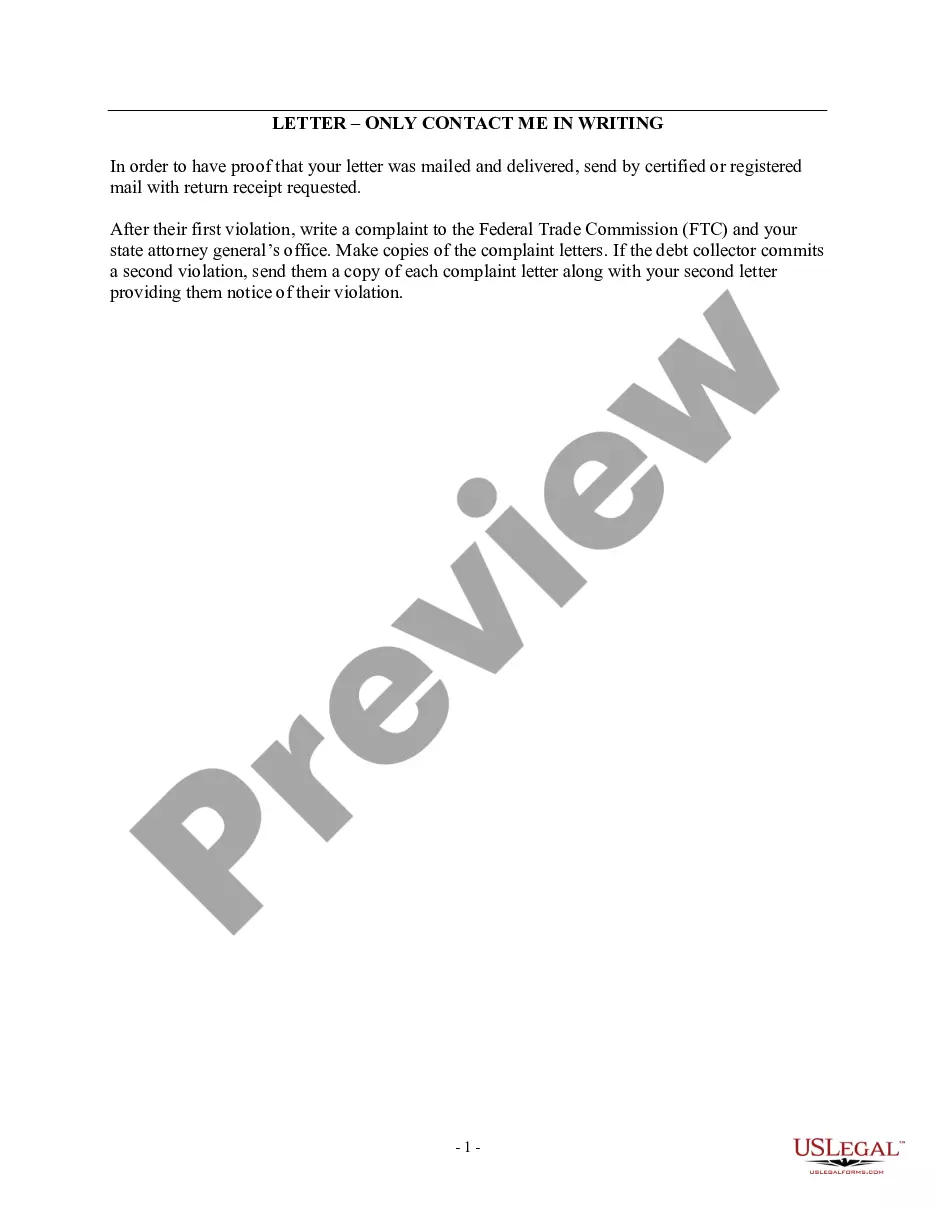
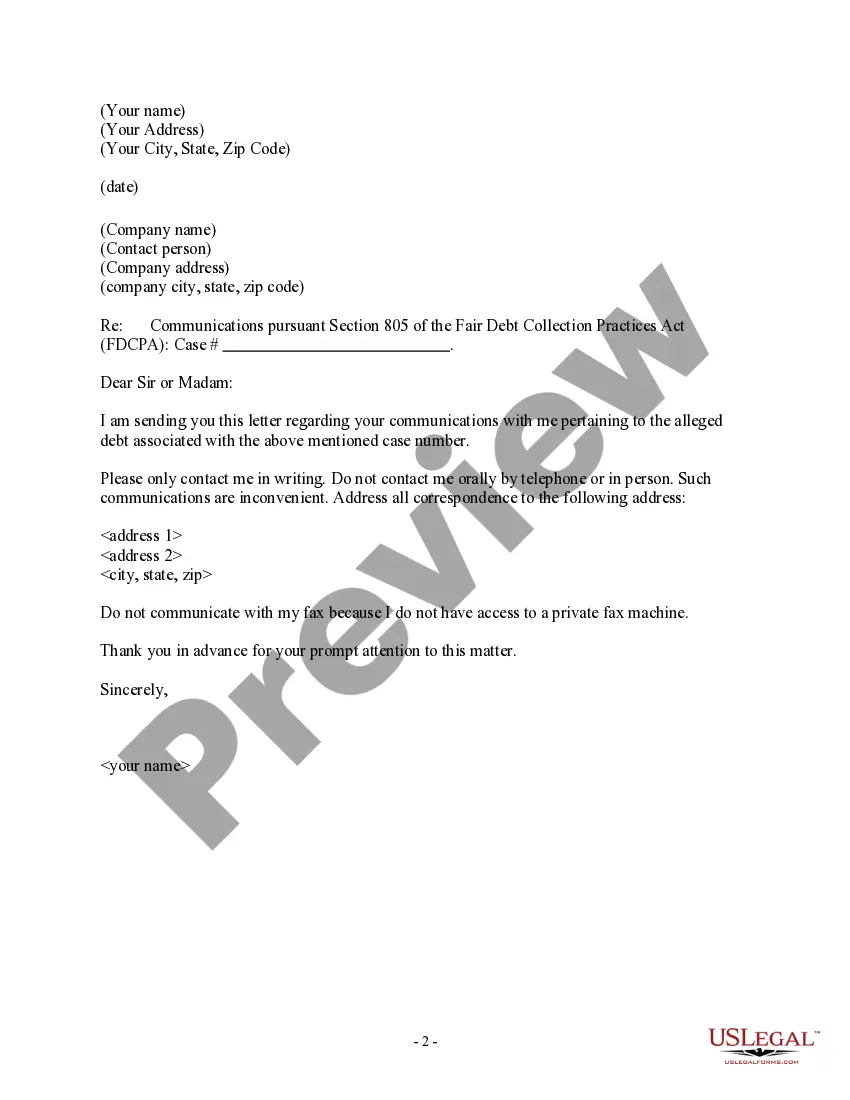
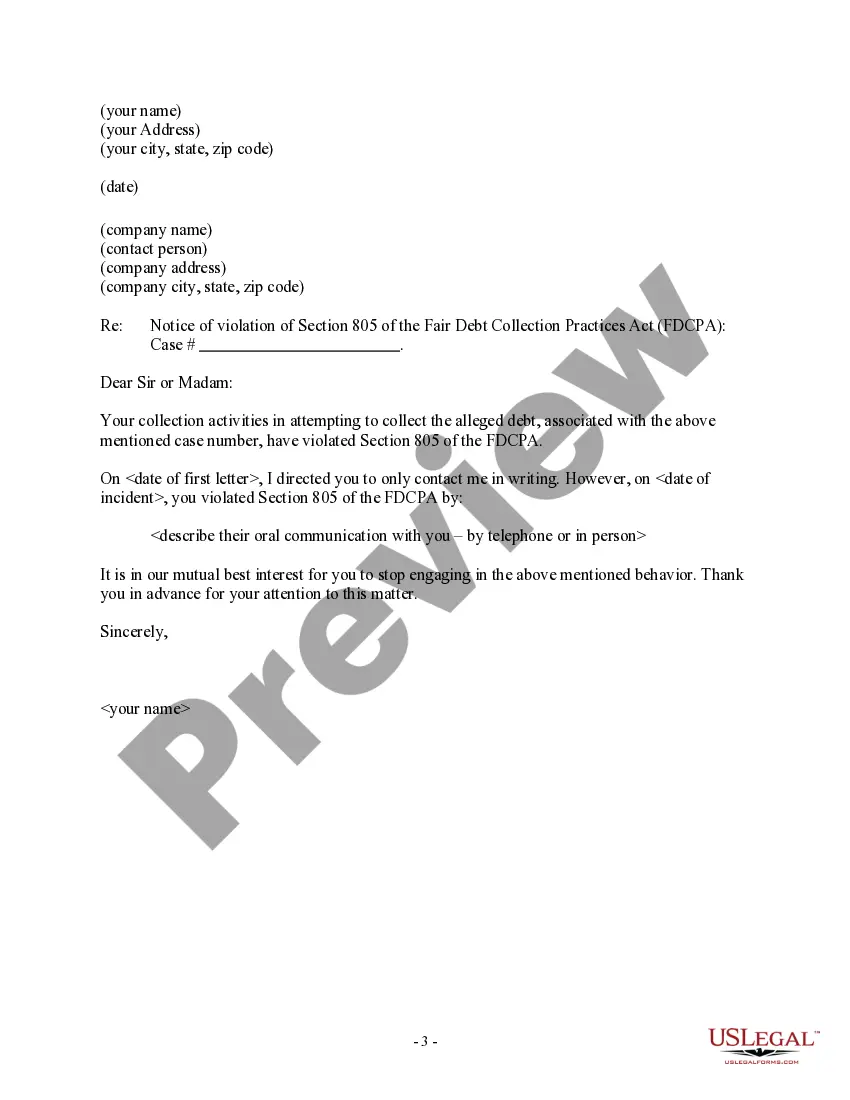
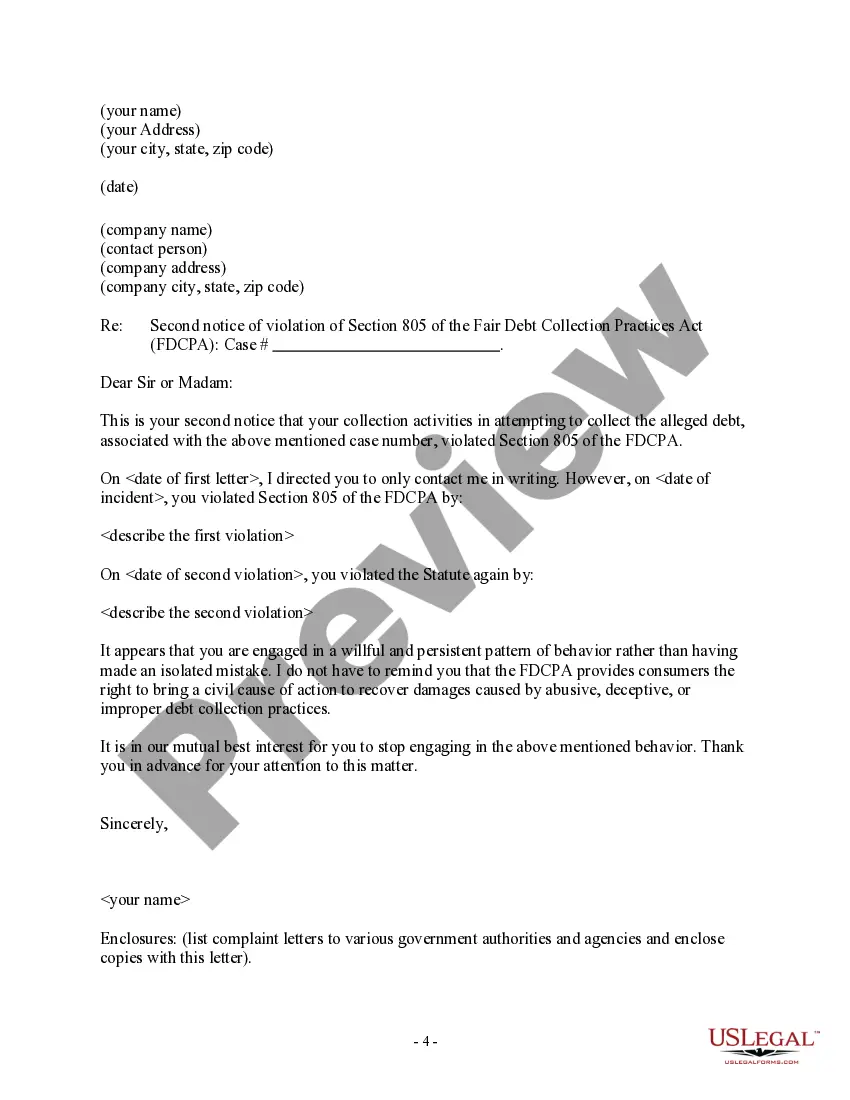
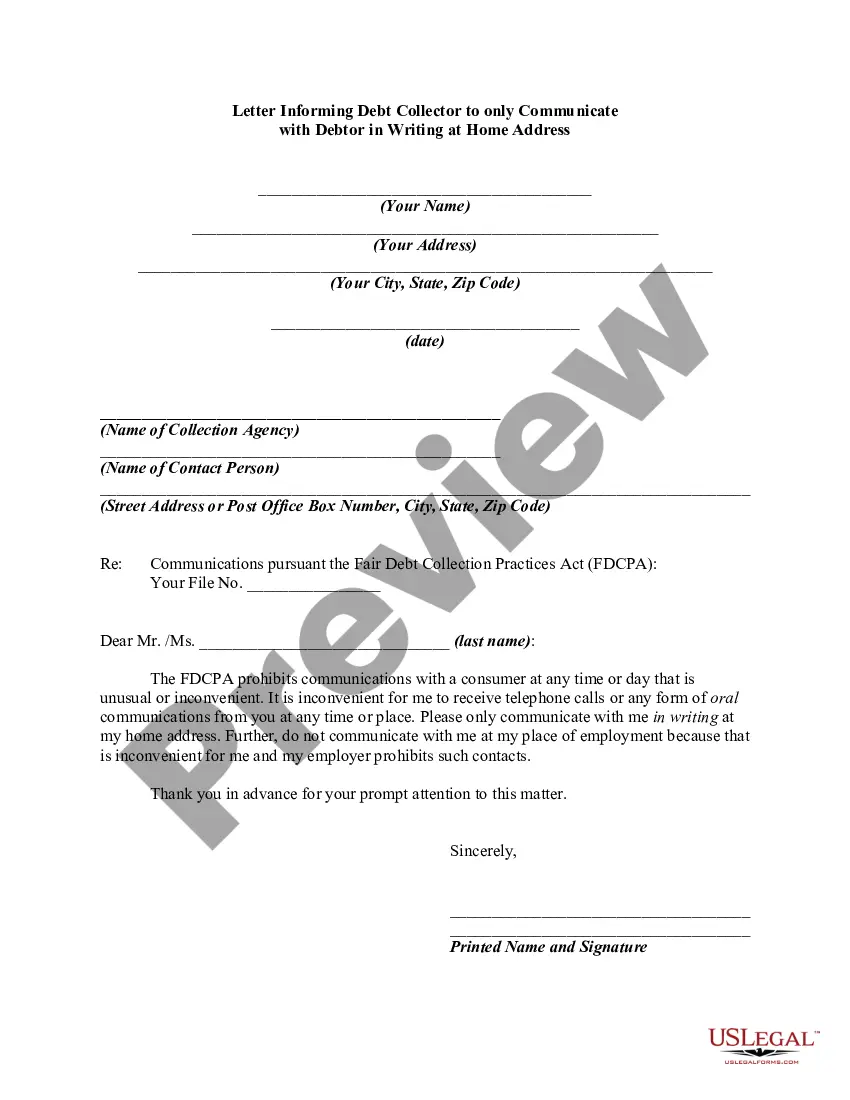
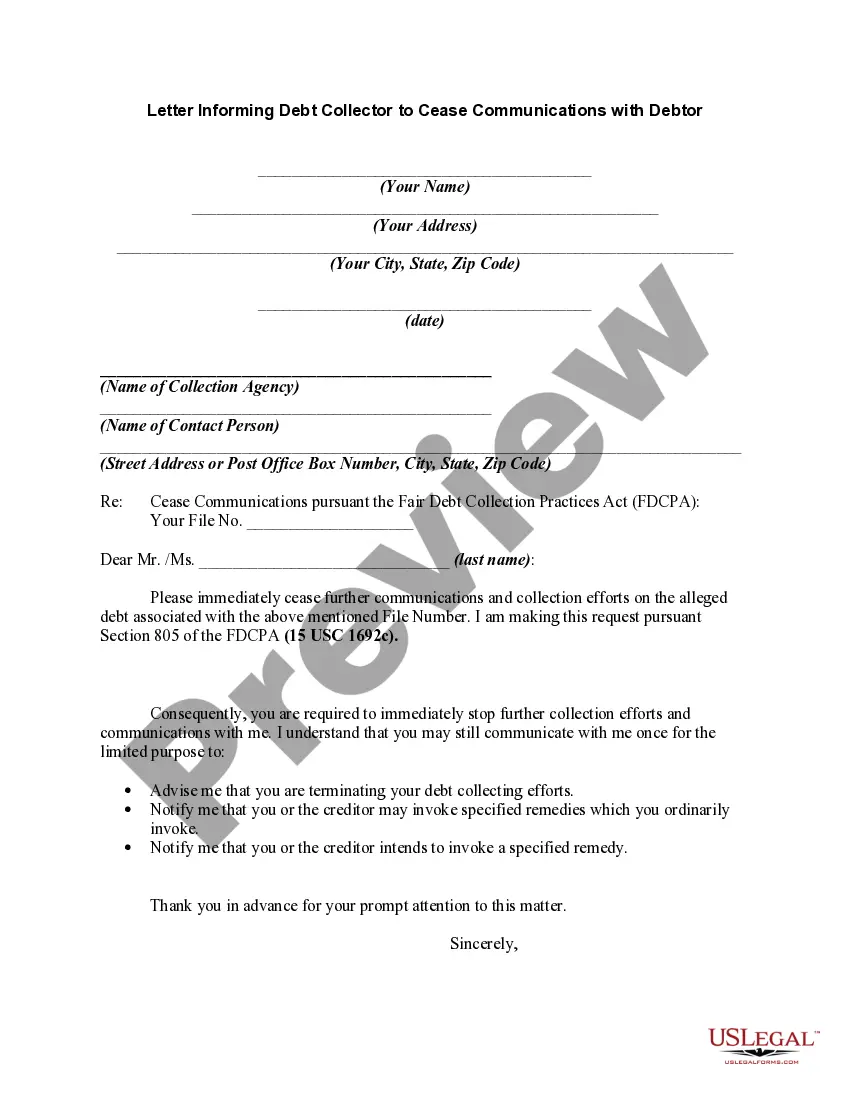
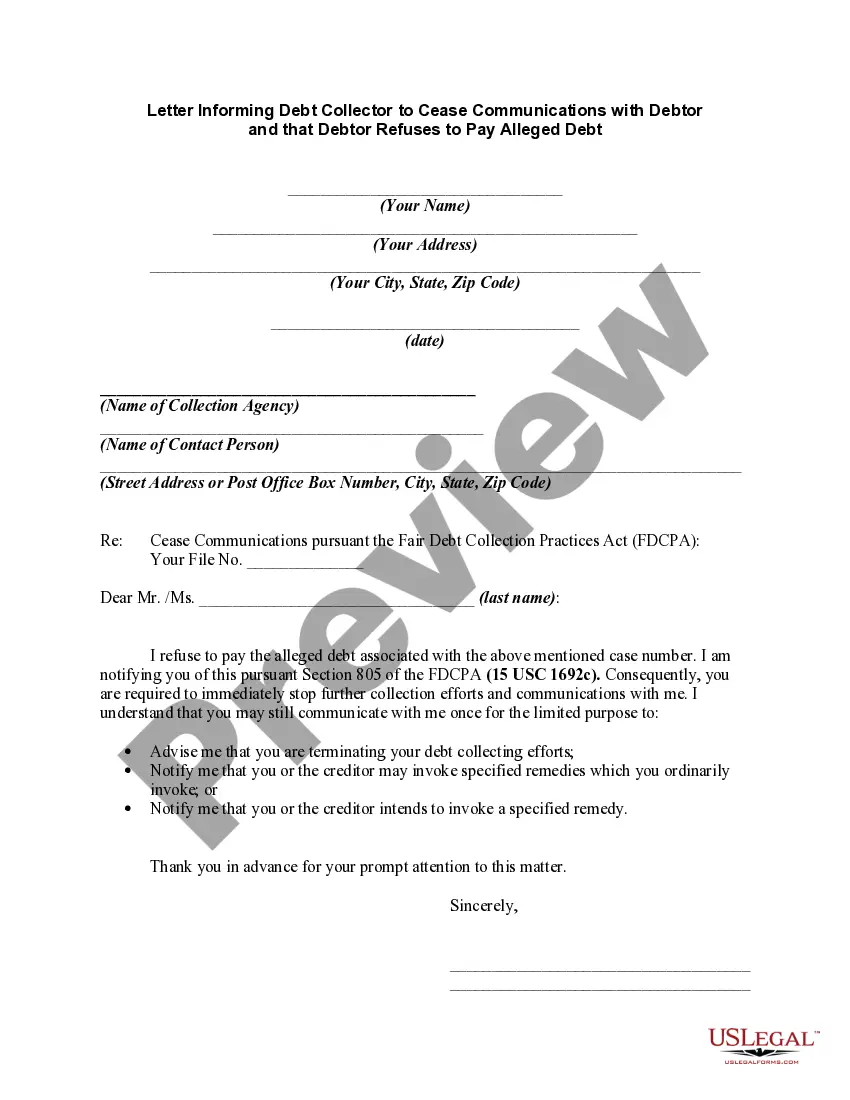
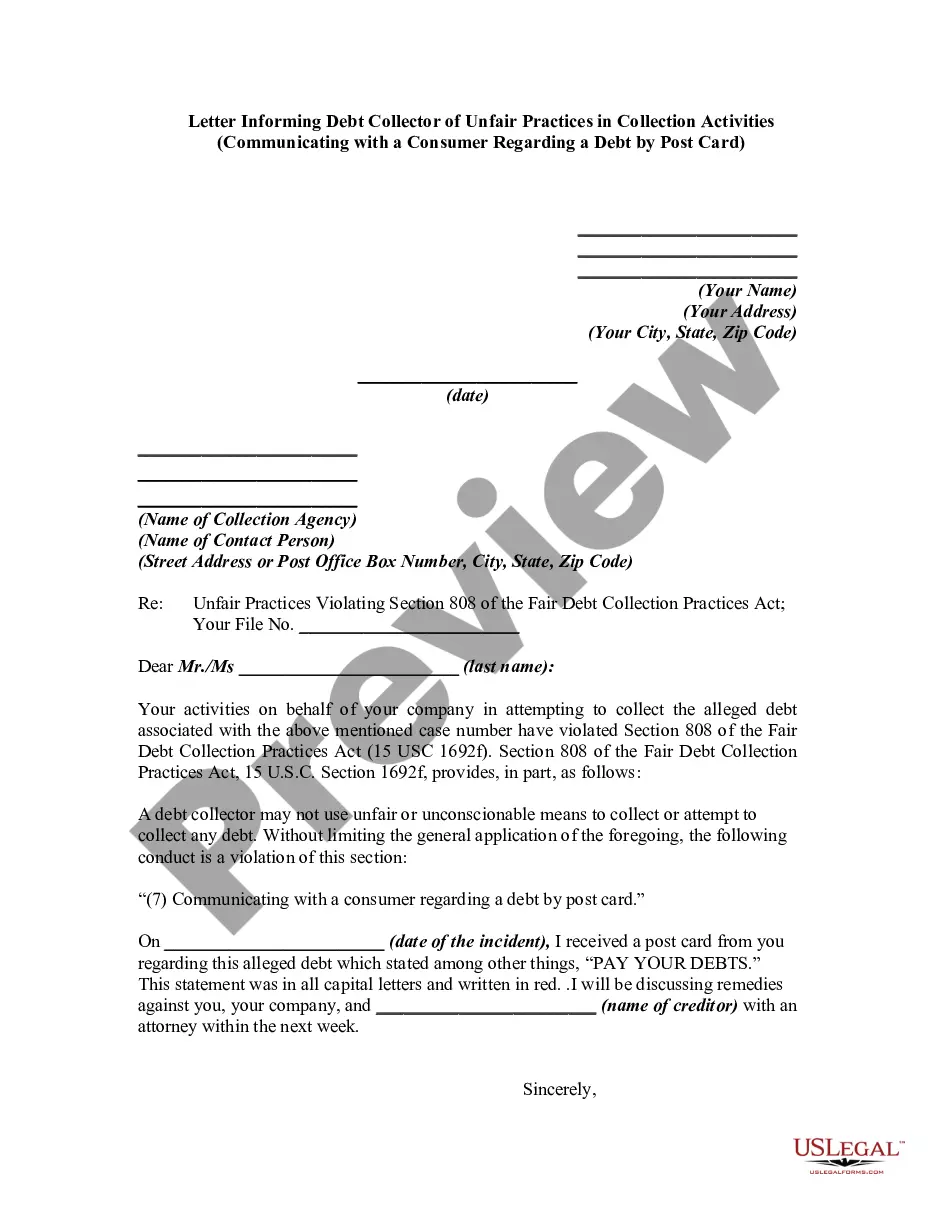
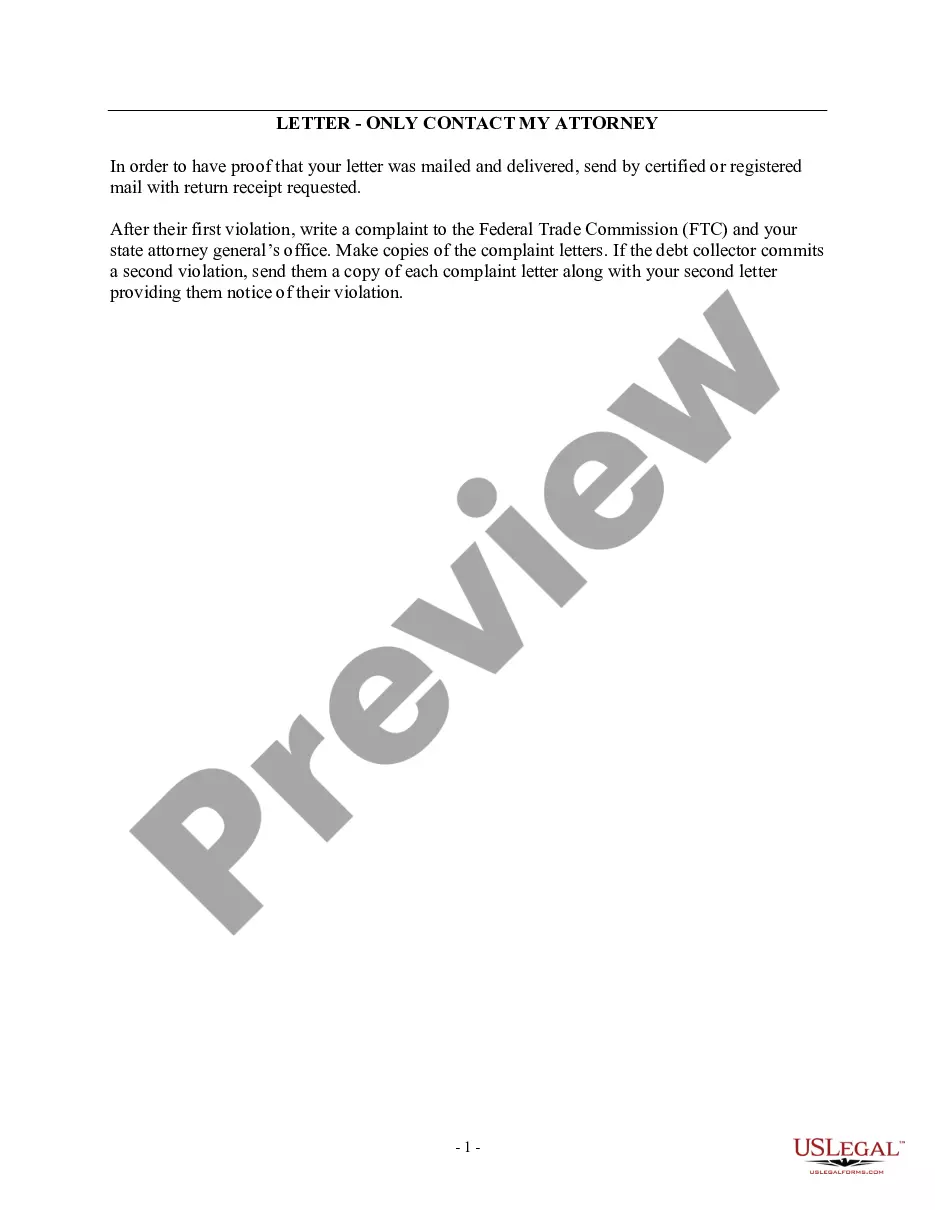
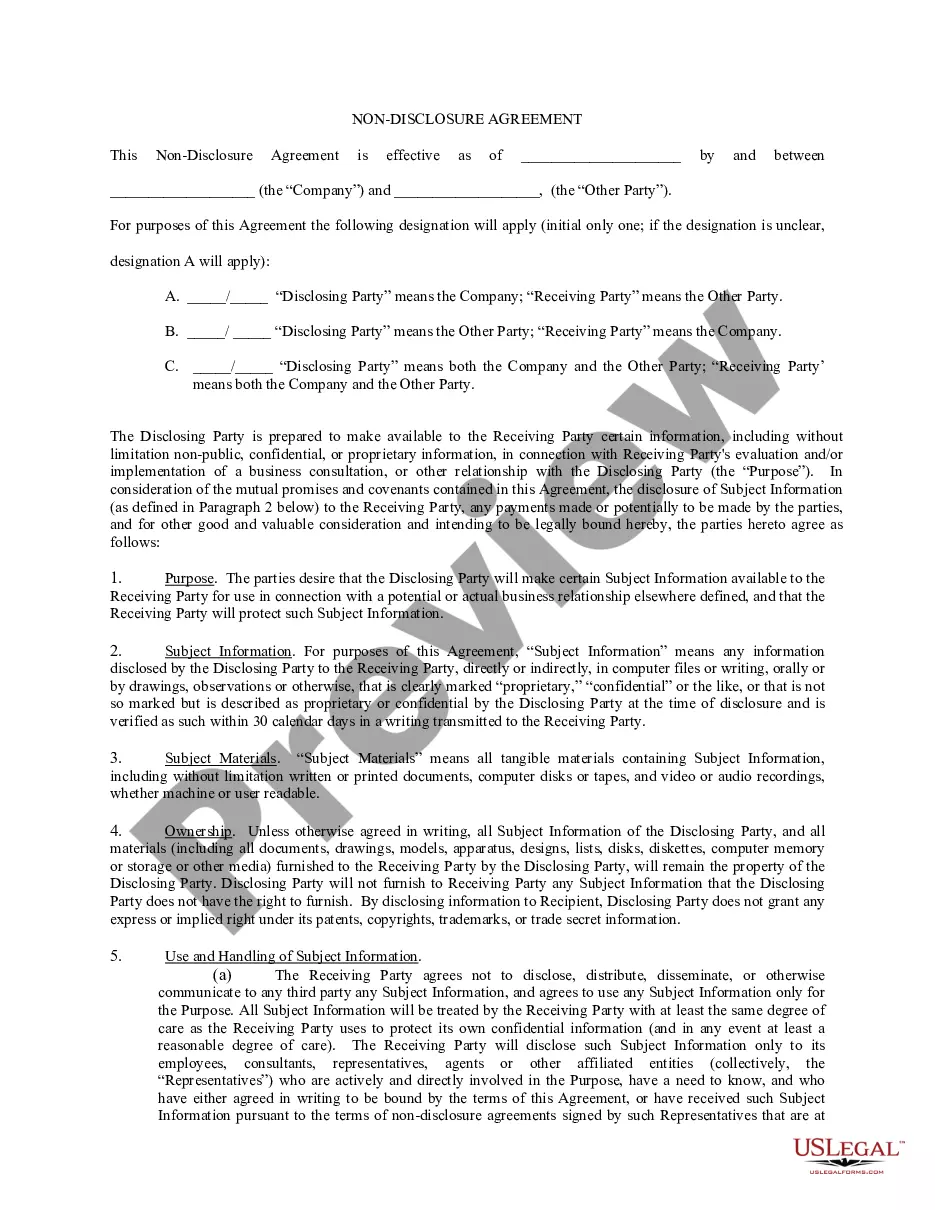
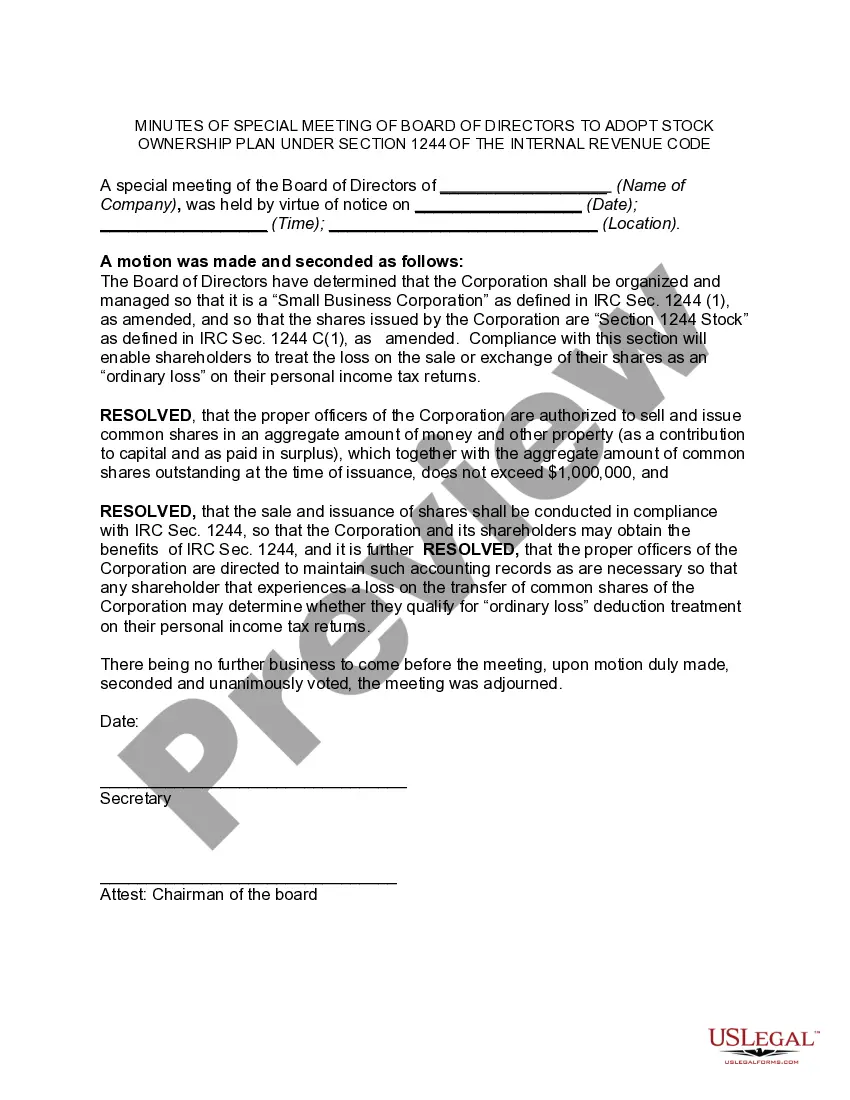
How to fill out Letter To Debt Collector - Only Contact Me In Writing?
If you require extensive, acquire, or print sanctioned document templates, utilize US Legal Forms, the largest collection of legal forms, which can be accessed online.
Make use of the site's user-friendly and efficient search to locate the files you need.
Various templates for business and personal purposes are categorized by types and states, or keywords.
Step 4. Once you have found the form you need, select the Acquire now button. Choose your preferred payment plan and enter your details to create an account.
Step 5. Complete the payment process. You can use your Visa or Mastercard or PayPal account to finish the transaction.
- Utilize US Legal Forms to find the Georgia Letter to Debt Collector - Only Contact Me In Writing with just a few clicks.
- If you are currently a US Legal Forms subscriber, Log In to your account and click the Download button to access the Georgia Letter to Debt Collector - Only Contact Me In Writing.
- You can also find forms you previously saved from the My documents tab of your account.
- If you are using US Legal Forms for the first time, follow the steps below.
- Step 1. Ensure you have selected the form for the correct region/state.
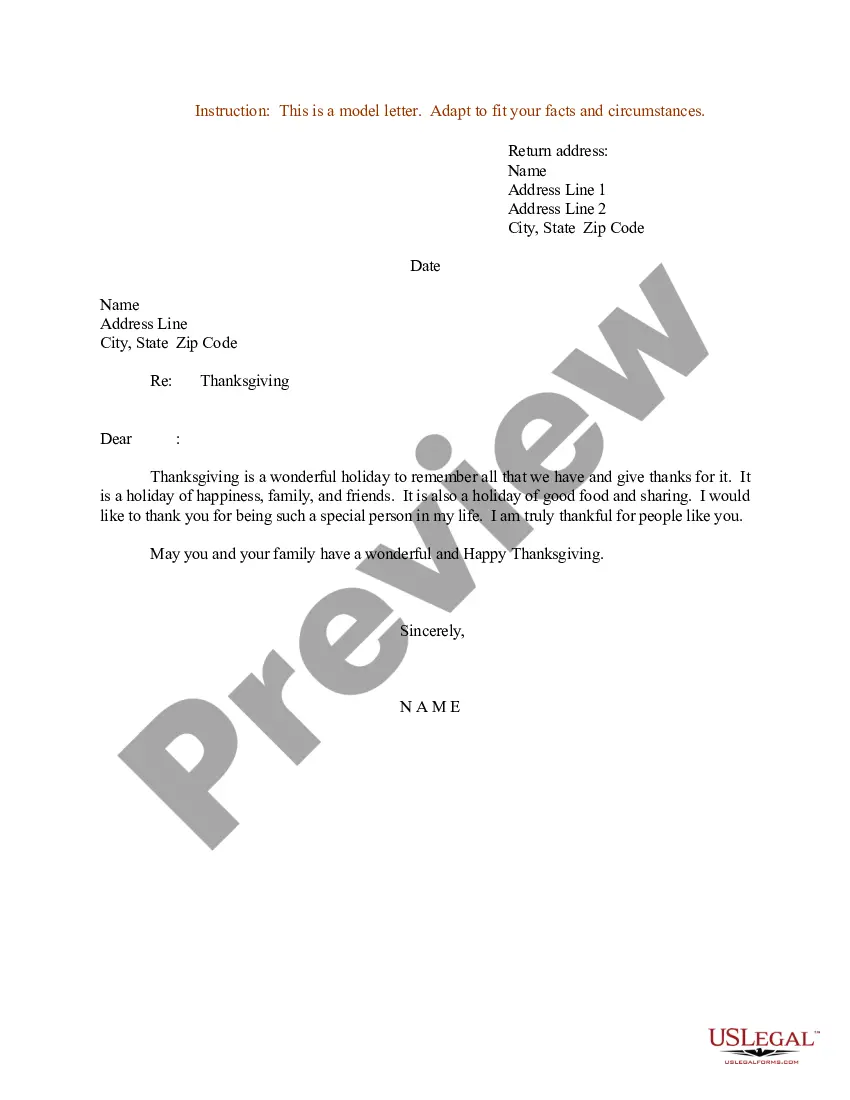
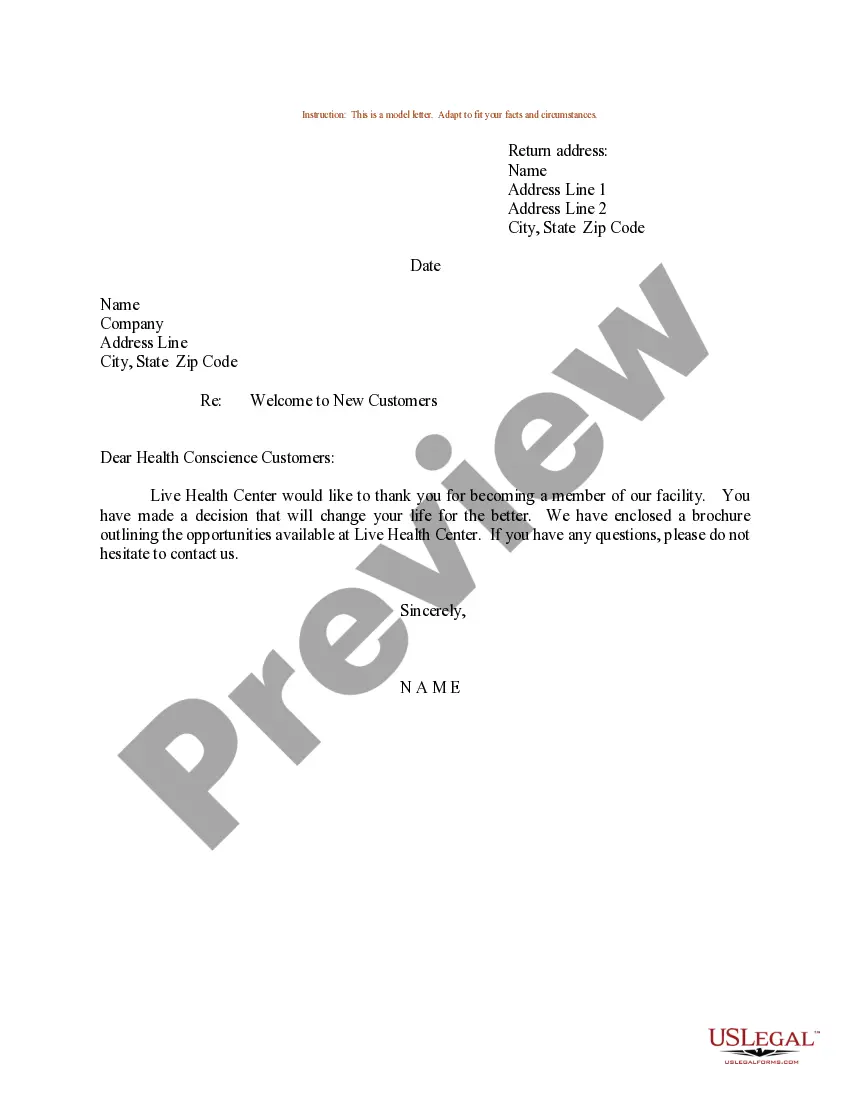
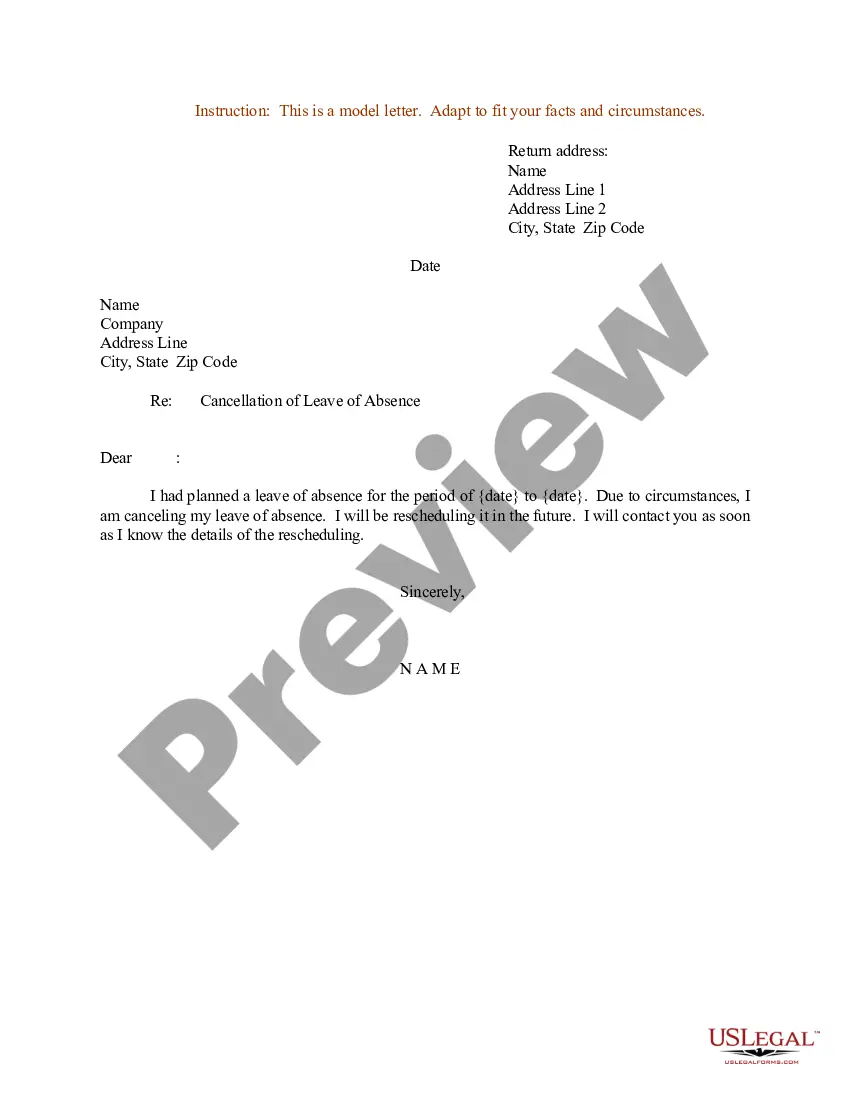
- Step 2. Use the Preview option to review the form's content. Don’t forget to read the description.
- Step 3. If you are not satisfied with the form, use the Search field at the top of the screen to find other versions of the legal form template.
Form popularity
FAQ
Legally Speaking, Emails are Considered Writings If sent to a consumer by a third-party debt collector, emails must comply with the Fair Debt Collection Practices Act (or FDCPA).
For some folks, that means dealing with calls from debt collectors. Starting late next year, collectors will also be allowed to contact consumers by email, text message, and even through social media, according to the Consumer Financial Protection Bureau.
Legally Speaking, Emails are Considered Writings If sent to a consumer by a third-party debt collector, emails must comply with the Fair Debt Collection Practices Act (or FDCPA). If the email communication pertains to healthcare debt, the Health Insurance Portability and Accountability Act (HIPAA) applies.
In Georgia, the statute of limitations on credit card debt is generally six years. After six years of non-payment on the debt, it becomes time-barred, meaning a collector or creditor cannot sue you to collect the debt.
At a minimum, proper debt validation should include an account balance along with an explanation of how the amount was derived. But most debt collectors respond with an account statement from the original creditor as debt validation and that's generally considered sufficient.
A debt collector has to send you a written statement outlining the specifics of your debt that is in collection. Within five days of contacting you, a debt collector must send you this written notice with the amount of money you owe and the name of the original creditor.
A debt validation letter should include the name of your creditor, how much you supposedly owe, and information on how to dispute the debt. After receiving a debt validation letter, you have 30 days to dispute the debt and request written evidence of it from the debt collector.
The name of the creditor seeking payment. A statement that the debt is assumed valid by the collector unless you dispute it within 30 days of the first contact. A statement that if you write to dispute the debt or request more information within 30 days, the debt collector will verify the debt by mail.
What Does a Debt Verification Notice Include? A debt collector has to send you a written statement outlining the specifics of your debt that is in collection. Within five days of contacting you, a debt collector must send you this written notice with the amount of money you owe and the name of the original creditor.
It should be short, concise, to the point and very clear as to what you want. It's imperative that you say as much as you can with as little text as possible. Remember to include the exact amount owed, the invoice number and the due date.