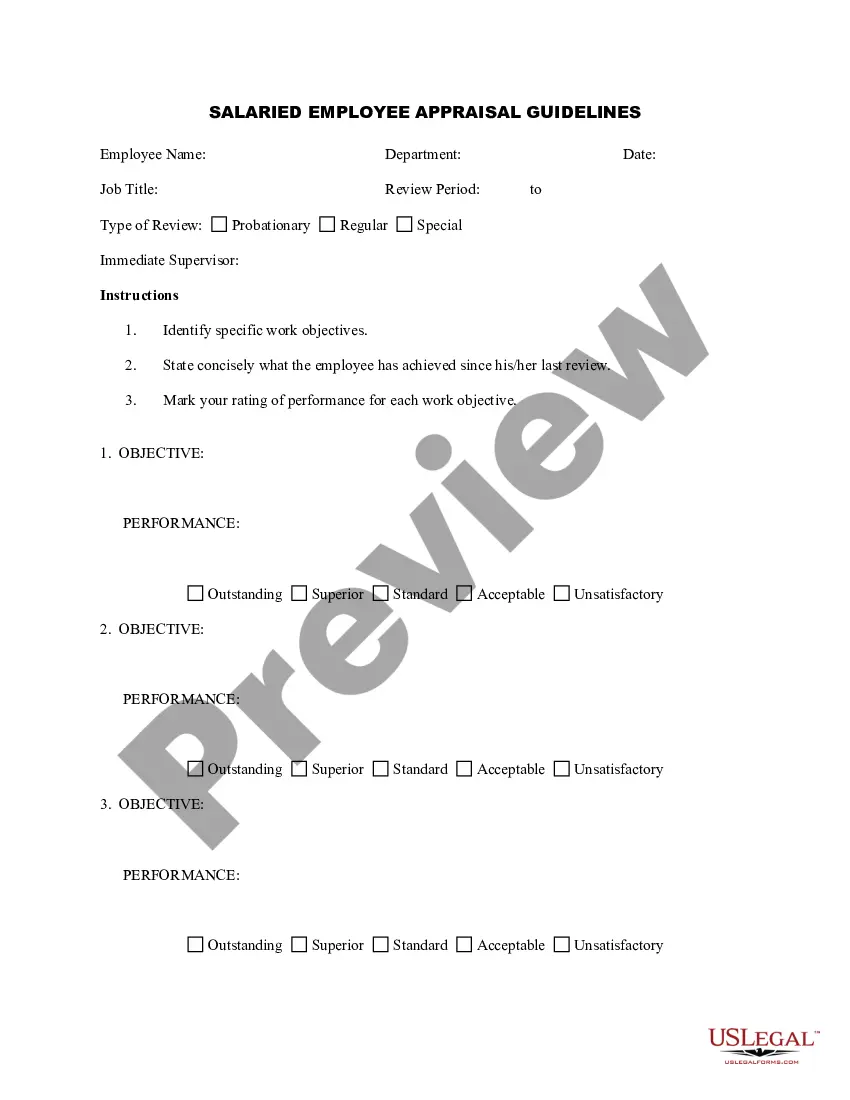
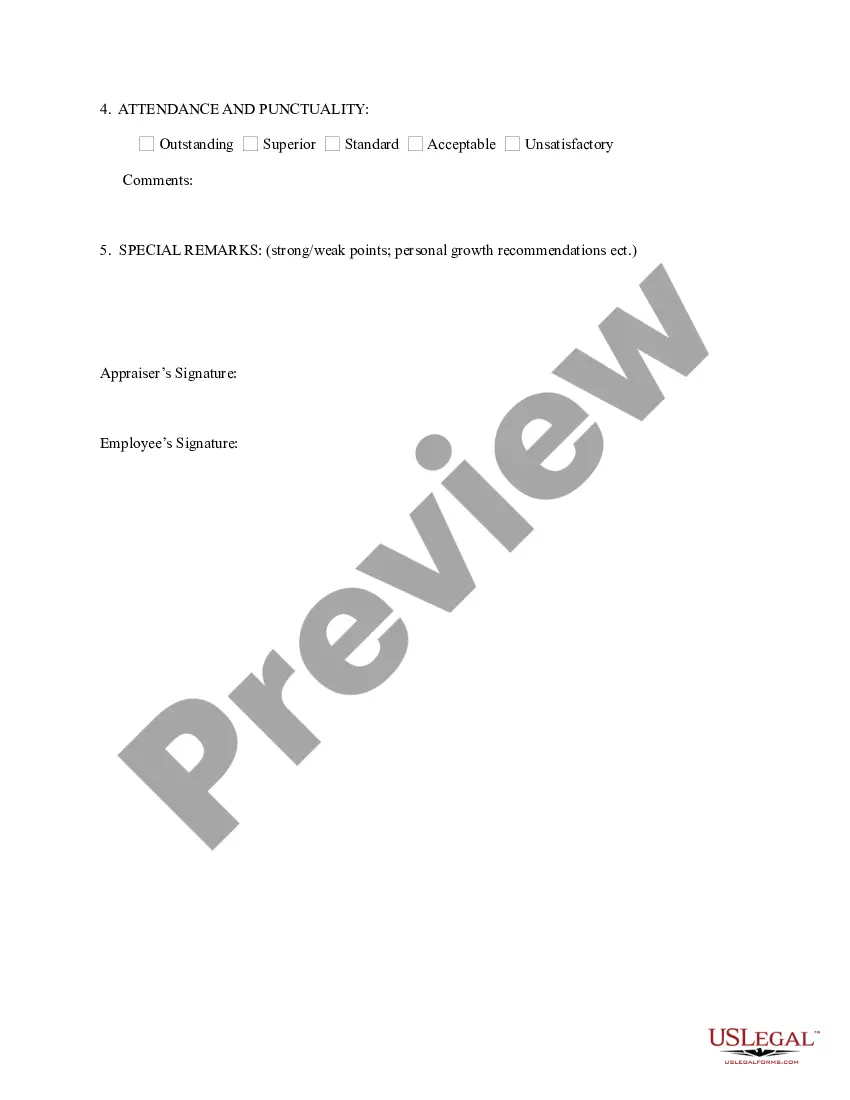
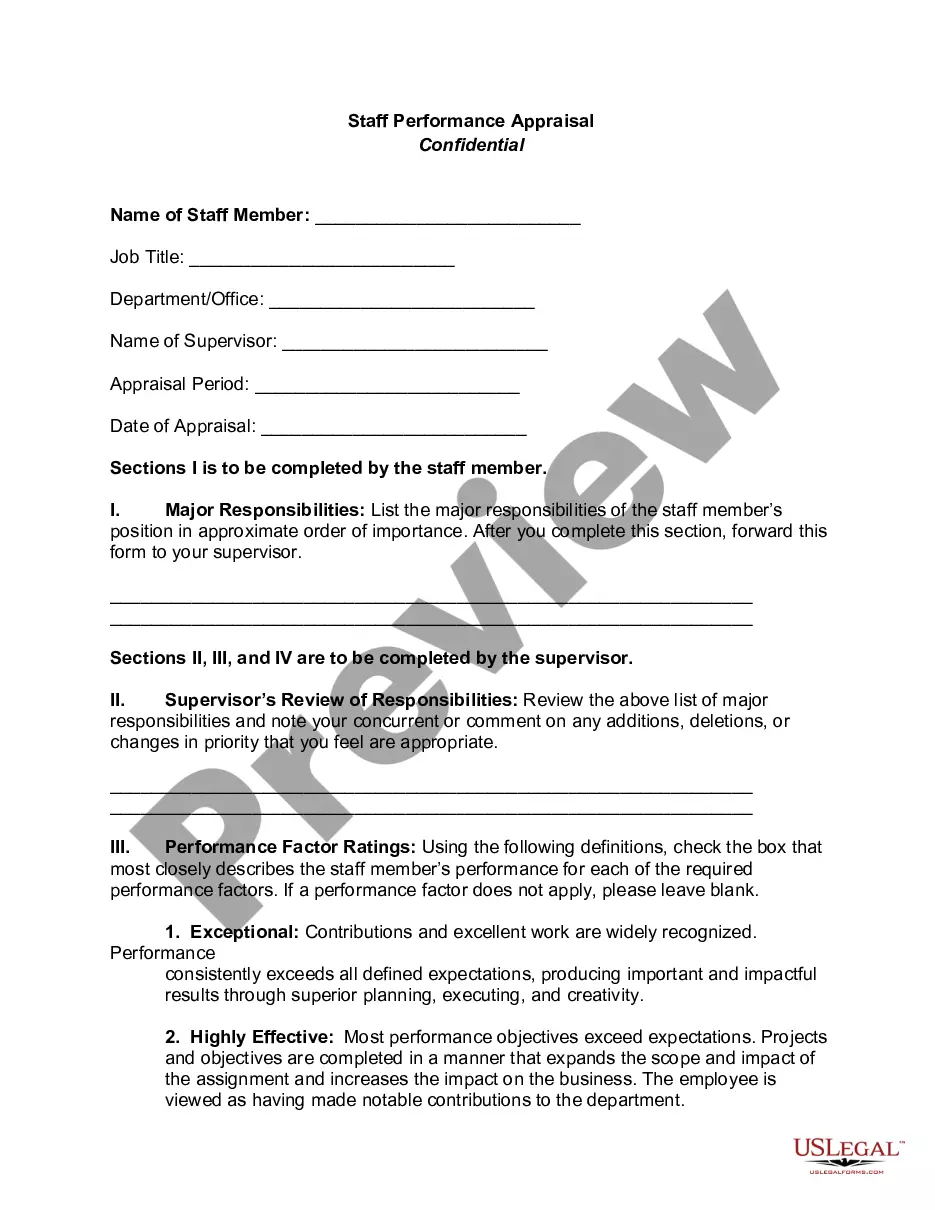
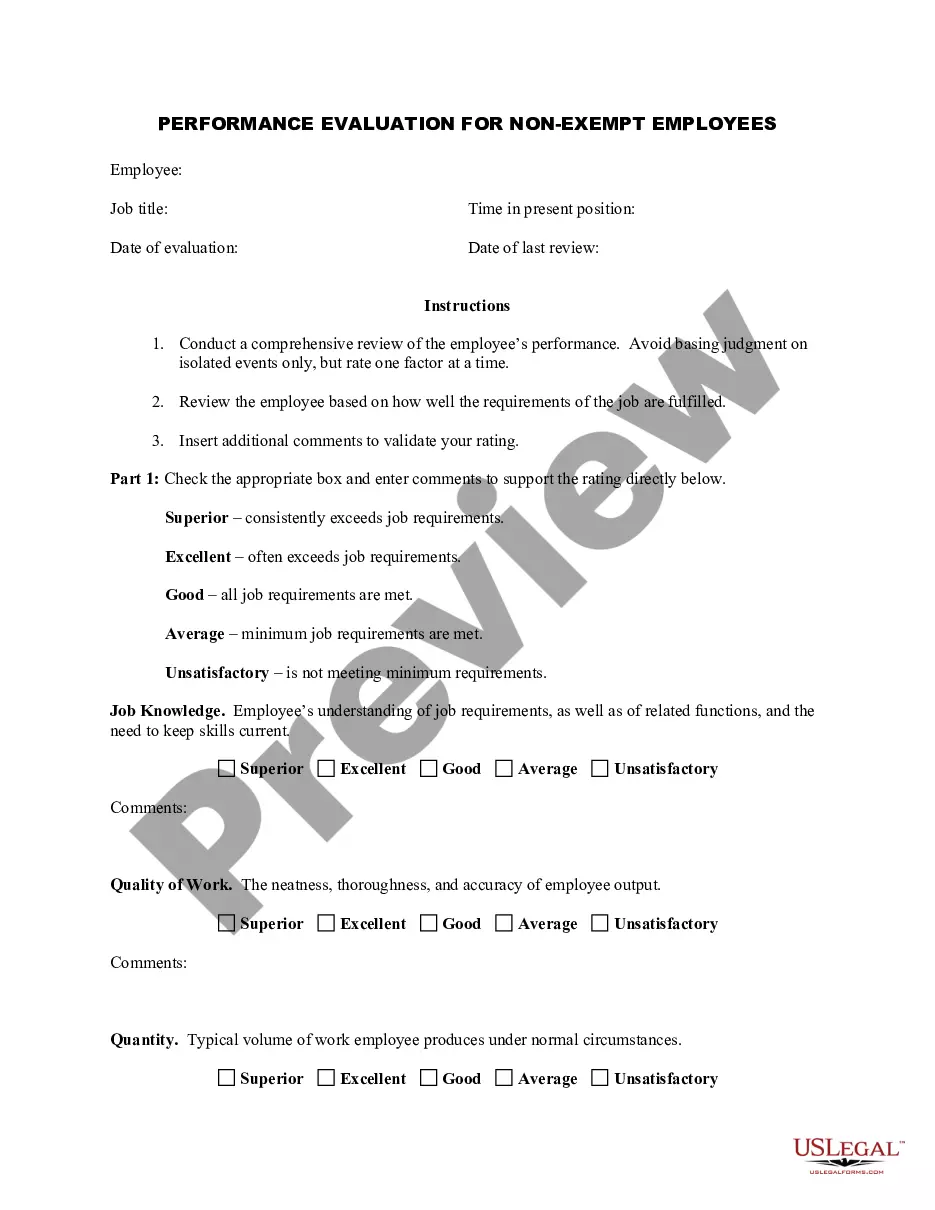
Georgia Salaried Employee Appraisal Guidelines - Employee Specific
Description
Get your form ready online
Our built-in tools help you complete, sign, share, and store your documents in one place.
Make edits, fill in missing information, and update formatting in US Legal Forms—just like you would in MS Word.
Download a copy, print it, send it by email, or mail it via USPS—whatever works best for your next step.
Sign and collect signatures with our SignNow integration. Send to multiple recipients, set reminders, and more. Go Premium to unlock E-Sign.
If this form requires notarization, complete it online through a secure video call—no need to meet a notary in person or wait for an appointment.
We protect your documents and personal data by following strict security and privacy standards.

Make edits, fill in missing information, and update formatting in US Legal Forms—just like you would in MS Word.

Download a copy, print it, send it by email, or mail it via USPS—whatever works best for your next step.

Sign and collect signatures with our SignNow integration. Send to multiple recipients, set reminders, and more. Go Premium to unlock E-Sign.

If this form requires notarization, complete it online through a secure video call—no need to meet a notary in person or wait for an appointment.

We protect your documents and personal data by following strict security and privacy standards.
Looking for another form?
How to fill out Salaried Employee Appraisal Guidelines - Employee Specific?
Selecting the ideal legal document template can be quite challenging.
Of course, there are numerous templates available on the internet, but how do you locate the legal form you require.
Utilize the US Legal Forms website.
If you are a new user of US Legal Forms, here are simple instructions for you to follow: First, ensure you have selected the correct form for your city/state. You can review the form using the Review button and check the form description to confirm this is the right fit for you.
- The service offers thousands of templates, including the Georgia Salaried Employee Appraisal Guidelines - Employee Specific, which can be utilized for business and personal purposes.
- All forms are reviewed by experts and comply with federal and state regulations.
- If you are already a member, Log In to your account and click the Download button to get the Georgia Salaried Employee Appraisal Guidelines - Employee Specific.
- Use your account to browse the legal forms you have previously purchased.
- Visit the My documents tab in your account to obtain another copy of the document you require.
Form popularity
FAQ
How Many Hours a Week Does the Average Salaried Employee Work? While 40 hours of work per week is considered full-time, the average salaried employee does not often exceed 45-50 hours per week.
The Fair Labor Standards Act (FLSA) establishes minimum wage, overtime pay, recordkeeping, and youth employment standards affecting employees in the private sector and in Federal, State, and local governments.
Generally the FLSA exempts executive, administrative, professional, and outside sales employees from overtime requirements provided they meet certain tests regarding job duties and are compensated "on a salary basis."
Your criteria for judging employee performance should include quantitative elements such as their goals and target achievement. While much of a performance appraisal is qualitative and subjective, the goals and achievement element is objective and measurable in clear numbers.
Per the new rule, which took effect on January 1, 2020, a salaried employee must earn at least $684 a week or $35,568 per year to be exempt from overtime. This minimum is up from $465 per week or $23,660 per year, which was set in 2004. The remainder of the overtime exempt rules will stay the same.
Effective performance management systems typically include the following three broad elements: goal setting, performance review and a performance improvement process.
Here's a step-by-step guide to effectively evaluating employees:Set Performance Standards.Set Specific Goals.Take Notes Throughout the Year.Be Prepared.Be Honest and Specific with Criticism.Don't Compare Employees.Evaluate the Performance, Not the Personality.Have a Conversation.More items...
Georgia Minimum Wage for 2021, 2022. Georgia's state minimum wage rate is $7.25 per hour. This is the same as the current Federal Minimum Wage rate. The minimum wage applies to most employees in Georgia, with limited exceptions including tipped employees, some student workers, and other exempt occupations.
The minimum salary threshold required for an employee to be exempt from overtime was raised from $23,660 annually to $47,476 annually.
Per the new rule, which took effect on January 1, 2020, a salaried employee must earn at least $684 a week or $35,568 per year to be exempt from overtime. This minimum is up from $465 per week or $23,660 per year, which was set in 2004. The remainder of the overtime exempt rules will stay the same.