A bond placement is the process of selling a new bond issue often to an intitutional investor. For a company in need of financing, this a typical transaction arranged through an investment banker.
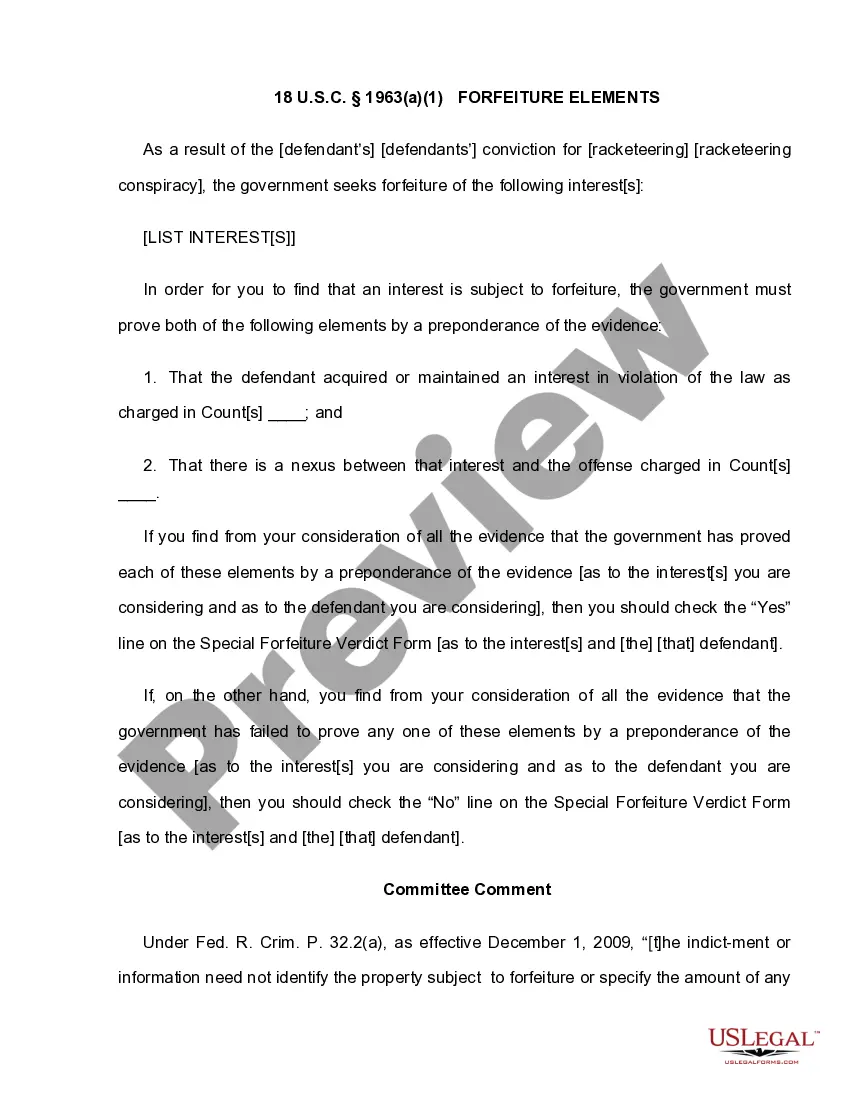
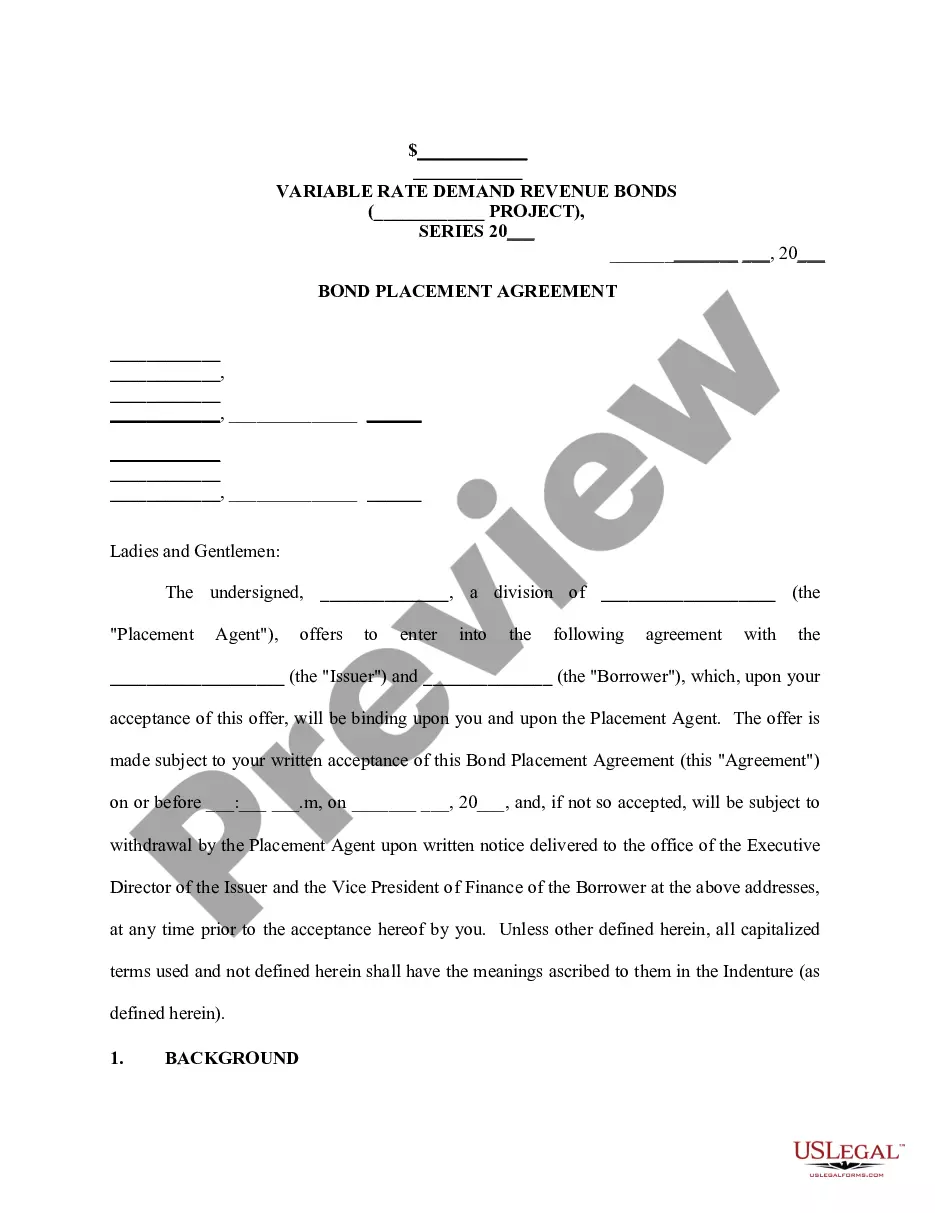
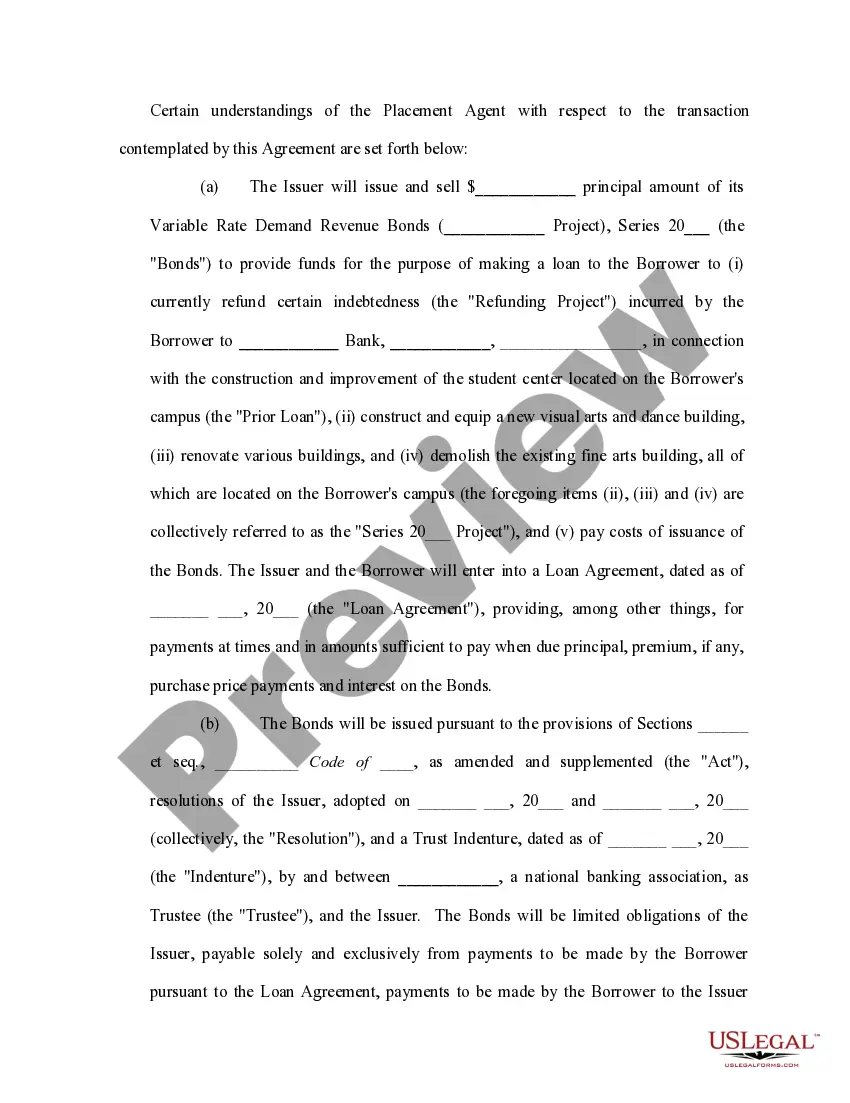
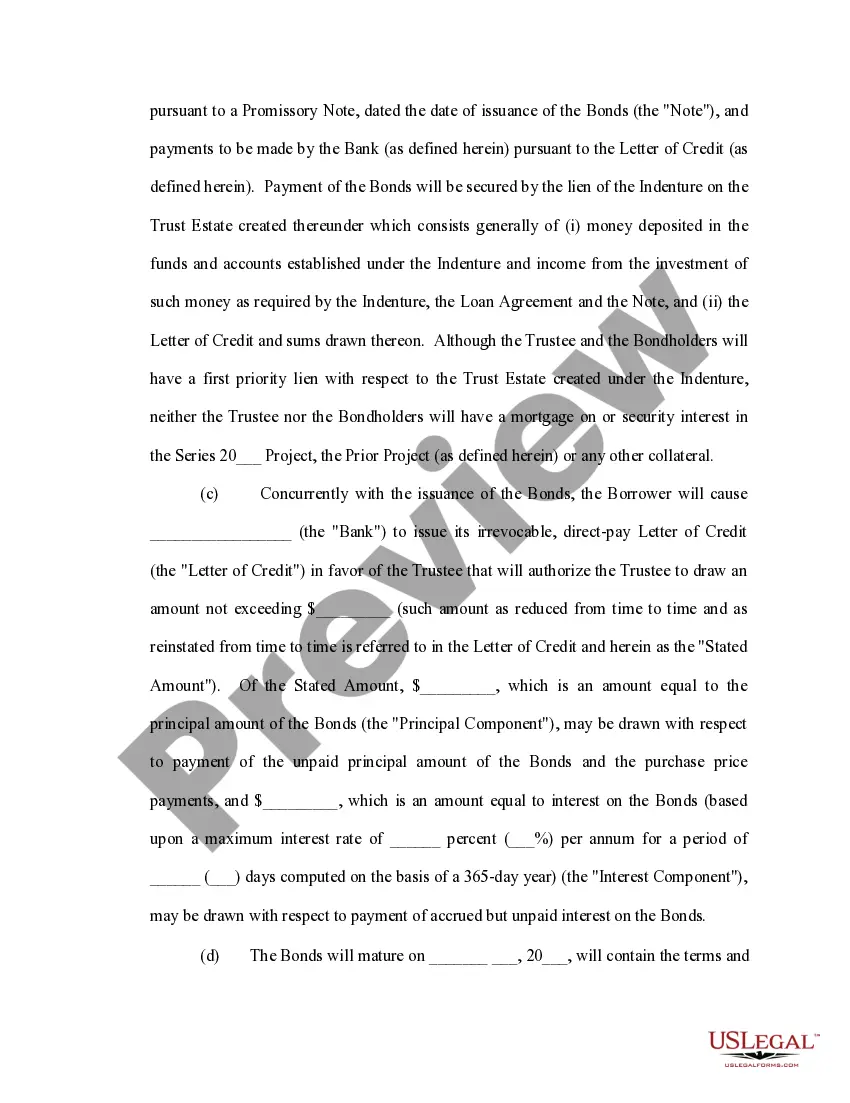
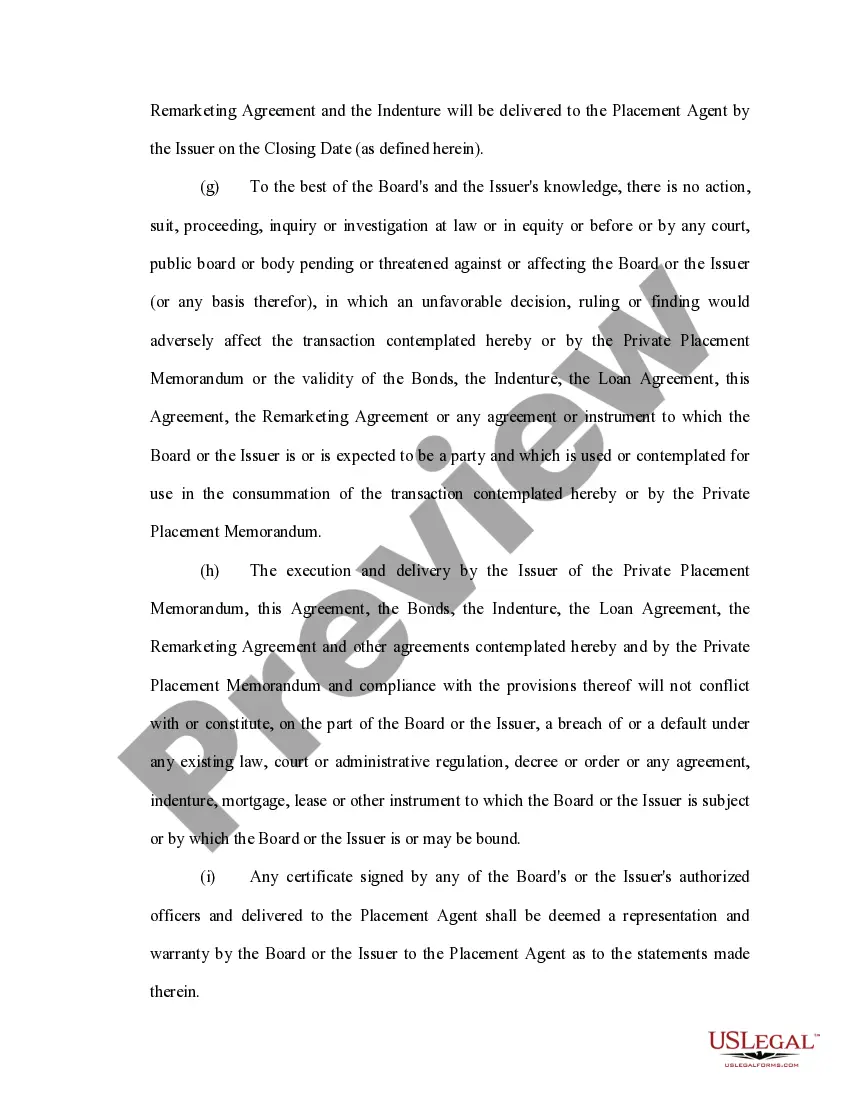
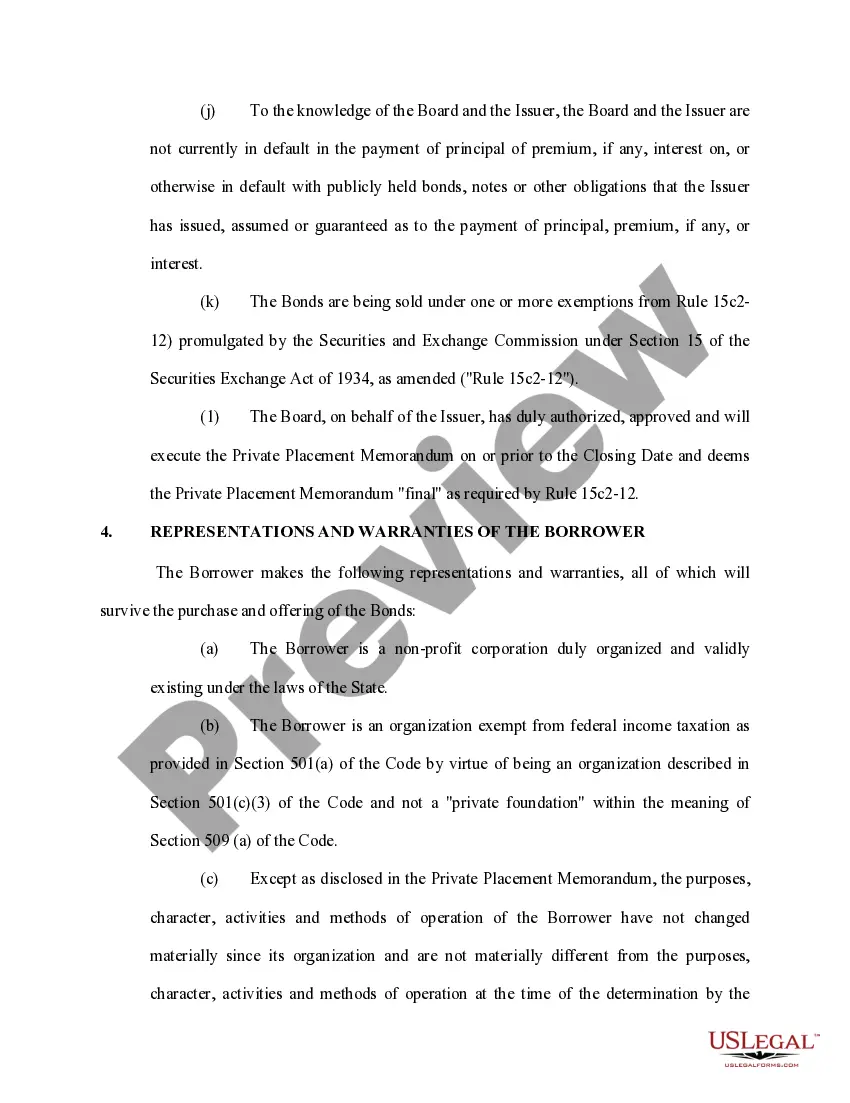
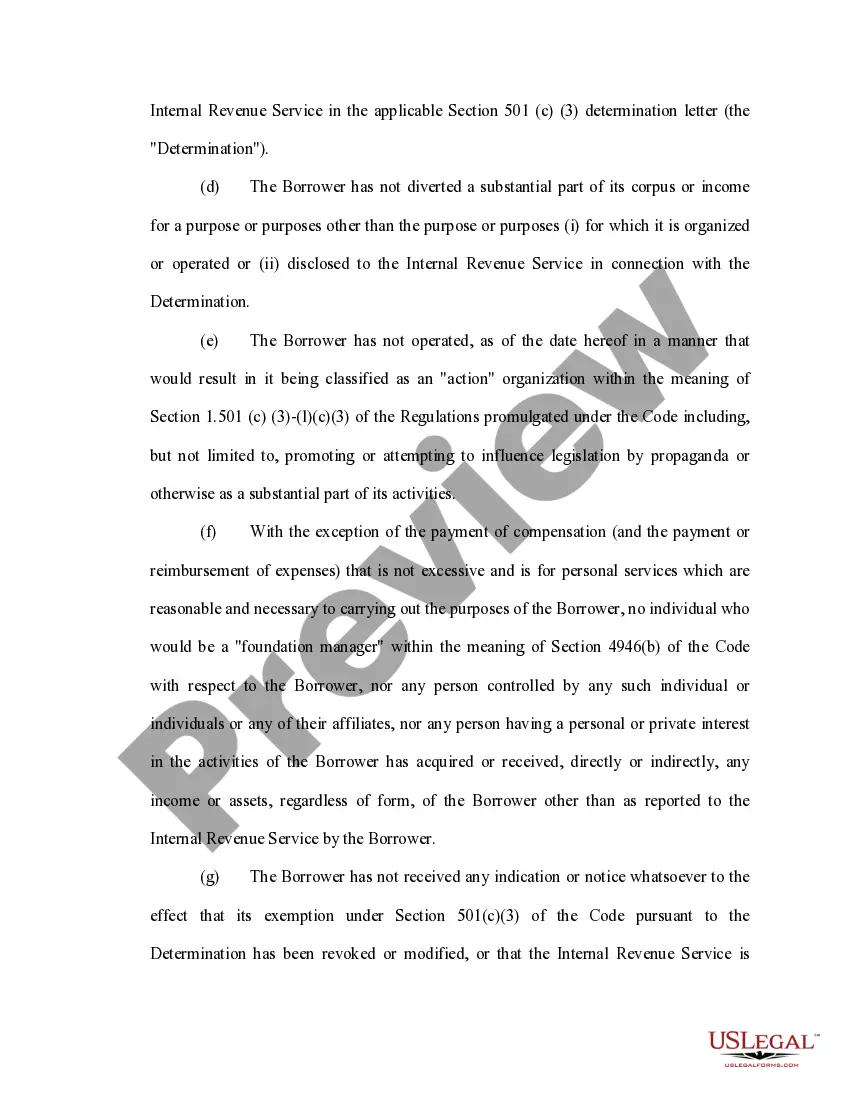
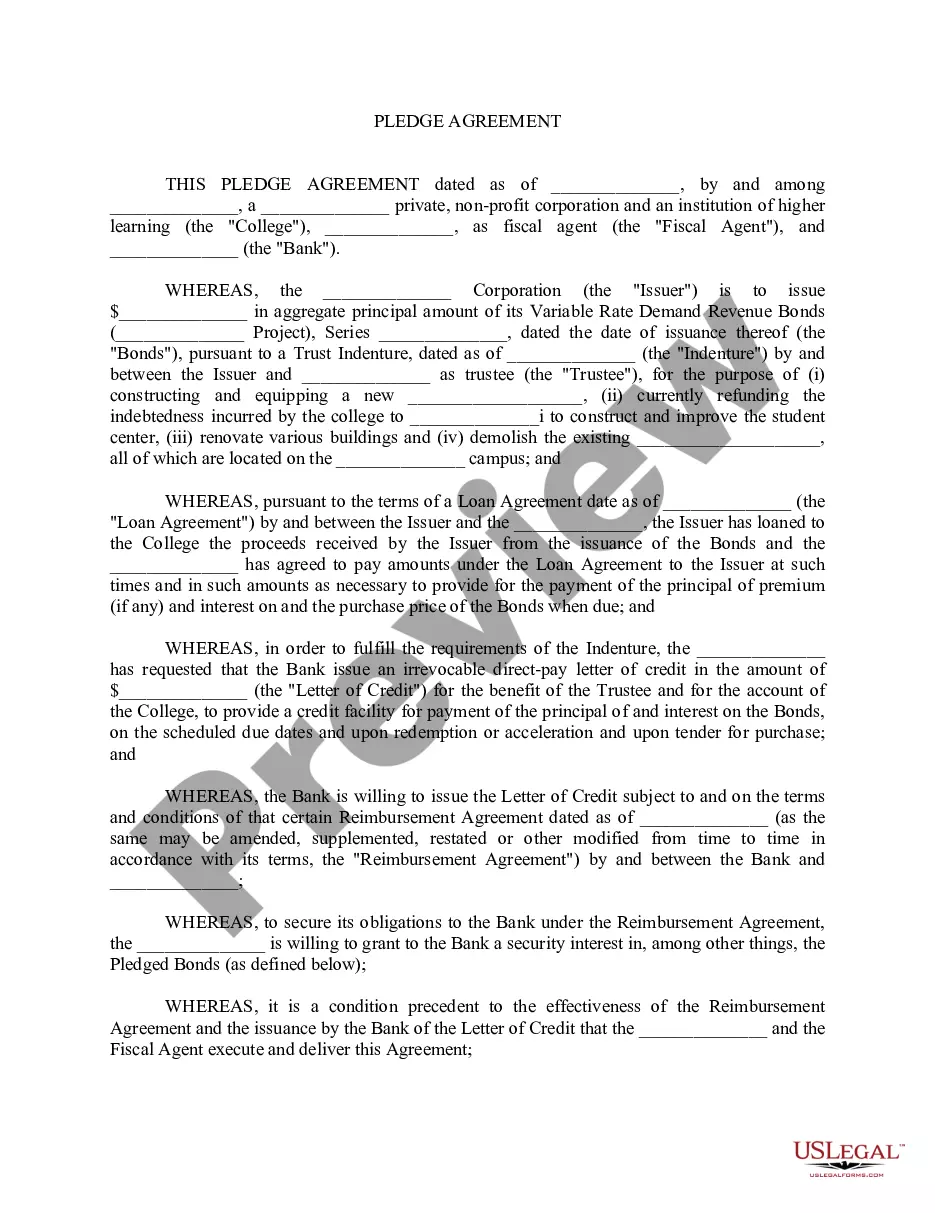
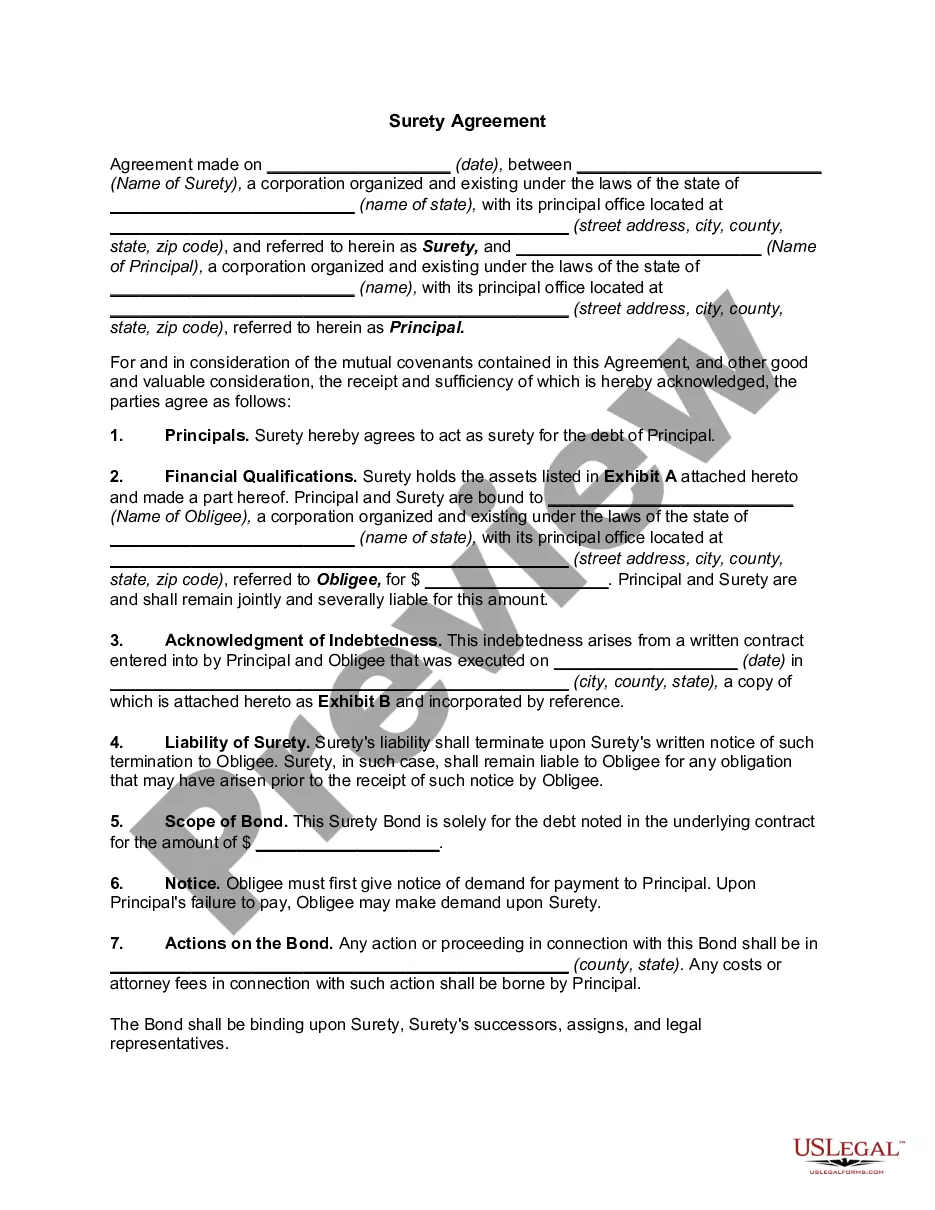
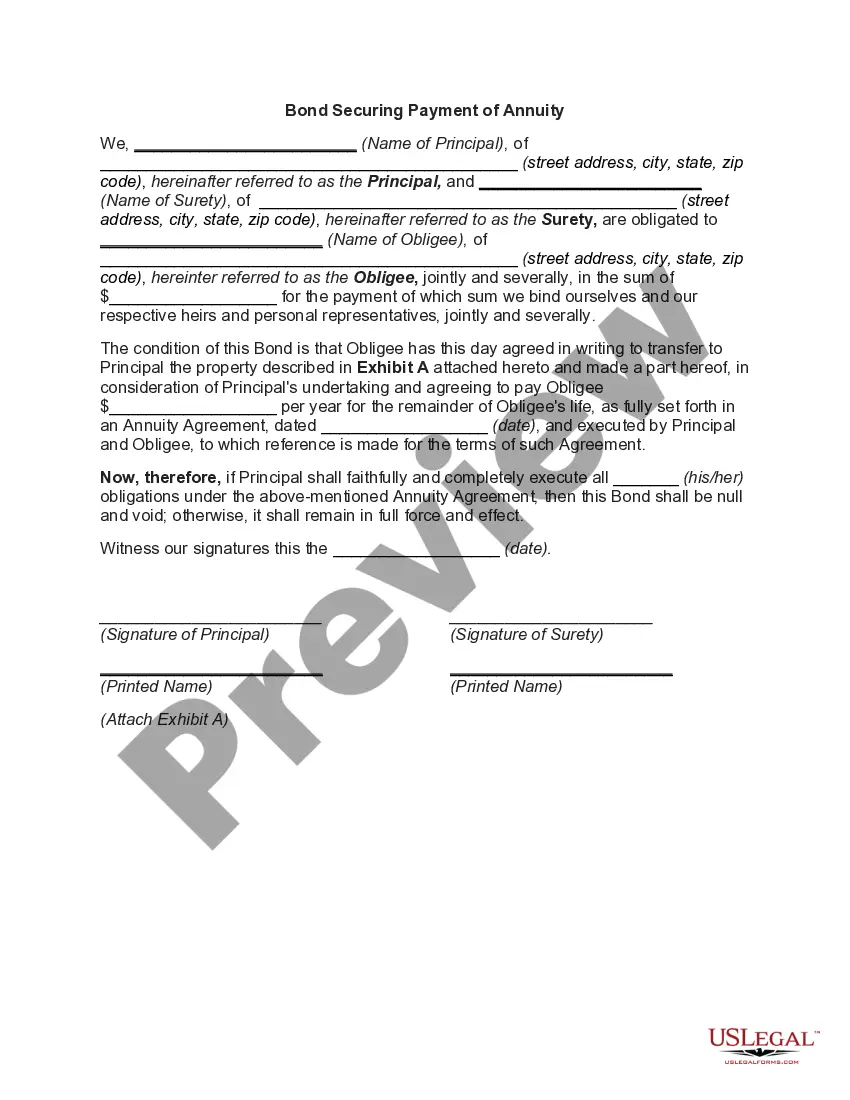
Georgia Bond placement agreement
Instant download
Description
Free preview
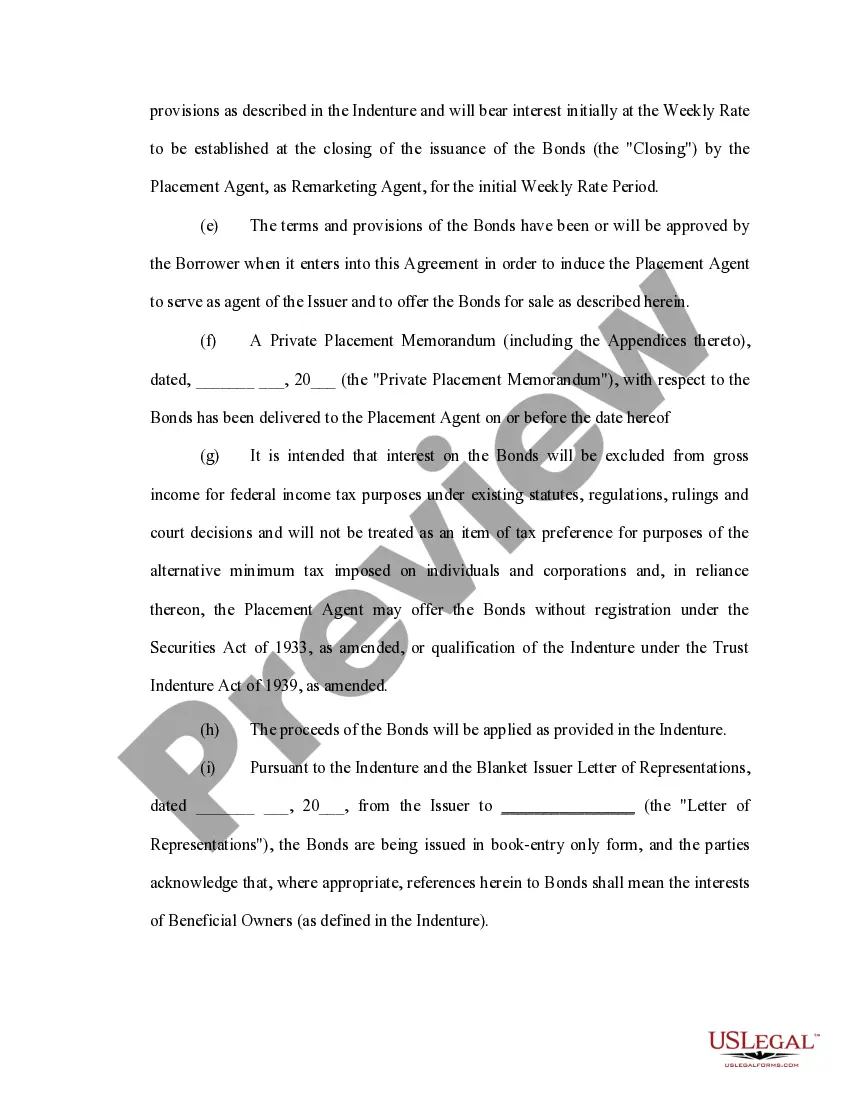
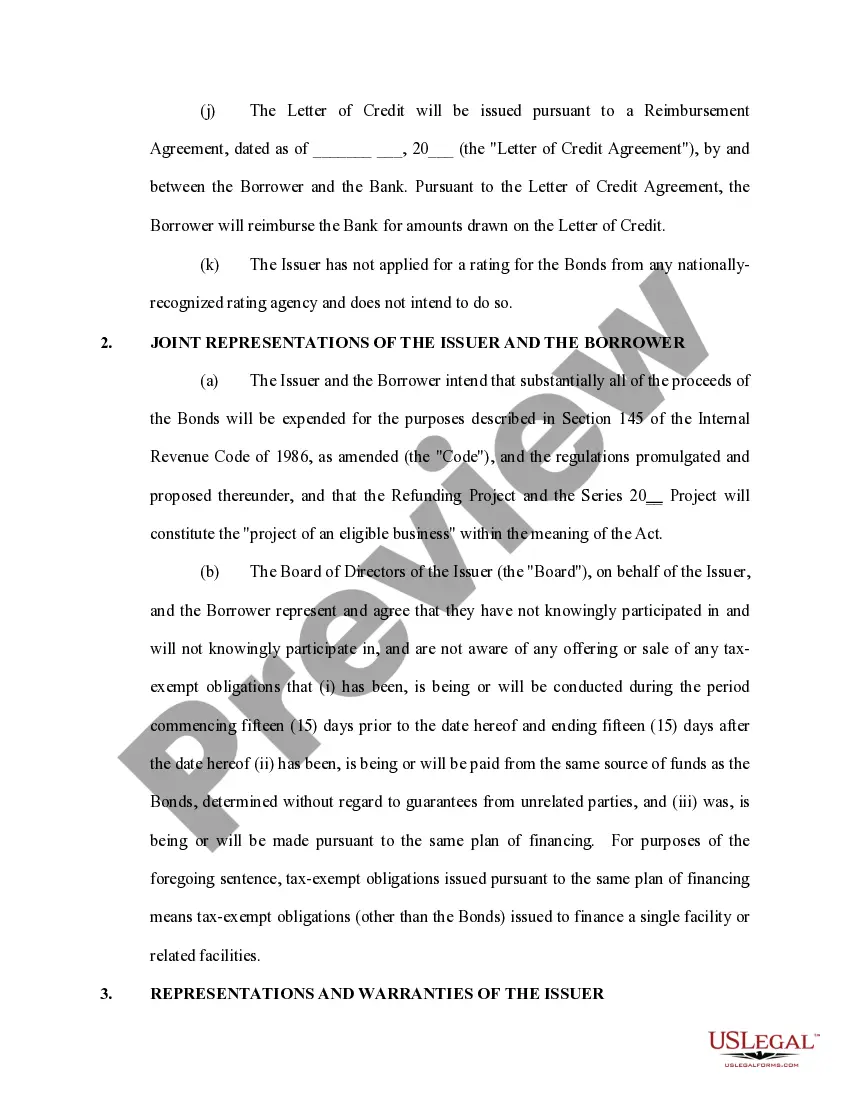
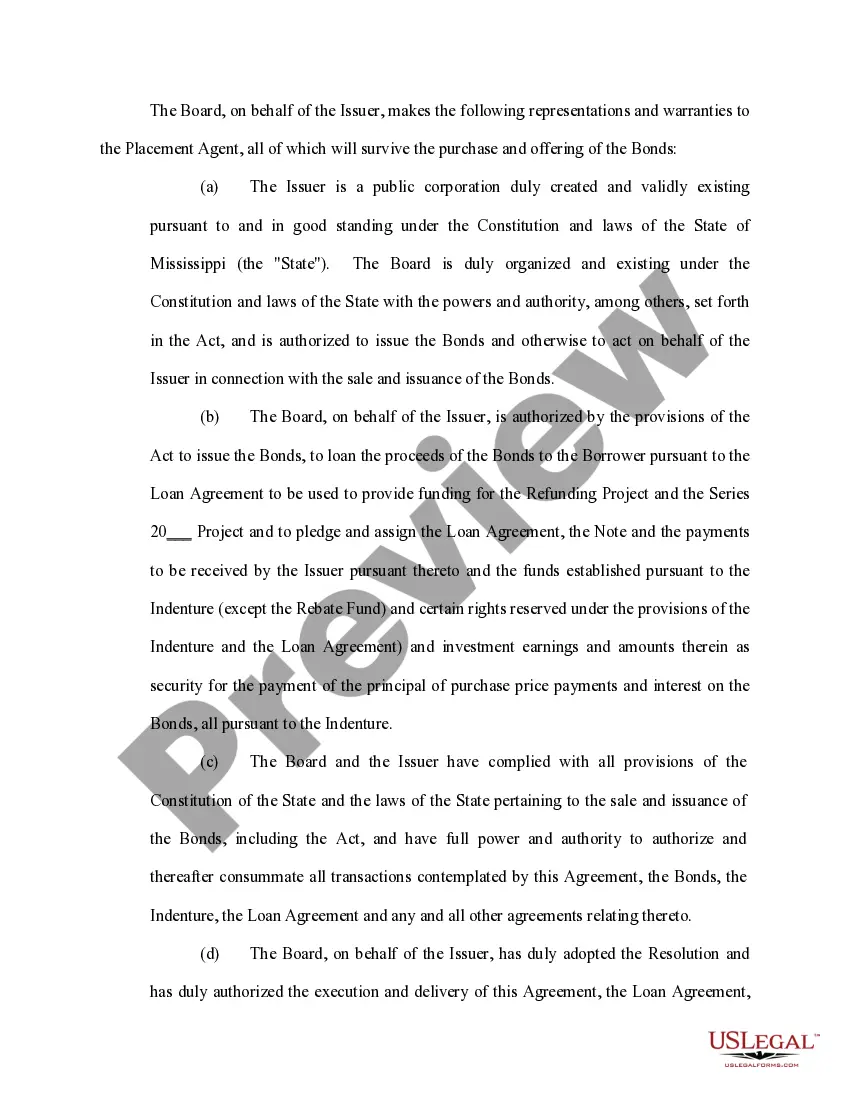
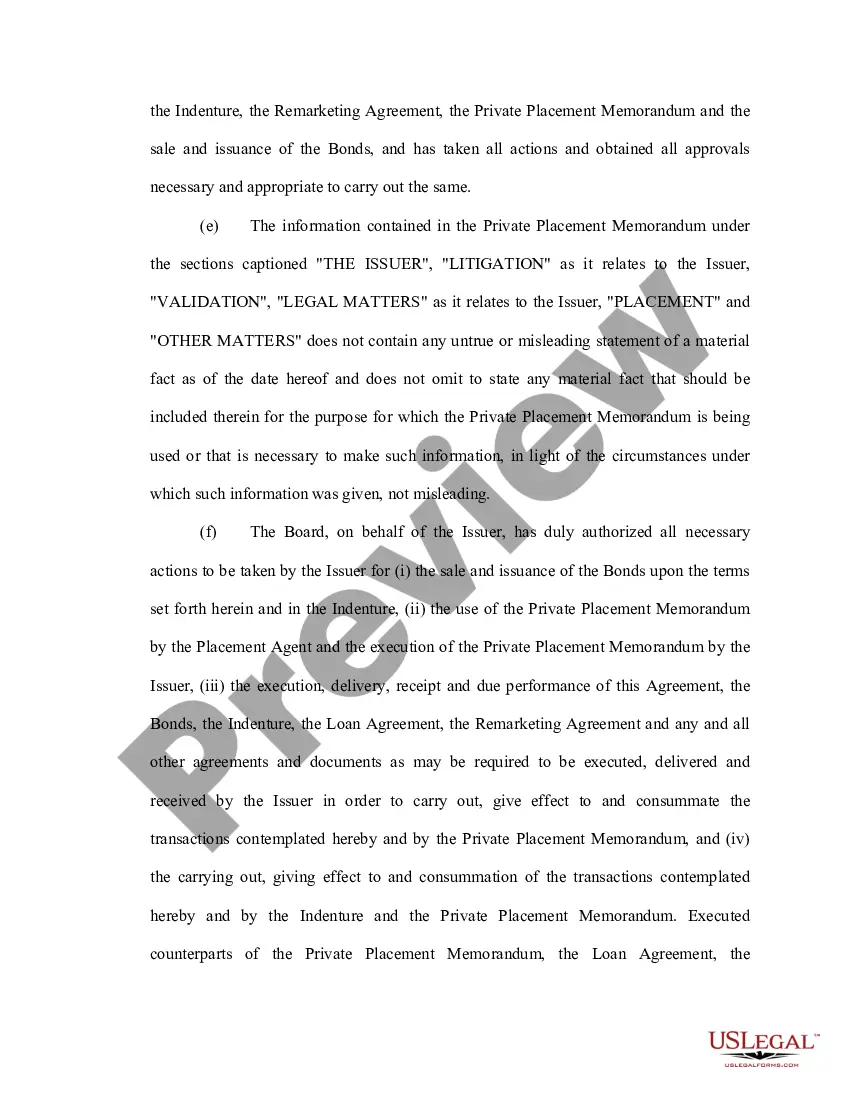



Get your form ready online
Our built-in tools help you complete, sign, share, and store your documents in one place.
Built-in online Word editor
Make edits, fill in missing information, and update formatting in US Legal Forms—just like you would in MS Word.
Export easily
Download a copy, print it, send it by email, or mail it via USPS—whatever works best for your next step.
E-sign your document
Sign and collect signatures with our SignNow integration. Send to multiple recipients, set reminders, and more. Go Premium to unlock E-Sign.
Notarize online 24/7
If this form requires notarization, complete it online through a secure video call—no need to meet a notary in person or wait for an appointment.
Store your document securely
We protect your documents and personal data by following strict security and privacy standards.
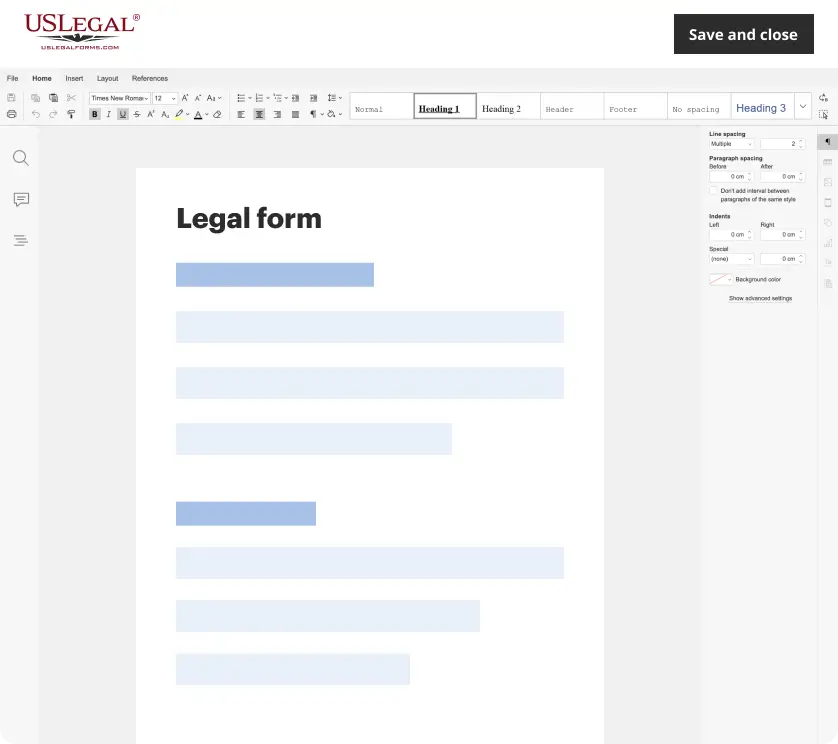
Make edits, fill in missing information, and update formatting in US Legal Forms—just like you would in MS Word.
Download a copy, print it, send it by email, or mail it via USPS—whatever works best for your next step.
Sign and collect signatures with our SignNow integration. Send to multiple recipients, set reminders, and more. Go Premium to unlock E-Sign.

If this form requires notarization, complete it online through a secure video call—no need to meet a notary in person or wait for an appointment.
We protect your documents and personal data by following strict security and privacy standards.
Looking for another form?









How to fill out Bond Placement Agreement?
If you wish to complete, obtain, or print authentic documents web templates, utilize US Legal Forms, the primary compilation of authentic forms available online.
Employ the site’s straightforward and user-friendly search to locate the documents you require. Numerous templates for business and personal purposes are categorized by types and states, or keywords.
Use US Legal Forms to find the Georgia Bond placement agreement within a few clicks.
Step 5. Complete the transaction. You can use your credit card or PayPal account to finalize the deal.
Step 6. Choose the format of your legal form and download it to your device. Step 7. Finalize, modify, and print or sign the Georgia Bond placement agreement. Every legal document template you purchase is yours permanently. You will have access to every form you downloaded in your account. Click on the My documents section and select a form to print or download again. Compete and download, and print the Georgia Bond placement agreement with US Legal Forms. There are thousands of professional and state-specific forms you can use for your business or personal needs.
- If you are already a US Legal Forms customer, sign in to your account and click on the Download button to acquire the Georgia Bond placement agreement.
- You can also access forms you previously downloaded in the My documents section of your account.
- If you are using US Legal Forms for the first time, follow the steps outlined below.
- Step 1. Ensure you have selected the form for your correct city/state.
- Step 2. Use the Review option to examine the form’s details. Do not forget to read the description.
- Step 3. If you are dissatisfied with the form, use the Search field at the top of the screen to find other types of your legal form template.
- Step 4. Once you have found the form you need, click the Purchase now button. Select the pricing plan you prefer and enter your credentials to register for an account.
Form popularity
FAQ
Secured bonds give investors a constant cash flow to manage their cash flow better because they are asset-backed and generate regular income. Even newer businesses and governments can raise money with secured bonds despite lacking market credibility.
What Is a Secured Bond? A secured bond is a type of investment in debt that is secured by a specific asset owned by the issuer. The asset serves as collateral for the loan. If the issuer defaults on the bond, the title to the asset is transferred to the bondholders.
Covered bonds provide dual recourse, unlike secured corporate bonds that only offer recourse against the issuer. This means that investors have a first recourse against the issuer and a bankruptcy-protected recourse against the issuer's assets (the cover pool).
Bonds are issued by governments and corporations when they want to raise money. By buying a bond, you're giving the issuer a loan, and they agree to pay you back the face value of the loan on a specific date, and to pay you periodic interest payments along the way, usually twice a year.
Secured bonds are secured with collateral, e.g. by an asset or assets of commensurate value. Unsecured bonds are not secured with collateral, but investors who buy these bonds put their faith in the creditworthiness of the issuing company.
When a bond is guaranteed by a bank or insurer, interest and principal will be paid even if the issuing company defaults. The guarantee protects investors against potentially significant losses. Those who own debt that is secured by collateral get compensated before those holding bonds that aren't backed by collateral.
A bond is simply a loan taken out by a company. Instead of going to a bank, the company gets the money from investors who buy its bonds. In exchange for the capital, the company pays an interest coupon, which is the annual interest rate paid on a bond expressed as a percentage of the face value.