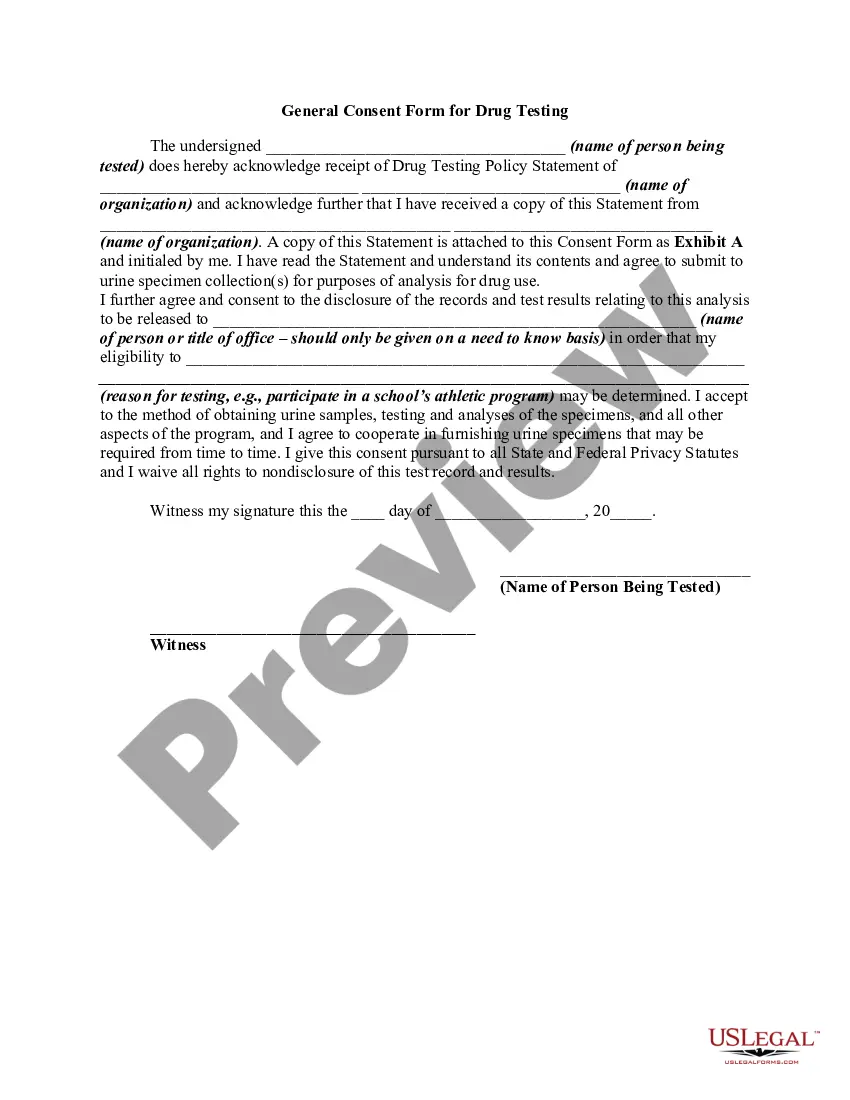
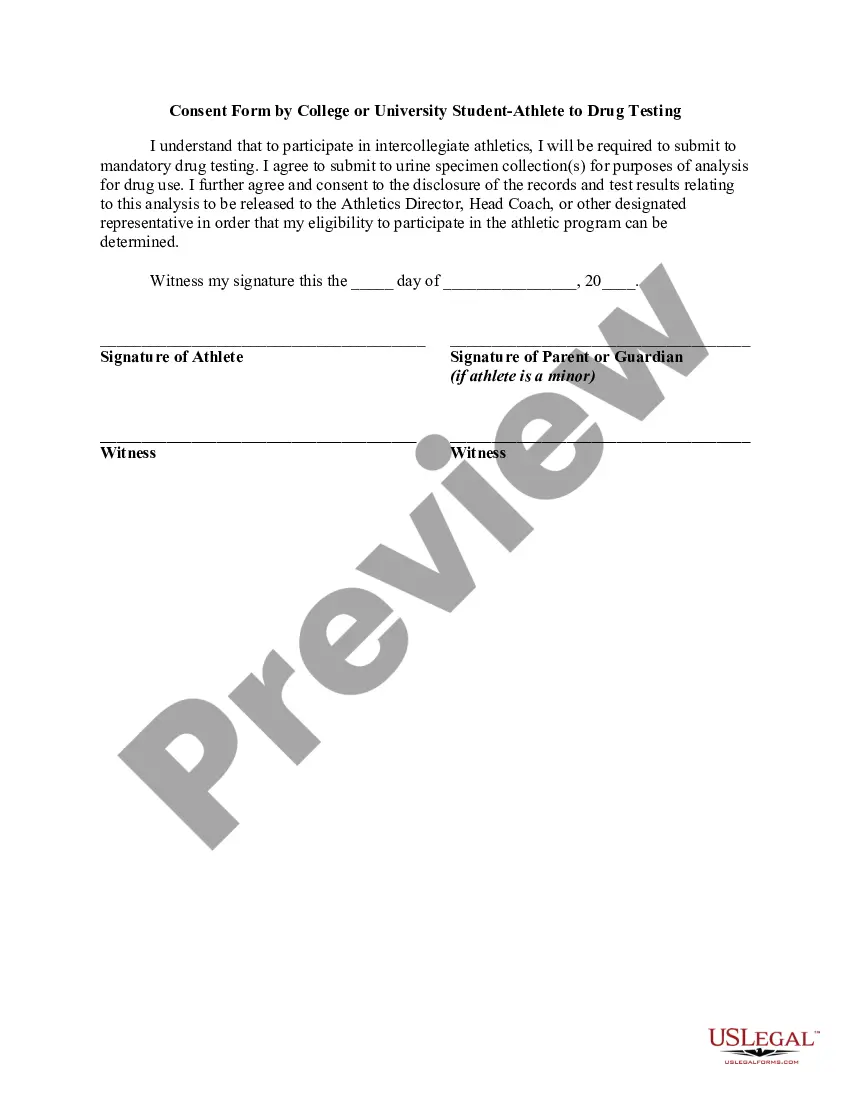
Intercollegiate student-athletes must sign a consent form in order to play college sports under the National Collegiate Athletic Association's policies.
Georgia Drug-Testing Consent for NCAA Division III Athletics
Category:
State:
Multi-State
Control #:
US-01718BG
Format:
Word;
Rich Text
Instant download
Description
Free preview
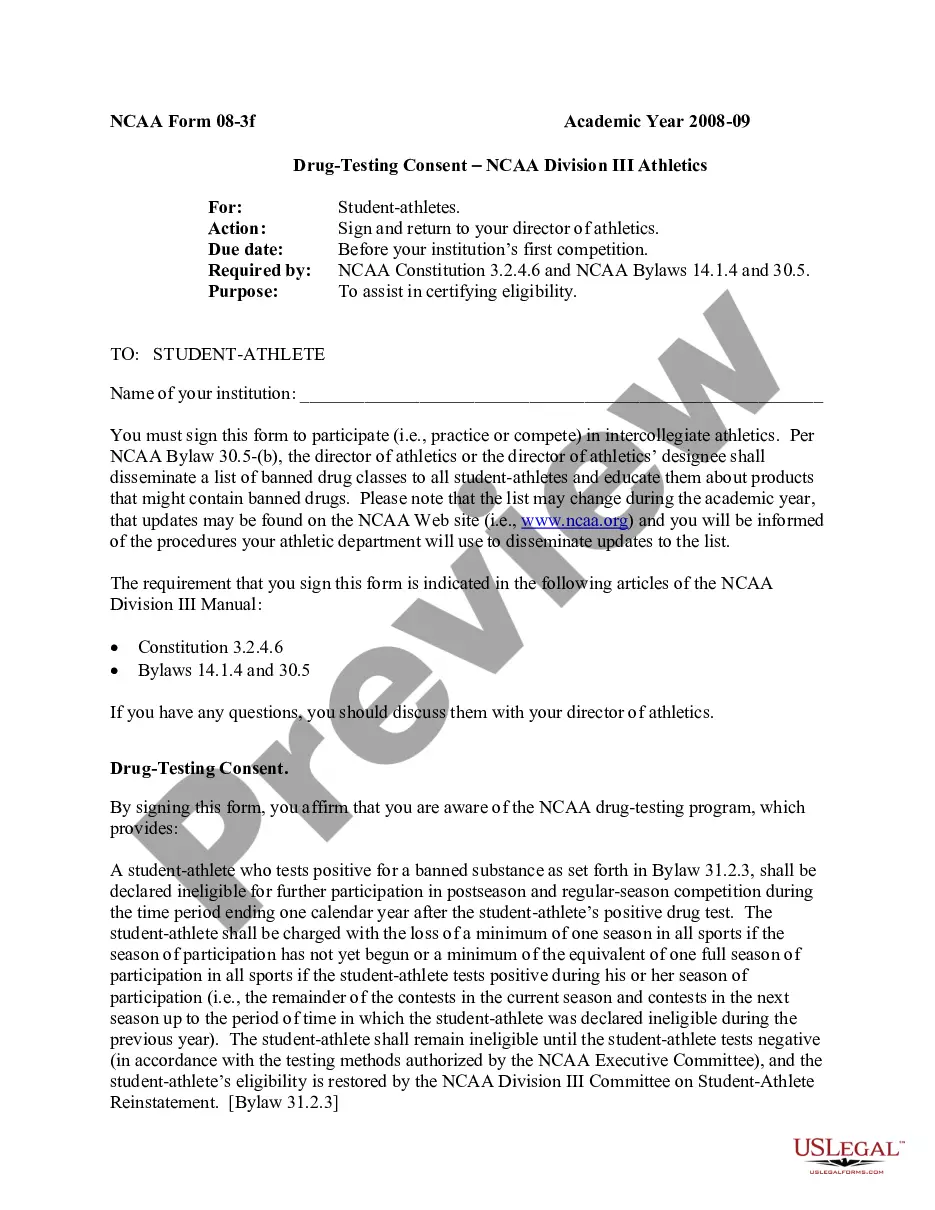
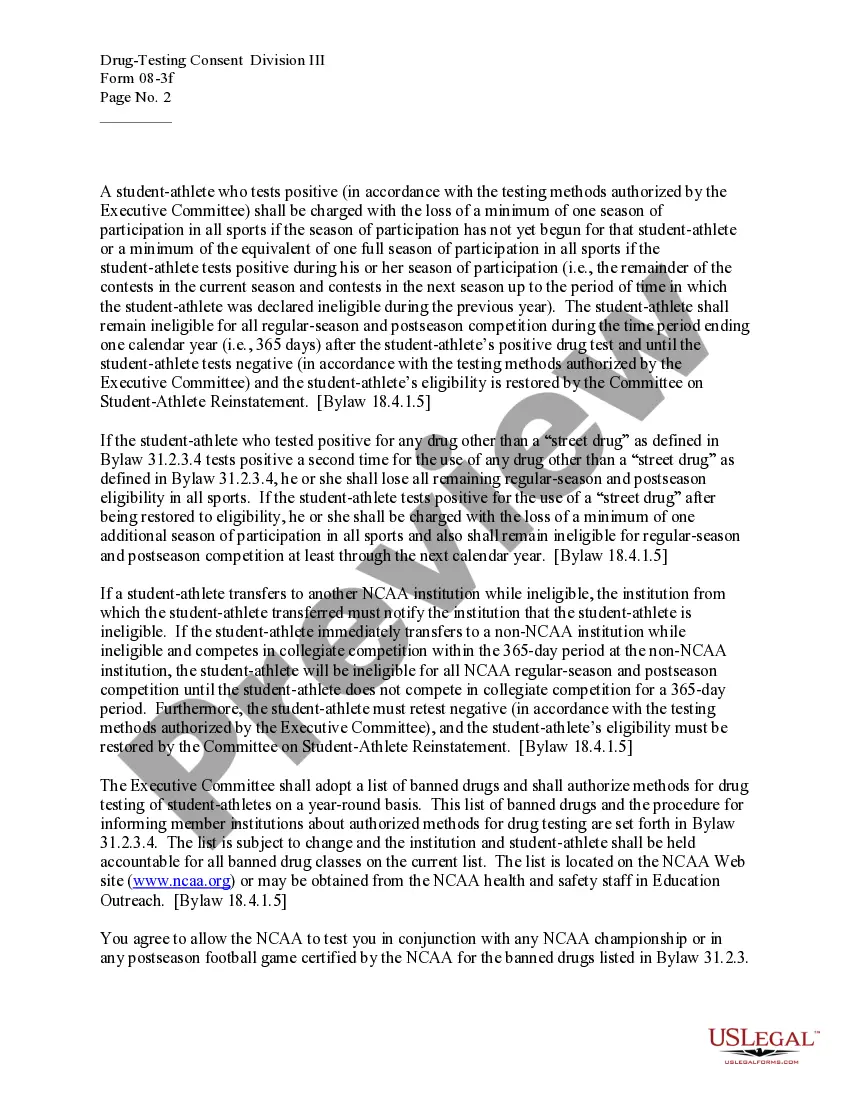
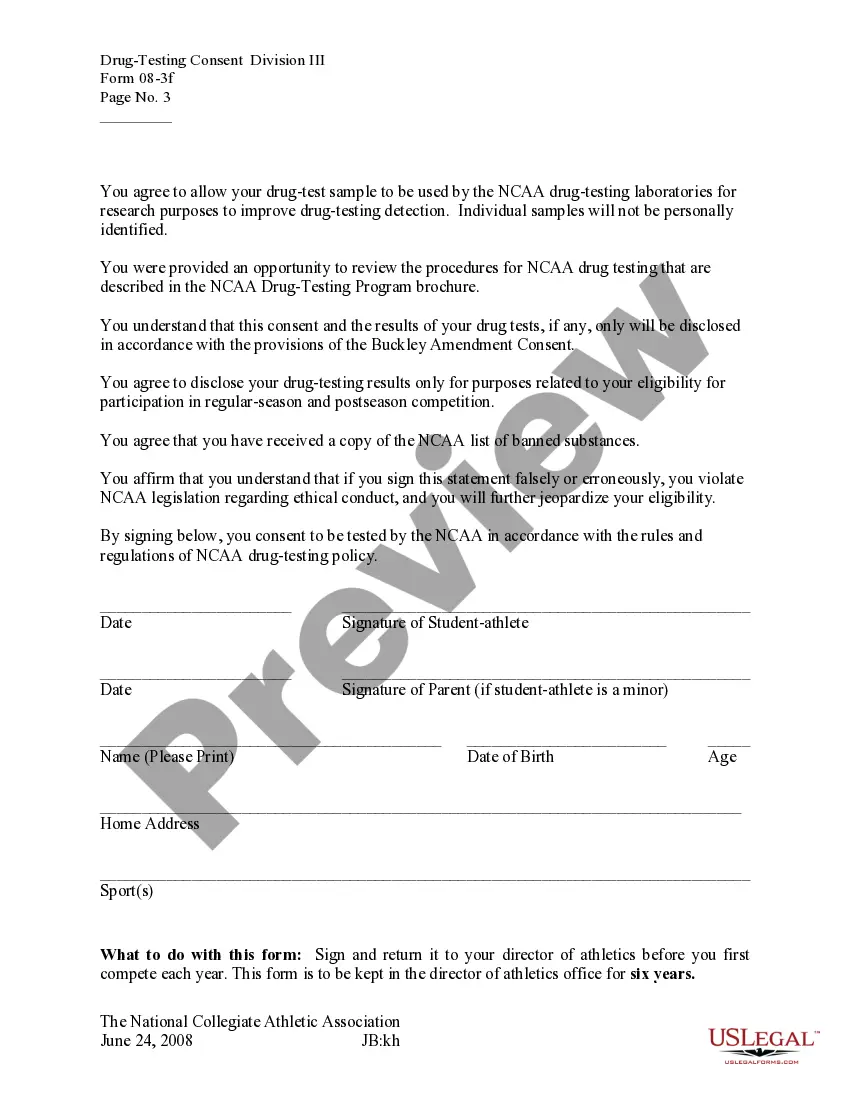


How to fill out Drug-Testing Consent For NCAA Division III Athletics?
US Legal Forms - one of the largest repositories of legal documents in the United States - offers a variety of legal form templates that you can purchase or print.
By using the website, you can access thousands of forms for business and personal purposes, organized by categories, regions, or keywords. You can obtain the latest versions of forms such as the Georgia Drug-Testing Consent for NCAA Division III Athletics within seconds.
If you have a subscription, Log In to download the Georgia Drug-Testing Consent for NCAA Division III Athletics from the US Legal Forms library. The Download button will appear on every form you view. You can access all previously downloaded forms in the My documents section of your account.
Process the transaction. Use your credit card or PayPal account to complete the transaction.
Select the format and download the form to your device. Make edits. Fill out, modify, and print and sign the downloaded Georgia Drug-Testing Consent for NCAA Division III Athletics. Every template you add to your account does not expire and is yours permanently. So, if you want to download or print another copy, simply go to the My documents section and click on the form you need. Access the Georgia Drug-Testing Consent for NCAA Division III Athletics with US Legal Forms, one of the largest collections of legal document templates. Utilize thousands of professional and state-specific templates that meet your business or personal requirements.
- Ensure you've selected the correct form for your location/state.
- Click the Review button to examine the form's contents.
- Read the form details to confirm that you've chosen the correct form.
- If the form doesn’t meet your needs, use the Search field at the top of the screen to find the one that does.
- If you are satisfied with the form, confirm your selection by clicking the Buy now button.
- Then, choose the payment plan you prefer and provide your details to create an account.
Form popularity
FAQ
Yes, you can drug test student-athletes under the guidelines of Georgia Drug-Testing Consent for NCAA Division III Athletics. These regulations allow institutions to ensure fairness and safety in sports. By implementing a drug-testing protocol, schools can support the well-being of their athletes and promote healthy competition. For more information, consider exploring the resources available on the US Legal Forms platform to navigate the legal aspects of consent effectively.
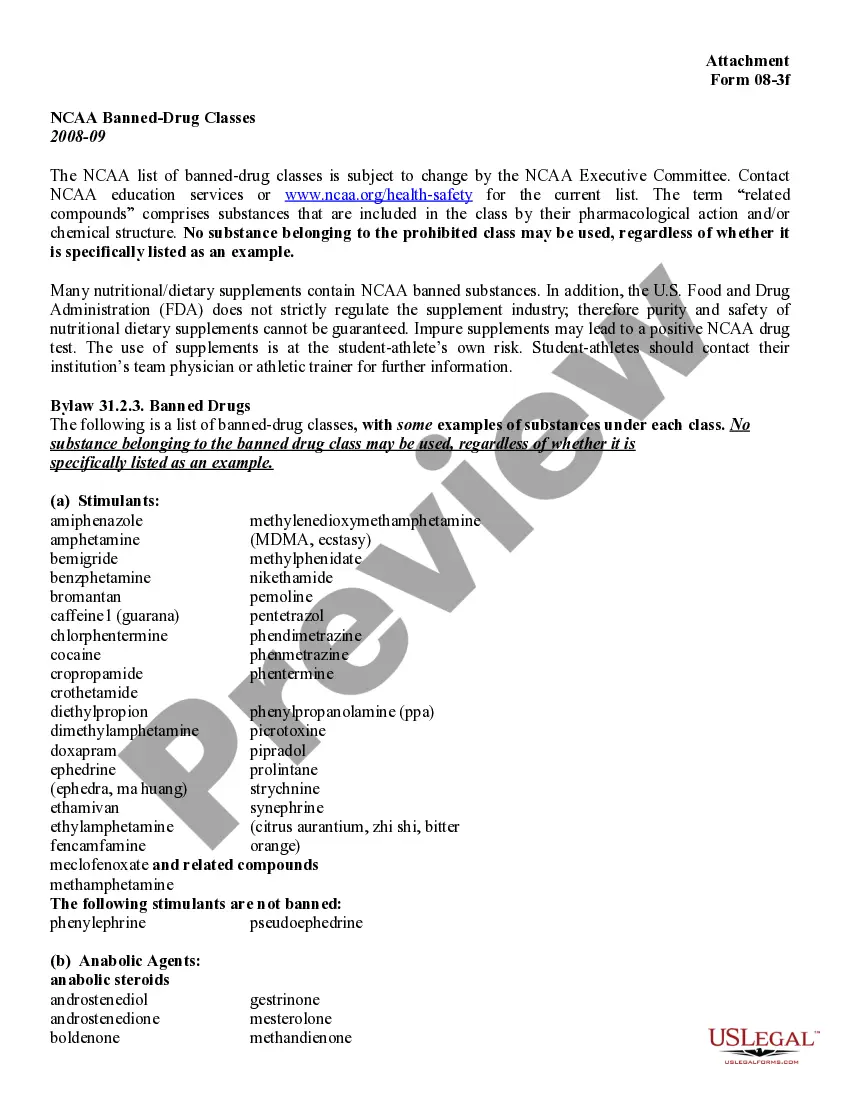
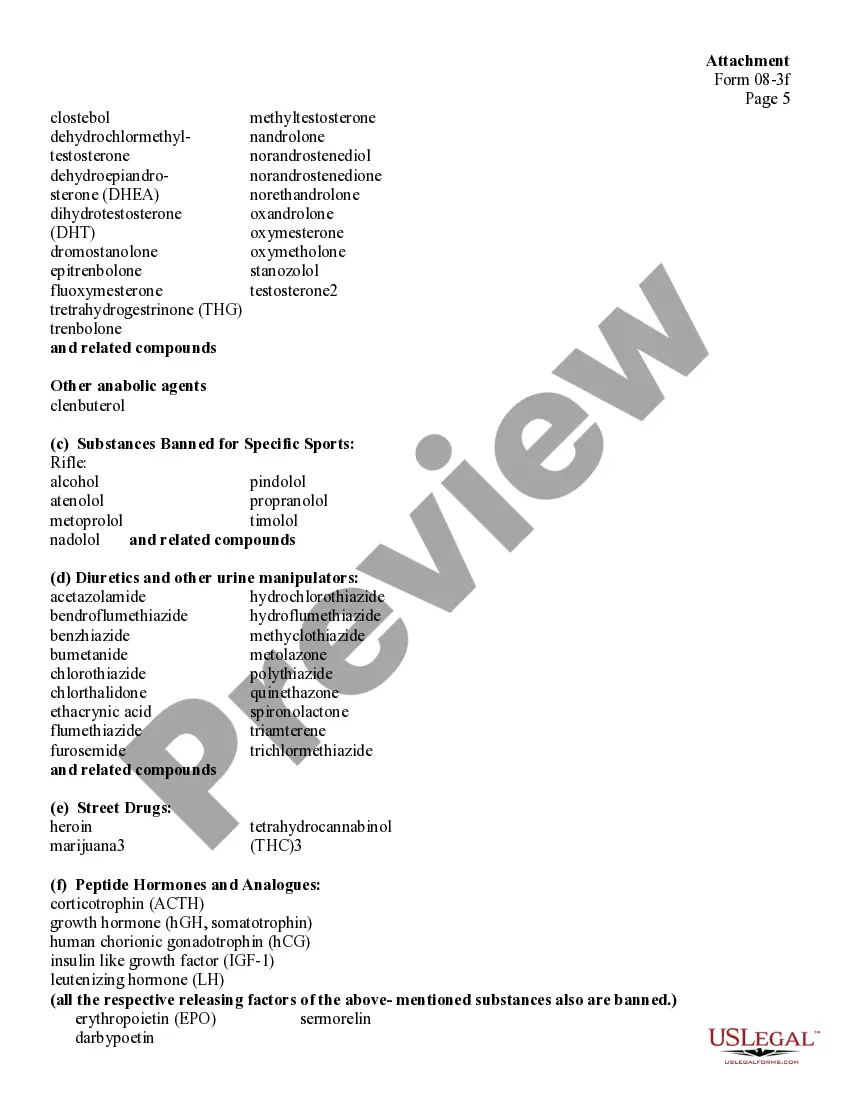
The NCAA prohibits a variety of substances, including anabolic steroids, stimulants, and certain recreational drugs. These substances are recognized for their potential to enhance performance or provide unfair advantages. The Georgia Drug-Testing Consent for NCAA Division III Athletics assists athletes in identifying banned drugs, helping them stay compliant.
A drug test consent form is a document that athletes must sign, agreeing to the terms of drug testing as mandated by the NCAA. This form outlines the athlete's rights, the testing procedures, and the substances being monitored. The Georgia Drug-Testing Consent for NCAA Division III Athletics simplifies this process, ensuring athletes understand their consent requirements.
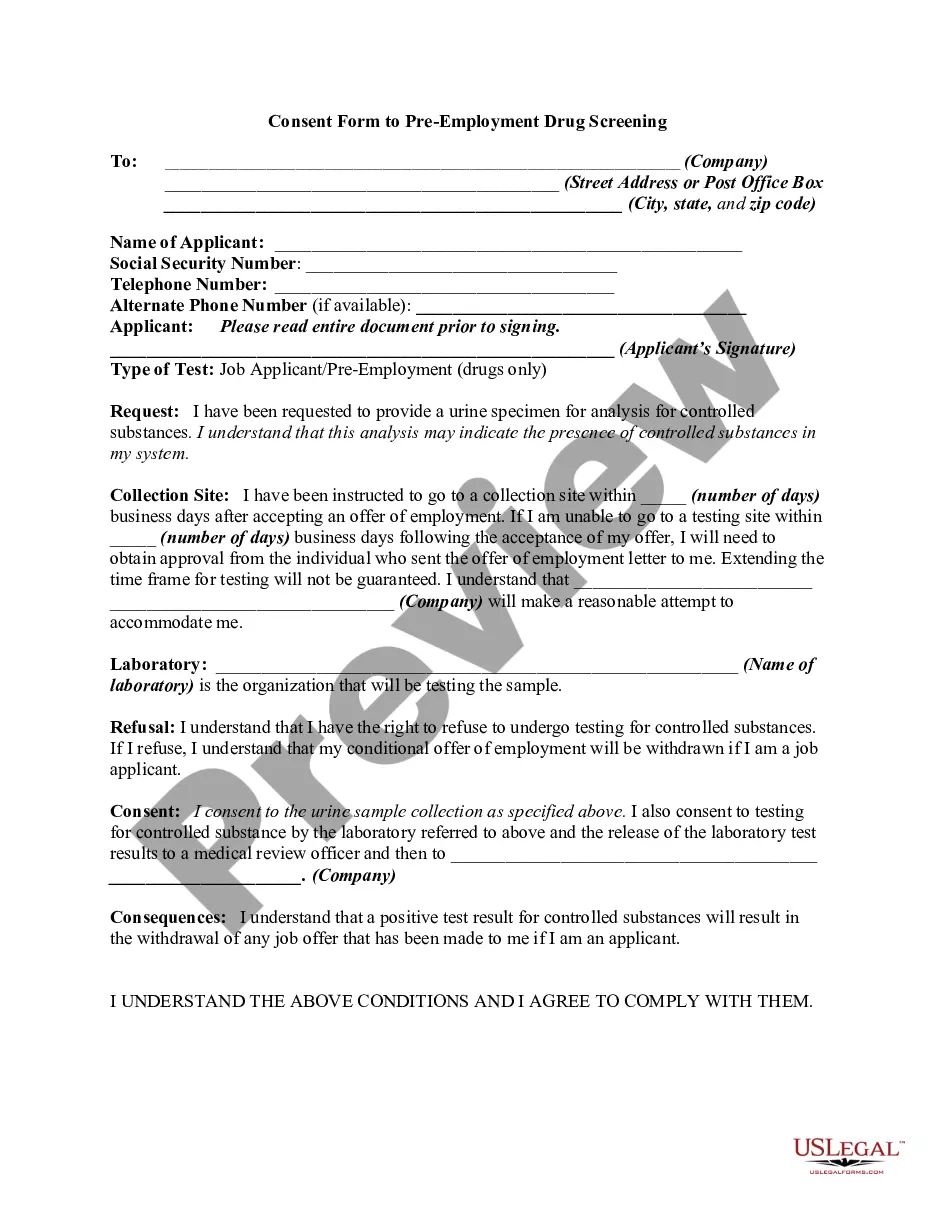
Yes, NCAA Division III athletes are subject to drug testing, although the frequency might differ compared to other divisions. Random tests can occur throughout the season during competitions and off-season training. Utilizing the Georgia Drug-Testing Consent for NCAA Division III Athletics provides clarity on testing protocols relevant to these athletes.
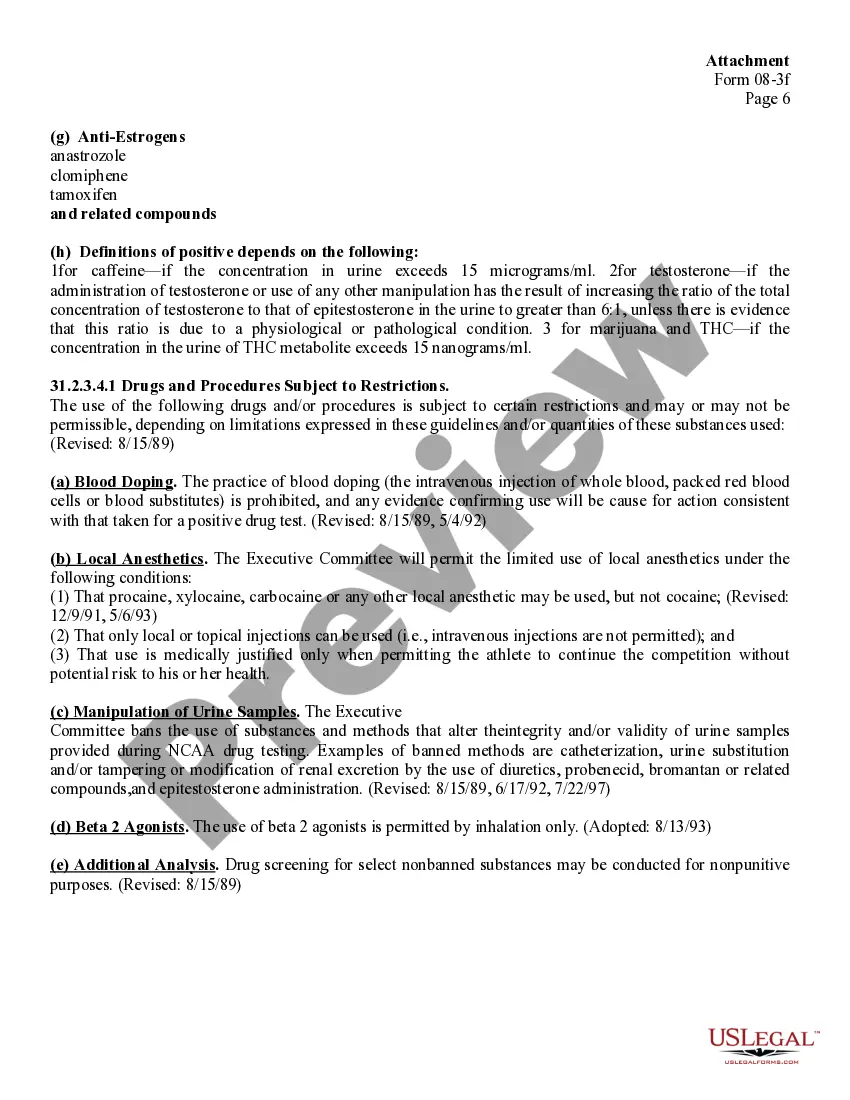
NCAA rules surrounding drug testing are designed to maintain a level playing field and to promote athlete safety. These regulations specify when tests occur, the substances being tested for, and the consequences of failing a test. Athletes engaging with the Georgia Drug-Testing Consent for NCAA Division III Athletics can easily navigate these rules and ensure compliance.
The NCAA tests for a range of banned substances including steroids, stimulants, and other performance-enhancing drugs. By maintaining a strict testing protocol, the NCAA aims to ensure fair competition among athletes. The Georgia Drug-Testing Consent for NCAA Division III Athletics plays a key role in informing athletes about these substances and their impact.
When athletes test positive for drugs, they may receive disciplinary action, which could include being barred from participation in events. The NCAA's guidelines are clear, allowing for a consistent approach to such penalties. The Georgia Drug-Testing Consent for NCAA Division III Athletics helps clarify what to expect if an athlete encounters this situation, providing peace of mind.
Failing a drug test in the NCAA can lead to serious consequences, including suspension from competition. Depending on the severity of the offense, an athlete might face additional penalties. The Georgia Drug-Testing Consent for NCAA Division III Athletics outlines the specific repercussions and procedures following a failed test, ensuring athletes are aware of their rights and responsibilities.
Vitamin D3 is not banned by the NCAA, and athletes can take it without fear of violating the rules. It is essential for overall health and can support athletes in maintaining their performance. However, when navigating supplements, it's beneficial to consider how this relates to Georgia Drug-Testing Consent for NCAA Division III Athletics to avoid any misunderstandings.
Yes, college student-athletes can be subjected to drug testing, particularly those involved in NCAA programs. Testing aims to uphold fair play and safe sporting practices across all divisions. Understanding Georgia Drug-Testing Consent for NCAA Division III Athletics can help athletes be more prepared for any potential testing protocols.