Georgia Anatomical Gift Act Donation
Understanding this form
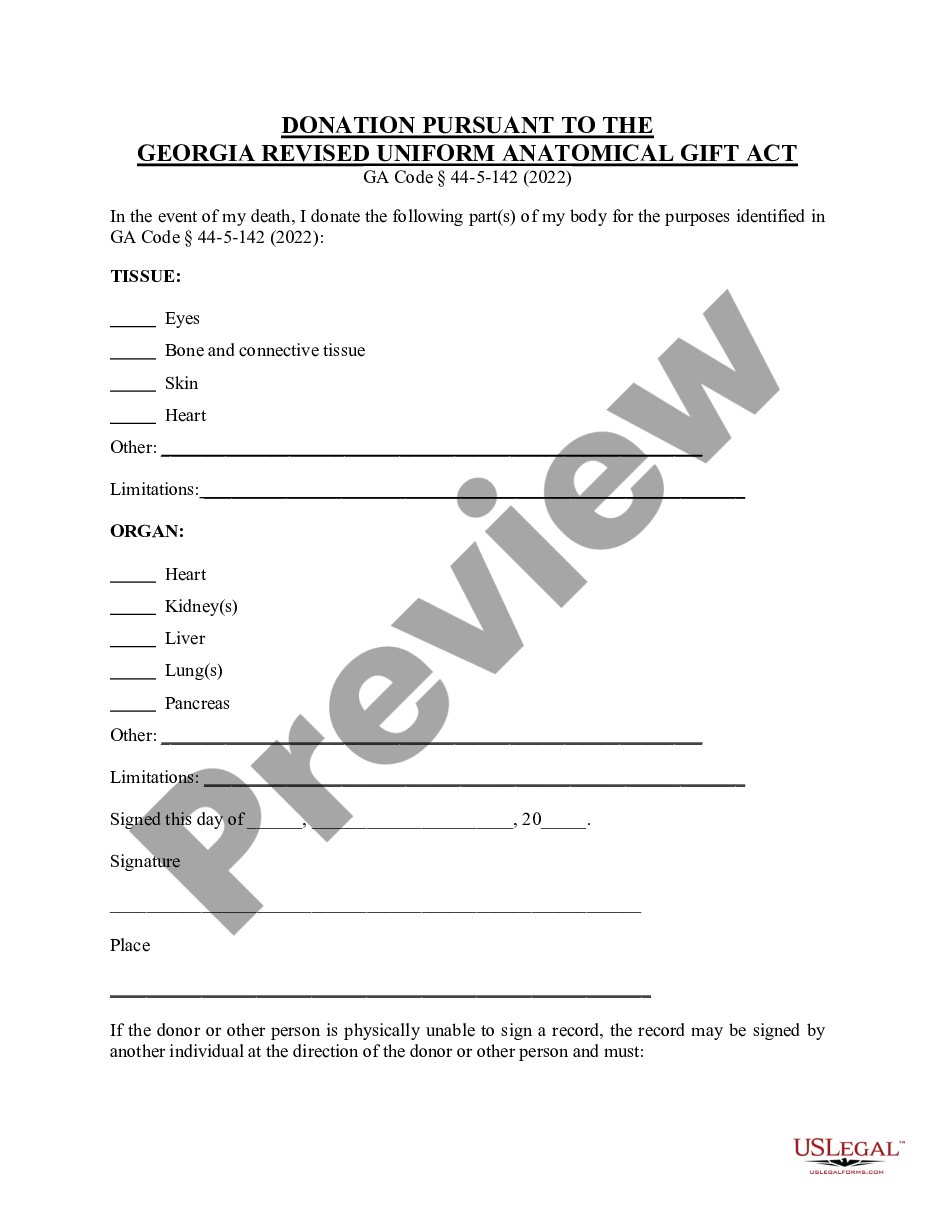
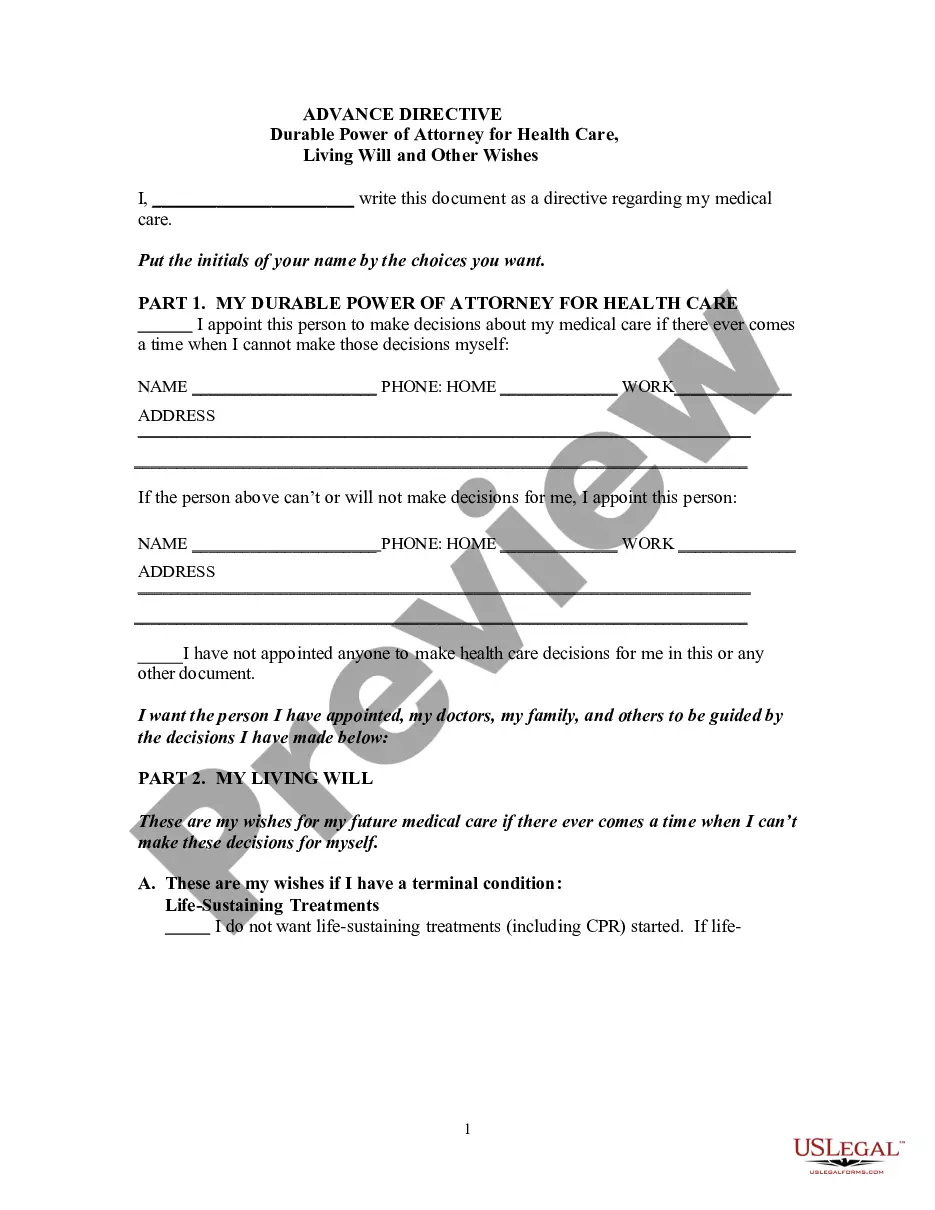
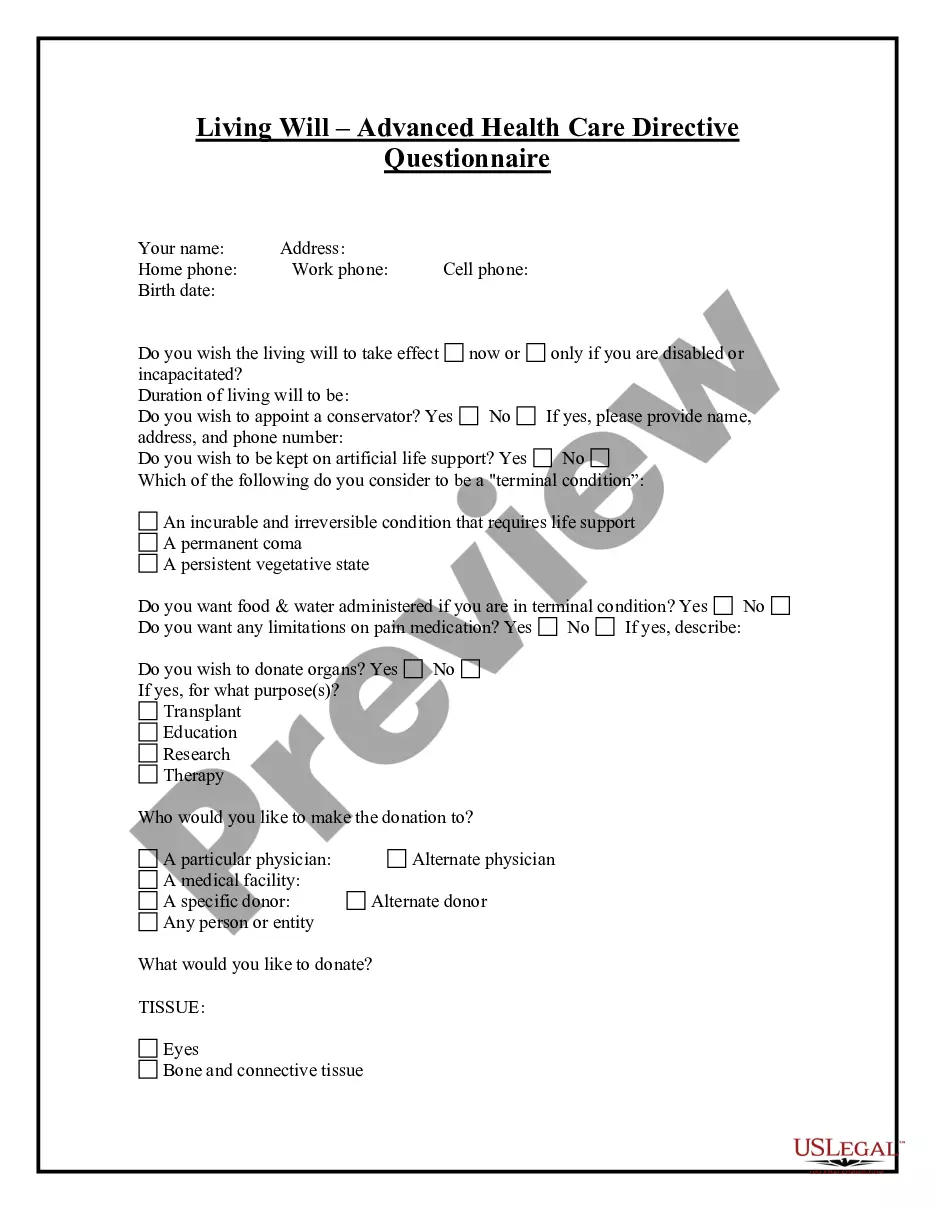
The Anatomical Gift Act Donation form allows individuals to specify which body parts and organs they wish to donate upon death. Unlike other estate planning documents, this form specifically addresses the intentions regarding anatomical gifts, ensuring that one's wishes are known and legally recognized. It is vital for individuals who want to make a donation, whether in whole or in part, to have this documented properly.
Key components of this form
- Donor's signature: Must be signed by the individual donating their organs.
- Date: The date of signing needs to be clearly indicated.
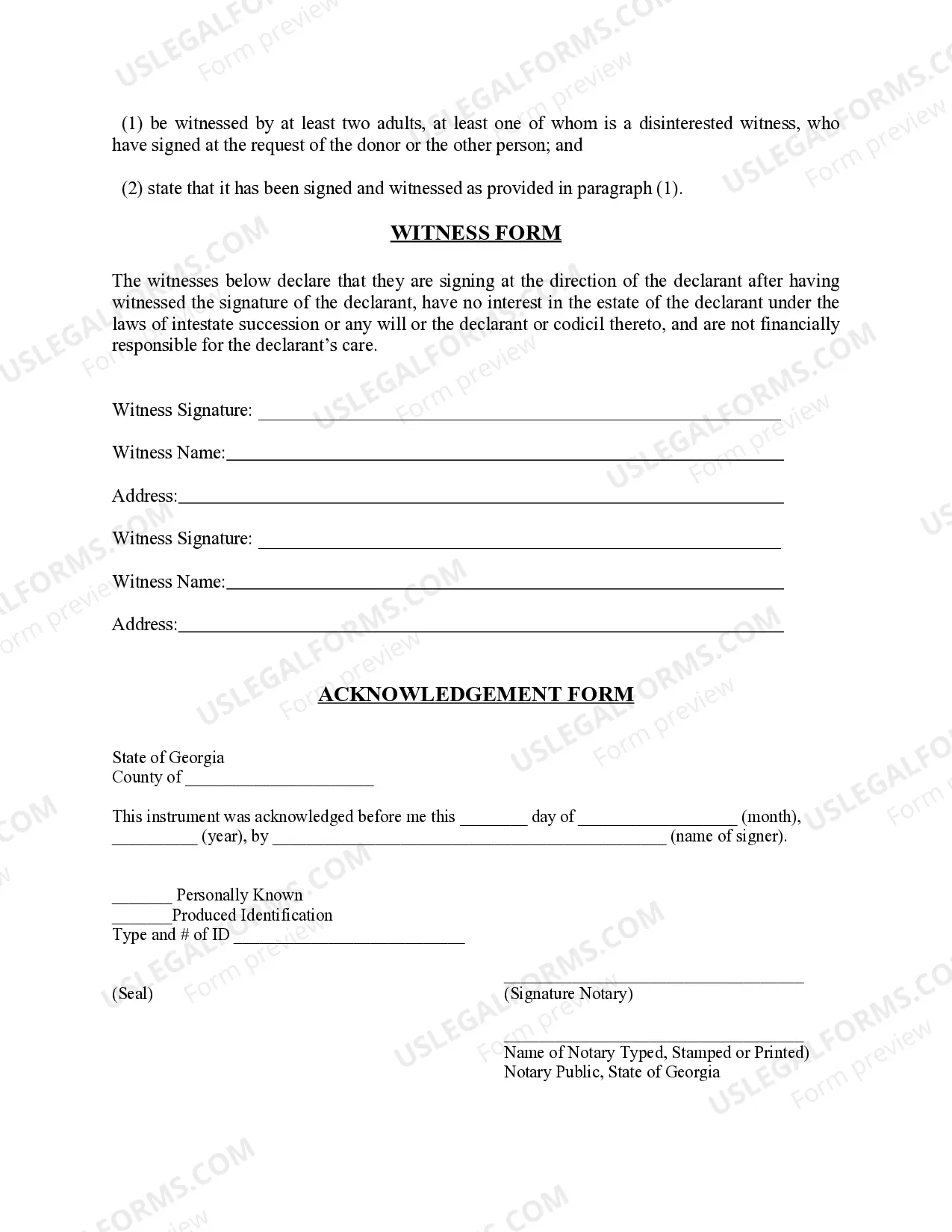
- Witness requirements: At least two witnesses are needed, one of whom must be disinterested.
- Place of signing: The location where the form is signed.
- Notarization: The form must be notarized to ensure legal validity.
When to use this document
This form is used when an individual decides to make specific anatomical donations after their death. It is particularly important for those who wish to ensure their wishes regarding organ and tissue donation are followed. Common scenarios for use include individuals wanting to contribute to medical science, help others in need of transplants, or leave a personal legacy.
Intended users of this form
- Individuals wishing to donate their organs or tissues after death.
- Family members or legal guardians arranging donations on behalf of someone else.
- People who want to clarify their intentions regarding anatomical gifts.
How to complete this form
- Enter your full name and other identifying information in the designated fields.
- Clearly specify which organs or body parts you wish to donate.
- Find two adult witnesses to sign the document, ensuring one is disinterested.
- Sign and date the form in the presence of the witnesses and a notary public.
- Keep a copy of the completed form for your records and ensure your family is aware of your wishes.
Notarization requirements for this form
In most cases, this form does not require notarization. However, some jurisdictions or signing circumstances might. US Legal Forms offers online notarization powered by Notarize, accessible 24/7 for a quick, remote process.
Get your form ready online
Our built-in tools help you complete, sign, share, and store your documents in one place.
Make edits, fill in missing information, and update formatting in US Legal Forms—just like you would in MS Word.
Download a copy, print it, send it by email, or mail it via USPS—whatever works best for your next step.
Sign and collect signatures with our SignNow integration. Send to multiple recipients, set reminders, and more. Go Premium to unlock E-Sign.
If this form requires notarization, complete it online through a secure video call—no need to meet a notary in person or wait for an appointment.
We protect your documents and personal data by following strict security and privacy standards.

Make edits, fill in missing information, and update formatting in US Legal Forms—just like you would in MS Word.

Download a copy, print it, send it by email, or mail it via USPS—whatever works best for your next step.

Sign and collect signatures with our SignNow integration. Send to multiple recipients, set reminders, and more. Go Premium to unlock E-Sign.

If this form requires notarization, complete it online through a secure video call—no need to meet a notary in person or wait for an appointment.

We protect your documents and personal data by following strict security and privacy standards.
Common mistakes to avoid
- Not having enough witnesses present when signing the form.
- Failing to notarize the form, which may render it invalid.
- Not specifying the body parts or organs clearly, leading to ambiguity.
- Not informing family members about the existence of the form.
Benefits of using this form online
- Immediate access to a legally vetted document tailored to your needs.
- Ability to easily edit and customize the form to reflect your specific wishes.
- Convenience of downloading and printing at your convenience.
- Ensures that you have a clear and organized way to communicate your anatomical donation intentions.
Looking for another form?


Form popularity
FAQ
The process for donating an organ is straightforward and organized under the Georgia Anatomical Gift Act Donation. Once a donor's intent is confirmed, medical professionals evaluate the donor's health and viability of the organs. Following this assessment, the organs are surgically removed in a controlled environment, ensuring a respectful process for both the donor and recipients involved.
Recipients of organ donations are chosen based on a variety of factors, including medical urgency, compatibility with the donor's organs, and overall health. The Georgia Anatomical Gift Act Donation ensures a fair and ethical selection process, utilizing databases and algorithms to match donors and recipients effectively. This approach helps save lives and brings hope to those in need.
Organ donations under the Georgia Anatomical Gift Act Donation process involve several critical steps. First, potential donors can register their intent to donate through state registries or indicate it on their driver's license. Additionally, healthcare professionals work closely with organ procurement organizations to facilitate the donation process efficiently.
To donate your body to science under the Georgia Anatomical Gift Act Donation, you need to complete a donation form provided by the institution you choose. This paperwork usually requires your signature and may need witnesses to validate your intent. Ensuring you have this paperwork in order gives your loved ones clarity and facilitates the process while respecting your wishes.
Donating your body to science in Georgia typically involves contacting a local medical school or research institution that participates in the Georgia Anatomical Gift Act Donation. Each institution has its own specific guidelines, but they often provide resources to guide you through your decision. By making this choice, you contribute to medical education and research, impacting future generations positively.
To register as an organ donor in Georgia, visit the Georgia Department of Driver Services or use the online donor registry. Completing this simple process ensures your wishes are honored in the context of the Georgia Anatomical Gift Act Donation. You can indicate your decision regarding organ donation on your driver's license as well. Remember, your choice can save lives!
Several factors may disqualify an individual from donating their body to science under the Georgia Anatomical Gift Act Donation. Common disqualifications include certain medical conditions, infectious diseases, or a history of substance abuse. Additionally, age and body condition at the time of death can also play a role. It's important to consult with donation organizations to understand their specific criteria and ensure that your wishes can be fulfilled.
The anatomical gift law in Georgia provides the legal framework for making body donations for research and education. This law allows individuals to make an anatomical gift through a variety of means, such as a will or a donor card. It ensures that your intentions for Georgia Anatomical Gift Act Donation are honored after your passing. By understanding this law, you can make informed decisions about how your body can contribute to science and healthcare.
In Georgia, you have several options for donating your body to science. Many medical schools, research institutions, and nonprofit organizations accept anatomical donations, allowing for educational and medical advancements. To initiate the process, it's essential to contact these institutions directly and understand their requirements for Georgia Anatomical Gift Act Donation. Resources like USLegalForms can help you find the right place and guide you through the necessary paperwork.
The Anatomical Gift Act outlines the legal framework for organ and tissue donations in the U.S., including Georgia. This act allows individuals to donate their bodies or organs after death to benefit medical research, education, or transplant purposes. Understanding this act is crucial for anyone considering Georgia Anatomical Gift Act Donation, as it ensures their wishes are respected. Additionally, it provides guidelines for consent and the process of making a donation.