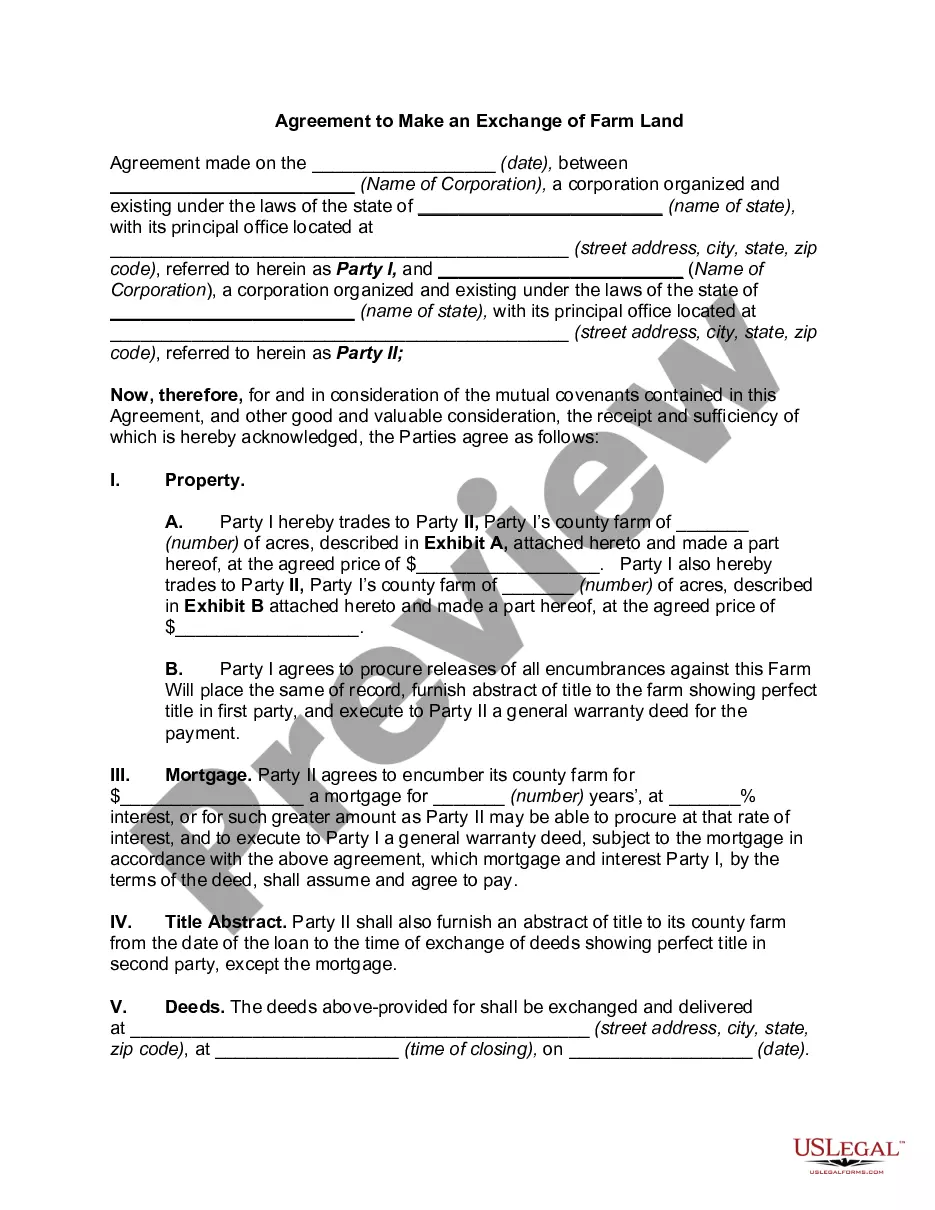
Georgia Petition for Legitimation and Transfer to Juvenile Court for Hearing
About this form
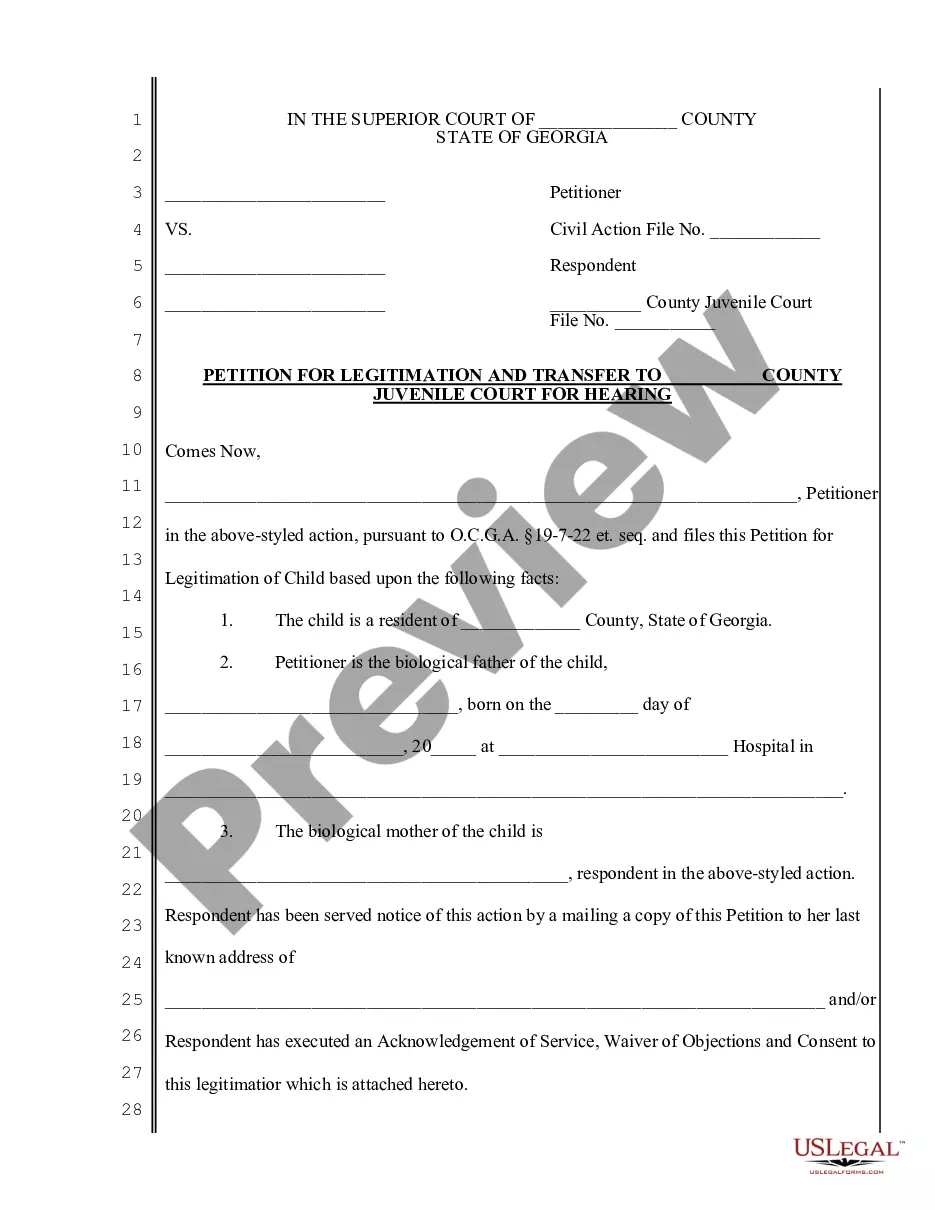
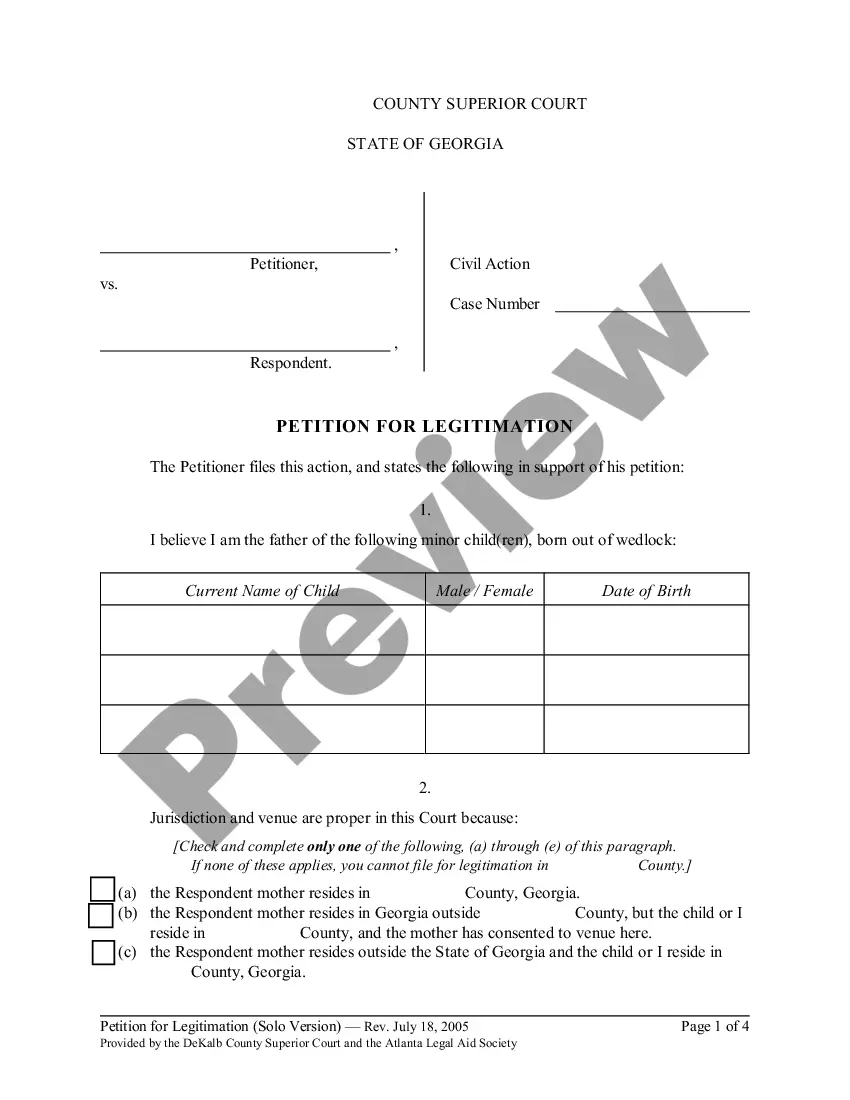
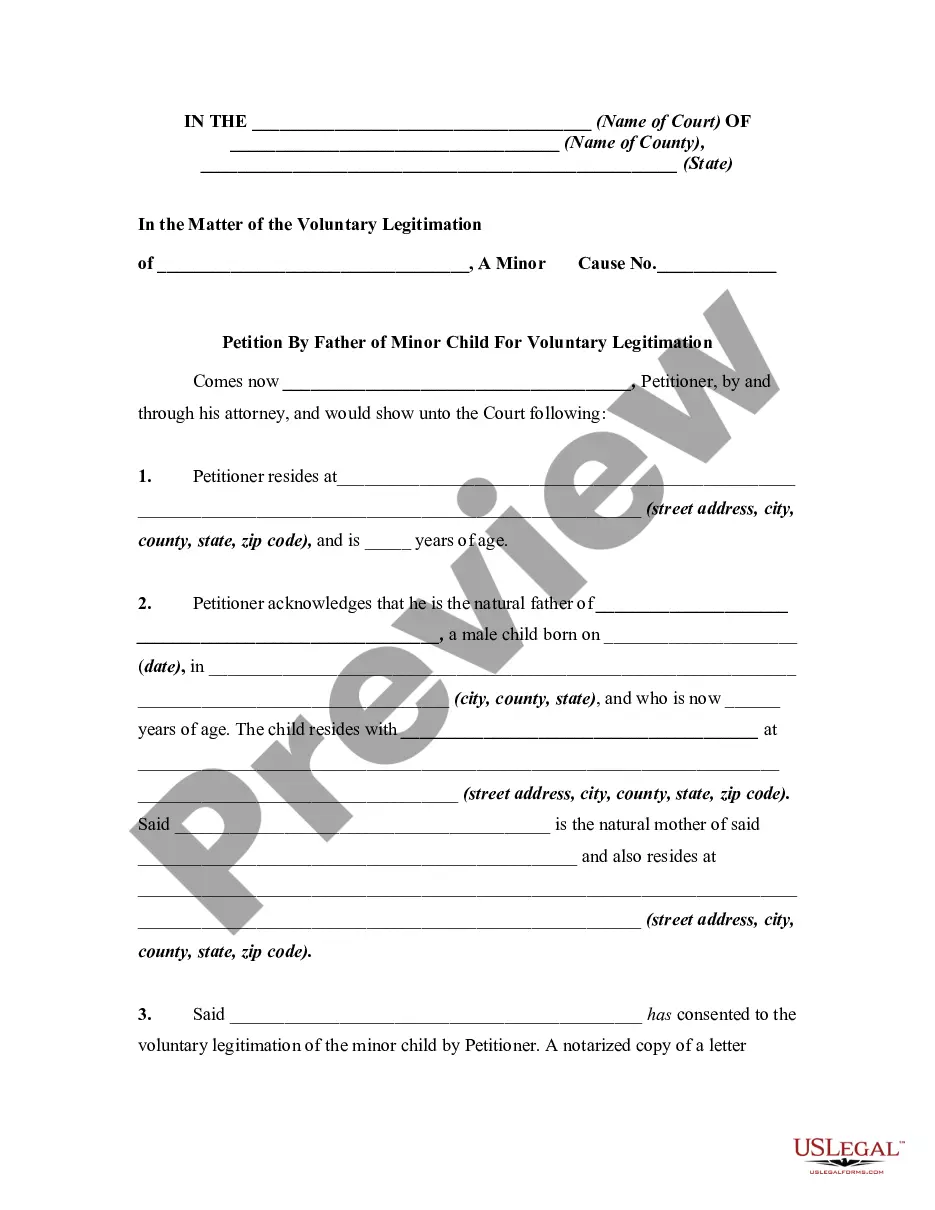
The Petition for Legitimation and Transfer to Juvenile Court for Hearing is a legal document used to request that a child's paternity be established in court. This form is distinct from other family law forms, as it specifically addresses the process of legitimation under Georgia law, enabling a biological father to secure legal rights and obligations regarding his child. By filing this petition, the father seeks to ensure that the child is recognized as legitimate, allowing for inheritance rights and other legal benefits.
What’s included in this form
- Identifying the petitioner and respondent, including their names and respective addresses.
- Details about the child, including name, date of birth, and place of birth.
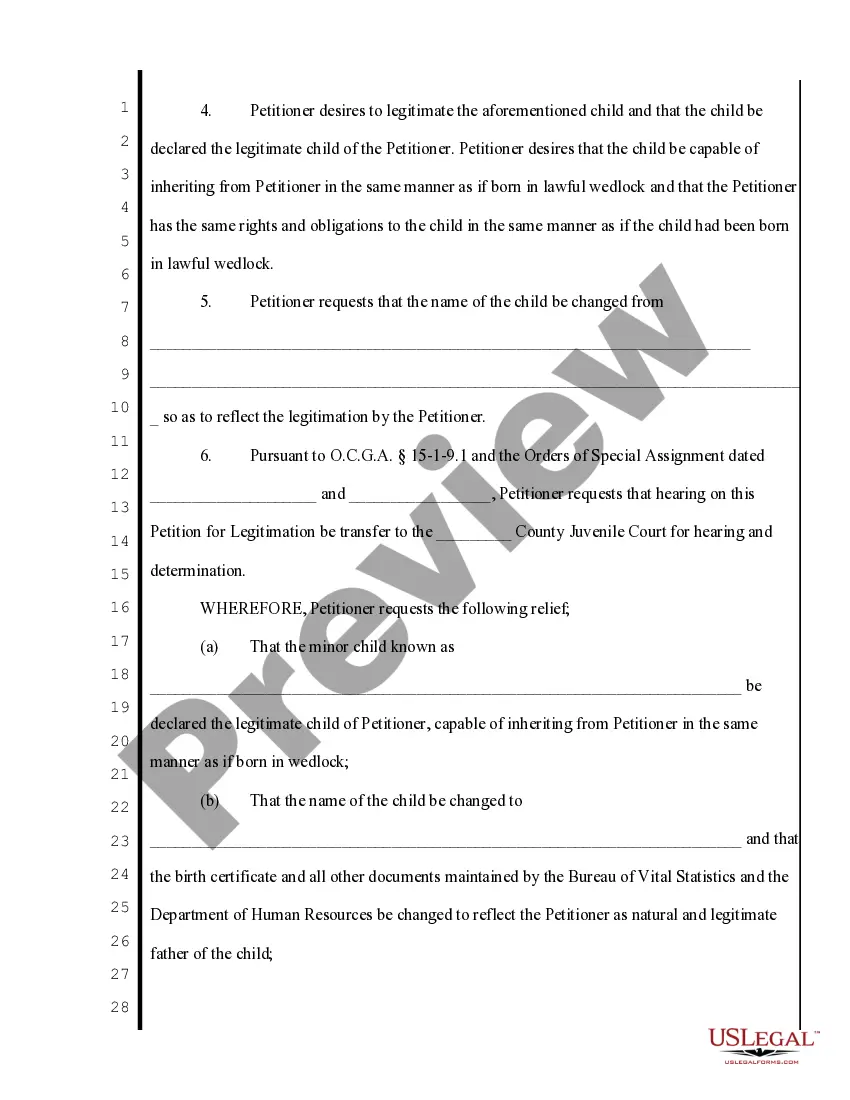
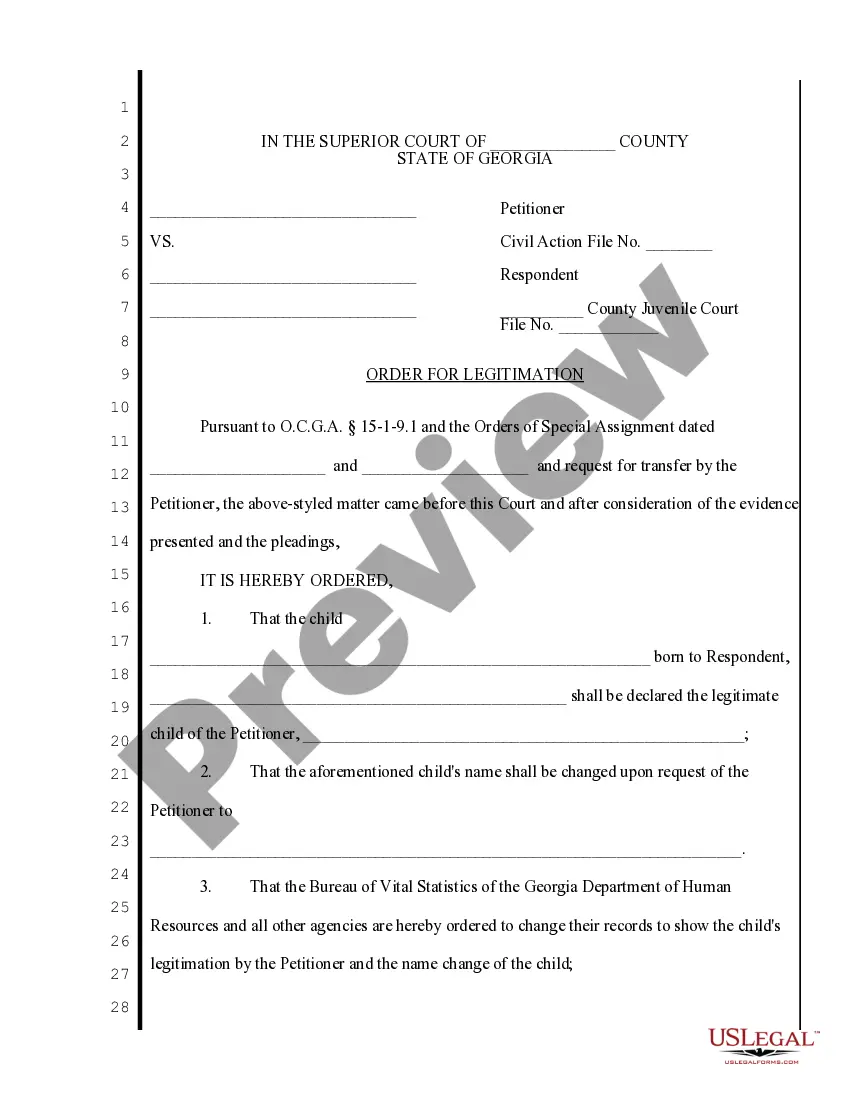
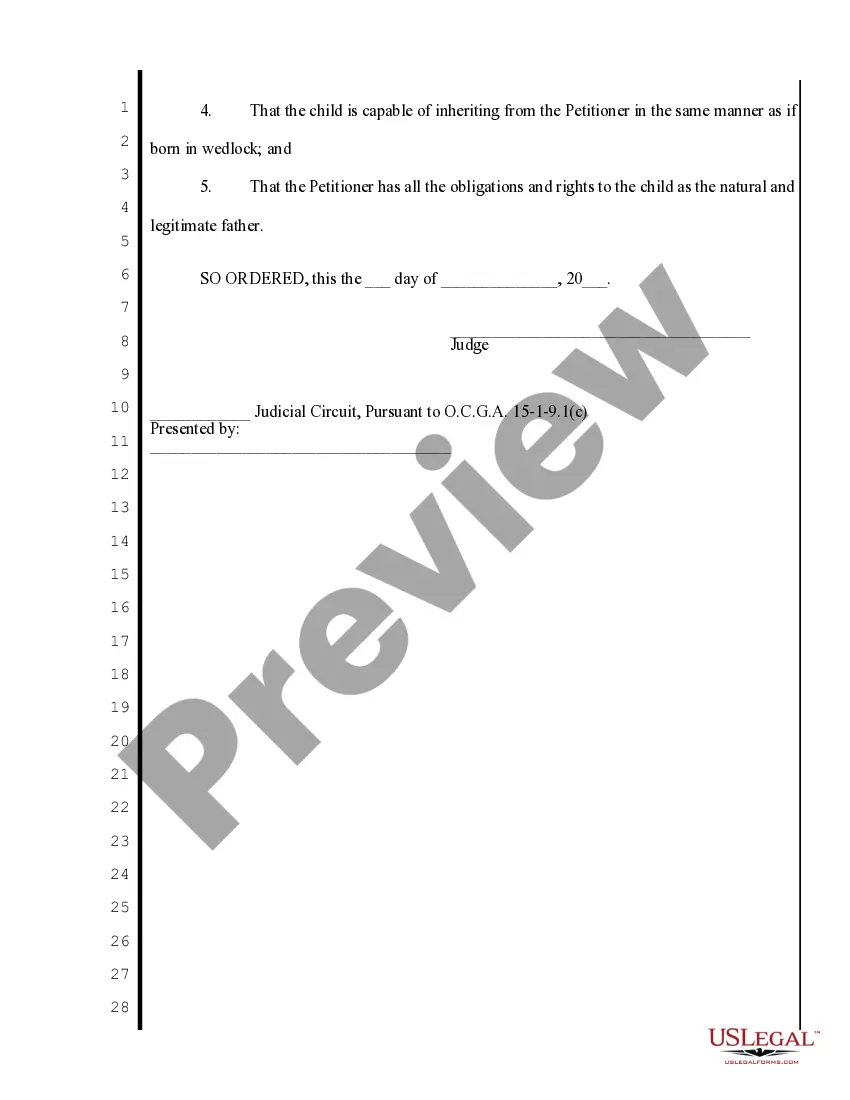
- Request for the child to be declared legitimate and capable of inheriting from the petitioner.
- Request to change the child's name to reflect the legitimation.
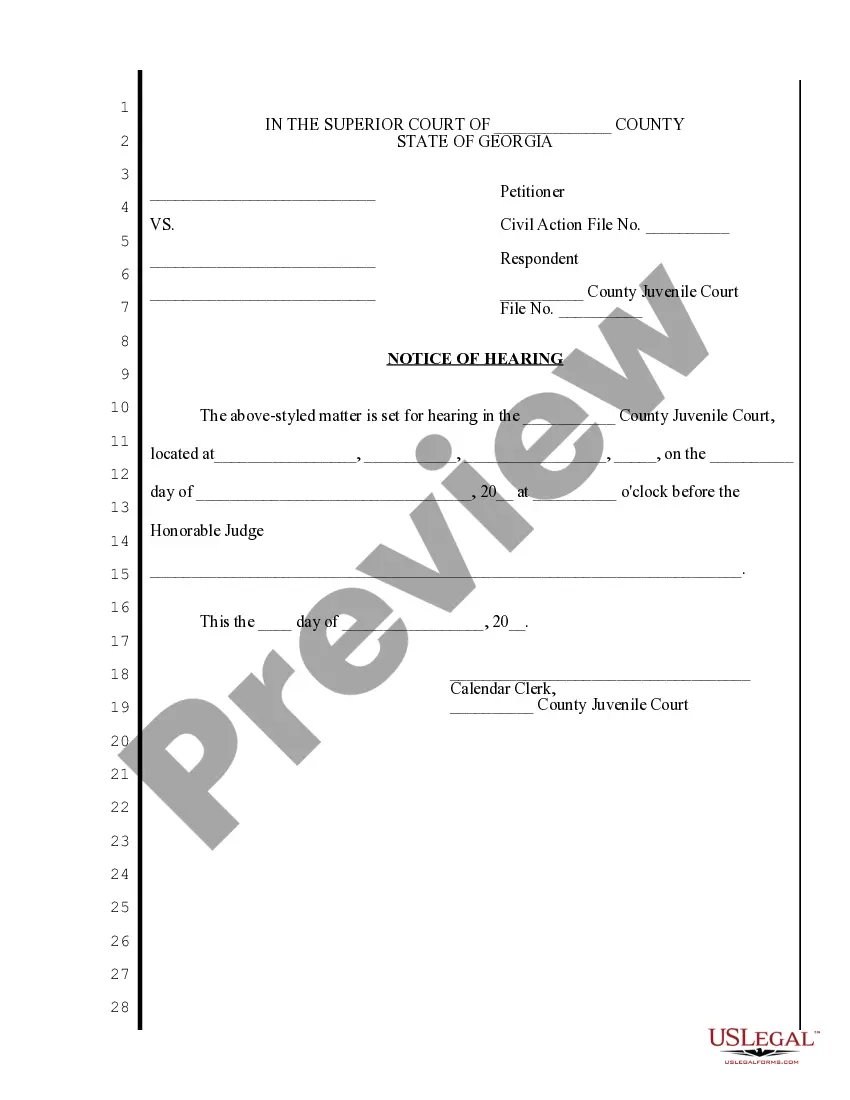
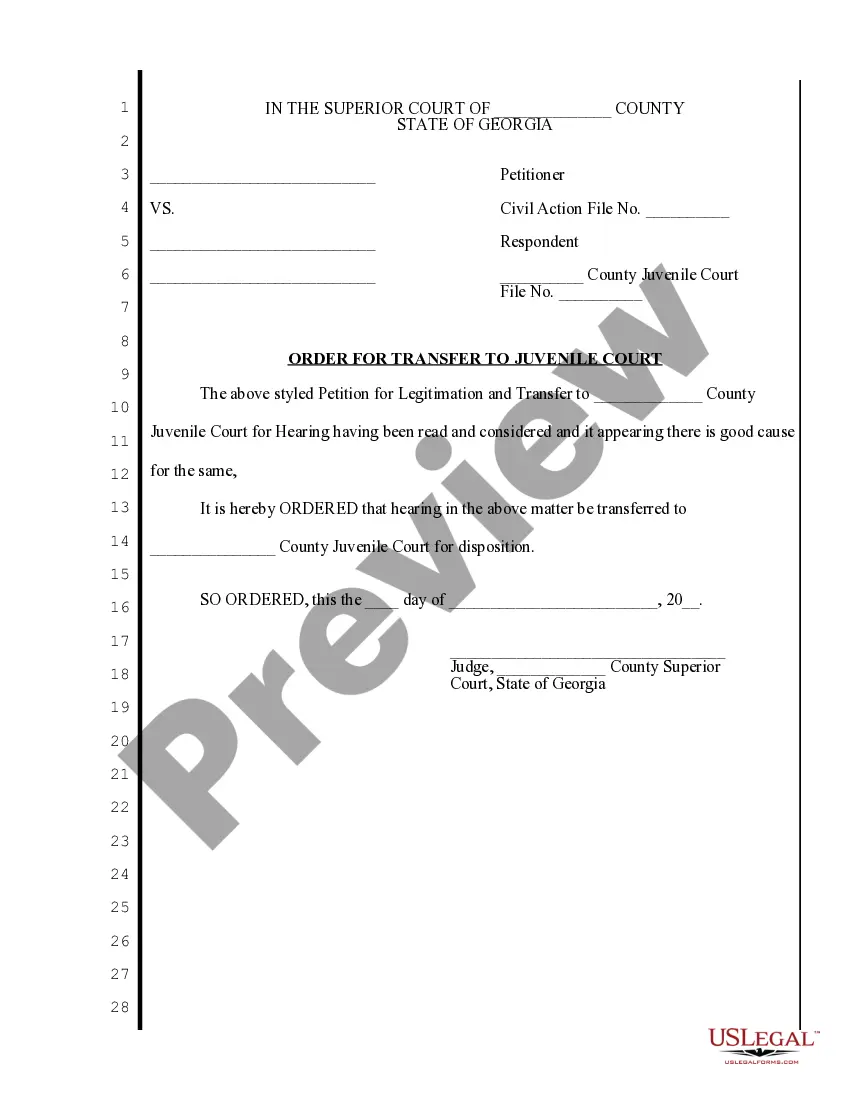
- Transfer request for the hearing to the appropriate county juvenile court.
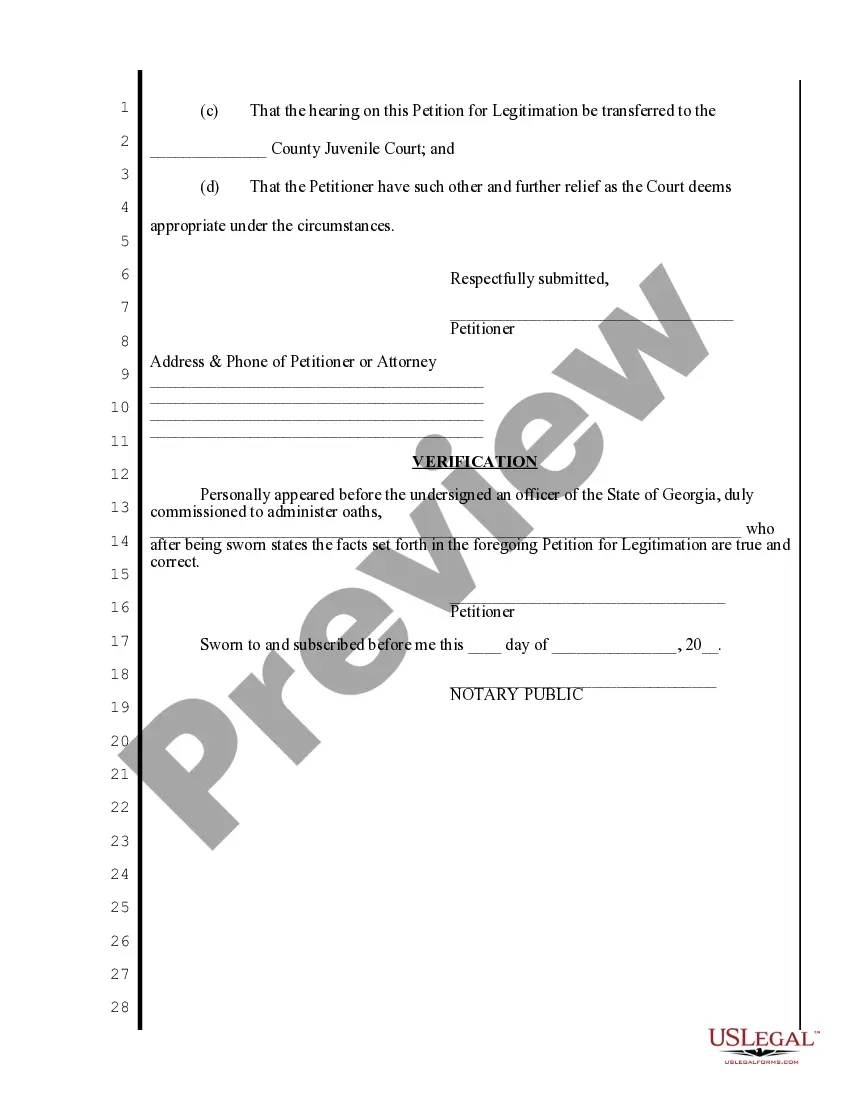
- Verification section for attesting to the truth of the claims made in the petition.

When to use this form
This form should be used in situations where a biological father wishes to establish legal paternity for a child in the state of Georgia. It is particularly relevant when the father and mother were not married at the time of the child's birth, or when the father wants to change the child's name and secure rights associated with legitimation, such as custody or visitation. Additionally, this form is essential when there is a need to initiate legal proceedings for rights concerning the child in juvenile court.
Who this form is for
- Biological fathers seeking to legitimate their child.
- Fathers wanting to ensure inheritance rights for their child.
- Individuals looking to change a child's name following legitimation.
- Petitioners who need to have their case heard in the juvenile court.
Completing this form step by step
- Fill in the names and addresses of the petitioner (father) and respondent (mother).
- Provide the child's full name, birth date, and place of birth.
- Indicate whether the mother has been notified of the petition.
- Request the child's name change if desired, including the new name.
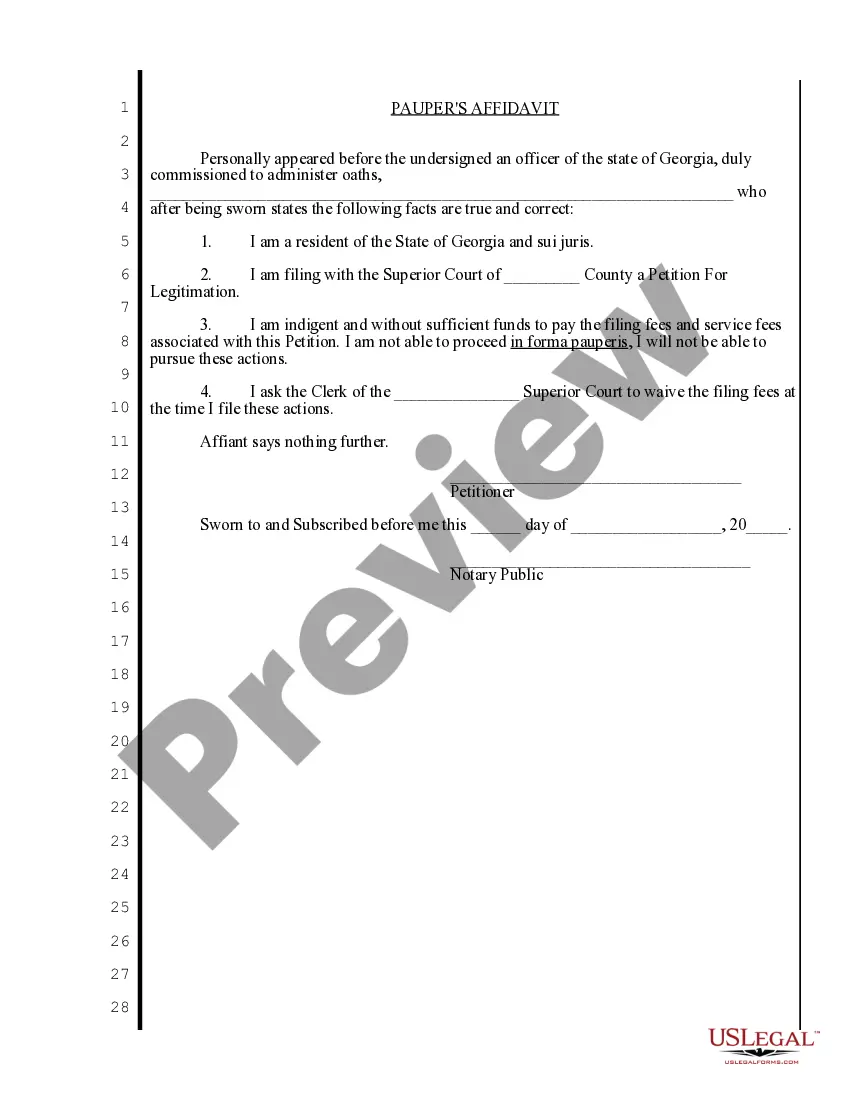
- Sign and date the verification section in the presence of a notary.
- File the completed form with the appropriate juvenile court as directed.
Is notarization required?
Yes, this form must be notarized to be legally valid. Make sure to sign the verification section in front of a notary public to complete the process. US Legal Forms offers integrated online notarization, available 24/7 via secure video call, providing a convenient and user-friendly option. This ensures your document meets all legal requirements without the need for travel.
Get your form ready online
Our built-in tools help you complete, sign, share, and store your documents in one place.
Make edits, fill in missing information, and update formatting in US Legal Forms—just like you would in MS Word.
Download a copy, print it, send it by email, or mail it via USPS—whatever works best for your next step.
Sign and collect signatures with our SignNow integration. Send to multiple recipients, set reminders, and more. Go Premium to unlock E-Sign.
If this form requires notarization, complete it online through a secure video call—no need to meet a notary in person or wait for an appointment.
We protect your documents and personal data by following strict security and privacy standards.

Make edits, fill in missing information, and update formatting in US Legal Forms—just like you would in MS Word.

Download a copy, print it, send it by email, or mail it via USPS—whatever works best for your next step.

Sign and collect signatures with our SignNow integration. Send to multiple recipients, set reminders, and more. Go Premium to unlock E-Sign.

If this form requires notarization, complete it online through a secure video call—no need to meet a notary in person or wait for an appointment.

We protect your documents and personal data by following strict security and privacy standards.
Mistakes to watch out for
- Failing to accurately complete all required fields, leading to delays.
- Not notifying the biological mother, which can result in the petition being contested.
- Providing incorrect information about the child's name or birth details.
- Neglecting to sign the form in front of a notary if required.
Advantages of online completion
- Convenience of downloading and filling the form from home.
- Editability allows for customization based on individual circumstances.
- Access to materials drafted by licensed attorneys, ensuring reliability and legal compliance.
Quick recap
- The Petition for Legitimation establishes legal parental rights for biological fathers in Georgia.
- It's necessary for name changes, inheritance rights, and the legal acknowledgment of the relationship.
- Proper completion and notarization of the form are essential for legal validity.
Looking for another form?

Form popularity
FAQ
While it is not mandatory to hire a lawyer for the legitimation process in Georgia, having legal assistance can be highly beneficial. A knowledgeable attorney can help you navigate the Georgia Petition for Legitimation and Transfer to Juvenile Court for Hearing effectively, ensuring all legal requirements are met. For individuals seeking assistance, platforms like US Legal Forms offer valuable resources and information to guide you through the process confidently.
The duration of the legitimation process in Georgia can vary based on several factors, including court schedules and case complexity. Generally, it can take several weeks to a few months to finalize a Georgia Petition for Legitimation and Transfer to Juvenile Court for Hearing. Preparing all necessary documents promptly and accurately can help expedite the process. Working with a reliable platform like US Legal Forms can provide guidance to streamline your legitimation journey.
To contest legitimation in Georgia, you must file an official response to the petition detailing your reasons for opposing it. Engaging in this process requires understanding of the law, as well as supporting evidence. Filing a thorough and well-structured response can be crucial for your case. Utilize USLegalForms to access professional guidance and legal forms needed for your response.
Yes, a judge can deny a legitimation request in Georgia. The decision usually depends on various factors, including the best interests of the child and the father's circumstances. It's important to present strong arguments and documentation when filing your Georgia Petition for Legitimation and Transfer to Juvenile Court for Hearing. Consulting a legal expert can help strengthen your case and increase the chances of approval.
The time it takes to complete the legitimation process in Georgia can vary, but typically it lasts several months. Factors include court schedules, the complexity of your case, and required documentation. You may need to consider the time for filing the Georgia Petition for Legitimation and Transfer to Juvenile Court for Hearing and any potential delays. Using USLegalForms can help streamline the process and provide you with the necessary forms to reduce delays.
To file a Georgia Petition for Legitimation and Transfer to Juvenile Court for Hearing, start by gathering necessary documents such as your child's birth certificate and proof of paternity. Next, complete the appropriate forms, which can often be found on the Georgia court website or through legal aid resources. After compiling your paperwork, file your petition with the appropriate juvenile court. It’s beneficial to utilize platforms like USLegalForms to ensure you have the correct forms and guidance throughout this process.
The juvenile justice process generally consists of four steps: intake, adjudication, disposition, and post-disposition. During intake, a case is evaluated to determine if it should proceed in court. The adjudication phase is where the court hears the case and makes a decision. Lastly, disposition determines the appropriate consequences or services needed, which may involve a Georgia Petition for Legitimation and Transfer to Juvenile Court for Hearing for the child's best interests.
The most common juvenile court cases include delinquency cases and dependency cases. Delinquency cases involve criminal behavior, while dependency cases address situations where a child may be in an unsafe environment. Understanding these categories can help parents and guardians navigate the legal process effectively. It may be necessary to file a Georgia Petition for Legitimation and Transfer to Juvenile Court for Hearing to ensure the best outcomes.
Juvenile court typically handles delinquency cases, status offense cases, and dependency cases. Delinquency cases involve minors who have committed offenses that would be crimes if done by adults. Status offenses include behaviors like truancy or running away, which are only considered offenses due to the individual's age. Dependency cases focus on the welfare of minors who may be abused or neglected, often requiring a Georgia Petition for Legitimation and Transfer to Juvenile Court for Hearing.
Yes, the court can deny a legitimation request in Georgia. The decision often depends on the best interests of the child. A Georgia Petition for Legitimation and Transfer to Juvenile Court for Hearing can be denied if the biological parent does not meet legal standards or if there are concerns about the child's welfare. Therefore, it's crucial to present a strong case when seeking legitimation.