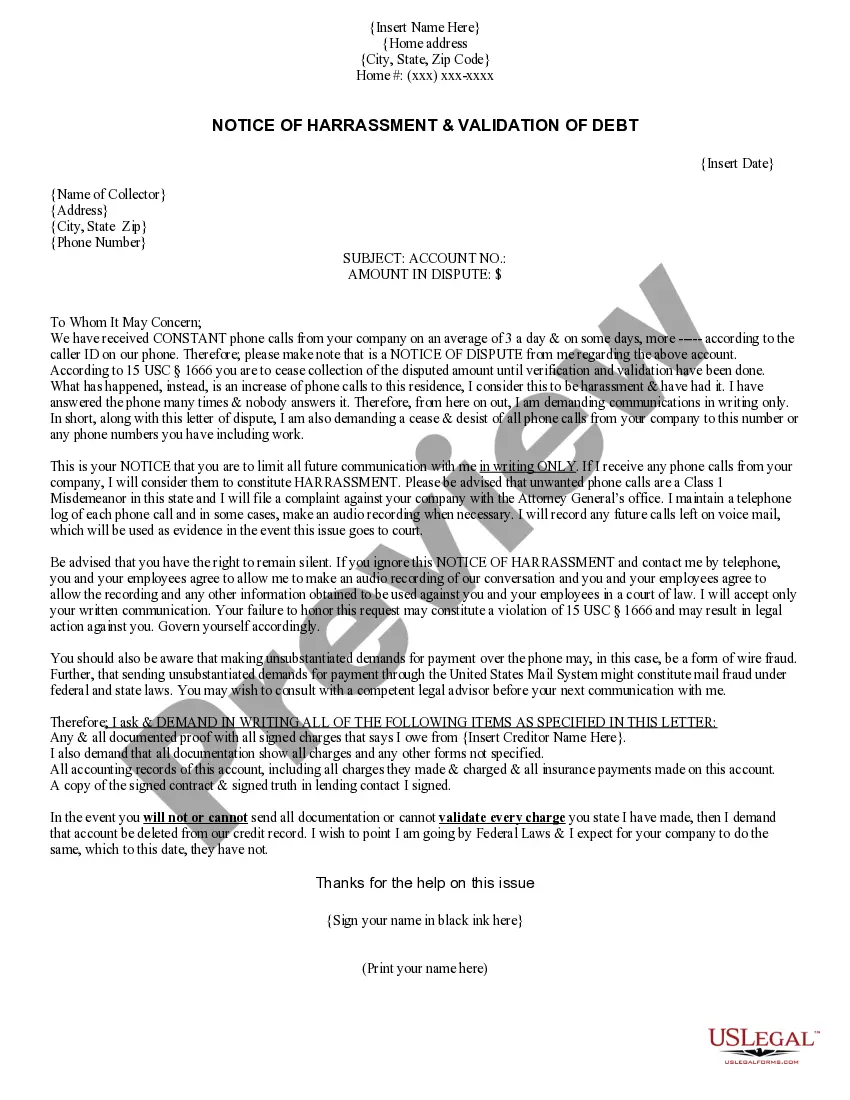
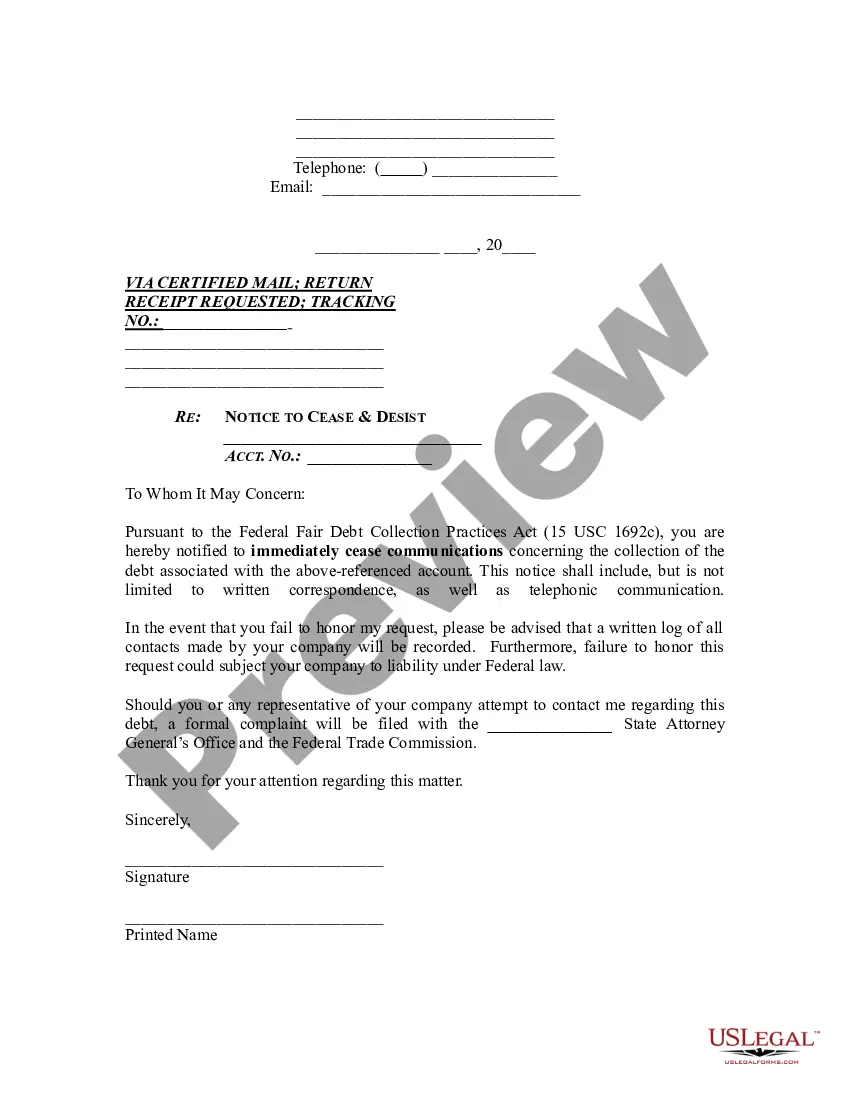
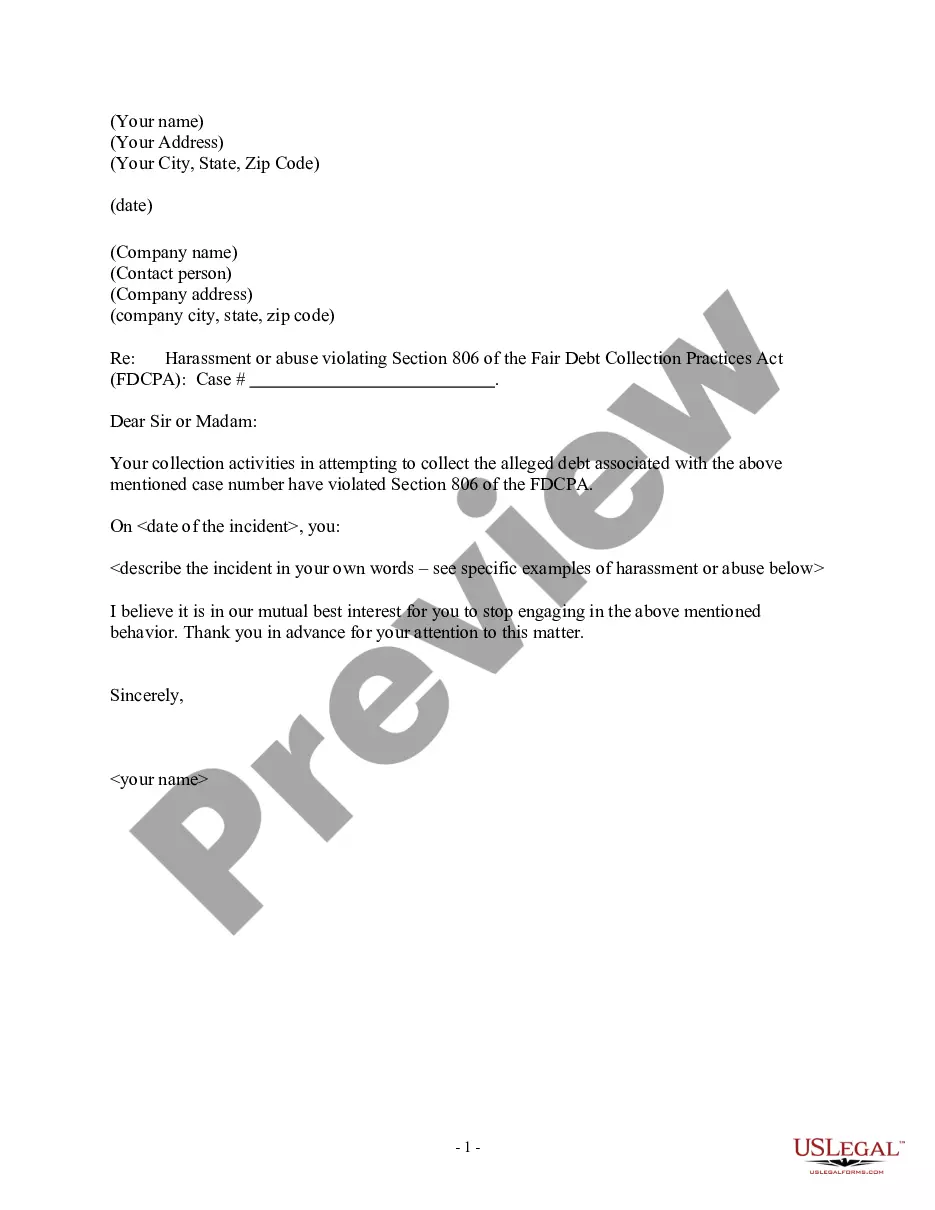
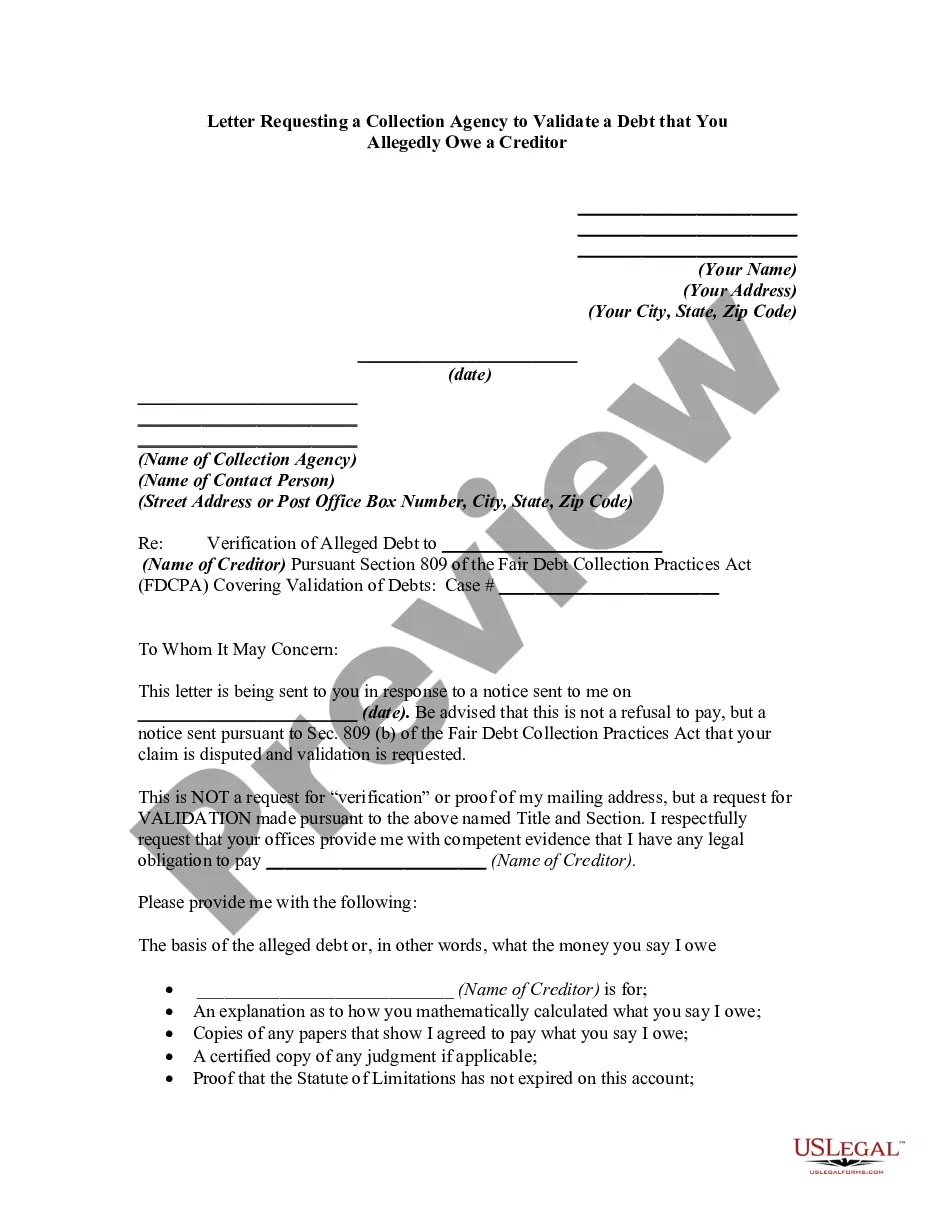
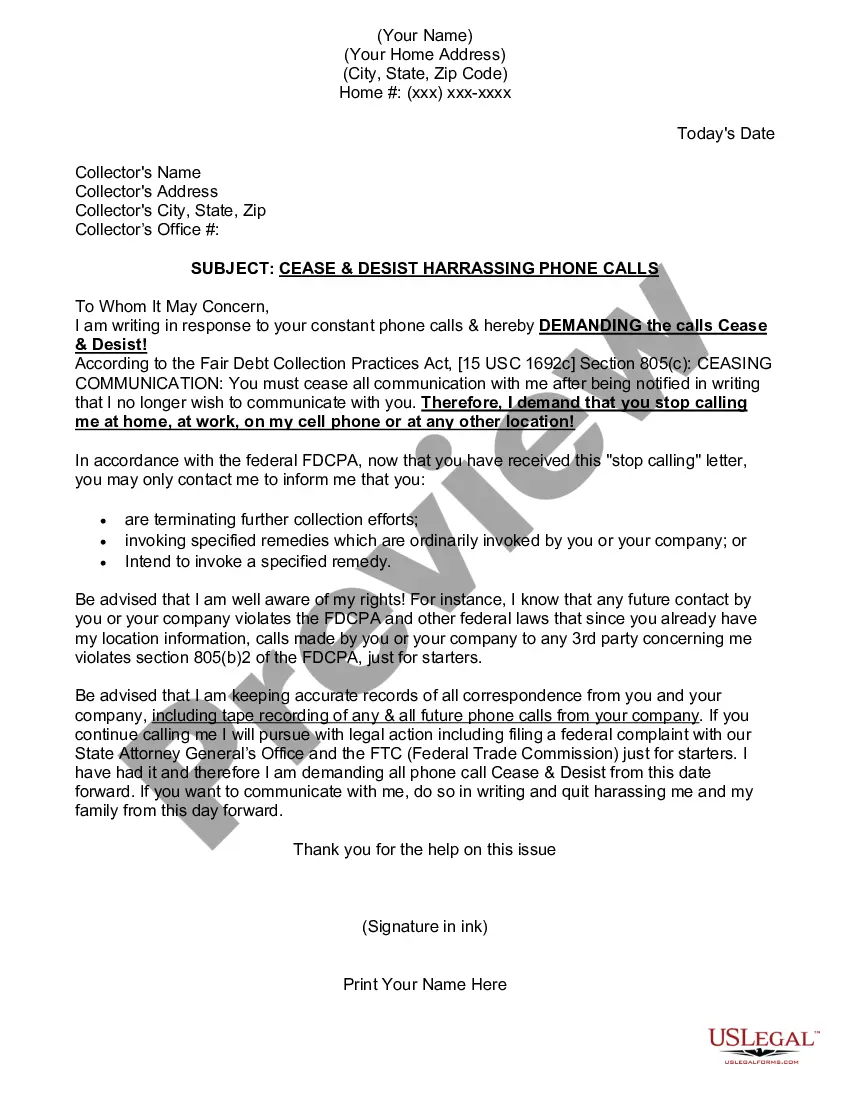
This NOTICE OF HARRASSMENT & VALIDATION OF DEBT is to be used when creditors call you repeatedly and mail you letters too. This form includes a cease and desist and a validation of debt, 2 letters in one.
Florida Notice of Harassment and Validation of Debt
Instant download
Description
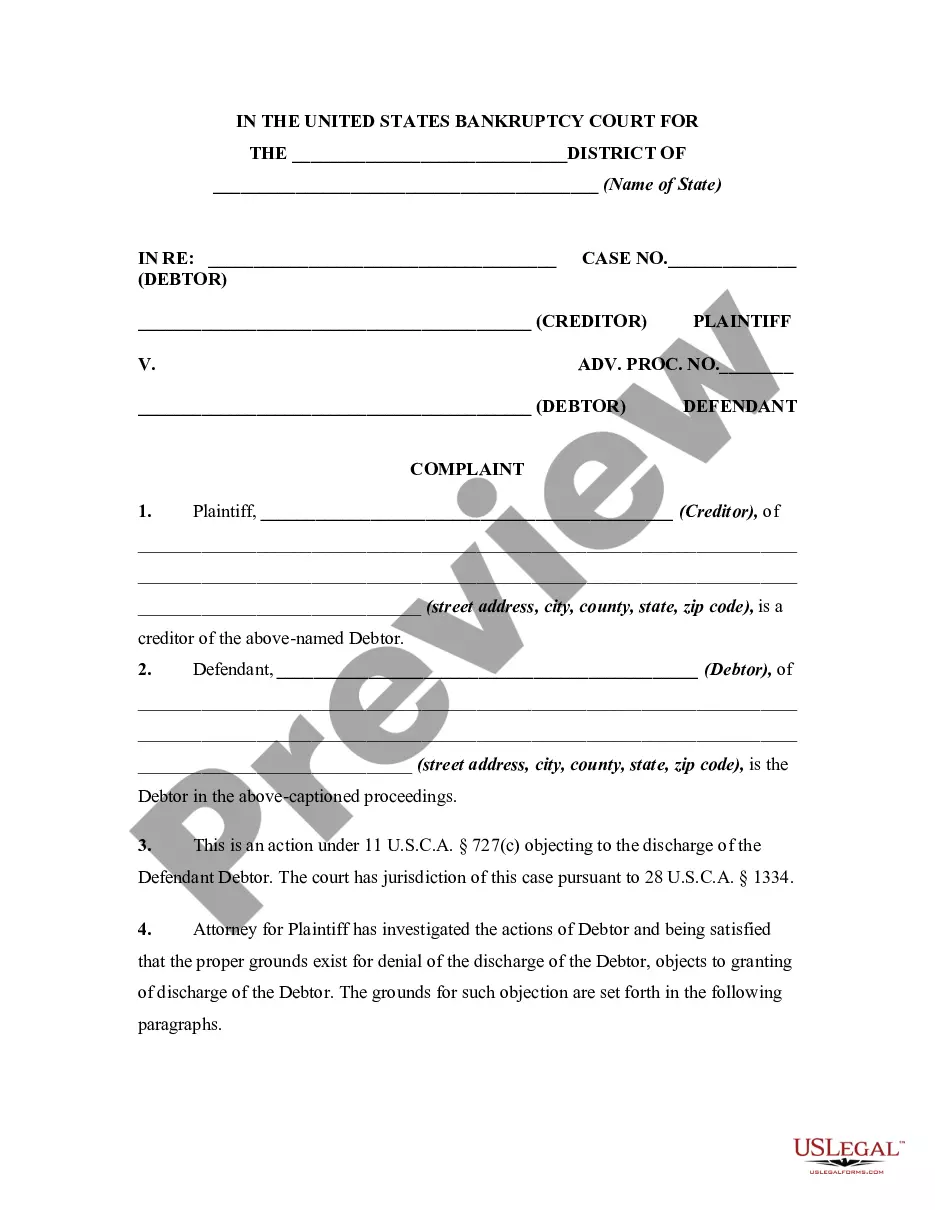
How to fill out Notice Of Harassment And Validation Of Debt?
Selecting the appropriate legitimate document template can be challenging. Clearly, there are numerous formats accessible online, but how can you obtain the valid form you need? Utilize the US Legal Forms website. The service provides a plethora of templates, including the Florida Notice of Harassment and Validation of Debt, which can be employed for business and personal purposes. All of the forms are reviewed by specialists and comply with federal and state regulations.
If you are already registered, Log In to your account and click the Obtain option to locate the Florida Notice of Harassment and Validation of Debt. Use your account to review the legal forms you have previously acquired. Visit the My documents section of your account and download another copy of the document you need.
If you are a new user of US Legal Forms, here are simple steps you should follow: First, ensure you have selected the correct form for your location/region. You can browse the form using the Preview option and read the form description to confirm it is the right one for you. If the form does not meet your requirements, use the Search field to find the appropriate form. Once you are confident the form is suitable, select the Get now option to obtain the form. Choose the pricing plan you prefer and enter the necessary information. Create your account and pay for the order using your PayPal account or credit card. Select the file format and download the legal document template to your system. Complete, modify, print, and sign the downloaded Florida Notice of Harassment and Validation of Debt.
Leverage the extensive resources available to ensure you have the correct legal documents for your needs.
- US Legal Forms is the largest collection of legal forms where you can find various document templates.
- Utilize the service to acquire professionally-crafted paperwork that adhere to state regulations.
- The forms are verified by professionals to ensure compliance.
- You can access your previous purchases easily through your account.
- New users can follow a straightforward process to find the correct forms.
- Payment can be made through PayPal or credit card.
Form popularity
FAQ
An example of a debt validation letter typically starts with your contact information followed by the creditor's information. You then state your request for validation referencing the Florida Notice of Harassment and Validation of Debt, and include details about the debt. For a comprehensive example, check resources like USLegalForms, which provide practical templates to guide you through the process.
To prepare a debt validation letter, start by gathering all relevant information about the debt, including the amount and creditor details. Next, structure your letter with a clear introduction, stating your request under the Florida Notice of Harassment and Validation of Debt. Ensure your tone is professional and assertive, and conclude with a request for a timely response. Finally, review the letter for accuracy before sending it.
The best sample for a debt validation letter includes all essential elements like your contact information, a clear request for validation, and a concise explanation of the debt. You can find templates tailored to the Florida Notice of Harassment and Validation of Debt on platforms like USLegalForms. These templates streamline the process, ensuring you include all necessary details.
Yes, debt validation letters can be very effective. They prompt the debt collector to provide proof of the debt, which is your right under the Florida Notice of Harassment and Validation of Debt. Many collectors may not have the necessary documentation, leading them to cease collection efforts. By sending a validation letter, you take a proactive step in managing your financial situation.
To fill out a debt validation letter, include your name, address, and the date at the top. Clearly state your request for validation of the debt, referencing the Florida Notice of Harassment and Validation of Debt. Be sure to include specific details about the debt, such as the amount owed and the creditor's name. Finally, sign the letter and keep a copy for your records.
To file a debt validation claim, start by gathering all relevant documents related to the debt. You’ll need to send a formal request for validation to the debt collector, citing your rights under the Fair Debt Collection Practices Act. Utilize the Florida Notice of Harassment and Validation of Debt to ensure that your request is formal and compliant. If you encounter resistance, consider using resources like uslegalforms to assist you in filing your claim effectively.
If you experience harassment from a debt collector, you can file a complaint with the Consumer Financial Protection Bureau or your state's attorney general. Document every interaction, noting dates, times, and the nature of the harassment. Additionally, you may want to send a formal request for a Florida Notice of Harassment and Validation of Debt, as this can serve as evidence of your dispute. Seeking legal advice may also help you navigate your options.
To dispute the validity of a debt, you should first send a written request for validation to the debt collector. This request should include a clear statement of your dispute and a demand for the Florida Notice of Harassment and Validation of Debt. Following this, keep a record of all correspondence and any responses you receive. If the collector fails to validate the debt, you may have grounds to take further action.
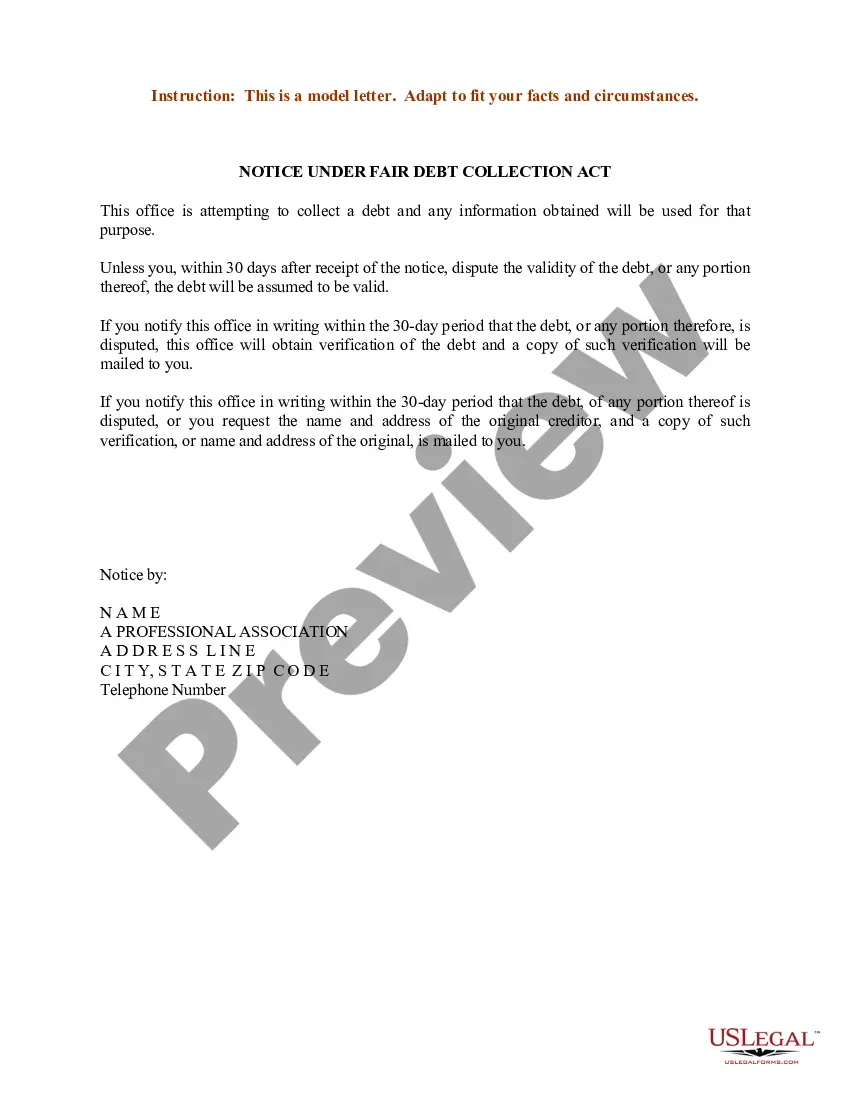
A debt validation notice must include specific information as outlined by the Fair Debt Collection Practices Act. This includes the amount of the debt, the name of the creditor, and your rights to dispute the debt. When you receive a Florida Notice of Harassment and Validation of Debt, ensure that it contains all the necessary details to protect your rights. If the notice is lacking, consider consulting with a legal professional.
Yes, pursuing debt validation is a smart move. By requesting a Florida Notice of Harassment and Validation of Debt, you can ensure that the debt collector provides proof that you owe the debt. This process can help prevent you from paying debts that may not be yours or that may be incorrectly stated. Additionally, it empowers you to understand your rights and obligations.