Florida Employee Evaluation Form for Soldier
Description
Get your form ready online
Our built-in tools help you complete, sign, share, and store your documents in one place.
Make edits, fill in missing information, and update formatting in US Legal Forms—just like you would in MS Word.
Download a copy, print it, send it by email, or mail it via USPS—whatever works best for your next step.
Sign and collect signatures with our SignNow integration. Send to multiple recipients, set reminders, and more. Go Premium to unlock E-Sign.
If this form requires notarization, complete it online through a secure video call—no need to meet a notary in person or wait for an appointment.
We protect your documents and personal data by following strict security and privacy standards.

Make edits, fill in missing information, and update formatting in US Legal Forms—just like you would in MS Word.

Download a copy, print it, send it by email, or mail it via USPS—whatever works best for your next step.

Sign and collect signatures with our SignNow integration. Send to multiple recipients, set reminders, and more. Go Premium to unlock E-Sign.

If this form requires notarization, complete it online through a secure video call—no need to meet a notary in person or wait for an appointment.

We protect your documents and personal data by following strict security and privacy standards.
Looking for another form?
How to fill out Employee Evaluation Form For Soldier?
US Legal Forms - one of the largest repositories of legal documents in the United States - provides a vast selection of legal form templates that you can download or print.
By using the website, you can access thousands of forms for business and personal purposes, organized by categories, states, or keywords. You can find the latest versions of forms like the Florida Employee Evaluation Form for Soldier within seconds.
If you are already subscribed monthly, Log In and retrieve the Florida Employee Evaluation Form for Soldier from your US Legal Forms account. The Acquire option will appear on every form you view. You can access all previously downloaded forms in the My documents tab in your account.
Process the transaction. Use your credit card or PayPal account to complete the purchase.
Download the form to your device in your preferred format.
Make edits. Complete, modify, print, and sign the downloaded Florida Employee Evaluation Form for Soldier.
Every template you added to your account does not have an expiration date and is yours indefinitely. Therefore, if you wish to download or print another copy, simply navigate to the My documents section and click on the form you desire.
Access the Florida Employee Evaluation Form for Soldier with US Legal Forms, one of the most comprehensive collections of legal document templates. Utilize thousands of professional and state-specific templates that cater to your business or personal requirements.
- Ensure you have selected the correct form for your area/county.
- Click the Review button to check the form's content.
- Examine the form details to confirm you have chosen the proper form.
- If the form does not meet your needs, use the Search bar at the top of the page to find one that does.
- If you are happy with the form, finalize your choice by clicking on the Acquire now button.
- Then, select the payment plan you prefer and provide your details to register for an account.
Form popularity
FAQ
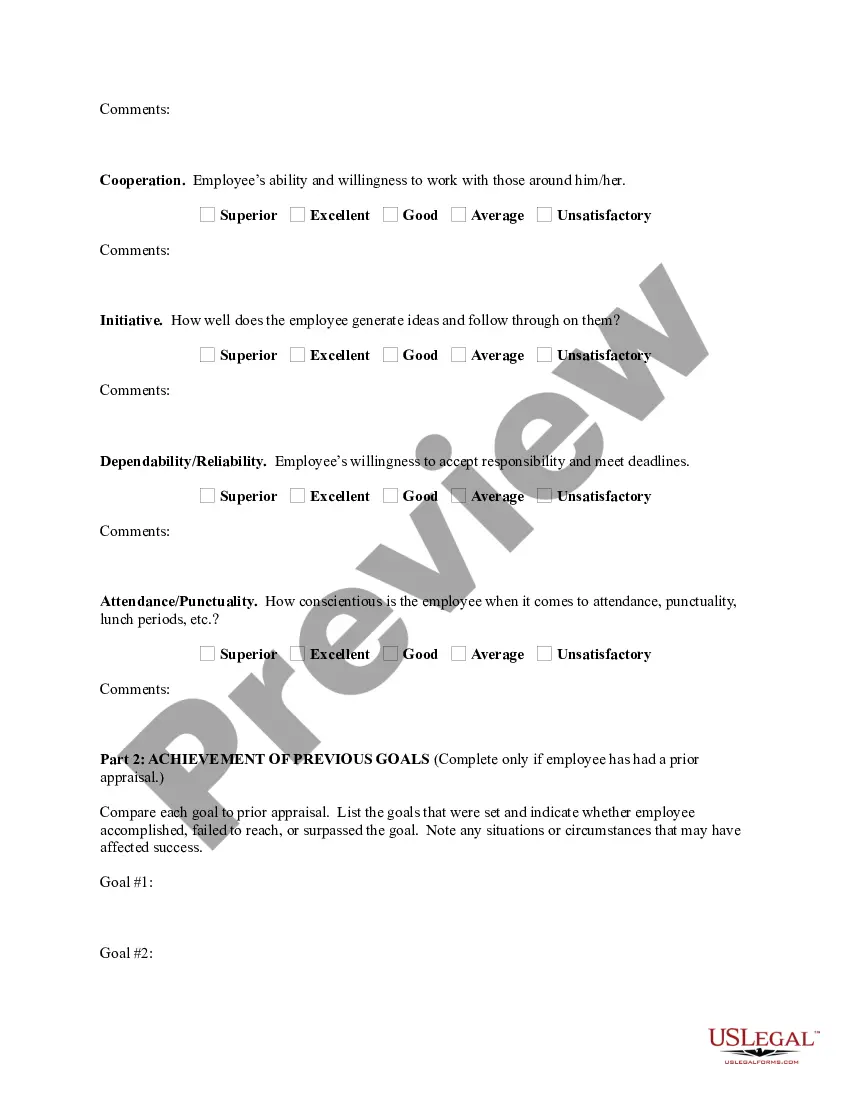
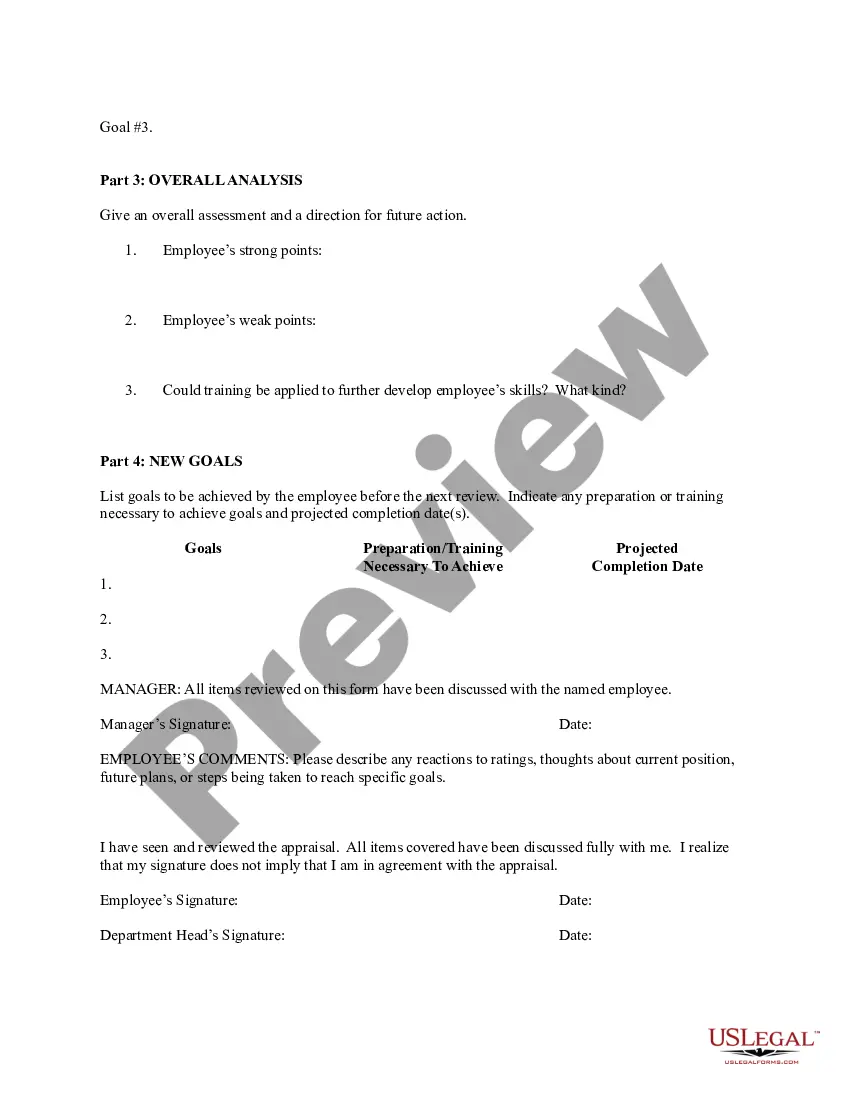
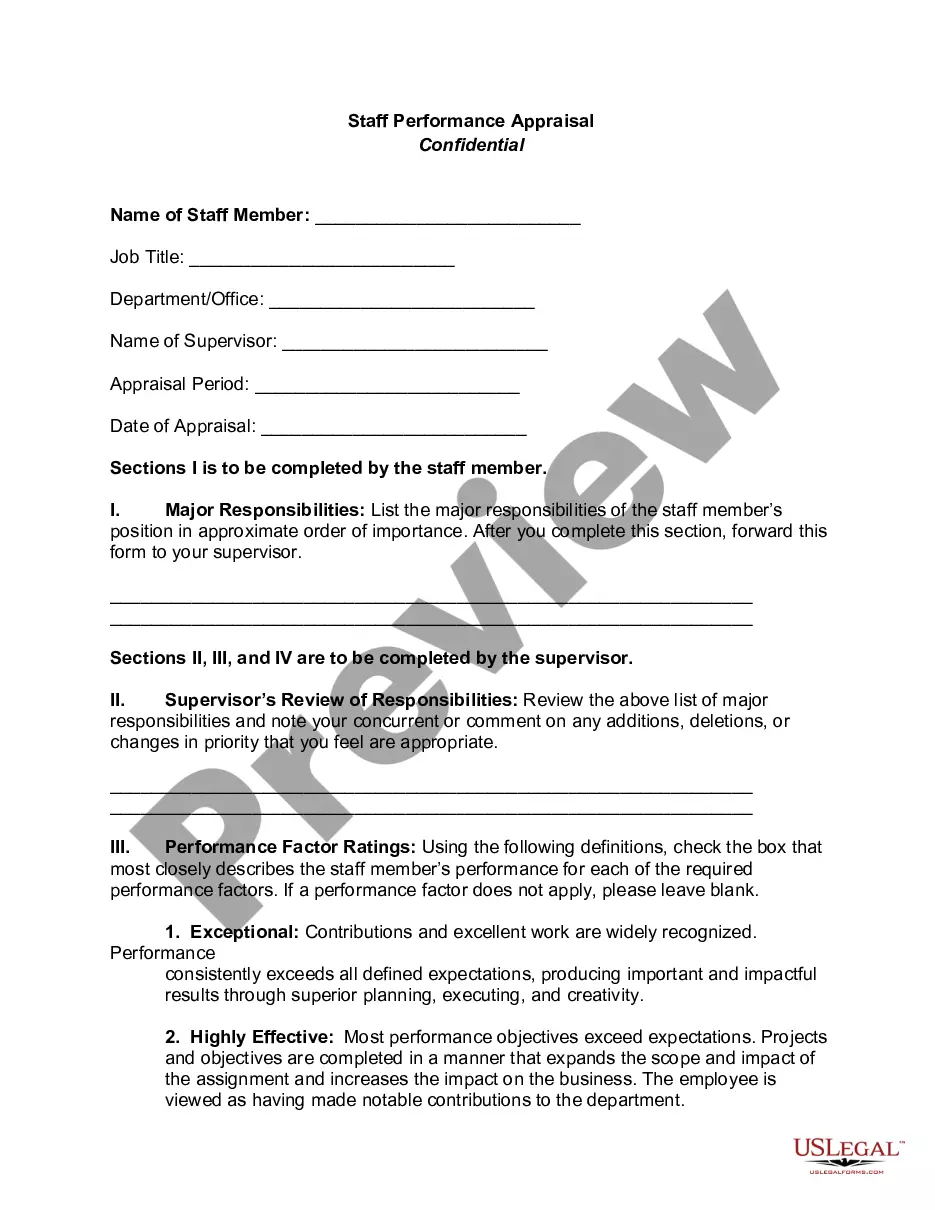
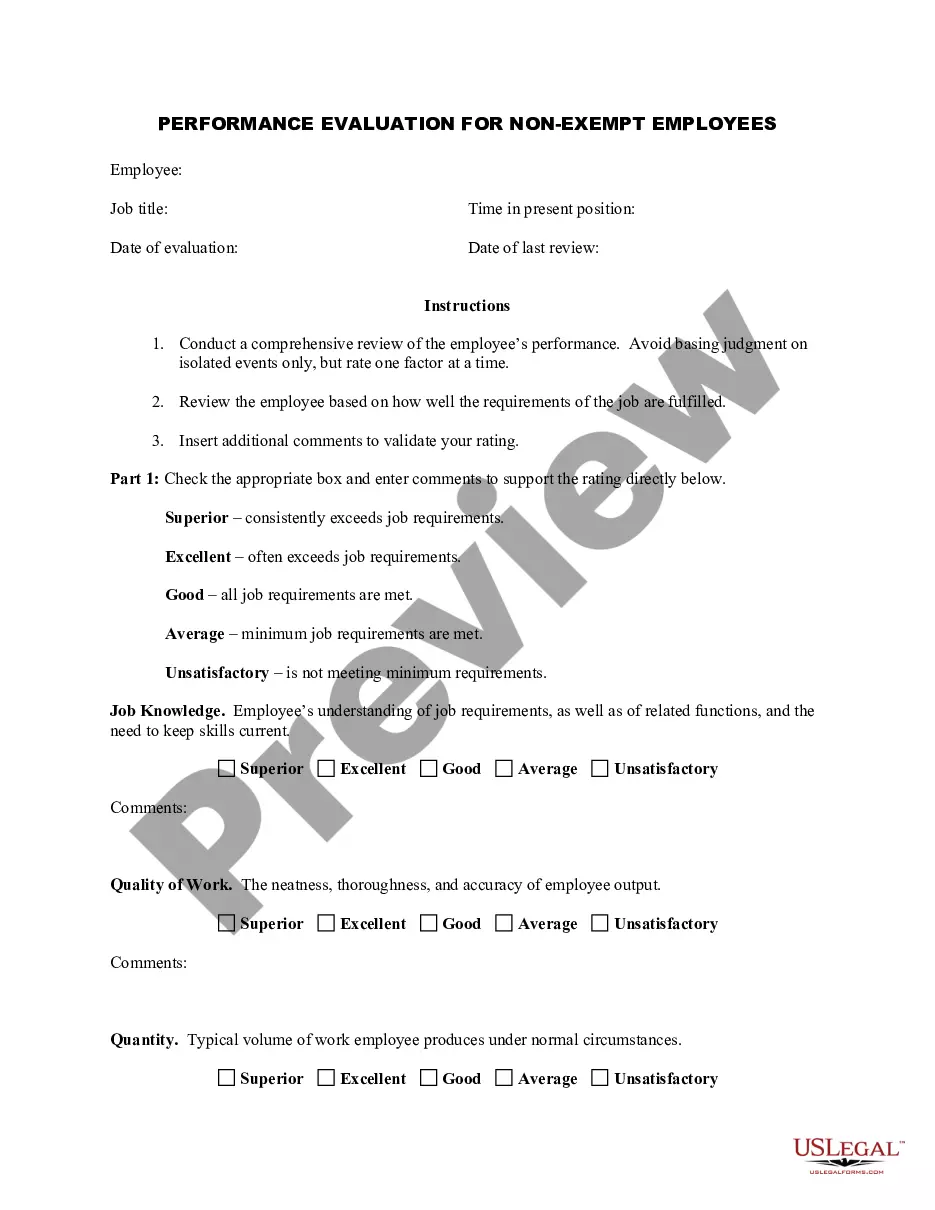
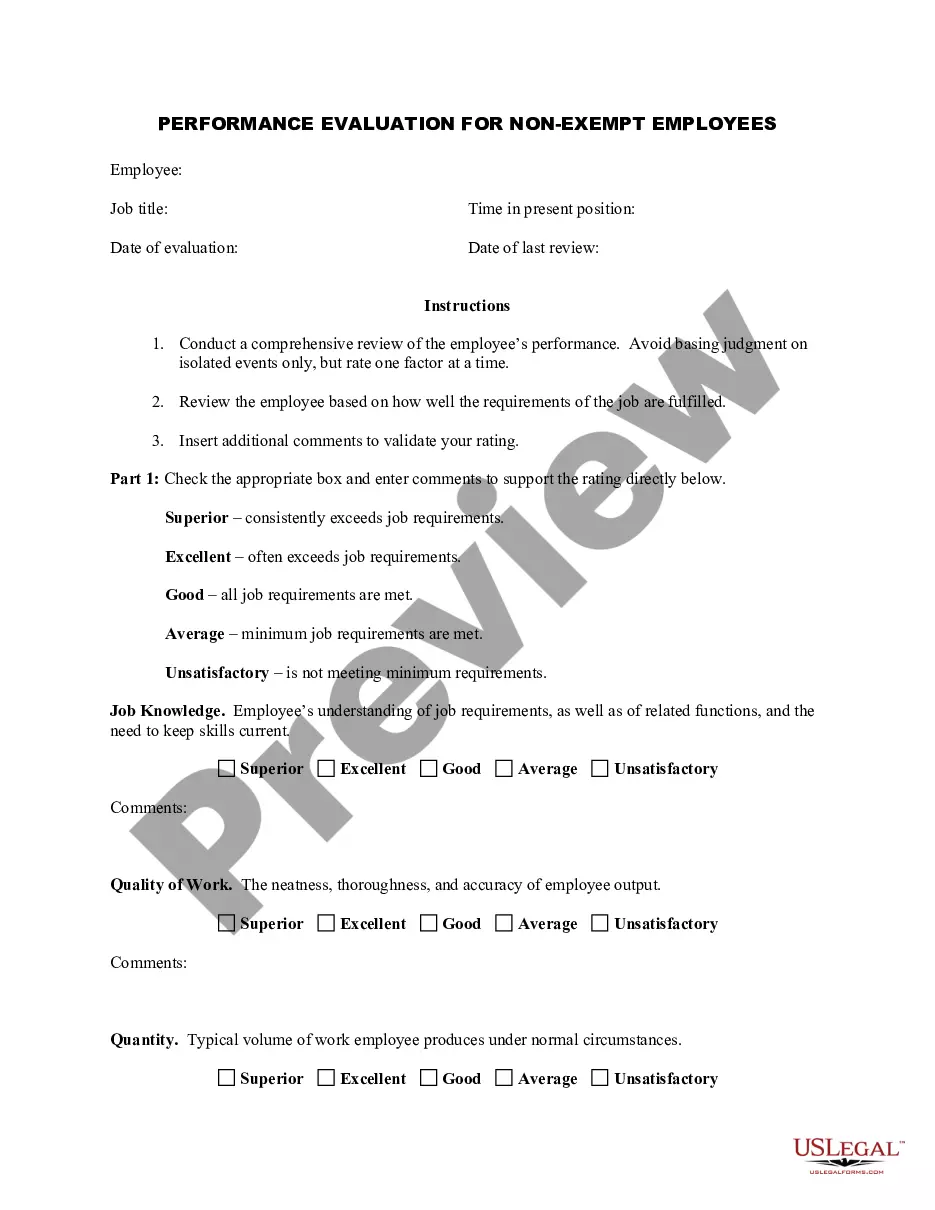
An example of performance evaluation for an employee can be a session where a supervisor provides feedback based on specific metrics and observed behaviors. For soldiers, the Florida Employee Evaluation Form for Soldier captures both quantitative and qualitative data, addressing skills such as physical fitness, performance under pressure, and collaboration with peers. This form not only highlights accomplishments but also sets clear expectations for growth.
The purpose of an employee evaluation form is to provide a framework for recording performance evaluations and enhancing employee development. It serves as a crucial tool for identifying strengths and weaknesses, which can guide future training and goals. By using a Florida Employee Evaluation Form for Soldier, supervisors can ensure accountability and foster growth within the military workforce.
4 Tips for Writing an Effective Self-EvaluationBe specific and provide examples. Specificity helps contextualize claims.Back up your contributions with metrics.Frame weaknesses as opportunities.Keep track of your accomplishments throughout the year.
When you fill the form:Be honest and critical. Analyze your failures and mention the reasons for it.Keep the words minimal.Identify weaknesses.Mention your achievements.Link achievements to the job description and the organization's goals.Set the goals for the next review period.Resolve conflicts and grievances.
If the 1SG is the individual who is directly responsible for supervising the daily activities of the supply sergeant, it would be appropriate for him to be the rater.
A rating scheme is the published rating chain of the NCO's rating officials (rater, senior rater, and reviewer).
For most staff positions, the job performance areas that should be included on a performance evaluation form are job knowledge and skills, quality of work, quantity of work, work habits and attitude.
What to Include in an Employee Evaluation Form?Employee and reviewer information. The form must have basic information about both parties involved.Review period.An easy-to-understand rating system.Evaluation points.Goals.Extra space for comments.Signatures.Scorecard.More items...?
Employee Evaluation Form Template includes fields for employee information (employee name, job title/department, reviewer name/title, review period, today's date), ratings by customizable skill area with comments (work quality, productivity, communication, collaboration, initiative, punctuality), an auto-calculated
How to write an employee evaluationReview the employee's job description. Get a current copy of each person's job description and review the requirements.Highlight areas of improvement.Compare strengths and weaknesses.Recommend actionable goals.Provide constructive feedback.Welcome employee input.