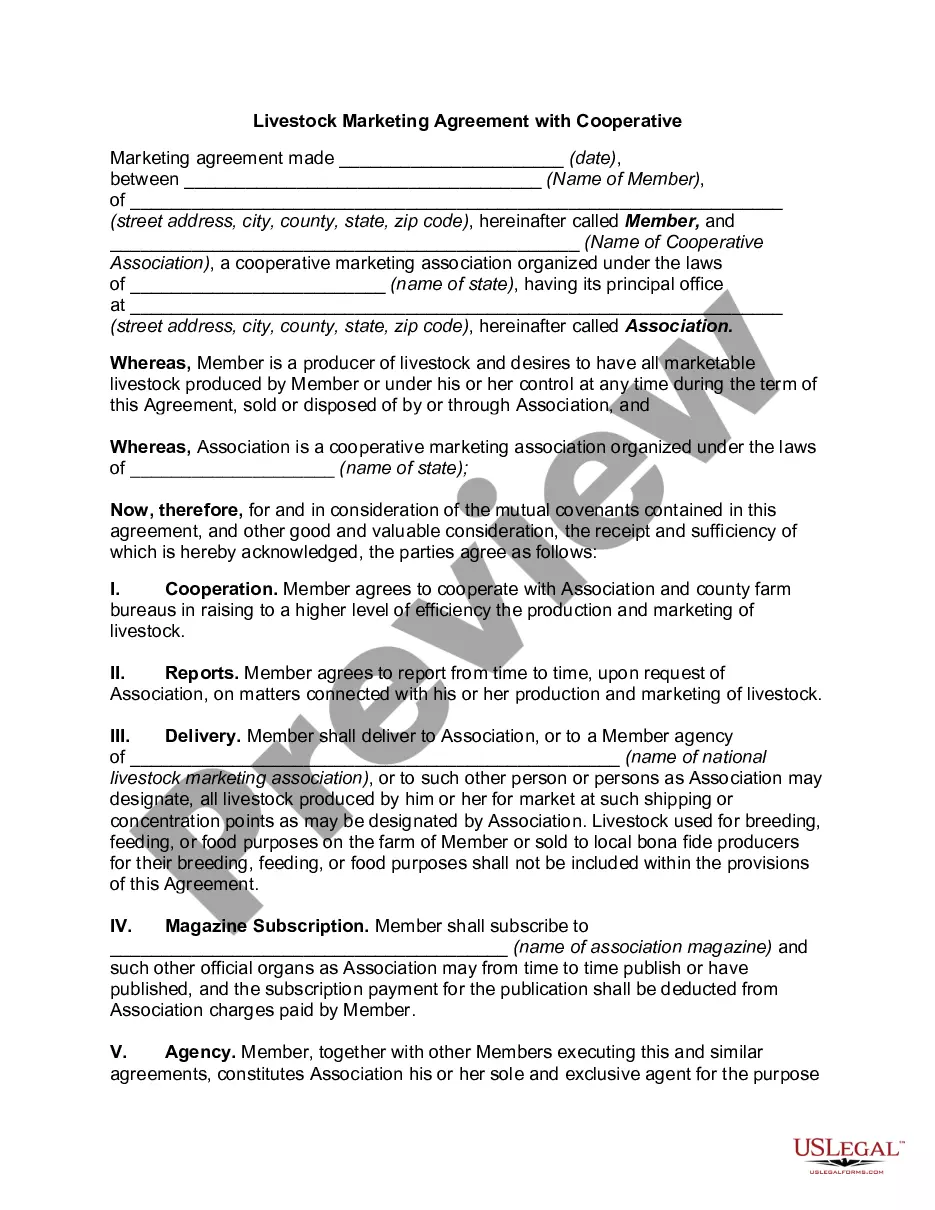
Florida Confidentiality Agreement with Employee Regarding Research, Development, Production, Marketing, and Management; and Covenant not to Compete
Description
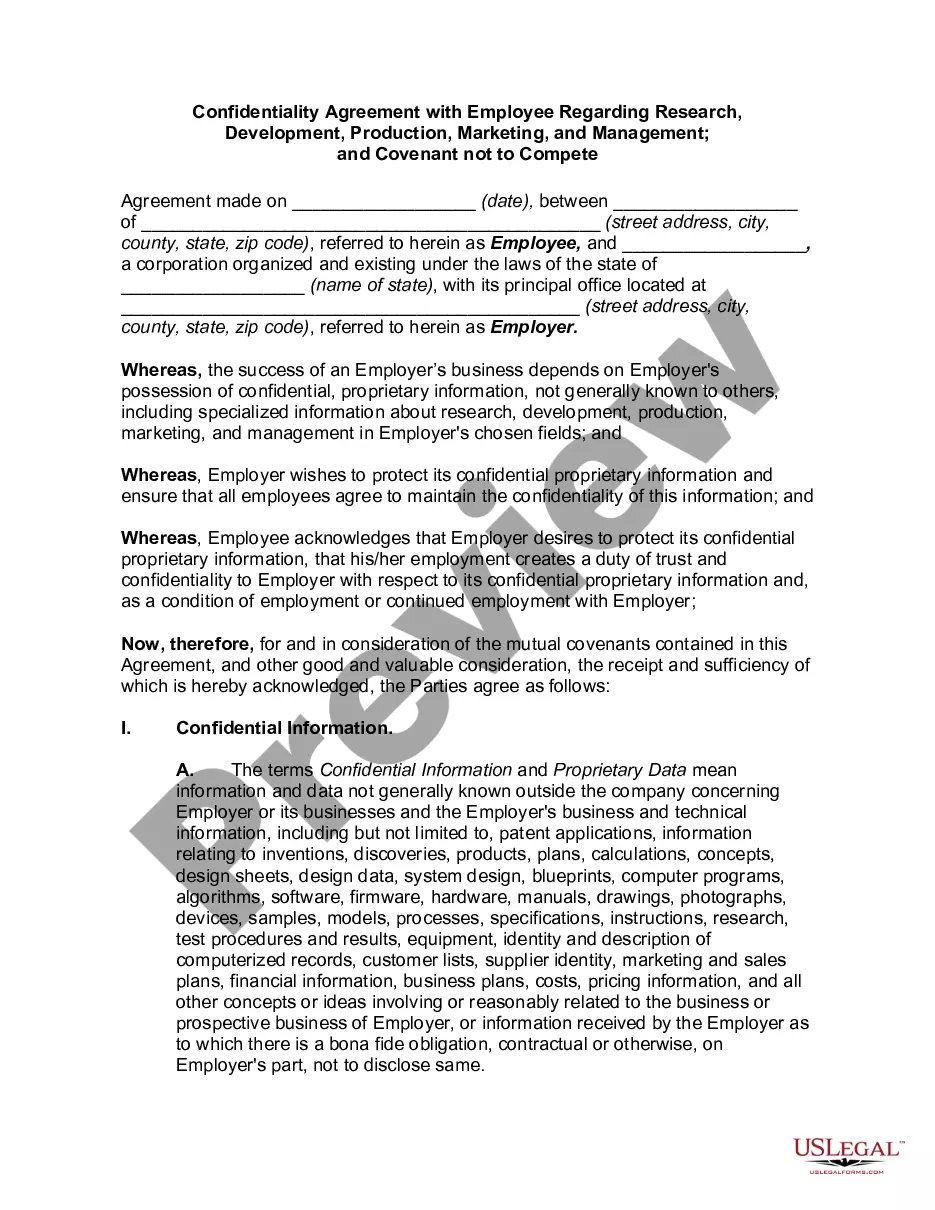
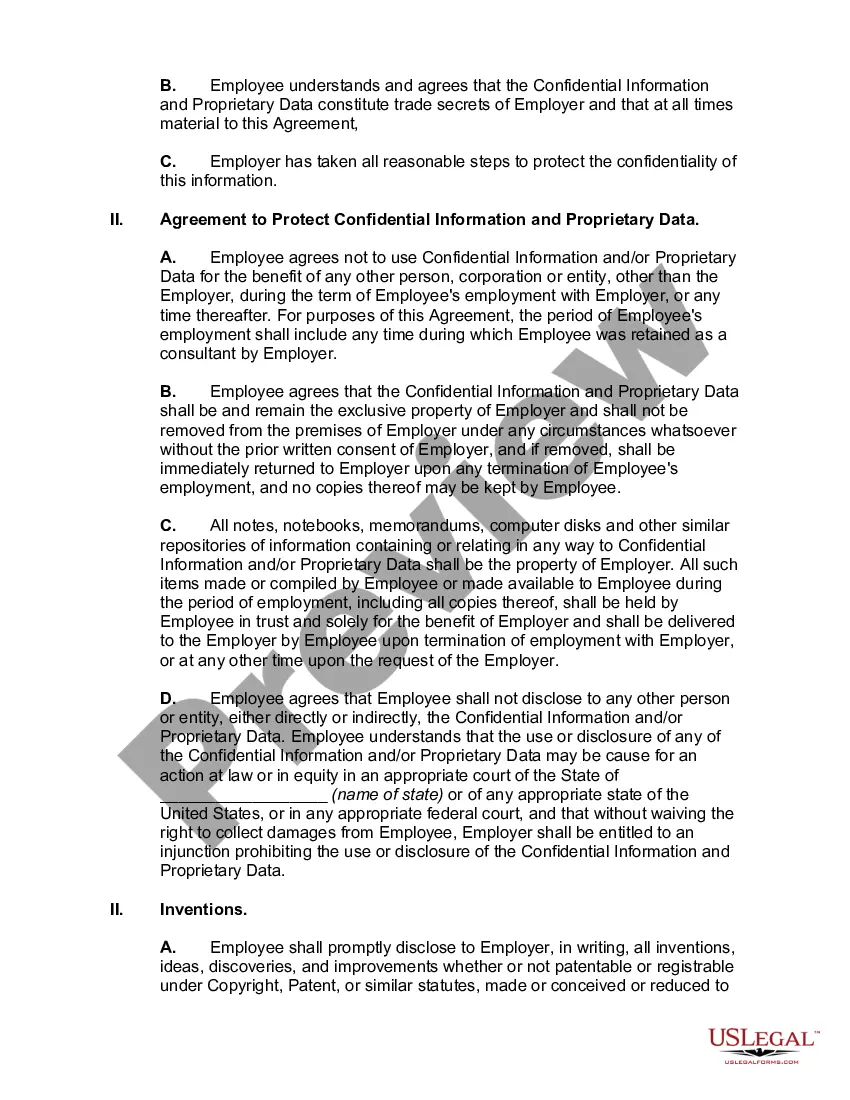
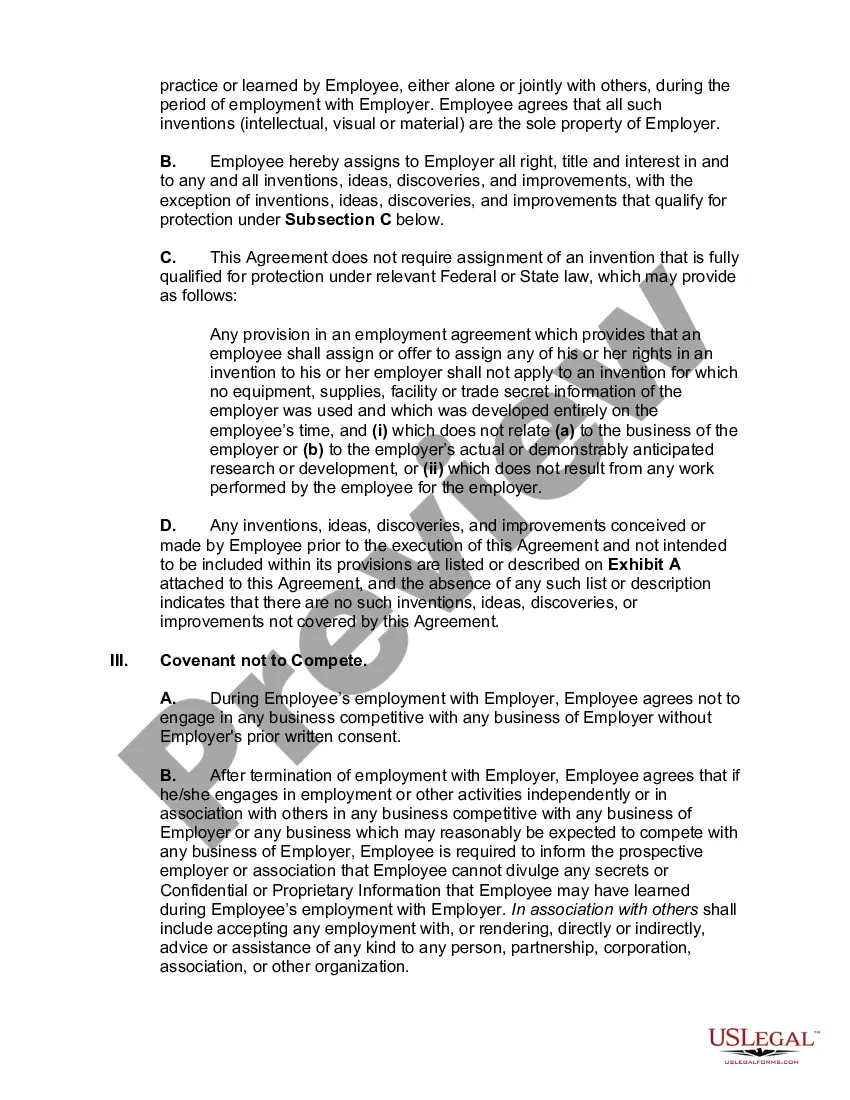
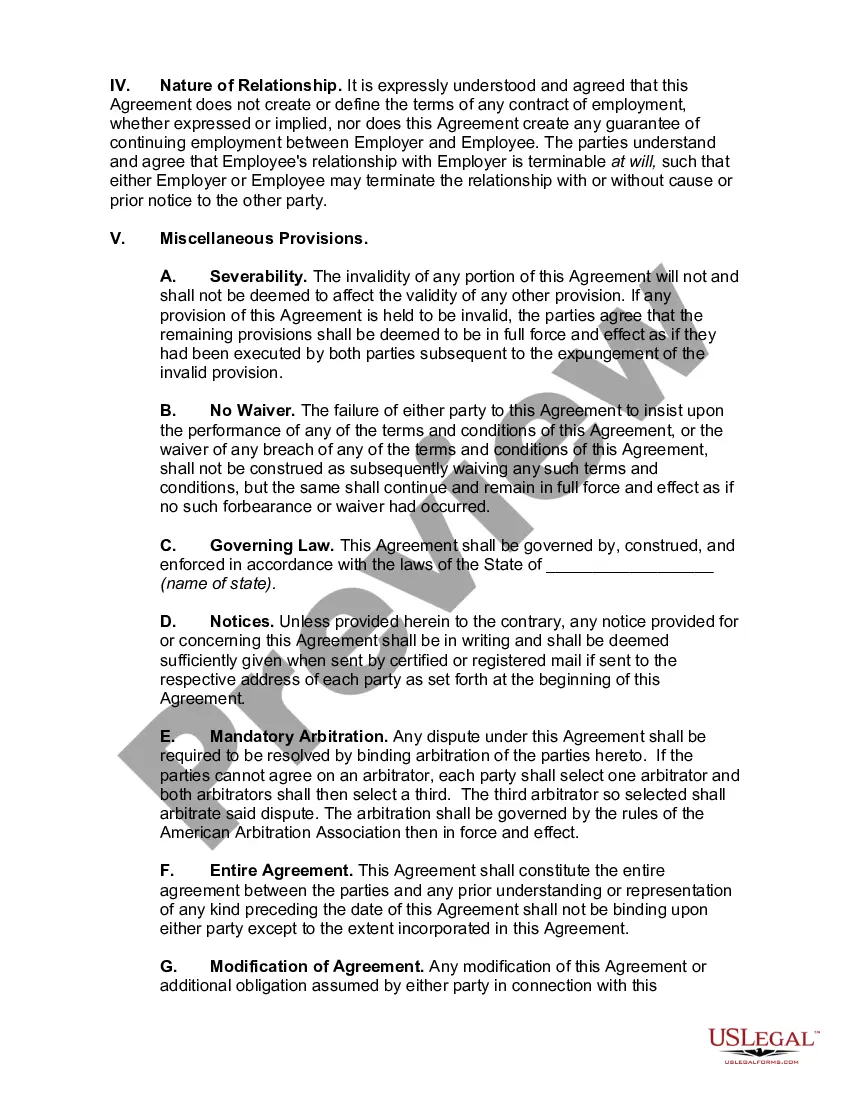
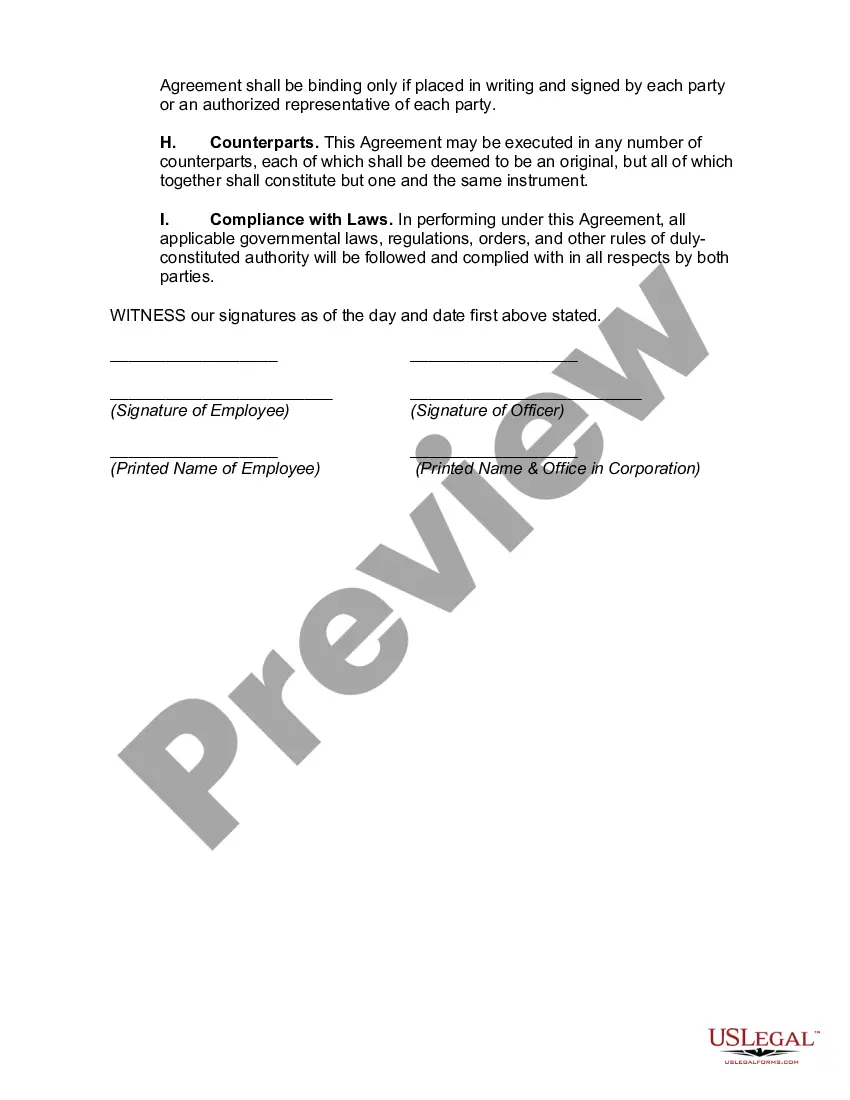
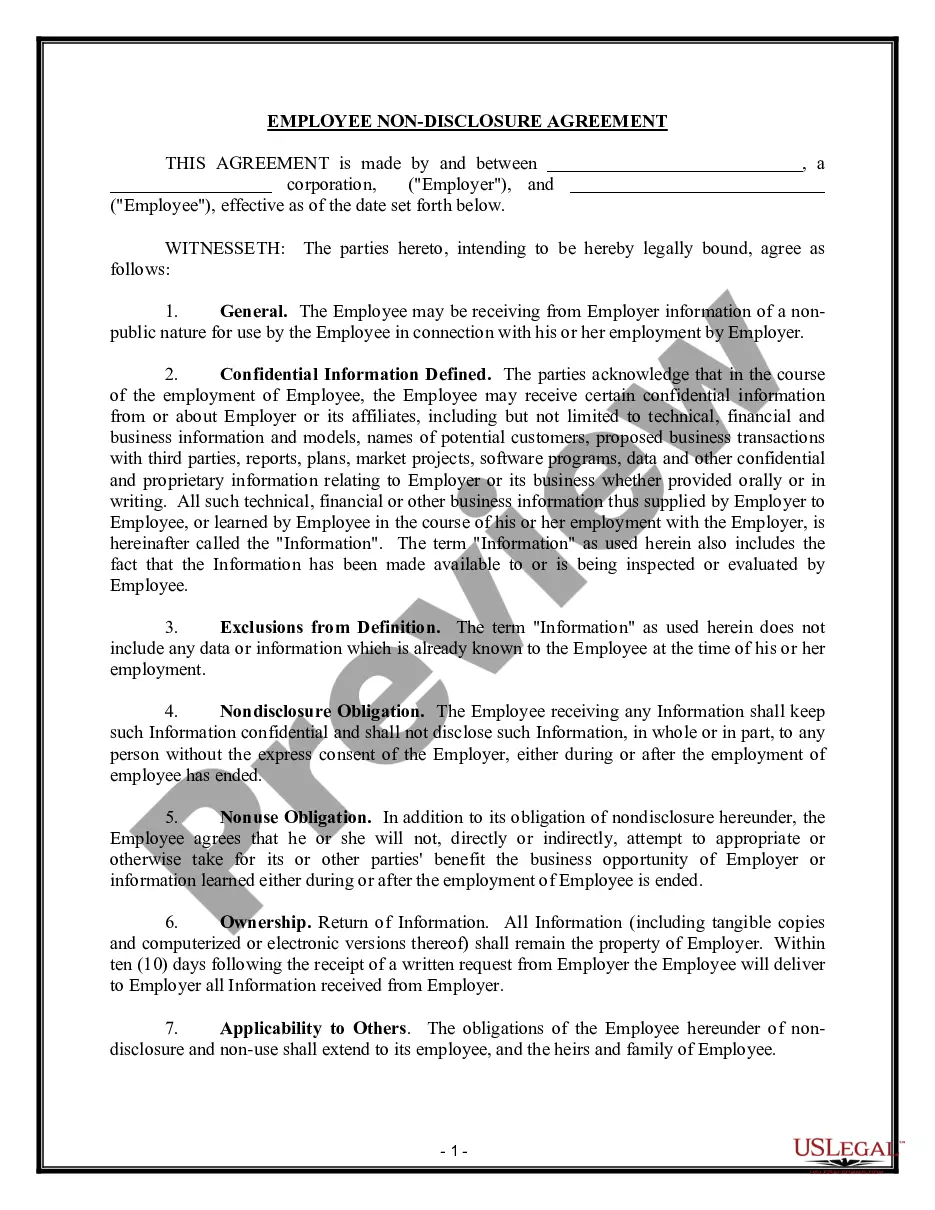
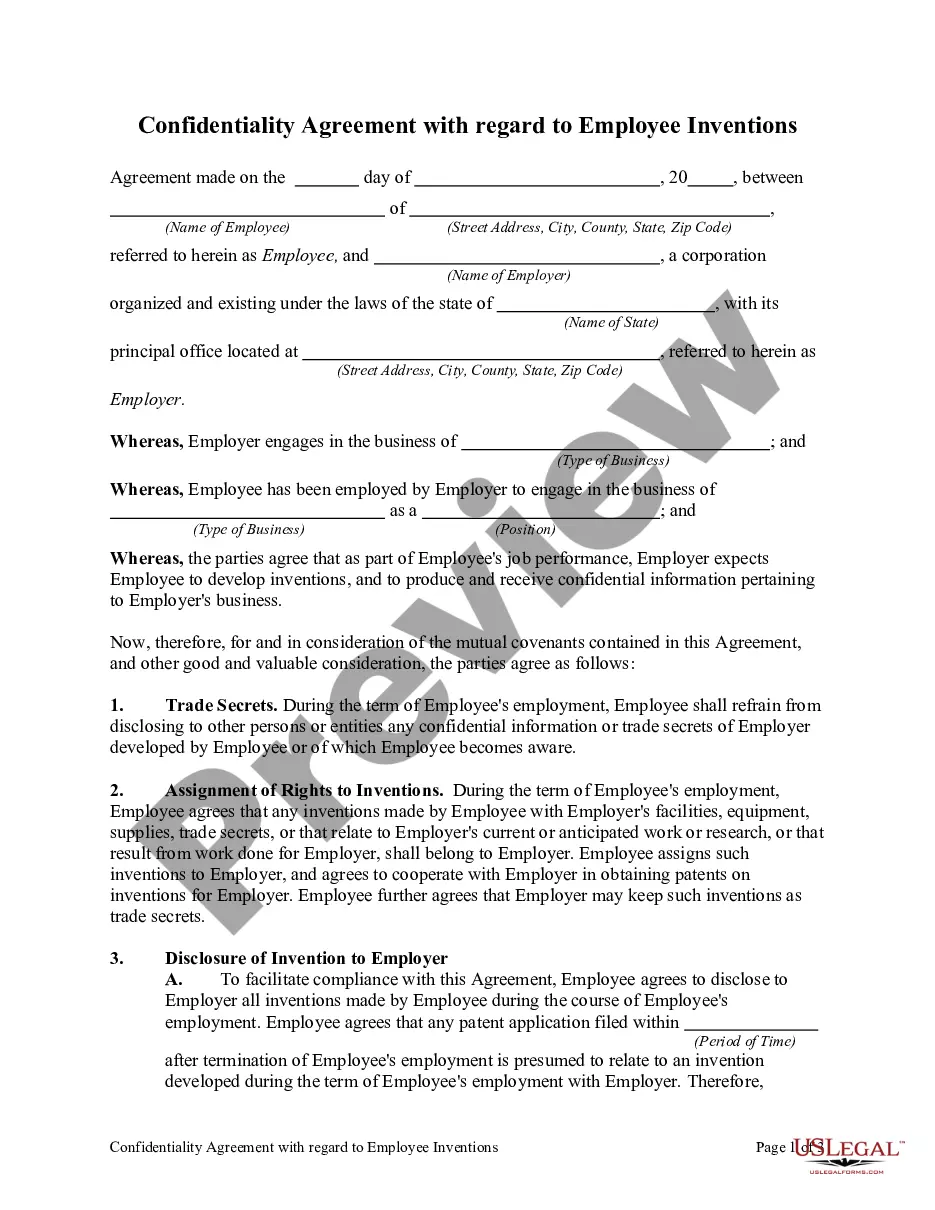
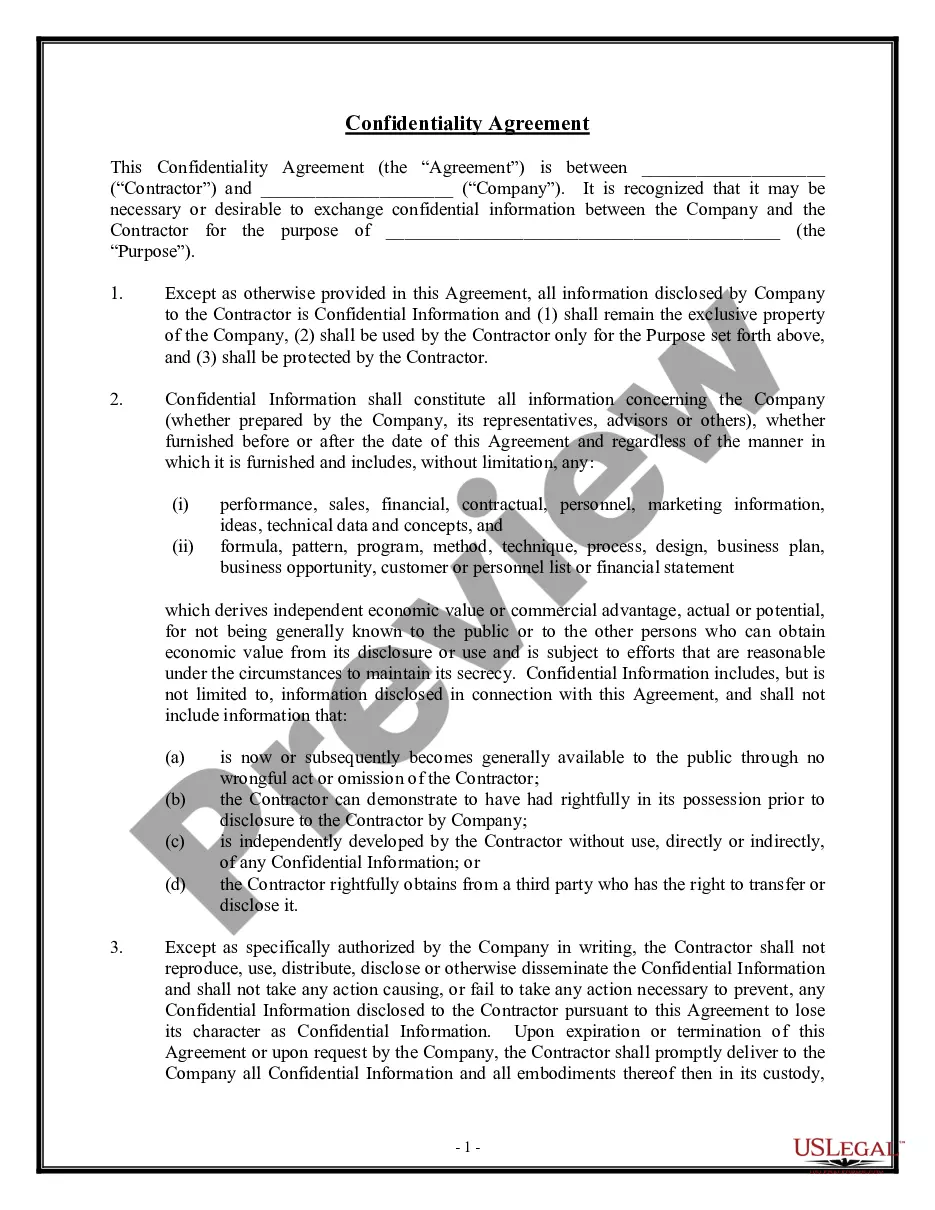
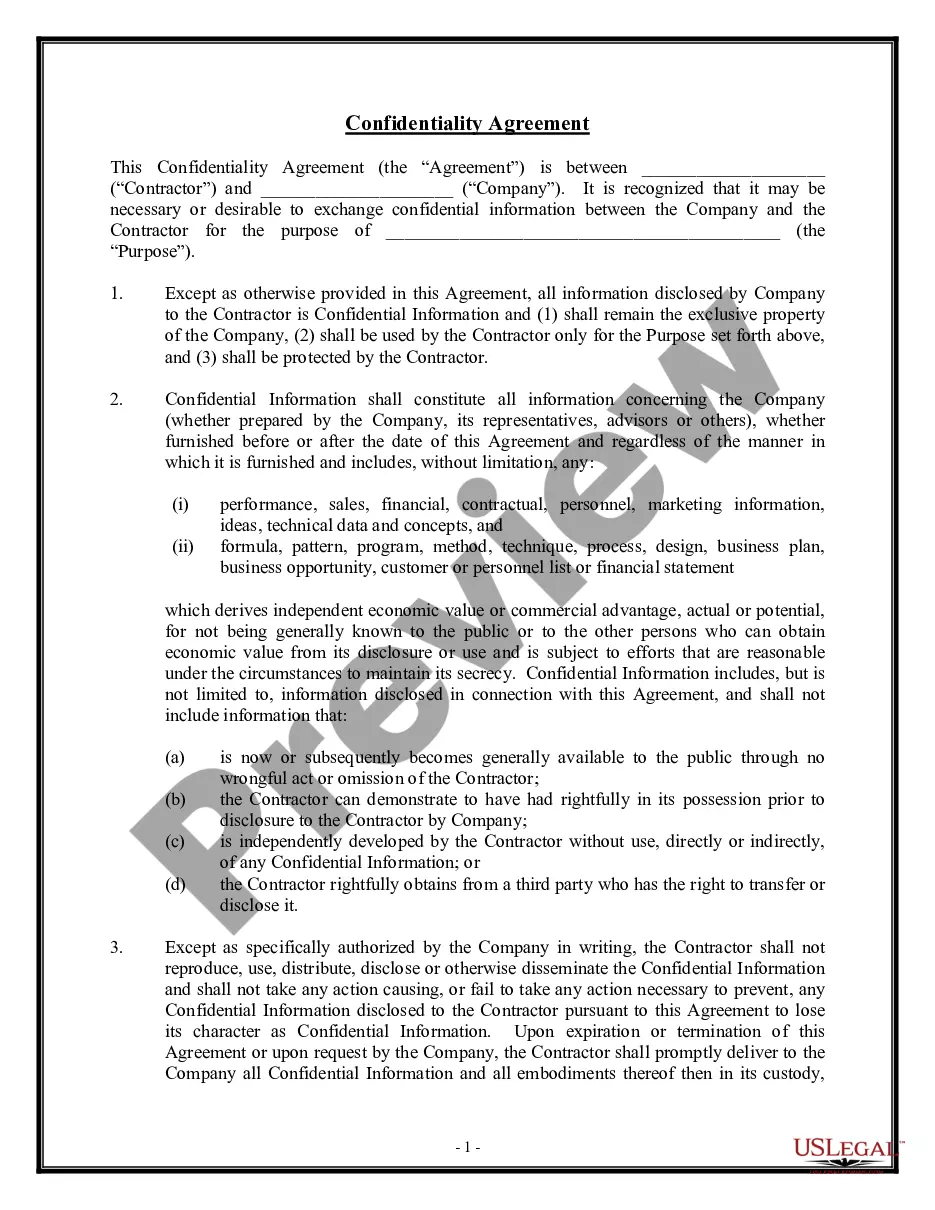

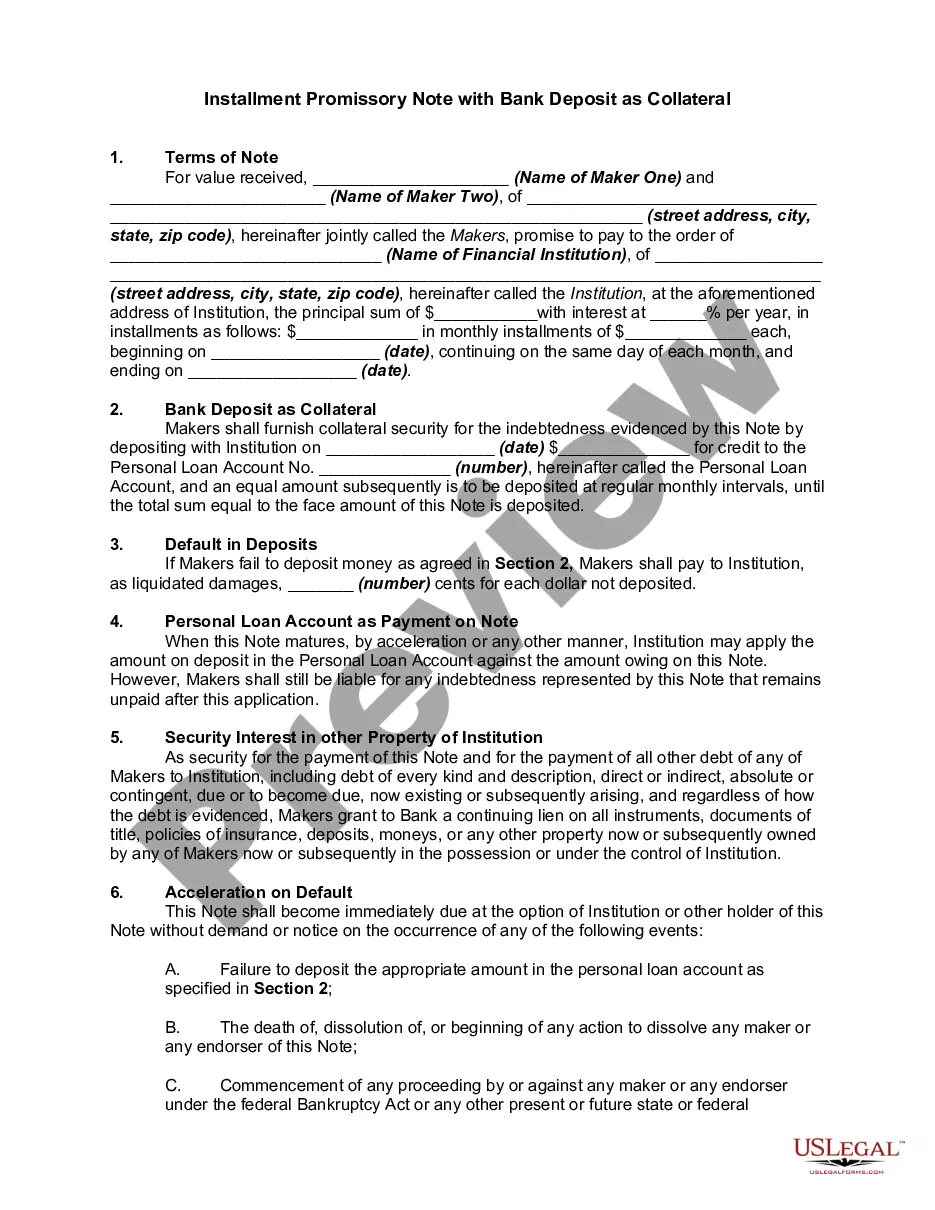
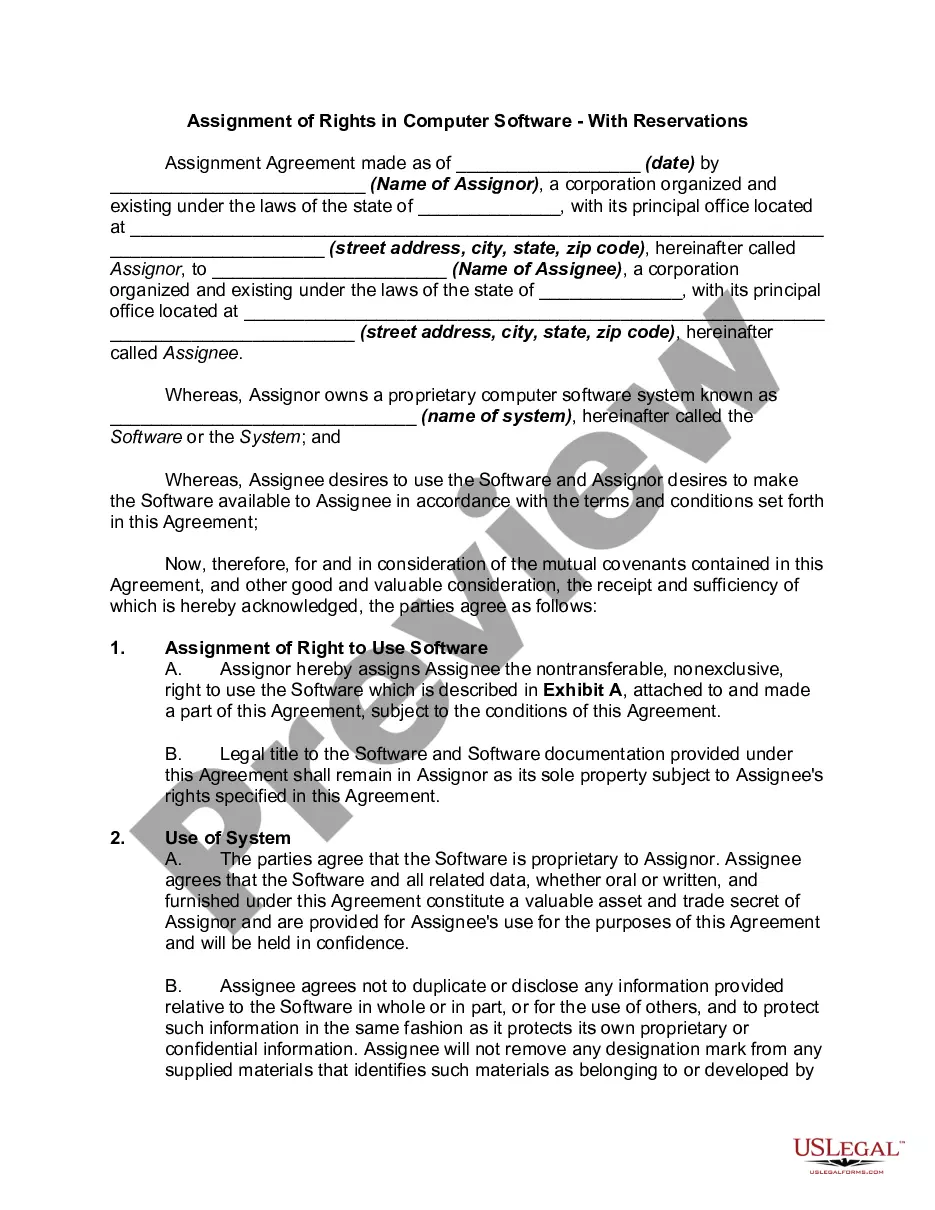

How to fill out Confidentiality Agreement With Employee Regarding Research, Development, Production, Marketing, And Management; And Covenant Not To Compete?
Have you ever been in a situation where you need documentation for various business or personal reasons nearly every workday.
There are numerous legal document samples accessible online, but finding versions you can rely on is not simple.
US Legal Forms provides thousands of template forms, including the Florida Confidentiality Agreement with Employee Regarding Research, Development, Production, Marketing, and Management; and Covenant not to Compete, which can be printed to meet state and federal requirements.
Once you find the appropriate form, click Purchase now.
Select the payment plan you desire, fill in the required details to create your account, and pay for the transaction using your PayPal or credit card. Choose a convenient format and download your copy. Access all the document templates you have purchased in the My documents section. You can obtain an additional copy of the Florida Confidentiality Agreement with Employee Regarding Research, Development, Production, Marketing, and Management; and Covenant not to Compete anytime, if needed. Just select the necessary form to download or print the document template. Utilize US Legal Forms, the most extensive collection of legal forms, to save time and avoid mistakes. The service offers professionally crafted legal document templates that can be utilized for various purposes. Create an account on US Legal Forms and start simplifying your life.
- If you are already familiar with the US Legal Forms website and have an account, simply Log In.
- After that, you can download the Florida Confidentiality Agreement with Employee Regarding Research, Development, Production, Marketing, and Management; and Covenant not to Compete template.
- If you do not have an account and wish to start using US Legal Forms, follow these steps.
- Find the form you need and ensure it is for the correct city/state.
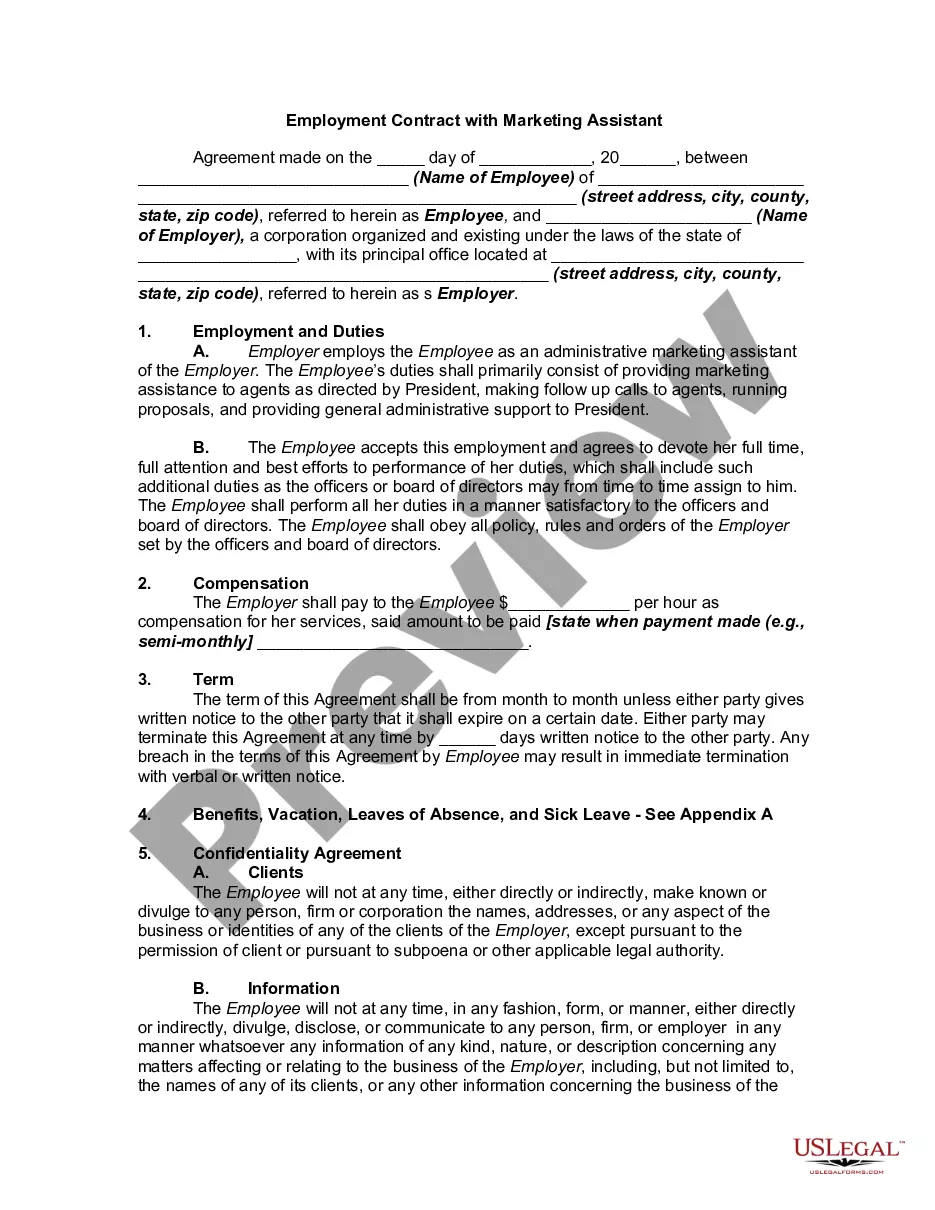
- Use the Preview button to examine the form.
- Review the description to confirm that you have selected the right form.
- If the form is not what you are looking for, use the Search field to find the form that meets your needs.
Form popularity
FAQ
Confidentiality/non-disclosure agreements are contracts in which the employee promises not to disclose certain proprietary information, such as trade secrets. Non-compete agreements are contracts in which the employee agrees not to unfairly compete against his/her (former) employer.
So are non-competes enforceable in Florida? In most circumstances, the answer is yes. Florida law recognizes the validity of a non-compete clause. Florida businesses can reach agreements with their employees limiting the employees' ability to compete with the business for a certain period of time.
In this context, a restrictive covenant is an agreement between an employer and employee that limits an employee's ability to compete after leaving the employer. The most common and restrictive type of agreement is a non-compete agreement.
A confidentiality agreement is a legal document that binds one or more parties to keep secret or proprietary information confidential or proprietary. An NDA is a kind of a contract that upholds secrecy; it does so by defining a confidential partnership and legally binding any parties who sign the NDA to that
There are three main agreements or restrictive covenants regularly used by business owners to limit disclosure or competition. They include confidentiality, non-solicitation and non-compete agreements or provisions.
Generally, confidentiality agreements are enforceable when they meet the general requirements of a contract.
Sometimes referred to as non-involvement clauses, non-compete clauses are valid and enforceable as long as there are reasonable limitations as to time, trade, and place.
A covenant not to compete, also called a "nompete agreement" or "non compete clause," is an agreement where one party promises not to compete with the other party in a specified area for a certain period of time. A covenant not to compete can be found in an employment contract or a sale of business contract.
Proving an Employer Breached the Contract The simplest way to get out of a non-compete is by providing evidence that an employer breached the contract. In such cases, it is crucial to work with an experienced attorney to double-check the contract line-by-line.
Confidentiality agreements can either protect both parties and so both parties are agreeing not to disclose or use each other's confidential information. In contrast, non-compete agreements are almost always one-sided agreements. Usually, one party (the employer) requires the other party not to compete.