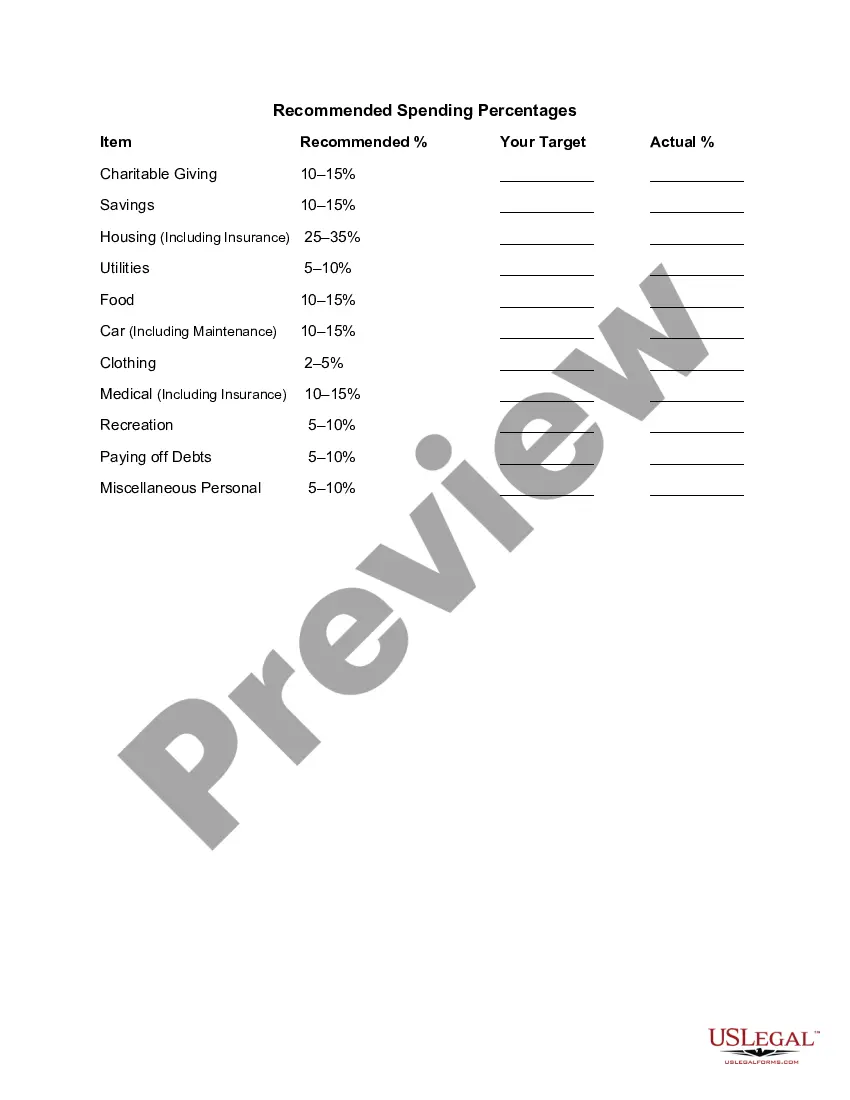
Florida Recommended Spending Percentages
Description
Get your form ready online
Our built-in tools help you complete, sign, share, and store your documents in one place.
Make edits, fill in missing information, and update formatting in US Legal Forms—just like you would in MS Word.
Download a copy, print it, send it by email, or mail it via USPS—whatever works best for your next step.
Sign and collect signatures with our SignNow integration. Send to multiple recipients, set reminders, and more. Go Premium to unlock E-Sign.
If this form requires notarization, complete it online through a secure video call—no need to meet a notary in person or wait for an appointment.
We protect your documents and personal data by following strict security and privacy standards.

Make edits, fill in missing information, and update formatting in US Legal Forms—just like you would in MS Word.

Download a copy, print it, send it by email, or mail it via USPS—whatever works best for your next step.

Sign and collect signatures with our SignNow integration. Send to multiple recipients, set reminders, and more. Go Premium to unlock E-Sign.

If this form requires notarization, complete it online through a secure video call—no need to meet a notary in person or wait for an appointment.

We protect your documents and personal data by following strict security and privacy standards.
Looking for another form?
How to fill out Recommended Spending Percentages?
Are you currently in the situation where you require documents for potential business or specific reasons every day.
There are numerous legitimate document templates available online, but finding versions you can trust is not easy.
US Legal Forms offers thousands of forms, including the Florida Recommended Spending Percentages, which are designed to meet state and federal requirements.
Once you locate the appropriate form, click Get now.
Select the pricing plan you prefer, enter the required information to create your account, and complete the transaction using your PayPal or credit card.
- If you are already familiar with the US Legal Forms website and have an account, simply Log In.
- Then, you can download the Florida Recommended Spending Percentages template.
- If you do not have an account and want to start using US Legal Forms, follow these steps.
- Find the form you need and ensure it is for your correct city/state.
- Use the Review button to verify the form.
- Check the description to confirm you have selected the right form.
- If the form isn’t what you are looking for, use the Search field to find the form that fits your needs.
Form popularity
FAQ
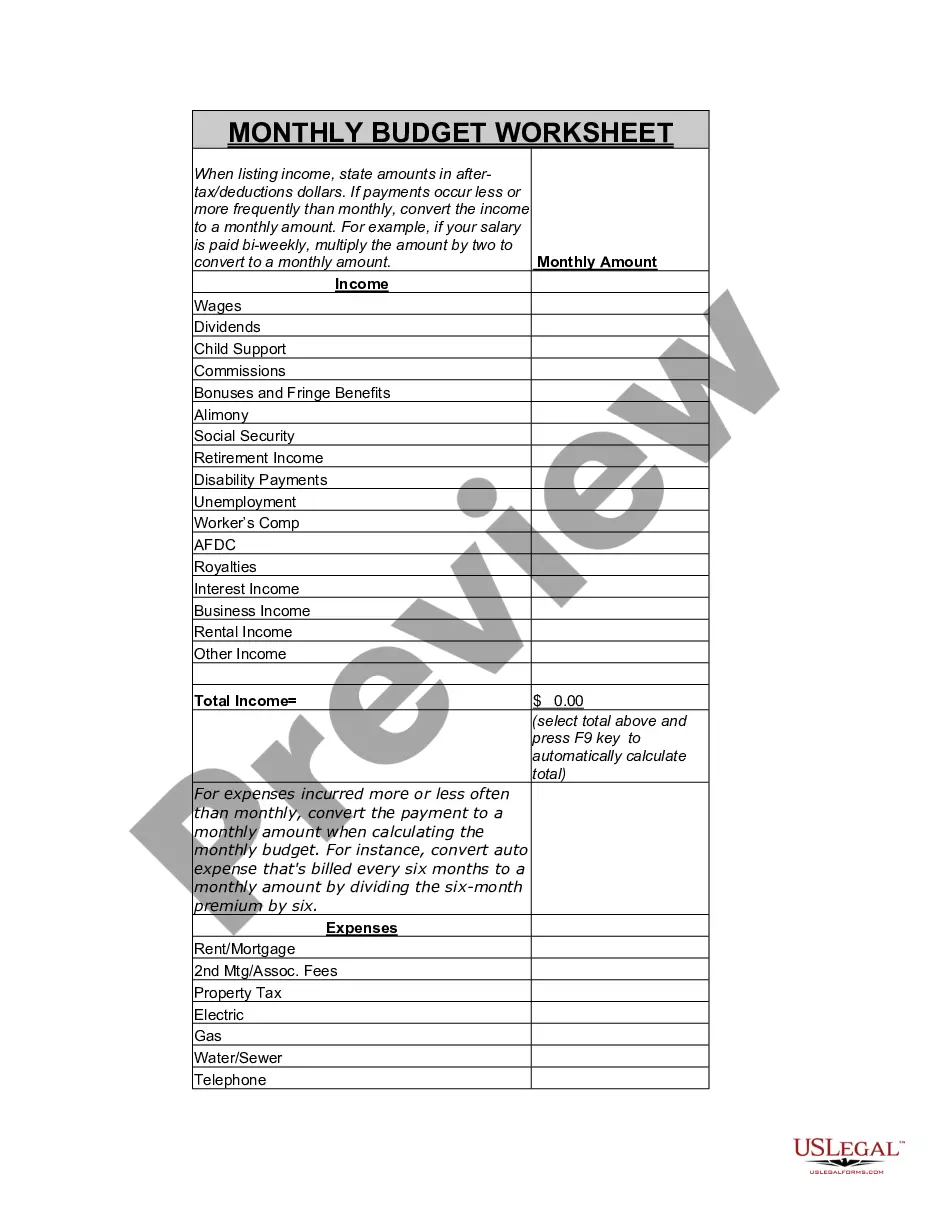
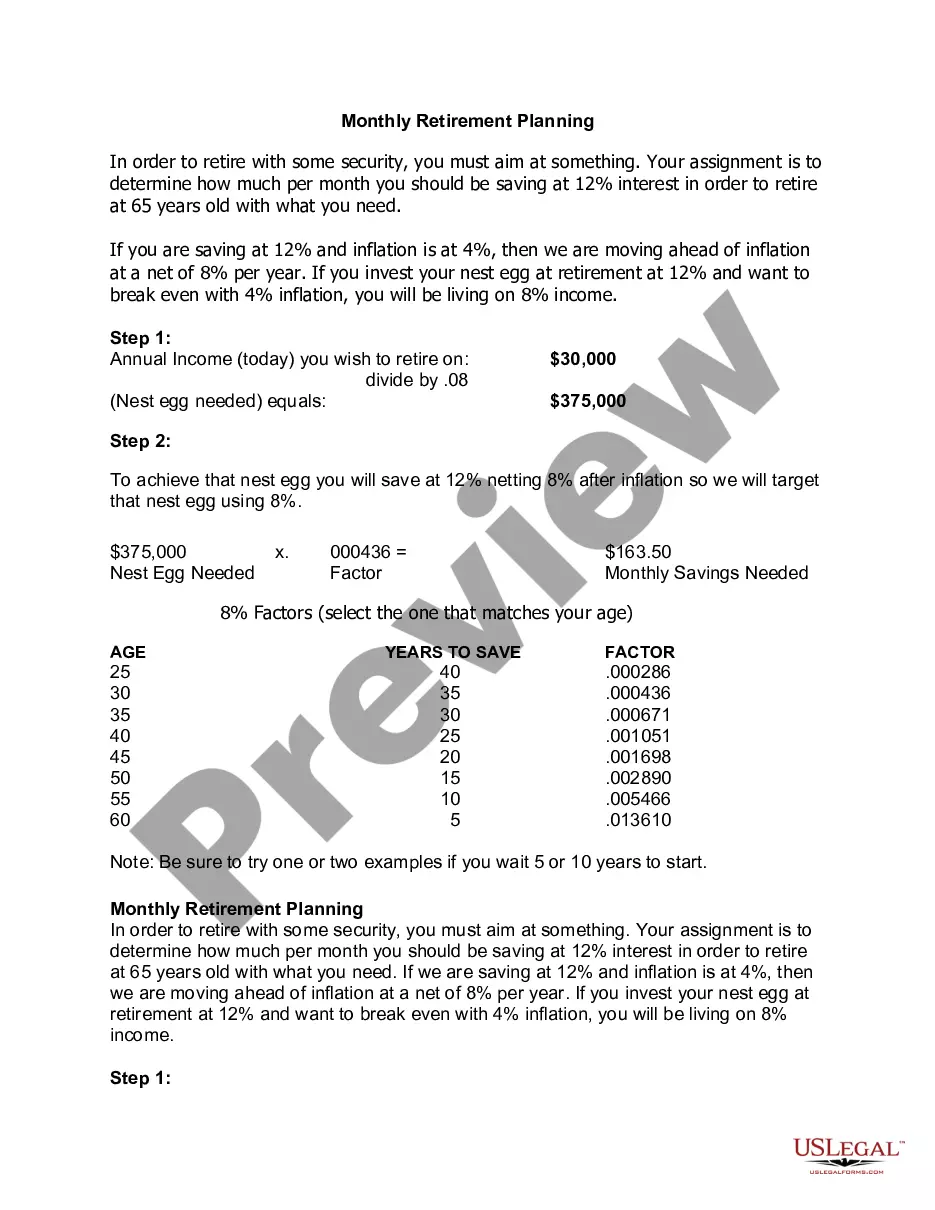
The 50 30 20 rule is a popular budgeting guideline that suggests how to allocate your income. According to this rule, 50% of your income should go towards necessities, 30% to wants, and 20% for savings or debt repayment. This method aligns well with Florida Recommended Spending Percentages, especially for those looking to maintain a balanced budget. By following this structure, you can ensure that you meet essential needs while allowing room for enjoyment and saving.
With no state income tax the state constitution forbids it Florida's state government generates the bulk of general revenue (75% to 80% depending on the year) from sales tax collections. It gets the rest from a variety of sources, including documentary stamp taxes, insurance taxes and corporate income taxes.
The National Conference of State Legislatures (NCSL) has traditionally reported that 49 states must balance their budgets, with Vermont being the exception.
What do state and local governments spend money on? State and local governments spend most of their resources on education, health, and social service programs. In 2019, about one-third of state and local spending went toward combined elementary and secondary education (22 percent) and higher education (9 percent).
National per capita direct general expenditures were $10,161. Florida's largest spending areas per capita were elementary and secondary education ($1,420) and public welfare ($1,341). The Census Bureau includes most Medicaid spending in public welfare but also allocates some of it to public hospitals.
Expenditures generally include spending on government salaries, infrastructure, education, public pensions, public assistance, corrections, Medicaid, and transportation. State debt refers to the money borrowed to make up for a deficit when revenues do not cover spending.
Alaska is the top state for fiscal stability. It's followed by South Dakota, Tennessee, Idaho and Utah to round out the top five. Half of the 10 states with the best fiscal stability also rank among the top 10 Best States overall. Learn more about the Best States for fiscal stability below.
The Florida Leads budget for Fiscal Year 2021-22 totals $101.5 billion, ensures the State maintains substantial funding in reserves, including General Revenue, to effectively respond to any unforeseen emergency, and continues to prioritize our K-12 education students and teachers, and Florida's environmental resources.
Florida lawmakers on Monday approved a sprawling $112.1 billion spending plan for the upcoming fiscal year the largest in state history that includes a huge investment to increase the pay of state workers and contractors.
Florida has a balanced budget provision, requiring the state not to have a budget deficit. The requirement for a balanced budget does not appear as such in the Florida Constitution.