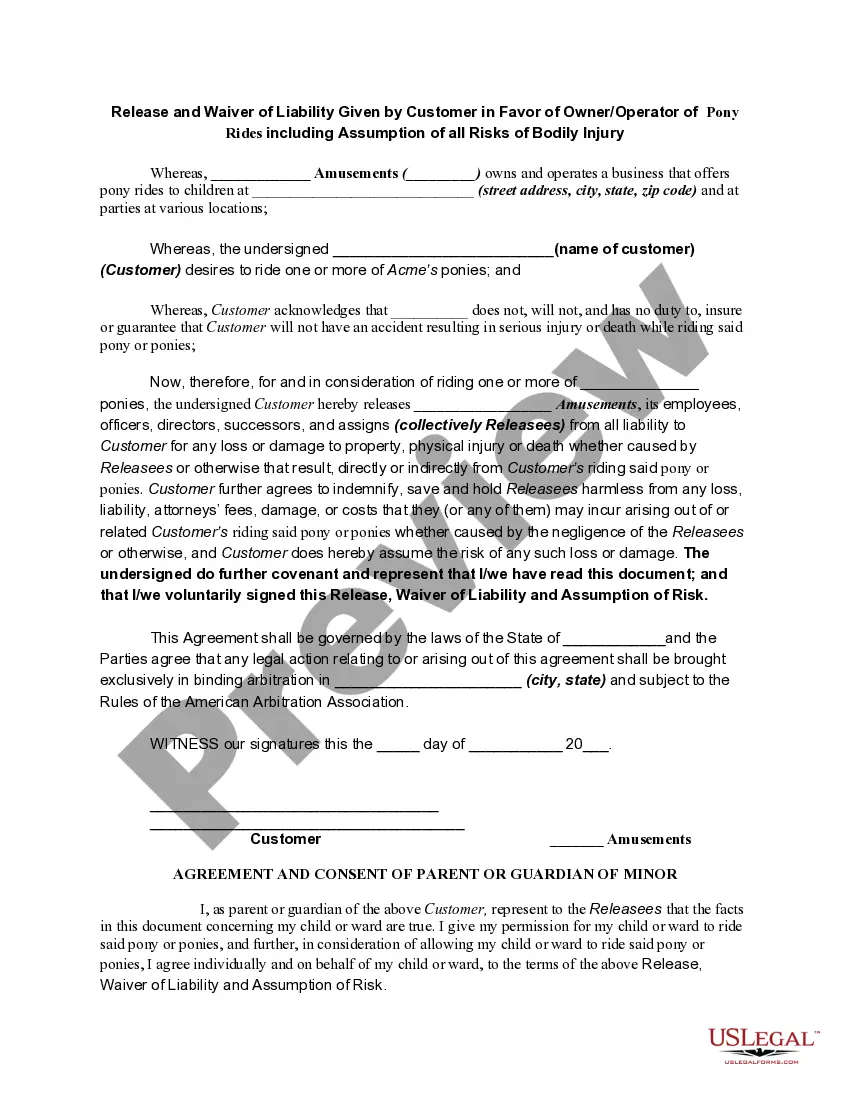
Florida Rule 144 Seller's Representation Letter Non-Affiliate
Description
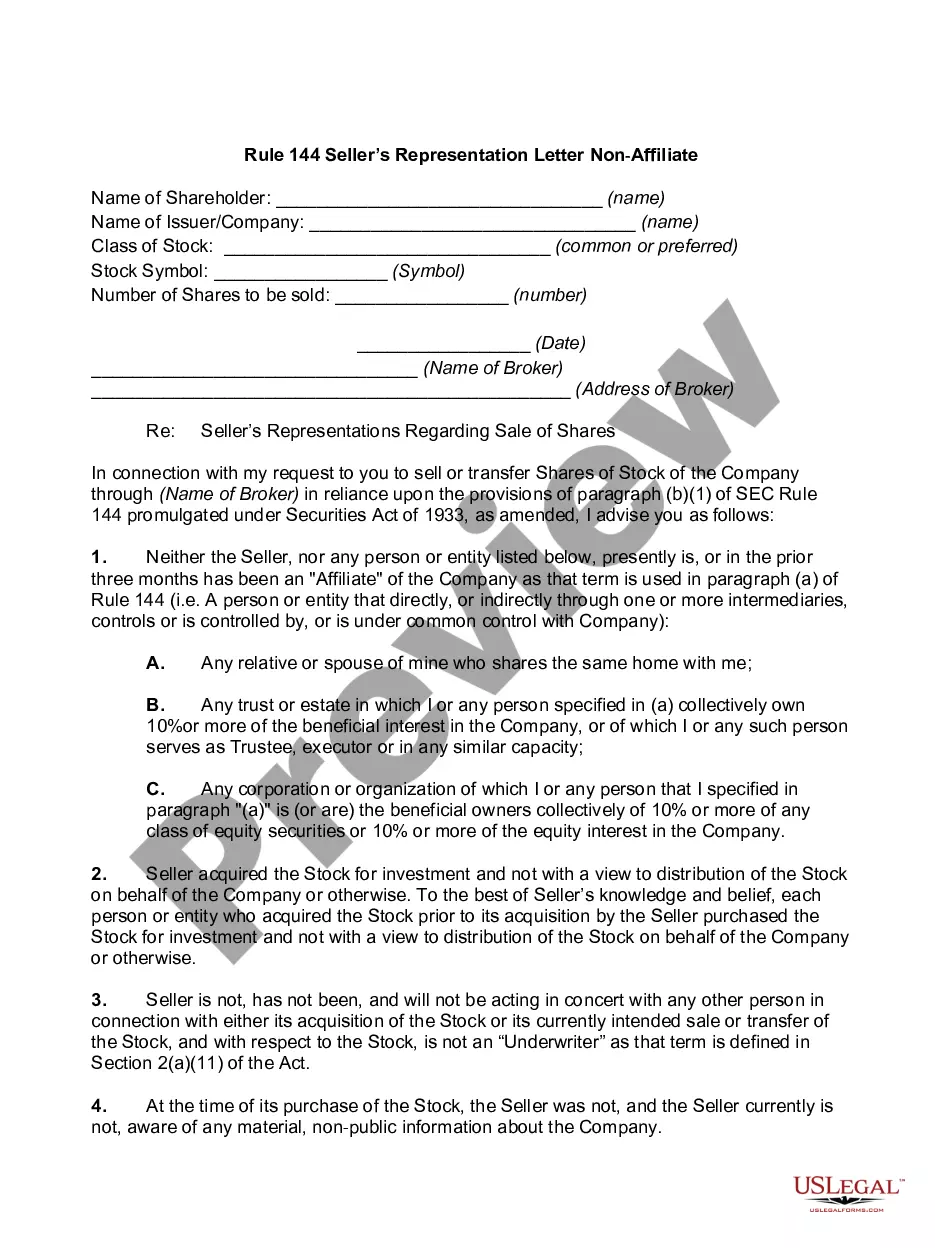
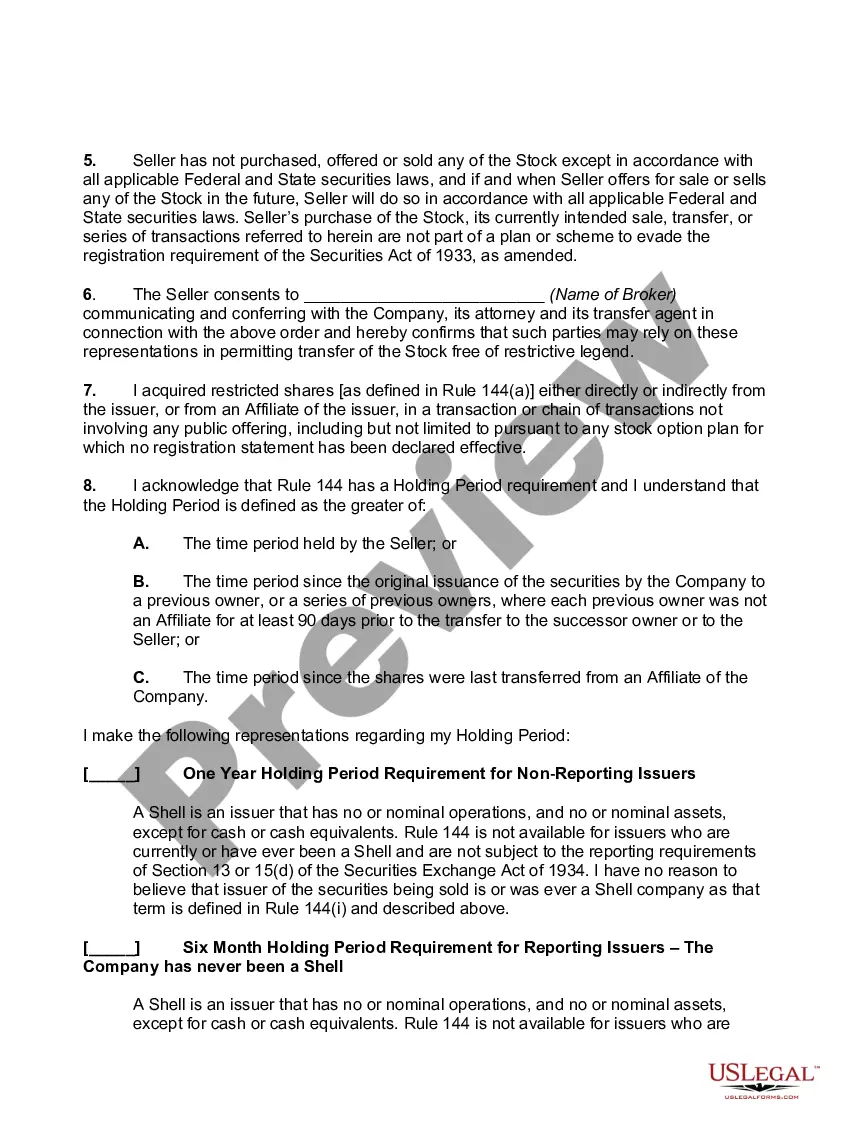
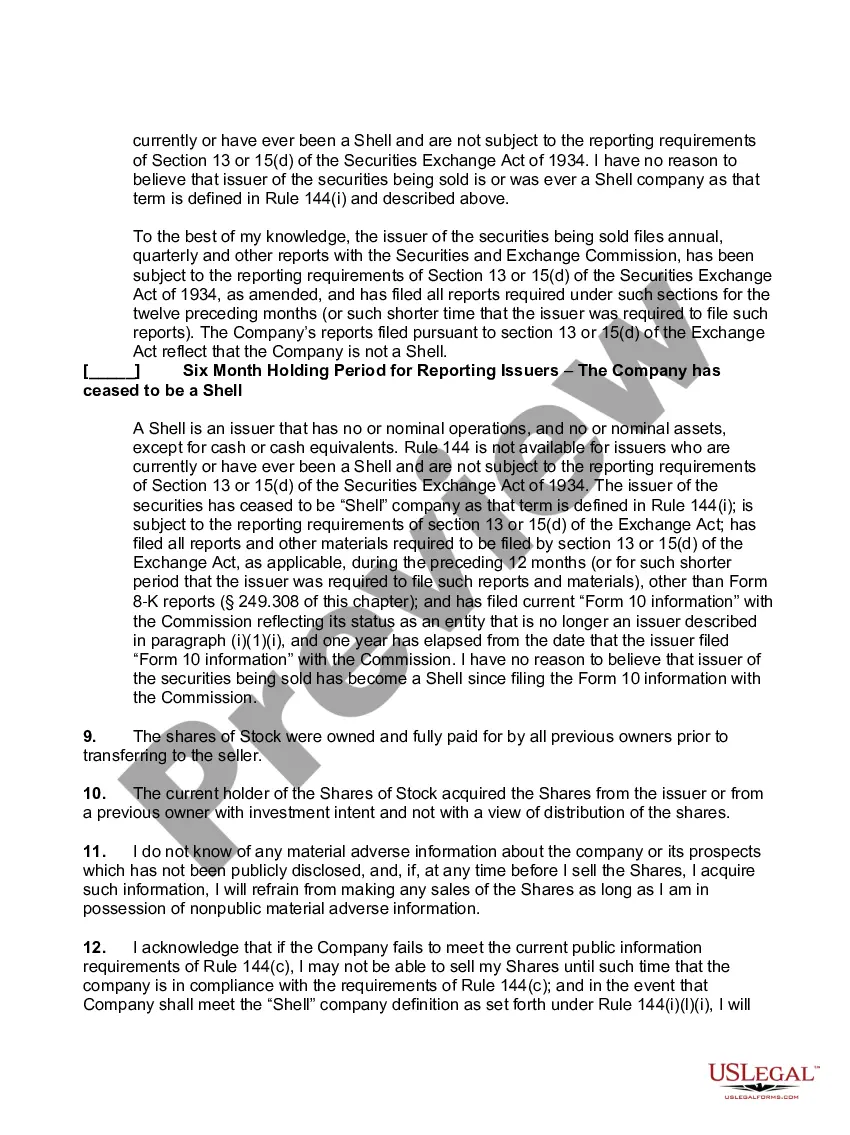


How to fill out Rule 144 Seller's Representation Letter Non-Affiliate?
US Legal Forms - one of the biggest collections of valid templates in the United States - offers a selection of legitimate document templates that you can download or create.
By using the website, you can access thousands of forms for business and personal matters, organized by categories, states, or keywords. You can find the newest forms such as the Florida Rule 144 Seller's Representation Letter Non-Affiliate in just moments.
If you have an account, Log In and download the Florida Rule 144 Seller's Representation Letter Non-Affiliate from the US Legal Forms library. The Download button will appear on every form you view. You can access all previously downloaded forms from the My documents tab in your account.
Make modifications. Complete, edit, print, and sign the downloaded Florida Rule 144 Seller's Representation Letter Non-Affiliate.
Every template you added to your account has no expiration date and is yours indefinitely. Therefore, if you want to download or print another copy, simply go to the My documents section and click on the form you need. Access the Florida Rule 144 Seller's Representation Letter Non-Affiliate with US Legal Forms, the most comprehensive library of legitimate document templates. Utilize thousands of professional and state-specific templates that fulfill your business or personal needs and requirements.
- If you want to use US Legal Forms for the first time, here are simple steps to help you get started.
- Make sure you have selected the correct form for your city/county. Click on the Review button to evaluate the form's content. Check the form details to ensure you have chosen the right one.
- If the form does not meet your needs, use the Search box at the top of the screen to find one that does.
- If you are satisfied with the form, confirm your selection by clicking the Buy now button. Then, choose the payment plan you prefer and provide your information to register for an account.
- Process the payment. Use a credit card or PayPal account to finalize the transaction.
- Select the format and download the form to your device.
Form popularity
FAQ
Counsel delivering an opinion as part of a Rule 144 sale typically relies on, among other things, a representation letter from the seller to establish certain facts underlying the opinion, and the seller's broker and the issuer's transfer agent may require a similar representation letter.
affiliate of a nonreporting issuer must hold the securities for one year before any public resale. After one year, a nonaffiliate may freely resell such securities without regard to any of the Rule 144 conditions.
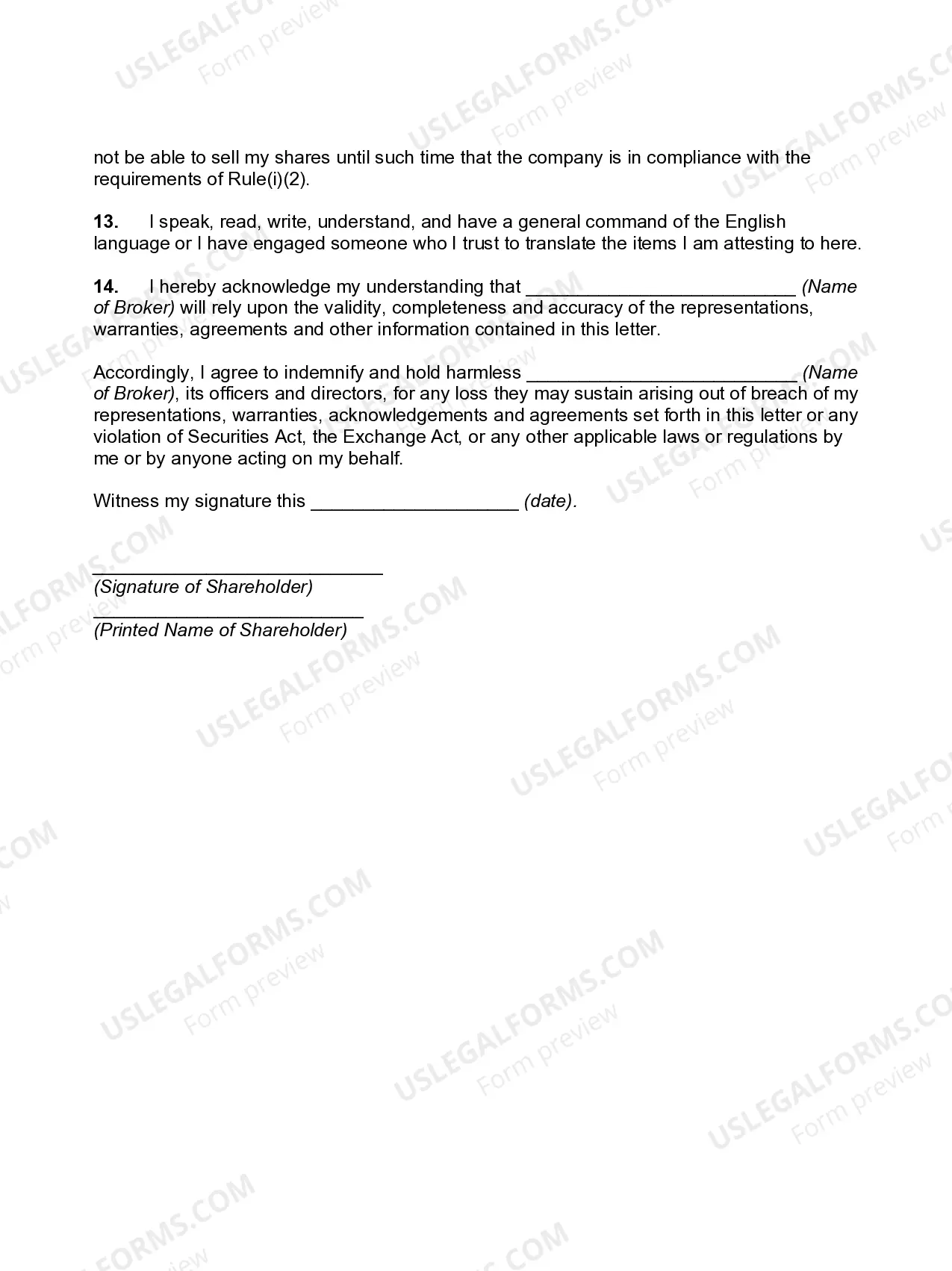
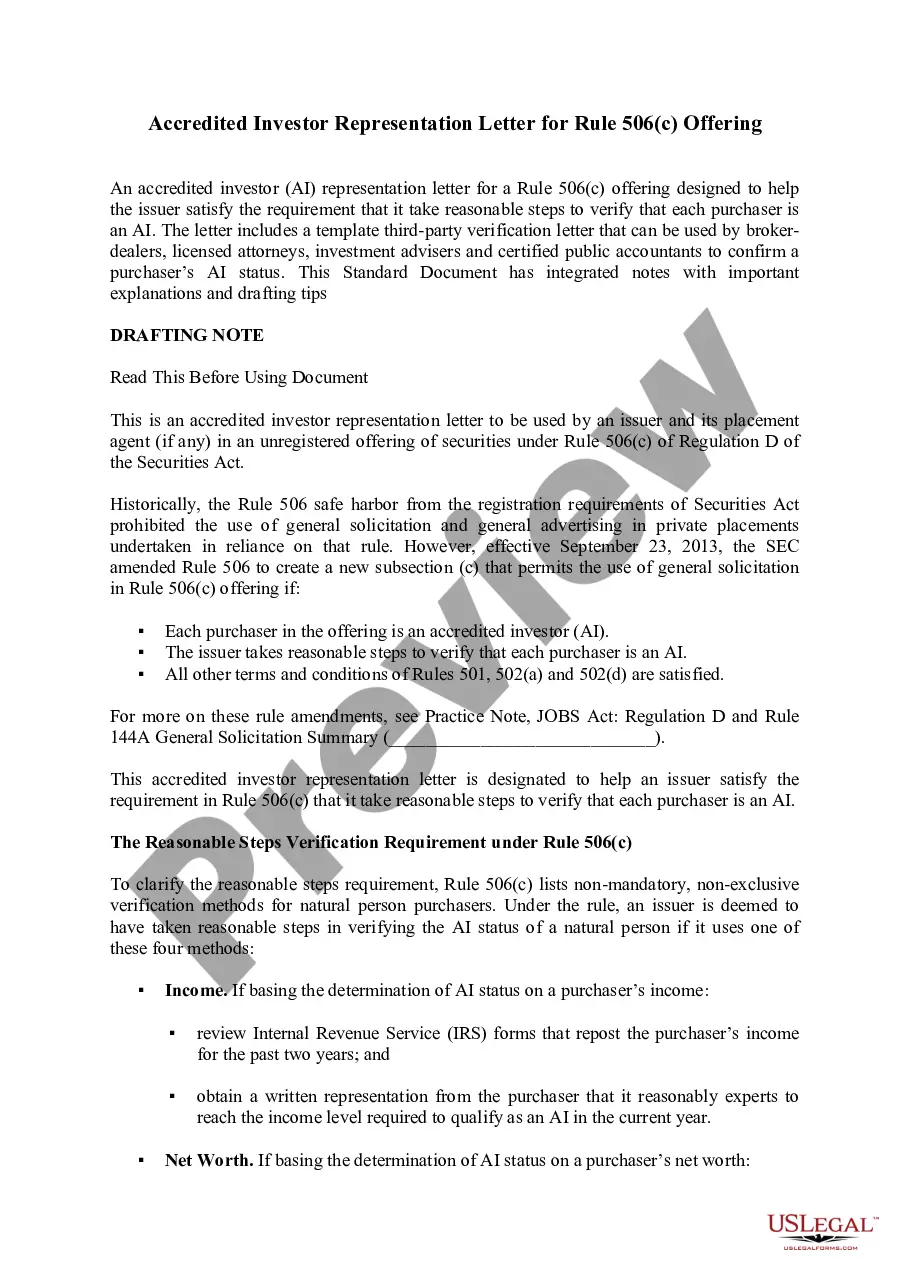
A standard form to be used as a starting point for drafting a representation letter to be delivered by a non-affiliate seller of restricted securities in reliance on Rule 144 under the Securities Act.
Rule 144 provides an exemption and permits the public resale of restricted or control securities if a number of conditions are met, including how long the securities are held, the way in which they are sold, and the amount that can be sold at any one time.
Rule 144 at (a)(1) defines an affiliate of an issuing company as a person that directly, or indirectly through one or more intermediaries, controls, or is controlled by, or is under common control with, such issuer.
Rule 144 is a safe harbor under Section 4(1) of the 1933 Act, originally adopted in 1972 and amended several times since then, that permits the public or private resale of restricted securities if certain conditions are met, including the satisfaction of applicable holding periods. D.
Rule 144 applies to the sale into the public securities market of restricted stock by anyone and of unrestricted stock sold by a controlling person (affiliate) of an issuing company. Sales into the public market involve a brokerage firm and are not face-to-face sales negotiated between a seller and a buyer.
Rule 144 provides an exemption and permits the public resale of restricted or control securities if a number of conditions are met, including how long the securities are held, the way in which they are sold, and the amount that can be sold at any one time.
Rule 144 does not apply to: sales in the public market that involve a brokerage firm. private transactions, including sales, gifts, estate distributions, and pledges (but will apply when the recipient wants to sell the restricted stock to the public market)