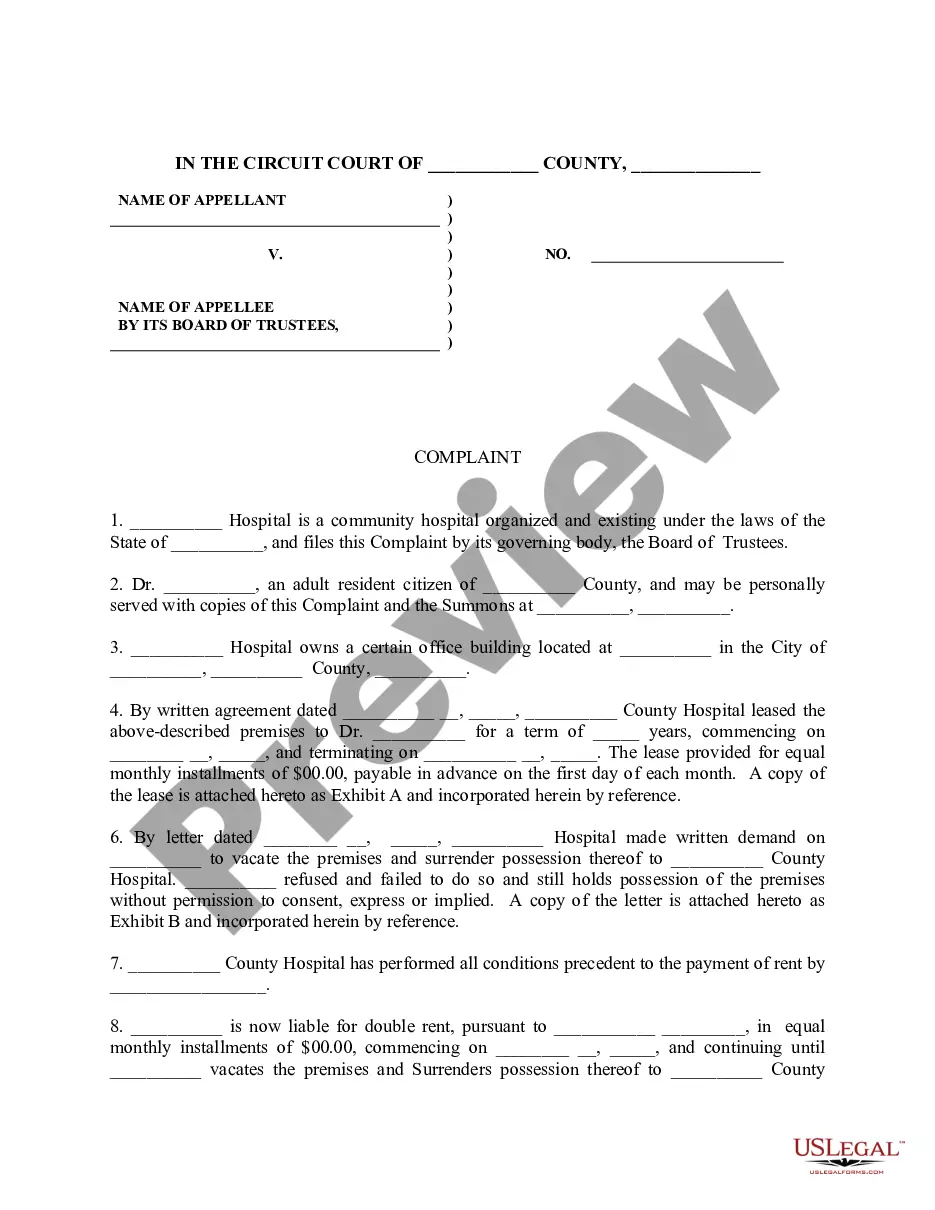
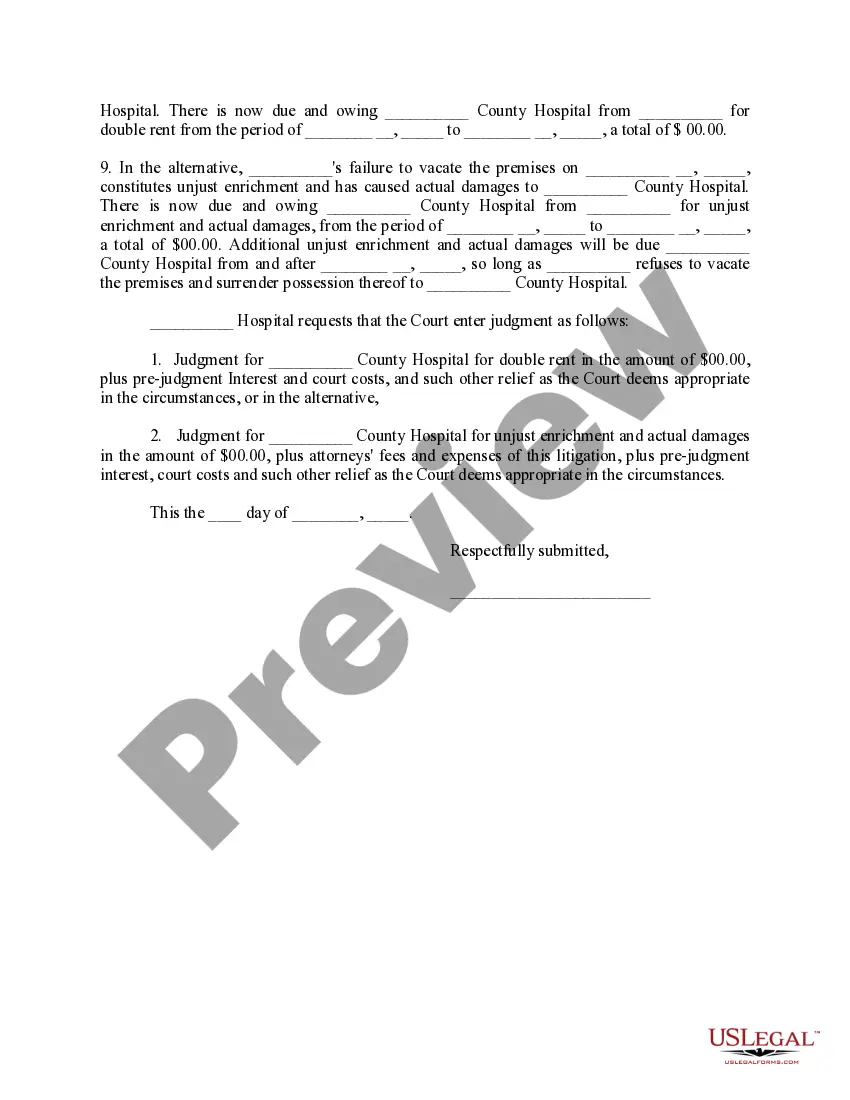
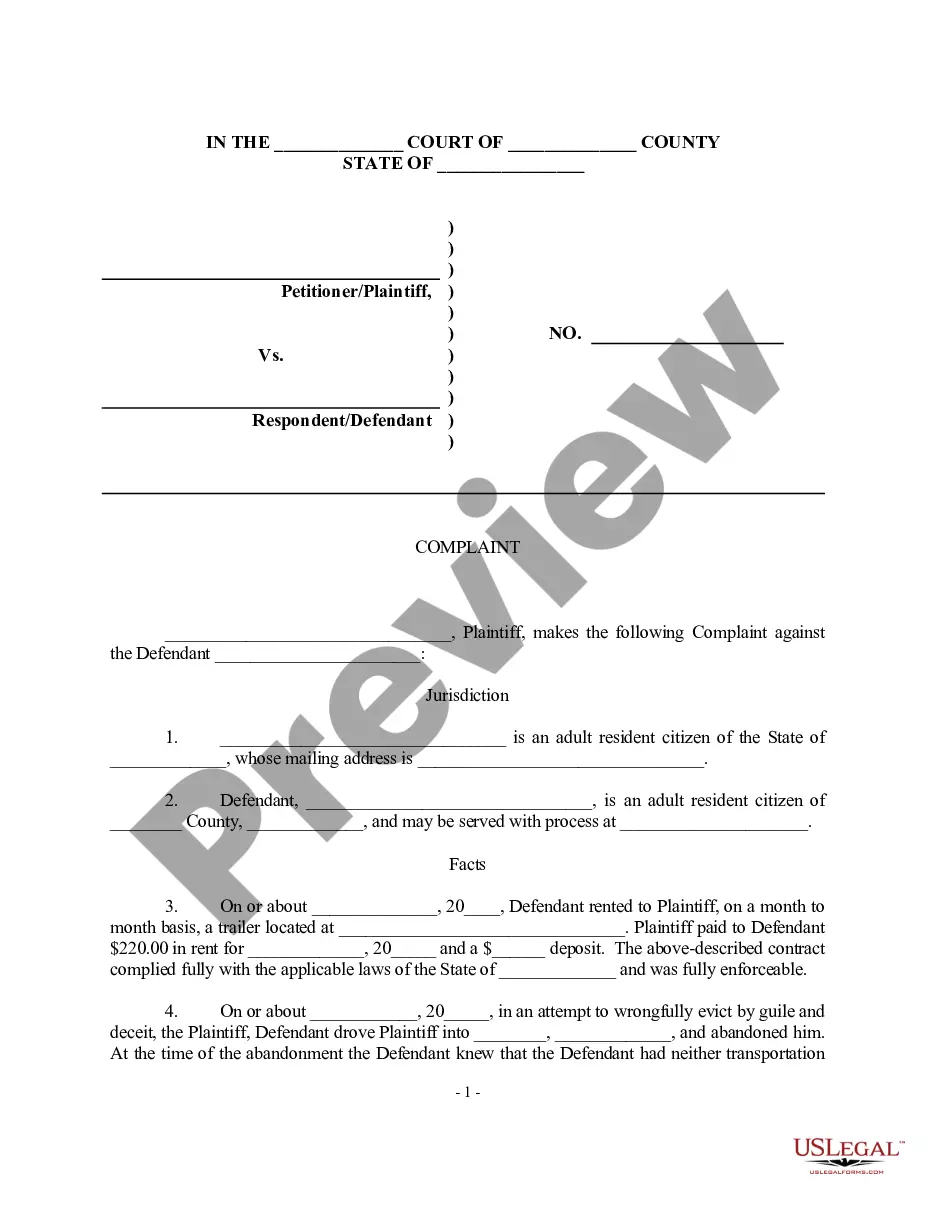
Florida Complaint regarding double rent damages for holdover
Description
Get your form ready online
Our built-in tools help you complete, sign, share, and store your documents in one place.
Make edits, fill in missing information, and update formatting in US Legal Forms—just like you would in MS Word.
Download a copy, print it, send it by email, or mail it via USPS—whatever works best for your next step.
Sign and collect signatures with our SignNow integration. Send to multiple recipients, set reminders, and more. Go Premium to unlock E-Sign.
If this form requires notarization, complete it online through a secure video call—no need to meet a notary in person or wait for an appointment.
We protect your documents and personal data by following strict security and privacy standards.

Make edits, fill in missing information, and update formatting in US Legal Forms—just like you would in MS Word.

Download a copy, print it, send it by email, or mail it via USPS—whatever works best for your next step.

Sign and collect signatures with our SignNow integration. Send to multiple recipients, set reminders, and more. Go Premium to unlock E-Sign.

If this form requires notarization, complete it online through a secure video call—no need to meet a notary in person or wait for an appointment.

We protect your documents and personal data by following strict security and privacy standards.
Looking for another form?


How to fill out Complaint Regarding Double Rent Damages For Holdover?
It is feasible to spend hours online trying to discover the valid document template that meets the state and federal requirements you require.
US Legal Forms provides thousands of valid forms that are reviewed by specialists.
You can download or create the Florida Complaint regarding double rent damages for holdover from the service.
If available, use the Preview option to browse through the document template as well.
- If you already have a US Legal Forms account, you may Log In and click the Download option.
- Then, you can complete, modify, print, or sign the Florida Complaint regarding double rent damages for holdover.
- Each valid document template you obtain is yours permanently.
- To get another copy of any purchased form, go to the My documents tab and click the corresponding option.
- If you are using the US Legal Forms website for the first time, follow the simple instructions below.
- First, ensure that you have selected the appropriate document template for the county/city of your choice.
- Review the form outline to confirm that you have selected the correct form.
Form popularity
FAQ
Chapter 83 of the Florida Statutes is instructive on handling a holdover tenant situation. Section 83.58 of the Florida Statutes entitles an owner to demand double rent for the amount of time that the tenant continues to stay in possession of the property.
When a tenant remains in possession of the rental after the agreement term expires they are considered a ?holdover tenant? . Legally, they become a month-to-month tenant and all provisions of the original agreement remain in effect, including the requirement to provide 30 days written notice of their intent to vacate.
Evicting a Holdover Tenant Similar to normal lease termination, the landlord must provide the holdover tenant with a notice of eviction. In the case of a standard lease, landlords must provide tenants a 3-day notice of eviction for non-payment of rent and a 7-day notice of eviction for violating the lease agreement.
Most landlords are aware of the 3 day notice requirements for a non-payment of rent eviction, and the 7 day notice requirements for a non-compliance with lease eviction. There are no such requirements for an eviction where the tenant is a holdover, assuming the lease has been properly terminated.
Ing to Florida Statute 83.58, if a Tenant remains after the lease terminates, an Eviction can be filed. As a result, the Court may award the Landlord double rent if they refuse to leave. In addition, the Landlord is entitled to Summary Procedure.
Chapter 83 of the Florida Statutes is instructive on handling a holdover tenant situation. Section 83.58 of the Florida Statutes entitles an owner to demand double rent for the amount of time that the tenant continues to stay in possession of the property.
At the end of the lease term, the tenant remains in possession without entering into a new lease agreement or obtaining permission from the landlord. In this case, the tenant becomes a holdover tenant under Florida law. The landlord may choose to evict the tenant or accept rent and establish a new tenancy.
Holdover Tenancies Legally, they become a month-to-month tenant and all provisions of the original agreement remain in effect, including the requirement to provide 30 days written notice of their intent to vacate. In Florida the landlord has the right to charge double the monthly rent amount as holdover rent.