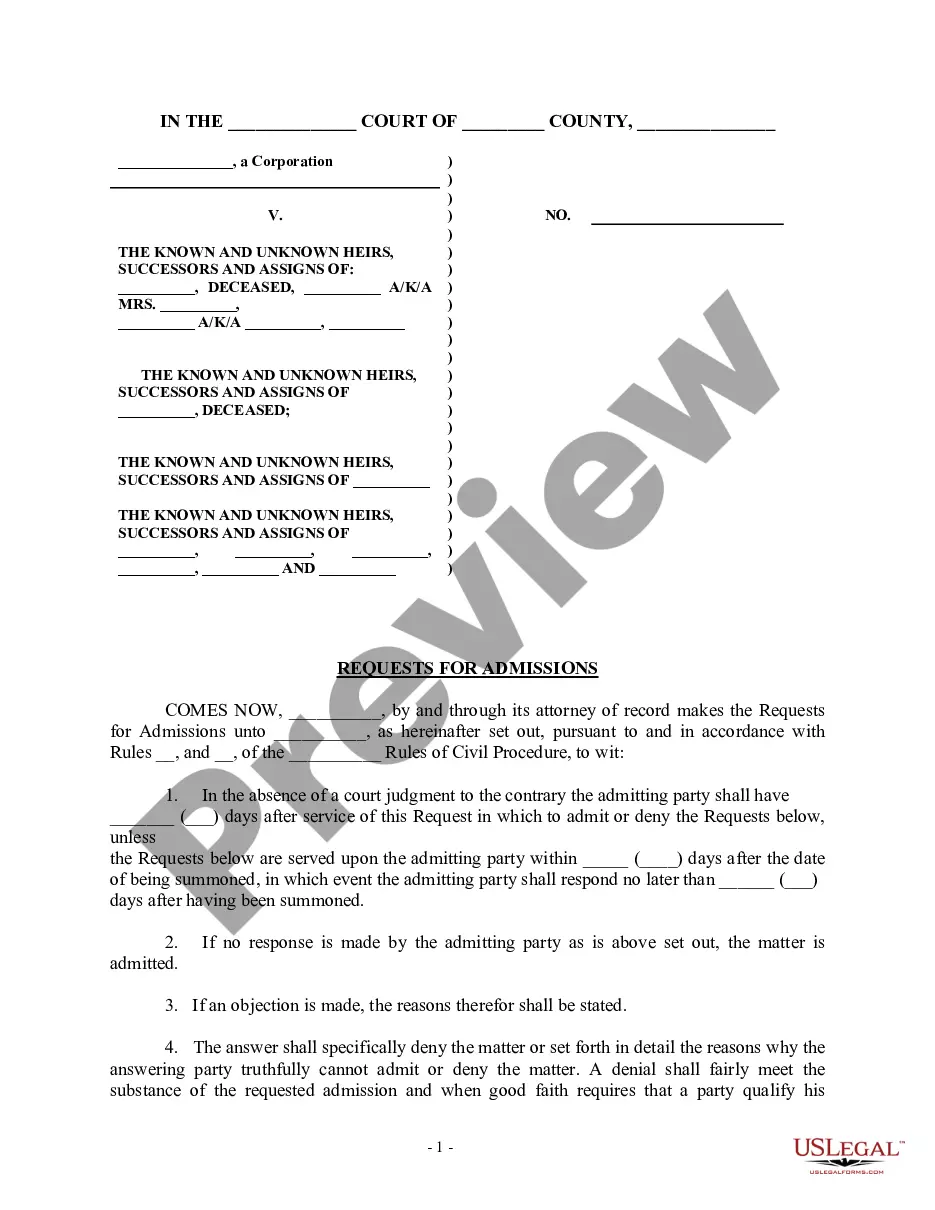
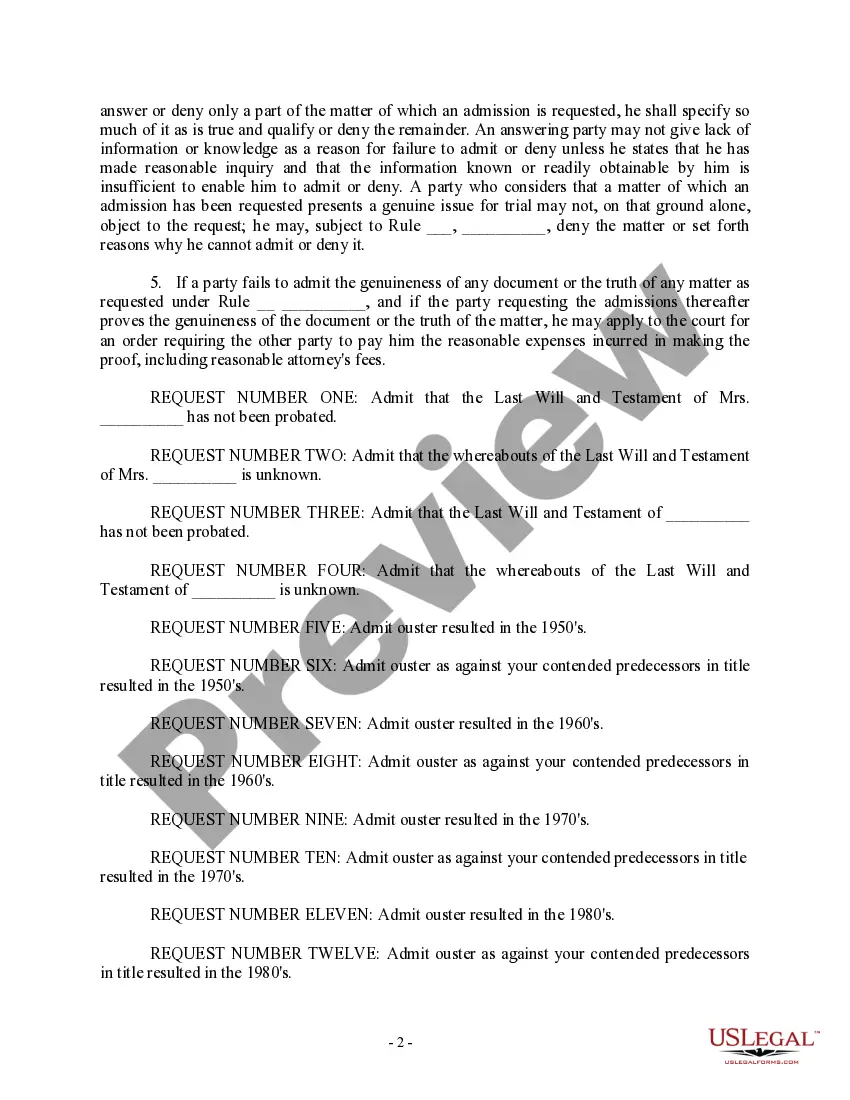
Florida Requests for Admissions
Description

Get your form ready online
Our built-in tools help you complete, sign, share, and store your documents in one place.
Make edits, fill in missing information, and update formatting in US Legal Forms—just like you would in MS Word.
Download a copy, print it, send it by email, or mail it via USPS—whatever works best for your next step.
Sign and collect signatures with our SignNow integration. Send to multiple recipients, set reminders, and more. Go Premium to unlock E-Sign.
If this form requires notarization, complete it online through a secure video call—no need to meet a notary in person or wait for an appointment.
We protect your documents and personal data by following strict security and privacy standards.

Make edits, fill in missing information, and update formatting in US Legal Forms—just like you would in MS Word.

Download a copy, print it, send it by email, or mail it via USPS—whatever works best for your next step.

Sign and collect signatures with our SignNow integration. Send to multiple recipients, set reminders, and more. Go Premium to unlock E-Sign.

If this form requires notarization, complete it online through a secure video call—no need to meet a notary in person or wait for an appointment.

We protect your documents and personal data by following strict security and privacy standards.
Looking for another form?
How to fill out Requests For Admissions?
If you need to completely download or print legal document templates, utilize US Legal Forms, the largest repository of legal documents available online. Take advantage of the site's simple and convenient search to find the forms you require. Many templates for business and personal use are organized by categories and states, or keywords. Use US Legal Forms to obtain the Florida Requests for Admissions in just a few clicks.
If you are already a US Legal Forms user, Log In to your account and click the Obtain button to access the Florida Requests for Admissions. You can also access forms you previously downloaded in the My documents section of your account.
If you are using US Legal Forms for the first time, follow the instructions below: Step 1. Ensure you have selected the form for the correct city/state. Step 2. Use the Review option to inspect the form's details. Don’t forget to read the description. Step 3. If you are not satisfied with the form, use the Search box at the top of the page to find other versions of the legal form template. Step 4. Once you have located the form you need, click the Get now button. Choose the payment plan you prefer and enter your information to create an account. Step 5. Complete the transaction. You can use your credit card or PayPal account to finalize the payment. Step 6. Select the format of the legal form and download it to your device. Step 7. Complete, modify, and print or sign the Florida Requests for Admissions.
- Every legal document template you acquire is yours indefinitely.
- You have access to all forms you downloaded within your account.
- Click the My documents section and choose a form to print or download again.
- Be proactive and download, and print the Florida Requests for Admissions with US Legal Forms.
- There are thousands of professional and state-specific forms you can use for your personal or business needs.
Form popularity
FAQ
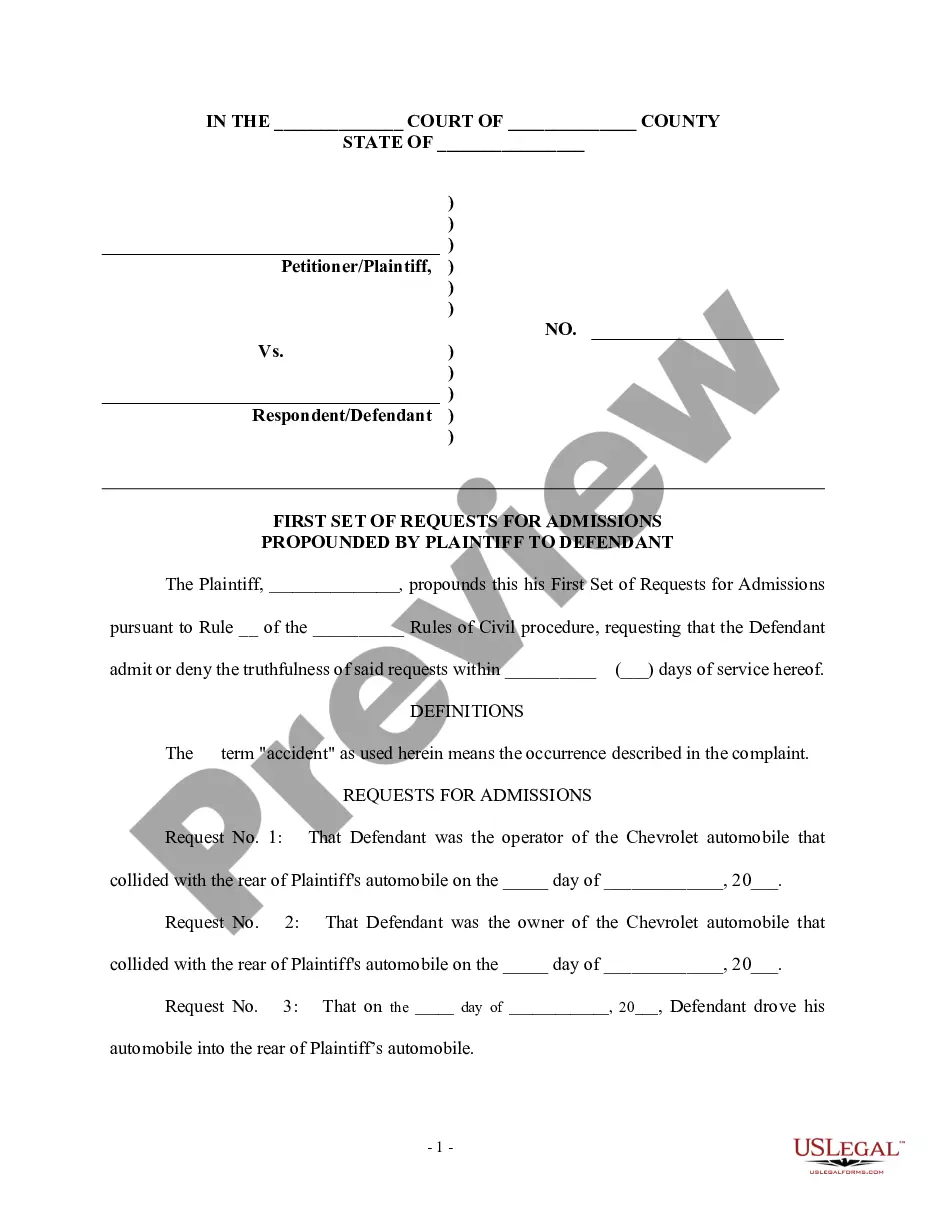
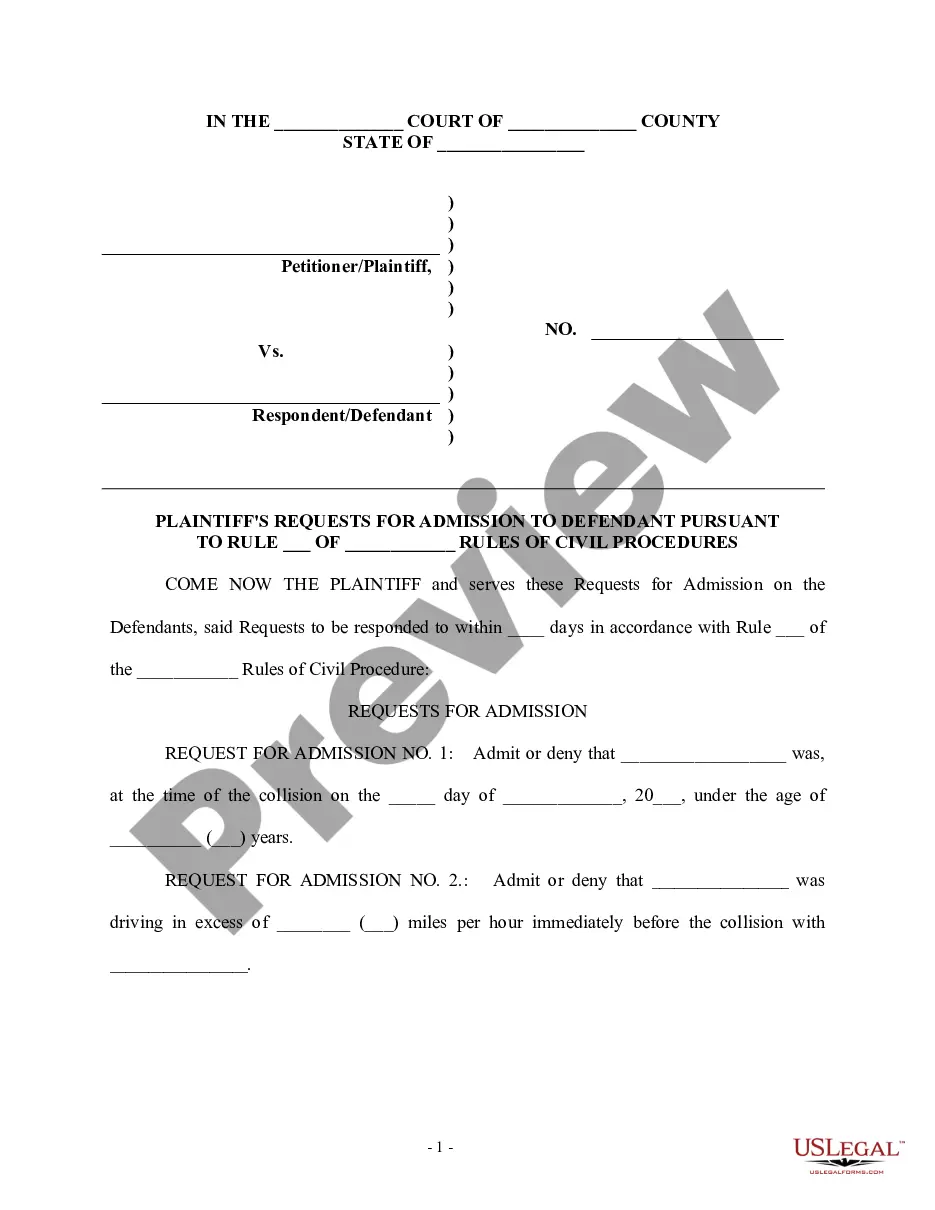
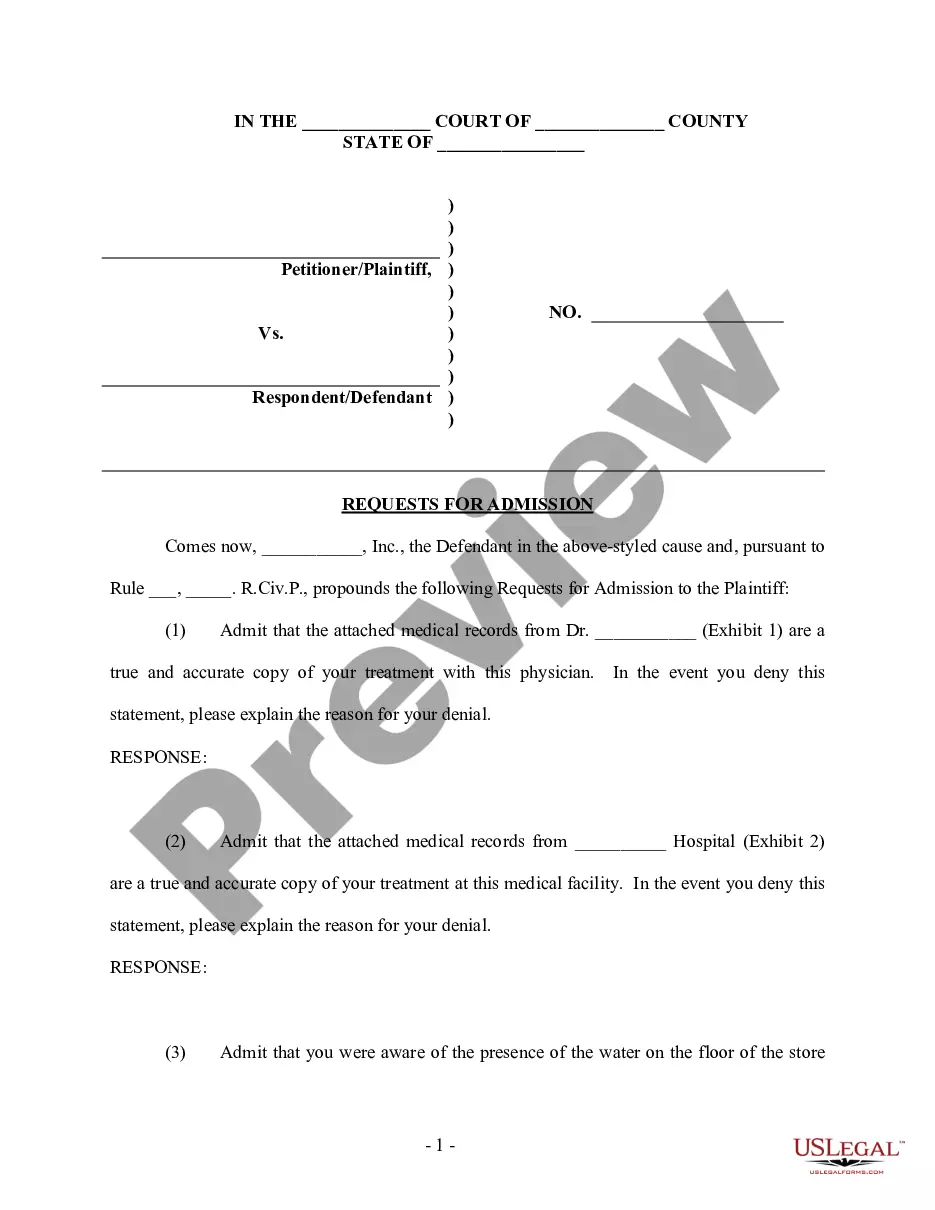
Rule 1.370 Requests for Admission can be a powerful tool to narrow the disputed facts and issues in litigation. A request for admission may be utilized to conclusively establish the truth of any fact, opinion of fact, or application of law to fact.
If the fact that is stated is true, write or check the word ?Admit.? If the fact that is stated is not true, write or check the word ?Deny.?
The total number of requests for admission that may be served without leave of court is limited to 30, including all subparts.
Proper Objections A responding party has four options: (1) admit; (2) deny; (3) admit in part and deny in part; or (4) explain why the party is unable to answer. It is possible to object to all or part of a request as well, but courts do not like parties who play ?word games? to avoid responding. Further, Civ.
Also, Federal Rules of Civil Procedure have placed 25 questions per party limitations on the use of interrogatories, but there is no numerical limit in FRCP on the requests for admission (unless specified differently in Local Rules of the state, which most states do have).
When responding to requests for admissions, the responding party shall state each deposition question, interrogatory, or discovery request in full as numbered, followed by the answer, objection, or other response. Fla. R. Civ.
For example, Plaintiff may send Defendant a request for admission that states, ?Admit that the front of the vehicle you were operating struck the front of the vehicle the Plaintiff was operating on the date of the car crash.?