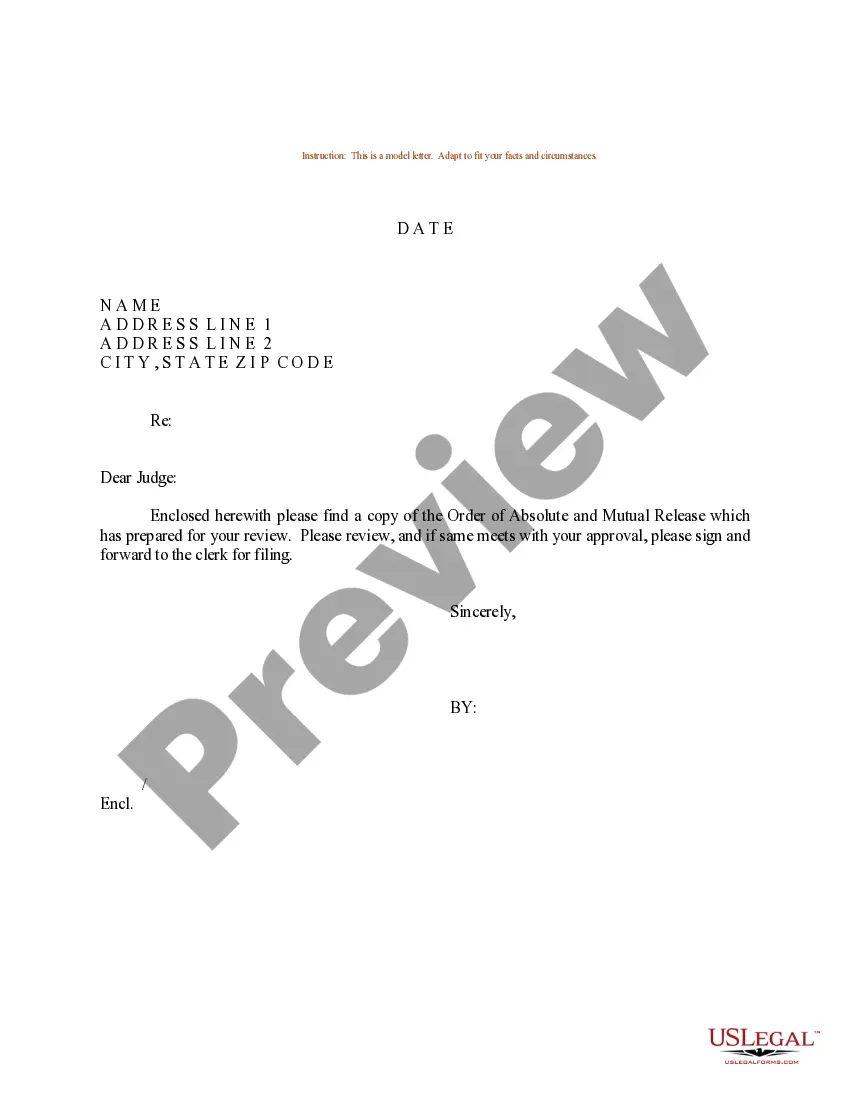
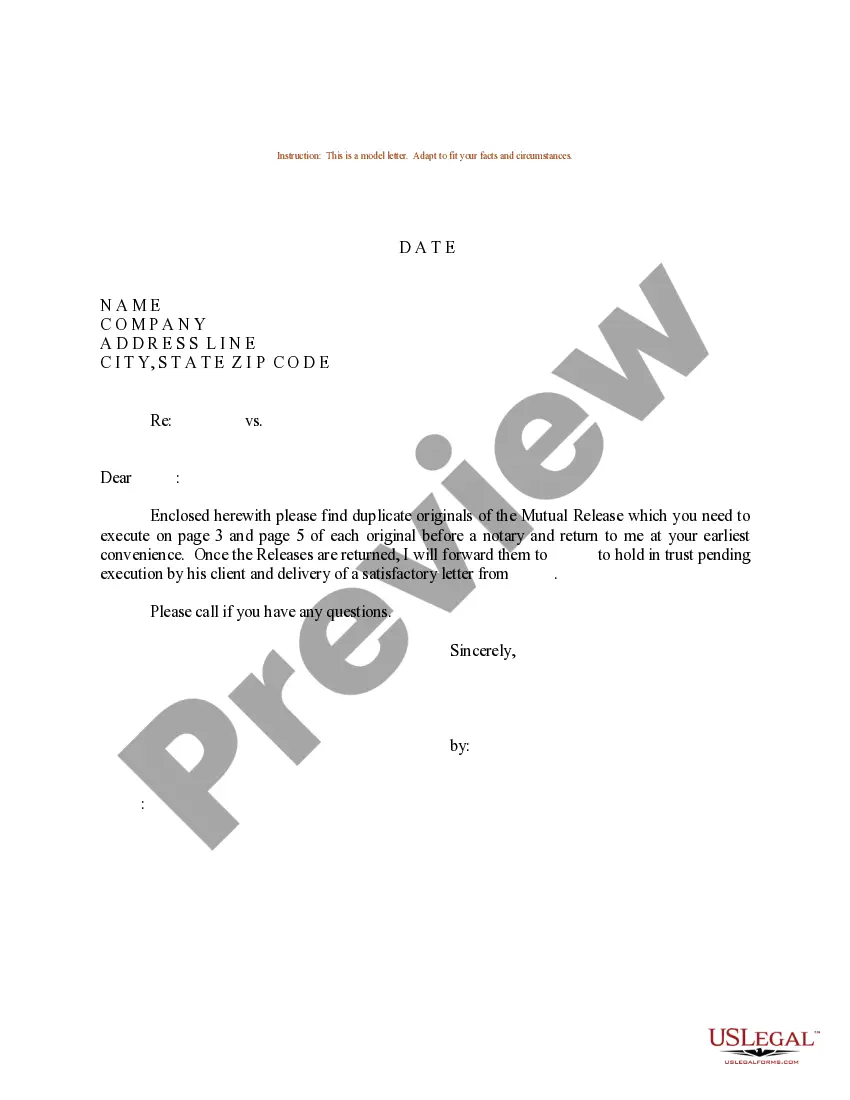
Florida Sample Letter for Full, Final, and Absolute Mutual Release and Bill of Sale
Description

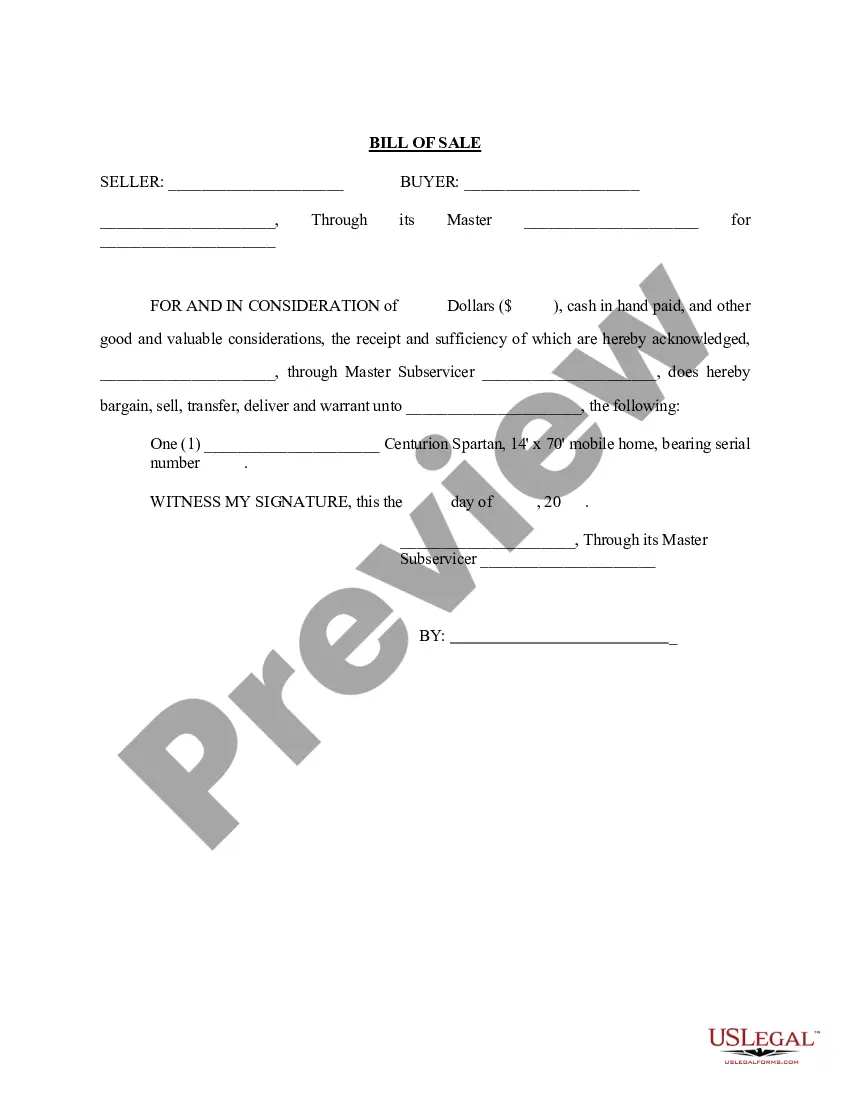
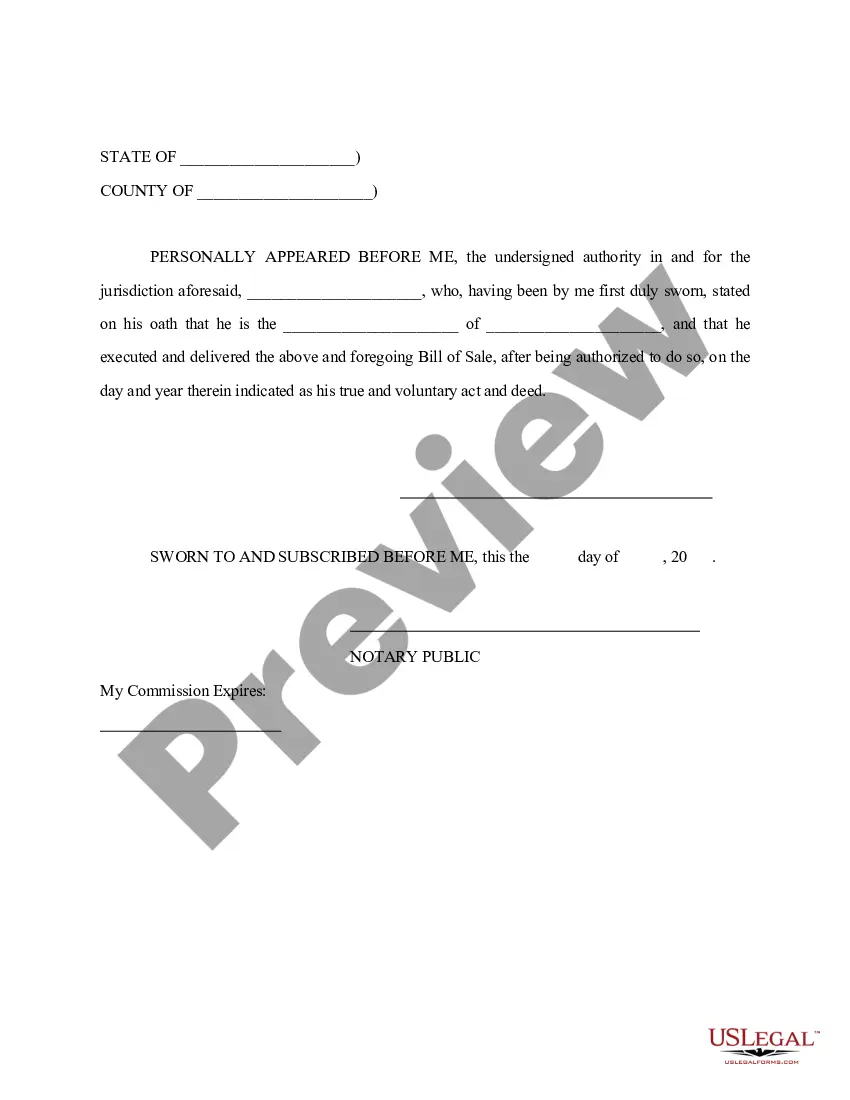

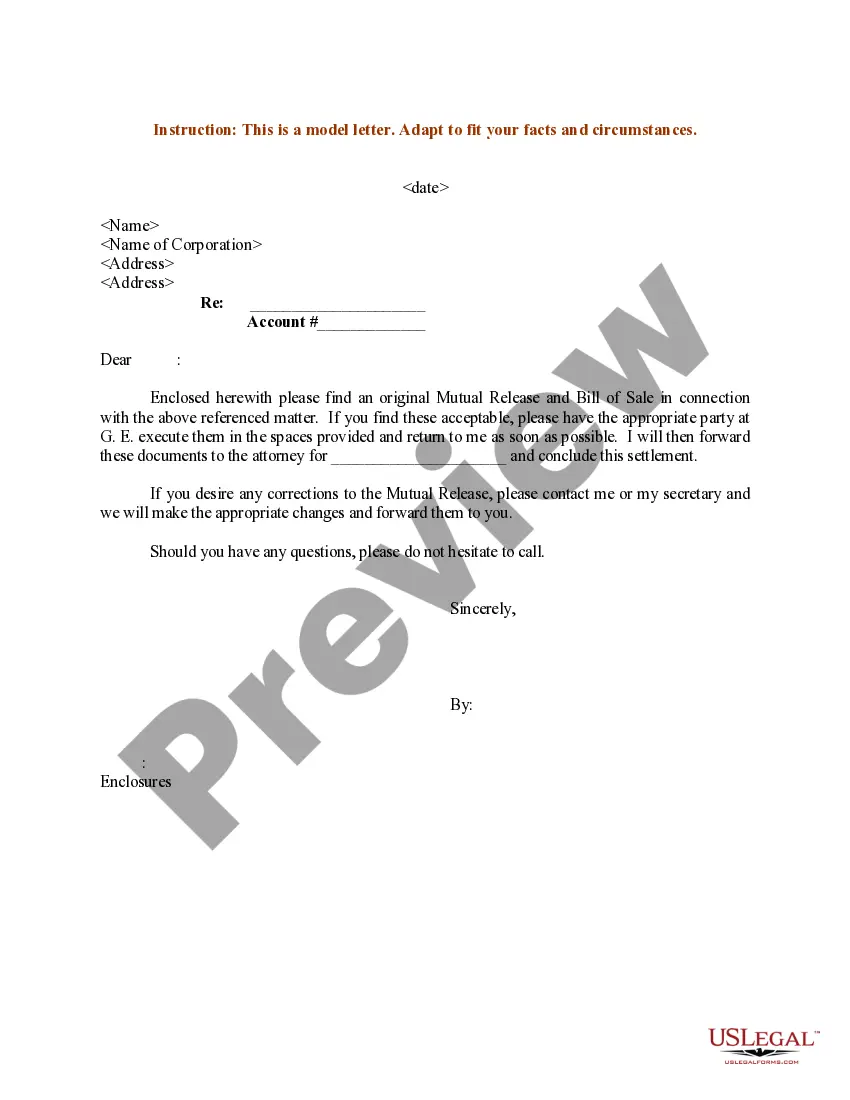
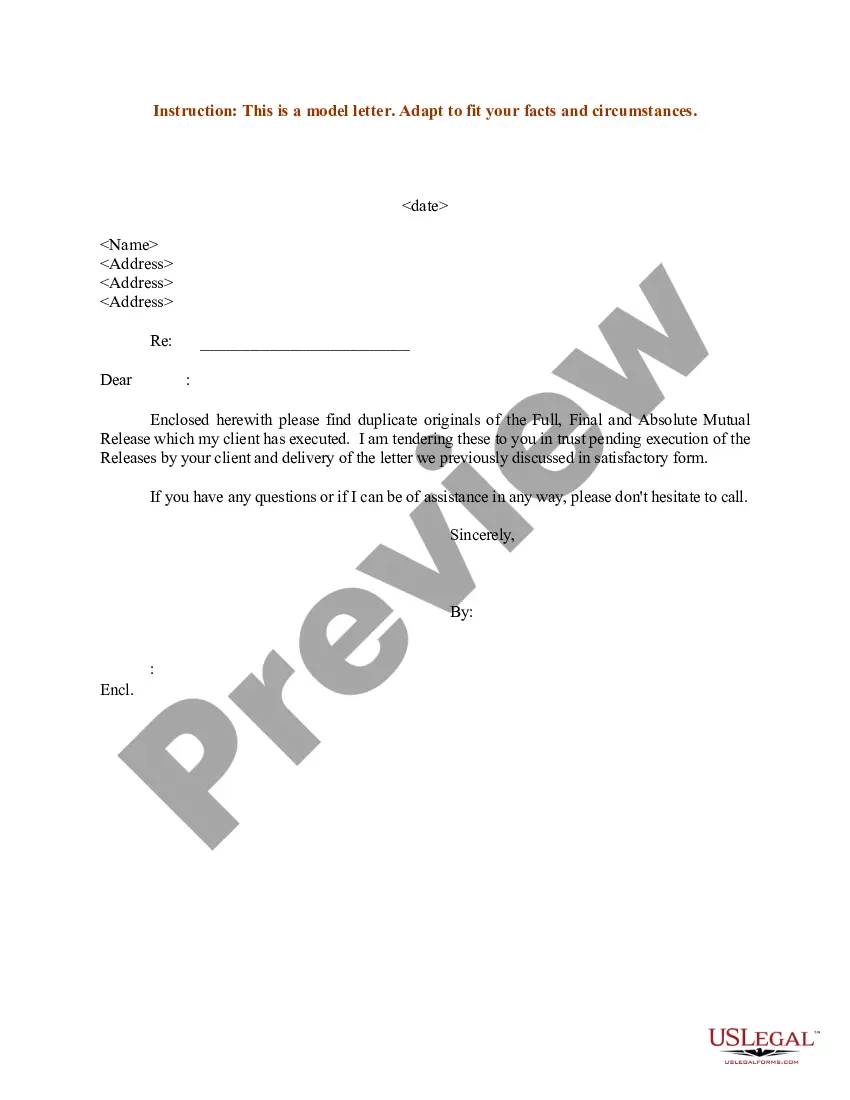
Get your form ready online
Our built-in tools help you complete, sign, share, and store your documents in one place.
Make edits, fill in missing information, and update formatting in US Legal Forms—just like you would in MS Word.
Download a copy, print it, send it by email, or mail it via USPS—whatever works best for your next step.
Sign and collect signatures with our SignNow integration. Send to multiple recipients, set reminders, and more. Go Premium to unlock E-Sign.
If this form requires notarization, complete it online through a secure video call—no need to meet a notary in person or wait for an appointment.
We protect your documents and personal data by following strict security and privacy standards.

Make edits, fill in missing information, and update formatting in US Legal Forms—just like you would in MS Word.

Download a copy, print it, send it by email, or mail it via USPS—whatever works best for your next step.

Sign and collect signatures with our SignNow integration. Send to multiple recipients, set reminders, and more. Go Premium to unlock E-Sign.

If this form requires notarization, complete it online through a secure video call—no need to meet a notary in person or wait for an appointment.

We protect your documents and personal data by following strict security and privacy standards.
Looking for another form?




How to fill out Sample Letter For Full, Final, And Absolute Mutual Release And Bill Of Sale?
If you intend to accumulate, retrieve, or produce legal document templates, utilize US Legal Forms, the largest repository of legal forms available online. Take advantage of the site's user-friendly search to locate the documents you require. A variety of templates for business and personal purposes are categorized by types and states, or keywords. Use US Legal Forms to obtain the Florida Sample Letter for Full, Final, and Absolute Mutual Release and Bill of Sale in just a few clicks.
If you are already a US Legal Forms user, Log In to your account and click the Download button to receive the Florida Sample Letter for Full, Final, and Absolute Mutual Release and Bill of Sale. You can also access forms you previously obtained in the My documents section of your account.
If you are using US Legal Forms for the first time, follow the instructions below: Step 1. Ensure you have chosen the form for your specific city/state. Step 2. Use the Preview option to review the form's contents. Be sure to read the description. Step 3. If you are not satisfied with the form, utilize the Search field at the top of the page to find alternative versions of the legal form template. Step 4. Once you have located the form you need, click the Get now button. Select the pricing plan you prefer and enter your details to create an account. Step 5. Complete the transaction. You can use your credit card or PayPal account to finalize the purchase. Step 6. Choose the format of the legal form and download it to your device. Step 7. Complete, modify, and print or sign the Florida Sample Letter for Full, Final, and Absolute Mutual Release and Bill of Sale.
Every legal document template you download is yours indefinitely. You can access all forms you have obtained in your account. Navigate to the My documents area and select a form to print or download once more.
Acquire, download, and print the Florida Sample Letter for Full, Final, and Absolute Mutual Release and Bill of Sale using US Legal Forms. There are many professional and state-specific forms available for your personal or business requirements.
- Every legal document template you download is yours forever.
- You have access to every form you obtained in your account.
- Select the My documents section and choose a form to print or download again.
- Acquire, download, and print the Florida Sample Letter for Full, Final, and Absolute Mutual Release and Bill of Sale with US Legal Forms.
- There are numerous professional and state-specific forms you can utilize for your personal or business needs.
Form popularity
FAQ
Term Of The Day ? No Release Settlement This payment is made to the claimant without requiring a signed release. Since it is very informal, a No Release Settlement maintains good will between the insurer and the insured. This type of settlement can also be used to stave off a law suit.
The Parties acknowledge that this is a full and final release, and that Executive and Company both intend and expressly agree that this release shall be effective as a bar to each and every claim, demand and cause of action that the claiming party may have or has against the other party as of the date of this Agreement ...
A settlement agreement, also called a release, is a binding contract that settles a lawsuit or potential lawsuit between two or more parties and stipulates that no lawsuit can be filed in the future. The courts encourage parties to resolve their dispute through a settlement agreement rather than through the courts.
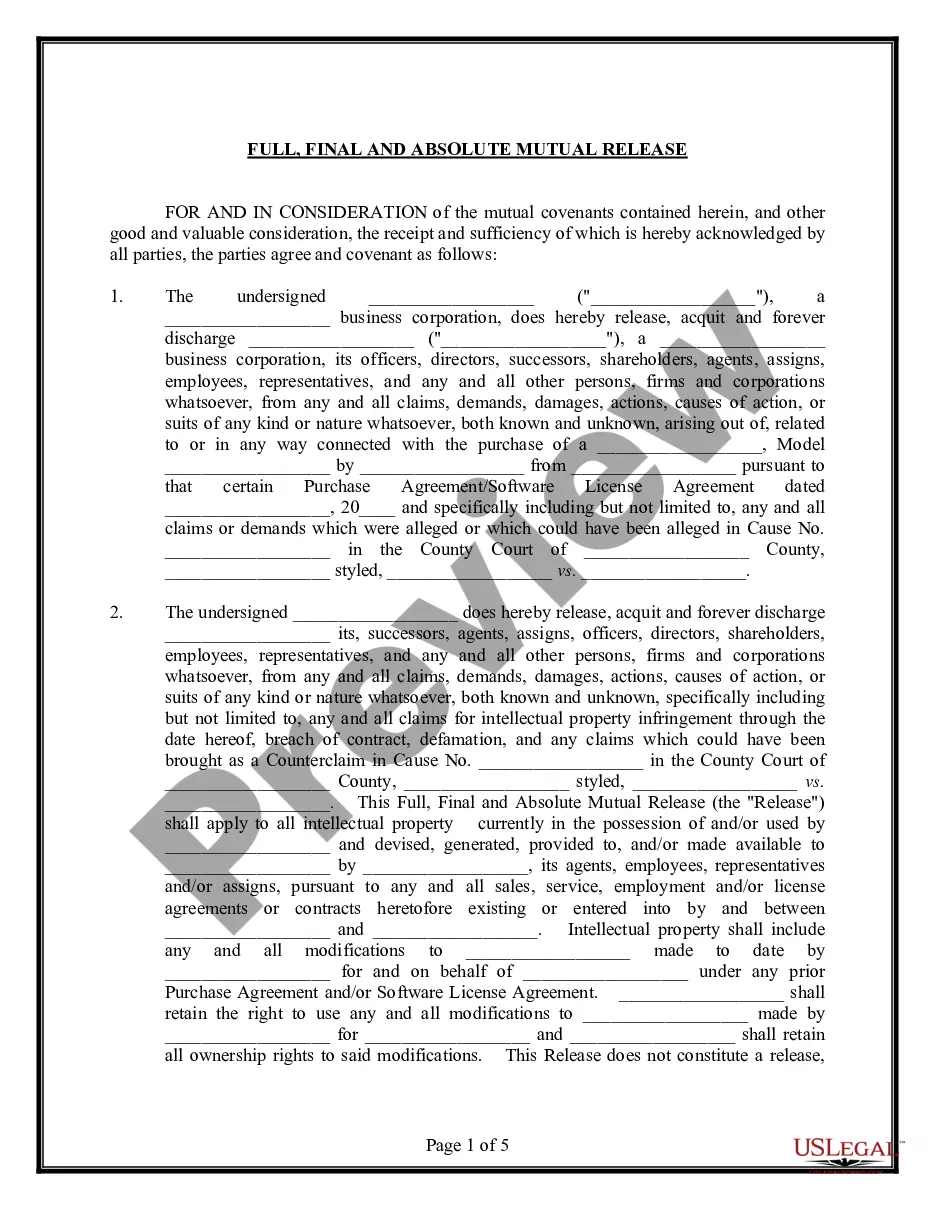
The preamble of a mutual release typically gives a brief summary of the subject claim or controversy. The operative clauses then go on to specify that the parties mutually "release" each other from any and all claims, counterclaims, cross-claims, third-party claims, and/or causes of action.
The release, which is legally binding, contains the terms to which you must adhere before getting your compensation and means the claim is closed and you cannot pursue it further. You agree not to sue any other party involved in the accident.
I agree to the terms of this Agreement, and I am voluntarily signing this release of all claims. I acknowledge that I have read and understand this Agreement, and I understand that I cannot pursue any of the claims and rights that I have waived in this Agreement at any time in the future.
What is the main difference between a Full Release Settlement and a No Release Settlement? In a Full Release Settlement, the claimant signs a release form giving up the right to additional indemnification; in a No Release Settlement, the claimant does not sign a release form.
A release usually takes the form of a voluntary private contract between parties to cease the obligation or concede the right. California Civil Code § 1541 upholds release provisions, stating ?[a]n obligation is extinguished by a release therefrom given to the debtor or the released party by the creditor or releasing ...