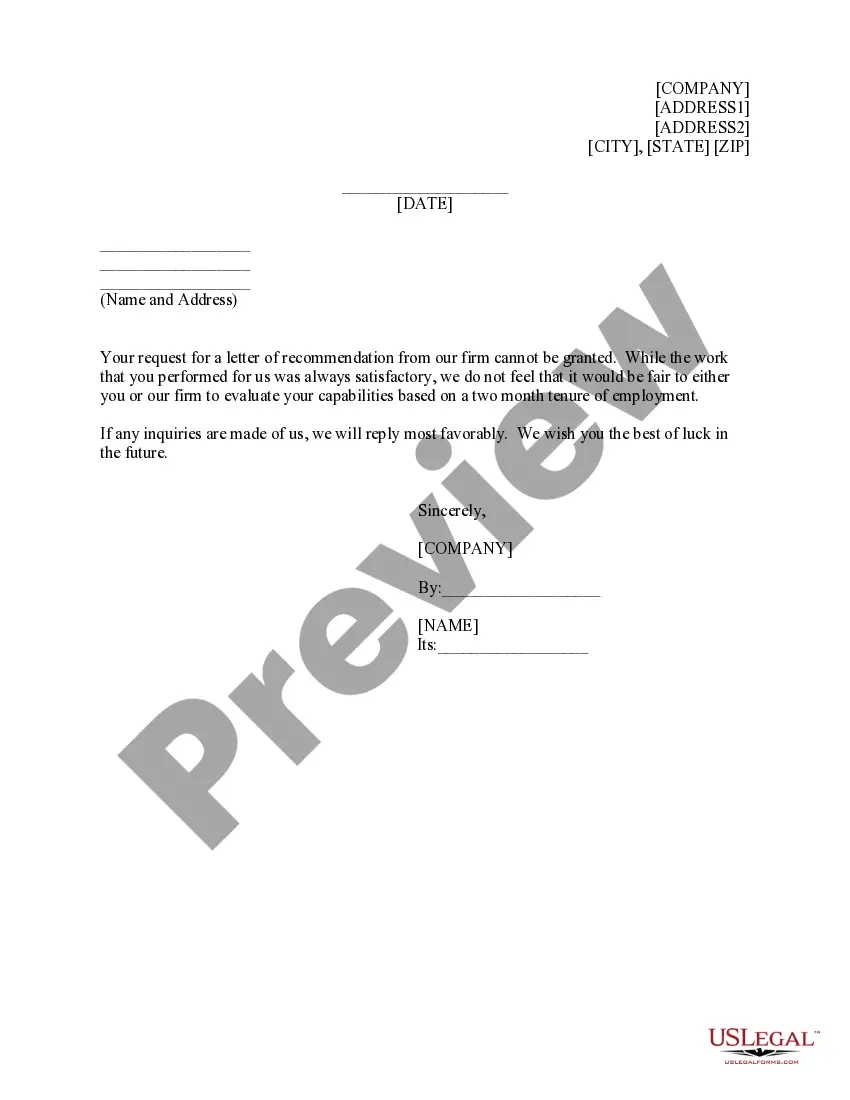
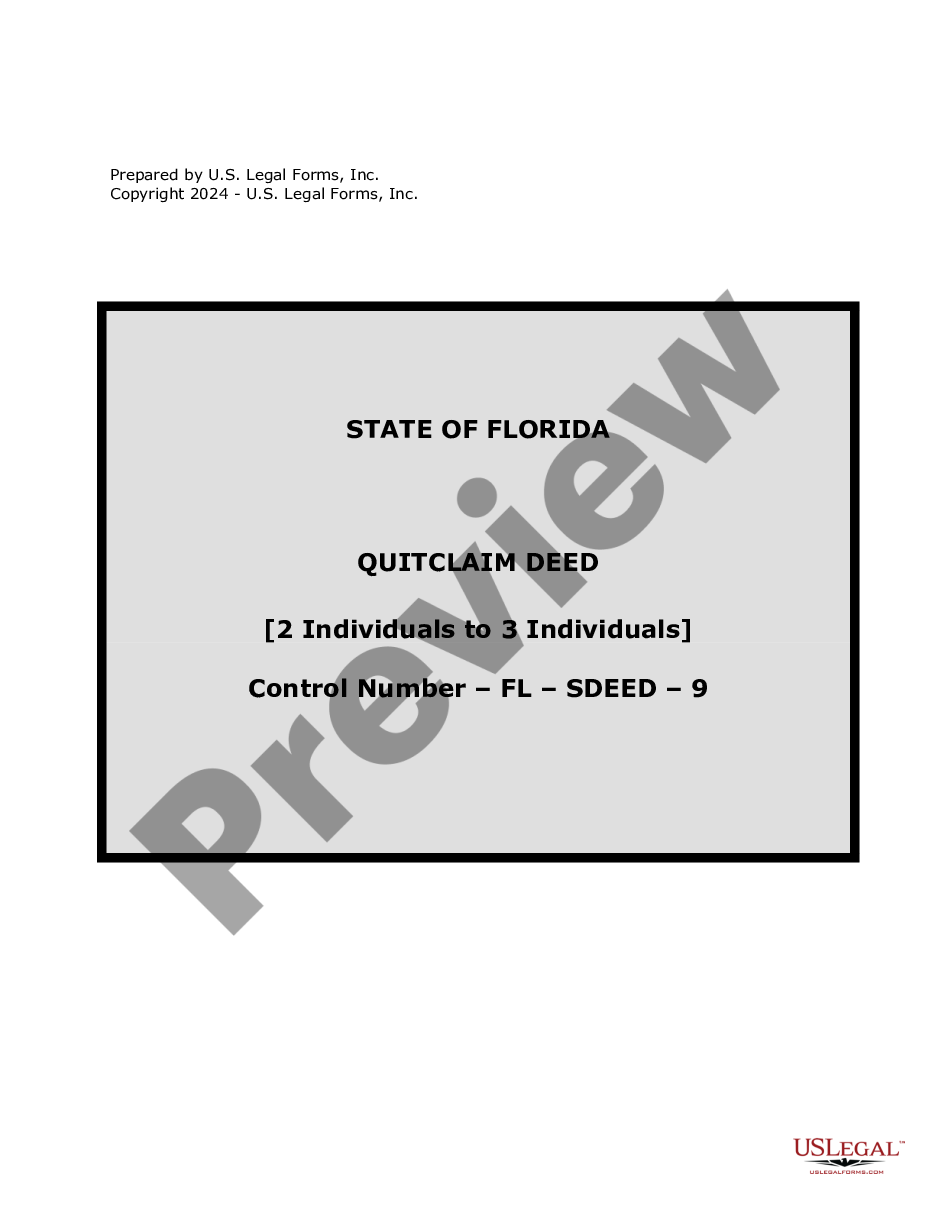
Florida Quitclaim Deed - Two Individuals to Three Individuals
About this form
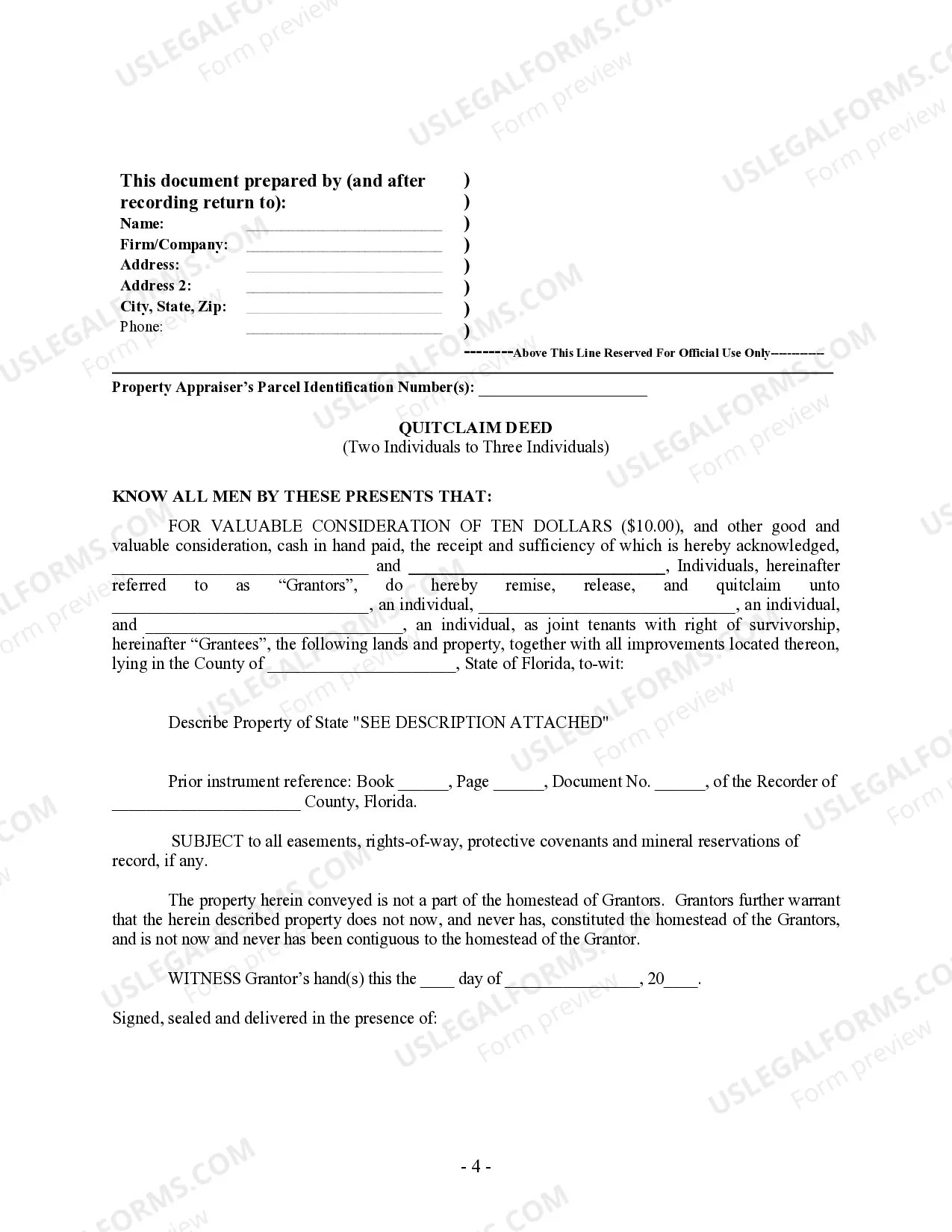
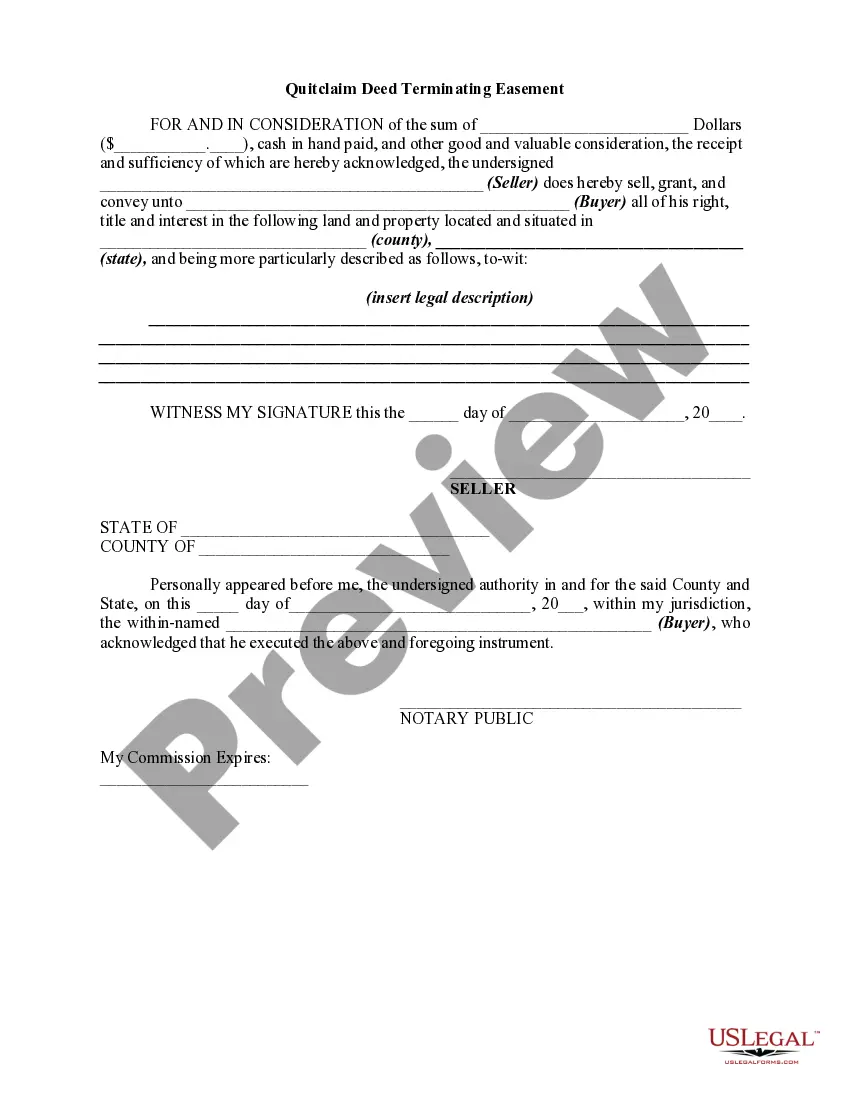
The Quitclaim Deed form allows two individuals (grantors) to transfer their interest in a property to three individuals (grantees). Unlike a warranty deed, a quitclaim deed does not guarantee that the grantors hold any claim to the property, making it a more informal option for property transfers. This form is ideal for situations where the parties are familiar with each other's claims to the property, such as family transactions or when clearing title disputes.
Key parts of this document
- Identification of the grantors (the individuals transferring the property).
- Identification of the grantees (the individuals receiving the property).
- Description of the property being transferred, including any legal descriptions required.
- Warranties made by the grantors concerning the property.
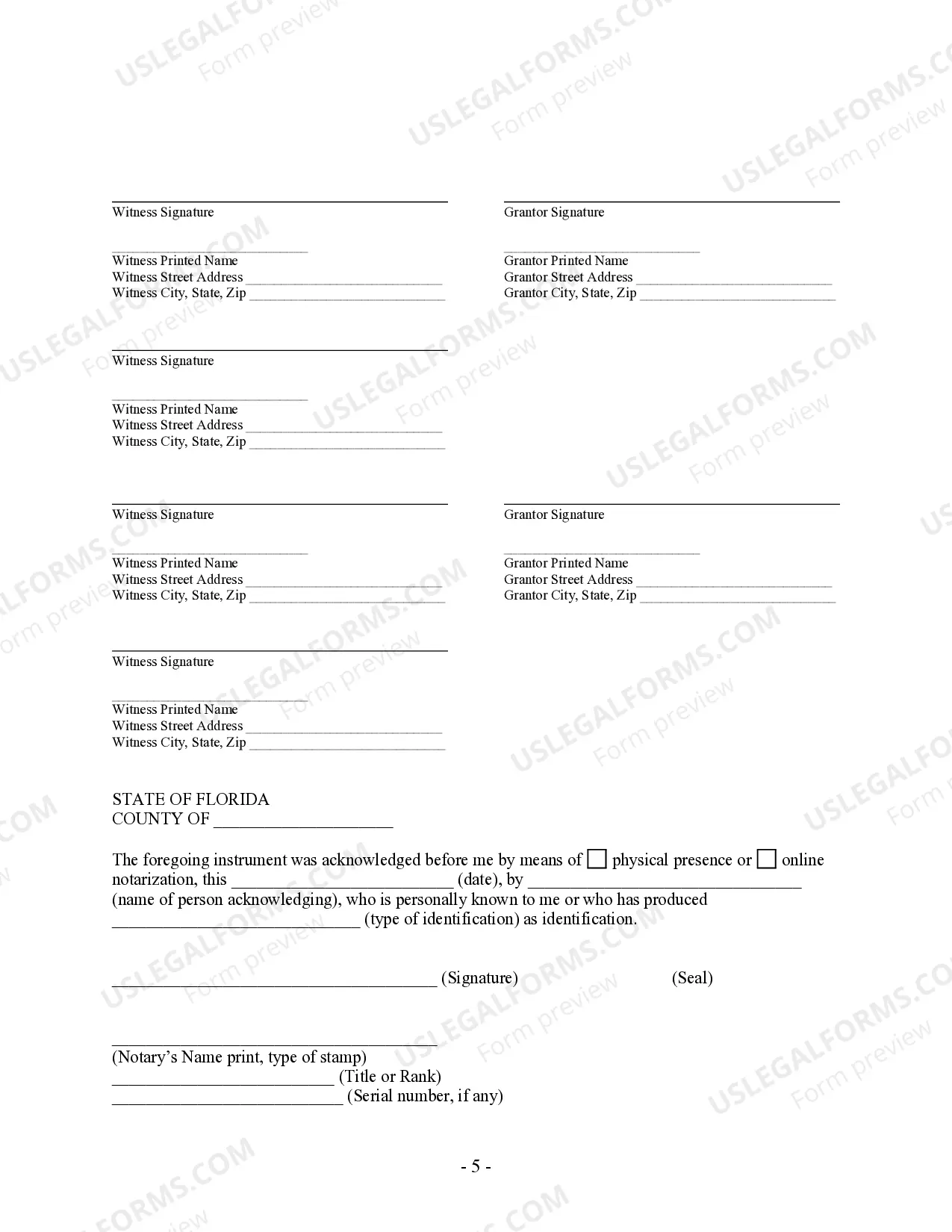
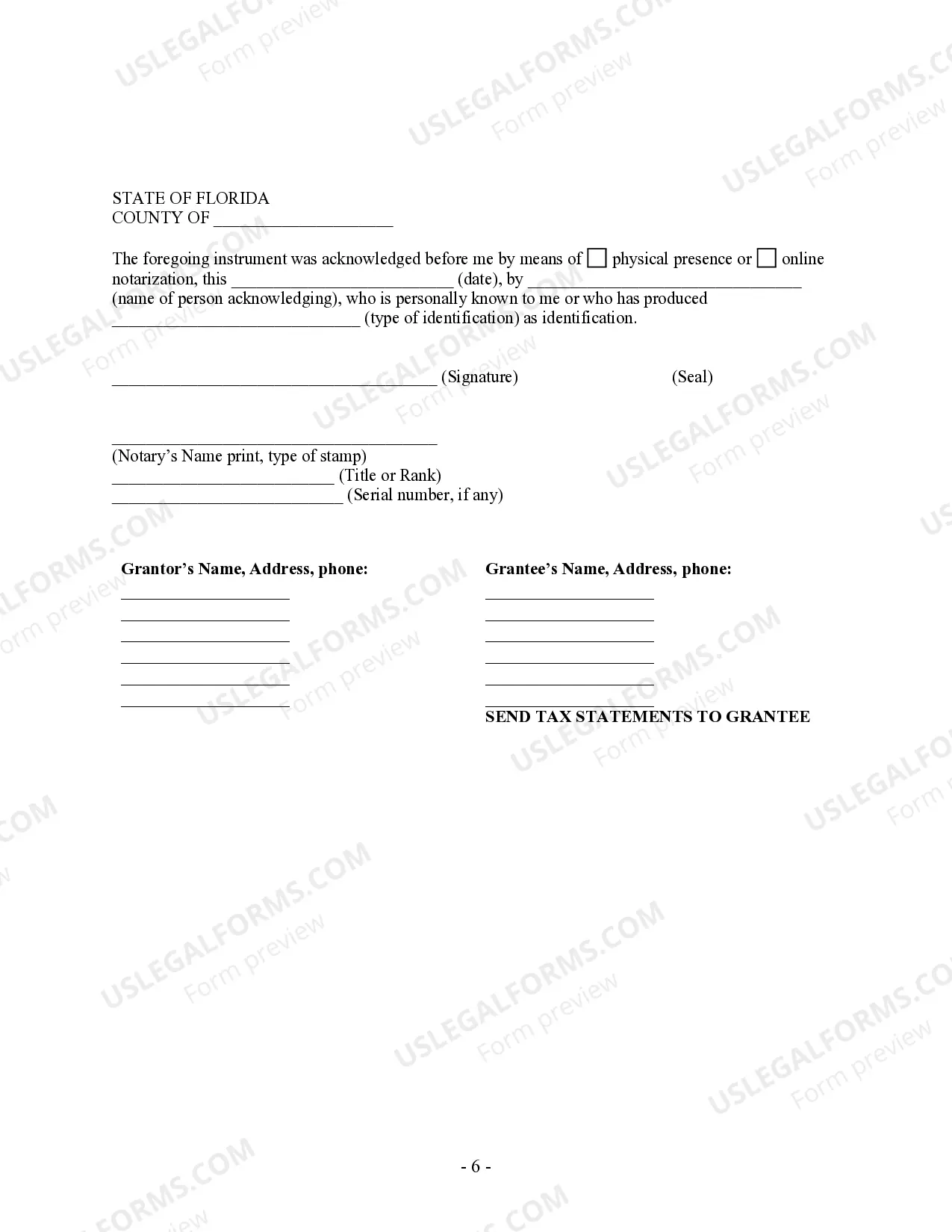
- Signatures of the grantors, with acknowledgment before a notary public.



Situations where this form applies
This form should be used when two individuals want to convey their ownership rights of a property to three individuals. Common scenarios include transferring property between family members, adding more owners to a deed, or resolving property disputes without legal guarantees.
Intended users of this form
This form is intended for:
- Two individuals wanting to transfer their property interest to three individuals.
- Families or friends entering into property arrangements without legal representation.
- Individuals familiar with the property and its legal status who prefer an informal transfer.
Steps to complete this form
- Identify all parties involved: the two grantors and three grantees.
- Provide a detailed description of the property being transferred.
- Ensure that both grantors sign the document in the presence of a notary.
- Fill in the date of the transfer and any additional required details.
- Review the form for accuracy before finalizing the signatures and notary acknowledgment.
Notarization requirements for this form
To make this form legally binding, it must be notarized. Our online notarization service, powered by Notarize, lets you verify and sign documents remotely through an encrypted video session.
Get your form ready online
Our built-in tools help you complete, sign, share, and store your documents in one place.
Make edits, fill in missing information, and update formatting in US Legal Forms—just like you would in MS Word.
Download a copy, print it, send it by email, or mail it via USPS—whatever works best for your next step.
Sign and collect signatures with our SignNow integration. Send to multiple recipients, set reminders, and more. Go Premium to unlock E-Sign.
If this form requires notarization, complete it online through a secure video call—no need to meet a notary in person or wait for an appointment.
We protect your documents and personal data by following strict security and privacy standards.

Make edits, fill in missing information, and update formatting in US Legal Forms—just like you would in MS Word.

Download a copy, print it, send it by email, or mail it via USPS—whatever works best for your next step.

Sign and collect signatures with our SignNow integration. Send to multiple recipients, set reminders, and more. Go Premium to unlock E-Sign.

If this form requires notarization, complete it online through a secure video call—no need to meet a notary in person or wait for an appointment.

We protect your documents and personal data by following strict security and privacy standards.
Typical mistakes to avoid
- Forgetting to have the document notarized, if required.
- Inaccurately describing the property, leading to potential disputes.
- Not including all necessary signatures from both grantors.
- Failing to complete the legal description properly.
Why use this form online
- Easy access to a professionally created document that meets legal standards.
- Ability to edit the form as needed before printing or signing.
- Saves time by allowing you to complete the form at your convenience.
- Provides peace of mind with a structured template drafted by attorneys.
Looking for another form?
Form popularity
FAQ
You do not necessarily need a lawyer to file a quitclaim deed in Florida; however, consulting one can be beneficial. A lawyer can help you understand the implications of a Florida Quitclaim Deed - Two Individuals to Three Individuals and provide guidance on ensuring that the deed fulfills all legal requirements. Using a platform like US Legal Forms can also simplify the filing process, providing you with the necessary documents and instructions.
To add someone to your deed in Florida, you need to execute a Florida Quitclaim Deed - Two Individuals to Three Individuals. Start by filling out the quitclaim deed form with accurate details of all parties involved. Once completed, you must sign the document in front of a notary and file it with your county's property appraiser or clerk's office to officially complete the process.
Yes, you can add someone to a deed without a lawyer by filing a Florida Quitclaim Deed - Two Individuals to Three Individuals yourself. The process involves completing the appropriate form, signing it in front of a notary, and filing it with the county clerk's office. While this is doable independently, having a lawyer can ensure that all legal aspects are correctly handled.
Yes, you can add a third person to your deed through a Florida Quitclaim Deed - Two Individuals to Three Individuals. To do this, you will need to create a new deed that reflects the desired ownership structure. Utilizing a platform like US Legal Forms can make this process simpler by providing templates and resources that ensure you meet all legal requirements.
There is no set limit to the number of individuals that can be listed on a quit claim deed in Florida. The Florida Quitclaim Deed - Two Individuals to Three Individuals allows you to add multiple names, so long as you properly document all parties' details. This flexibility makes it easier to share property interests among family members, friends, or business partners as needed.
In Florida, a quit claim deed allows property owners to transfer their interest in a property without making guarantees about the title's condition. The Florida Quitclaim Deed - Two Individuals to Three Individuals must include the names of all parties involved and be executed according to state laws. Additionally, this deed needs to be executed before a notary and recorded to be effective against third parties.
To add a person to a property deed in Florida, you will need to execute a new Florida Quitclaim Deed - Two Individuals to Three Individuals. This process involves drafting the deed, having it signed by the current owners in front of a notary, and then recording it with the local county recorder’s office. It's important to gather the necessary information about the new co-owner and ensure that both parties understand their legal responsibilities.
When you add someone to your deed through a Florida Quitclaim Deed, that person obtains ownership rights to the property. This means they can share in the benefits of the property, such as its value and any income it generates. However, it also means that they can be involved in decision-making regarding the property, which can impact your control over it. Thus, it's beneficial to clearly establish expectations with the new co-owner.
Yes, you can add someone to your deed using a Florida Quitclaim Deed without needing to refinance your mortgage. This process allows for a straightforward transfer of property interest without altering your existing mortgage. However, it's essential to inform your lender about this change, as it may affect your mortgage terms or obligations.
While it's not legally required to hire an attorney for a Florida Quitclaim Deed, consulting one can provide you with valuable guidance. An attorney can help ensure that the deed is completed correctly and addresses your specific situation. This legal support can help you avoid potential pitfalls and ensure that the property transfer aligns with your intentions.