Florida Quitclaim Deed - Trust to Husband and Wife
About this form
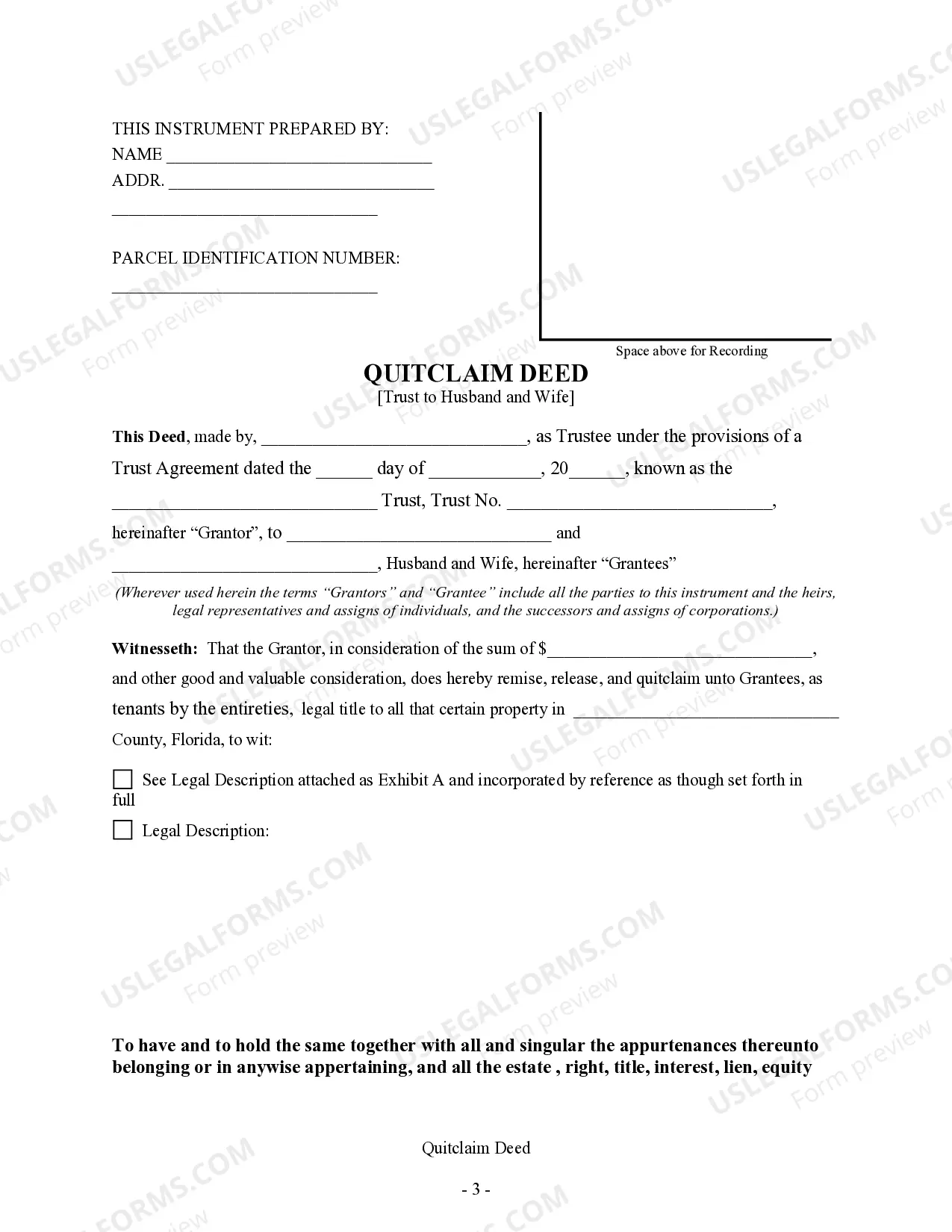
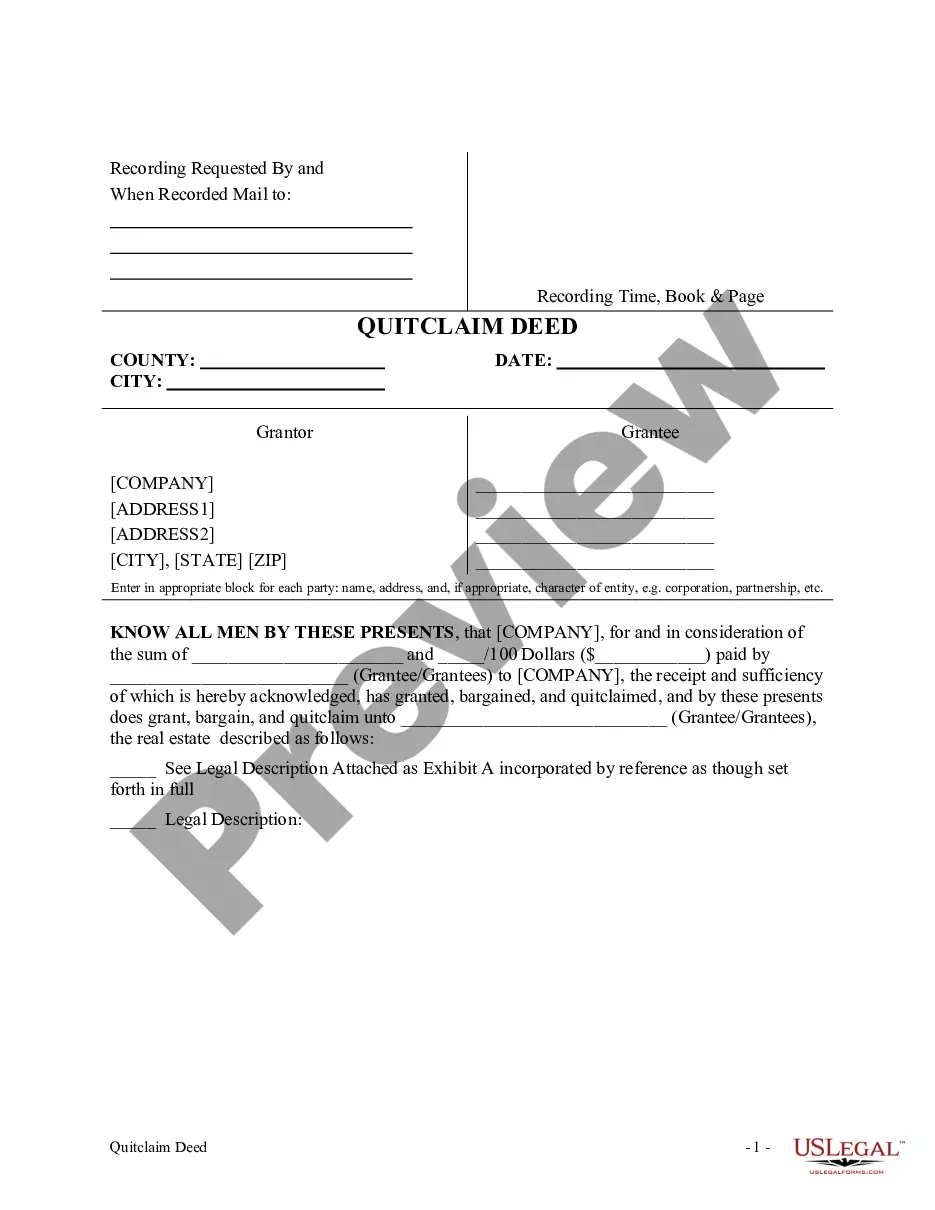
This Quitclaim Deed is a legal document that enables a trustee of a trust to transfer property ownership to a husband and wife. Unlike a warranty deed, a quitclaim deed does not guarantee that the grantor holds clear title to the property. This form is specific in its purpose for couples, allowing them to take ownership as tenants by the entirety, joint tenants with the right of survivorship, or tenants in common, ensuring the document complies with all state laws.
Key parts of this document
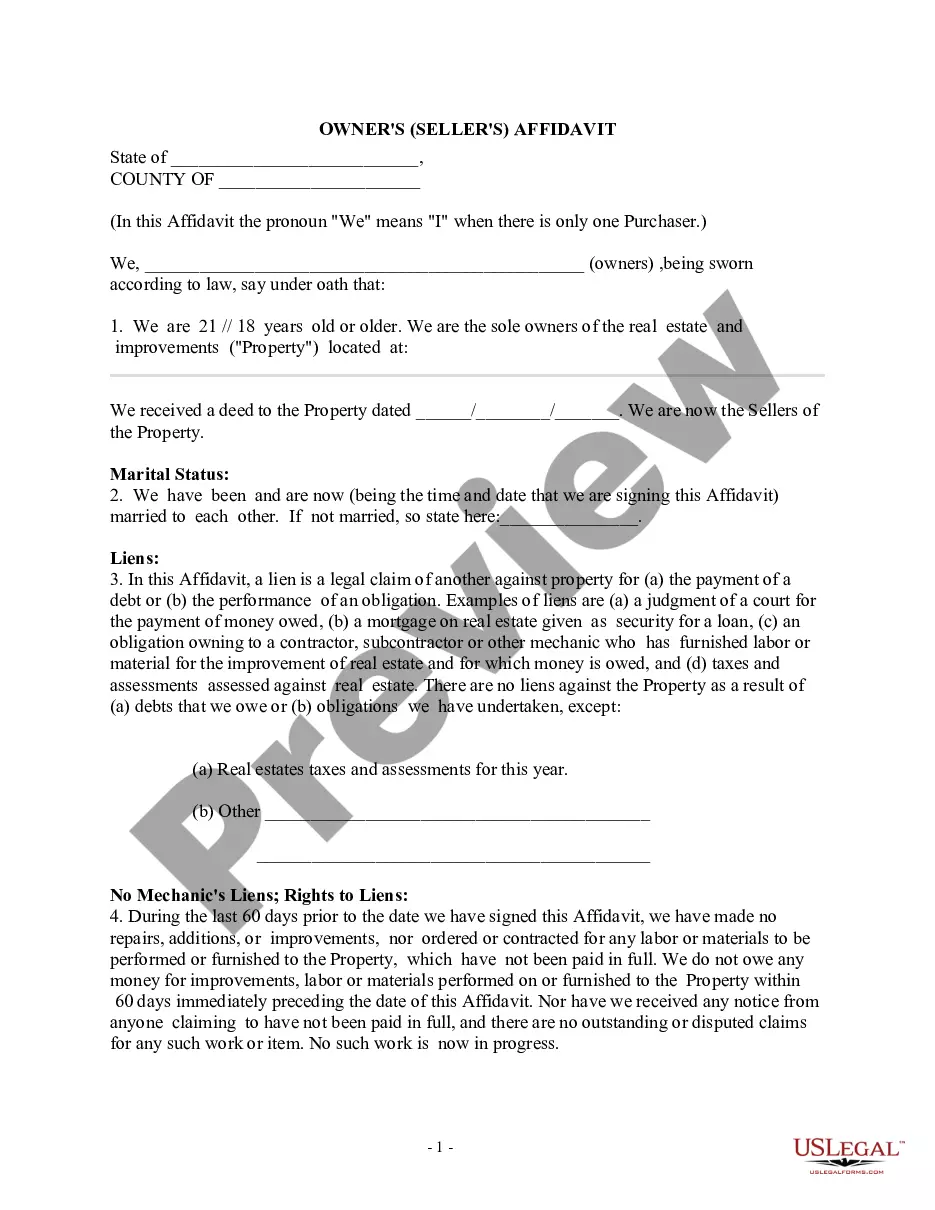
- Identification of the grantor (trustee) and grantees (husband and wife).
- Description of the property being transferred.
- Language specifying how the property will be held (as tenants by the entirety, joint tenants, or tenants in common).
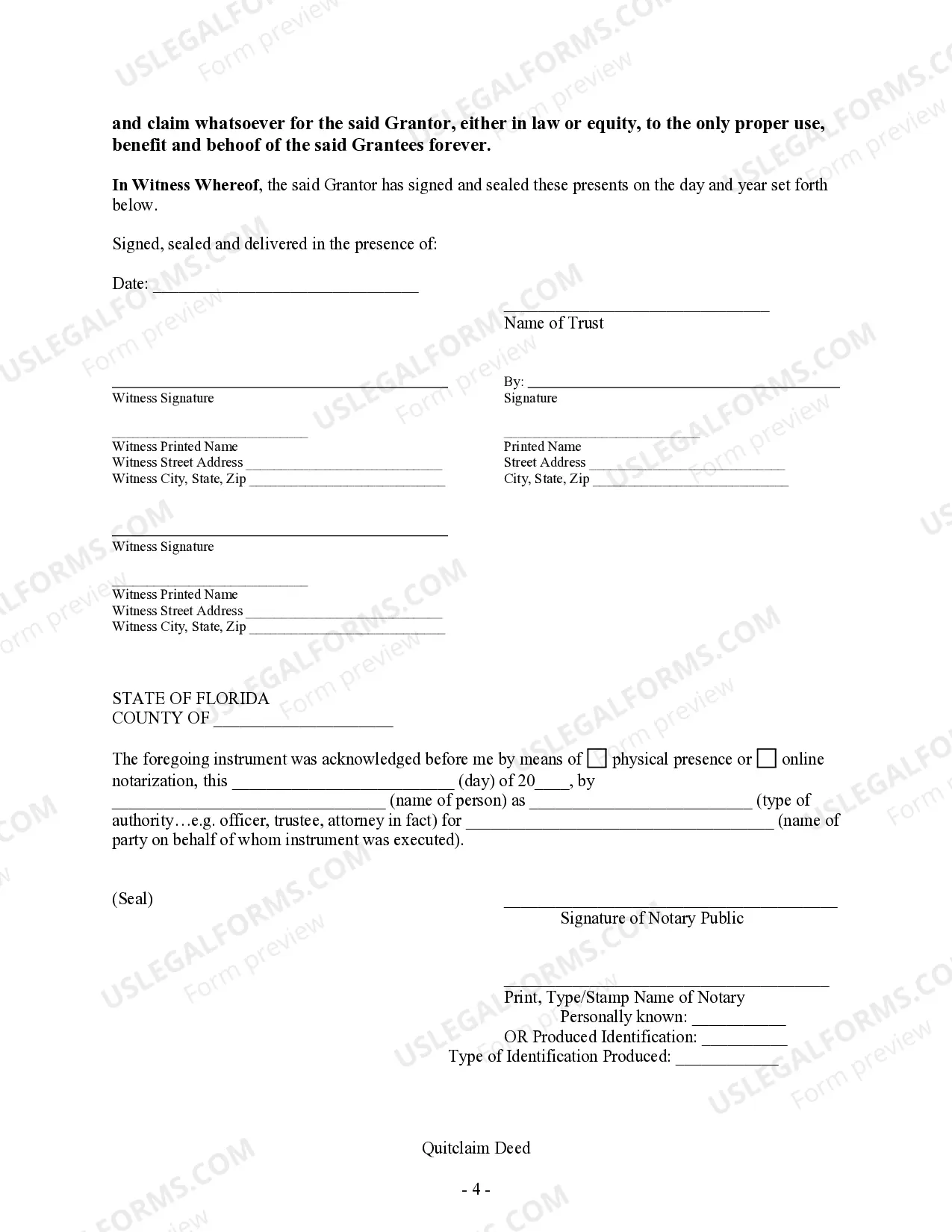
- Signature lines for the grantor, witnesses, and notary (if applicable).
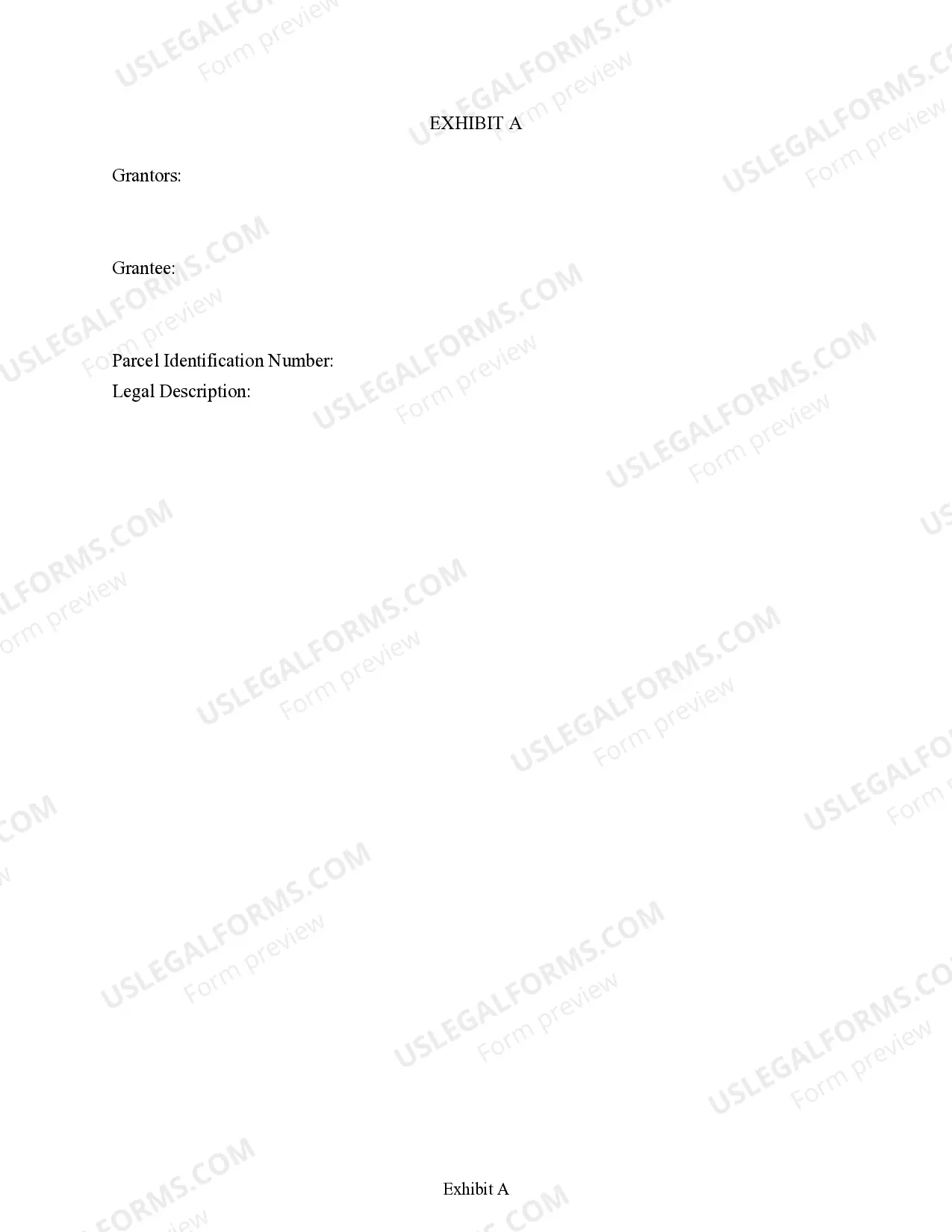
- Legal description of the property attached as Exhibit A.

Common use cases
This form is commonly used when a trustee wishes to transfer property ownership to a married couple. It is ideal for situations involving family properties held in a trust or when a couple wants to clarify their ownership rights in a property. Using a quitclaim deed can simplify the process of transferring property without delving into warranties of title.
Who can use this document
This form is intended for:
- Trustees of a trust looking to transfer real estate to a husband and wife.
- Married couples wishing to establish joint ownership of property.
- Individuals who are familiar with property transfer processes and want to navigate them with clarity.
Completing this form step by step
- Identify the parties involved: enter the name of the grantor (trustee) and the names of the grantees (husband and wife).
- Specify the property: provide a detailed description of the property being transferred.
- Choose the ownership structure: indicate whether the property will be owned as tenants by the entirety, joint tenants, or tenants in common.
- Enter the date of transfer: include the date on which the transfer will occur.
- Sign and date the form: ensure the grantor signs in the presence of witnesses and a notary if required.
Does this document require notarization?
This form does not typically require notarization unless specified by local law. It is essential to check with local regulations to ensure compliance.
Get your form ready online
Our built-in tools help you complete, sign, share, and store your documents in one place.
Make edits, fill in missing information, and update formatting in US Legal Forms—just like you would in MS Word.
Download a copy, print it, send it by email, or mail it via USPS—whatever works best for your next step.
Sign and collect signatures with our SignNow integration. Send to multiple recipients, set reminders, and more. Go Premium to unlock E-Sign.
If this form requires notarization, complete it online through a secure video call—no need to meet a notary in person or wait for an appointment.
We protect your documents and personal data by following strict security and privacy standards.

Make edits, fill in missing information, and update formatting in US Legal Forms—just like you would in MS Word.

Download a copy, print it, send it by email, or mail it via USPS—whatever works best for your next step.

Sign and collect signatures with our SignNow integration. Send to multiple recipients, set reminders, and more. Go Premium to unlock E-Sign.

If this form requires notarization, complete it online through a secure video call—no need to meet a notary in person or wait for an appointment.

We protect your documents and personal data by following strict security and privacy standards.
Common mistakes
- Failing to include a legal description of the property.
- Not specifying the type of ownership (tenants by the entirety, joint tenants, or tenants in common).
- Omitting signatures or dates from the document.
- Not consulting local laws which may require specific language or additional forms.
Why use this form online
- Convenience: Download and complete the form from the comfort of your home.
- Editability: Easily fill out the form using a computer or print it to complete by hand.
- Reliability: Forms are drafted by licensed attorneys to meet state legal requirements.
Legal use & context
- A Quitclaim Deed is used to transfer ownership without guaranteeing the titleâs validity.
- It effectively conveys property rights to recipients but may not protect against title disputes.
- Consider seeking legal advice if there are concerns about property rights or obligations.
Looking for another form?

Form popularity
FAQ
After signing a quitclaim deed in Florida, a spouse typically relinquishes any claim to the property involved. This means they may lose legal rights to that property unless other provisions are in place, such as those outlined in a prenuptial agreement or divorce decree. It’s vital to understand the legal implications of signing this deed. Knowing how a Florida quitclaim deed—trust to husband and wife functions can help inform your decisions.
Yes, property can be transferred from a trust to an individual through a quitclaim deed. The trustee has the authority to execute the deed, transferring the property rights to the named individual. This process is often used in family settings, such as for spouses. The Florida quitclaim deed—trust to husband and wife provides a clear method for managing trust assets.
In Florida, it is not legally required for both spouses to be on the deed for the property. However, having both names on the deed can help avoid potential disputes in the future and clarifies ownership. A quitclaim deed can be an effective way to add or remove a spouse from the deed when needed. Keep in mind that the Florida quitclaim deed—trust to husband and wife can simplify these changes.
Yes, a quitclaim deed can transfer property from a trust to an individual or another party. The trustee must execute the deed to effectuate this transfer. This process is particularly beneficial for spouses, as it facilitates the transfer of property registered in a trust to both partners. Understanding the role of the Florida quitclaim deed—trust to husband and wife can help you manage your property assets efficiently.
Generally, a quitclaim deed does not override a divorce decree. If the divorce decree specifies how the property should be divided, the terms of that decree take precedence over any subsequent quitclaim deeds. Moreover, it’s important to execute any property transfers in accordance with the divorce agreement. Seeking guidance on using a quitclaim deed in tandem with legal documents can streamline the process.
In Florida, a quitclaim deed must be in writing and signed by the grantor, and it must include a proper legal description of the property being transferred. It should also be notarized to be recorded officially. Importantly, the quitclaim deed does not guarantee the validity of the title, so be aware of the risks involved. Utilizing the Florida quitclaim deed—trust to husband and wife allows for a straightforward transfer while underscoring the need for the right legal framework.
In Florida, a spouse may lose their rights to a property after signing a quitclaim deed. This type of deed relinquishes any claim or interest in the property, which means the rights are usually transferred to the other spouse. However, it's crucial to consult with a legal expert, especially in sensitive situations like divorce. Understanding the implications of a Florida quitclaim deed—trust to husband and wife can help you navigate these issues.
A quitclaim deed is not suitable for transferring property that has liens or legal claims against it. Additionally, it cannot be used in situations involving complex estate planning or when the property's title is disputed. For these scenarios, you may need to consider a warranty deed or seek legal advice. Using a Florida quitclaim deed—trust to husband and wife can simplify many family matters, but it's essential to understand its limitations.
Yes, a Florida quitclaim deed can transfer property out of a trust. When the trustee executes a quitclaim deed, it effectively transfers the property to the designated beneficiary. This is commonly used in family arrangements, particularly for transferring assets to a husband and wife. Always ensure that proper legal steps are followed to maintain clarity and legality in the transfer.
In Florida, you do not necessarily need an attorney to handle a quitclaim deed. While having legal guidance can aid in avoiding mistakes, many people successfully draft these documents themselves. If you prefer assurance and accuracy, consider using US Legal Forms. They offer resources that support you in completing a Florida Quitclaim Deed - Trust to Husband and Wife efficiently.