This is a multi-state form covering the subject matter of the title.
Delaware Subordination and Attornment Agreement - Landlord - Tenant - Lender
Category:
State:
Multi-State
Control #:
US-XS-0014
Format:
Word;
Rich Text
Instant download
Description
Free preview
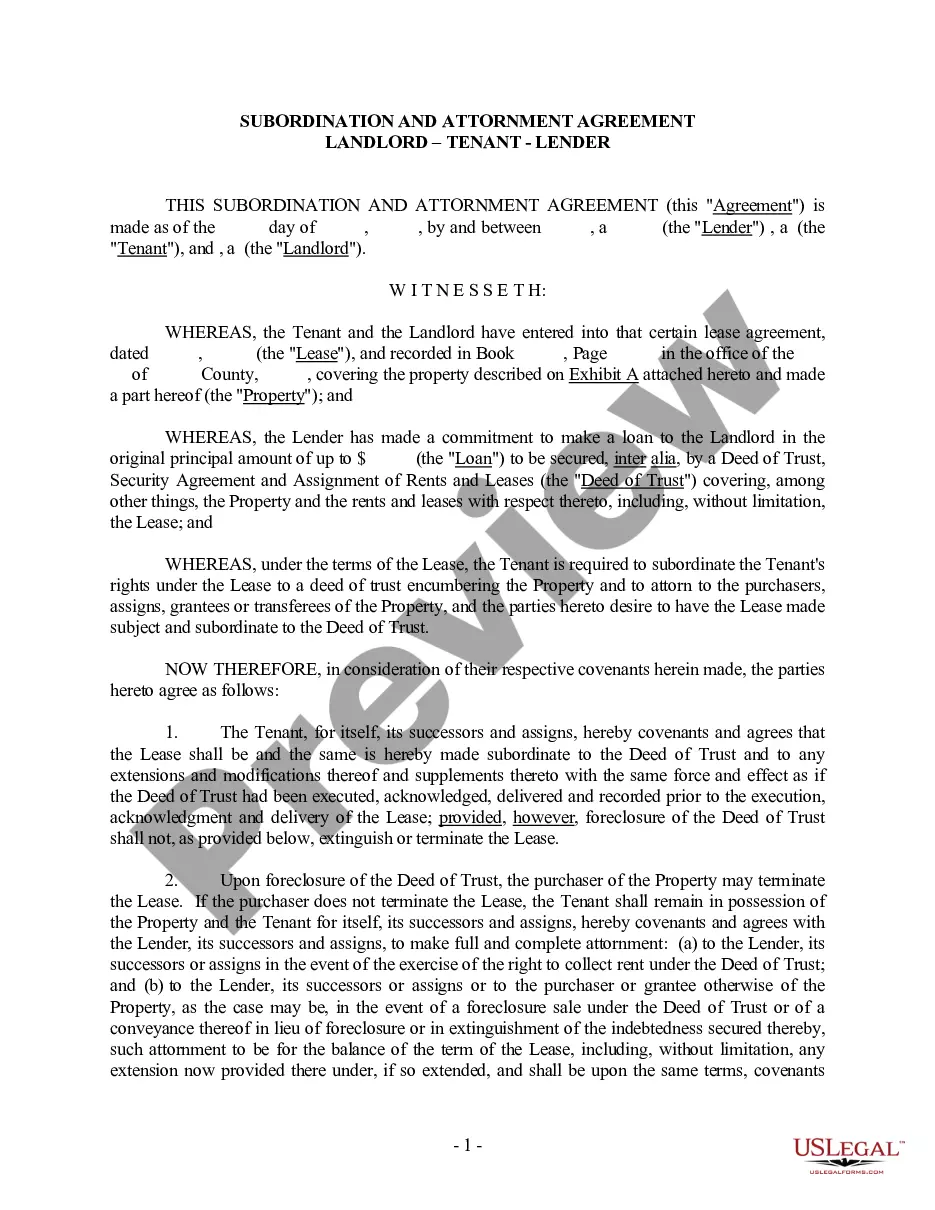
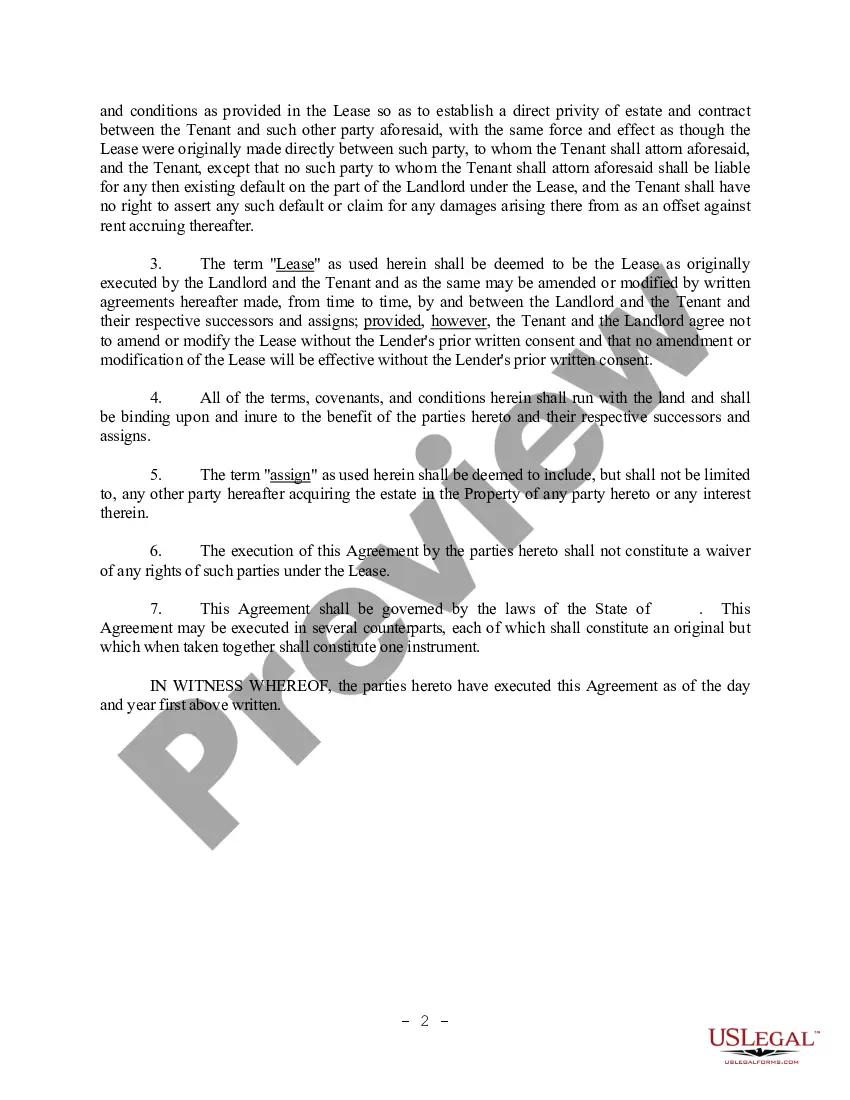
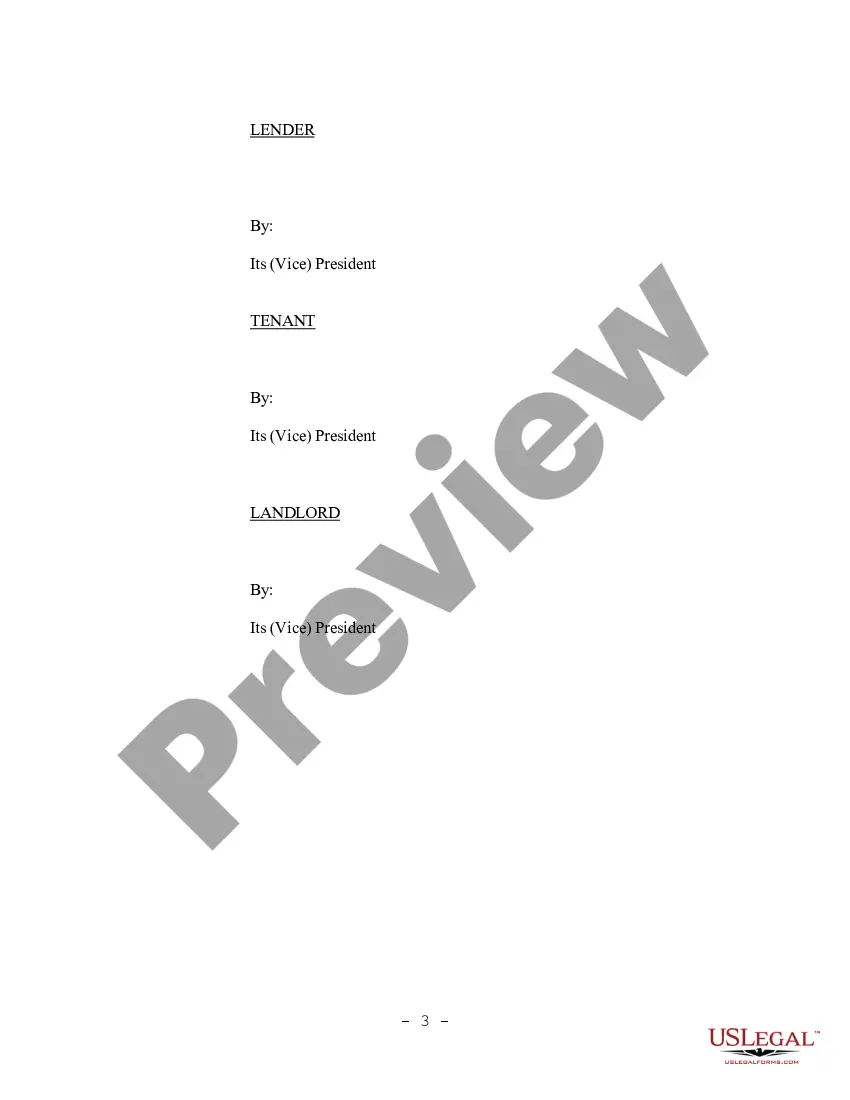
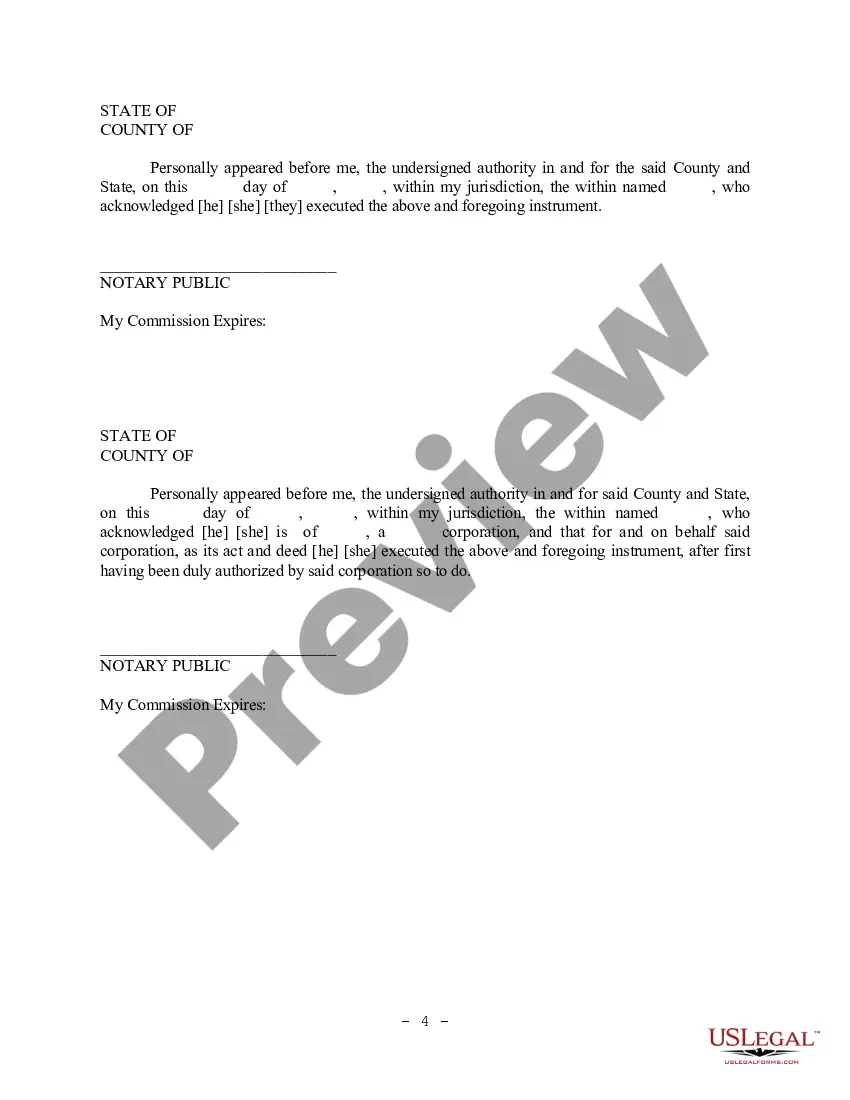
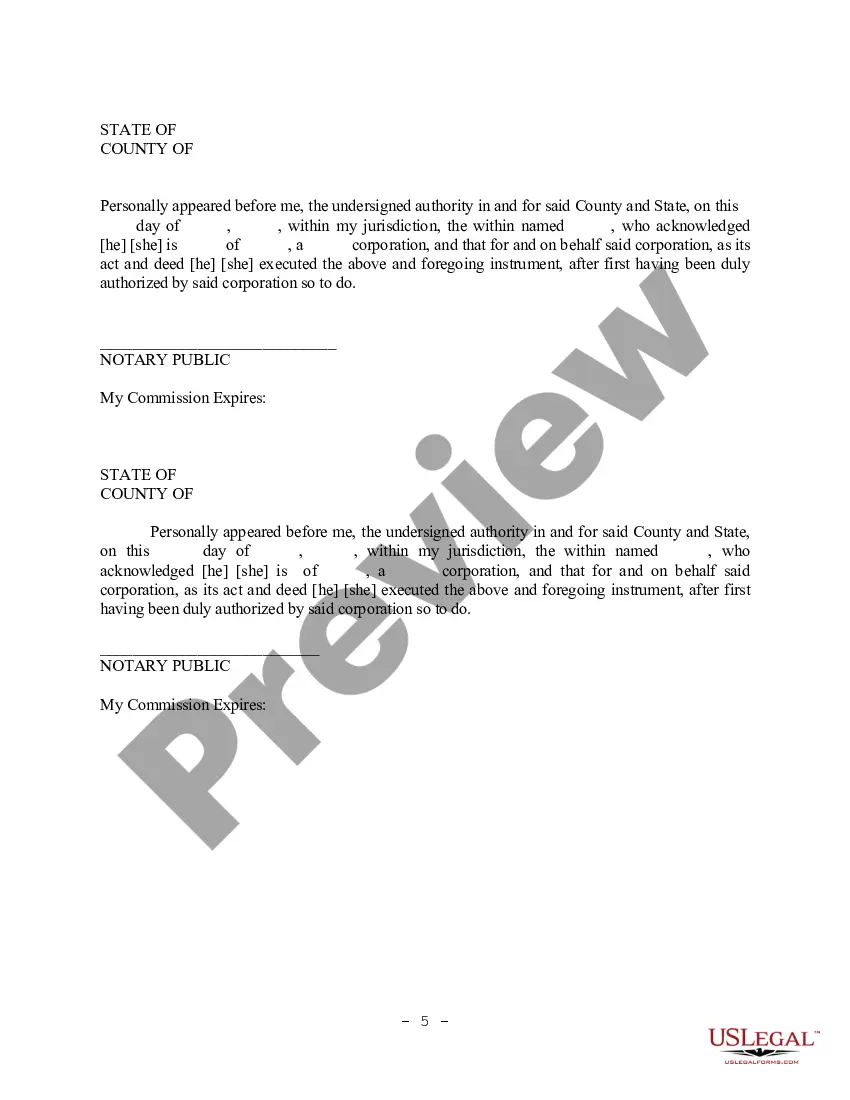
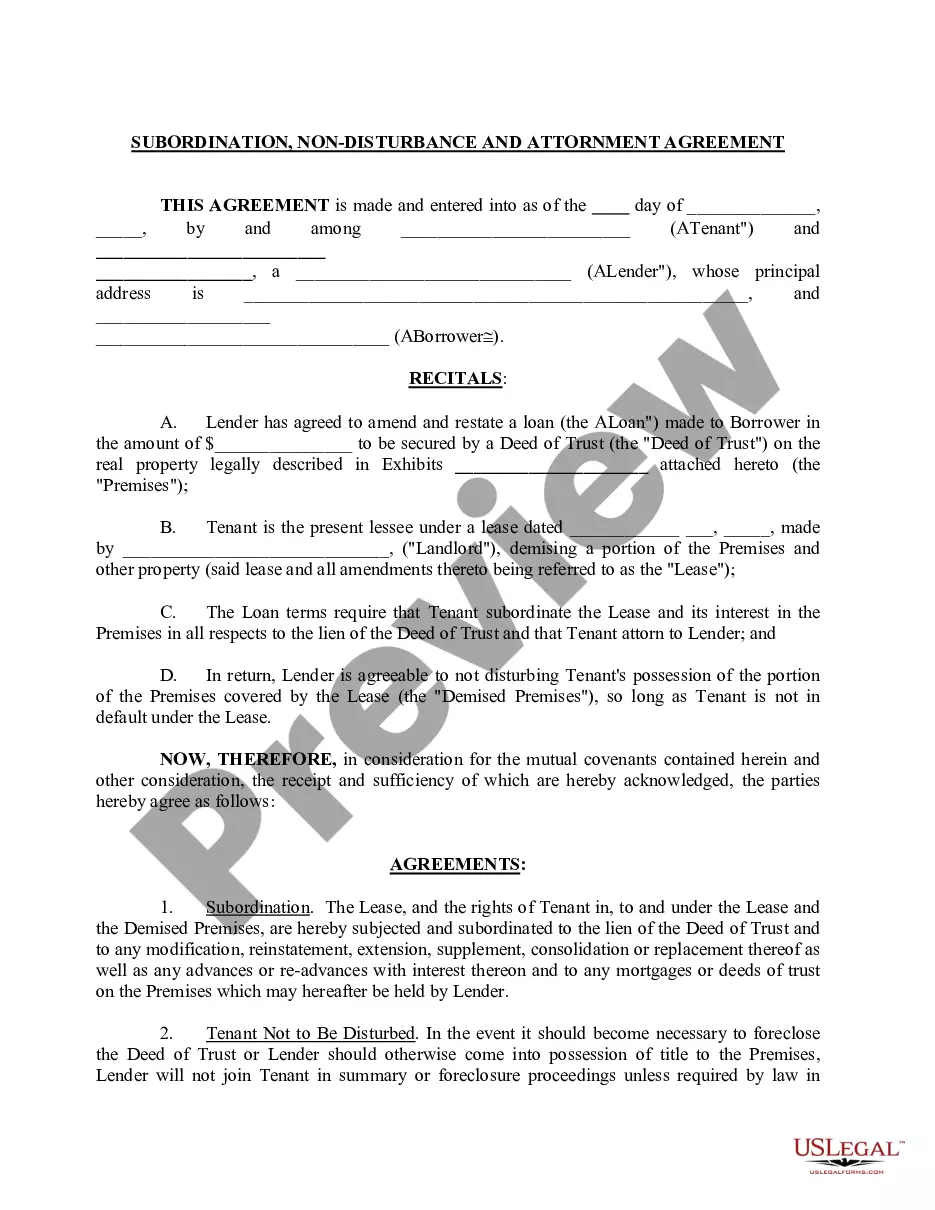
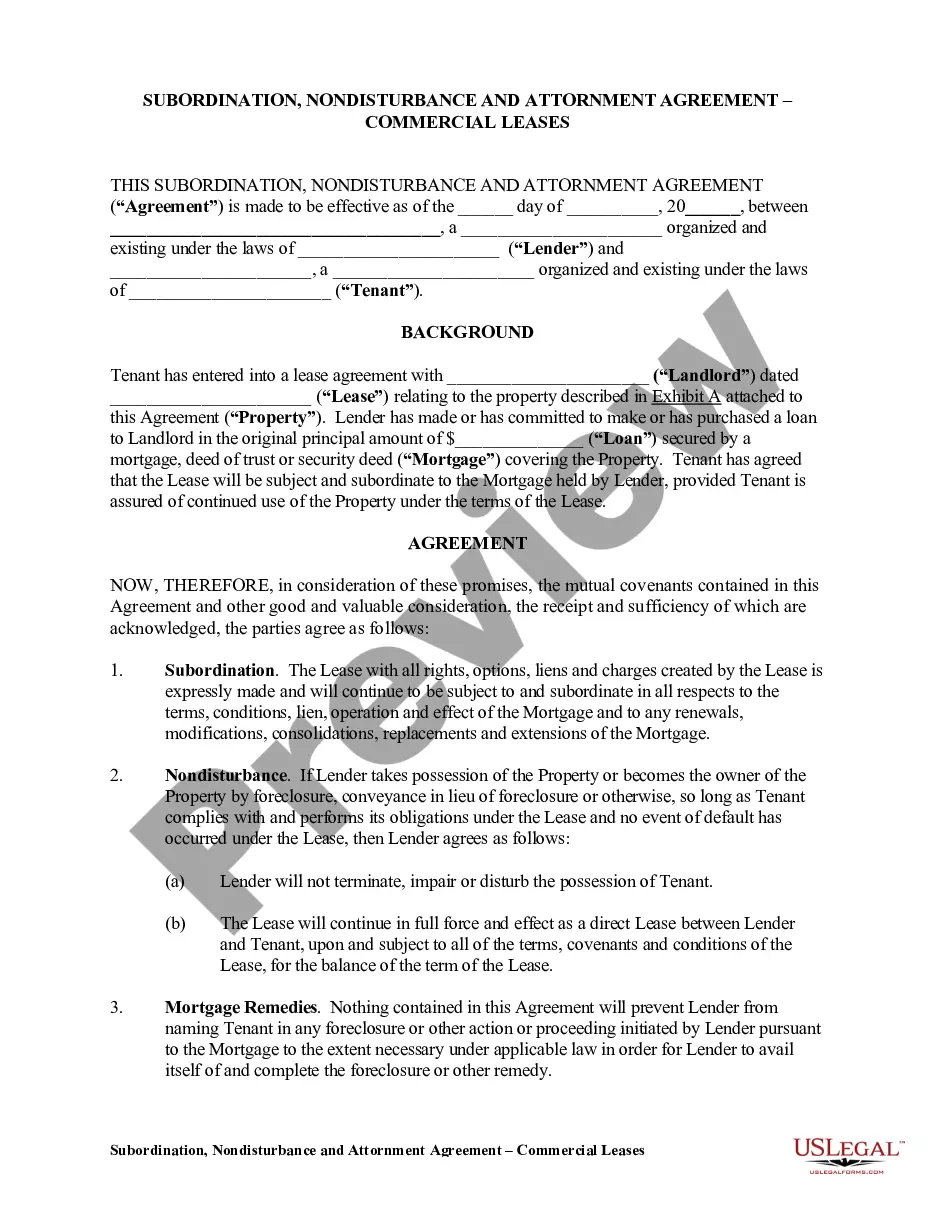
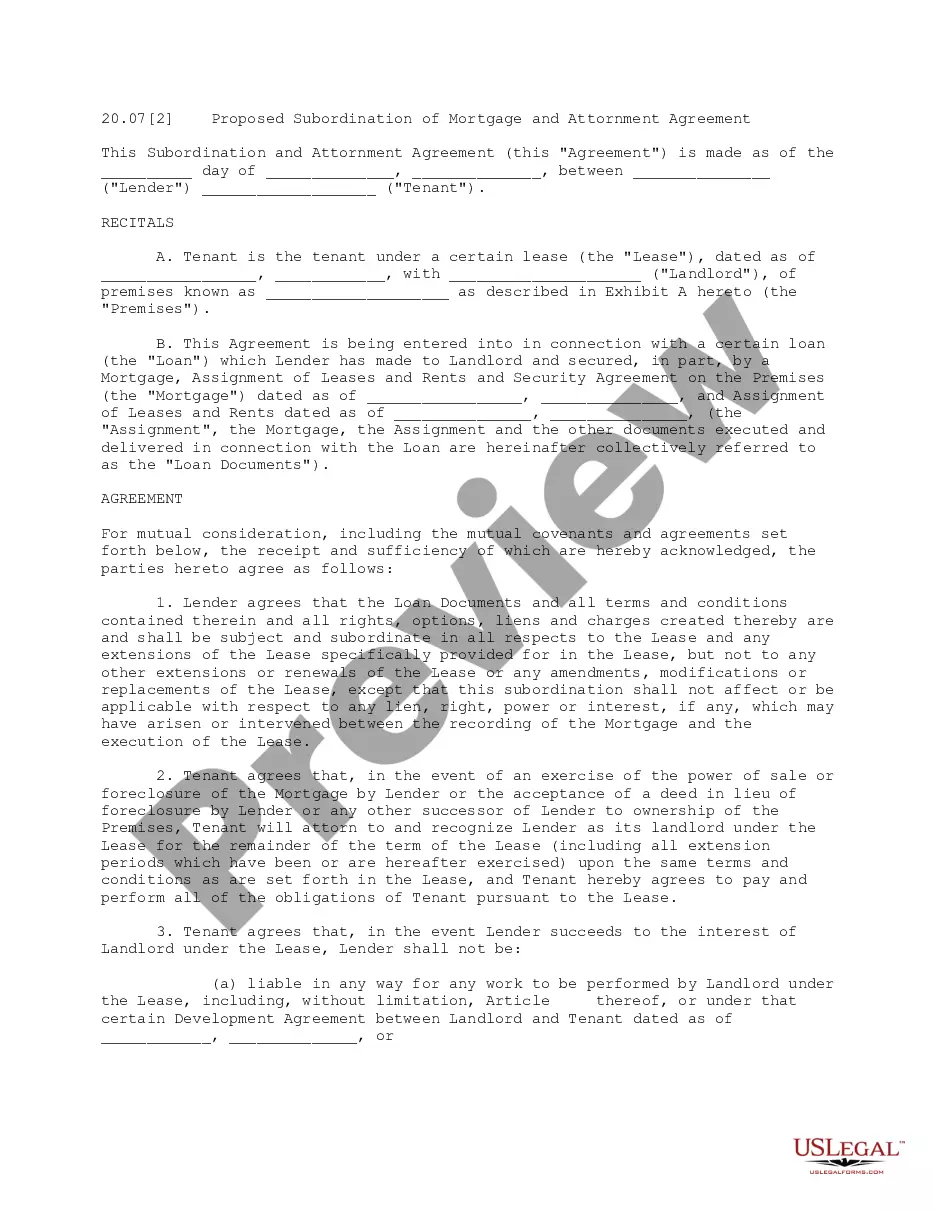
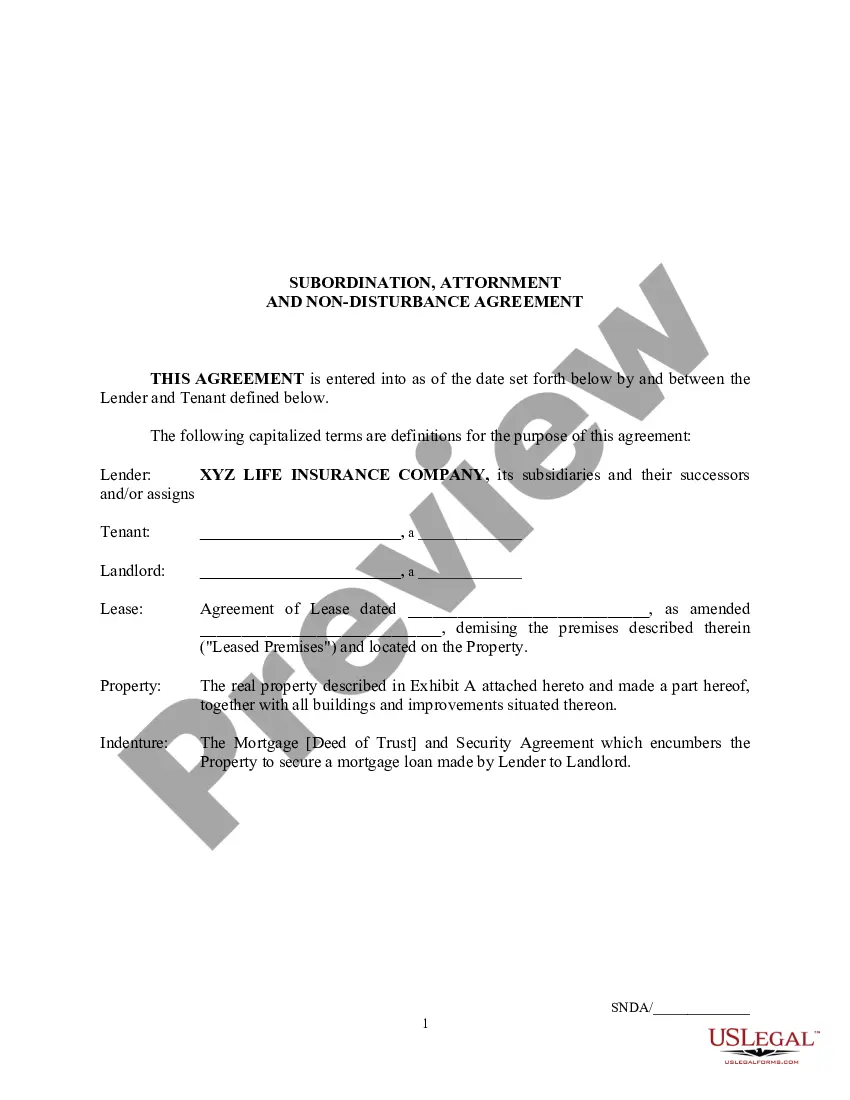
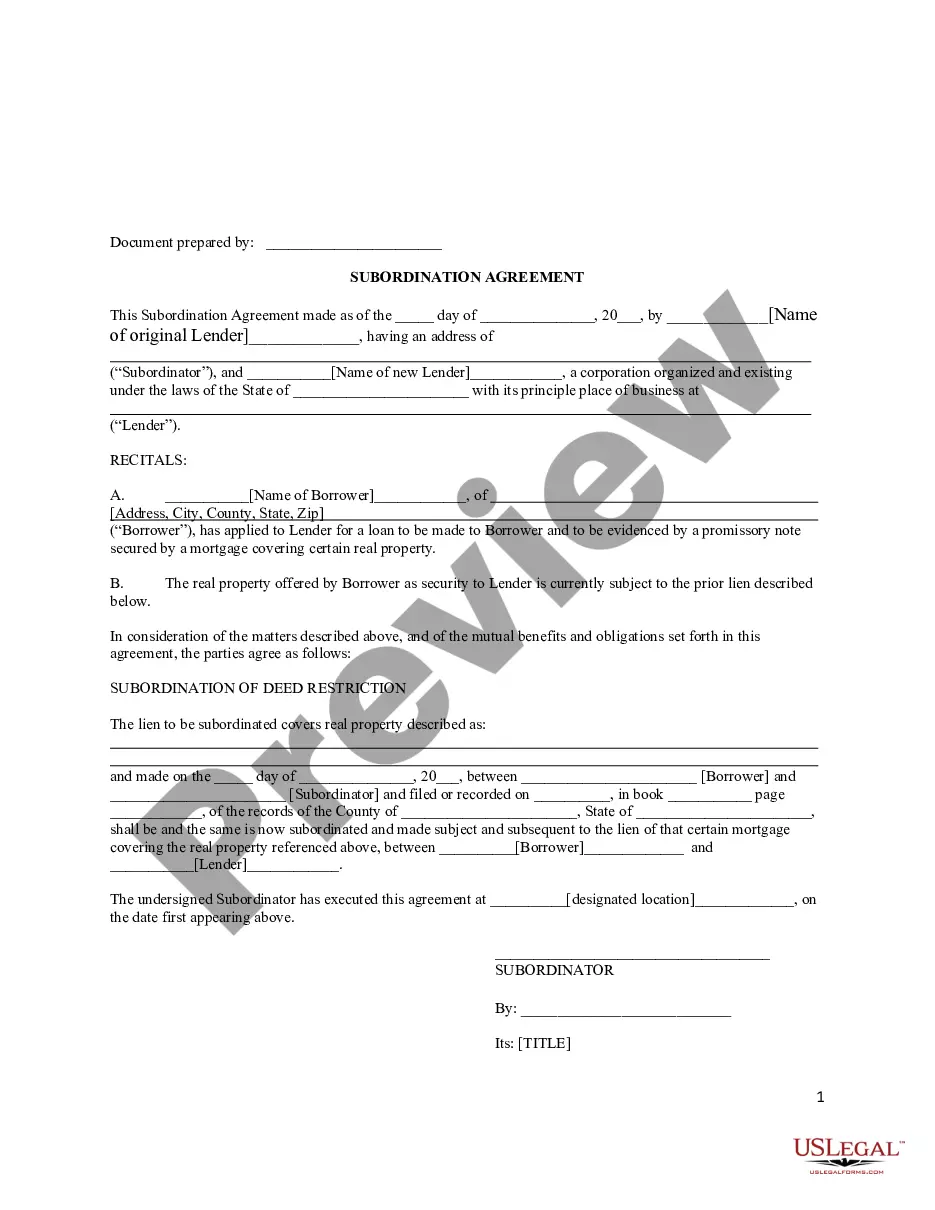
How to fill out Subordination And Attornment Agreement - Landlord - Tenant - Lender?
You can spend numerous hours online attempting to locate the legal document template that satisfies the state and federal requirements you need. US Legal Forms offers a vast array of legal forms that are examined by experts.
You can effortlessly download or print the Delaware Subordination and Attornment Agreement - Landlord - Tenant - Lender from my assistance. If you already possess a US Legal Forms account, you can Log In and select the Obtain option. Subsequently, you can complete, modify, print, or sign the Delaware Subordination and Attornment Agreement - Landlord - Tenant - Lender.
Every legal document template you purchase is yours indefinitely. To acquire another copy of the purchased form, navigate to the My documents tab and click on the corresponding option. If you are using the US Legal Forms website for the first time, follow the simple instructions below: First, ensure that you have selected the correct document template for the region/city of your choice. Review the form description to confirm you have chosen the right one. If available, utilize the Preview option to view the document template as well.
- To find another version of your form, use the Search field to locate the template that meets your needs and requirements.
- Once you have found the template you want, click on Buy now to proceed.
- Select the pricing plan you prefer, enter your details, and register for an account on US Legal Forms.
- Complete the transaction. You can use your credit card or PayPal account to pay for the legal form.
- Choose the format of your document and download it to your device.
- Make modifications to the document if necessary. You can complete, edit, sign, and print the Delaware Subordination and Attornment Agreement - Landlord - Tenant - Lender.
- Obtain and print numerous document templates using the US Legal Forms website, which provides the largest selection of legal forms. Utilize expert and state-specific templates to address your business or personal requirements.
Form popularity
FAQ
Section 5106 of the Delaware landlord-tenant code outlines the rights and responsibilities of landlords and tenants regarding lease agreements. This section specifically addresses the subordination agreements and how they relate to tenant rights in the context of lender relationships. Understanding this section is crucial for ensuring compliance and protecting the interests of all parties involved in a Delaware Subordination and Attornment Agreement - Landlord - Tenant - Lender.
A lender wants a Delaware Subordination and Attornment Agreement - Landlord - Tenant - Lender because it provides essential legal protections. This agreement allows lenders to maintain priority over tenant rights in situations like foreclosure, ensuring that they can recover their investment effectively. By securing these rights, lenders can offer more favorable financing options to landlords.
Lenders seek a Delaware Subordination and Attornment Agreement - Landlord - Tenant - Lender to protect their investment in the property. This agreement ensures that their rights take precedence over the tenant's, allowing them to act swiftly in case of default. It also reassures lenders that tenants will acknowledge their rights, which is essential for safeguarding the property’s value.
The purpose of a Delaware Subordination and Attornment Agreement - Landlord - Tenant - Lender is to clarify and secure the rights of all parties involved. It allows the lender to maintain priority over the property in case of foreclosure, while also affirming the tenant's rights to occupy the premises. By doing so, it fosters stability and confidence among landlords, tenants, and lenders.
A subordination and attornment agreement is a legal document that defines the relationship between a landlord, tenant, and lender. In essence, it establishes the order of rights among these parties regarding the property. This agreement helps protect the tenant’s rights while ensuring that the lender’s claims take precedence, thus creating a clear framework for all involved.
The primary beneficiaries of a Delaware Subordination and Attornment Agreement - Landlord - Tenant - Lender are the landlord and the lender. This agreement clarifies the relationship between all parties, ensuring that the tenant's rights remain protected even if the property changes ownership. It also provides the lender with security over the property, which is crucial for maintaining their financial interests.
A Subordination, Non-Disturbance, and Attornment (SNDA) agreement offers significant benefits to lenders. It helps protect their interests when a property changes ownership or is subject to foreclosure. By establishing the terms of the Delaware Subordination and Attornment Agreement - Landlord - Tenant - Lender, lenders can ensure that tenant rights remain intact, thereby maintaining the property's income potential. This agreement fosters a secure lending environment and encourages a smoother operational framework for all parties involved.
The attornment agreement is typically drafted by a legal professional who specializes in real estate law. This may include attorneys representing landlords, tenants, or lenders involved in the transaction. When drafting a Delaware Subordination and Attornment Agreement - Landlord - Tenant - Lender, it is crucial to ensure that all parties’ rights and responsibilities are clearly defined. Utilizing a platform like US Legal Forms can simplify this process by providing templates and resources tailored to your specific needs.