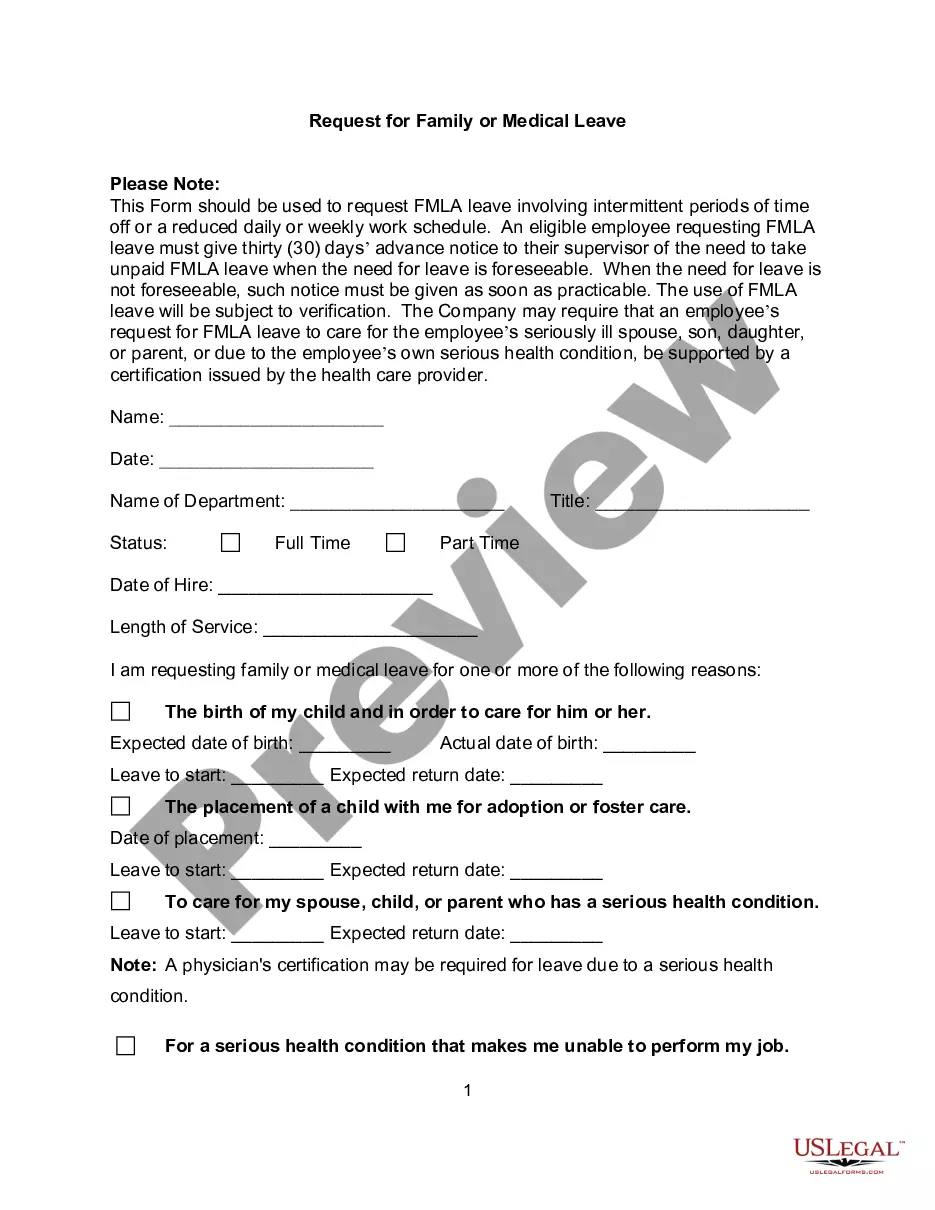
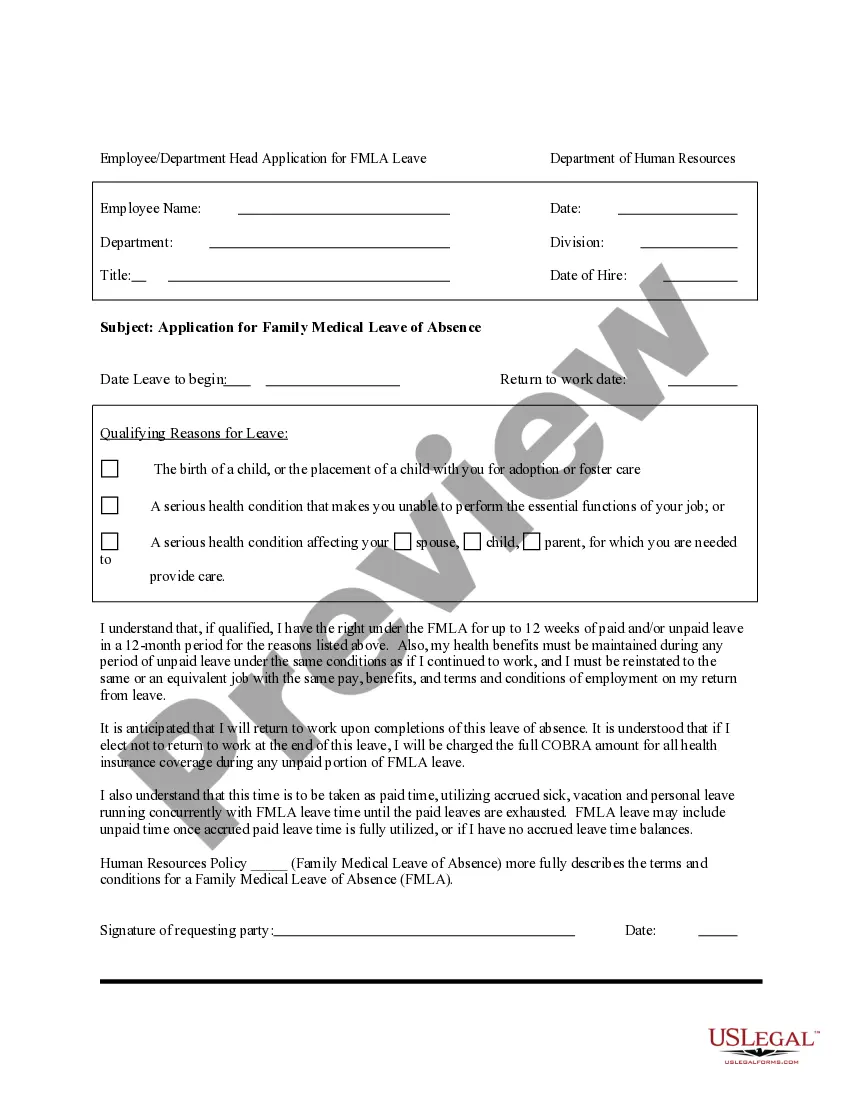
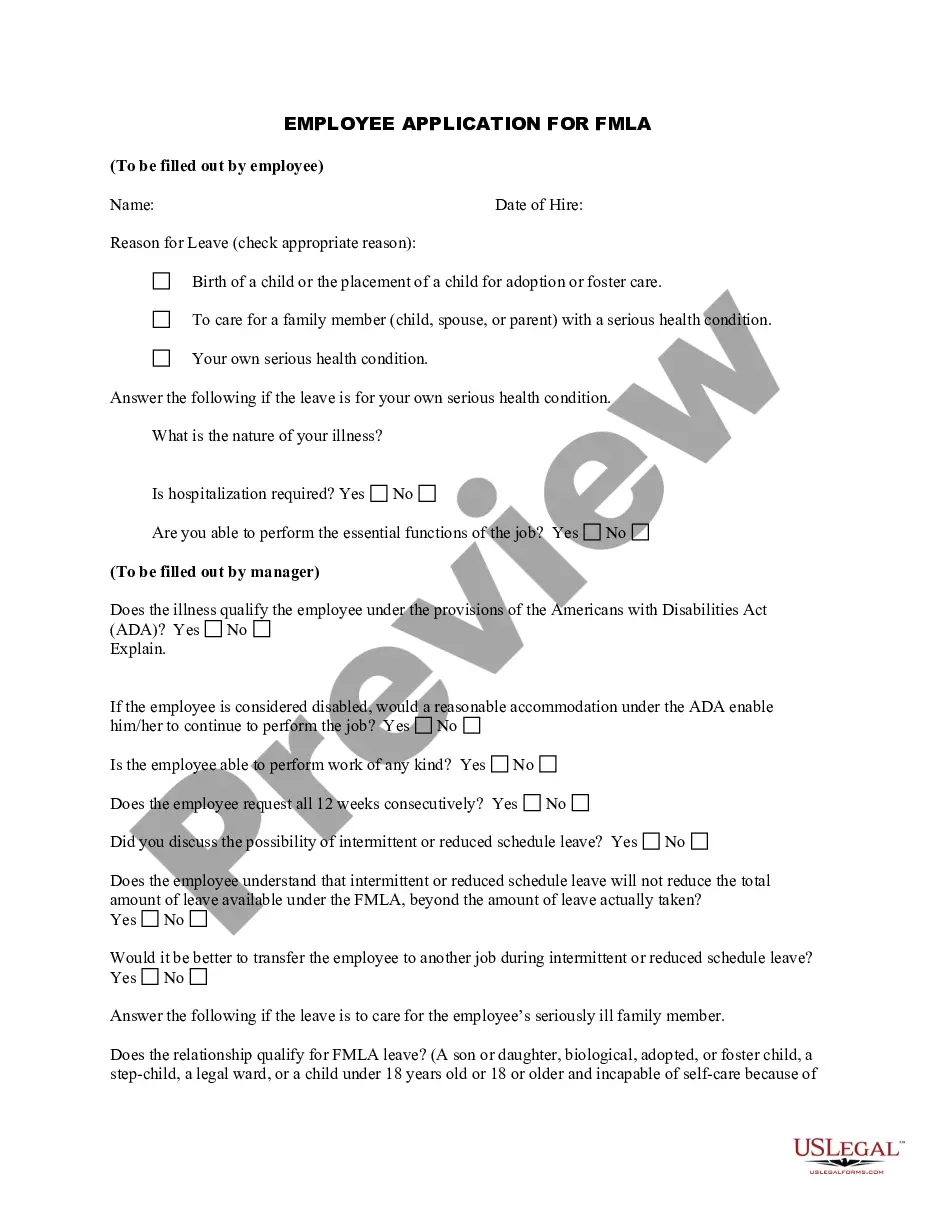
Delaware Family and Medical Leave Request Form
Description
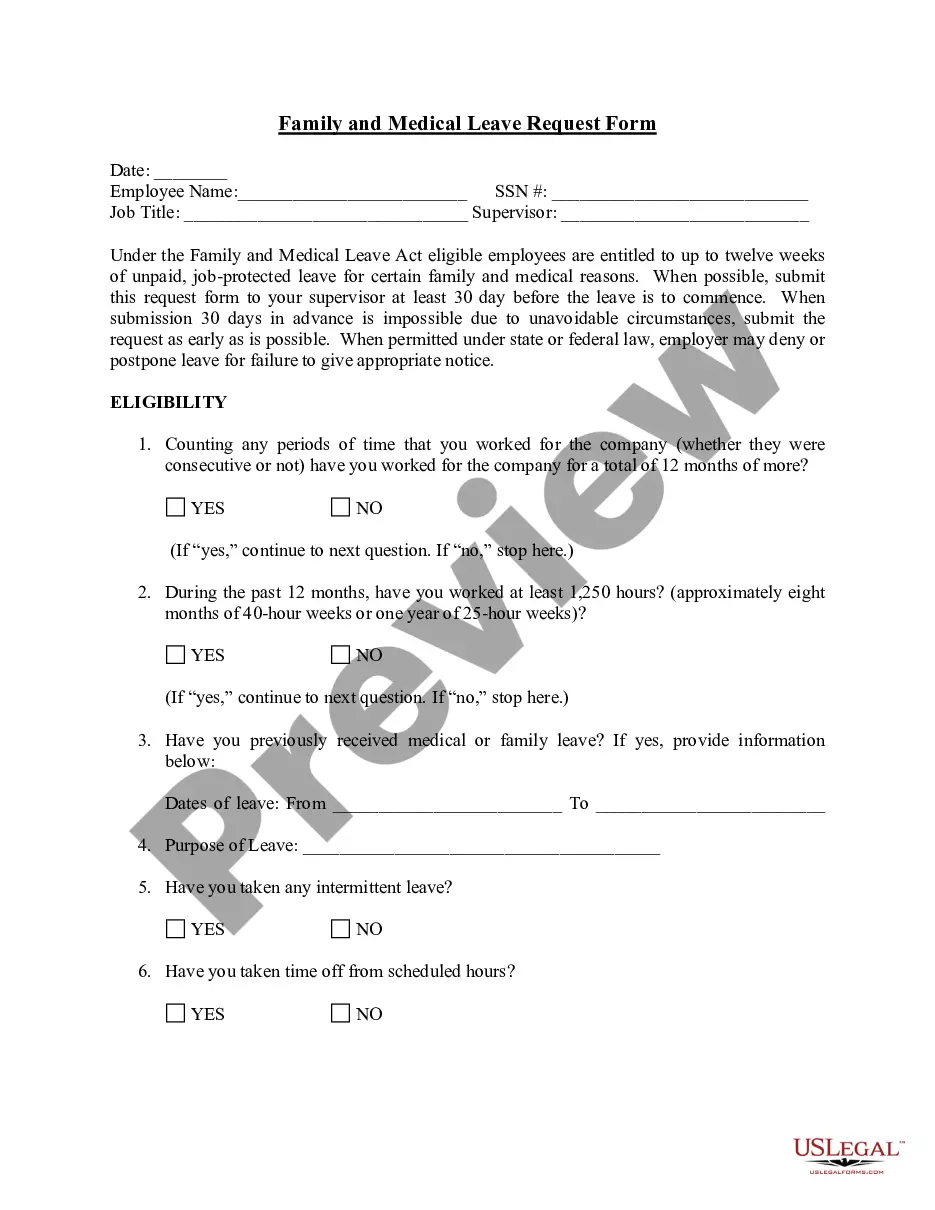
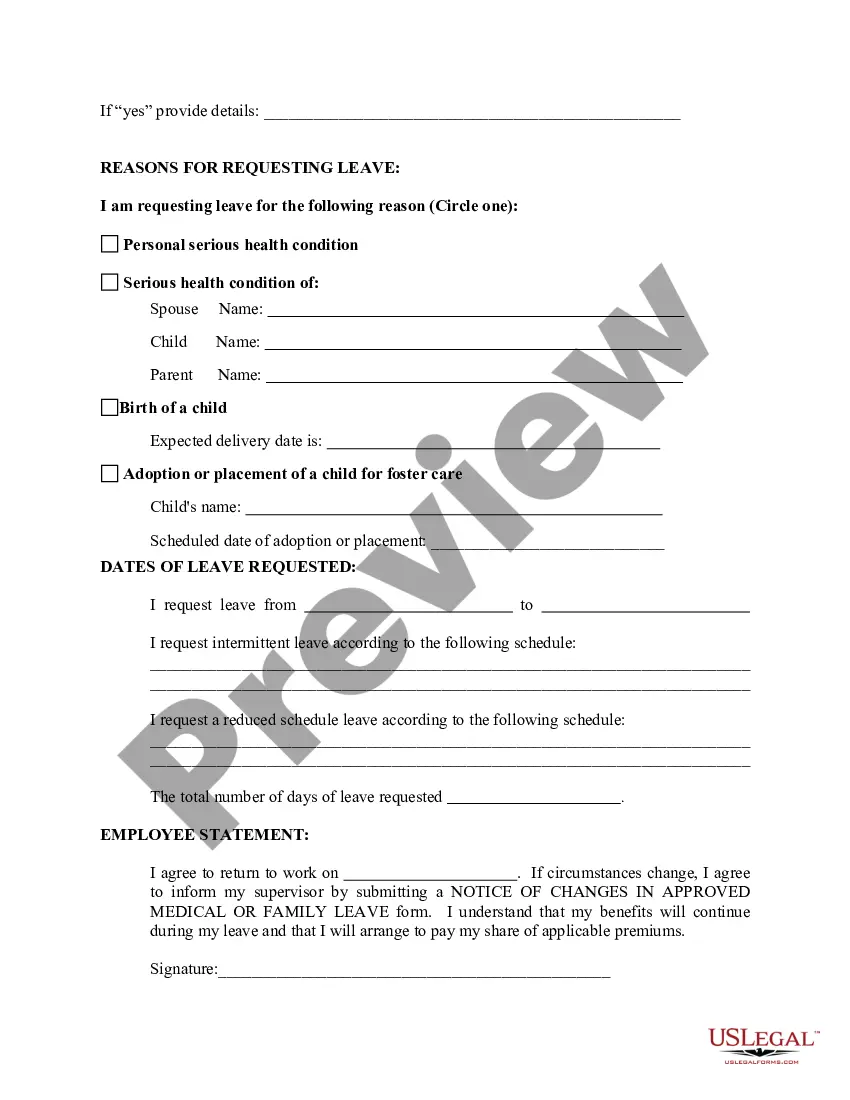
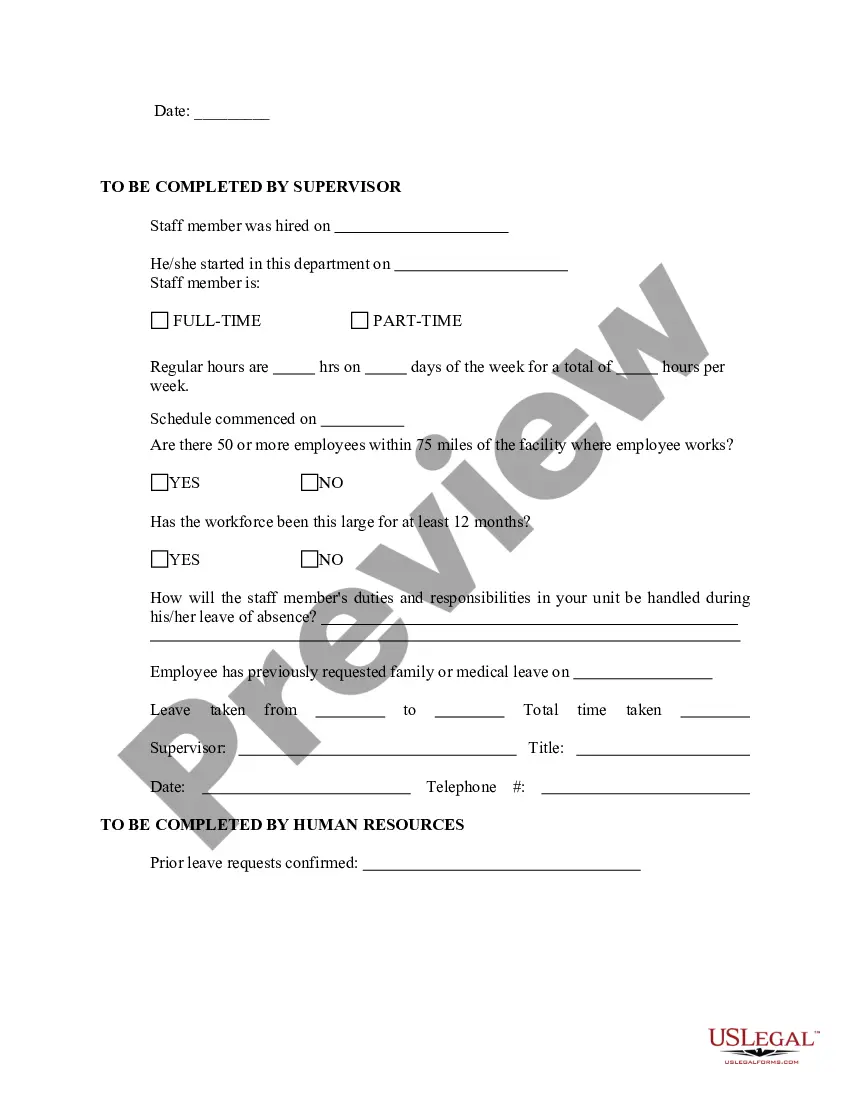
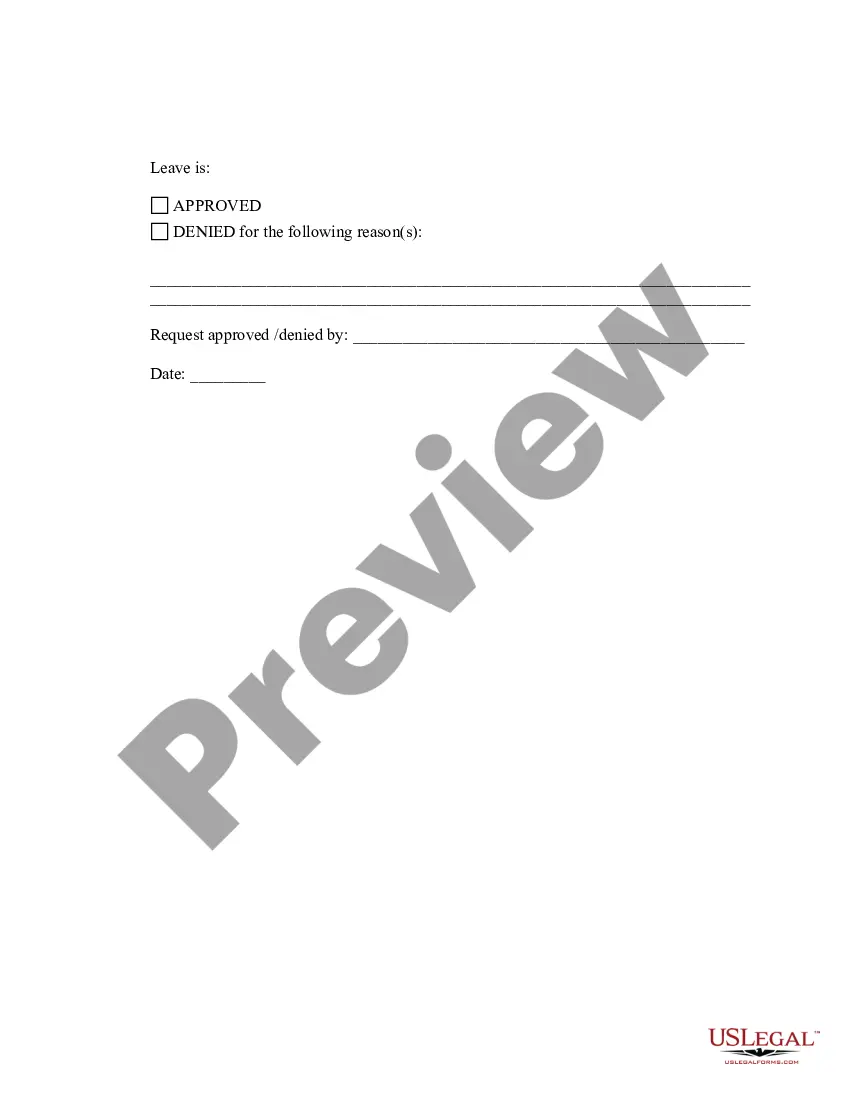
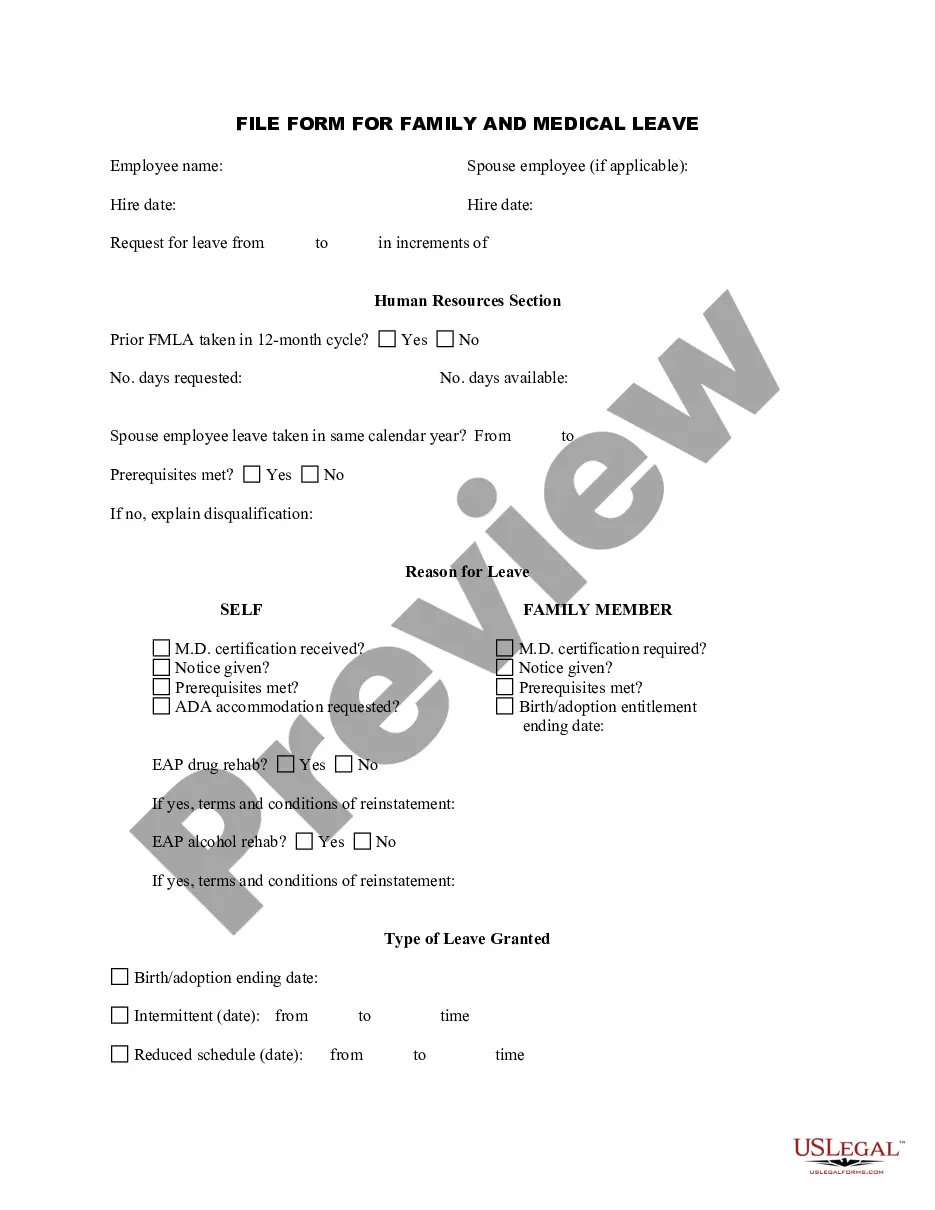
Get your form ready online
Our built-in tools help you complete, sign, share, and store your documents in one place.
Make edits, fill in missing information, and update formatting in US Legal Forms—just like you would in MS Word.
Download a copy, print it, send it by email, or mail it via USPS—whatever works best for your next step.
Sign and collect signatures with our SignNow integration. Send to multiple recipients, set reminders, and more. Go Premium to unlock E-Sign.
If this form requires notarization, complete it online through a secure video call—no need to meet a notary in person or wait for an appointment.
We protect your documents and personal data by following strict security and privacy standards.

Make edits, fill in missing information, and update formatting in US Legal Forms—just like you would in MS Word.

Download a copy, print it, send it by email, or mail it via USPS—whatever works best for your next step.

Sign and collect signatures with our SignNow integration. Send to multiple recipients, set reminders, and more. Go Premium to unlock E-Sign.

If this form requires notarization, complete it online through a secure video call—no need to meet a notary in person or wait for an appointment.

We protect your documents and personal data by following strict security and privacy standards.
Looking for another form?

How to fill out Family And Medical Leave Request Form?
Are you presently in a situation where you need documents for either business or personal purposes almost all the time.
There are numerous reliable document templates accessible online, yet locating versions you can rely on is quite challenging.
US Legal Forms provides a vast array of form templates, such as the Delaware Family and Medical Leave Request Form, designed to satisfy both federal and state requirements.
Choose the pricing plan you want, provide the required information to create your account, and pay for your order using PayPal or a credit card.
Select a convenient file format and download your copy. You can find all the document templates you have purchased in the My documents section. You can retrieve an additional copy of the Delaware Family and Medical Leave Request Form anytime if needed. Just click on the required form to download or print the document template.
- If you are already familiar with the US Legal Forms website and have an account, simply Log In.
- Then, you may download the Delaware Family and Medical Leave Request Form template.
- If you do not have an account and want to start using US Legal Forms, follow these steps.
- Find the form you need and ensure it is for your correct region/state.
- Use the Preview button to view the document.
- Read the description to confirm that you have selected the correct form.
- If the form is not what you are looking for, utilize the Search area to find the form that meets your requirements.
- Once you locate the appropriate form, click on Get now.
Form popularity
FAQ
Delaware state law doesn't provide pregnancy leave, but if you work in Delaware, the federal Family Medical Leave Act (FMLA) gives you the right to take unpaid leave for these reasons.
The Family and Medical Leave Act (FMLA) provides a means of balancing the demands of the workplace with the needs of families, and promotes the stability, integrity, and economic security of employees' families in a manner that accommodates the legitimate interests of the State of Delaware (State).
FMLA runs concurrently with the Parental Leave benefit, as applicable. The State provides up to 12 calendar weeks of Parental Leave to eligible employees upon the birth of a child of the employee, or upon the adoption by the employee of a child who is six (6) years of age or younger.
The FMLA provides eligible employees up to 12 weeks of unpaid leave for qualifying family and medical reasons in a 12-month period from the first date of FMLA leave use.
Delaware employers must comply with the FMLA if they have at least 50 employees for at least 20 weeks in the current or previous year. Employees may take FMLA leave if: They have worked for the company for at least a year. They worked at least 1,250 hours during the previous year, and.
The FMLA provides eligible employees up to 12 weeks of unpaid leave for qualifying family and medical reasons in a 12-month period from the first date of FMLA leave use.
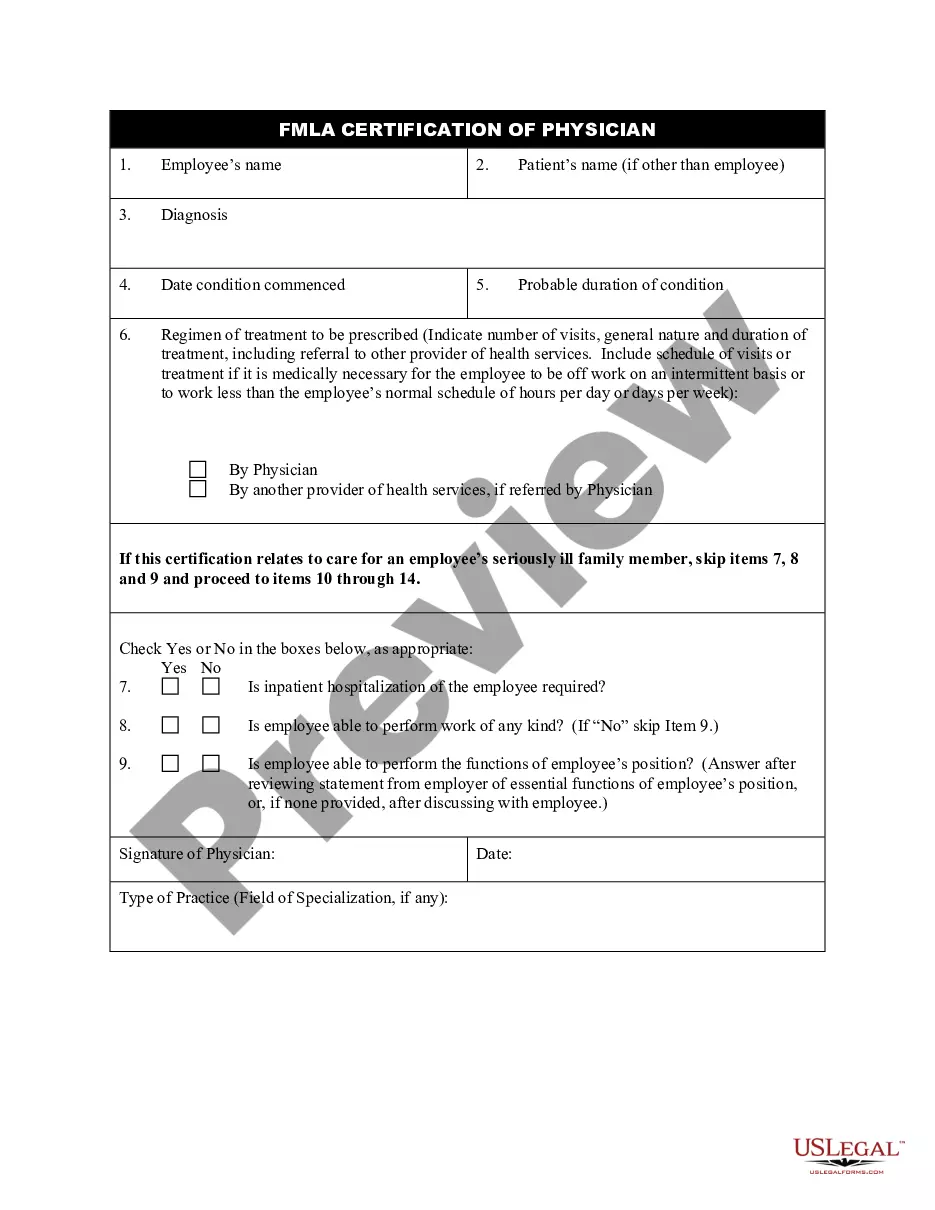
To apply for FMLA, the employee must take an FMLA Medical Certification Form to their health care provider. This form ensures that the employee's or family member's applicable health condition is valid. After receiving the form, the employee must return it within 15 calendar days.
There is no Delaware law requiring private employers to provide employees sick leave, paid or unpaid, although many employers do grant it as an important employee benefit. It is important to remember, however, that if sick leave is promised, an employer may create a legal obligation to grant it.