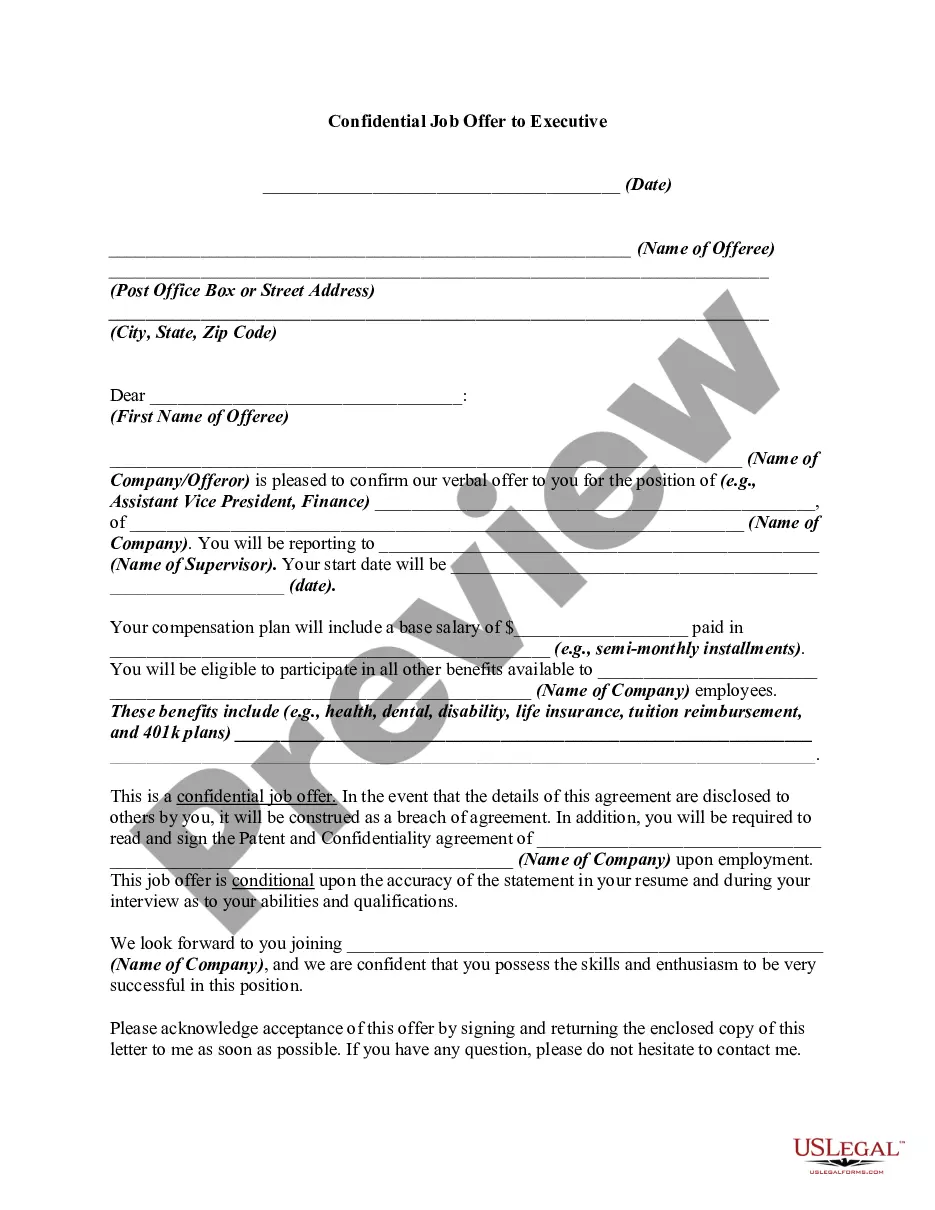
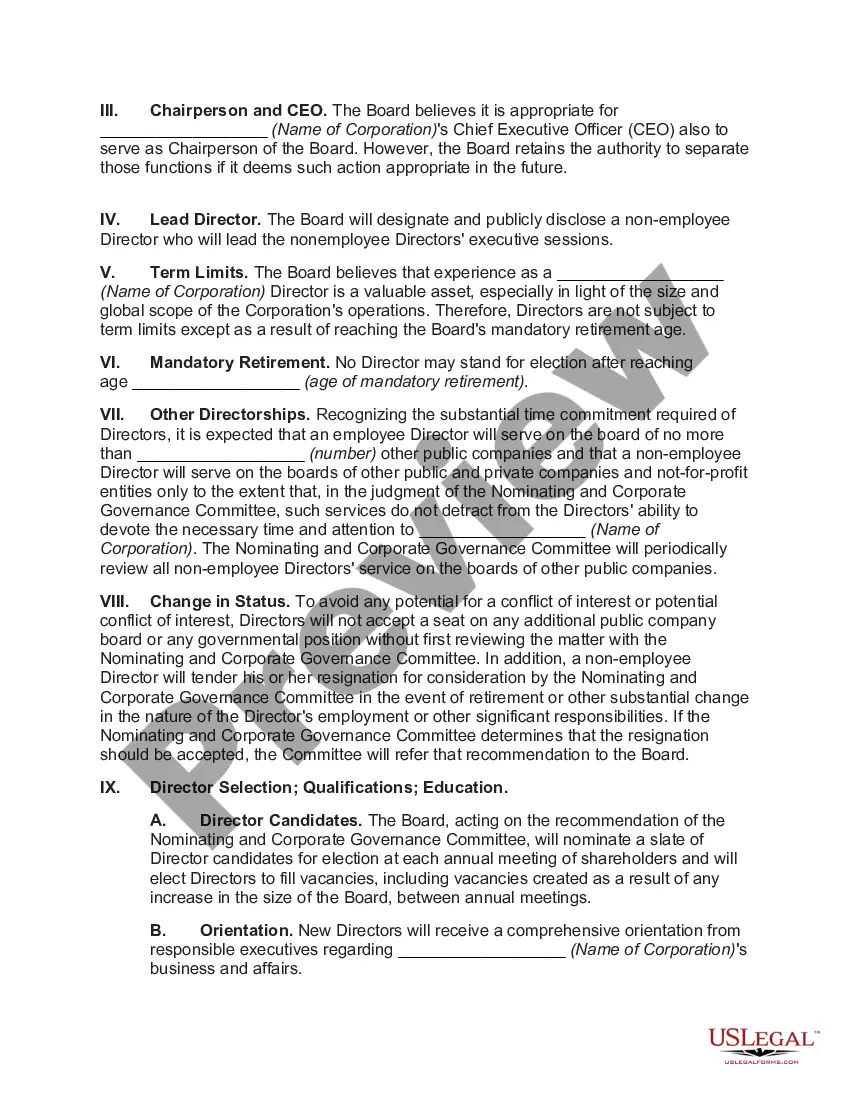
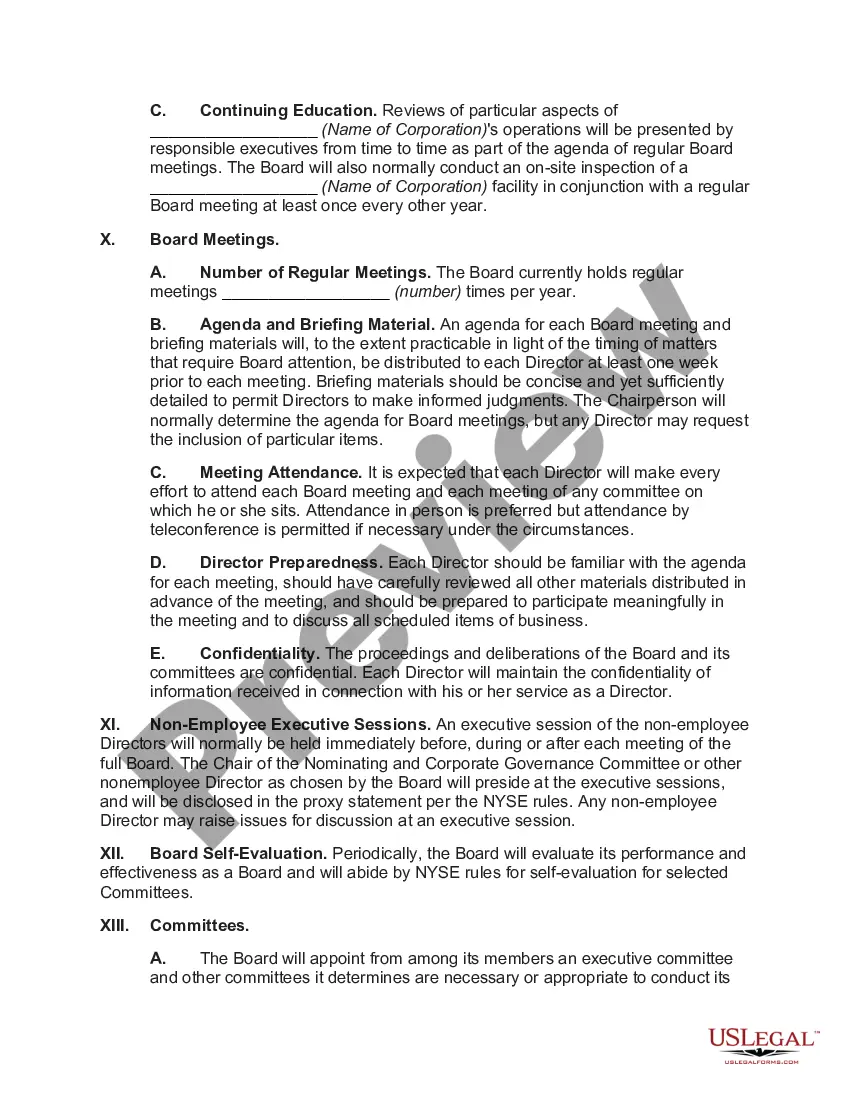
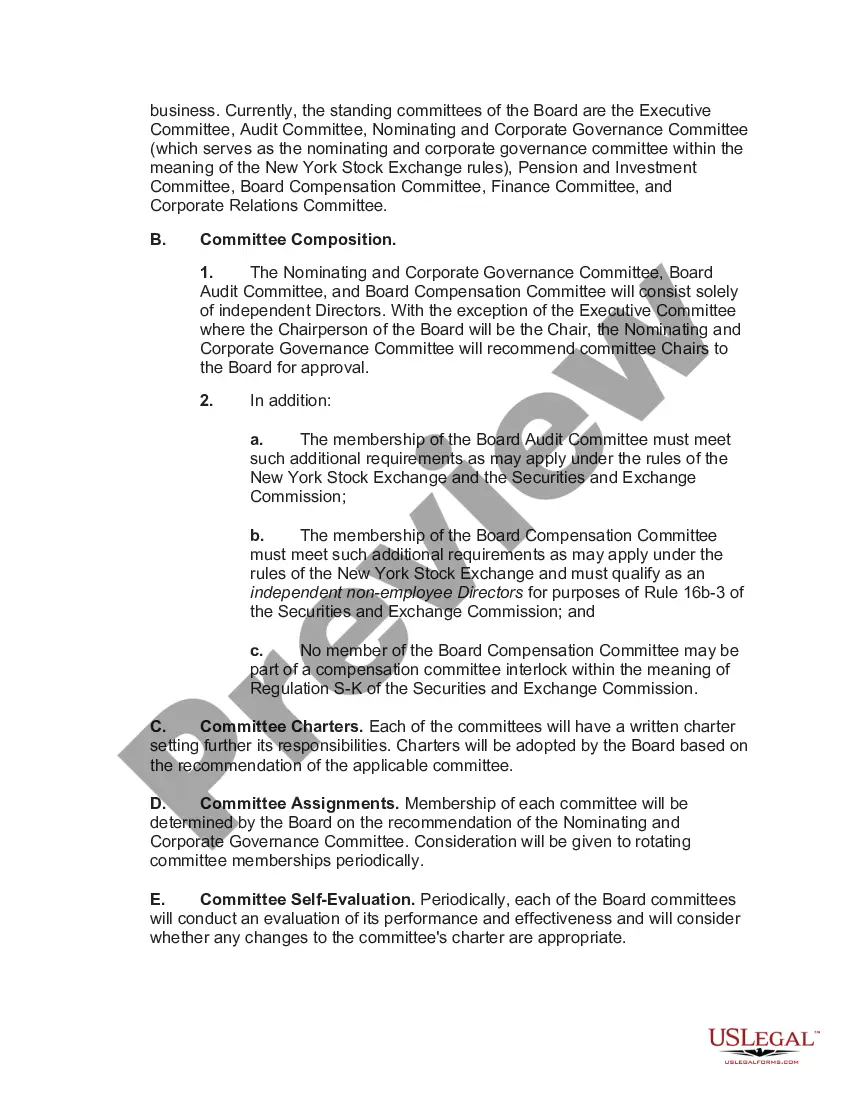
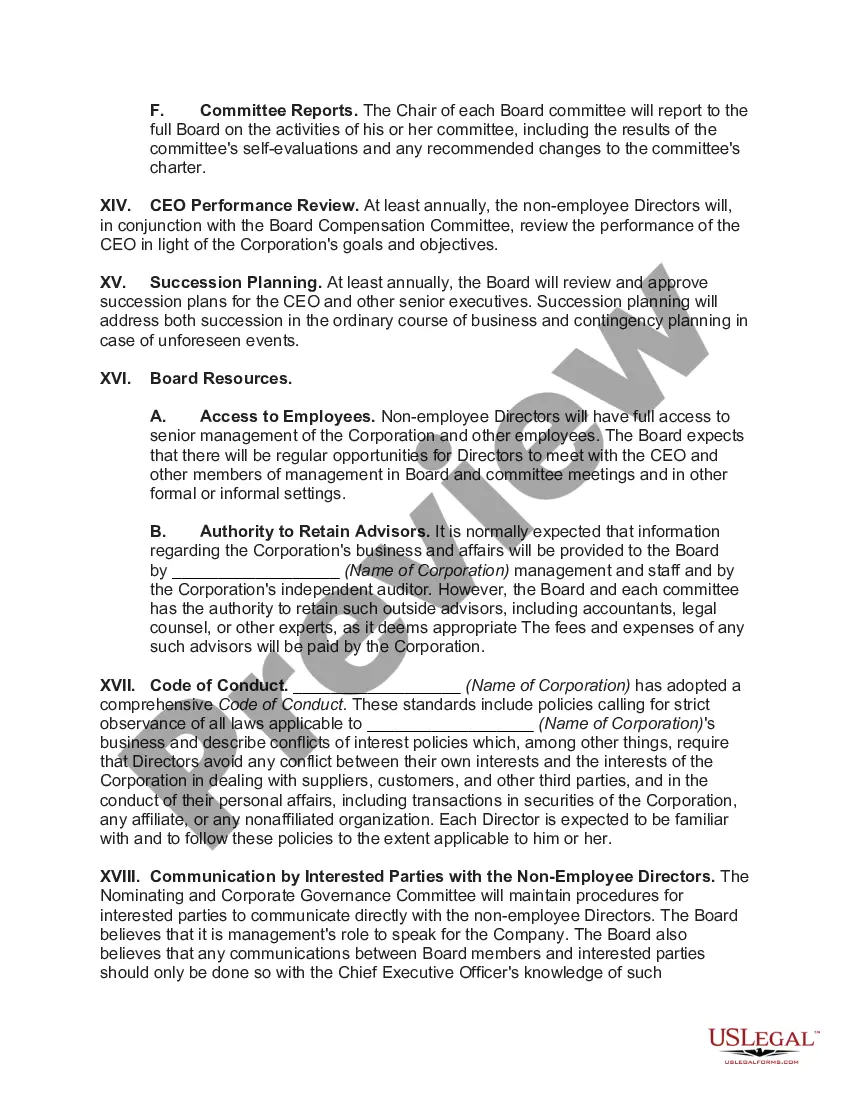
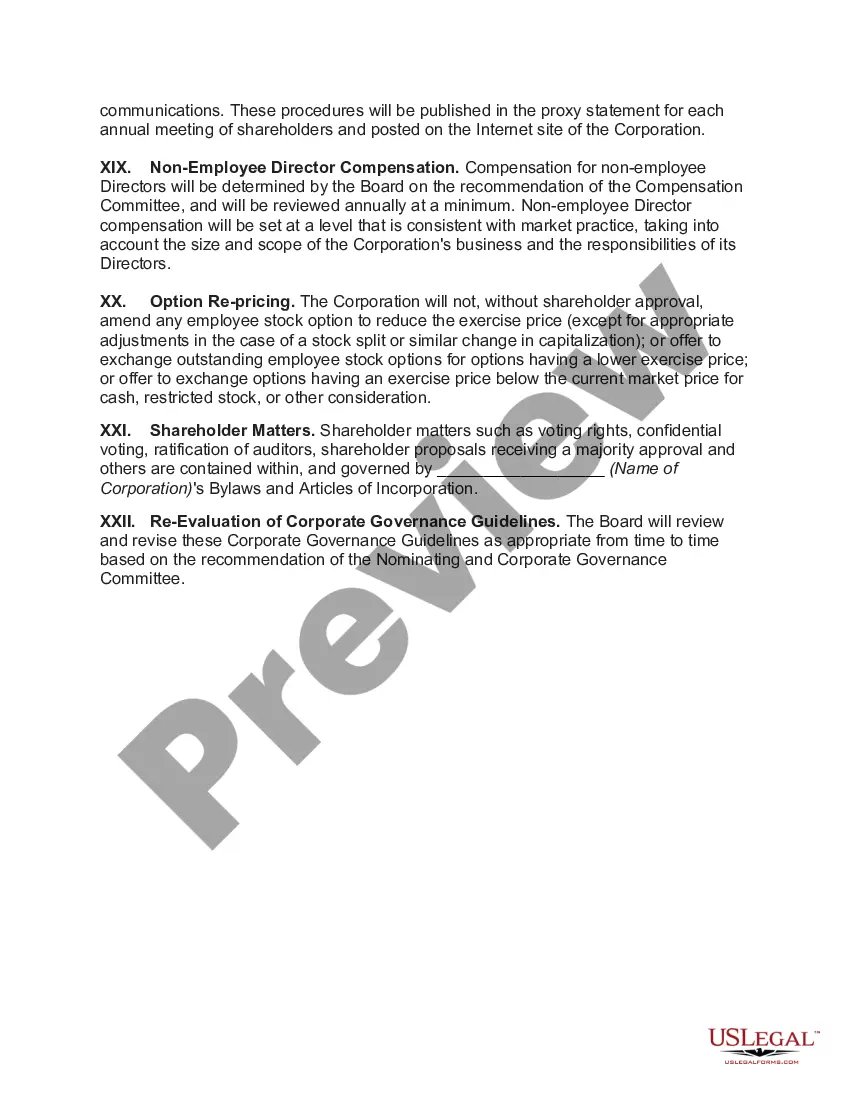
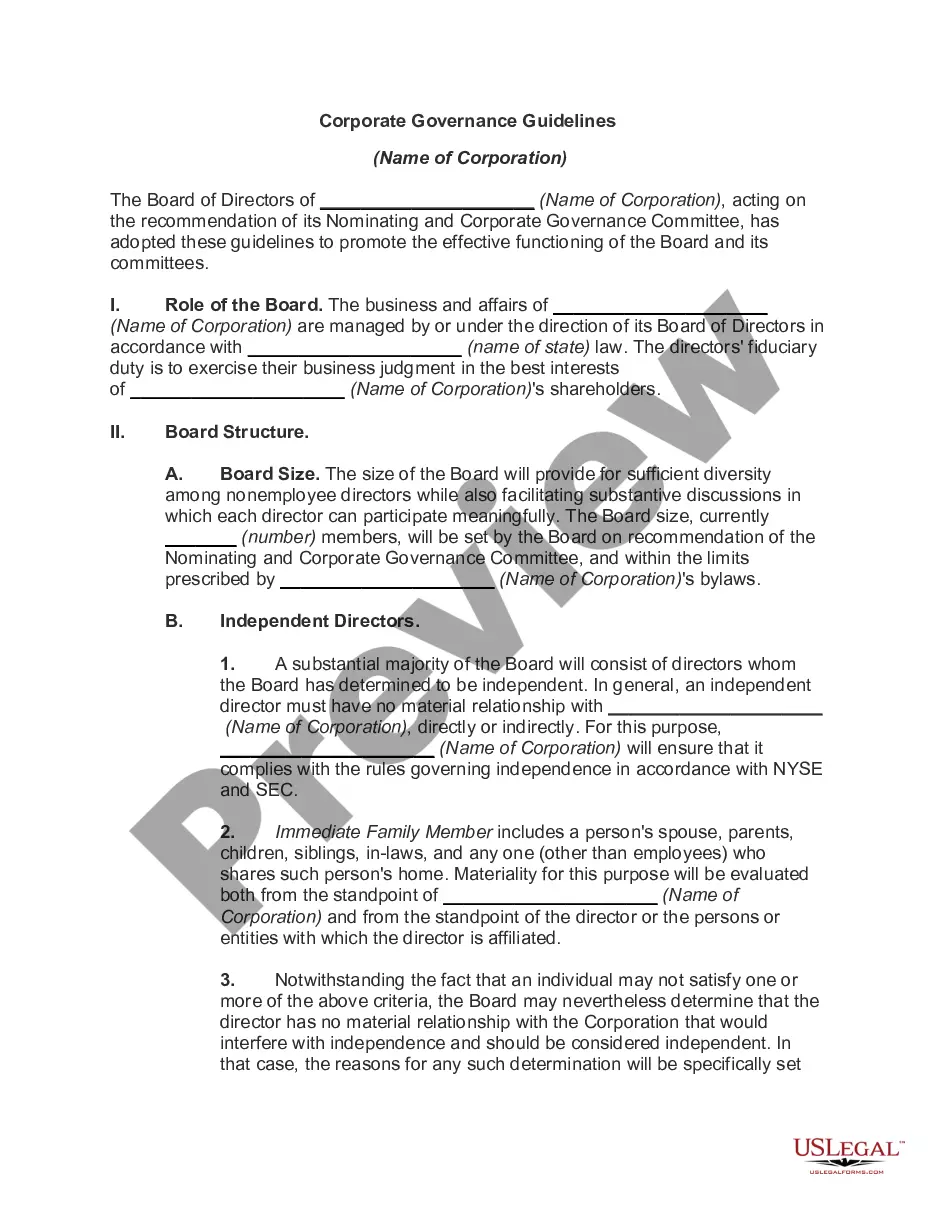
Delaware Corporate Governance Guidelines
Description
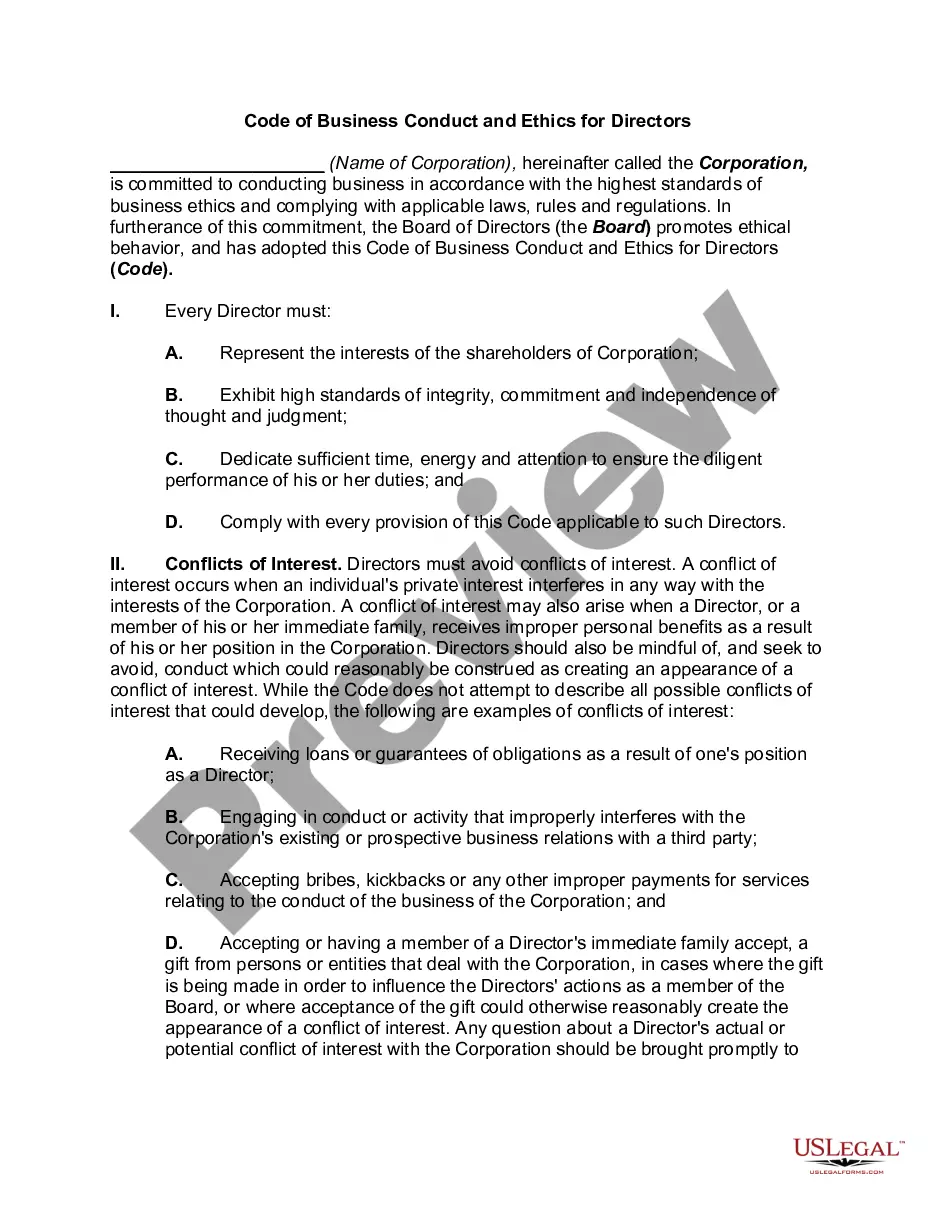

Get your form ready online
Our built-in tools help you complete, sign, share, and store your documents in one place.
Make edits, fill in missing information, and update formatting in US Legal Forms—just like you would in MS Word.
Download a copy, print it, send it by email, or mail it via USPS—whatever works best for your next step.
Sign and collect signatures with our SignNow integration. Send to multiple recipients, set reminders, and more. Go Premium to unlock E-Sign.
If this form requires notarization, complete it online through a secure video call—no need to meet a notary in person or wait for an appointment.
We protect your documents and personal data by following strict security and privacy standards.

Make edits, fill in missing information, and update formatting in US Legal Forms—just like you would in MS Word.

Download a copy, print it, send it by email, or mail it via USPS—whatever works best for your next step.

Sign and collect signatures with our SignNow integration. Send to multiple recipients, set reminders, and more. Go Premium to unlock E-Sign.

If this form requires notarization, complete it online through a secure video call—no need to meet a notary in person or wait for an appointment.

We protect your documents and personal data by following strict security and privacy standards.
Looking for another form?


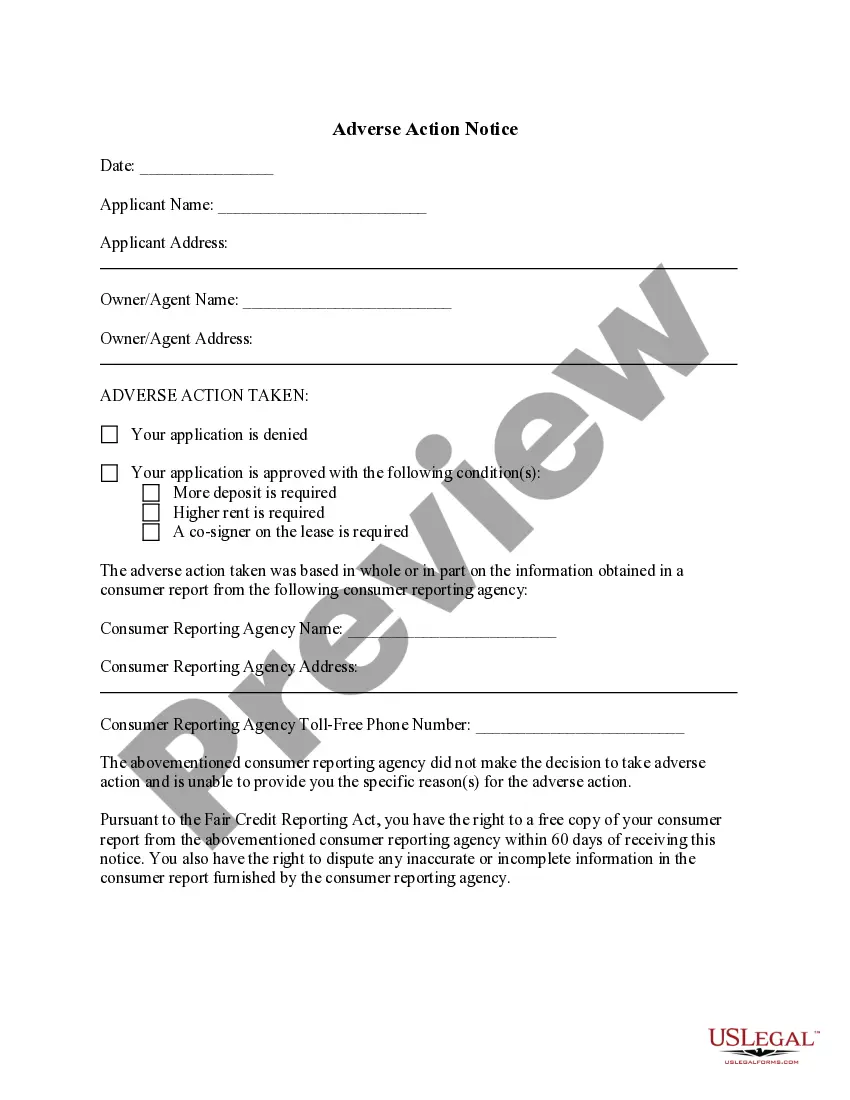
How to fill out Corporate Governance Guidelines?
Are you currently in a situation where you require documents for both business or personal purposes almost all the time.
There are numerous legal document templates accessible online, but finding ones you can rely on is not easy.
US Legal Forms offers a vast selection of form templates, including the Delaware Corporate Governance Guidelines, which are designed to comply with state and federal regulations.
Utilize US Legal Forms, the most extensive collection of legal forms, to save time and avoid mistakes.
The service provides professionally crafted legal document templates suitable for various purposes. Create an account on US Legal Forms and begin simplifying your life.
- If you are already acquainted with the US Legal Forms website and possess an account, simply Log In.
- After that, you can download the Delaware Corporate Governance Guidelines template.
- If you do not have an account and wish to start using US Legal Forms, follow these steps.
- Select the form you need and ensure it is for the correct city/area.
- Utilize the Preview option to review the form.
- Check the description to confirm that you have chosen the right form.
- If the form is not what you are looking for, use the Search field to find the form that meets your needs and expectations.
- Once you find the correct form, click Buy now.
- Choose the pricing plan you desire, fill in the required details to create your account, and pay for the order using your PayPal or Visa or Mastercard.
- Select a convenient file format and download your copy.
- Access all the document templates you have purchased in the My documents section. You can obtain another copy of the Delaware Corporate Governance Guidelines at any time, if necessary. Click the relevant form to download or print the document template.
Form popularity
FAQ
Stock Certificate Signatures: Under Delaware law, stock certificates must be signed by two officers who are authorized to do so. If you hold multiple officer roles, you can sign as both officers.
The principal officers of the Corporation shall be chosen by the Directors and shall be a President, a Vice President, a Secretary and a Treasurer. The Board of Directors may also choose additional Vice Presidents and one or more Assistant Secretaries and Assistant Treasurers.
Both Texas and Delaware require every corporation to have Bylaws. You do not need to publicly file the Bylaws in either state, but you must create, retain, and follow them.
Keep in mind there are no stated required officer positions that a Delaware corporation must have, as opposed to other states. One person can comprise an entire Delaware corporation. Most Delaware companies have at least a president as well as a secretary.
Seven Characteristics of Corporate GovernanceDiscipline. Corporate discipline is a commitment by a company's senior management to adhere to behavior that is universally recognized and accepted to be correct and proper.Transparency.Independence.Accountability.Responsibility.Fairness.Social responsibility.
There must be at least one director. There is no maximum number of directors, but the number of directors should be stated in the certificate of incorporation or bylaws. A director must be a person, but a director does not need to own stock in the corporation.
It has also been designed to cross-reference the FRC's Corporate Governance Code, and is centred on five fundamental principles of corporate governance: integrity, objectivity, professional competence and due care, confidentiality, and professional behaviour.
Only One Director, Despite Multiple Shareholders Under Delaware law, there can be multiple shareholders while maintaining a single director board. This gives entrepreneurs maximum control as things get started.
If your startup is a corporation incorporated in Delaware or Washington, you must have a board of directors. The Delaware General Corporation Law provides that the business and affairs of every Delaware corporation shall be managed by or under the supervision of a board of directors.
Both Texas and Delaware require every corporation to have Bylaws. You do not need to publicly file the Bylaws in either state, but you must create, retain, and follow them.