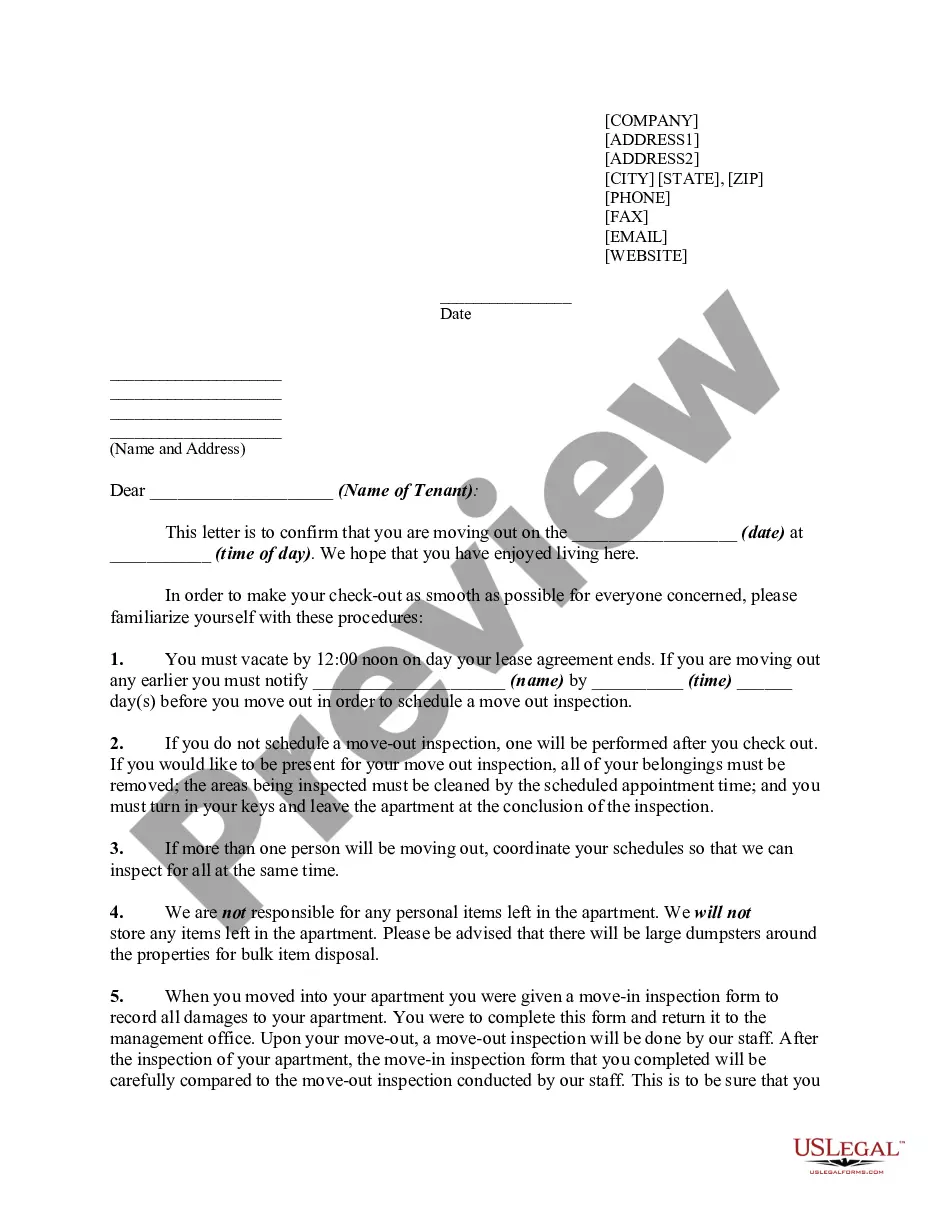
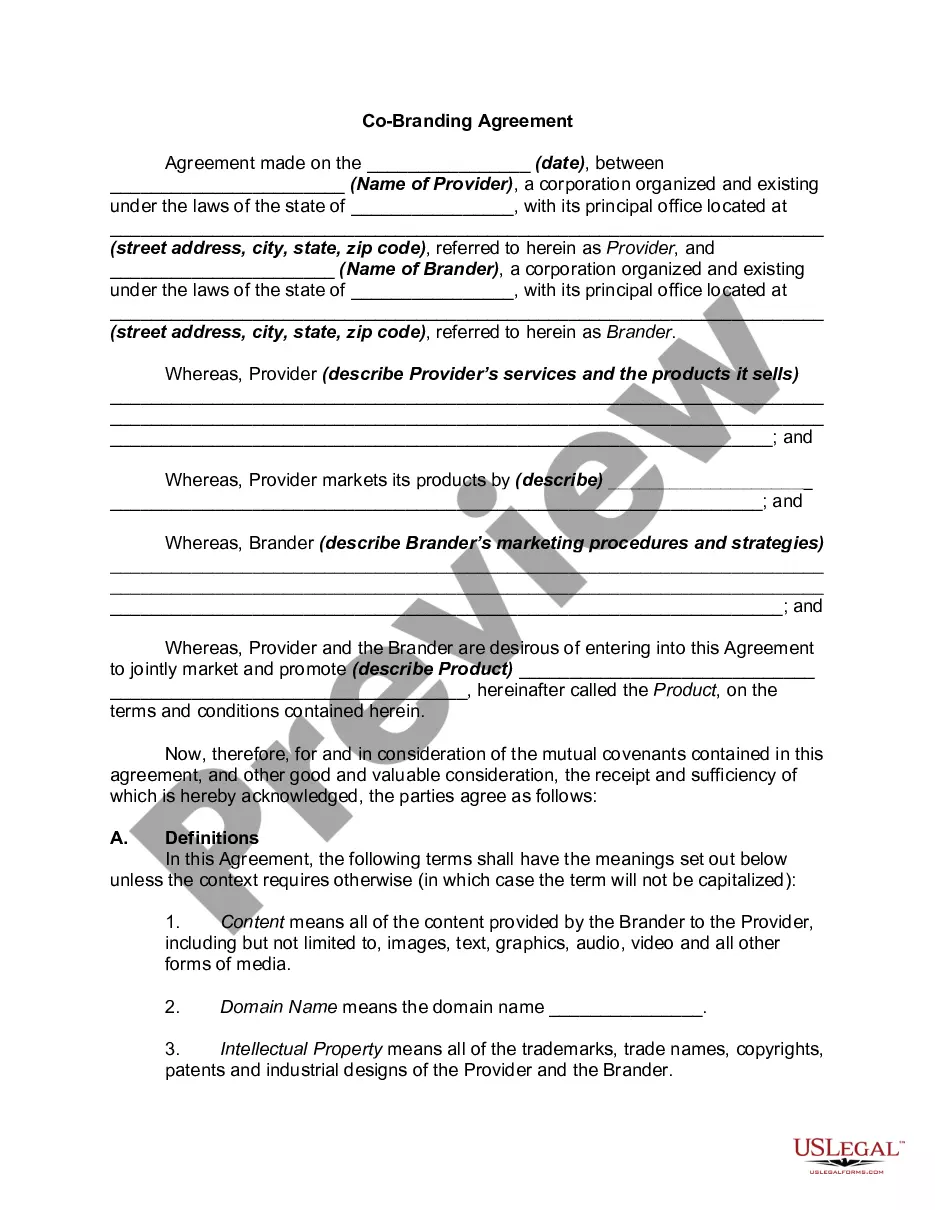
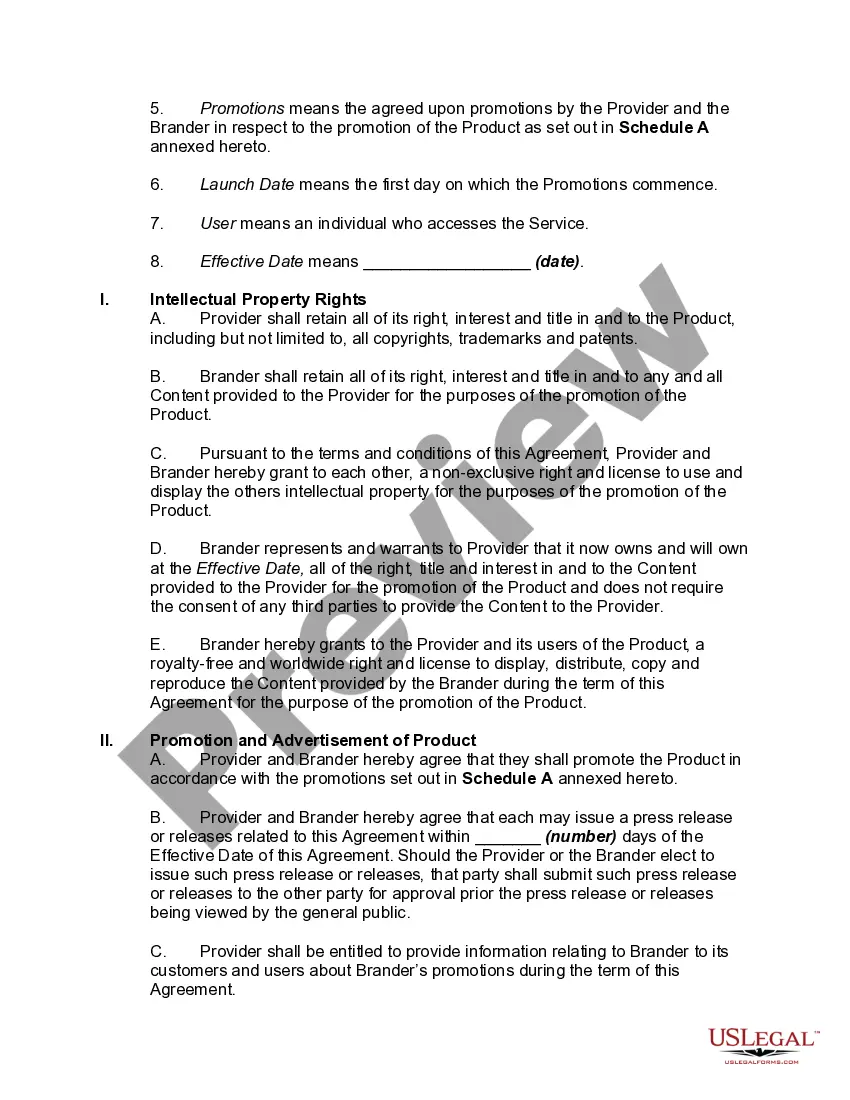
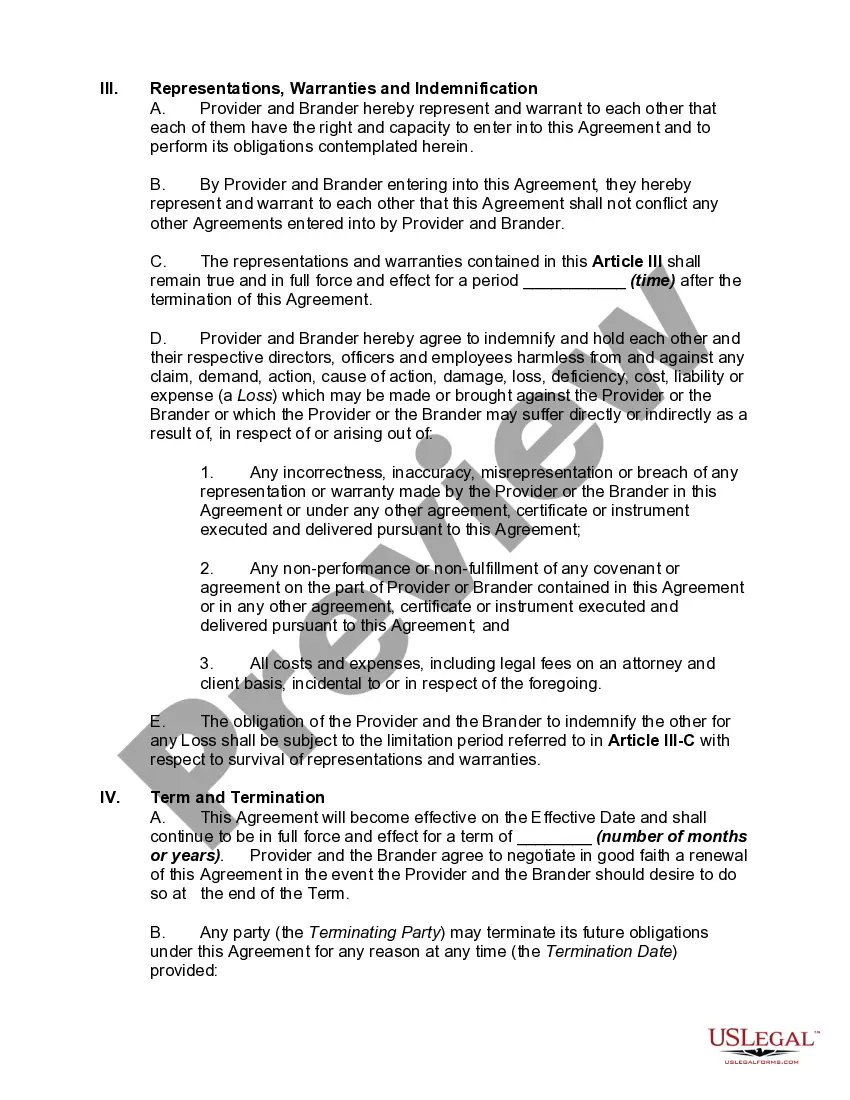
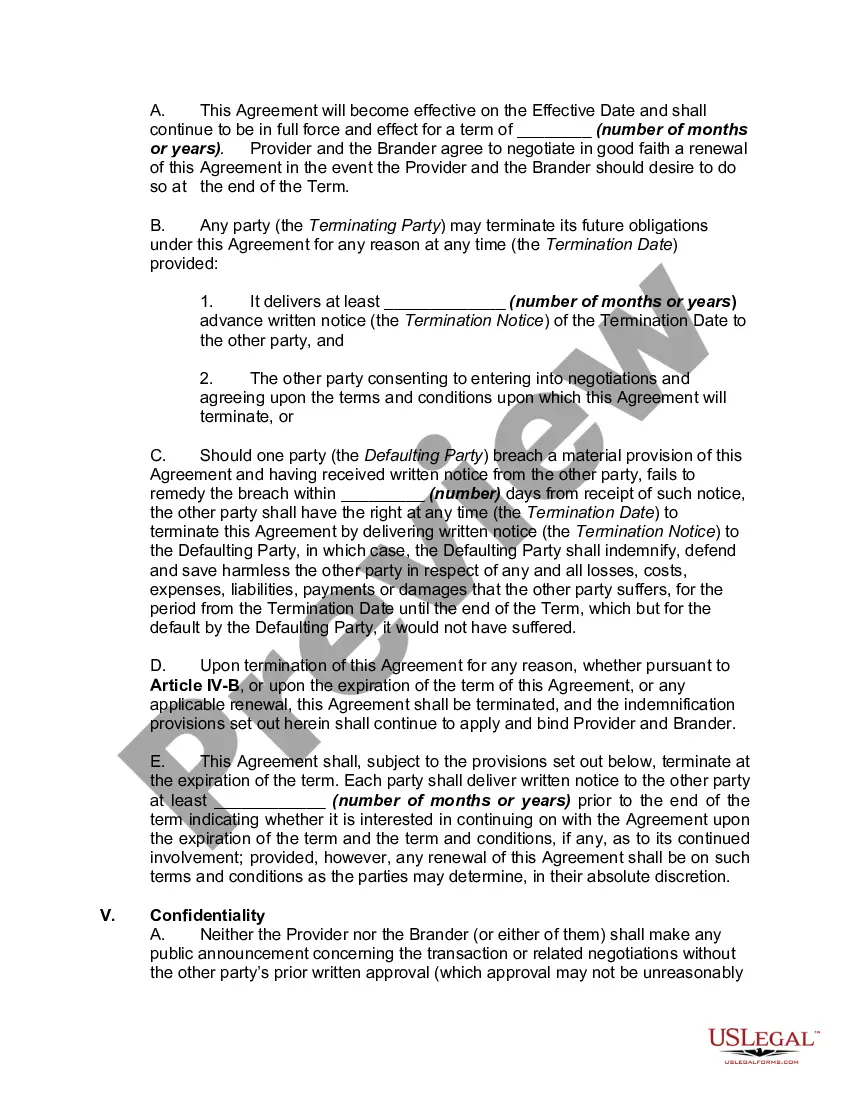
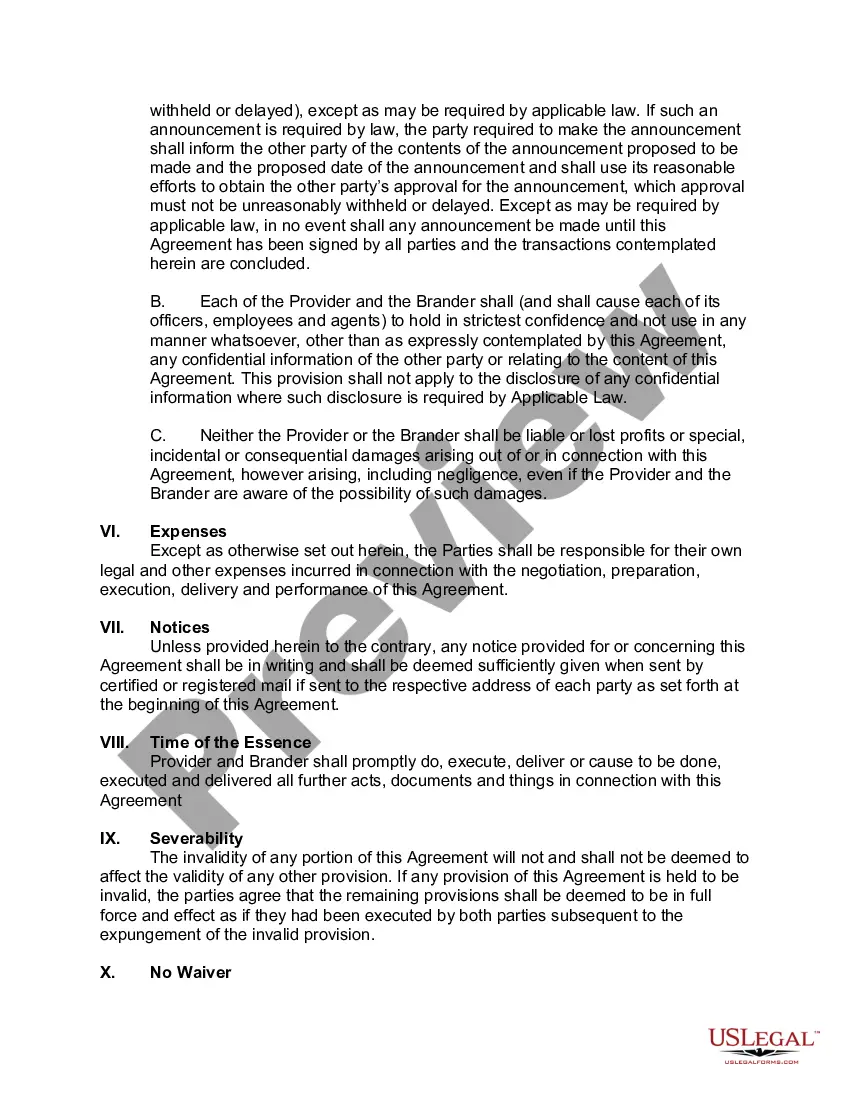
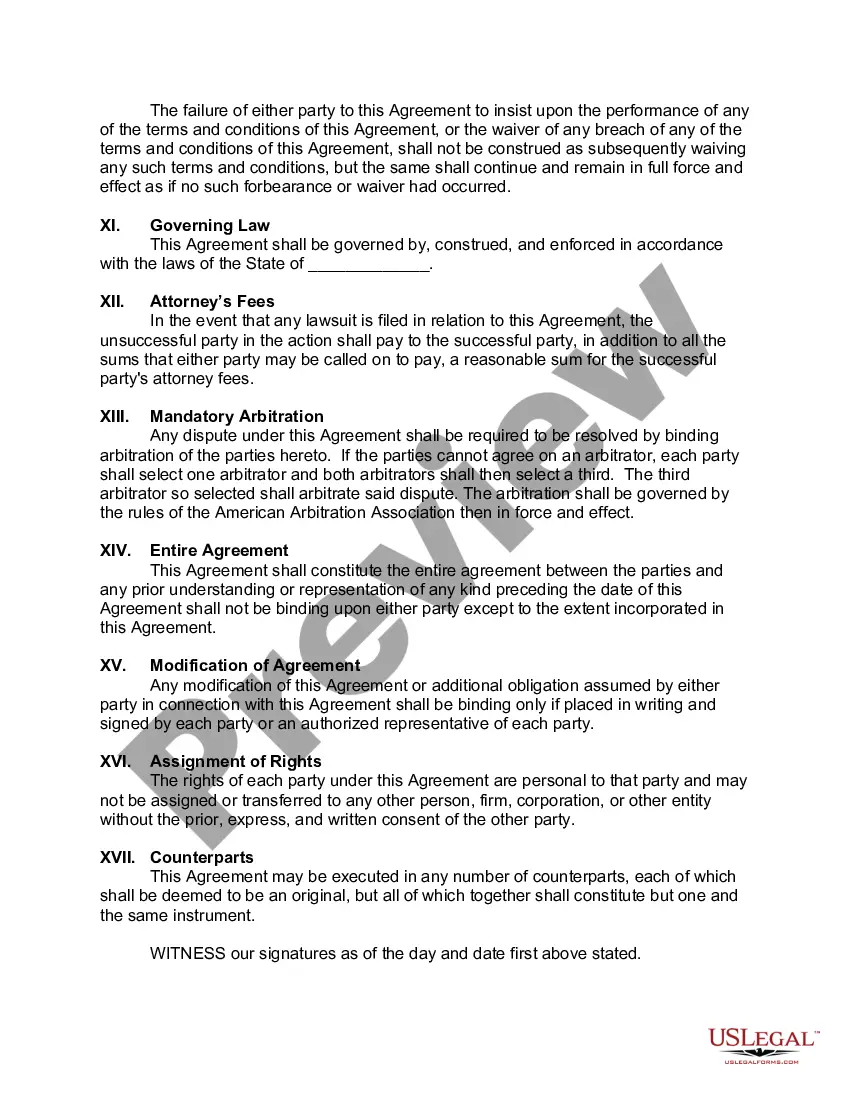
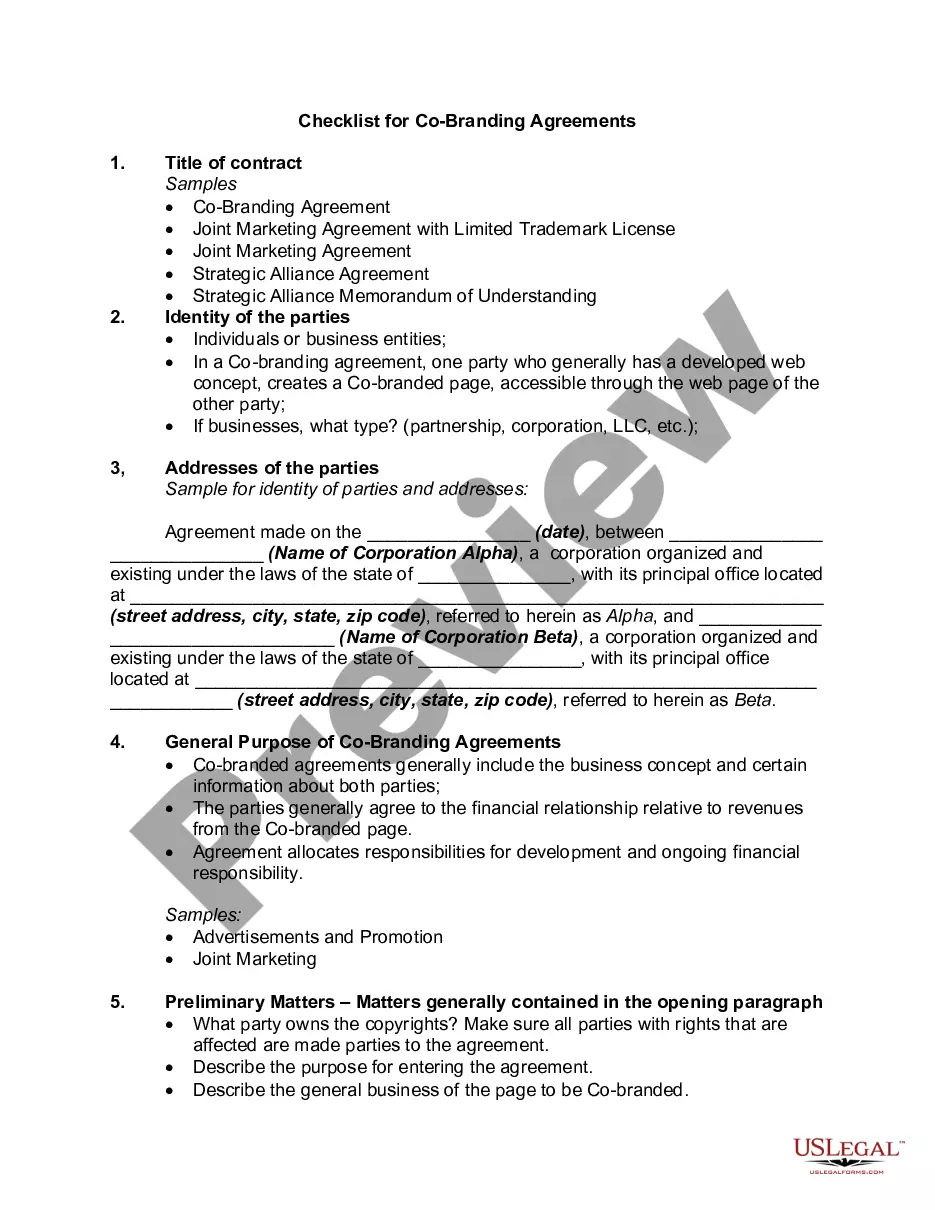
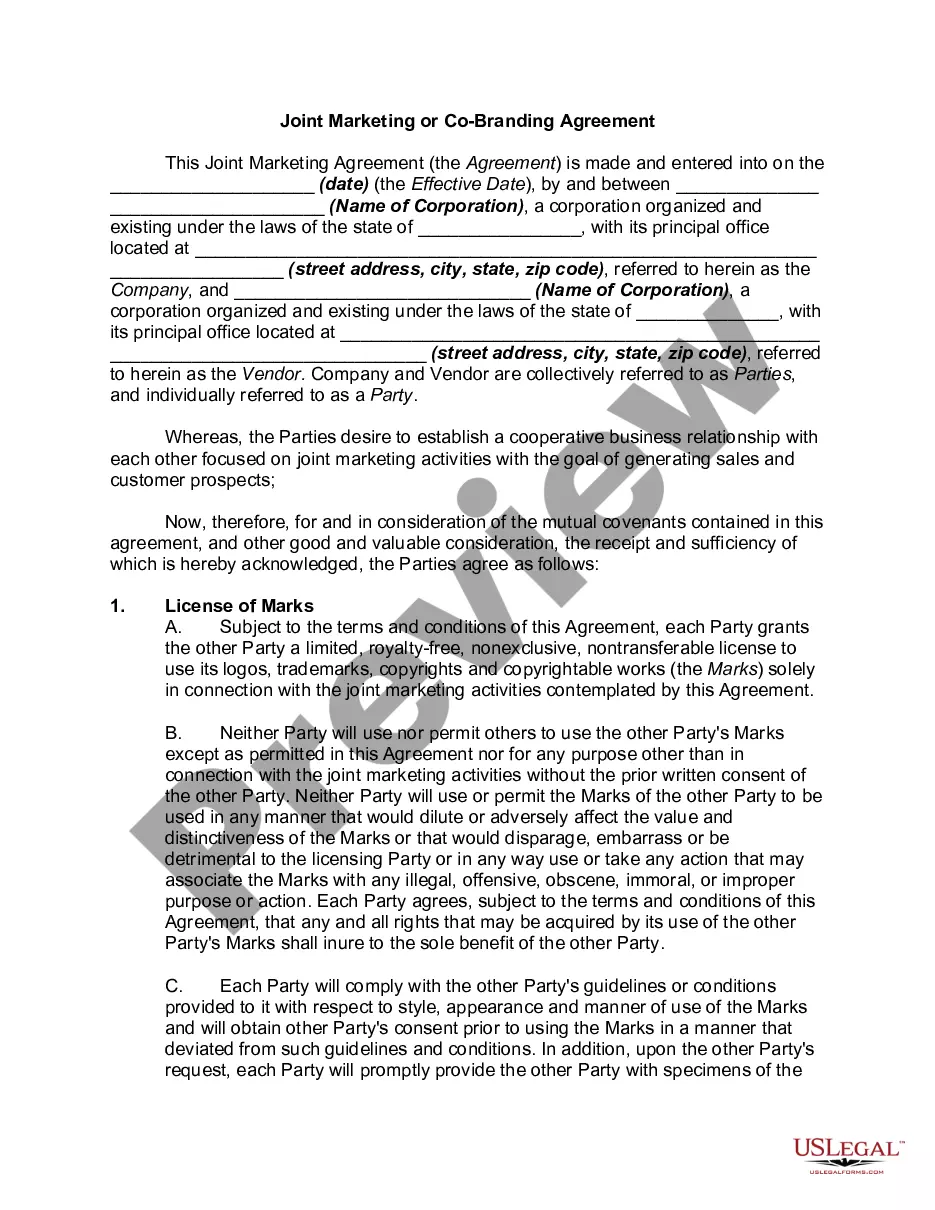
Delaware Co-Branding Agreement
Description
Get your form ready online
Our built-in tools help you complete, sign, share, and store your documents in one place.
Make edits, fill in missing information, and update formatting in US Legal Forms—just like you would in MS Word.
Download a copy, print it, send it by email, or mail it via USPS—whatever works best for your next step.
Sign and collect signatures with our SignNow integration. Send to multiple recipients, set reminders, and more. Go Premium to unlock E-Sign.
If this form requires notarization, complete it online through a secure video call—no need to meet a notary in person or wait for an appointment.
We protect your documents and personal data by following strict security and privacy standards.

Make edits, fill in missing information, and update formatting in US Legal Forms—just like you would in MS Word.

Download a copy, print it, send it by email, or mail it via USPS—whatever works best for your next step.

Sign and collect signatures with our SignNow integration. Send to multiple recipients, set reminders, and more. Go Premium to unlock E-Sign.

If this form requires notarization, complete it online through a secure video call—no need to meet a notary in person or wait for an appointment.

We protect your documents and personal data by following strict security and privacy standards.
Looking for another form?


How to fill out Co-Branding Agreement?
Selecting the optimal legitimate document template can be a challenging task.
Of course, there are numerous designs available online, but how do you find the authentic form you need.
Utilize the US Legal Forms website. This service offers a vast array of templates, such as the Delaware Co-Branding Agreement, suitable for both business and personal needs.
If the form does not meet your requirements, use the Search field to find the right one. Once you are certain that the form is suitable, click the Get now button to acquire the form. Choose the pricing plan you prefer and enter the required information. Create your account and pay for your order using your PayPal account or credit card. Select the file format and download the legal document template to your device. Complete, edit, print, and sign the acquired Delaware Co-Branding Agreement. US Legal Forms is the largest collection of legal templates where you can find countless document formats. Utilize this service to download professionally crafted papers that adhere to state regulations.
- Each of the templates is reviewed by professionals and meets state and federal regulations.
- If you are already registered, Log In to your account and click the Obtain button to access the Delaware Co-Branding Agreement.
- Use your account to browse through the legal documents you have previously purchased.
- Visit the My documents section of your account and download another copy of the document you desire.
- If you are a new user of US Legal Forms, here are some straightforward steps for you to follow.
- First, confirm you have chosen the correct form for your city/region. You can preview the form using the Review button and read the form description to ensure it is appropriate for your needs.
Form popularity
FAQ
Co-branding typically involves a specific product or service collaboration between two brands, while a partnership can encompass broader business strategies. In co-branding, both brands jointly create something new, but in a partnership, they might not produce a shared offering. Understanding these differences can guide you in deciding how to structure your Delaware Co-Branding Agreement for optimal success.
Co-branding is when two or more brands collaborate to create a product or service that benefits from both identities. Important issues to consider include brand alignment and marketing strategies. A strong Delaware Co-Branding Agreement is essential for addressing these elements and ensuring both brands achieve their goals while nurturing their unique identities.
Co-branding risks include potential conflicts of interest and lack of control over brand messaging. If one party fails to meet expectations, the overall partnership may suffer. Additionally, intellectual property issues could arise without a clear agreement in place. Protect your interests by outlining all terms in a Delaware Co-Branding Agreement that specifies how risks will be managed.
One significant disadvantage is the shared risk involved in co-branding. If one brand experiences a negative incident, it can affect the reputation of the other brand. Partners must ensure that they have trust and transparency throughout their partnership. A well-defined Delaware Co-Branding Agreement can help establish expectations and mitigate such risks.
Several major issues warrant your attention when engaging in co-branding. First, alignment of brand values is crucial; mismatched brands can confuse customers. Next, evaluate how the agreement manages shared marketing and sales strategies. Use a comprehensive Delaware Co-Branding Agreement to document how both parties will collaborate while protecting their respective interests.
The biggest potential drawback to a co-branding strategy involves the risk of brand dilution. When two brands collaborate, consumers may struggle to recognize individual brand identities. This issue can reduce the perceived value of both brands. To navigate this problem effectively, consider a well-drafted Delaware Co-Branding Agreement that clearly outlines each brand's roles and responsibilities.
A branding agreement is a contract that sets terms for brand usage between two or more parties. It often outlines the rights to use brand logos, trademarks, and other brand elements. If you're working on a Delaware Co-Branding Agreement, it often includes branding elements to ensure a clear and cohesive brand presentation across all materials.
The form of co-branding refers to the structure and method in which brands collaborate to create a unified product offering. Popular forms are ingredient co-branding, where one brand's product becomes part of another's, and promotional co-branding, where two brands jointly market a product. Understanding these forms can guide the creation of your Delaware Co-Branding Agreement.
branding agreement is a legally binding document that outlines the terms and conditions between partnering brands. It specifies how brands will collaborate, including financial agreements, marketing efforts, and product management. Establishing a Delaware CoBranding Agreement ensures that all parties understand their roles and helps to safeguard your interests.
known example of cobranding is the partnership between NutraSweet and various beverage companies. They create drinks that feature both brands, clearly enhancing the product's appeal. Your own company could explore similar collaborations under a Delaware CoBranding Agreement to create impactful partnerships that attract more customers.