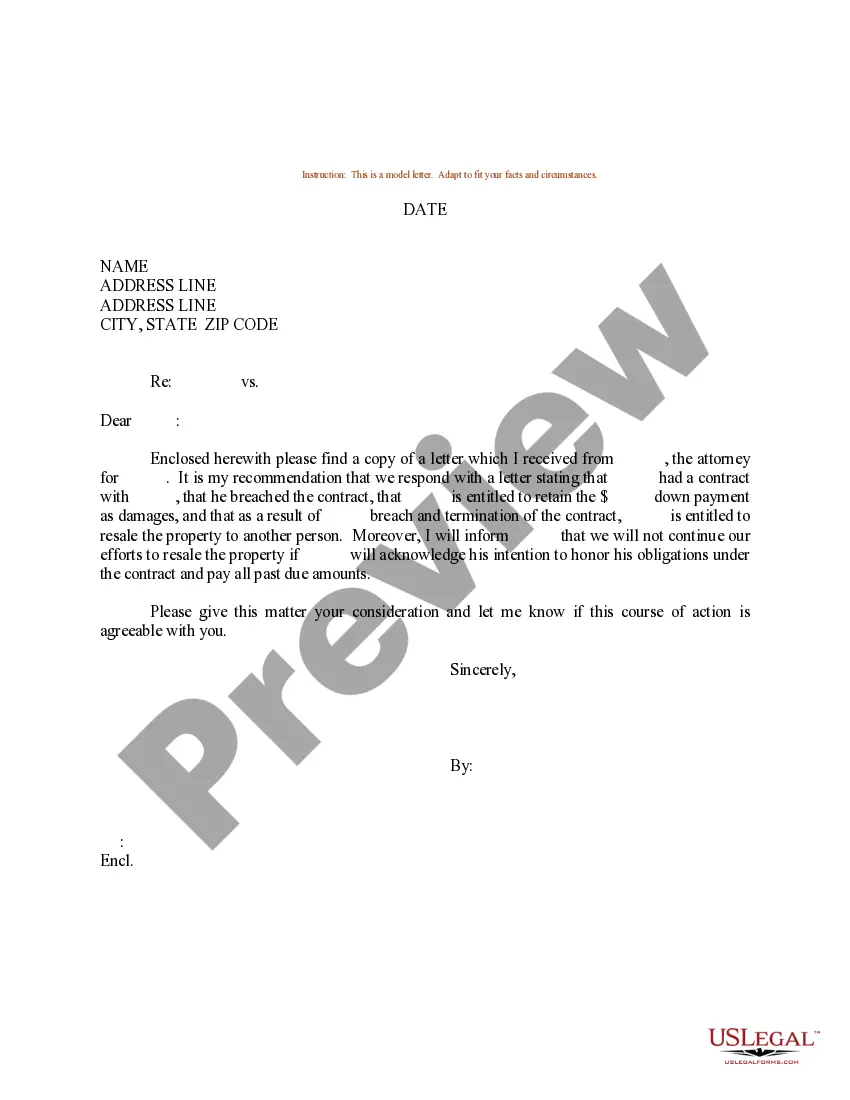
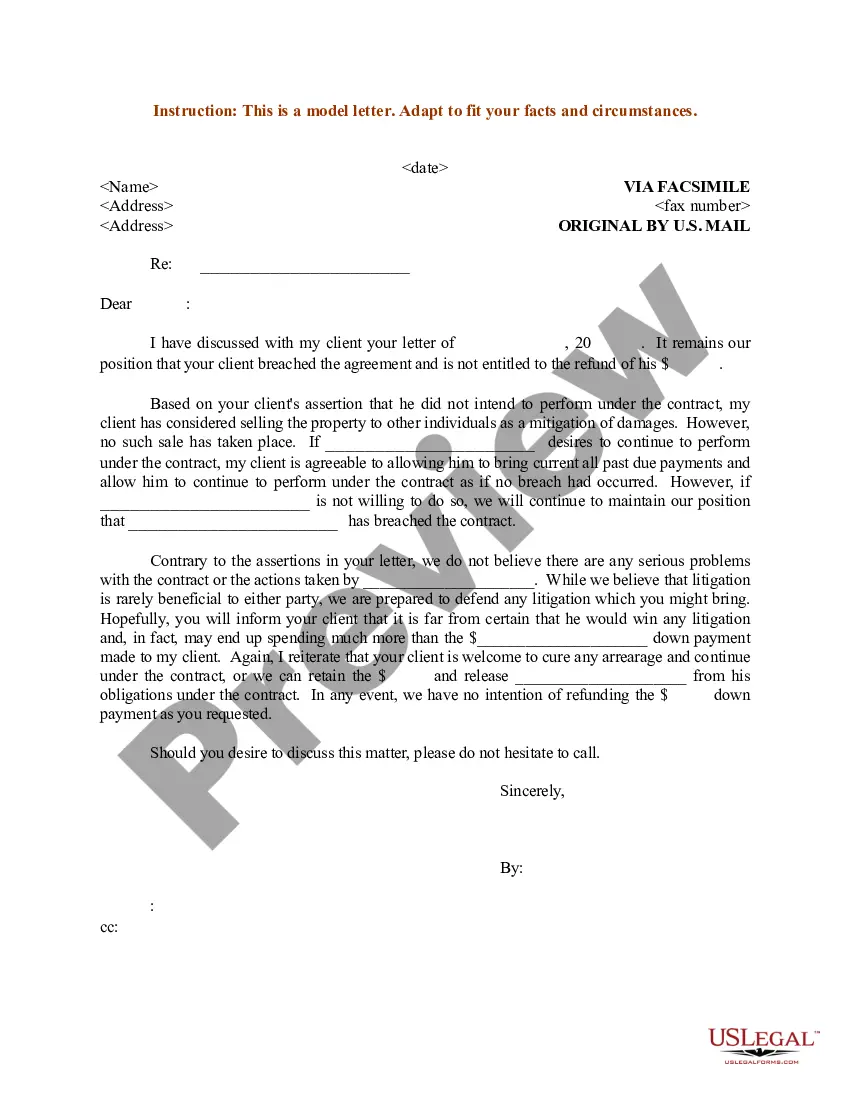
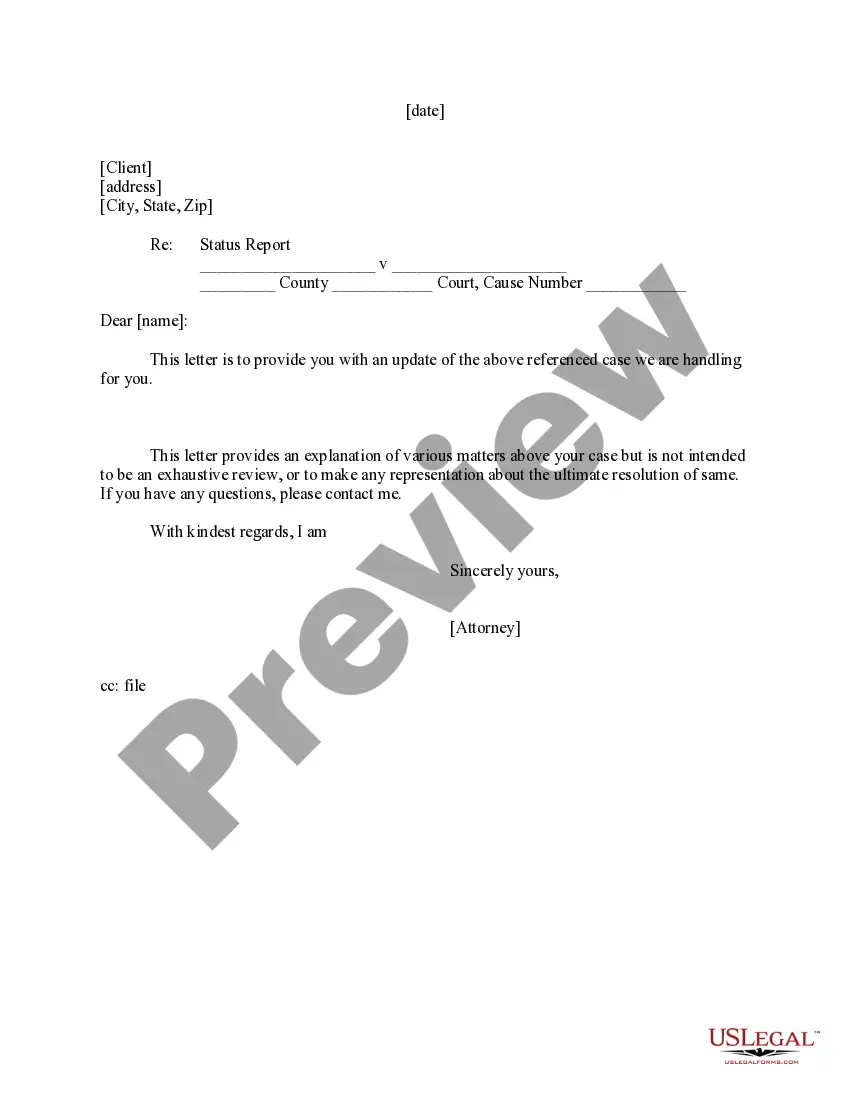
Delaware Sample Letter to Client with Case Update - Breach of Contract Litigation
Description
Get your form ready online
Our built-in tools help you complete, sign, share, and store your documents in one place.
Make edits, fill in missing information, and update formatting in US Legal Forms—just like you would in MS Word.
Download a copy, print it, send it by email, or mail it via USPS—whatever works best for your next step.
Sign and collect signatures with our SignNow integration. Send to multiple recipients, set reminders, and more. Go Premium to unlock E-Sign.
If this form requires notarization, complete it online through a secure video call—no need to meet a notary in person or wait for an appointment.
We protect your documents and personal data by following strict security and privacy standards.

Make edits, fill in missing information, and update formatting in US Legal Forms—just like you would in MS Word.

Download a copy, print it, send it by email, or mail it via USPS—whatever works best for your next step.

Sign and collect signatures with our SignNow integration. Send to multiple recipients, set reminders, and more. Go Premium to unlock E-Sign.

If this form requires notarization, complete it online through a secure video call—no need to meet a notary in person or wait for an appointment.

We protect your documents and personal data by following strict security and privacy standards.
Looking for another form?




How to fill out Sample Letter To Client With Case Update - Breach Of Contract Litigation?
Selecting the appropriate authorized document template can be quite challenging. Naturally, there are numerous designs available online, but how will you locate the authorized form you need? Use the US Legal Forms website. The service provides a vast array of templates, including the Delaware Sample Letter to Client with Case Update - Breach of Contract Litigation, suitable for both business and personal purposes. All forms are reviewed by experts and comply with federal and state regulations.
If you are currently registered, Log In to your account and click the Acquire button to obtain the Delaware Sample Letter to Client with Case Update - Breach of Contract Litigation. Use your account to browse through the authorized forms you have previously purchased. Visit the My documents section of your account to download another copy of the document you need.
If you are a new user of US Legal Forms, here are simple instructions you should follow: First, ensure you have selected the correct form for your city/state. You can view the form using the Preview button and read the form summary to confirm it is the right one for you. If the form does not meet your needs, use the Search field to find the correct form. Once you are confident that the form is suitable, click the Purchase now button to obtain the form. Select the pricing plan you want and fill in the required information. Create your account and complete your order using your PayPal account or credit card. Choose the document format and download the authorized document template to your device. Complete, edit, print, and sign the received Delaware Sample Letter to Client with Case Update - Breach of Contract Litigation.
In summary, US Legal Forms offers a comprehensive library of authorized templates that are essential for both business and personal use, ensuring compliance with necessary regulations.
- US Legal Forms is the largest collection of authorized documents where you can find numerous document templates.
- Utilize the service to acquire professionally-made documents that meet state requirements.
- The forms undergo thorough verification by professionals.
- You can browse through your past purchases easily.
- New users have a straightforward process to follow for obtaining forms.
- The platform offers various pricing plans for flexibility in purchases.
Form popularity
FAQ
A claim for breach of contract is a legal assertion that one party has failed to meet the obligations outlined in a contract. This claim seeks compensation or specific performance to rectify the situation. By referencing a Delaware Sample Letter to Client with Case Update - Breach of Contract Litigation, you can articulate the specifics of your claim and lay a solid foundation for your case.
To prove a breach of contract claim, you must demonstrate that a valid contract exists, that a party failed to fulfill their obligations, and that the breach caused you harm. Key evidence may include the contract itself, communications, and any related documents. A Delaware Sample Letter to Client with Case Update - Breach of Contract Litigation can serve as a supporting document in your case, clearly outlining the breach and your position.
A demand letter for breach of contract is a formal request for payment or action due to a contract violation. This letter typically specifies the breach, the amount owed, and a deadline for compliance. By utilizing a Delaware Sample Letter to Client with Case Update - Breach of Contract Litigation, you can ensure your demand is clear and compelling, enhancing your chances of a favorable outcome.
A letter before claim for breach of contract is a preliminary notice sent to a party before formal legal action is initiated. This letter summarizes the situation, outlines the breach, and states the desired outcome. Incorporating a Delaware Sample Letter to Client with Case Update - Breach of Contract Litigation can help you present your concerns effectively and encourage resolution before escalating the issue.
A letter of claim for breach of contract is a document sent by one party to another, outlining the nature of the alleged breach and requesting a remedy. This letter serves as a formal notification and gives the recipient an opportunity to address the issue before any legal action is taken. Using a Delaware Sample Letter to Client with Case Update - Breach of Contract Litigation can help ensure that your claim is clearly articulated and legally sound.
After a letter of claim is sent, the recipient typically has a specific timeframe to respond. The response may include acceptance of the claim, a counter-argument, or a request for further information. If the matter remains unresolved, the next steps often involve negotiation or even initiating formal legal proceedings, making a Delaware Sample Letter to Client with Case Update - Breach of Contract Litigation crucial for clarity.
A letter of response to a breach of contract is a written communication that addresses allegations made by one party against another regarding a contract violation. This letter provides the recipient with an opportunity to clarify their position and present their side of the issue. Utilizing a Delaware Sample Letter to Client with Case Update - Breach of Contract Litigation can help structure your response effectively and professionally.
The four phases of litigation include pleadings, discovery, trial, and post-trial. During pleadings, parties file initial documents outlining their positions. Discovery involves exchanging evidence and information, while the trial is where the case is presented before a judge or jury. Finally, the post-trial phase may include appeals or enforcement of judgments. A Delaware Sample Letter to Client with Case Update - Breach of Contract Litigation can help keep your clients informed throughout these phases, enhancing transparency and trust.
You should use a litigation hold when you expect a dispute may lead to legal action or when you receive a notice of a potential lawsuit. This proactive step ensures that all essential evidence is preserved and not inadvertently destroyed. Implementing a Delaware Sample Letter to Client with Case Update - Breach of Contract Litigation can facilitate this process effectively. By prioritizing a litigation hold, you strengthen your legal standing and prepare for potential proceedings.
A legal hold process requires clear identification of relevant data and documentation that must be preserved. You must notify employees and relevant stakeholders about the hold and provide instructions on how to retain this information. Utilizing a Delaware Sample Letter to Client with Case Update - Breach of Contract Litigation can streamline this communication. This approach helps to maintain compliance and safeguard your position in the ongoing litigation.