An independent contractor is a person or business who performs services for another person under an express or implied agreement and who is not subject to the other's control, or right to control, the manner and means of performing the services. The person who hires an independent contractor is not liable to others for the acts or omissions of the independent contractor. An independent contractor is distinguished from an employee, who works regularly for an employer. The exact nature of the independent contractor's relationship with the hiring party is important since an independent contractor pays their own Social Security, income taxes without payroll deduction, has no retirement or health plan rights, and often is not entitled to worker's compensation coverage.
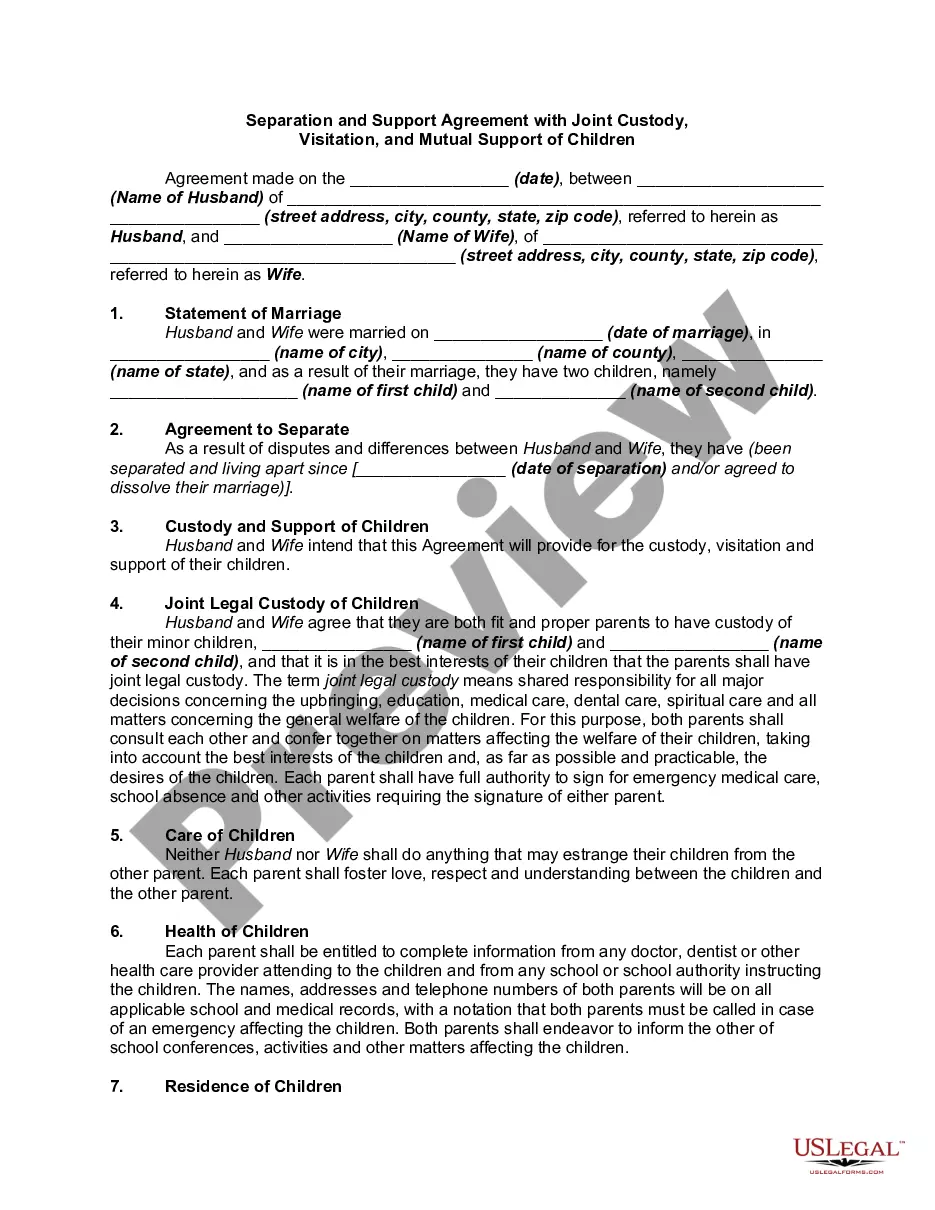
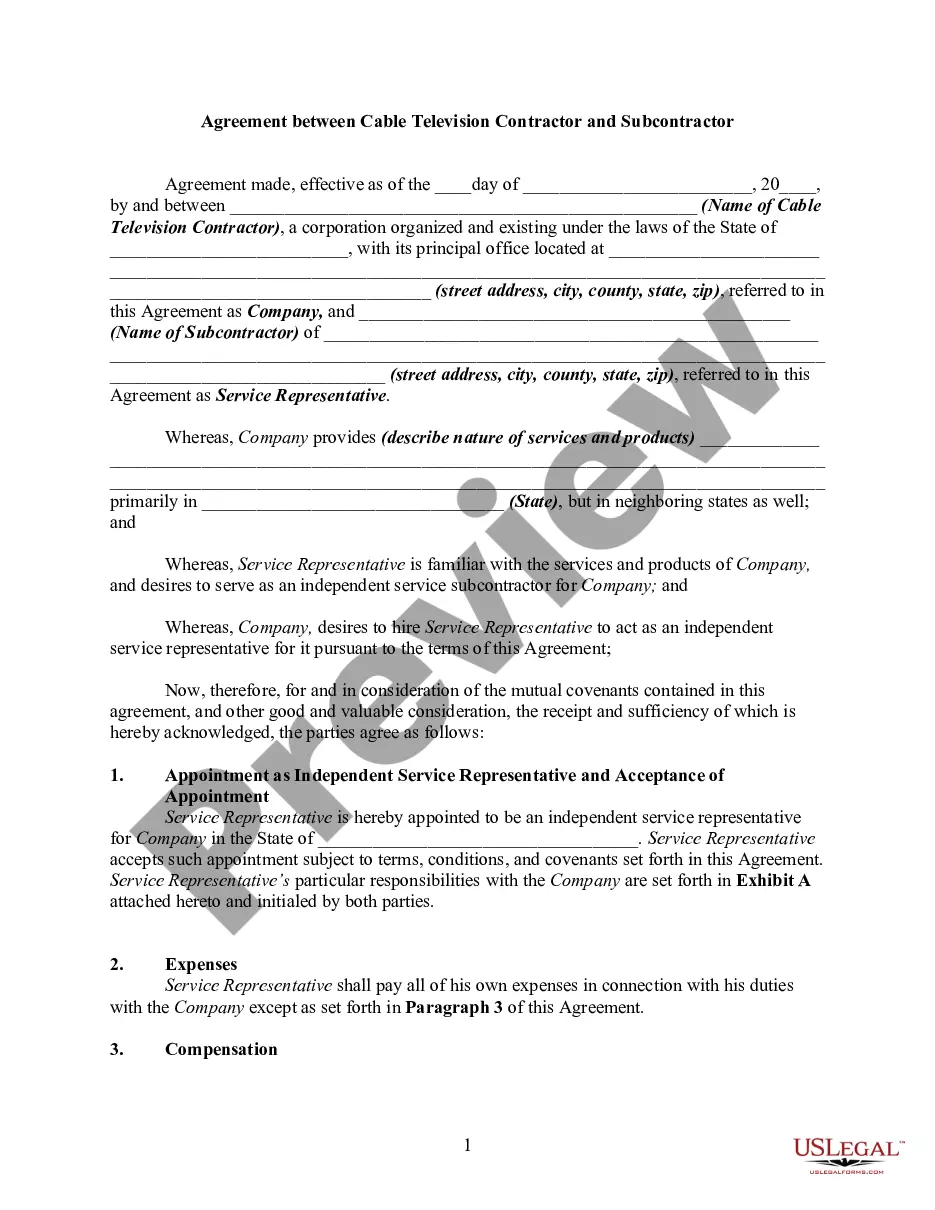
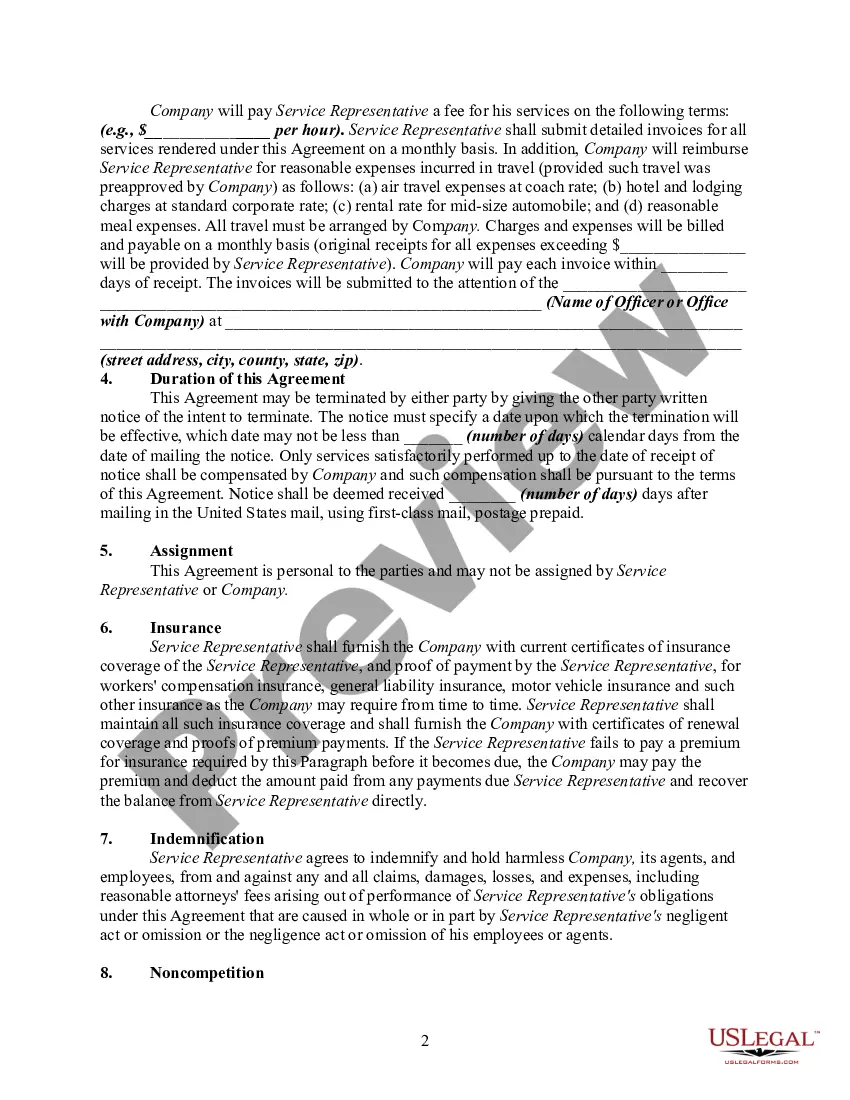
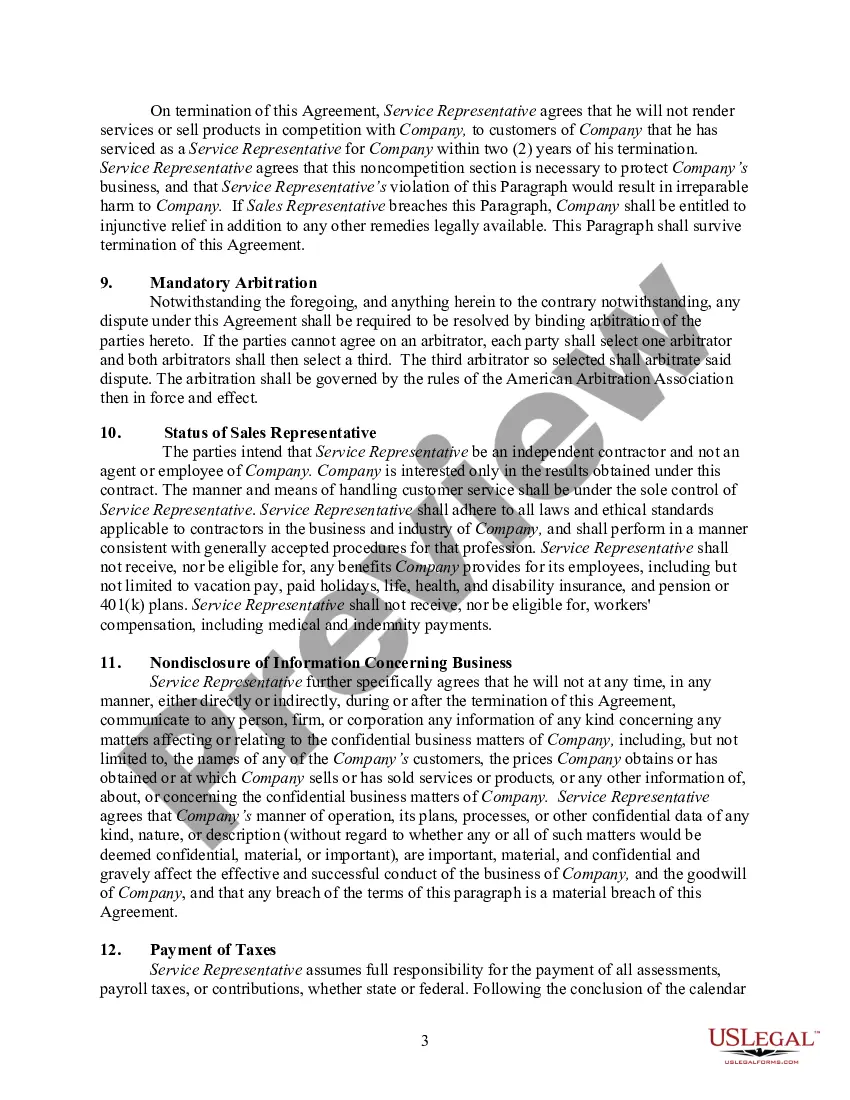
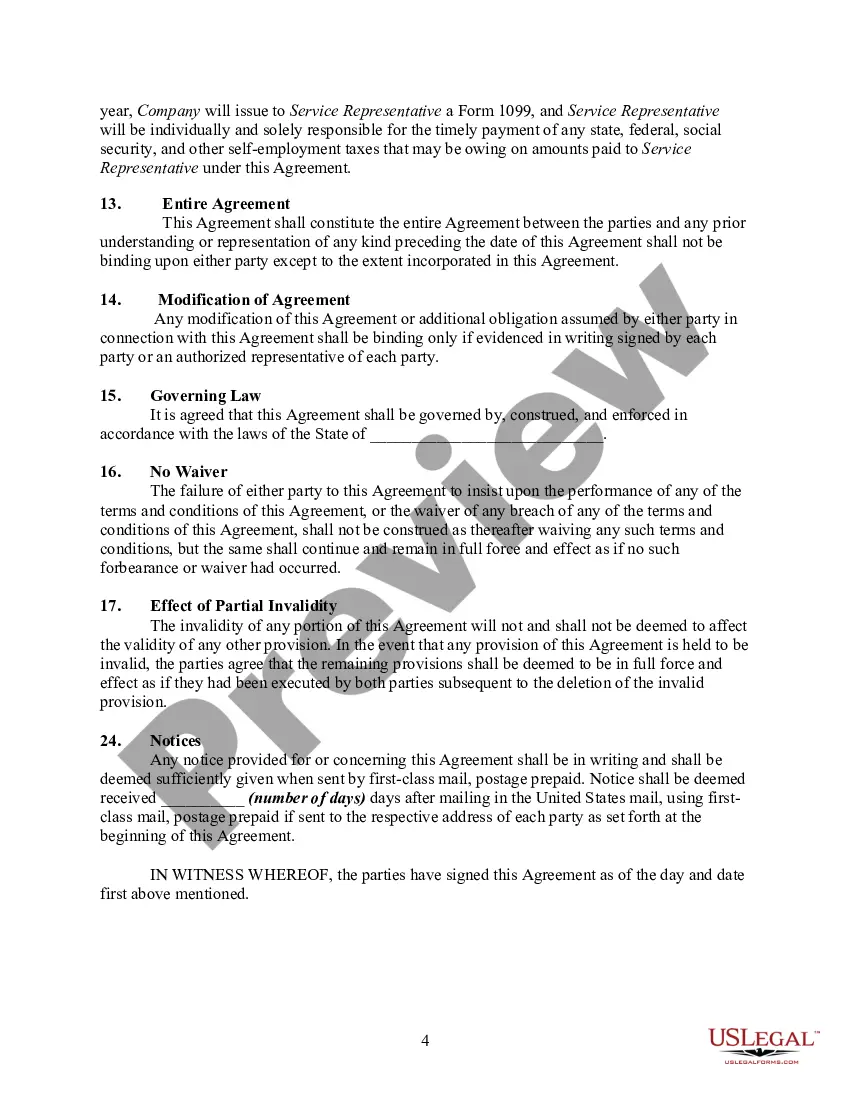
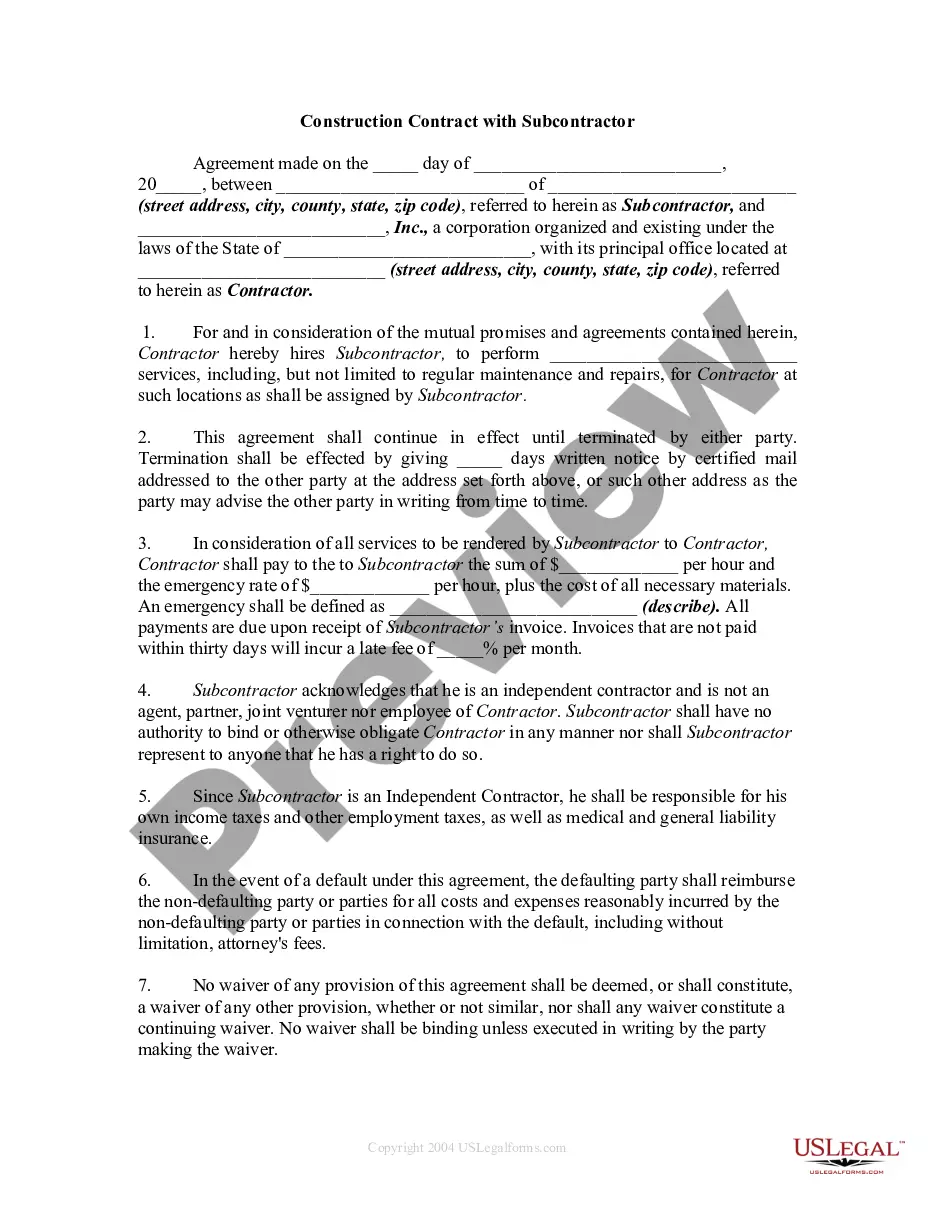
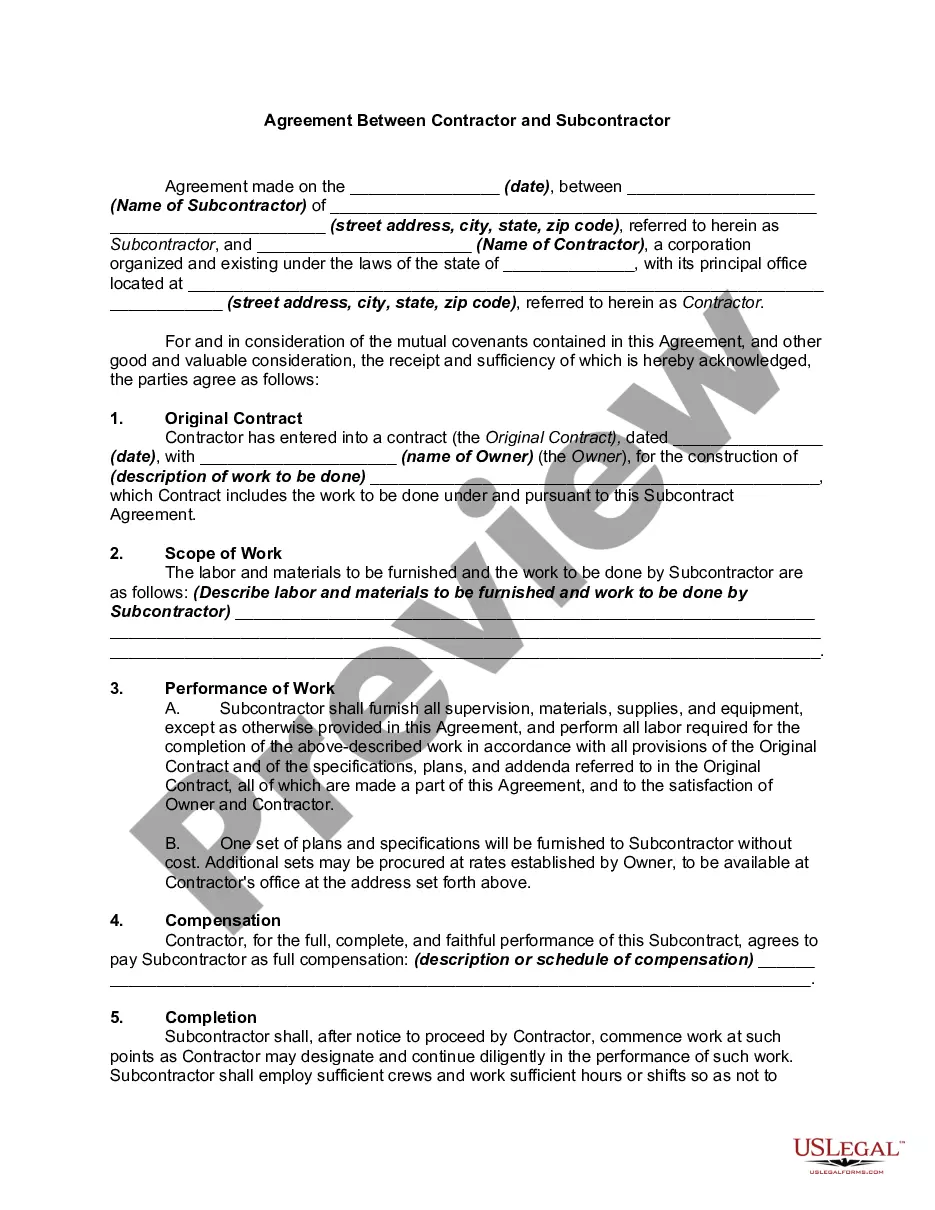
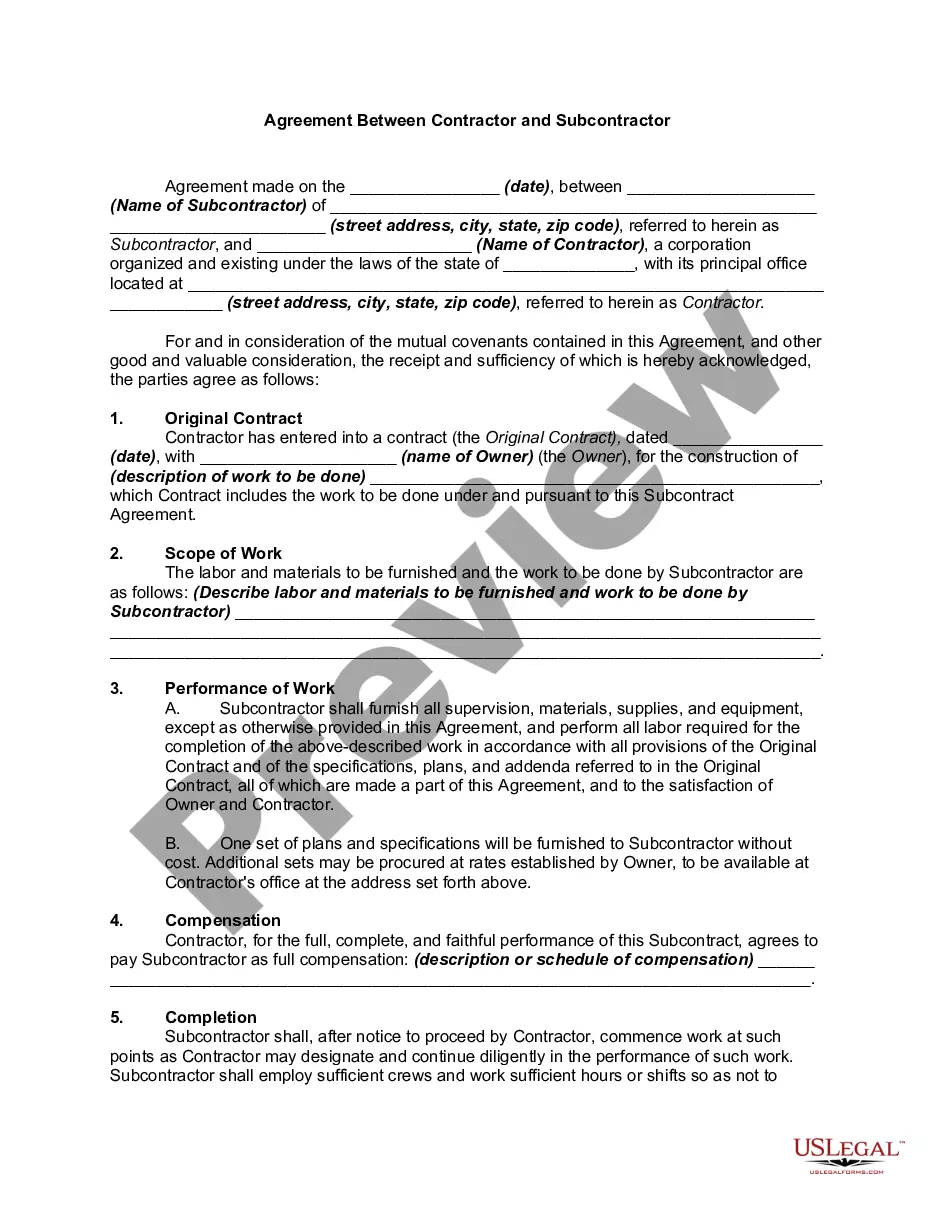
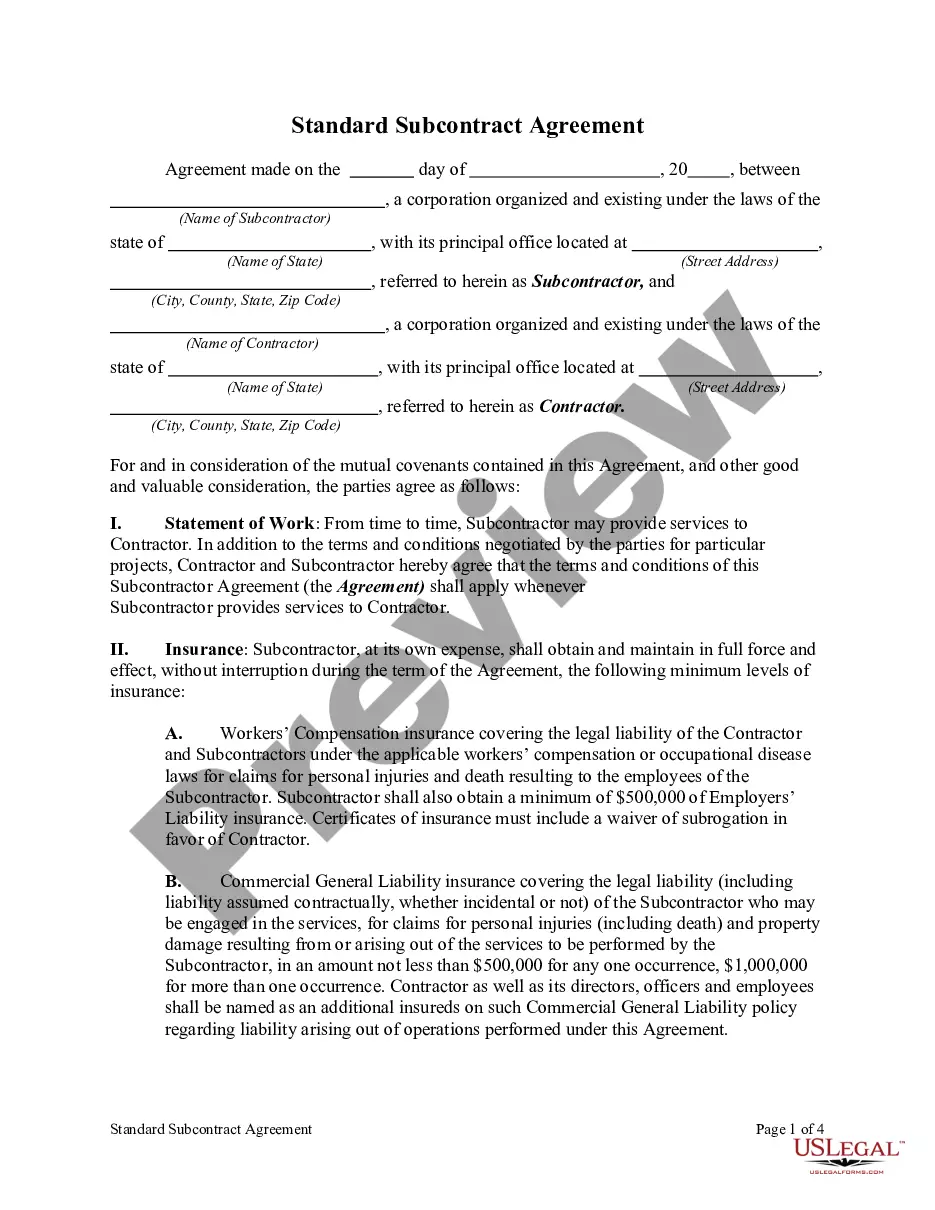
Delaware Agreement between Cable Television Contractor and Subcontractor
Description

Get your form ready online
Our built-in tools help you complete, sign, share, and store your documents in one place.
Make edits, fill in missing information, and update formatting in US Legal Forms—just like you would in MS Word.
Download a copy, print it, send it by email, or mail it via USPS—whatever works best for your next step.
Sign and collect signatures with our SignNow integration. Send to multiple recipients, set reminders, and more. Go Premium to unlock E-Sign.
If this form requires notarization, complete it online through a secure video call—no need to meet a notary in person or wait for an appointment.
We protect your documents and personal data by following strict security and privacy standards.

Make edits, fill in missing information, and update formatting in US Legal Forms—just like you would in MS Word.

Download a copy, print it, send it by email, or mail it via USPS—whatever works best for your next step.

Sign and collect signatures with our SignNow integration. Send to multiple recipients, set reminders, and more. Go Premium to unlock E-Sign.

If this form requires notarization, complete it online through a secure video call—no need to meet a notary in person or wait for an appointment.

We protect your documents and personal data by following strict security and privacy standards.
Looking for another form?






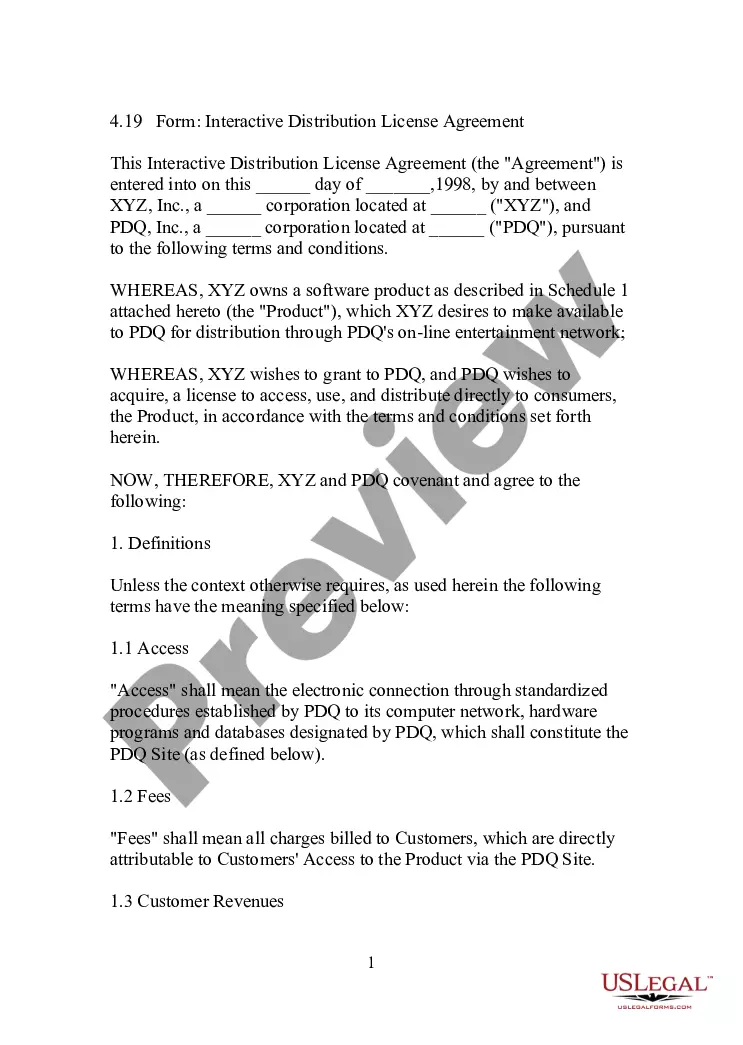
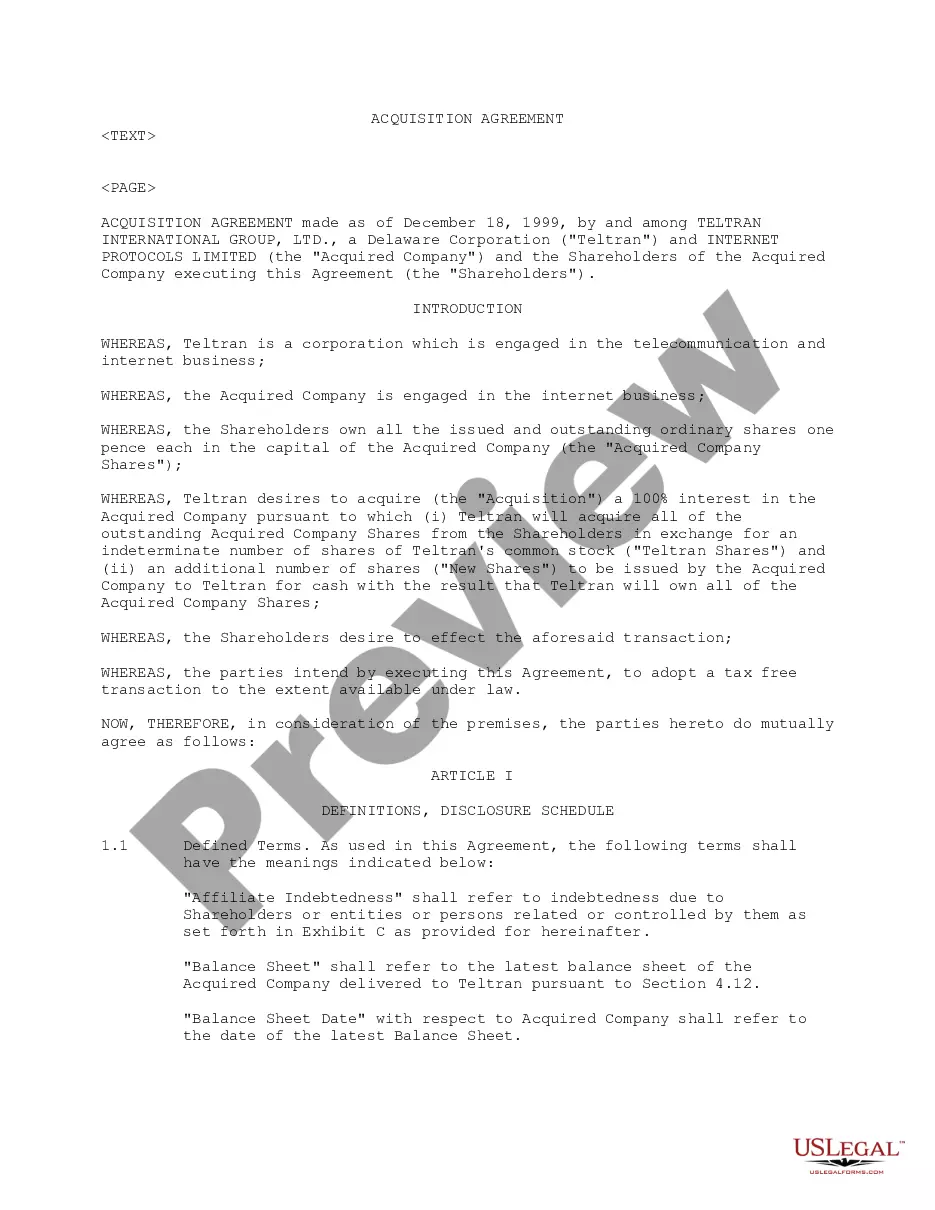
How to fill out Agreement Between Cable Television Contractor And Subcontractor?
You might spend time online searching for the legal document template that meets the federal and state requirements you need.
US Legal Forms offers a multitude of legal forms that can be reviewed by professionals.
You can easily obtain or print the Delaware Agreement between Cable Television Contractor and Subcontractor from our services.
If available, use the Review button to view the document template as well.
- If you already possess a US Legal Forms account, you can Log In and click the Download button.
- Then, you can complete, modify, print, or sign the Delaware Agreement between Cable Television Contractor and Subcontractor.
- Every legal document template you obtain is yours permanently.
- To get another copy of any purchased form, visit the My documents tab and click the relevant button.
- If you are using the US Legal Forms website for the first time, follow the simple instructions below.
- First, ensure that you have selected the correct document template for the county/city of your choice.
- Check the form details to confirm that you have chosen the correct form.
Form popularity
FAQ
To report a cable company to the FCC, you can visit the FCC's official website and file a complaint online. This process allows you to provide specific details about your issue, whether it involves service quality or billing disputes. If you are dealing with a contractual issue based on the Delaware Agreement between Cable Television Contractor and Subcontractor, documenting your concerns can empower you when filing your complaint.
The cable industry is primarily regulated by the FCC, which establishes rules to ensure fair competition and protect consumers. Local and state governments also play a role in regulating certain aspects, such as franchising agreements. For contractors and subcontractors working under the Delaware Agreement between Cable Television Contractor and Subcontractor, being aware of these regulations is essential for compliance and successful project execution.
You can confirm a contractor's license and insurance status in Delaware by visiting the Secretary of State’s website or the Division of Professional Regulation. They provide a searchable database where you can easily check credentials. When entering into a Delaware Agreement between Cable Television Contractor and Subcontractor, ensuring your contractor is licensed and insured protects you and your investment. It’s a simple yet crucial step for peace of mind during your project.
In Delaware, construction tax typically includes sales tax on materials and certain services related to construction work. The general sales tax rate is currently 0%, making Delaware an attractive option for contractors and builders. If you are entering into a Delaware Agreement between Cable Television Contractor and Subcontractor, understanding this tax structure helps in budgeting your project effectively. Always consult a tax professional to stay informed about any recent updates.
Yes, Delaware requires a contractor license for most construction-related work to ensure quality and safety in the industry. Specific trades, such as electrical and plumbing, have additional licensing requirements. If you’re operating under a Delaware Agreement between Cable Television Contractor and Subcontractor, securing the appropriate licenses is vital for your protection and the success of your projects. Make sure to research this thoroughly before starting any contract work.
Yes, Delaware requires certain contractors to have a license to operate legally. Specific fields, including construction, often mandate licensing to ensure compliance with safety and quality standards. For those involved in projects that require a Delaware Agreement between Cable Television Contractor and Subcontractor, having a contractor's license is essential. Without it, you may face legal complications during your contract work.
The FCC has authority over certain aspects of cable TV content, particularly in terms of decency standards and children’s programming. However, it does not regulate all content on cable networks, allowing some creative freedom. This balance is important in the context of the Delaware Agreement between Cable Television Contractor and Subcontractor, as it shapes the interaction between regulation and content delivery. Understanding these boundaries helps consumers and providers navigate content expectations.
The Federal Communications Commission (FCC) oversees cable companies in the U.S. This agency enforces regulations and ensures that cable services operate fairly and efficiently. Knowledge of the FCC’s role is crucial for those engaging in the Delaware Agreement between Cable Television Contractor and Subcontractor, as it helps stakeholders understand regulatory influences. This understanding enables better navigation of compliance and operational requirements.
Cable commissions are typically established by state or local authorities. These commissions oversee cable operations to ensure compliance with local regulations and community needs. The groundwork for effective cable commission creation often involves frameworks like the Delaware Agreement between Cable Television Contractor and Subcontractor. By understanding how these commissions are set up, stakeholders can better advocate for community interests.
Yes, cable networks require an FCC license to operate legally within the United States. This licensing ensures that networks adhere to federal regulations, particularly in terms of broadcast quality and content standards. The need for a license ties back to agreements like the Delaware Agreement between Cable Television Contractor and Subcontractor, which promote transparency and compliance in cable operations. Thus, compliance with licensing can impact the overall service quality provided to consumers.