An easement gives one party the right to go onto another party's property. That property may be owned by a private person, a business entity, or a group of owners. Utilities often get easements that allow them to run pipes or phone lines beneath private property. Easements may be obtained for access to another property, called "access and egress", use of spring water, entry to make repairs on a fence or slide area, drive cattle across and other uses. The easement is a real property interest, but separate from the legal title of the owner of the underlying land.
Delaware Easement for Access to Property
State:
Multi-State
Control #:
US-00495
Format:
Word;
Rich Text
488 downloads
Description
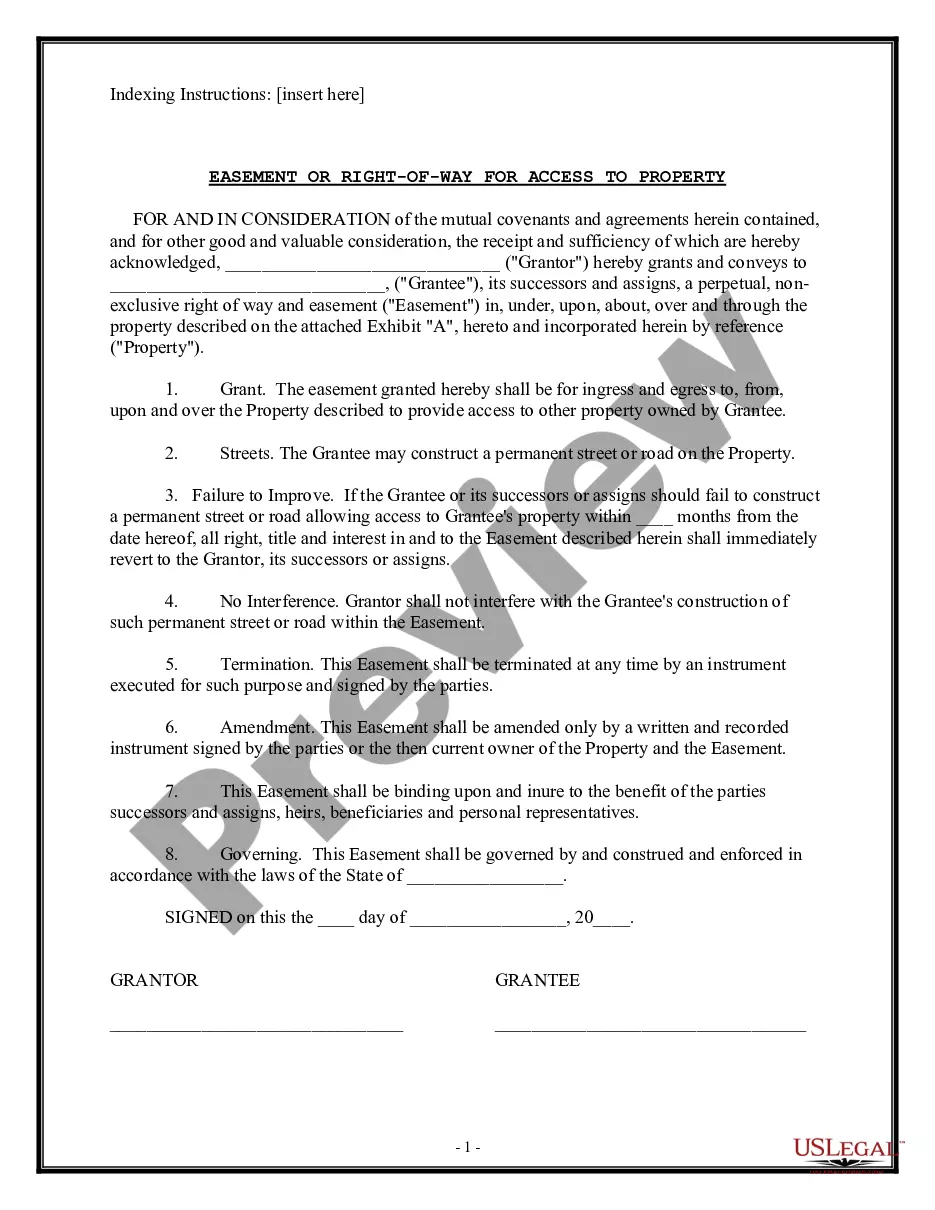
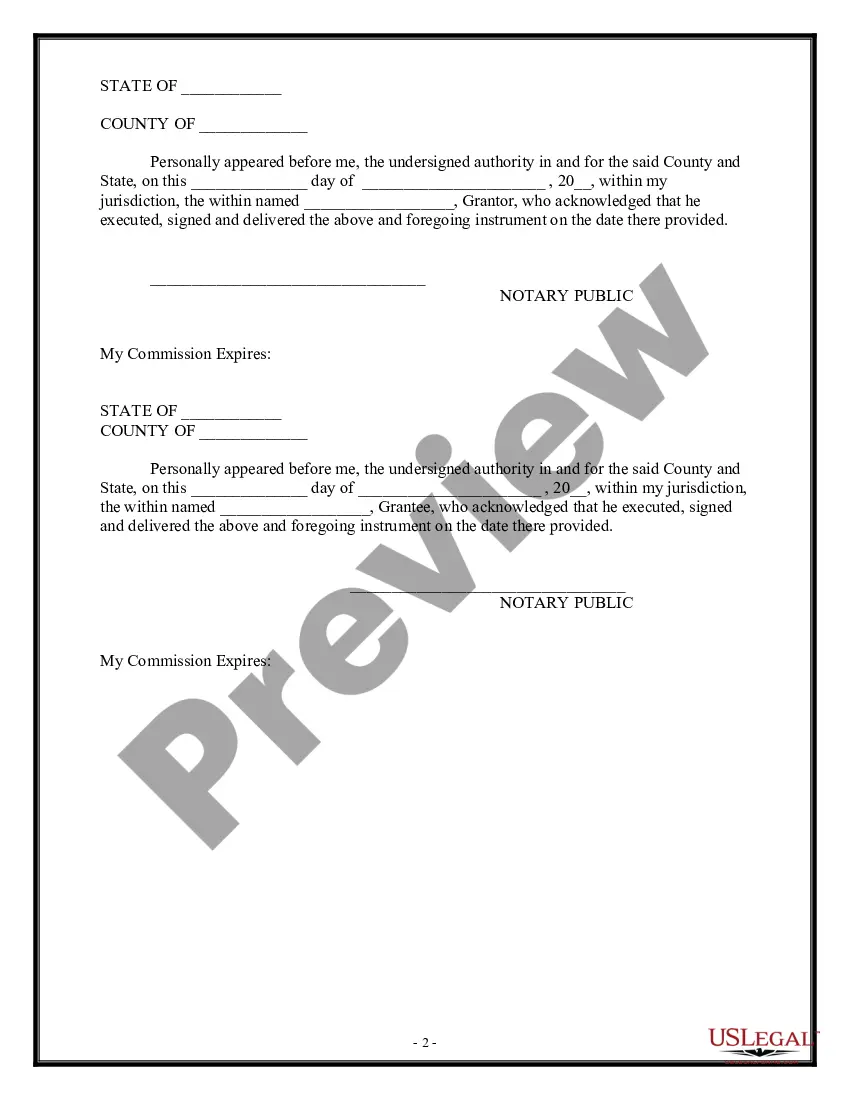
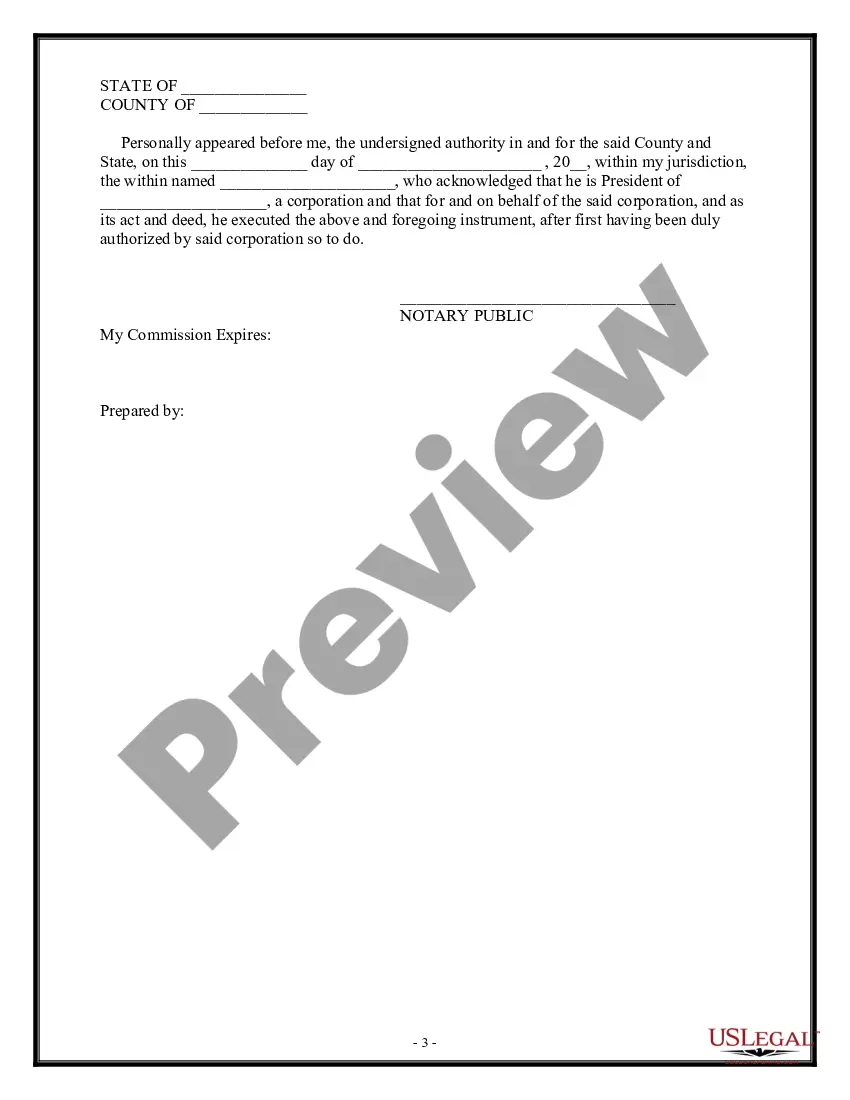
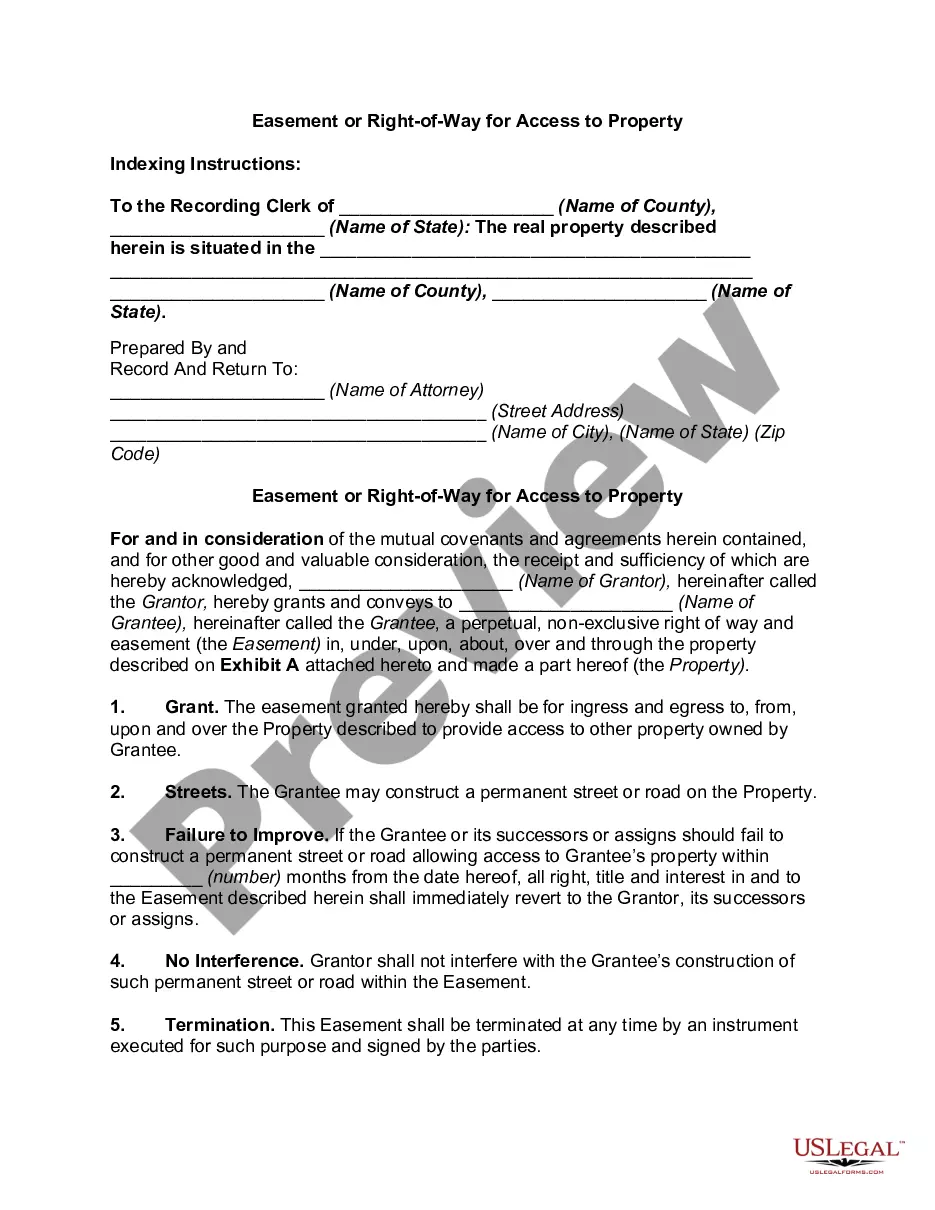
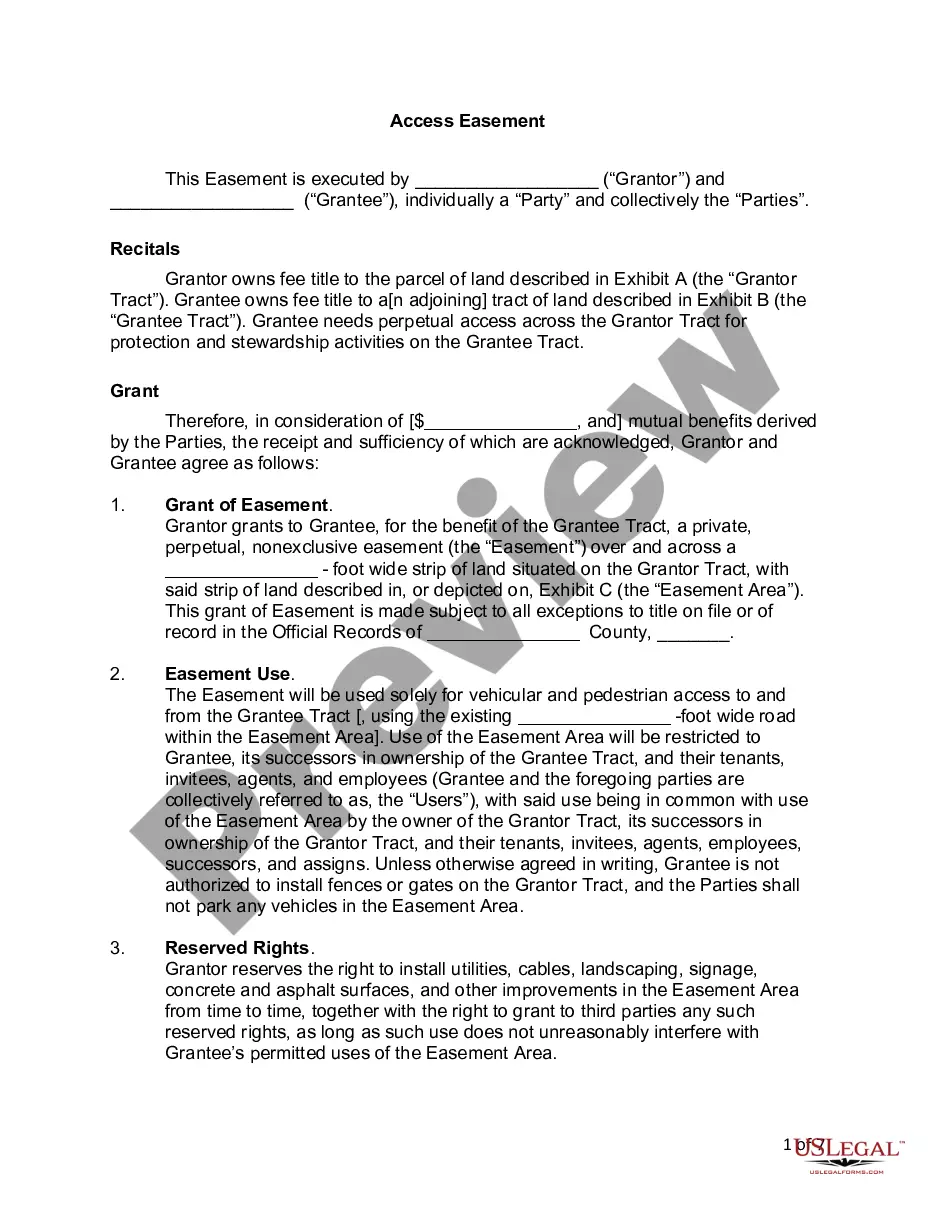
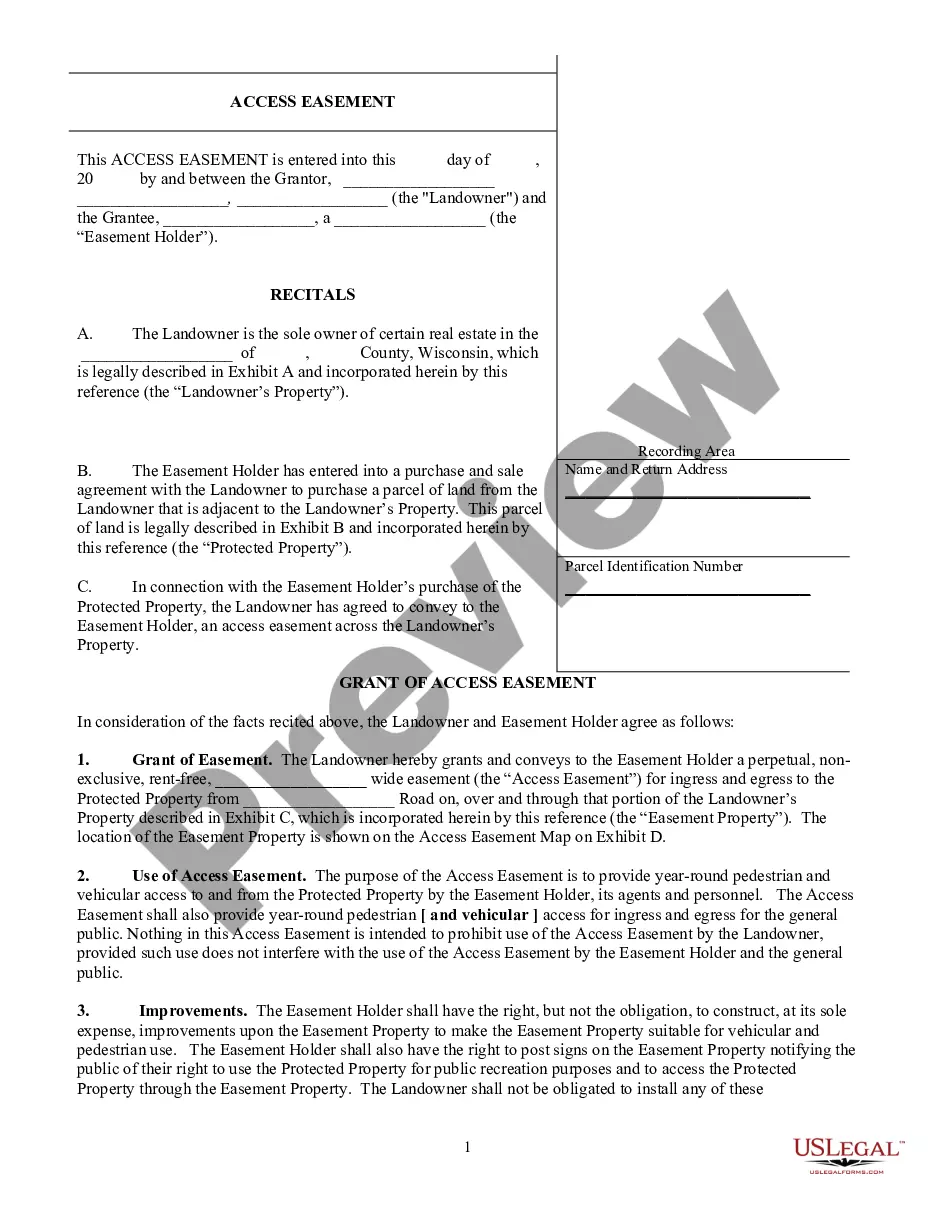
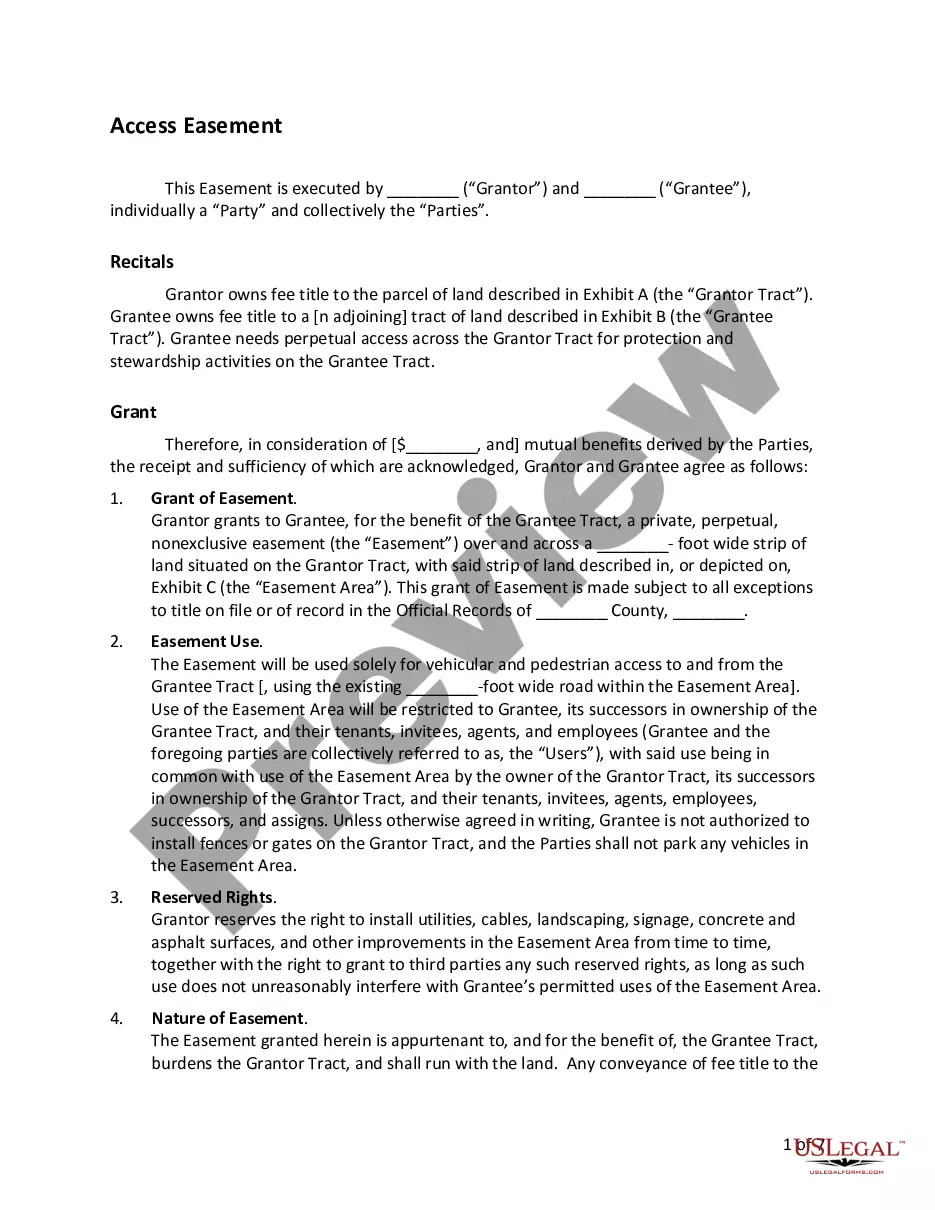
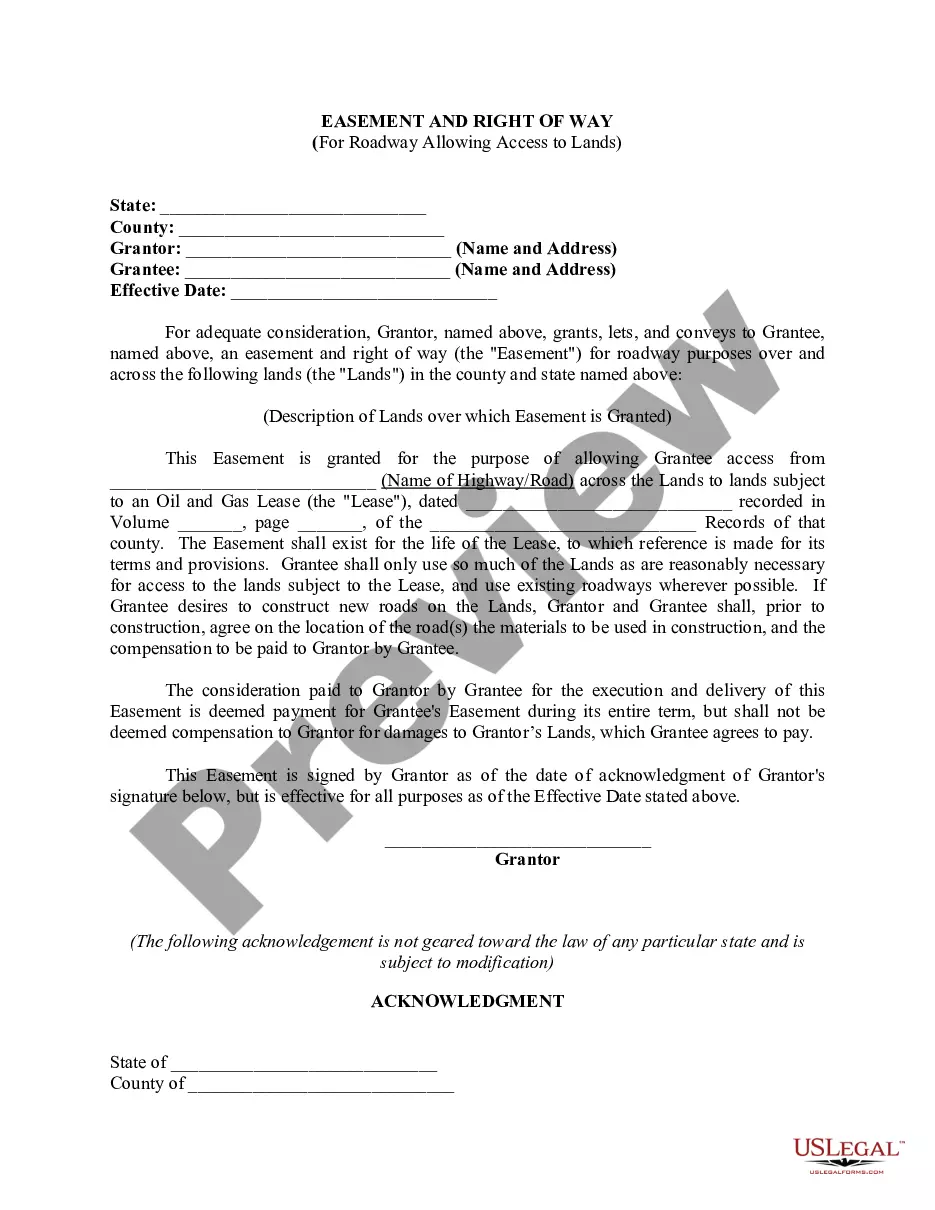
This form is an Easement or Right-of-Way for Access to Property. The form provides that an easement is granted for the ingress and egress to, from, upon, and over the property described in the agreement. The form also provides that the grantee may construct a permanent street or road on the property.
Free preview
Get your form ready online
Our built-in tools help you complete, sign, share, and store your documents in one place.
Built-in online Word editor
Make edits, fill in missing information, and update formatting in US Legal Forms—just like you would in MS Word.
Export easily
Download a copy, print it, send it by email, or mail it via USPS—whatever works best for your next step.
E-sign your document
Sign and collect signatures with our SignNow integration. Send to multiple recipients, set reminders, and more. Go Premium to unlock E-Sign.
Notarize online 24/7
If this form requires notarization, complete it online through a secure video call—no need to meet a notary in person or wait for an appointment.
Store your document securely
We protect your documents and personal data by following strict security and privacy standards.

Make edits, fill in missing information, and update formatting in US Legal Forms—just like you would in MS Word.

Download a copy, print it, send it by email, or mail it via USPS—whatever works best for your next step.

Sign and collect signatures with our SignNow integration. Send to multiple recipients, set reminders, and more. Go Premium to unlock E-Sign.

If this form requires notarization, complete it online through a secure video call—no need to meet a notary in person or wait for an appointment.

We protect your documents and personal data by following strict security and privacy standards.
Looking for another form?
How to fill out Easement For Access To Property?
Are you in a situation where you need to have documentation for various business or personal purposes almost every workday? There are numerous legitimate document templates accessible online, but finding ones you can rely on is challenging. US Legal Forms offers thousands of form templates, including the Delaware Easement for Access to Property, which are designed to meet federal and state requirements.
If you are already familiar with the US Legal Forms website and have an account, simply Log In. Then, you can download the Delaware Easement for Access to Property template.
If you do not have an account and want to start using US Legal Forms, follow these steps: Get the form you need and ensure it is for the correct city/county. Use the Review button to examine the form. Check the details to confirm that you have chosen the right form. If the form does not meet your needs, utilize the Search area to find the form that fits your requirements and specifications. Once you locate the right form, click on Purchase now. Select the pricing plan you prefer, fill in the required information to create your account, and pay for the order using your PayPal or credit card. Choose a suitable file format and download your copy.
Avoid altering or removing any HTML tags. Only synonymize plain text outside of the HTML tags.
- Find all the document templates you have purchased in the My documents list.
- You can obtain an additional copy of the Delaware Easement for Access to Property whenever needed.
- Simply click on the required form to download or print the document template.
- Utilize US Legal Forms, which has one of the most extensive collections of legitimate forms, to save time and avoid mistakes.
- The service provides properly crafted legal document templates that you can use for various purposes.
- Create an account on US Legal Forms and start making your life easier.
Form popularity
FAQ
In Delaware, squatter's rights, known in the law as adverse possession, allow people to claim ownership of property that is not technically theirs by occupying it for at least 20 years, ing to the Delaware Code.
Acting quickly is the best way to fight an adverse possession claim. Negotiate permission in writing: You may be willing to allow the use of the property. If so, having a written document helps prove you allowed specific use and could help fight an adverse possession claim.
In areas where a proposed Shared-Use Path (SUP) and/or Sidewalk (SW) is designed to meander beyond the minimum right-of-way listed in Figure 3.2. 5-a and outside of the 15-foot Frontage Easement required in Section 3.2.
(a) For the purposes of this chapter ?abandoned personal property? shall be deemed to be tangible personal property which the rightful owner has left in the care or custody of another person and has failed to maintain, pay for the storage of, exercise dominion or control over, and has failed to otherwise assert or ...
An easement is defined as the grant of a nonpossessory property interest that grants the easement holder permission to use another person's land.
An easement gives the easement holder a right of use over the land of another. Once an easement has been granted, the grantor may not interfere with the grantee's use of the easement.
The concept allows trespassers to gain legal title to property by openly inhabiting and improving the property and meeting some other specific conditions. Under Delaware's adverse possession law, an individual must occupy property for at least 20 years before the possibility of ownership.
The adverse possessor must either: Have a defective document which tries (but fails) to transfer title of the property to the possessor (?color of title?), or. The possessor must actually occupy the property with the intent to claim the title to the property (?claim of right?).