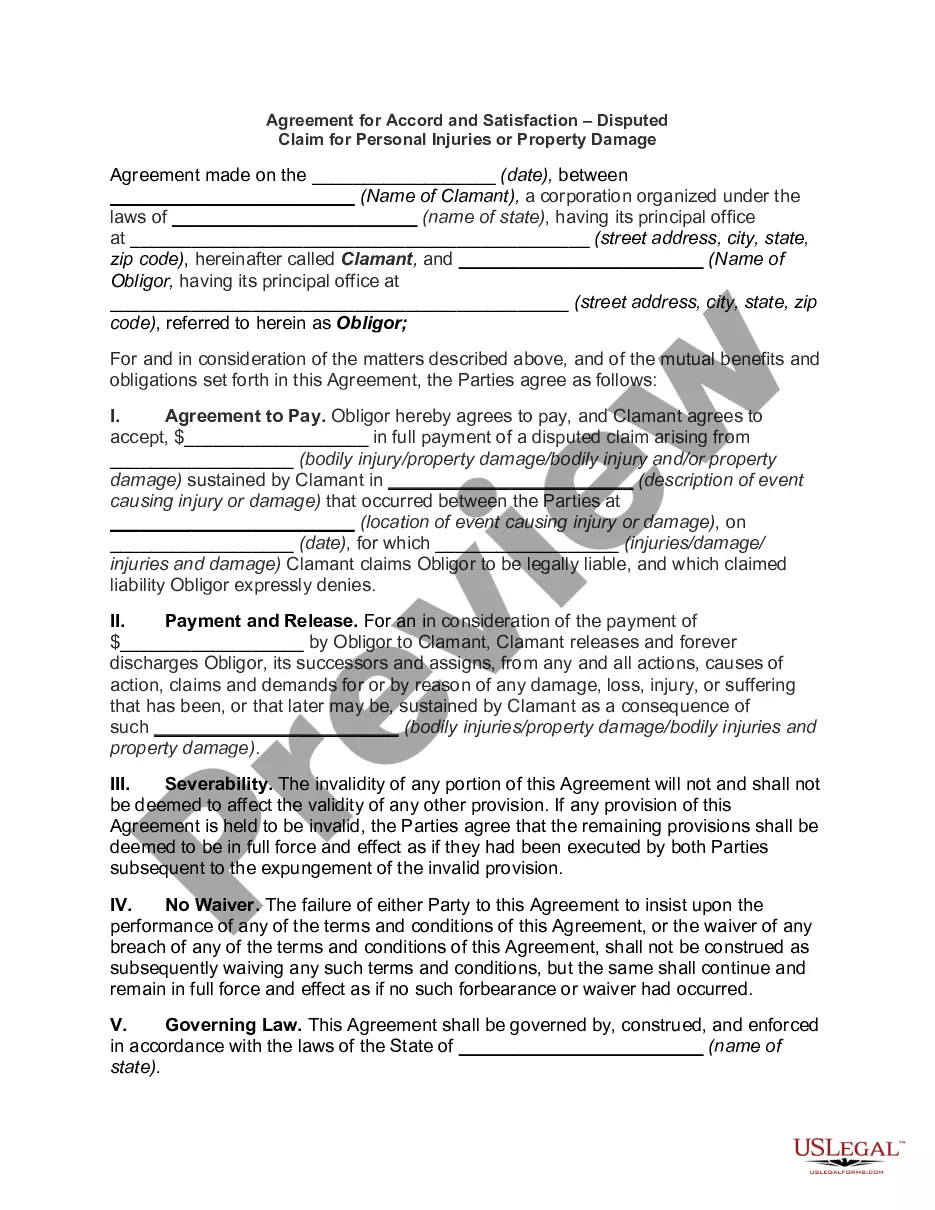
Delaware Agreement for Accord and Satisfaction of a Disputed Claim (i.e., Personal and Property Damages) for Negligence

State:
Multi-State
Control #:
US-00437BG
Format:
Word; 
Rich Text
Instant download

Description

A contract is usually discharged by performance of the terms of the agreement. However, the parties may agree to a different performance. This is called an accord. When the accord is performed, this is called an accord and satisfaction. The original obligation is discharged.


In order for there to be an accord and satisfaction, there must be

(1) a bona fide dispute;

(2) an agreement to settle the dispute; and

(3) the performance of the agreement.


An example would be settlement of a lawsuit for breach of contract. The parties might settle for less than the amount called for under the contract if the amount is in dispute. An accord and satisfaction is also a method of settling a cause of action arising either from a civil wrong (tort), by substituting for the cause of action an agreement for its satisfaction and the performance of the substituted agreement. The accord is the agreement; the satisfaction is the performance of the agreement.
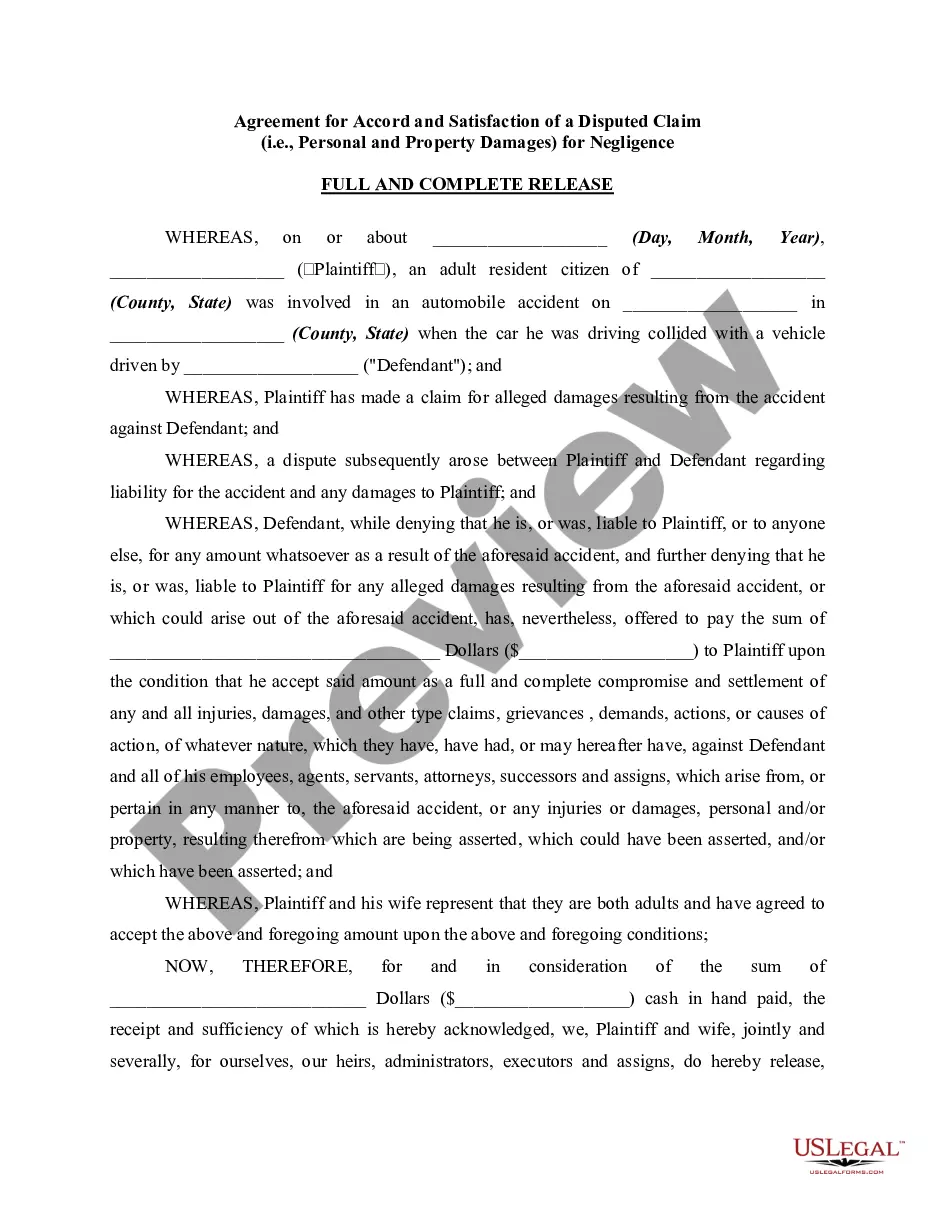
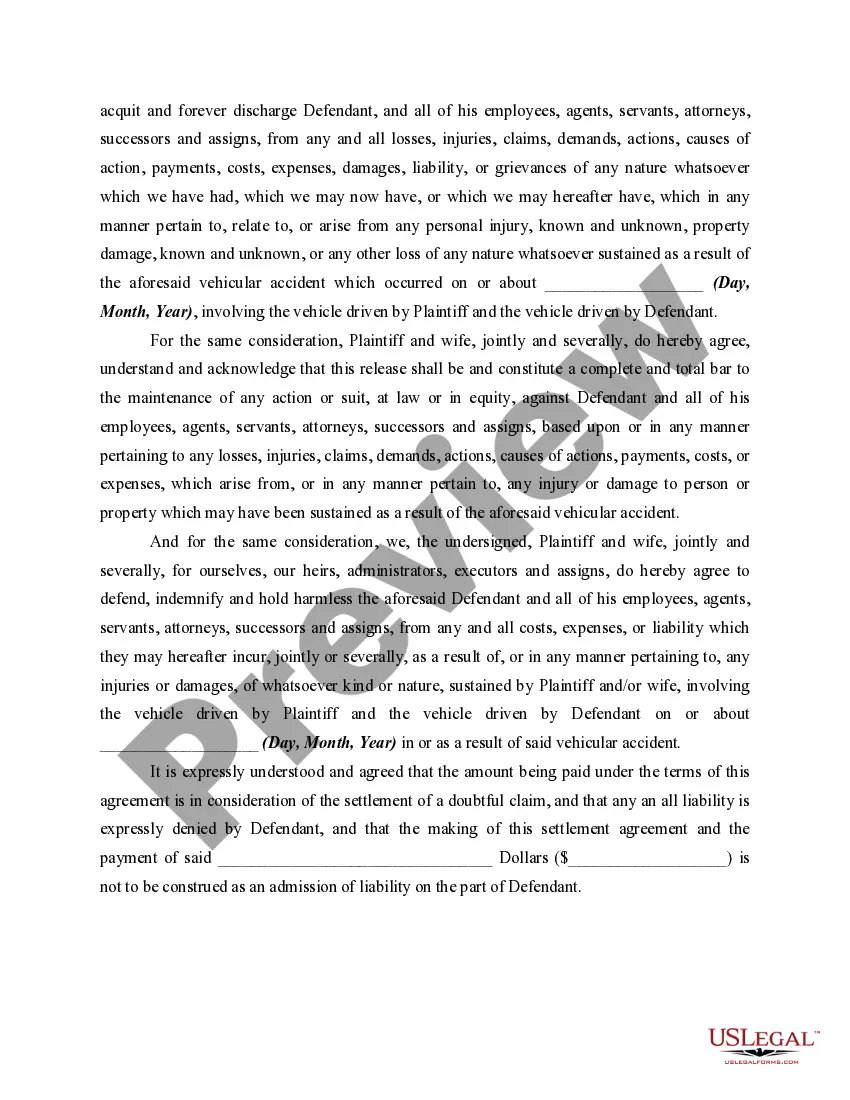
Free preview
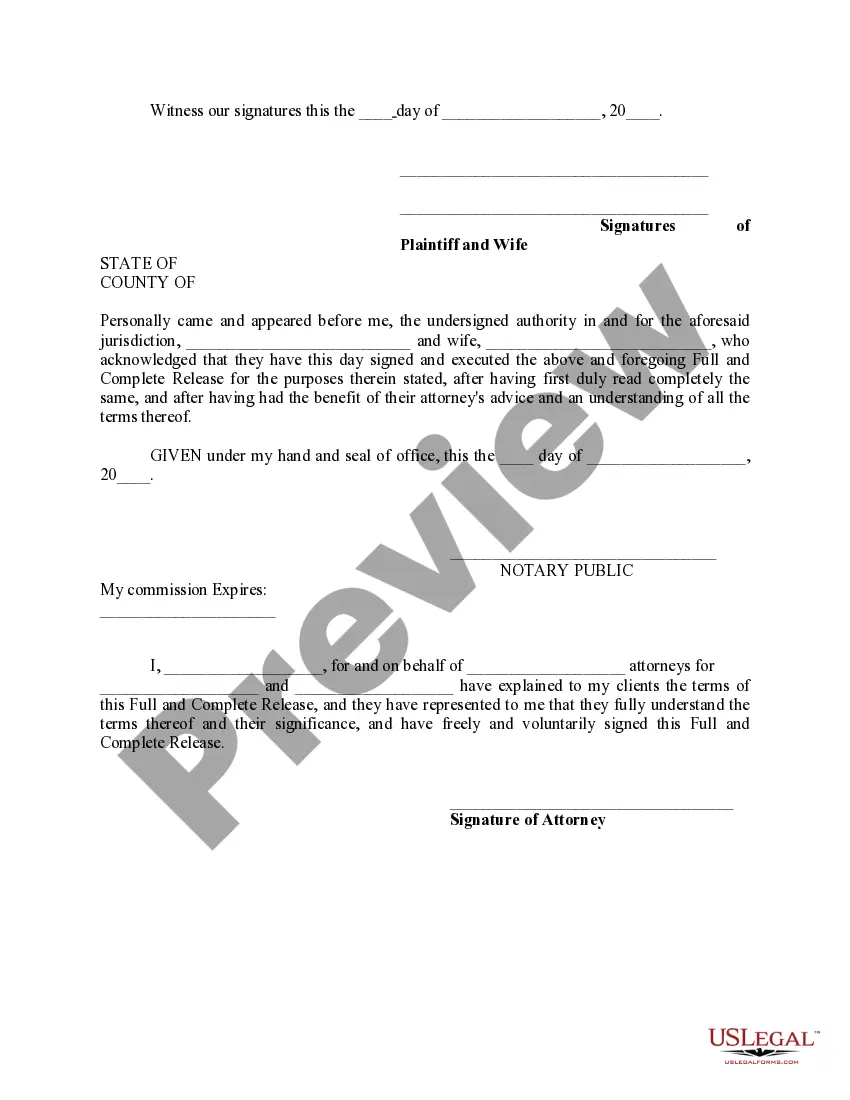
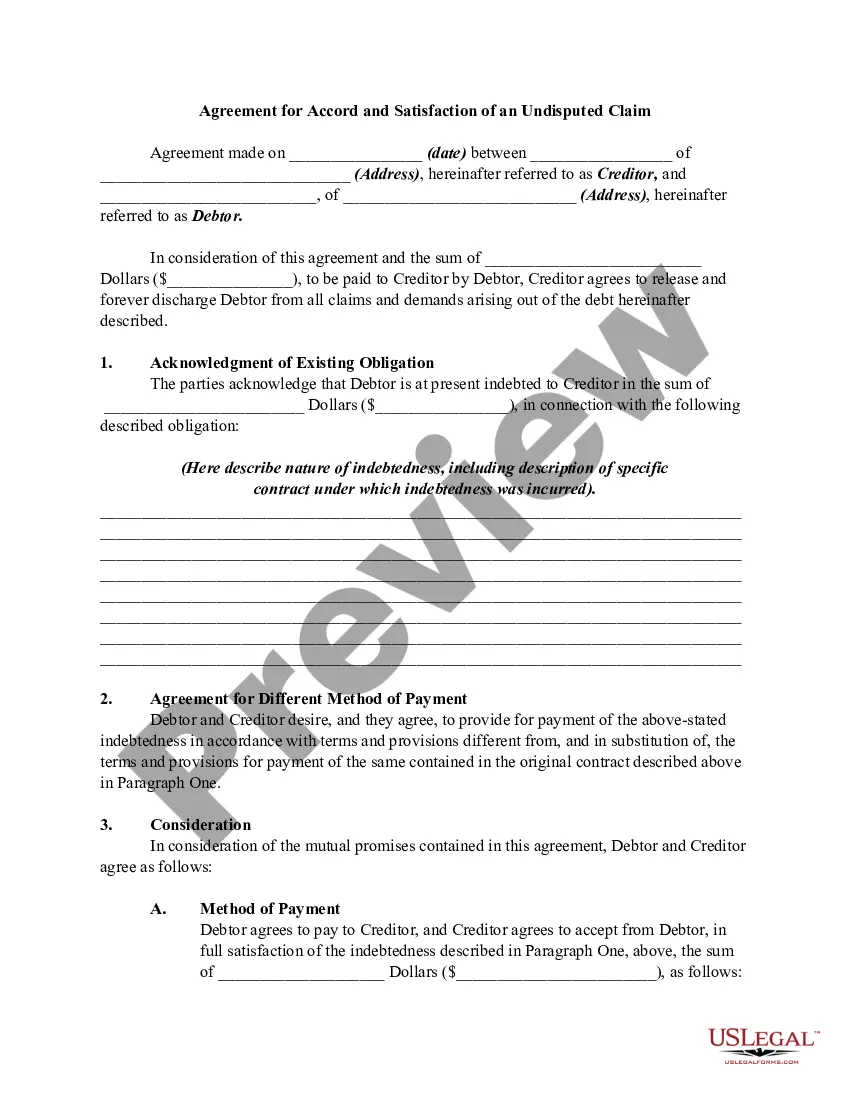
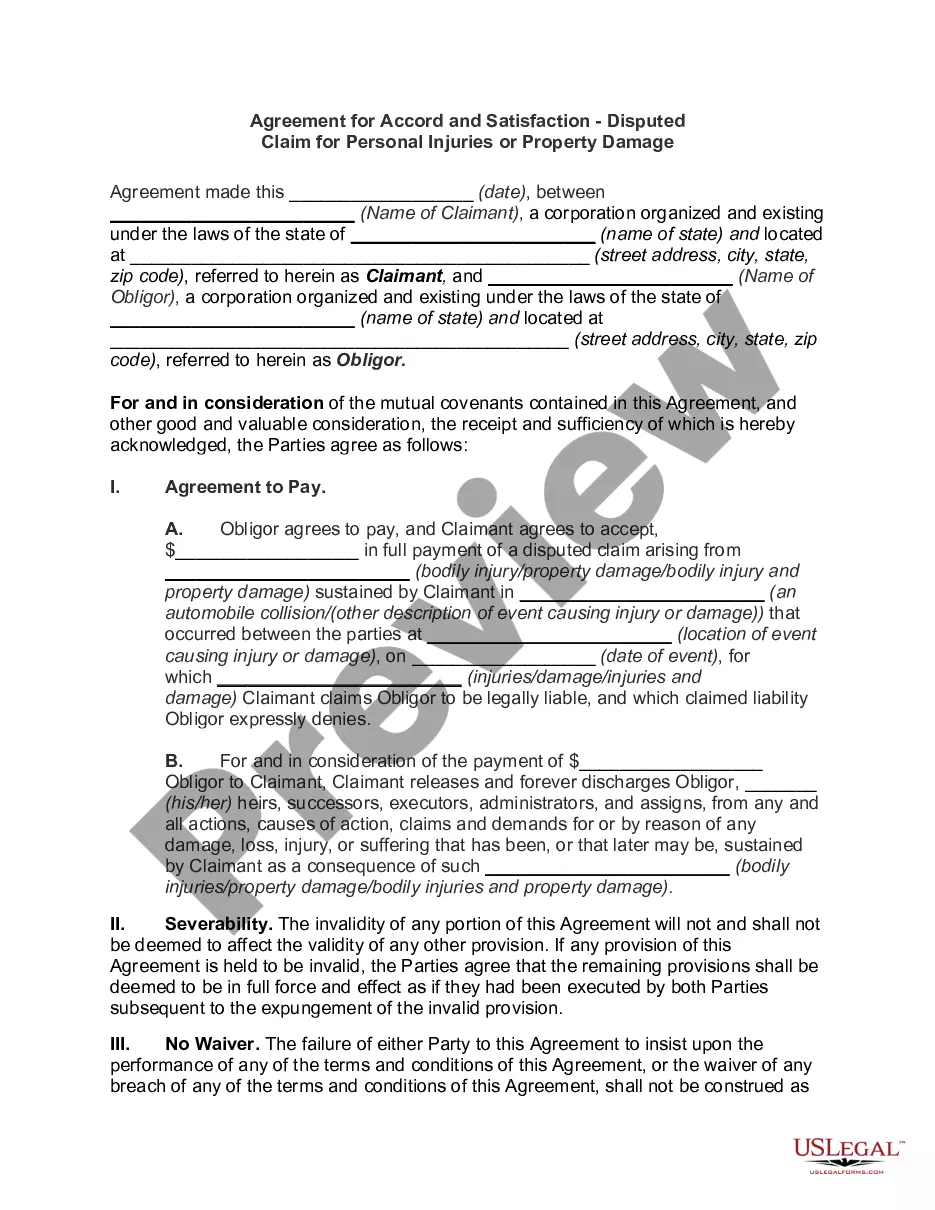
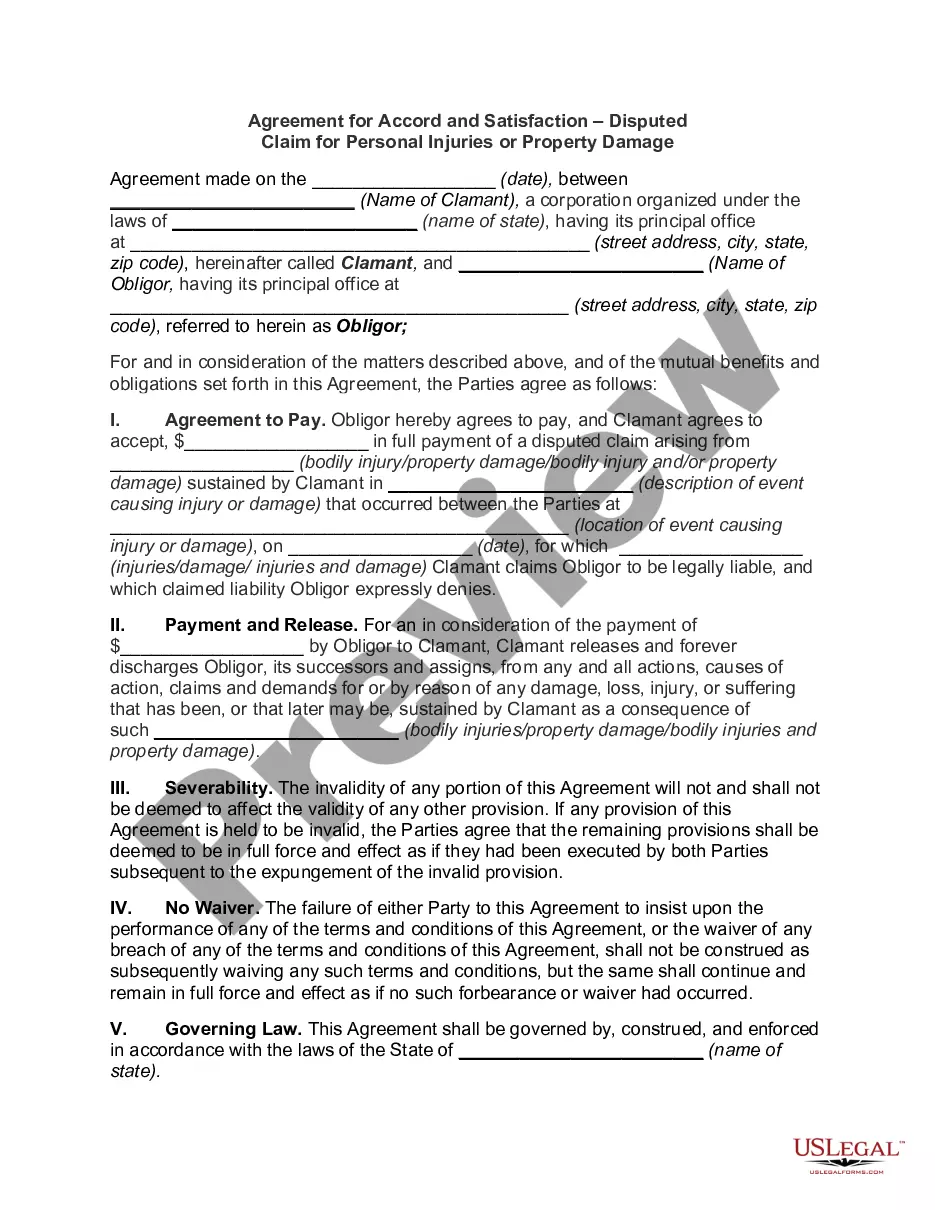
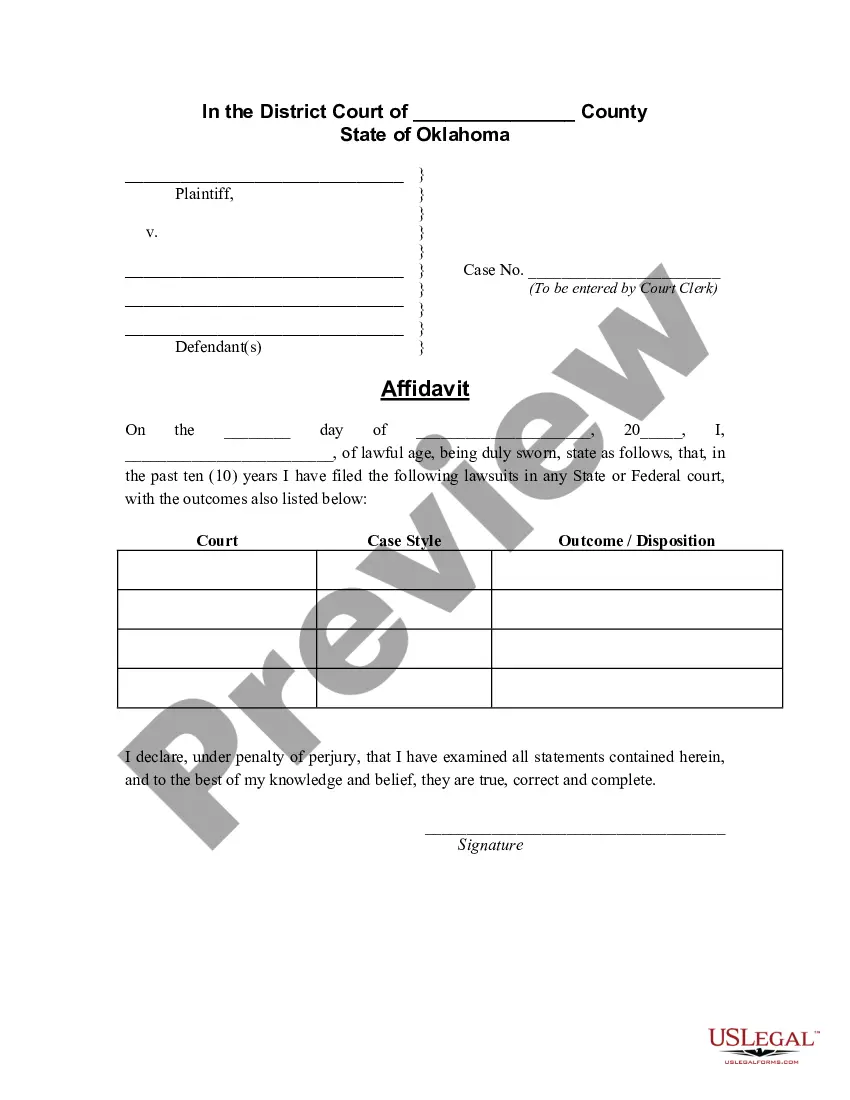
  • Preview Agreement for Accord and Satisfaction of a Disputed Claim (i.e., Personal and Property Damages) for Negligence
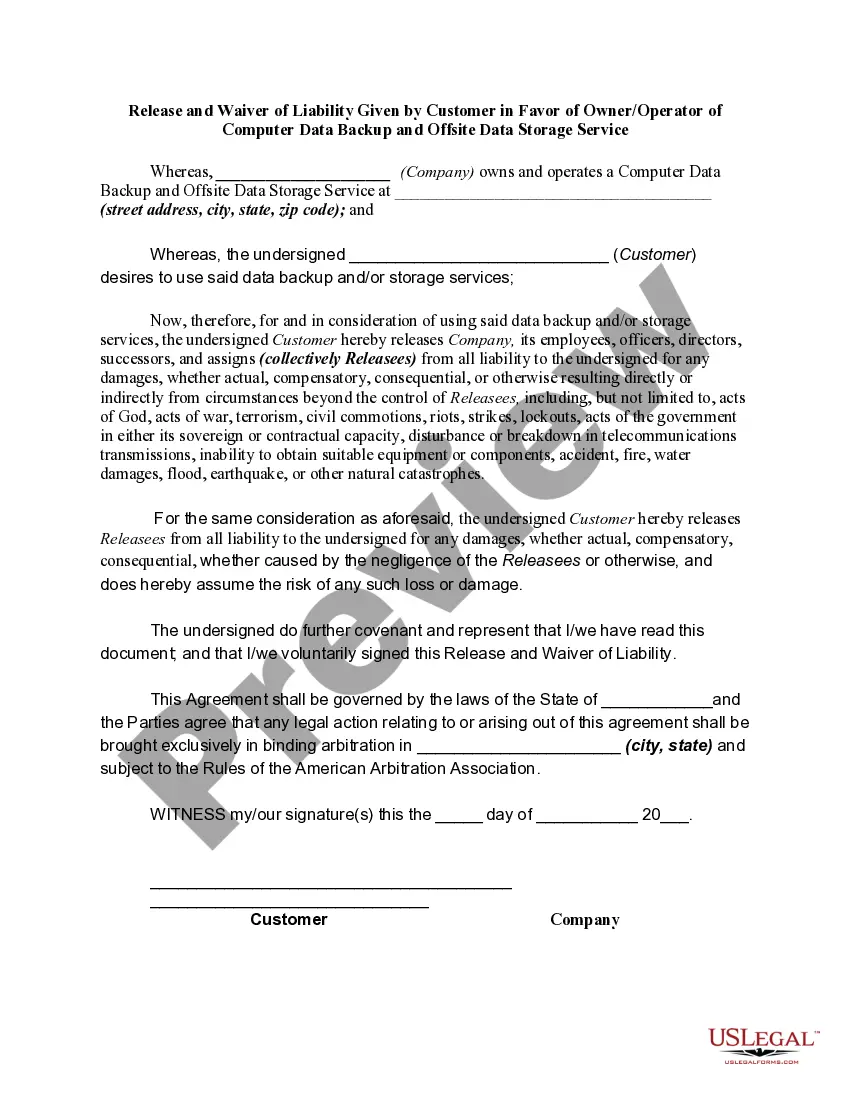
  • Preview Agreement for Accord and Satisfaction of a Disputed Claim (i.e., Personal and Property Damages) for Negligence
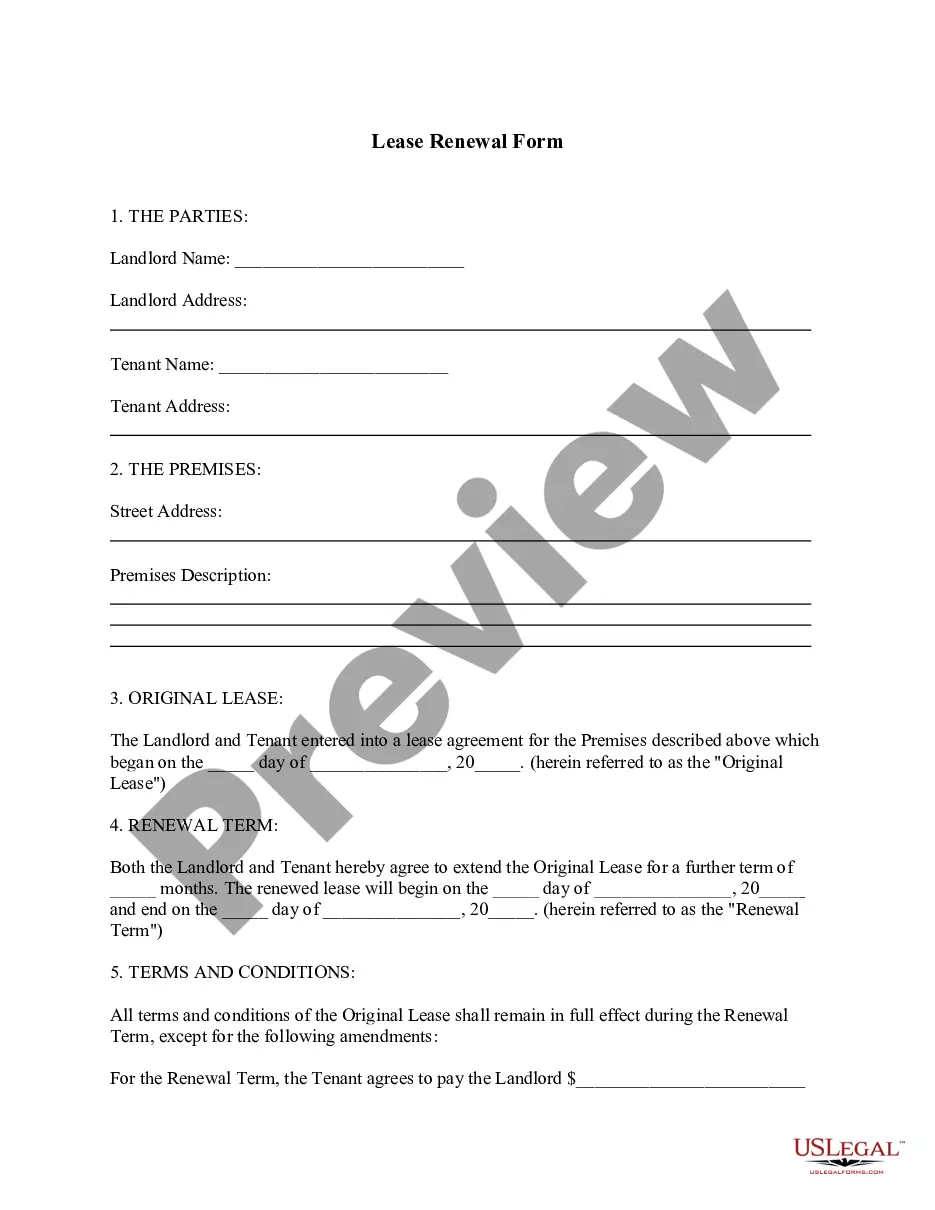
  • Preview Agreement for Accord and Satisfaction of a Disputed Claim (i.e., Personal and Property Damages) for Negligence

How to fill out Agreement For Accord And Satisfaction Of A Disputed Claim (i.e., Personal And Property Damages) For Negligence?

Are you currently in a circumstance where you require documents for both business or individual reasons every single day.

There are numerous legal document templates available online, but locating ones you can trust isn't easy.

US Legal Forms offers a vast array of form templates, such as the Delaware Agreement for Accord and Satisfaction of a Disputed Claim (i.e., Personal and Property Damages) for Negligence, which can be drafted to meet federal and state requirements.

Once you find the appropriate form, click Acquire now.

Choose the pricing plan you prefer, fill in the necessary information to create your account, and pay for the transaction using your PayPal or Visa or Mastercard.

  1. If you are already acquainted with the US Legal Forms website and possess an account, simply Log In.
  2. Then, you can download the Delaware Agreement for Accord and Satisfaction of a Disputed Claim (i.e., Personal and Property Damages) for Negligence template.
  3. If you do not have an account and wish to start using US Legal Forms, follow these steps.
  4. Obtain the form you need and ensure it is for your correct area/state.
  5. Utilize the Review button to examine the form.
  6. Read the explanation to ensure that you have selected the right form.
  7. If the form isn't what you're looking for, use the Lookup field to find the form that suits your needs and requirements.

Form popularity

FAQ

Section 271 of Delaware law pertains to the enforceability of agreements related to the release of claims. It establishes the legal framework for settling disputes and ensures that settlements are binding and effective. Understanding this section is vital for anyone considering a Delaware Agreement for Accord and Satisfaction of a Disputed Claim (i.e., Personal and Property Damages) for Negligence, as it can influence the validity of your agreement and protect your interests.

The statute of limitations in Delaware varies depending on the type of claim, but negligence claims generally have a three-year limit. This period begins from the date of the incident that caused the damages. It is important to be aware of this timeframe to take appropriate action. If you find yourself needing to navigate these legal waters, a Delaware Agreement for Accord and Satisfaction of a Disputed Claim (i.e., Personal and Property Damages) for Negligence can provide a structured approach.

Delaware Superior Court Rule 133 addresses the procedures for resolving civil cases through alternative dispute resolution. This rule encourages parties to consider mediation or arbitration as an efficient way to settle disputes instead of going to trial. Utilizing these alternatives can simplify the process and may lead to a Delaware Agreement for Accord and Satisfaction of a Disputed Claim (i.e., Personal and Property Damages) for Negligence, ultimately saving time and resources.

Rule 4 outlines the procedure for serving a summons in Delaware. It specifies how a party must be notified of a lawsuit and the methods of service permitted under Delaware law. Proper service is essential to ensuring the validity of your case, especially when entering a Delaware Agreement for Accord and Satisfaction of a Disputed Claim (i.e., Personal and Property Damages) for Negligence. This rule helps protect your rights by ensuring all parties are informed.

In Delaware, the limitation period for a negligence claim typically spans three years. This means that you have three years from the date of the incident to file a claim. If you exceed this timeframe, you may lose your right to seek compensation. Understanding this limitation is crucial when considering a Delaware Agreement for Accord and Satisfaction of a Disputed Claim (i.e., Personal and Property Damages) for Negligence.

Accord and satisfaction is a legal concept that resolves a disputed claim by agreeing to accept a different performance than originally required. In the context of a Delaware Agreement for Accord and Satisfaction of a Disputed Claim (i.e., Personal and Property Damages) for Negligence, this means both parties can negotiate terms to settle the matter amicably. This approach not only helps avoid lengthy litigation but also provides a clear resolution for both sides. To draft an effective agreement, US Legal Forms offers valuable templates and guidance.

Rule 4 in Delaware outlines the procedures for serving legal documents. It specifies how parties involved in a legal dispute can officially notify each other about claims, including a Delaware Agreement for Accord and Satisfaction of a Disputed Claim (i.e., Personal and Property Damages) for Negligence. Understanding this rule is crucial for ensuring that all parties receive proper notice and that the legal process proceeds smoothly. For a comprehensive understanding of these procedures, consider exploring resources offered by US Legal Forms.

The accord and satisfaction law in Delaware allows parties to settle a disputed claim by reaching an agreement that satisfies the obligations owed. This legal concept can play a pivotal role in a Delaware Agreement for Accord and Satisfaction of a Disputed Claim (i.e., Personal and Property Damages) for Negligence. Utilizing this law can lead to a resolution that avoids lengthy litigation, providing a more efficient path to closure.

In Delaware, the statute of limitations for presenting a property damage claim is generally three years from the date of the damage. This timeline is important when considering how to approach a Delaware Agreement for Accord and Satisfaction of a Disputed Claim (i.e., Personal and Property Damages) for Negligence. Knowing this limitation can help you act promptly and effectively to secure your rights and interests.

Rule 30(b)(6) allows for the deposition of an organization, requiring it to designate a representative to testify on its behalf. In the context of a Delaware Agreement for Accord and Satisfaction of a Disputed Claim (i.e., Personal and Property Damages) for Negligence, understanding this rule can help you gather vital information during litigation. This procedure ensures that organizations provide clear and comprehensive responses during legal disputes, promoting fairness in the process.

Trusted and secure by over 3 million people of the world’s leading companies

Delaware Agreement for Accord and Satisfaction of a Disputed Claim (i.e., Personal and Property Damages) for Negligence