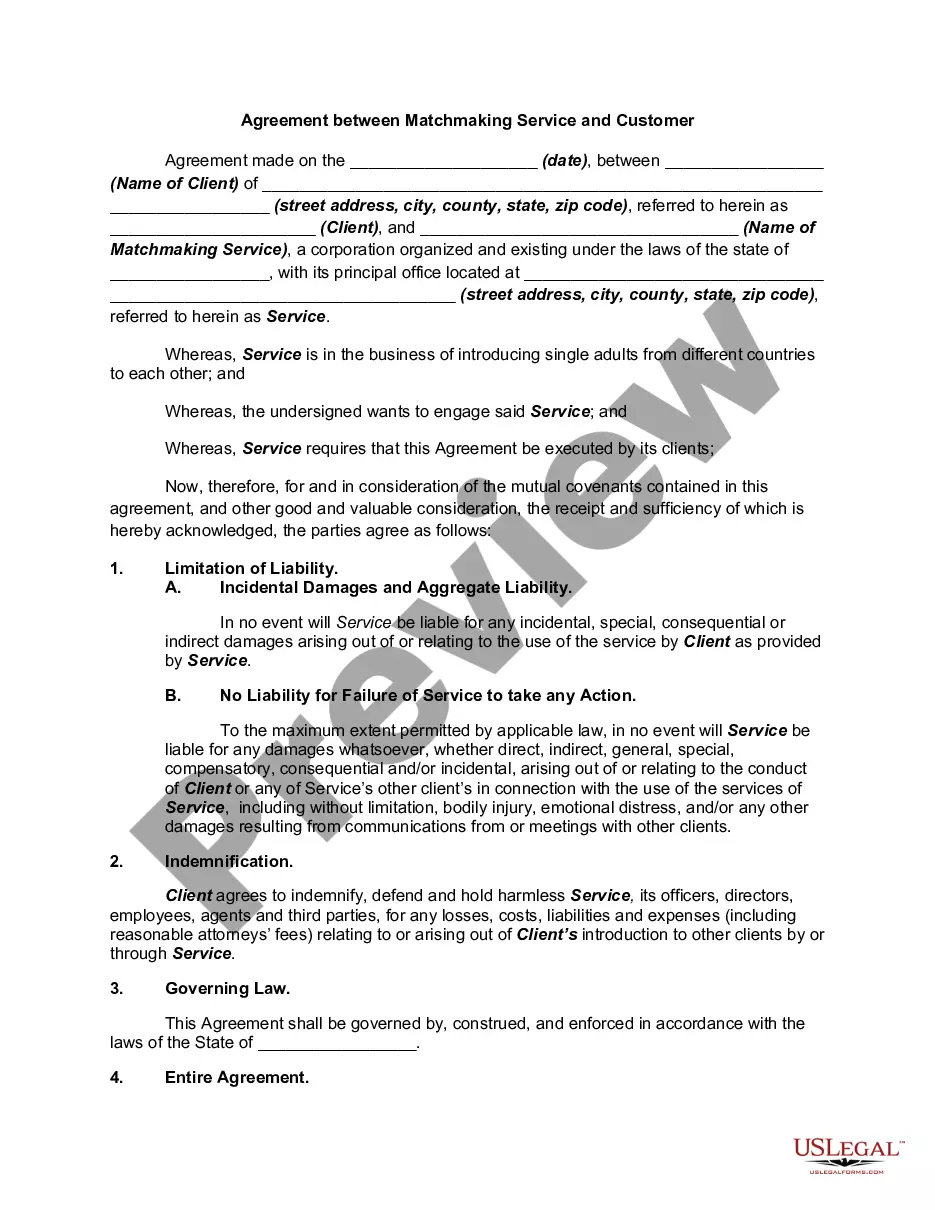
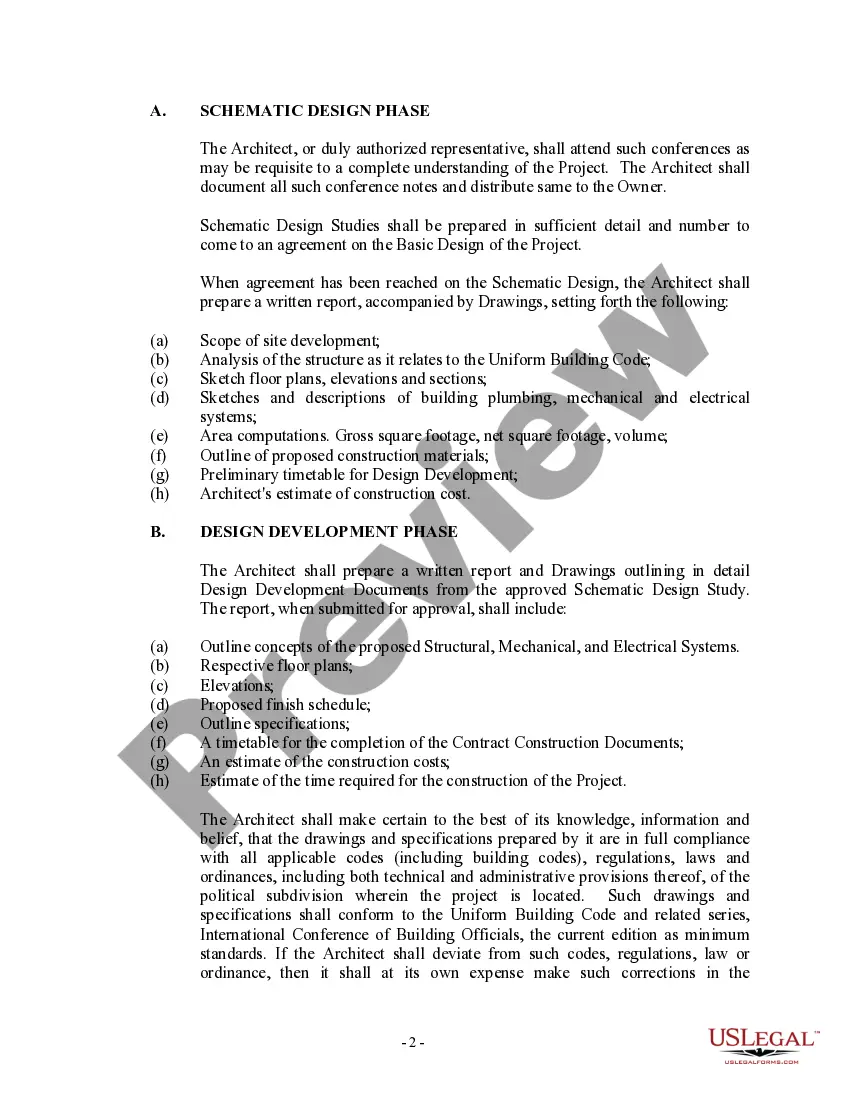
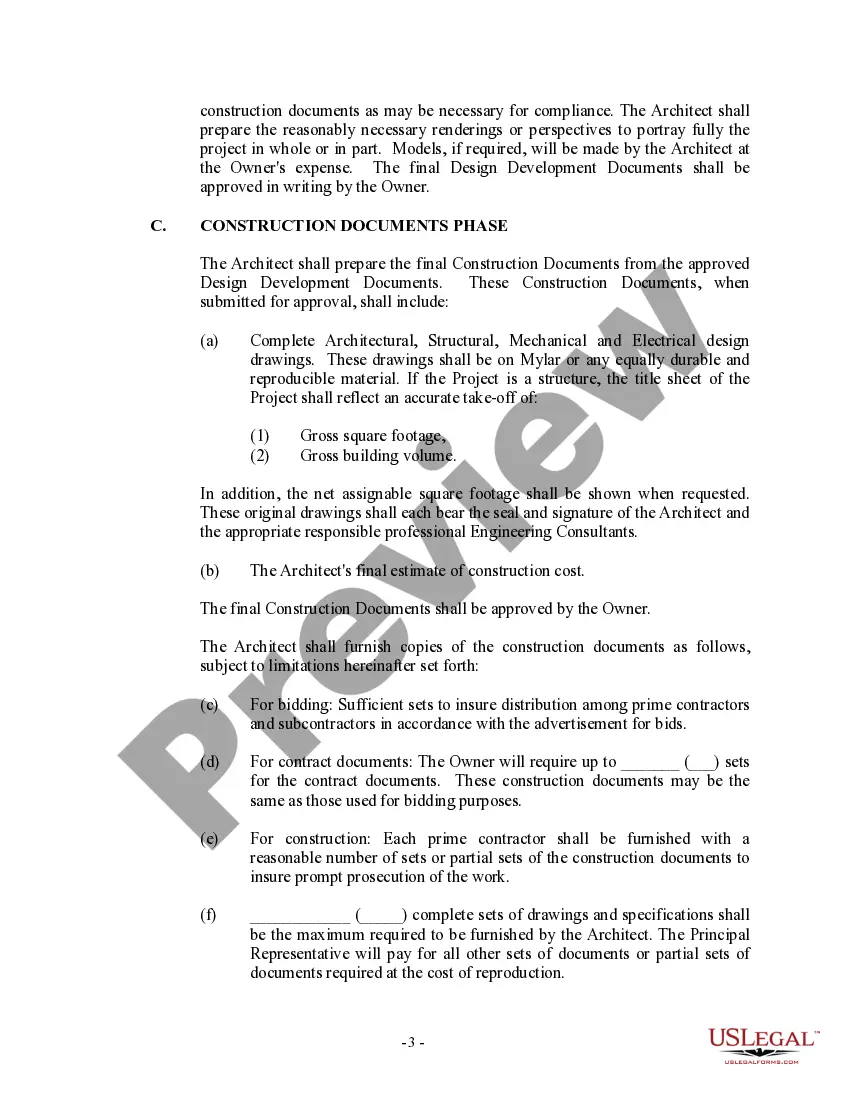
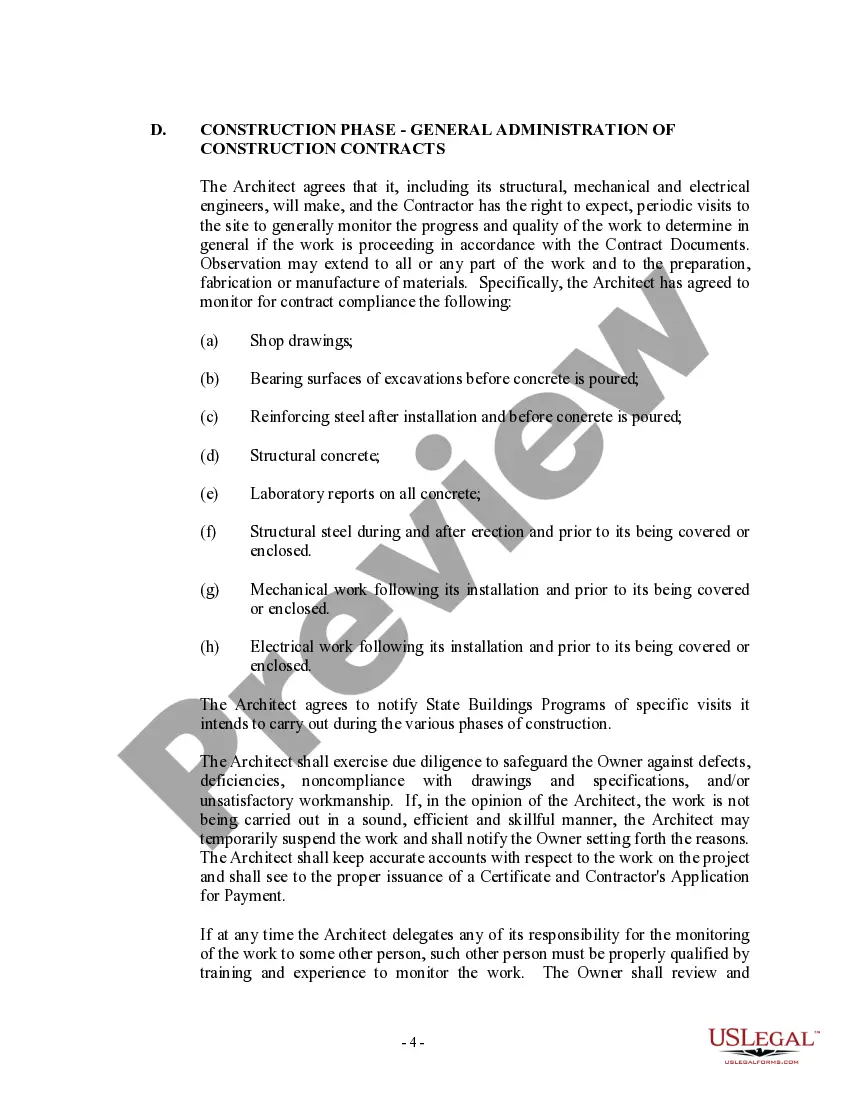
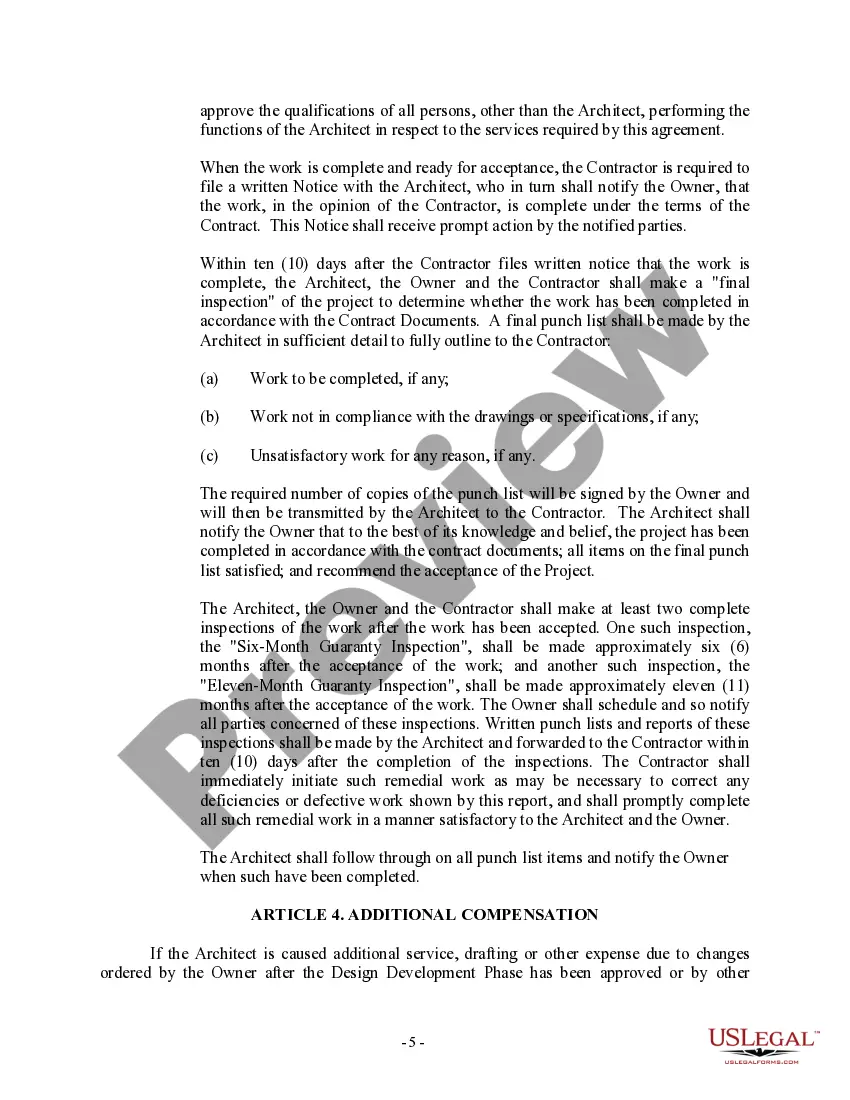
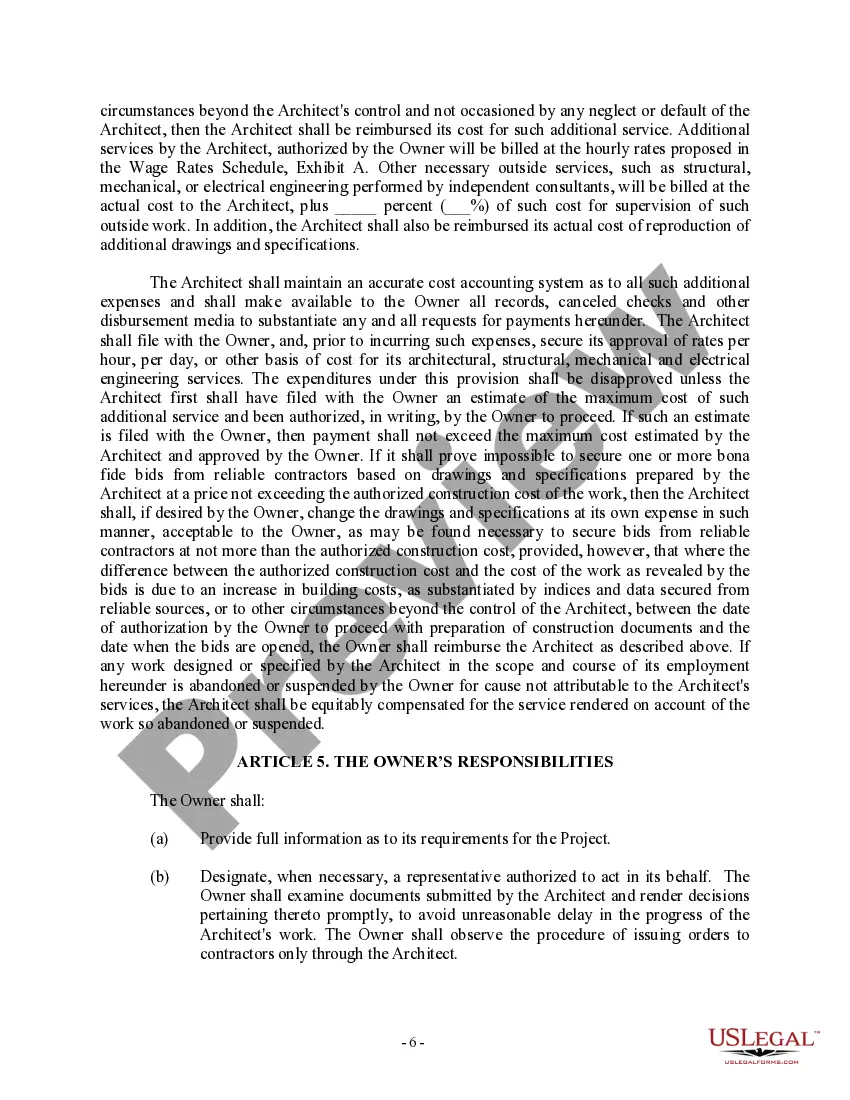
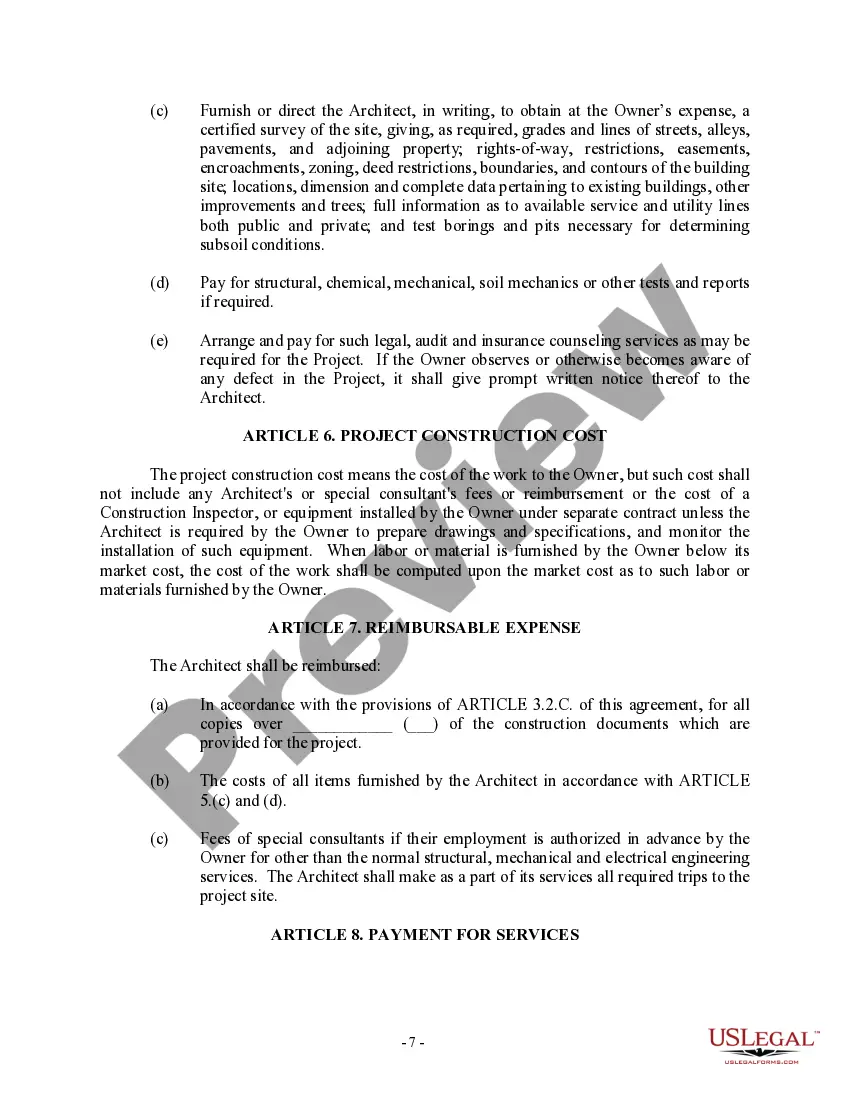
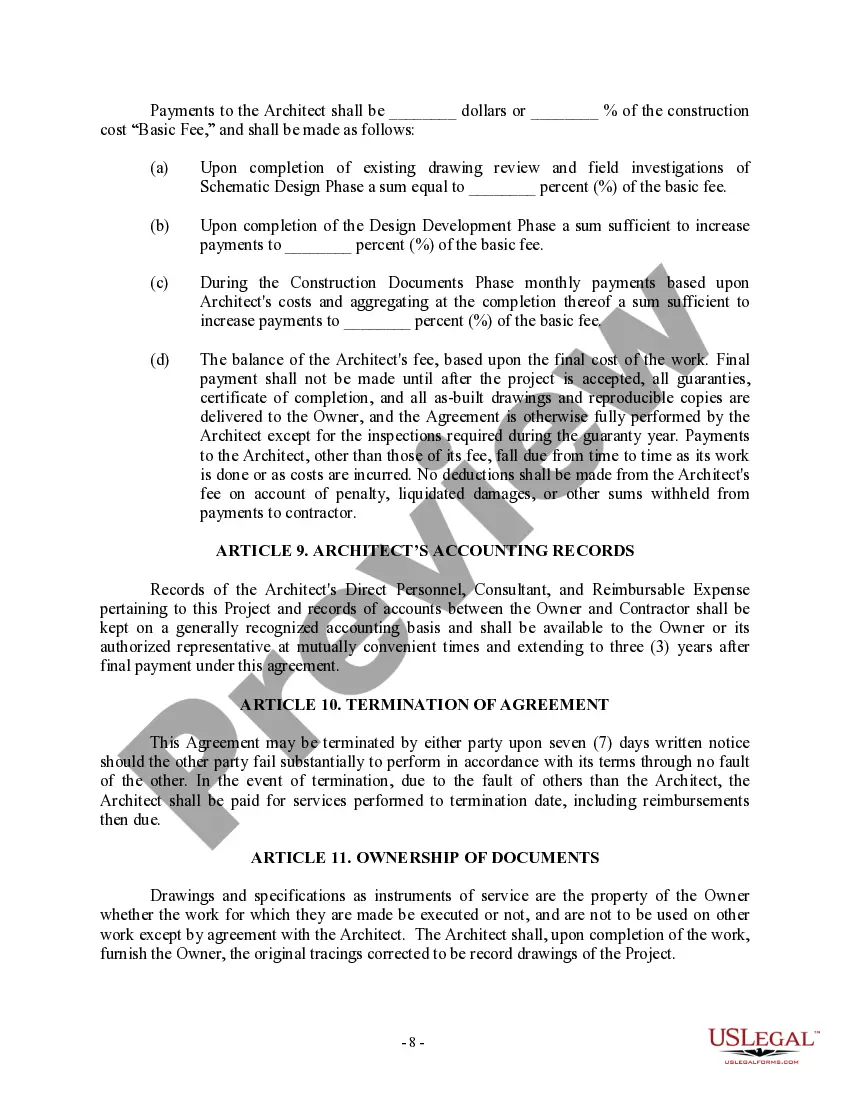
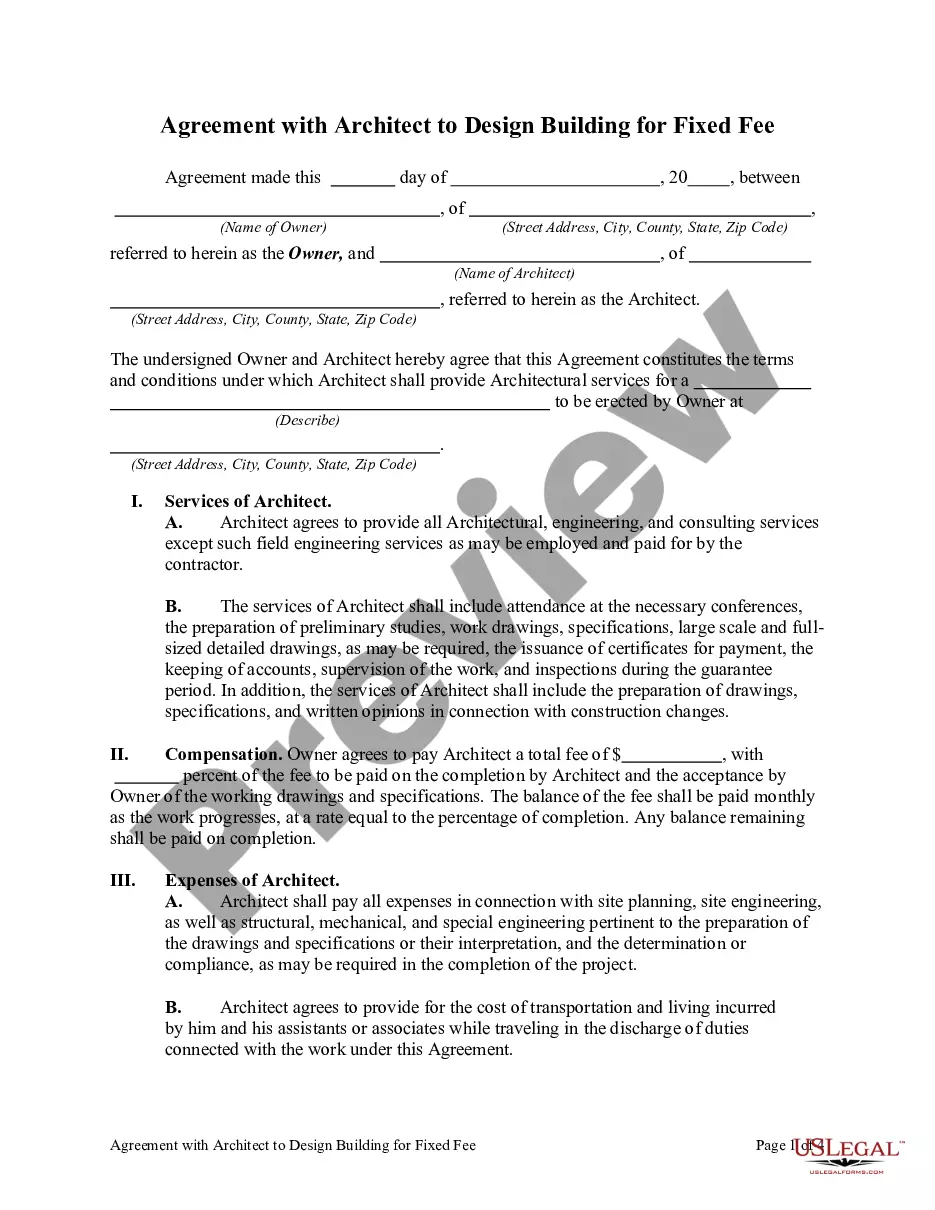
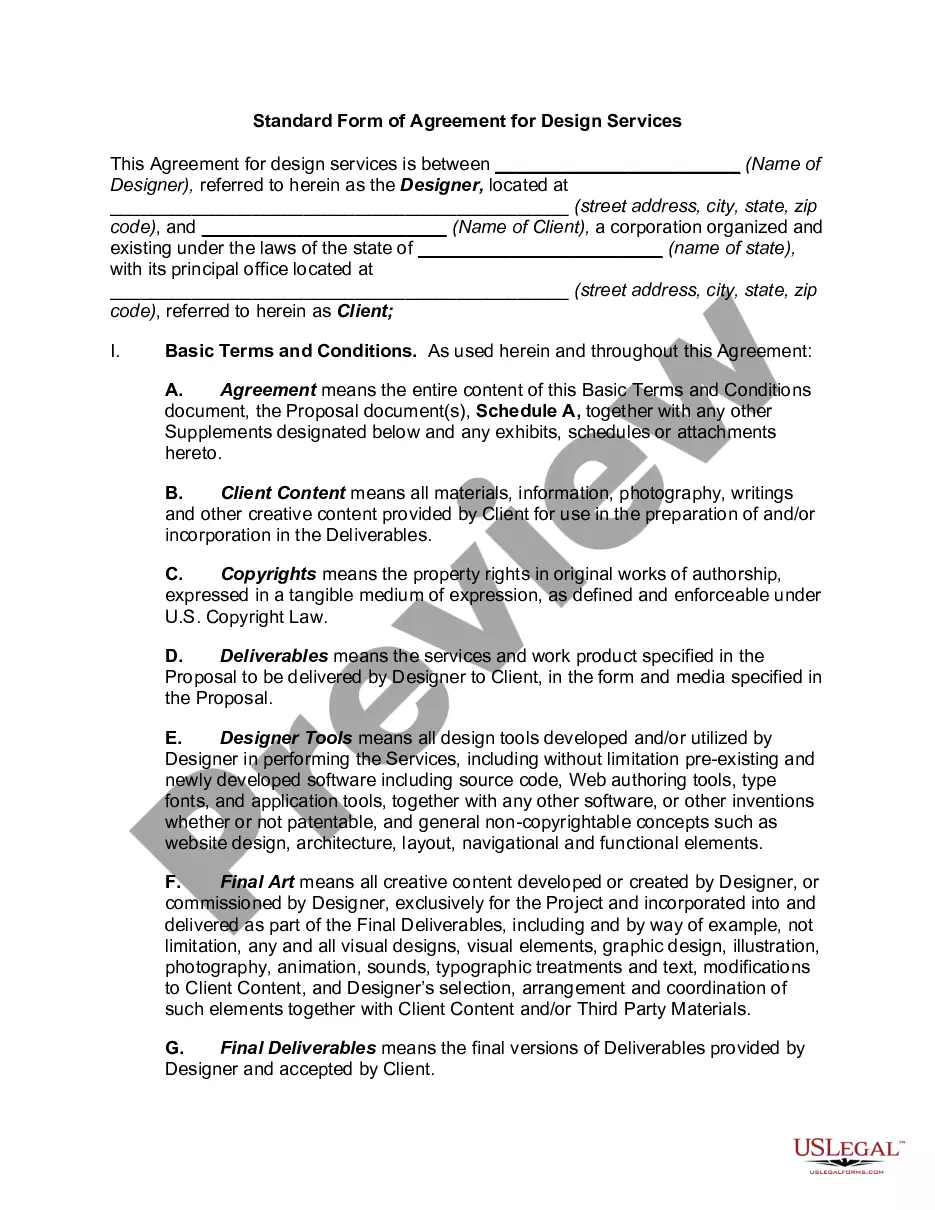
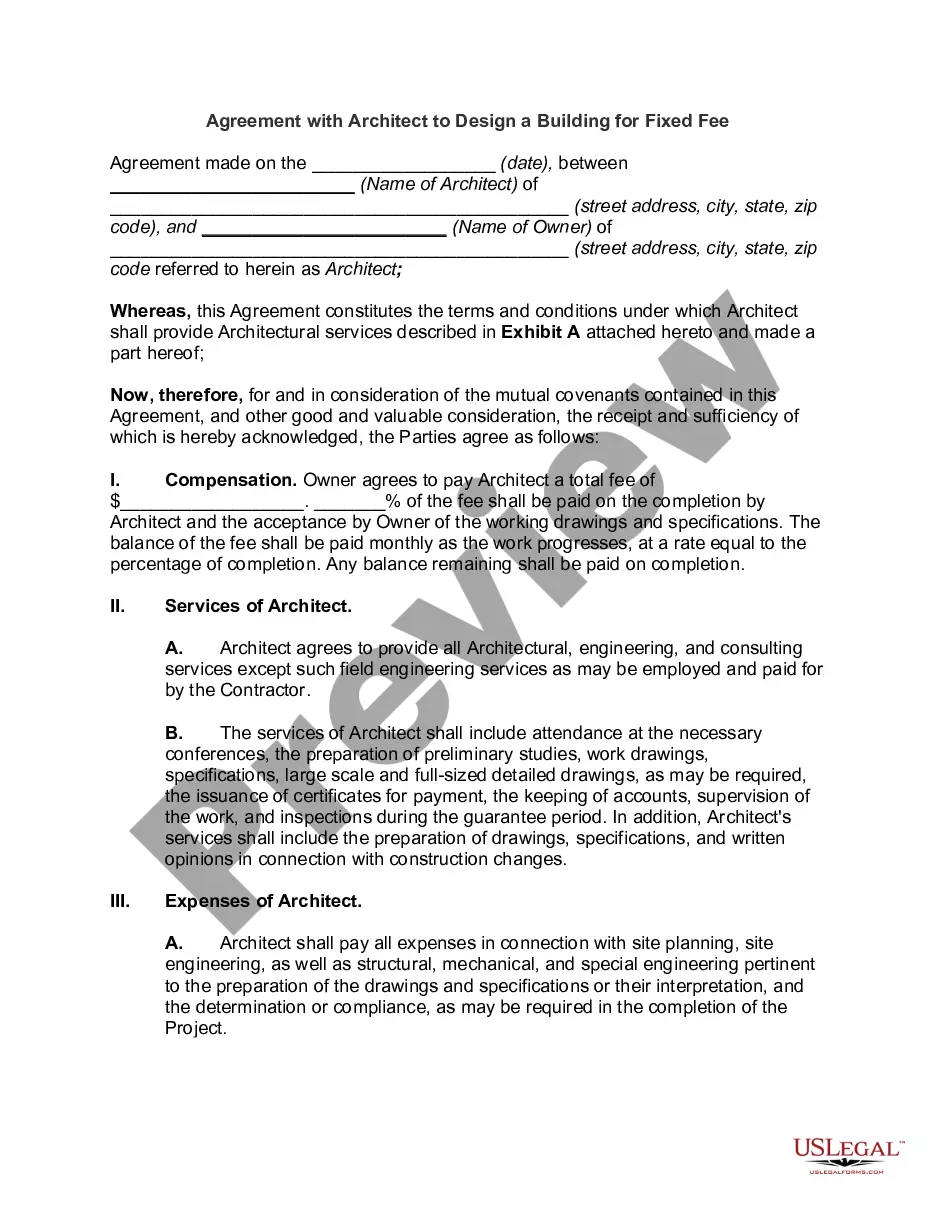
Delaware Architect Contract for Design
Description


Get your form ready online
Our built-in tools help you complete, sign, share, and store your documents in one place.
Make edits, fill in missing information, and update formatting in US Legal Forms—just like you would in MS Word.
Download a copy, print it, send it by email, or mail it via USPS—whatever works best for your next step.
Sign and collect signatures with our SignNow integration. Send to multiple recipients, set reminders, and more. Go Premium to unlock E-Sign.
If this form requires notarization, complete it online through a secure video call—no need to meet a notary in person or wait for an appointment.
We protect your documents and personal data by following strict security and privacy standards.

Make edits, fill in missing information, and update formatting in US Legal Forms—just like you would in MS Word.

Download a copy, print it, send it by email, or mail it via USPS—whatever works best for your next step.

Sign and collect signatures with our SignNow integration. Send to multiple recipients, set reminders, and more. Go Premium to unlock E-Sign.

If this form requires notarization, complete it online through a secure video call—no need to meet a notary in person or wait for an appointment.

We protect your documents and personal data by following strict security and privacy standards.
Looking for another form?


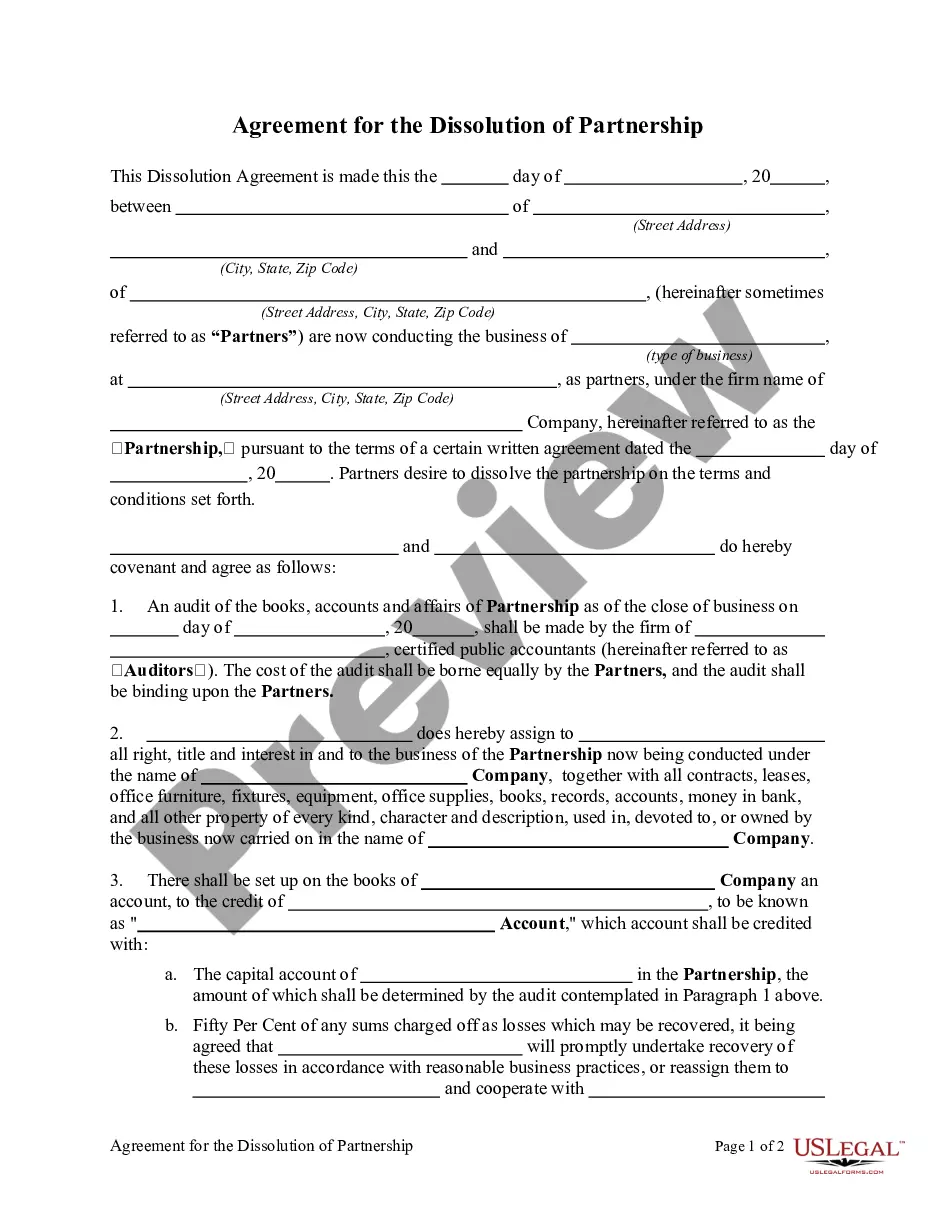


How to fill out Architect Contract For Design?
Finding the appropriate legal document template can be quite a challenge.
Certainly, there are numerous templates accessible online, but how do you locate the legal form you require? Utilize the US Legal Forms website.
The platform provides thousands of templates, including the Delaware Architect Agreement for Design, which can be utilized for business and personal purposes.
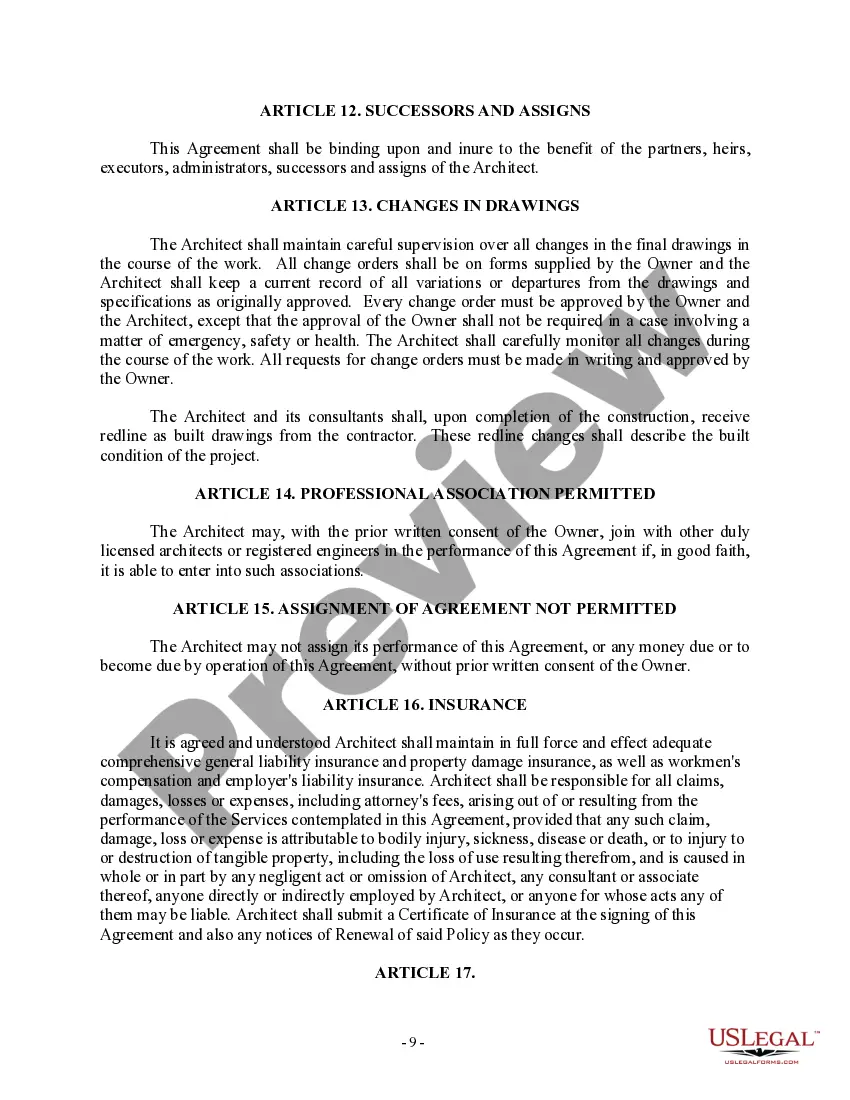
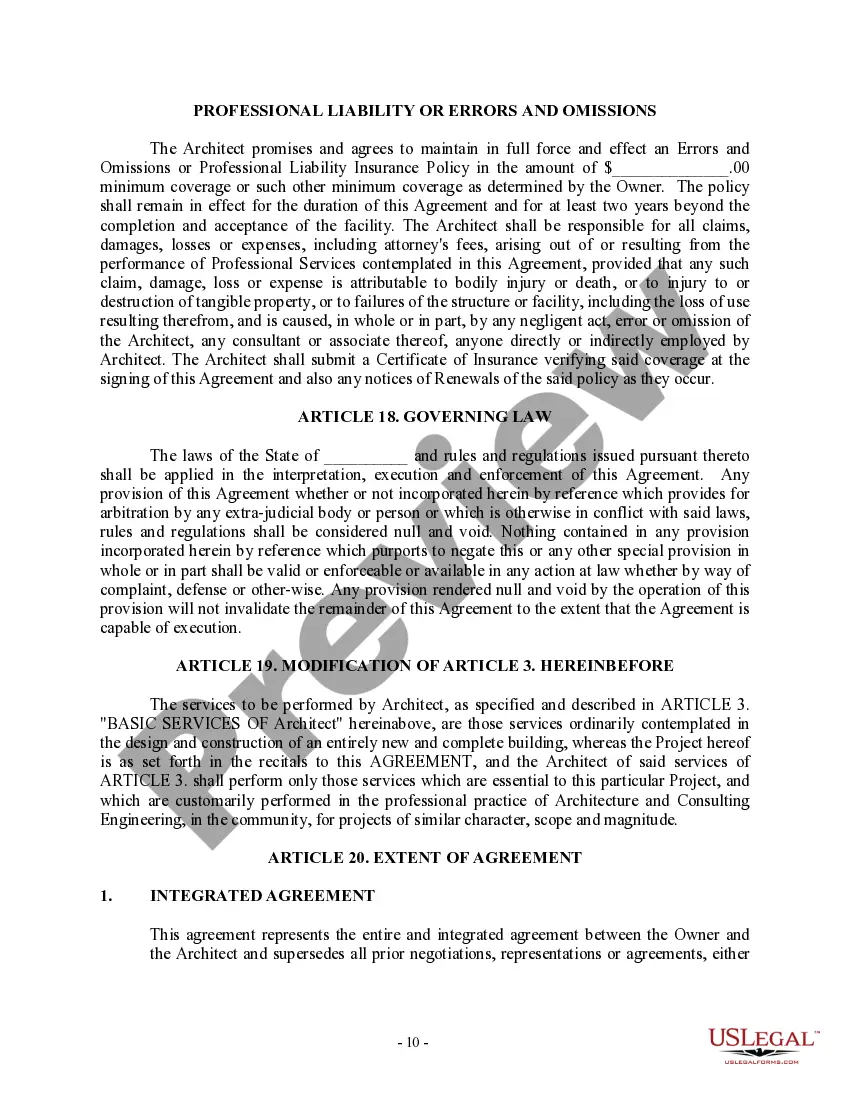
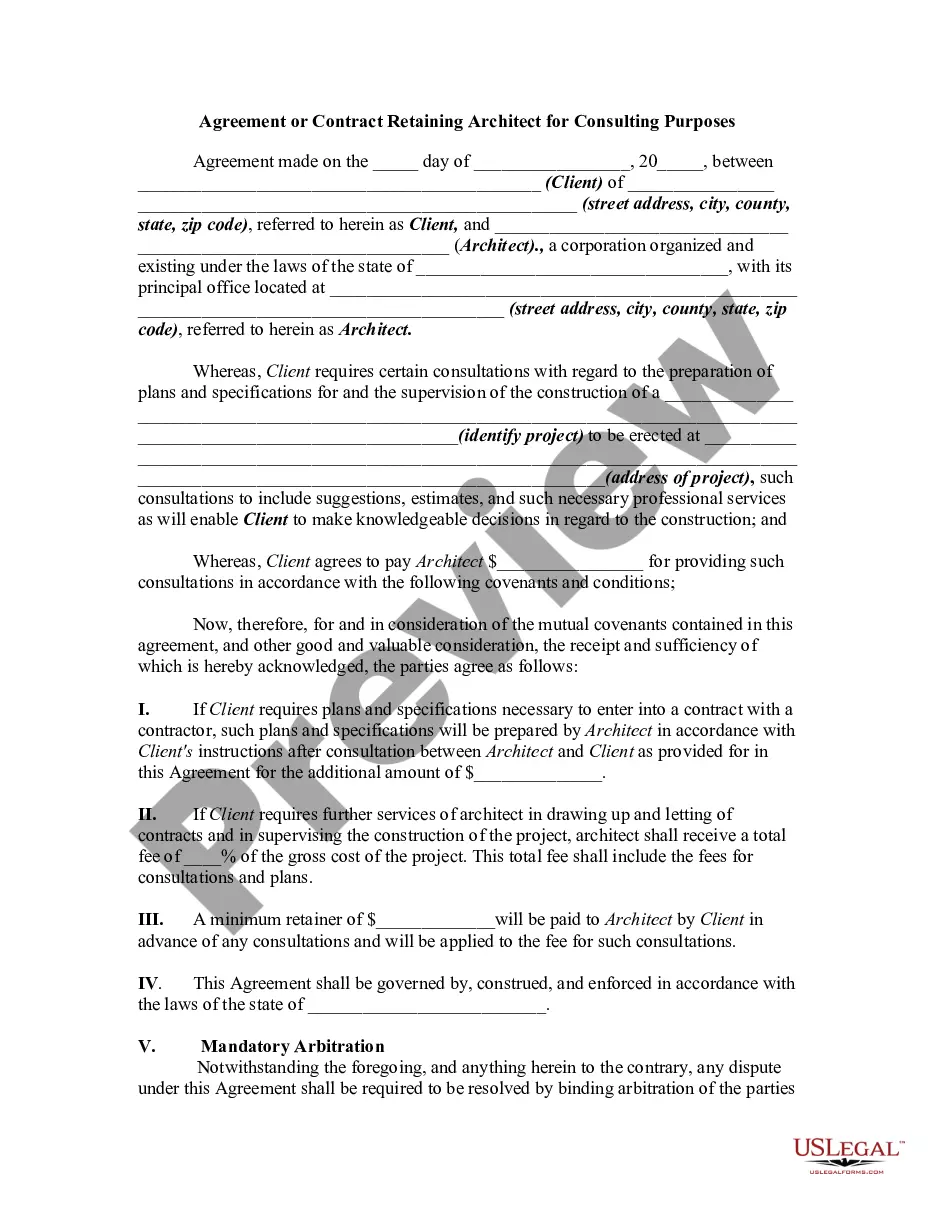
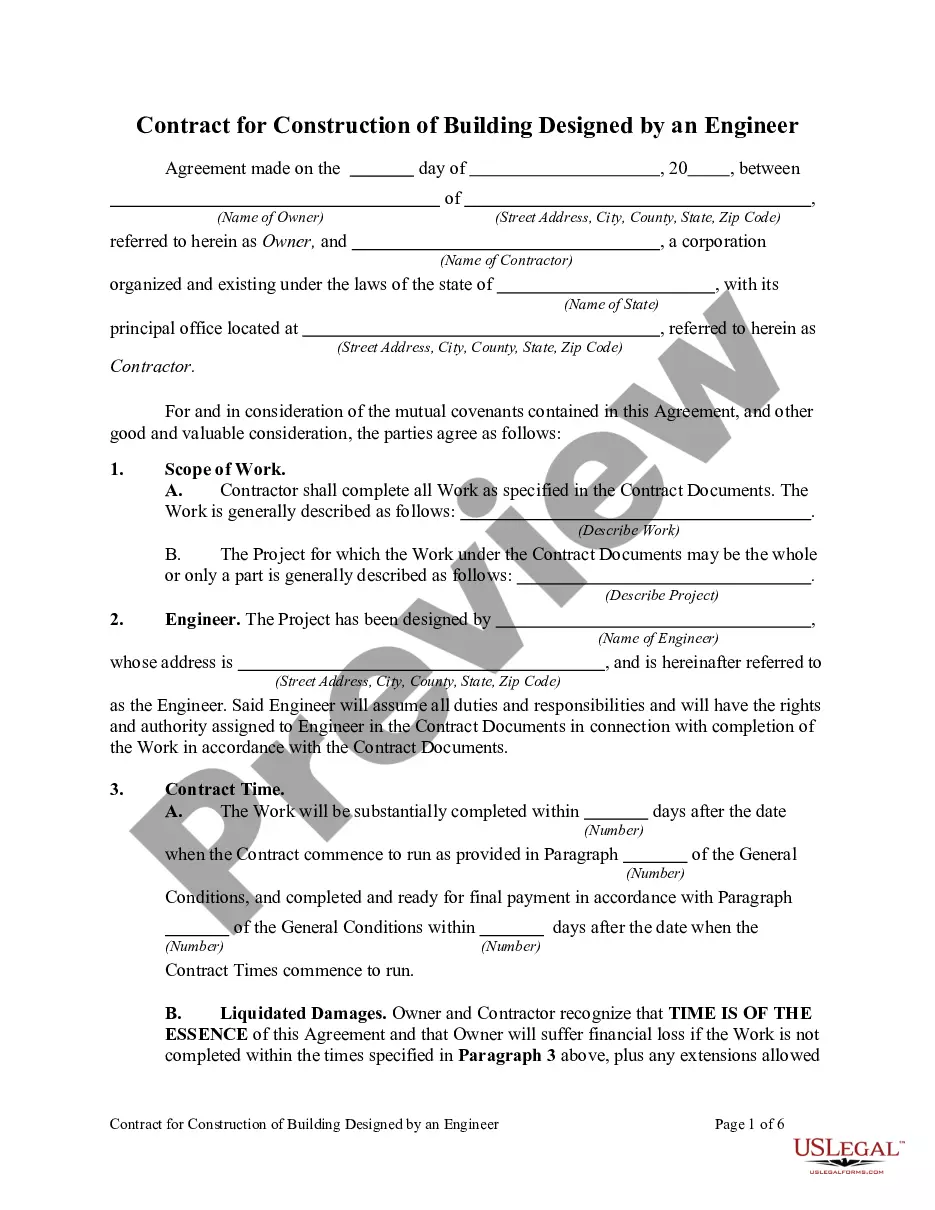
You can review the form using the Preview button and read the form description to confirm it’s the right one for you.
- All templates are reviewed by experts and adhere to federal and state regulations.
- If you are already registered, Log In to your account and click the Download button to obtain the Delaware Architect Agreement for Design.
- Use your account to search for the legal templates you have previously purchased.
- Go to the My documents section of your account and download another copy of the document you need.
- If you are a new user of US Legal Forms, here are some straightforward steps for you to follow.
- First, ensure you have selected the correct form for your city/state.
Form popularity
FAQ
The basic elements that should be addressed in an agreement between an owner and architect include (1) the owner's objectives for the project, (2) the architect's scope of services and a description of the drawings or other deliverables the architect is to furnish; (3) the fees to be paid for providing those services
Architects must use written contracts when contracting to provide architectural services in California.
Architecture Contracts are the joint agreements between development partners and sponsors on the deliverables, quality, and fitness-for-purpose of an architecture. Successful implementation of these agreements will be delivered through effective architecture governance (see Architecture Governance).
Since January 1, 1996, California law has required that any architect who agrees to provide architectural services must have a written contract.
The basic elements that should be addressed in an agreement between an owner and architect include (1) the owner's objectives for the project, (2) the architect's scope of services and a description of the drawings or other deliverables the architect is to furnish; (3) the fees to be paid for providing those services
Although architects who carry out architectural work on their own properties cannot claim for loss or damage that they may suffer arising out of shortcomings or mistakes that is they cannot make claims against themselves then they would remain liable for claims by others.
Many of these building contracts will be Architect administered, meaning that the Architect who designed the construction will also be assessing tenders and then acting as contract administrator once the chosen Builder commences works.
Architects are in charge of design and project planning, and they are also responsible for the visual appearance of buildings and structures.
In general, a Contract administrator in construction is a legally binding agreement between two or more parties. In construction, this usually means between the main contractor and the subcontractor.
Steps to Create the ContractIdentifiers for each party.the project location.a brief description of the project.a basic scope of services to be performed by you.a proposed compensation structure.actions for the client to take if they elect to move forward with you.