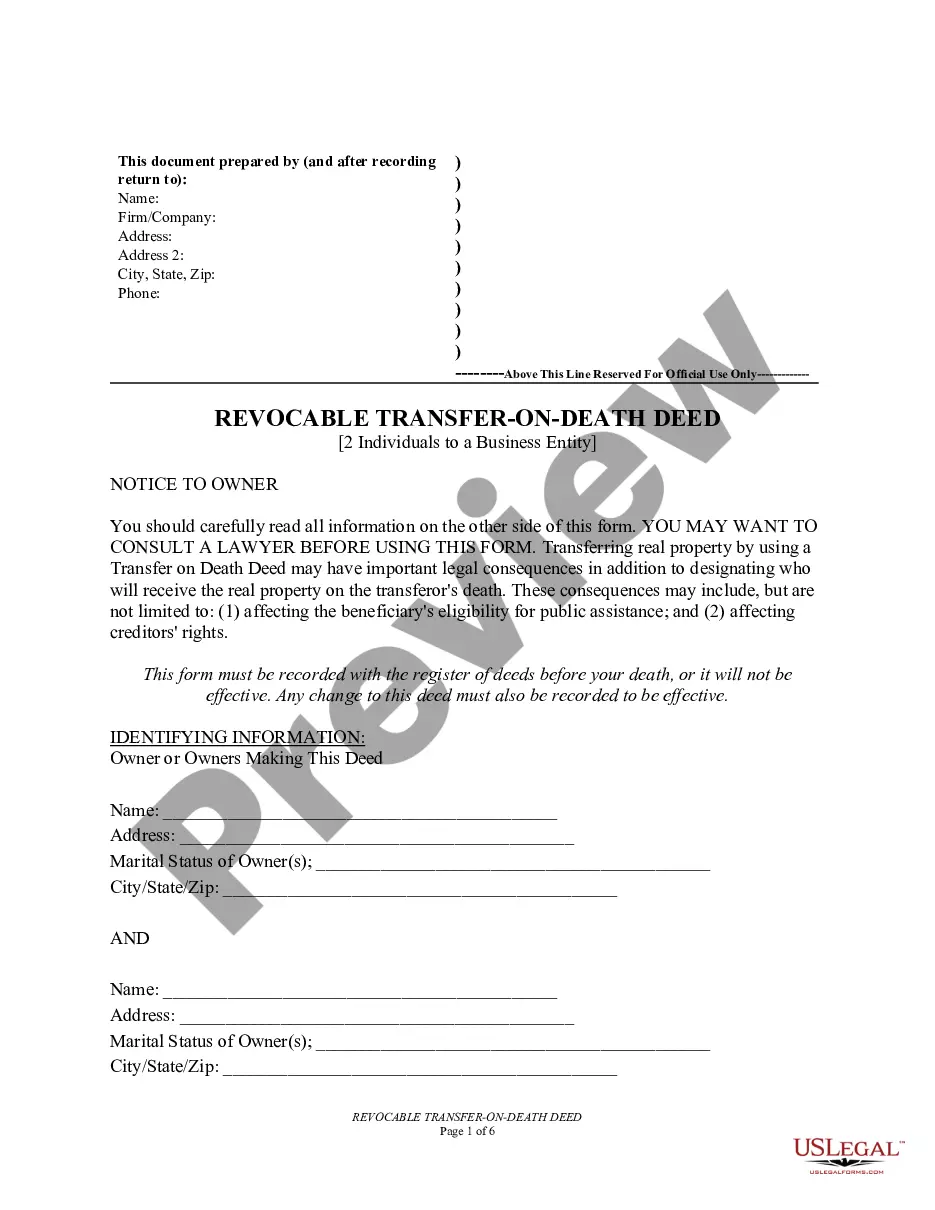
Delaware Living Trust for Individual Who is Single, Divorced or Widow or Widower With No Children

What this document covers
This Living Trust for Individuals Who are Single, Divorced, or a Widow/Widower With No Children is a legal document designed for estate planning. It allows a single individual to create a trust that will manage their assets while they are alive and dictate how these assets will be distributed upon their death. This form is specifically crafted for individuals who do not have children and want to establish a revocable trust to avoid probate and maintain control over their estate.
Key components of this form
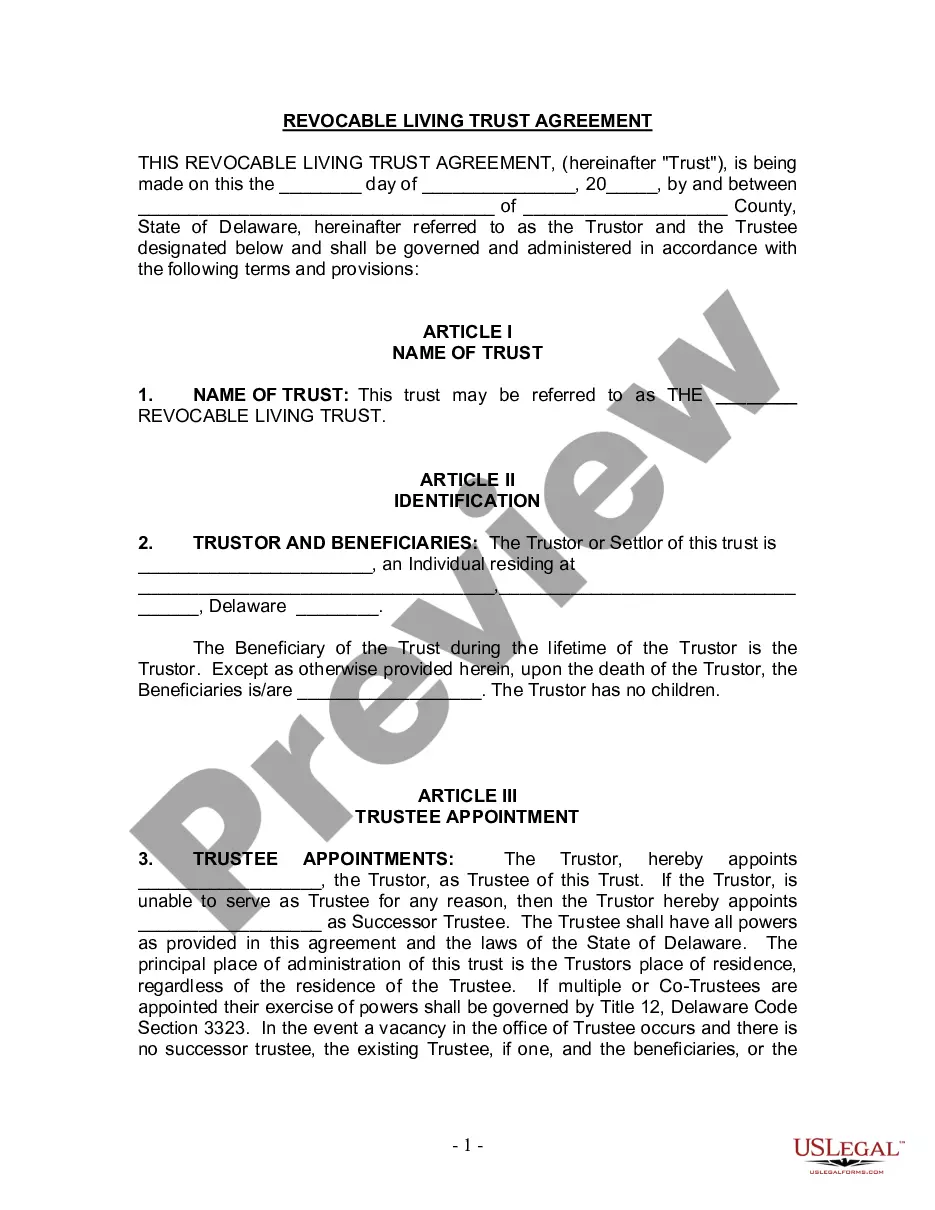
- Trustee appointment: Identifies who will manage the trust, often the individual creating the trust.
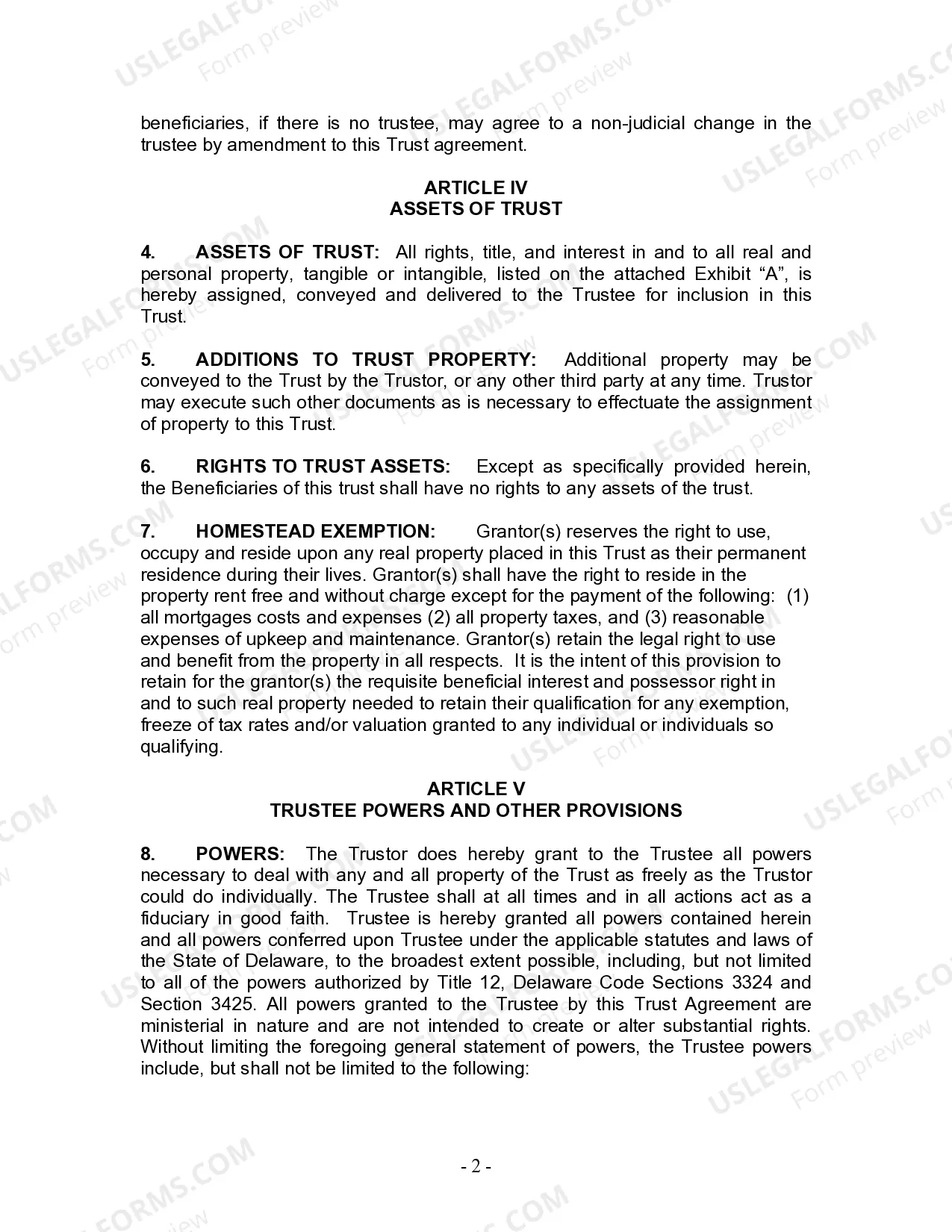
- Trust assets: Specifies the assets being transferred into the trust.
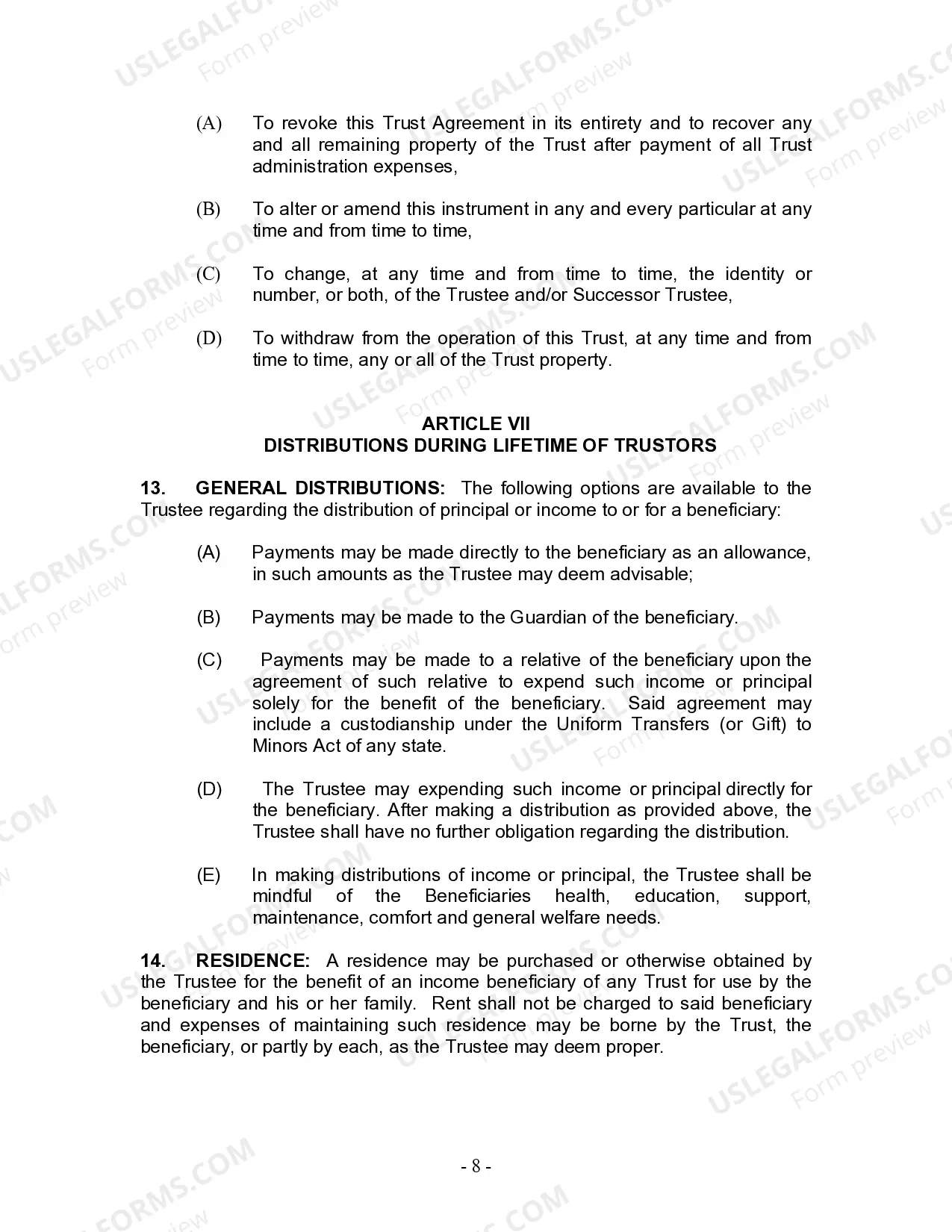
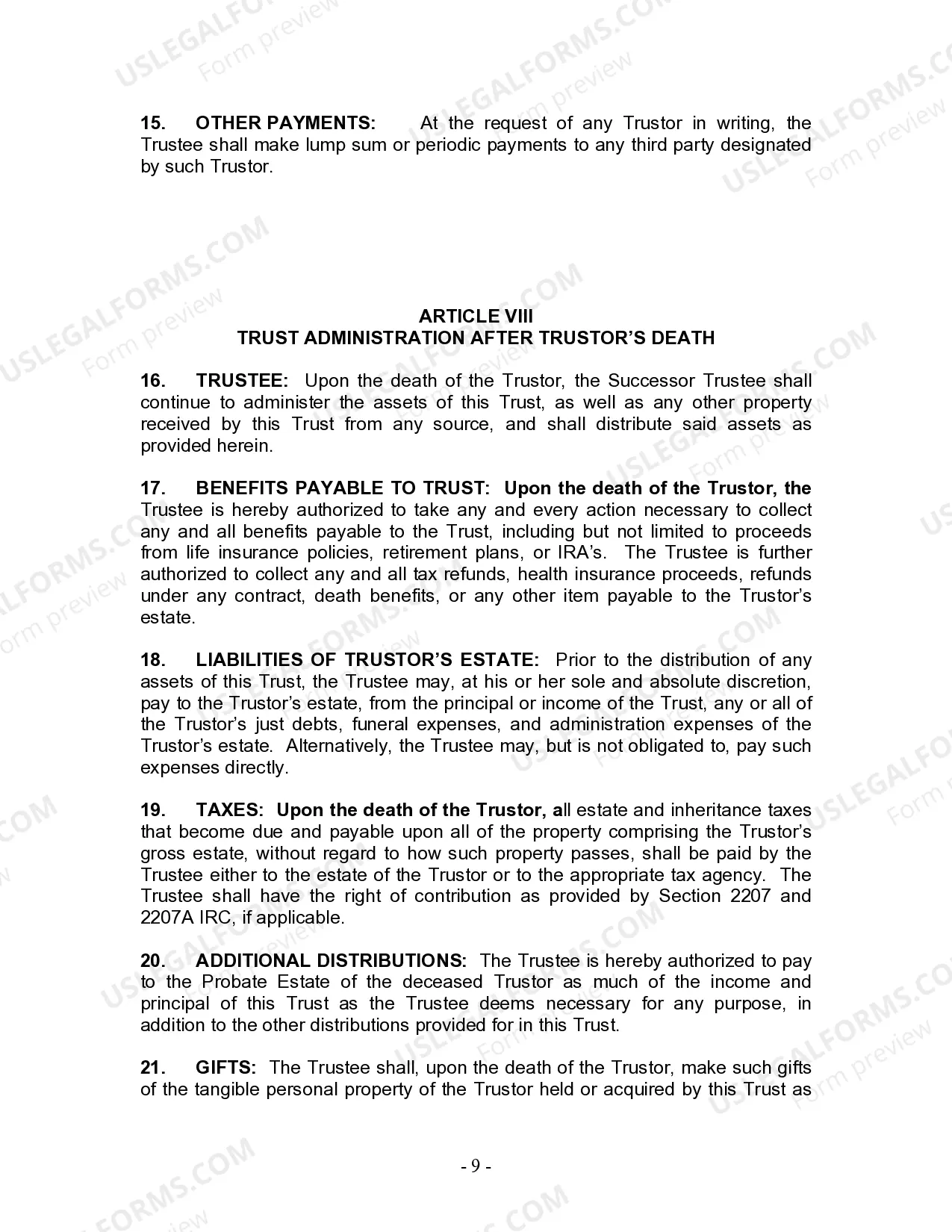
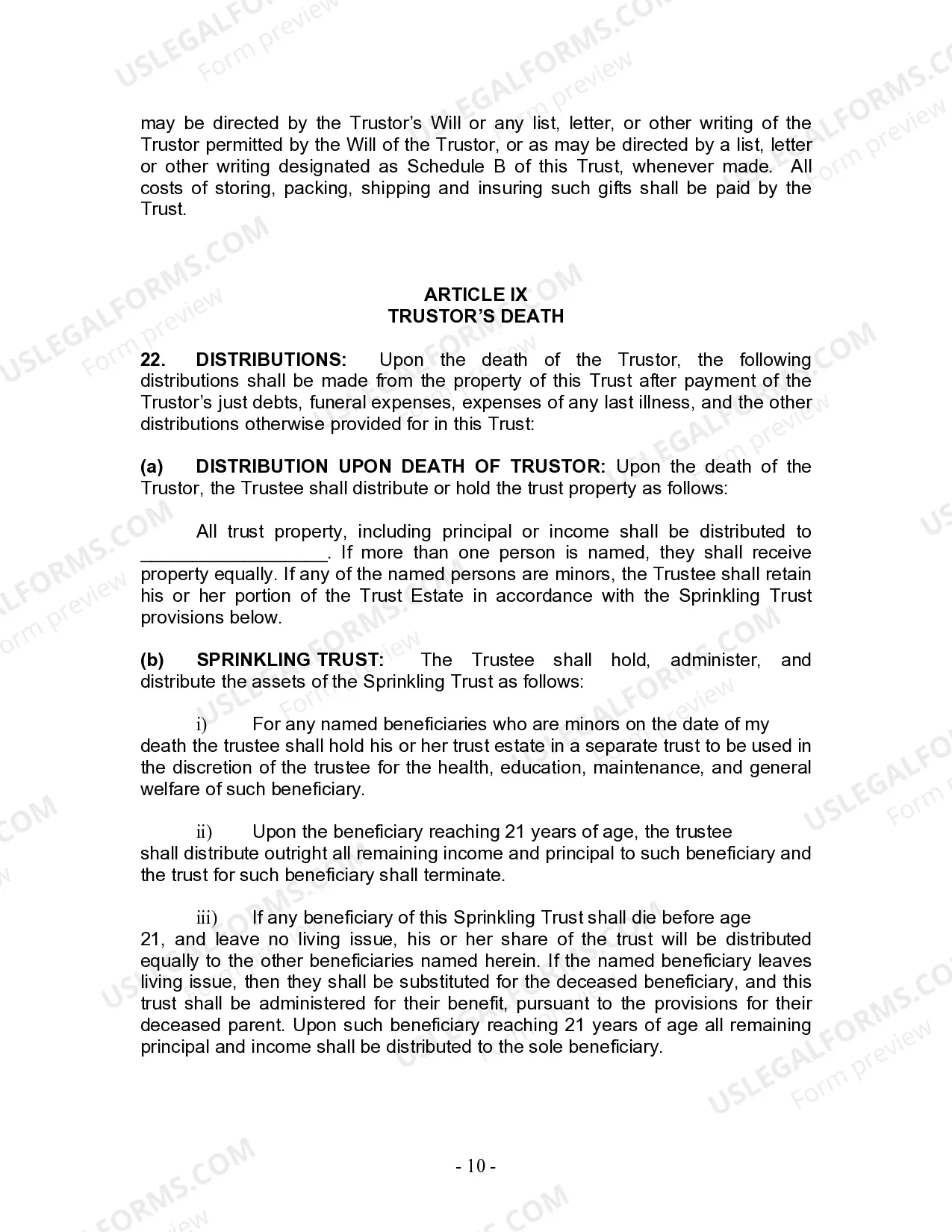
- Distribution provisions: Outlines how the trust's assets will be handled after the Trustor's death.
- Successor trustees: Details provisions for appointing new trustees in case the original trustee can no longer serve.
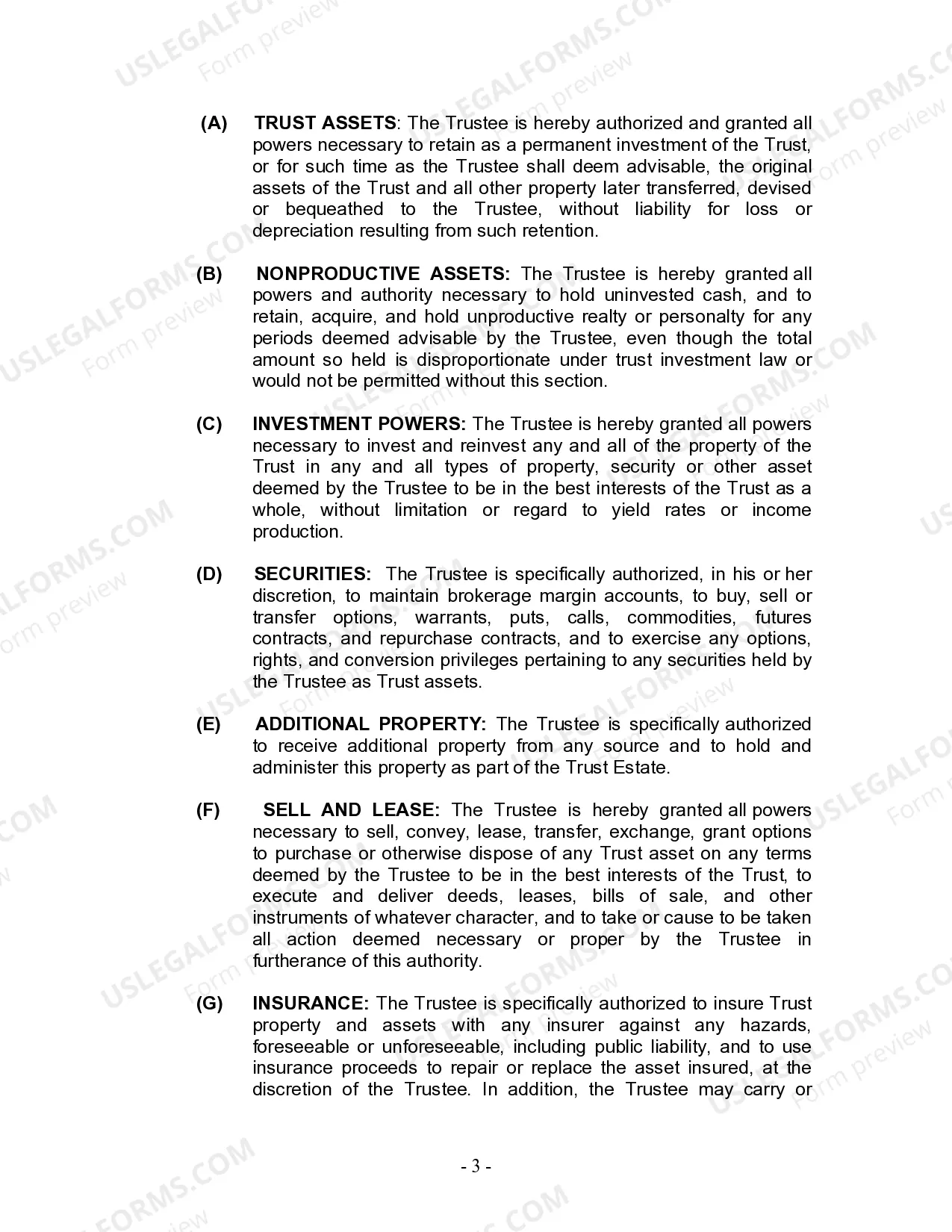
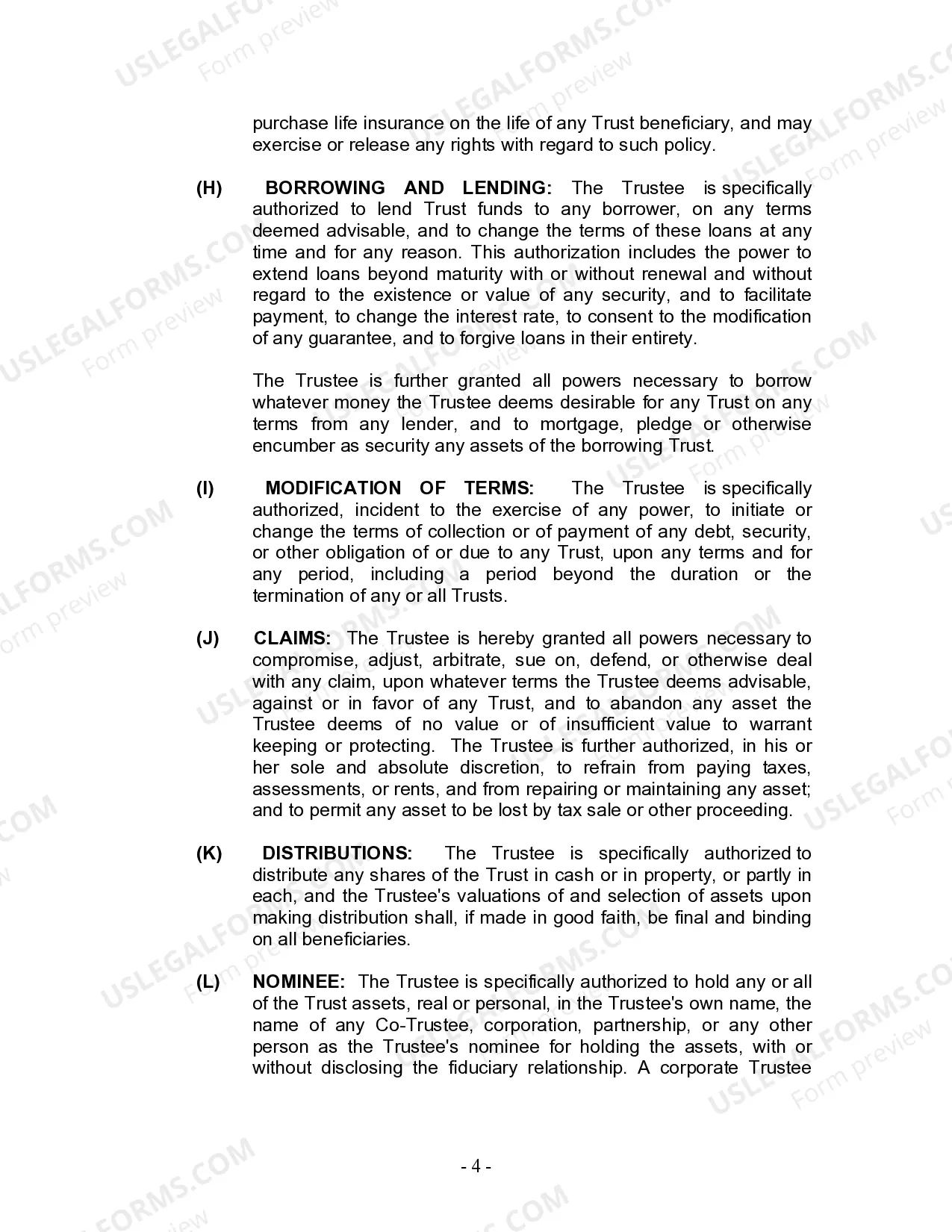
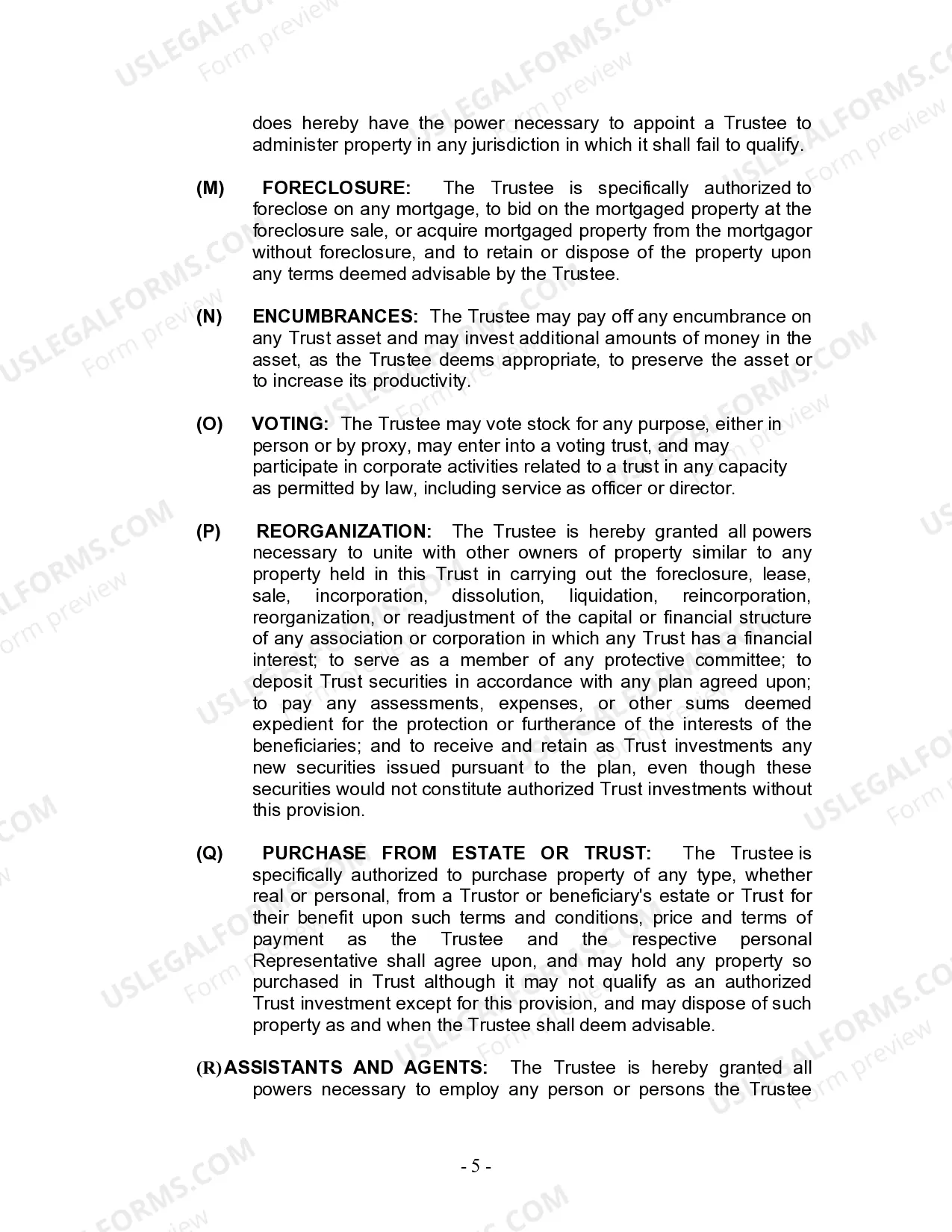
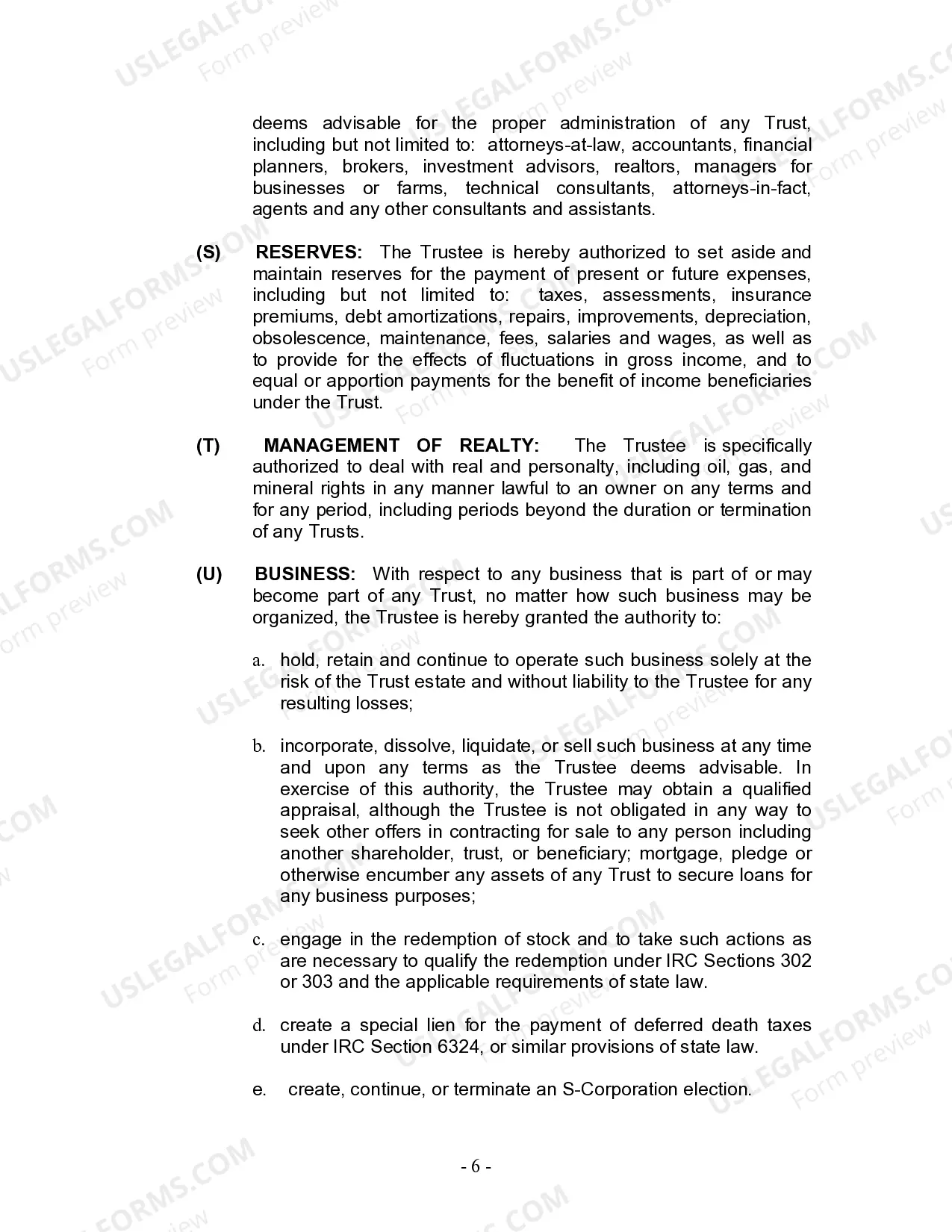
- Rights and powers of the trustee: Lists the authority granted to the trustee for managing the trust assets.
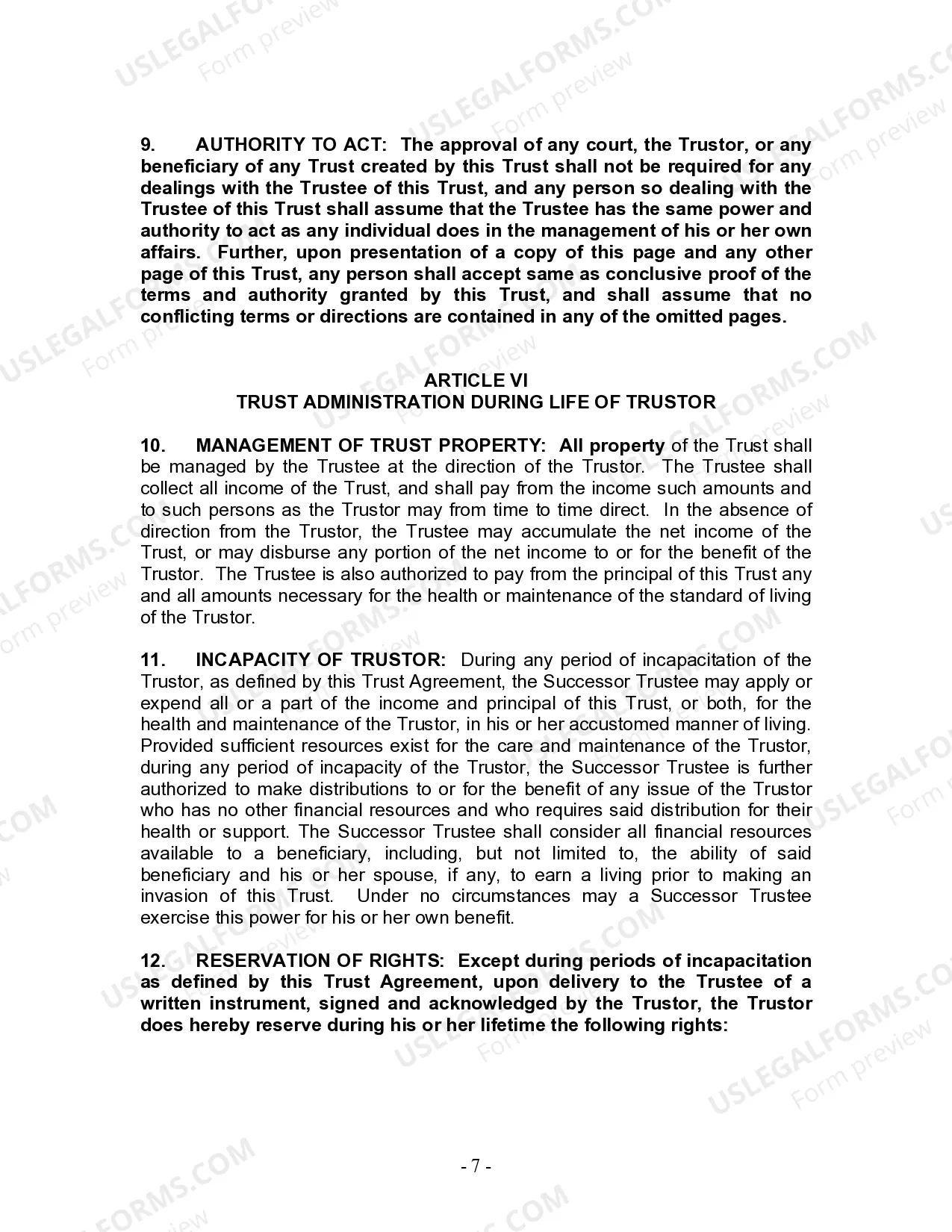
- Revocation conditions: Indicates how the Trustor can amend or revoke the trust during their lifetime.



Common use cases
This form is particularly helpful for individuals who are single, divorced, or widowed and do not have children. It is ideal for those who want to ensure their assets are managed according to their wishes and passed on to designated beneficiaries without going through the often lengthy and costly probate process. It can also be used by those who want to maintain full control over their assets during their lifetime while planning for potential incapacity.
Who should use this form
- Individuals who are single, divorced, or widowed with no children.
- People who wish to establish a revocable living trust for effective estate planning.
- Anyone looking to avoid probate and simplify the transfer of their assets after death.
- Individuals wanting to designate specific beneficiaries for their assets.
- Those who are seeking to maintain control over their assets during their lifetime.
How to complete this form
- Identify the parties involved: Fill in your name as the Trustor, and provide the name of your chosen Trustee.
- Specify the assets: Detail the property and assets to be included in the trust.
- Appoint a Successor Trustee: Choose a person to step in as Trustee if necessary.
- Complete distribution provisions: Indicate how you'd like the trust assets to be distributed after your death.
- Review and sign: Ensure all sections are filled out correctly and sign the document in the presence of a notary if required.
Notarization requirements for this form
Yes, this form must be notarized to be legally valid. US Legal Forms offers integrated online notarization services, available 24/7 through secure video calls, ensuring that you do not have to travel to find a notary.
Get your form ready online
Our built-in tools help you complete, sign, share, and store your documents in one place.
Make edits, fill in missing information, and update formatting in US Legal Forms—just like you would in MS Word.
Download a copy, print it, send it by email, or mail it via USPS—whatever works best for your next step.
Sign and collect signatures with our SignNow integration. Send to multiple recipients, set reminders, and more. Go Premium to unlock E-Sign.
If this form requires notarization, complete it online through a secure video call—no need to meet a notary in person or wait for an appointment.
We protect your documents and personal data by following strict security and privacy standards.

Make edits, fill in missing information, and update formatting in US Legal Forms—just like you would in MS Word.

Download a copy, print it, send it by email, or mail it via USPS—whatever works best for your next step.

Sign and collect signatures with our SignNow integration. Send to multiple recipients, set reminders, and more. Go Premium to unlock E-Sign.

If this form requires notarization, complete it online through a secure video call—no need to meet a notary in person or wait for an appointment.

We protect your documents and personal data by following strict security and privacy standards.
Common mistakes to avoid
- Failing to list all assets intended for the trust.
- Not designating a Successor Trustee, leading to complications in management.
- Overlooking the need for a signature from a notary (if applicable).
- Not keeping the trust updated after significant life changes (e.g., new assets, changes in status).
- Neglecting to inform beneficiaries about the existence of the trust.
Why complete this form online
- Convenience: Access and complete the form from your computer or mobile device at any time.
- Editability: Make changes and updates easily as your circumstances change.
- Reliability: Ensure the form is legally compliant and up to date with current laws.
Looking for another form?
Form popularity
FAQ
Establishing a trust can be highly beneficial for a single individual without children. A Delaware Living Trust provides control over your assets, avoids probate, and offers more privacy compared to a will. It allows you to dictate how your estate is handled, making it a smart choice for anyone valuing their wishes and ensuring their legacy.
The best trust for a single person is often a Delaware Living Trust specifically tailored to your needs. This type of trust provides control of your assets during your life and ensures they are managed and distributed according to your wishes after your death. Using platforms like US Legal Forms can help in creating a customized trust that serves your unique situation.
As a single individual with no children, you have various options for beneficiaries in your Delaware Living Trust. You can designate family members, such as siblings or parents, or even choose friends or charities that hold personal significance for you. Defining your beneficiaries ensures your assets go to those who matter most to you.
To establish a Delaware Living Trust, you start by gathering essential documents related to your assets and financial interests. Next, you can consult with an attorney or use platforms like US Legal Forms to create a trust document that meets your specific needs. Once the trust document is completed and signed, you will need to transfer your assets into the trust.
In the case of a Delaware Living Trust for Individuals, if one spouse passes away, the assets held in the trust typically transfer seamlessly to the surviving spouse, avoiding probate court. This process simplifies the transition of assets and maintains privacy. Effective estate planning can also include provisions for other beneficiaries, ensuring your wishes are carried out.
Yes, a single person with no children should consider establishing a Delaware Living Trust. It allows you to manage your assets during your lifetime and effectively distribute them after your death according to your wishes. Additionally, a trust minimizes probate delays and expenses, ensuring more privacy and faster access to your estate.
To set up a Delaware Living Trust for Individuals Who are Single, Divorced, or Widowed With No Children, start by identifying your assets and deciding how you want to manage them. Next, you can draft the trust document, which outlines the terms and designates a trustee. It's advisable to ensure all your assets are properly funded into the trust. Tools like US Legal Forms can help you navigate the legal requirements and simplify the process.
Yes, you can establish a Delaware Living Trust for Individuals Who are Single, Divorced, or Widowed With No Children without a spouse. This type of trust allows you to manage your assets effectively and secure your financial future independently. By setting up a trust, you retain control over your assets and can specify how they will be distributed according to your wishes. Consider using platforms like US Legal Forms to guide you through the setup process.
Excluding your spouse from a trust is possible, particularly in the framework of a Delaware Living Trust for Individual Who is Single, Divorced or Widow or Widower With No Children. However, this decision requires careful consideration, as it could affect property rights and other legal implications. You should consult with a knowledgeable attorney or use the USLegalForms platform for guidance to navigate this decision effectively.
You can indeed establish a trust without your spouse, particularly when considering a Delaware Living Trust for Individual Who is Single, Divorced or Widow or Widower With No Children. This approach offers you the freedom to designate your assets according to your wishes, without needing to involve a partner. Just ensure you consult with a legal expert to understand the nuances related to your personal situation.