District of Columbia Last Will and Testament for a Domestic Partner with No Children
What is this form?
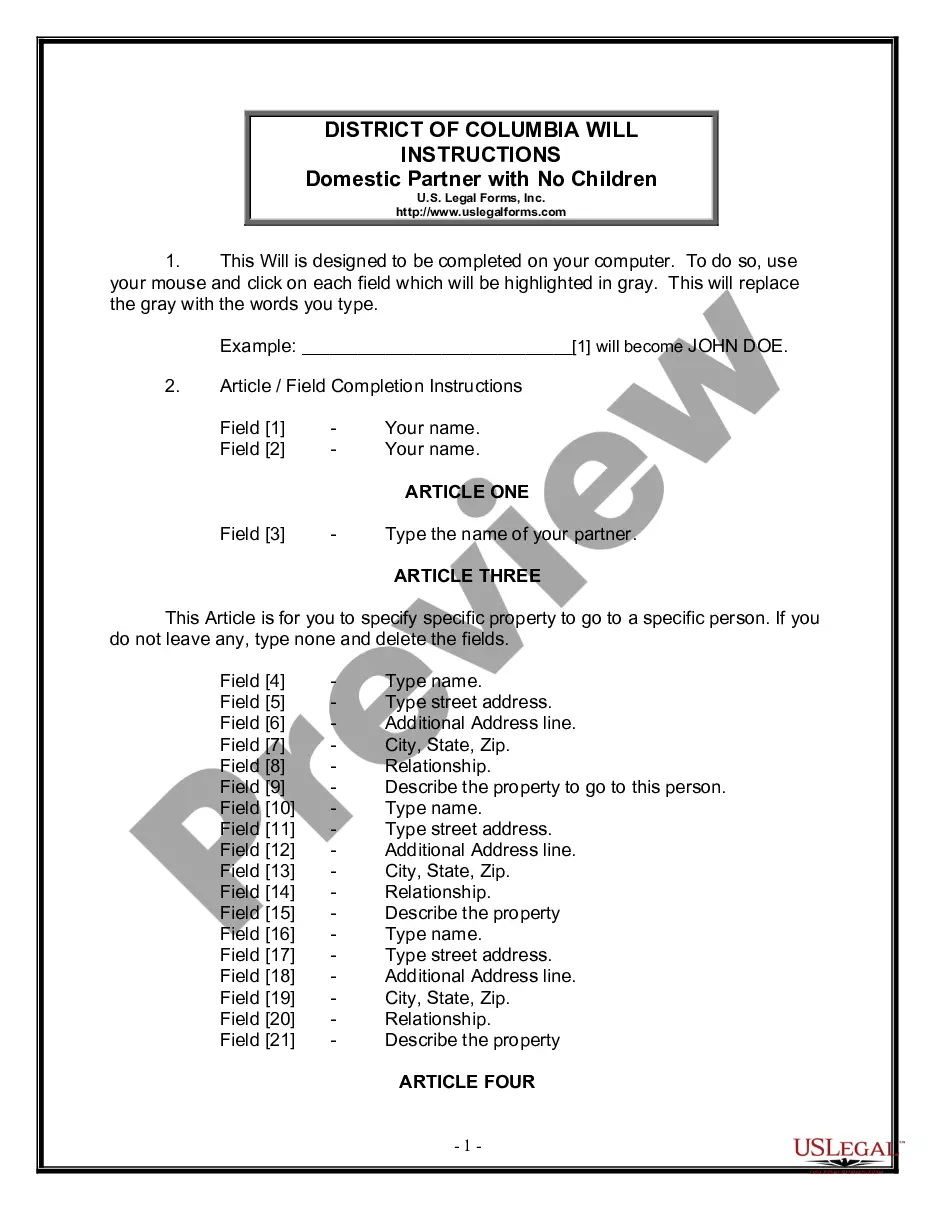
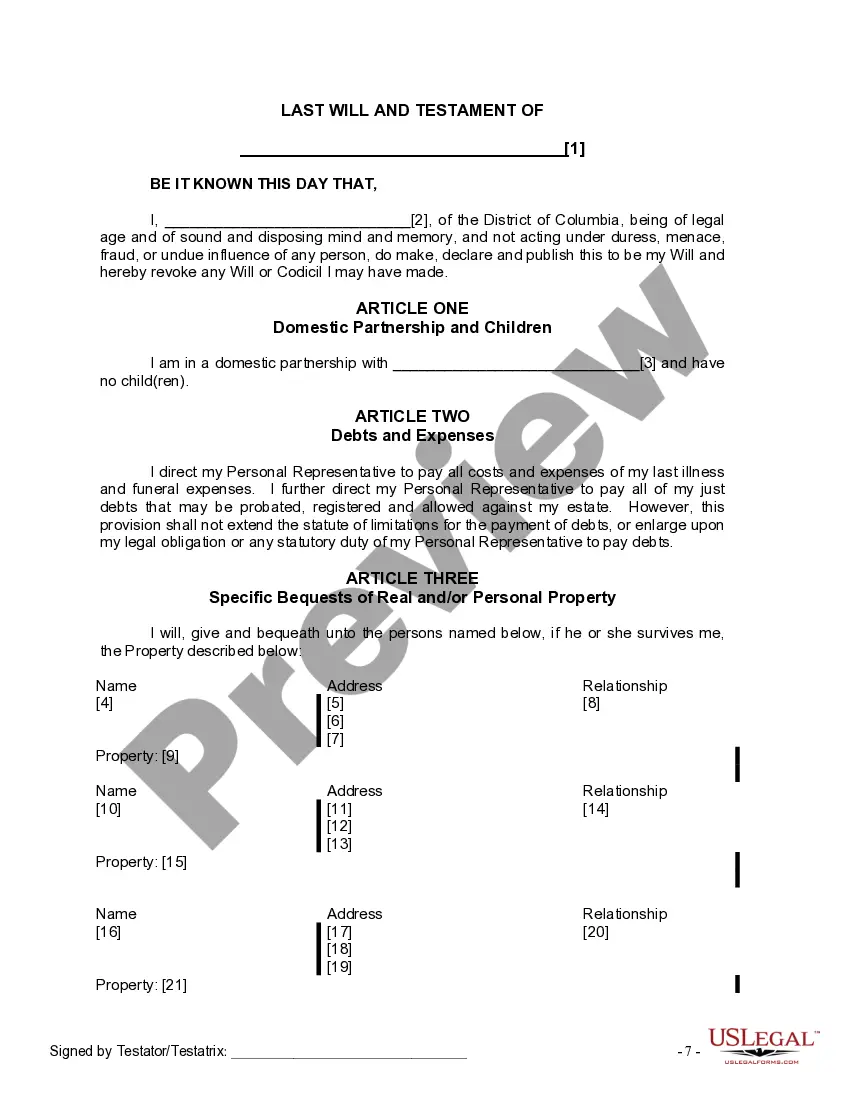
The Last Will and Testament for a Domestic Partner with No Children is a legal document that outlines how a person wishes to distribute their property upon death. This will is specifically designed for domestic partners who do not have children and provides the necessary provisions to appoint a personal representative, determine beneficiaries, and specify the distribution of assets. Unlike traditional wills that may include provisions for children or other family members, this form is tailored to streamline the wishes of domestic partners without offspring.
Key parts of this document
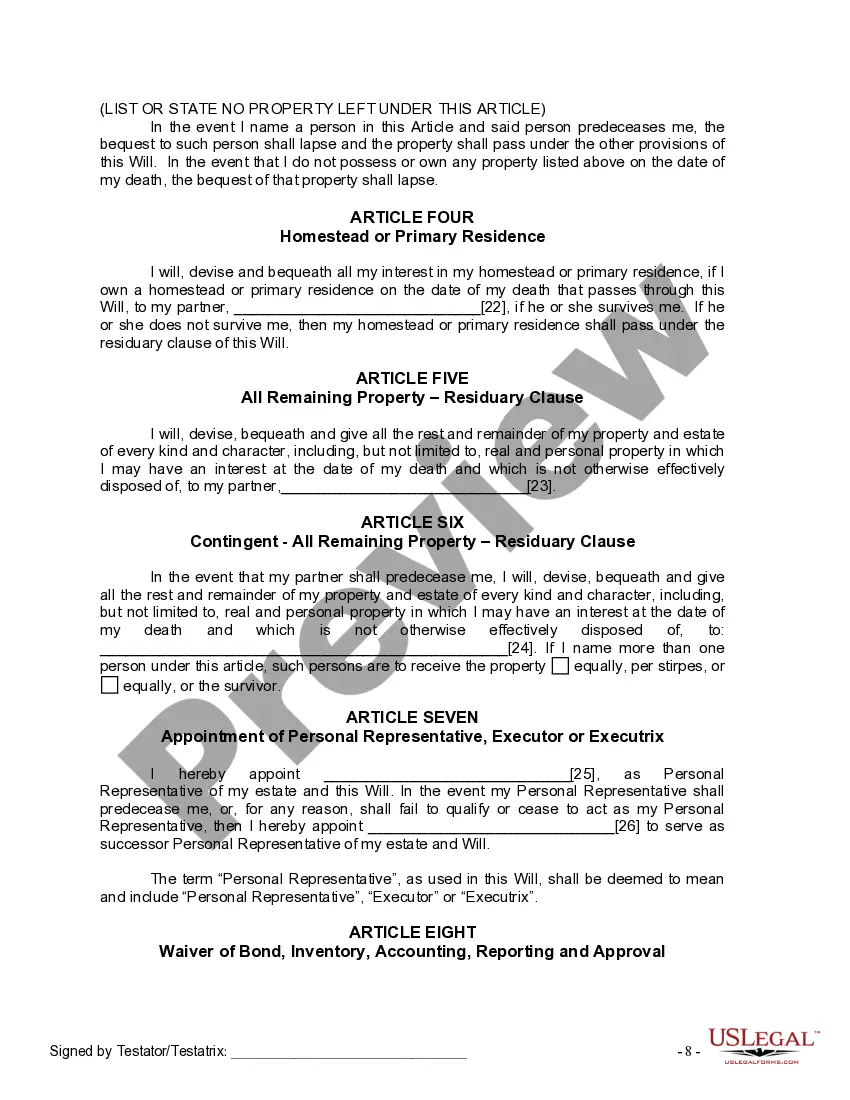
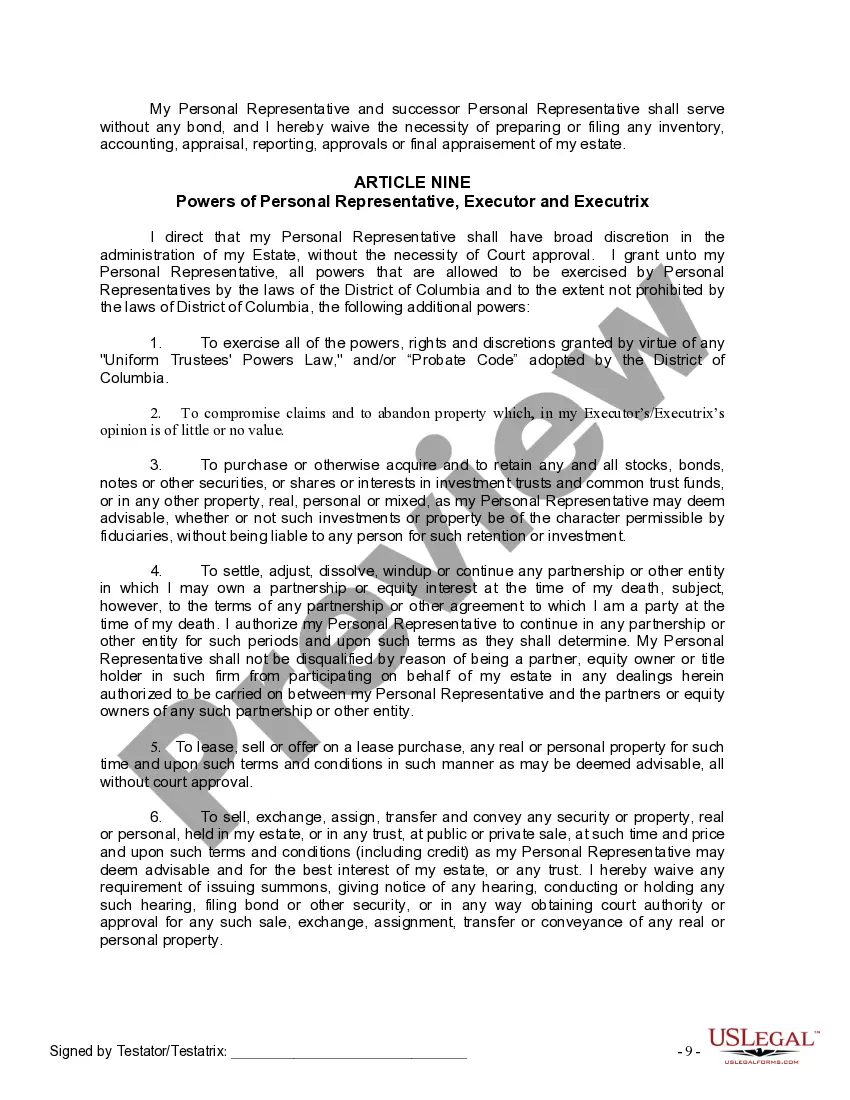
- Appointment of a personal representative to manage the estate.
- Specific bequests allowing the designation of property to specific individuals.
- Provisions for the distribution of the homestead or primary residence.
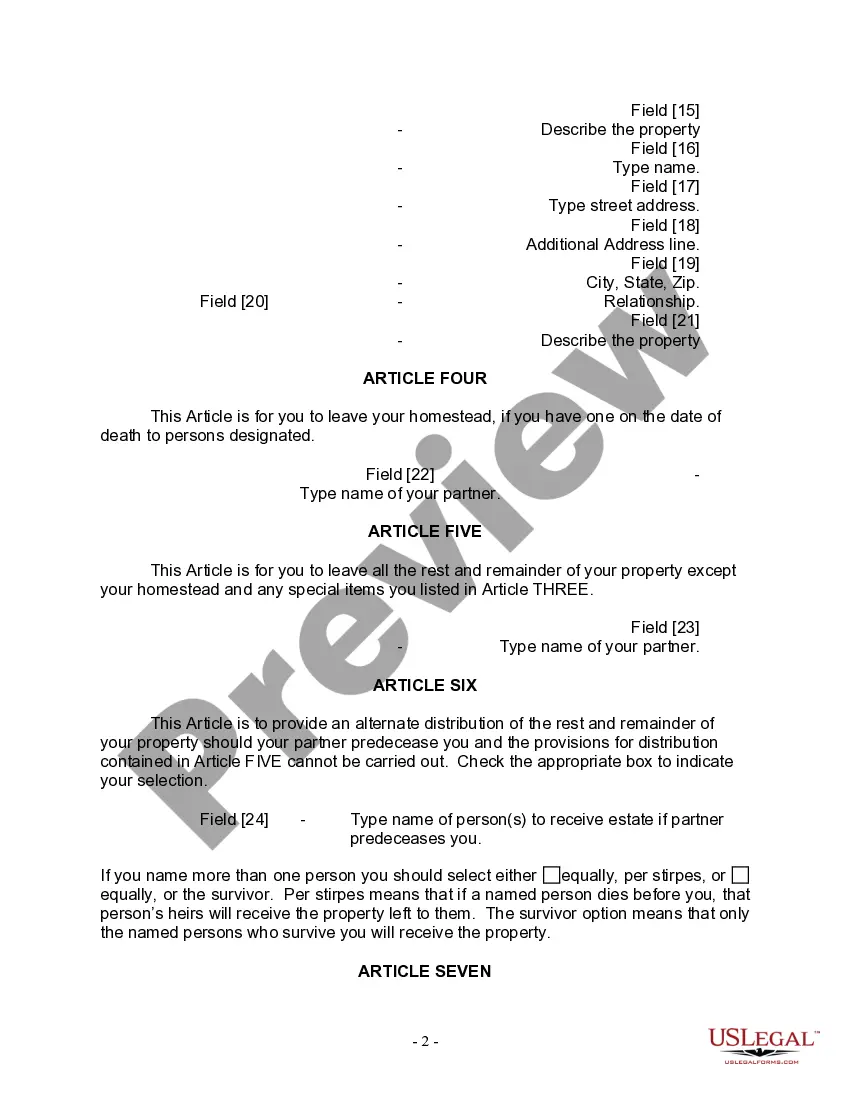
- Alternate distributions if the primary beneficiary predeceases the testator.
- Instructions for waiving bond requirements for the personal representative.
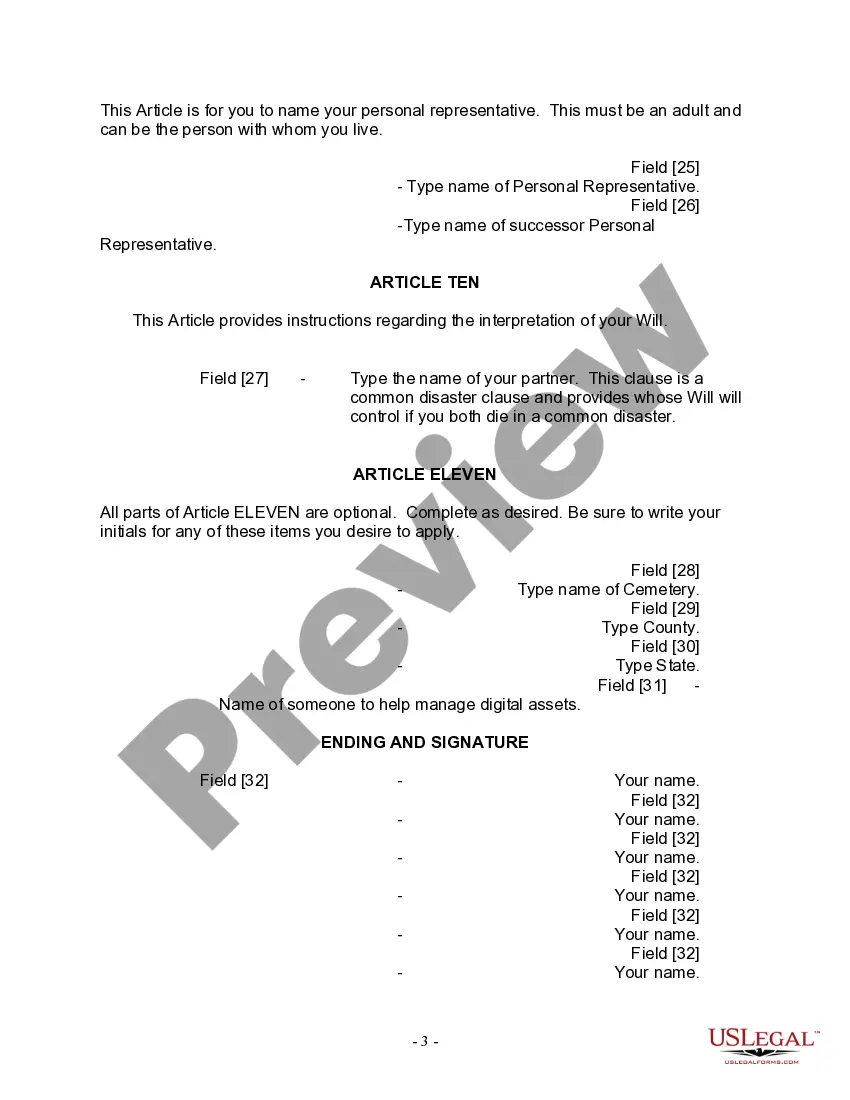
- Common disaster clause specifying which will takes precedence in case of simultaneous death.



Common use cases
This form should be used when a domestic partner, who has no children, wishes to define their estate plan clearly. It is appropriate in situations where partners want to ensure that their assets are distributed according to their wishes rather than defaulting to state intestacy laws. This form is also useful for partners who want to legally communicate their intentions regarding their estate and personal relationships.
Who can use this document
- Domestic partners without children looking to create a legally binding will.
- Individuals wanting to specify their asset distribution to their partner or other beneficiaries.
- People seeking to appoint a trusted person as their personal representative for estate management.
Instructions for completing this form
- Enter your full name and residence information at the beginning of the document.
- Specify your partner's name in Article One and provide details about your relationship.
- List any specific assets you intend to bequeath in Article Three, including their descriptions and relationships to the beneficiaries.
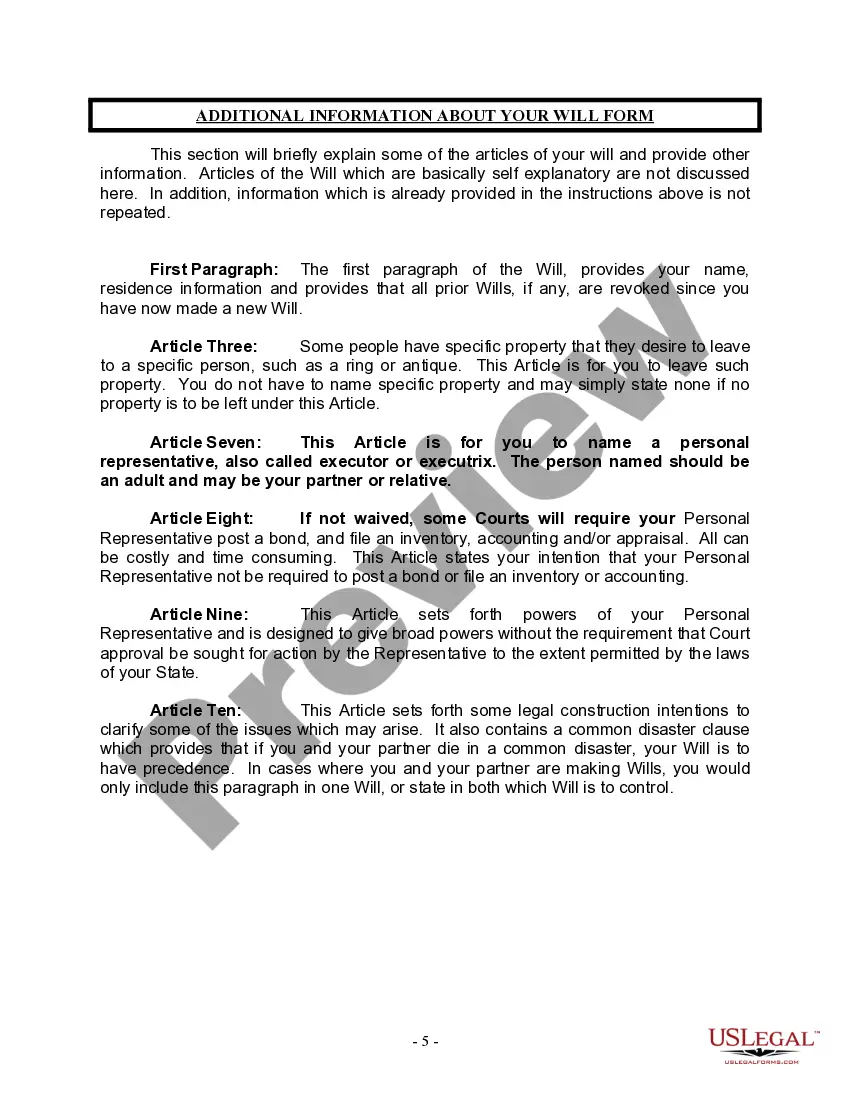
- Designate your personal representative and any successor in Article Seven.
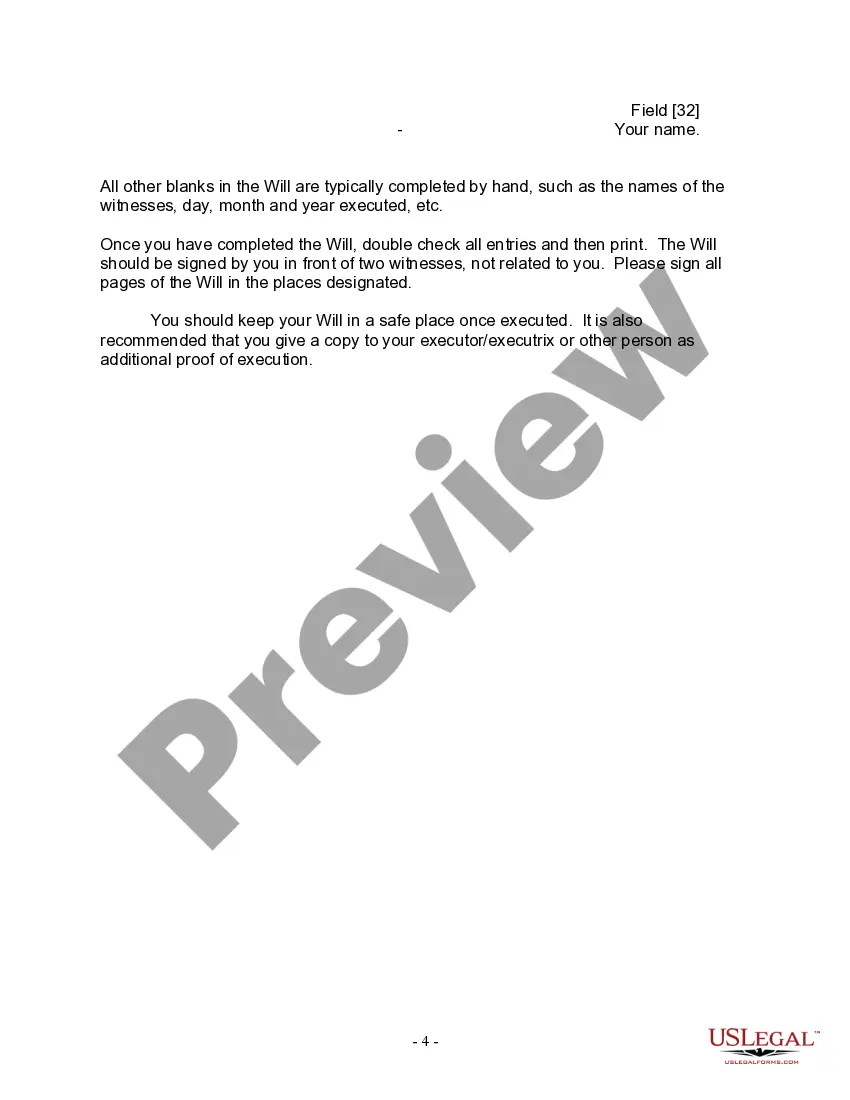
- Sign the document in front of two witnesses who are not named in the will.
Notarization requirements for this form
This form does not typically require notarization unless specified by local law. However, if your state has adopted a self-proving affidavit statute, it is advisable to have your will notarized to ensure quicker probate processing.
Get your form ready online
Our built-in tools help you complete, sign, share, and store your documents in one place.
Make edits, fill in missing information, and update formatting in US Legal Forms—just like you would in MS Word.
Download a copy, print it, send it by email, or mail it via USPS—whatever works best for your next step.
Sign and collect signatures with our SignNow integration. Send to multiple recipients, set reminders, and more. Go Premium to unlock E-Sign.
If this form requires notarization, complete it online through a secure video call—no need to meet a notary in person or wait for an appointment.
We protect your documents and personal data by following strict security and privacy standards.

Make edits, fill in missing information, and update formatting in US Legal Forms—just like you would in MS Word.

Download a copy, print it, send it by email, or mail it via USPS—whatever works best for your next step.

Sign and collect signatures with our SignNow integration. Send to multiple recipients, set reminders, and more. Go Premium to unlock E-Sign.

If this form requires notarization, complete it online through a secure video call—no need to meet a notary in person or wait for an appointment.

We protect your documents and personal data by following strict security and privacy standards.
Avoid these common issues
- Failing to have two witnesses present during the signing.
- Not specifying alternate beneficiaries if the primary beneficiary passes away first.
- Omitting essential details about specific assets or properties intended for distribution.
- Not reviewing the completed will for errors or omissions before signing.
Why use this form online
- Easy accessibility allows users to complete the form at their convenience.
- Editable fields enable individuals to personalize their will according to their unique situation.
- Reduces the risk of errors with guided instructions throughout the form.
- Streamlined process allows for quick printing and execution of the will.
Legal use & context
- A valid Last Will and Testament can help ensure your wishes are followed after death.
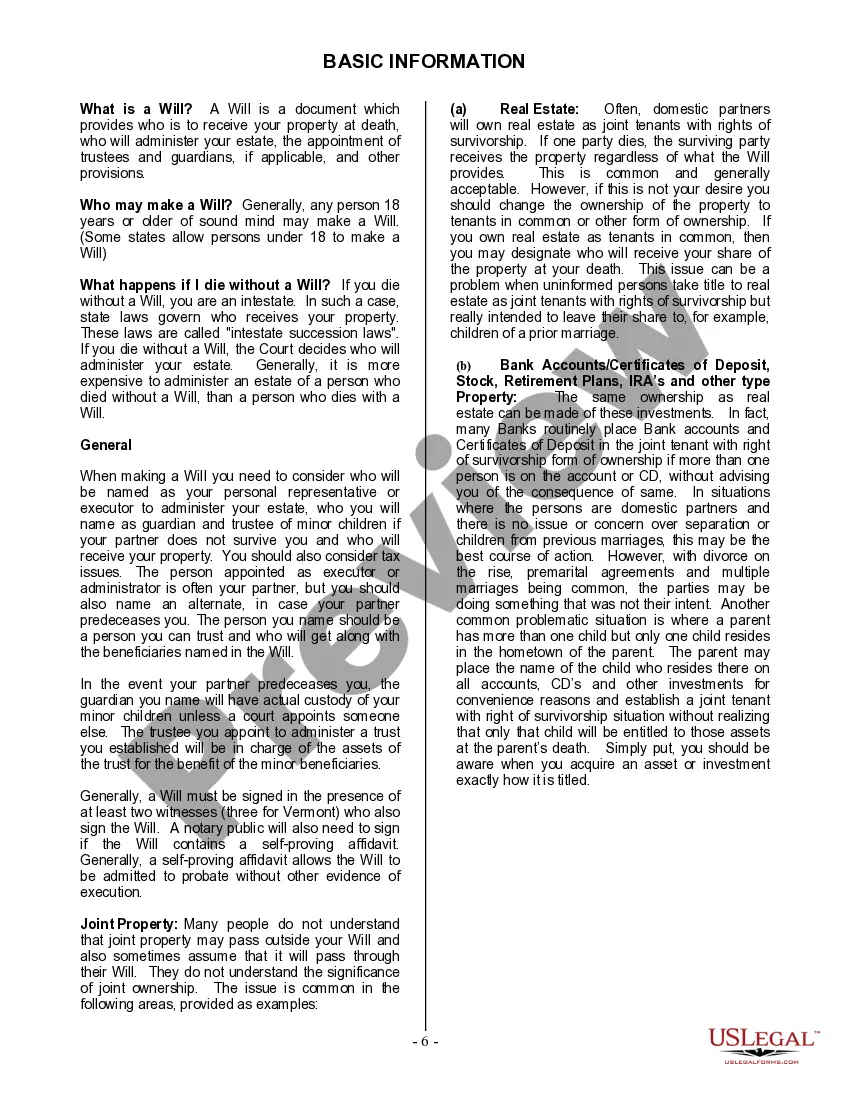
- Without a will, state laws will dictate the distribution of your estate, possibly excluding your partner.
- This form must be signed according to the witnessing requirements of your state for it to be legally enforceable.
Summary of main points
- This will is tailored for domestic partners without children.
- Clear instructions on property distribution can alleviate future legal disputes.
- Proper execution, including witness signatures, is essential for validity.
- Keeping your will updated is important, especially if circumstances change.
Looking for another form?
Form popularity
FAQ
To avoid probate in Washington, DC, individuals can utilize strategies such as establishing trusts, designating beneficiaries for accounts, or holding property in joint tenancy. Creating a District of Columbia Last Will and Testament for a Domestic Partner with No Children is a useful step, but additional measures like these can simplify asset transfer. Consulting with legal professionals or using platforms like uslegalforms can assist you in navigating these options effectively.
In the District of Columbia, wills do not need to be notarized to be valid; however, it is beneficial to have them notarized to ensure authenticity. When creating a District of Columbia Last Will and Testament for a Domestic Partner with No Children, a notary can help prevent disputes regarding the will's validity. You may consider using a platform like uslegalforms to streamline the process and provide peace of mind.
While it is not legally required for both spouses to have a will, it is highly recommended. Having separate District of Columbia Last Wills and Testaments for both partners can help clarify intentions and reduce conflicts after death. Each spouse can address their individual wishes and provide for their domestic partner without any ambiguity.
Yes, a wife can create her own District of Columbia Last Will and Testament for a Domestic Partner with No Children without including her husband in the process. She can clearly outline her wishes for asset distribution and designate beneficiaries as she sees fit. It is crucial for her to understand that her husband may have certain legal rights under DC law, which could affect the will.
Yes, a married man can create a District of Columbia Last Will and Testament for a Domestic Partner with No Children independently. He has the legal right to dictate how he wants his assets distributed without needing his spouse's consent. However, he should be aware that his wife may still have rights to a portion of his estate under DC law, unless explicitly waived.
When preparing your District of Columbia Last Will and Testament for a Domestic Partner with No Children, it is important to understand the rights of a living spouse. Generally, a will cannot fully disinherit a spouse without specific legal steps. In certain cases, a surviving spouse may claim a portion of the estate, regardless of what the will states. Therefore, it is often wise to consult legal guidance to ensure your wishes are properly articulated and respected.
In the context of a District of Columbia Last Will and Testament for a Domestic Partner with No Children, individuals not named in the will will not inherit. This includes family members who are not specifically designated as beneficiaries. Additionally, if someone has been legally disinherited, they will also not receive any assets from the estate, regardless of familial ties. It is essential to clearly outline beneficiaries in your will to avoid confusion.
One of the biggest mistakes in creating a will is failing to update it after major life changes, such as marriage, divorce, or the birth of children. Another common error is not specifying clear beneficiary designations. By creating a thoughtful District of Columbia Last Will and Testament for a Domestic Partner with No Children, you can avoid these pitfalls and clearly express your intentions.
You can write your own will in the District of Columbia, as long as it meets specific legal requirements. This includes being in writing, signed, and witnessed. Using a properly structured District of Columbia Last Will and Testament for a Domestic Partner with No Children could simplify matters and help ensure your wishes are legally recognized.
Yes, in the District of Columbia, one spouse can make a will independently of the other. Each spouse has the right to decide how to distribute their own assets. It is advisable for domestic partners to formalize their intentions through a District of Columbia Last Will and Testament for a Domestic Partner with No Children to clarify their wishes and prevent disputes.