District of Columbia Landlord Tenant Relationship Questionnaire for Tenants

State:
Multi-State
Control #:
US-Q1021
Format:
Word; 
Rich Text
Instant download

Description

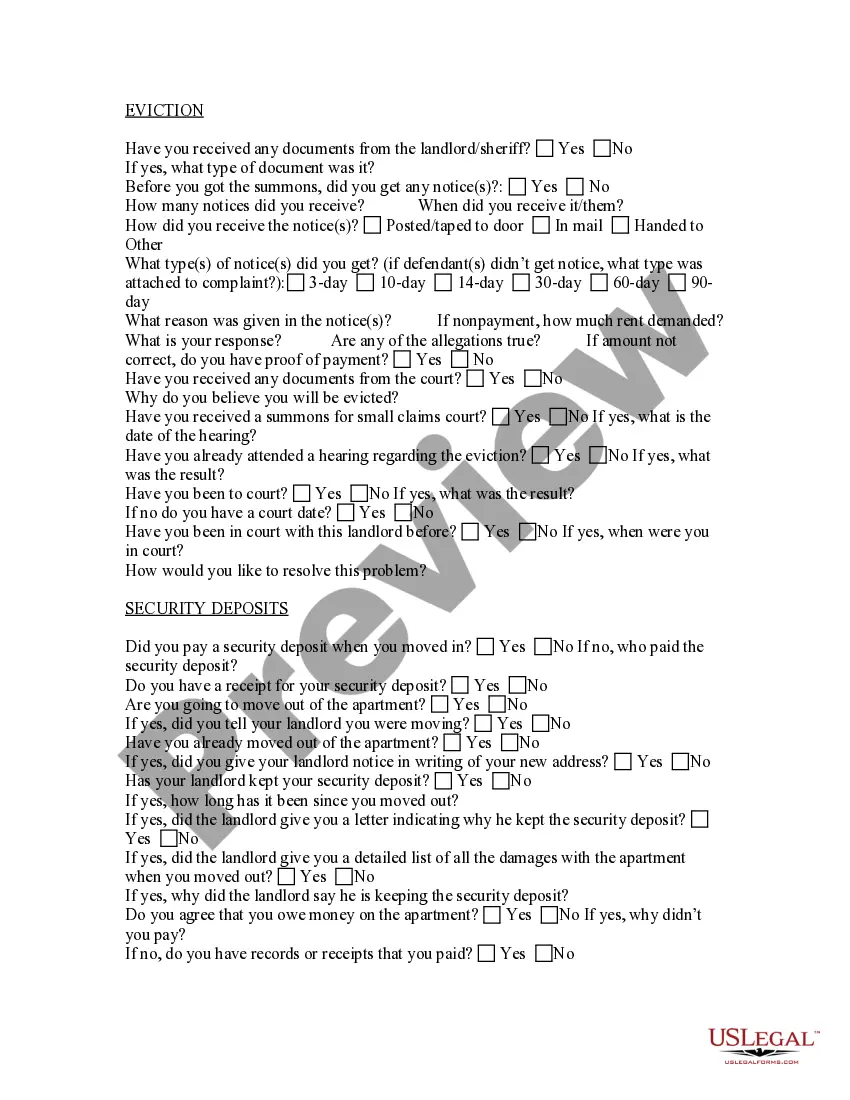
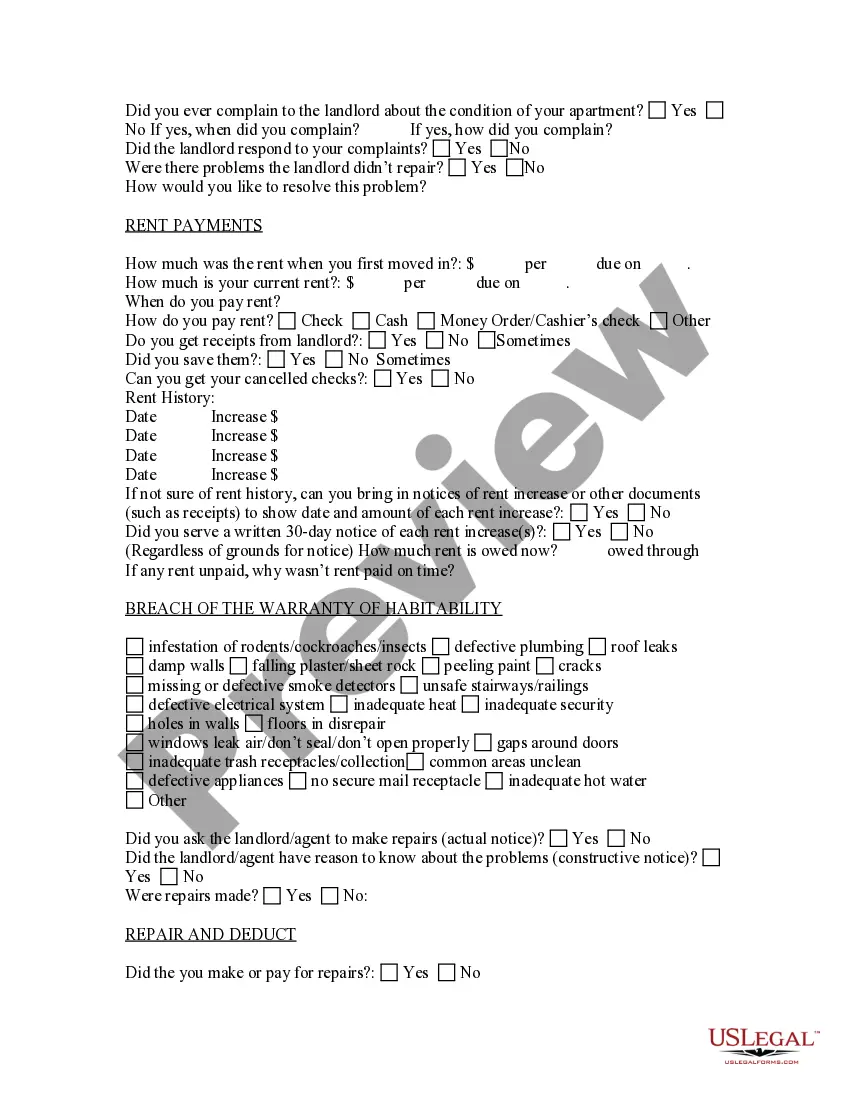
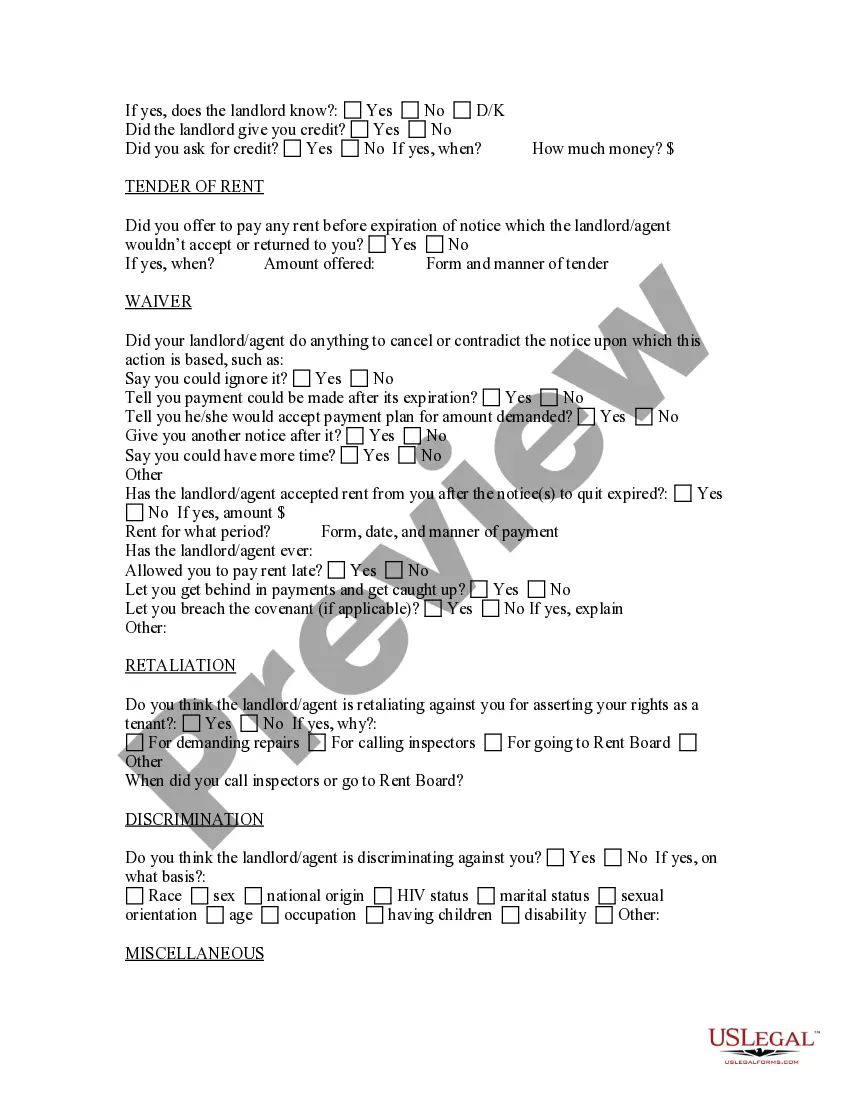
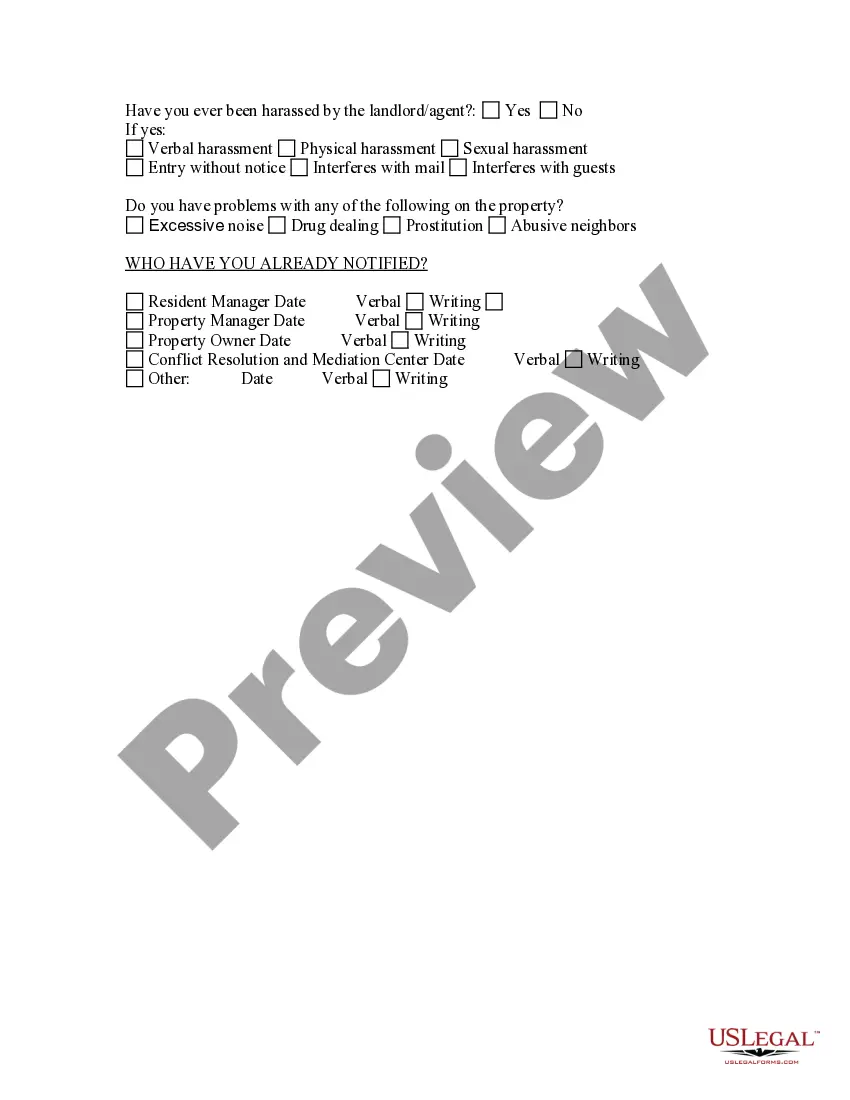
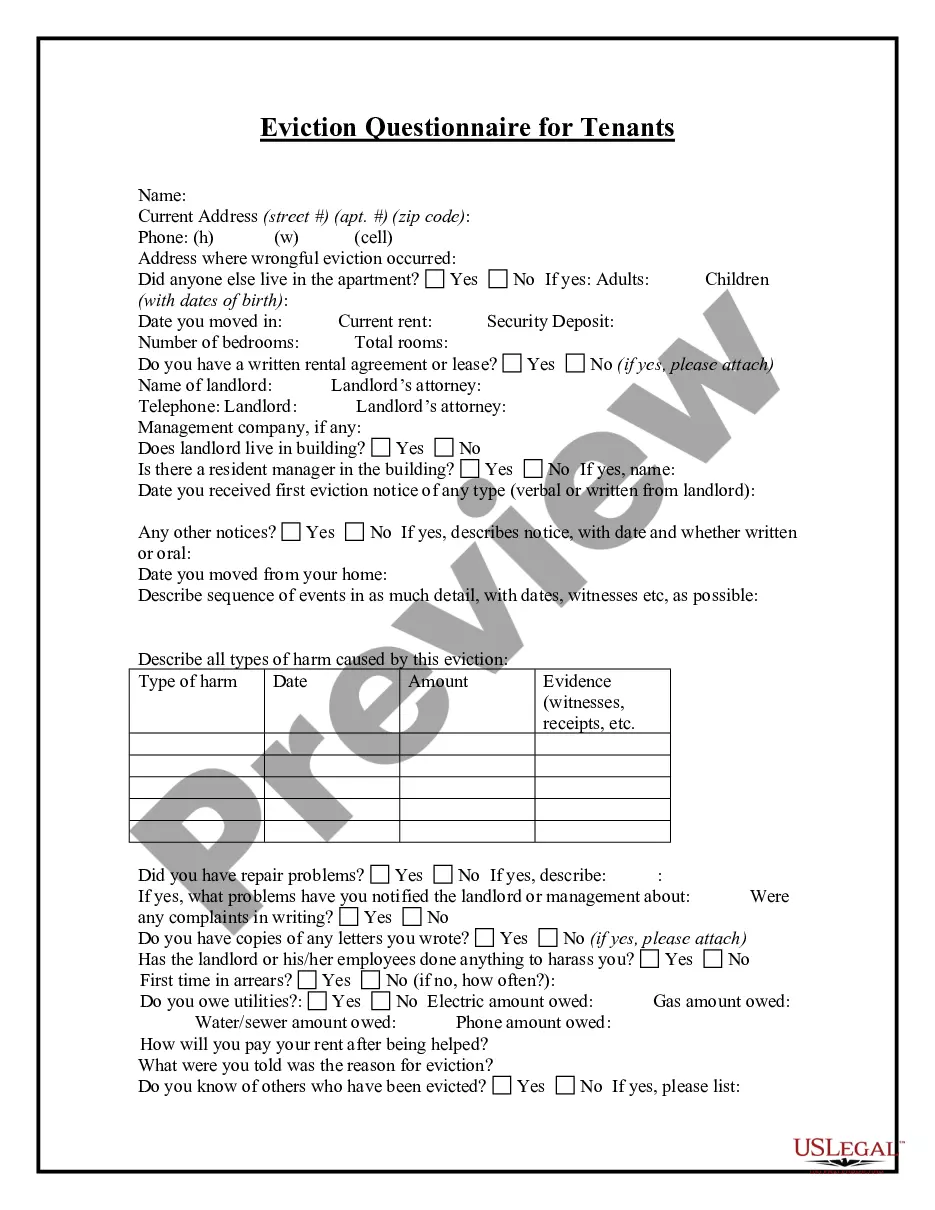
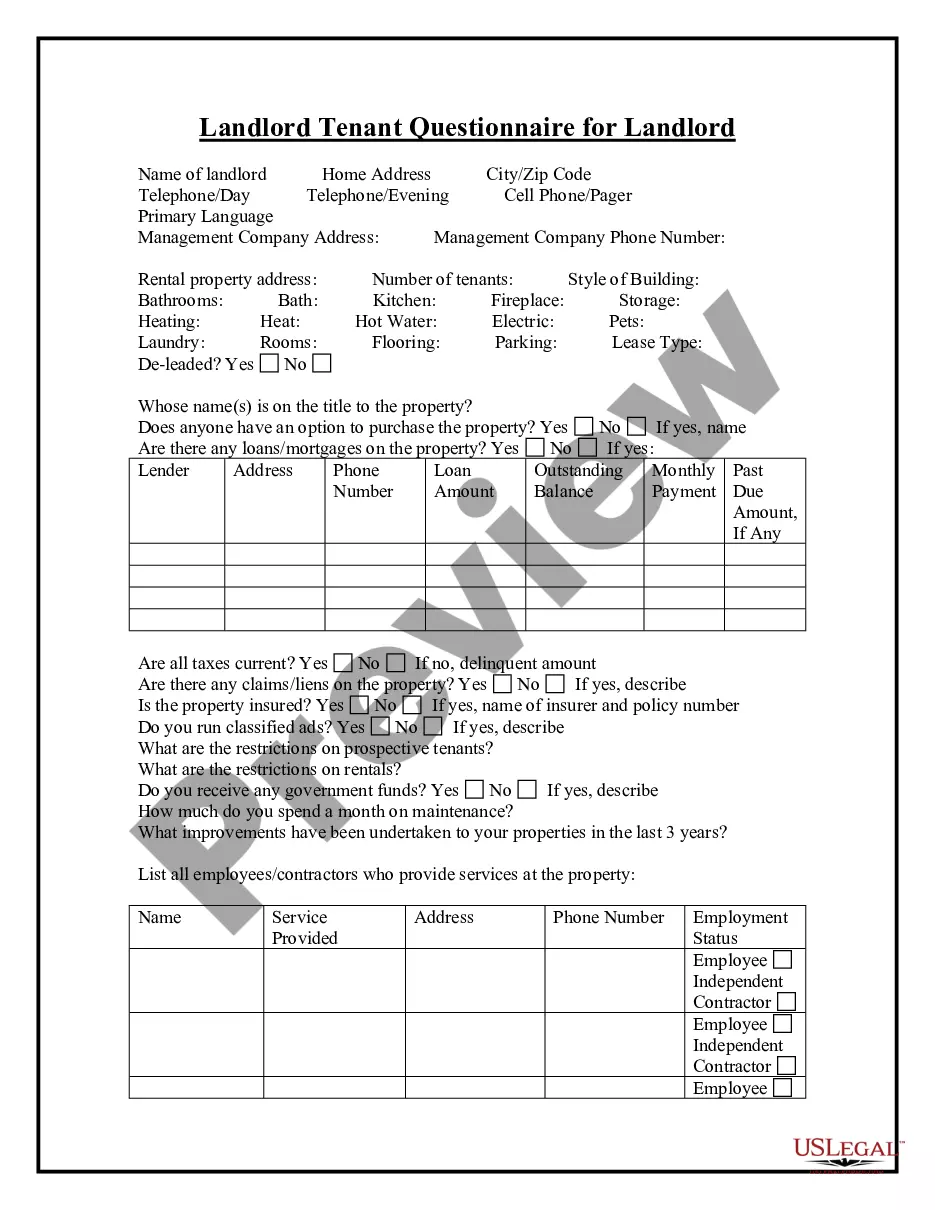
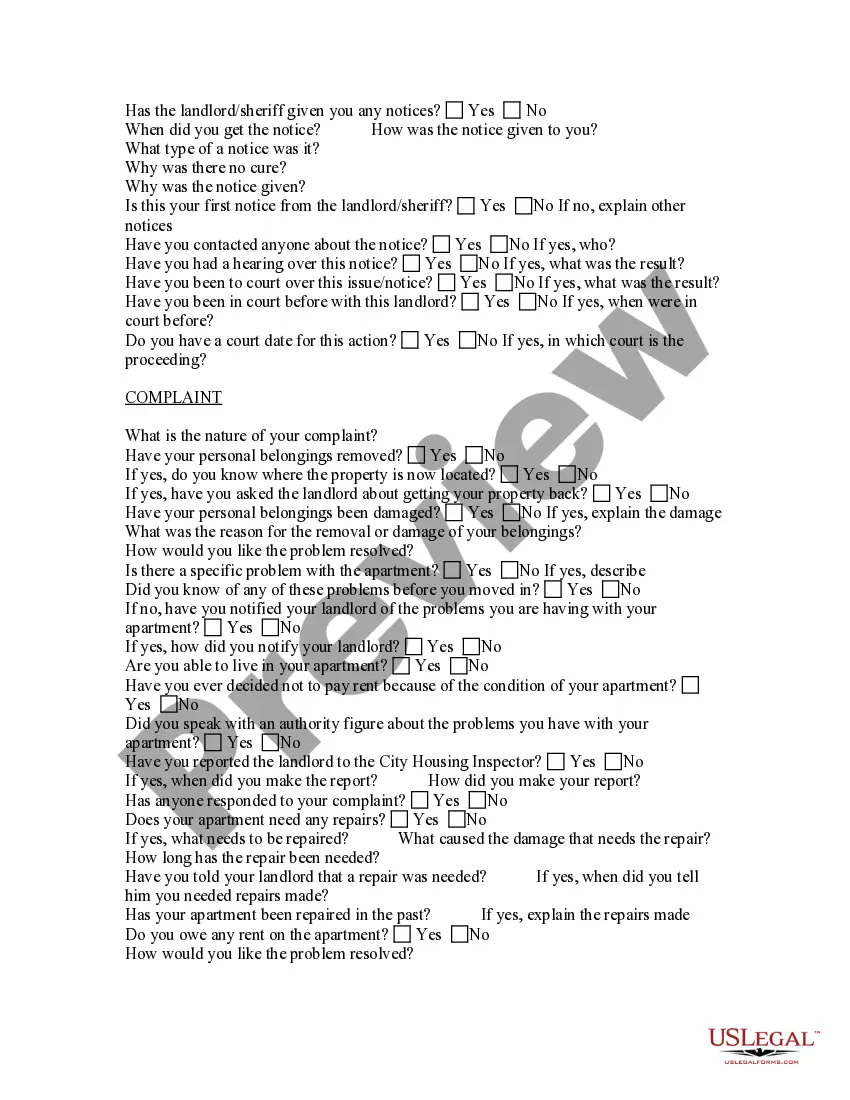
This form addresses important considerations that may effect the legal rights and obligations of a tenant with respect to his or her relationship with the landlord. This questionnaire enables those seeking legal help to effectively identify and prepare their issues and problems. Thorough advance preparation enhances the attorney’s case evaluation and can significantly reduce costs associated with case preparation.


This questionnaire may also be used by an attorney as an important information gathering and issue identification tool when forming an attorney-client relationship with a new client. This form helps ensure thorough case preparation and effective evaluation of a new client’s needs. It may be used by an attorney or new client to save on attorney fees related to initial interviews.
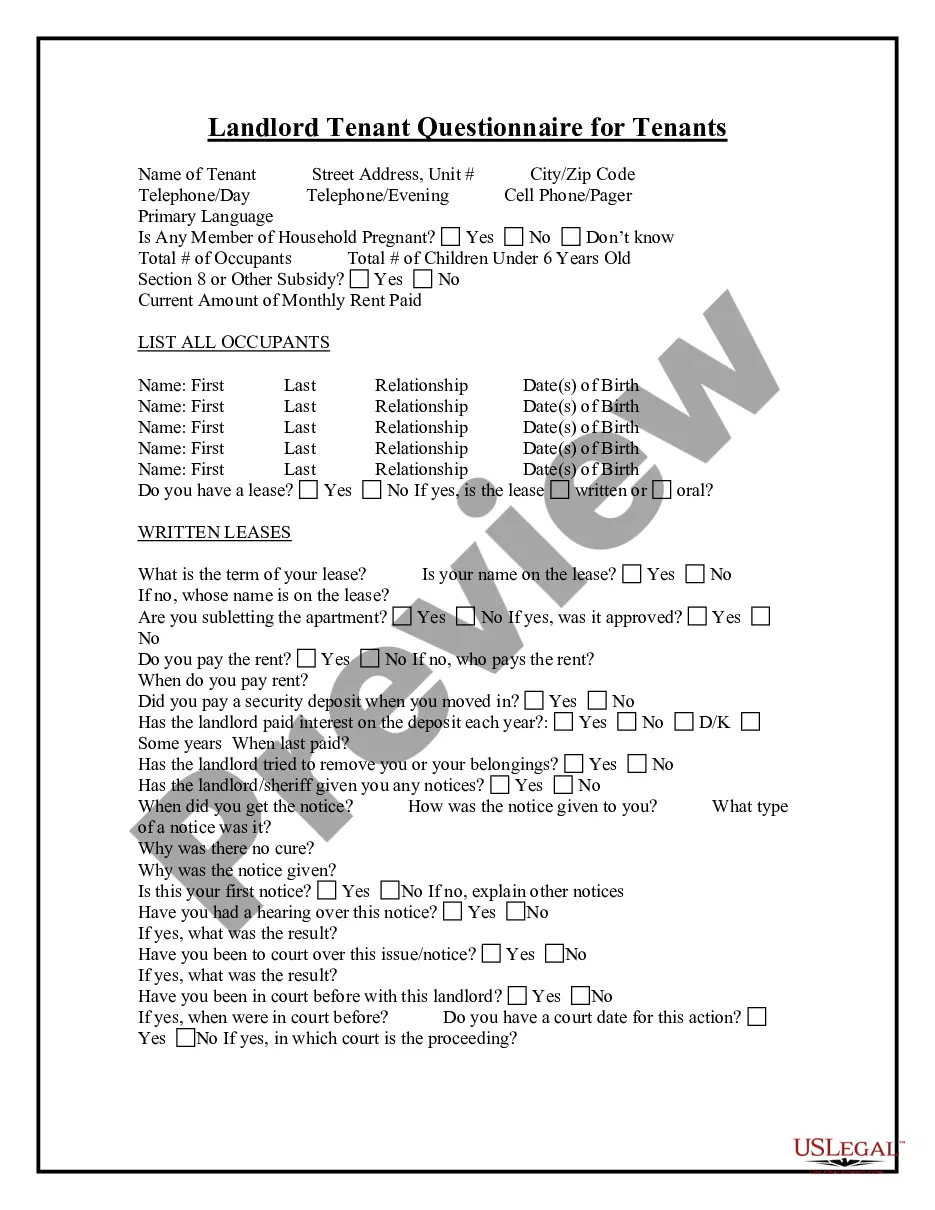
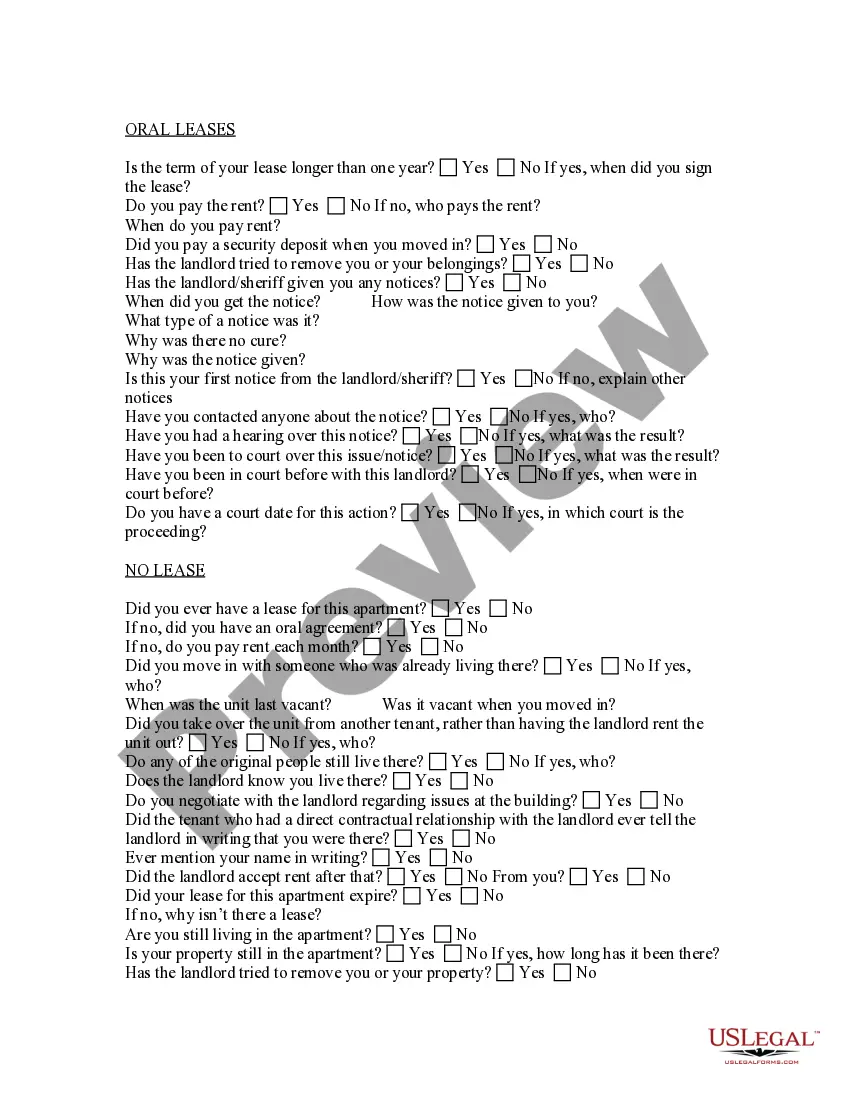
Free preview
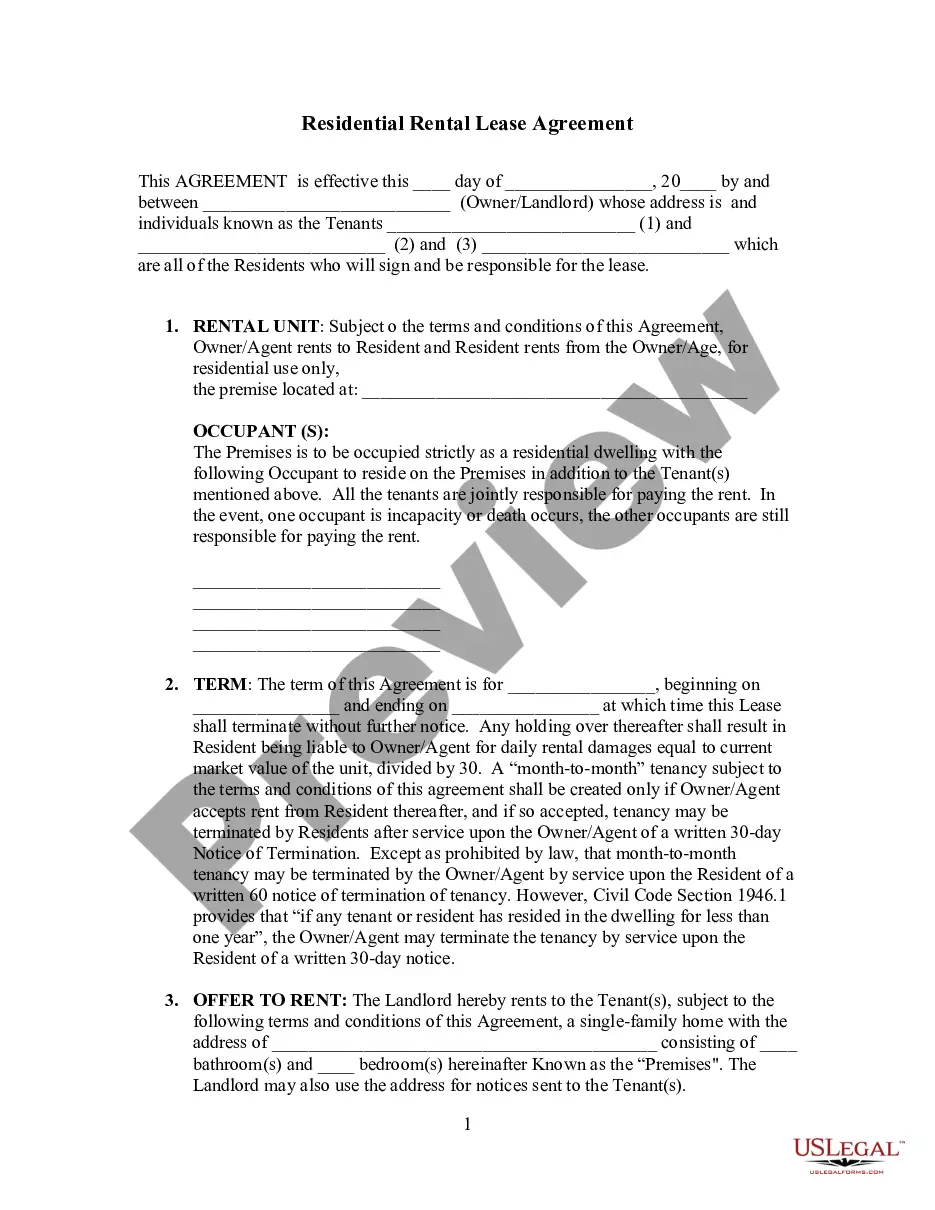
  • Preview Landlord Tenant Relationship Questionnaire for Tenants
  • Preview Landlord Tenant Relationship Questionnaire for Tenants
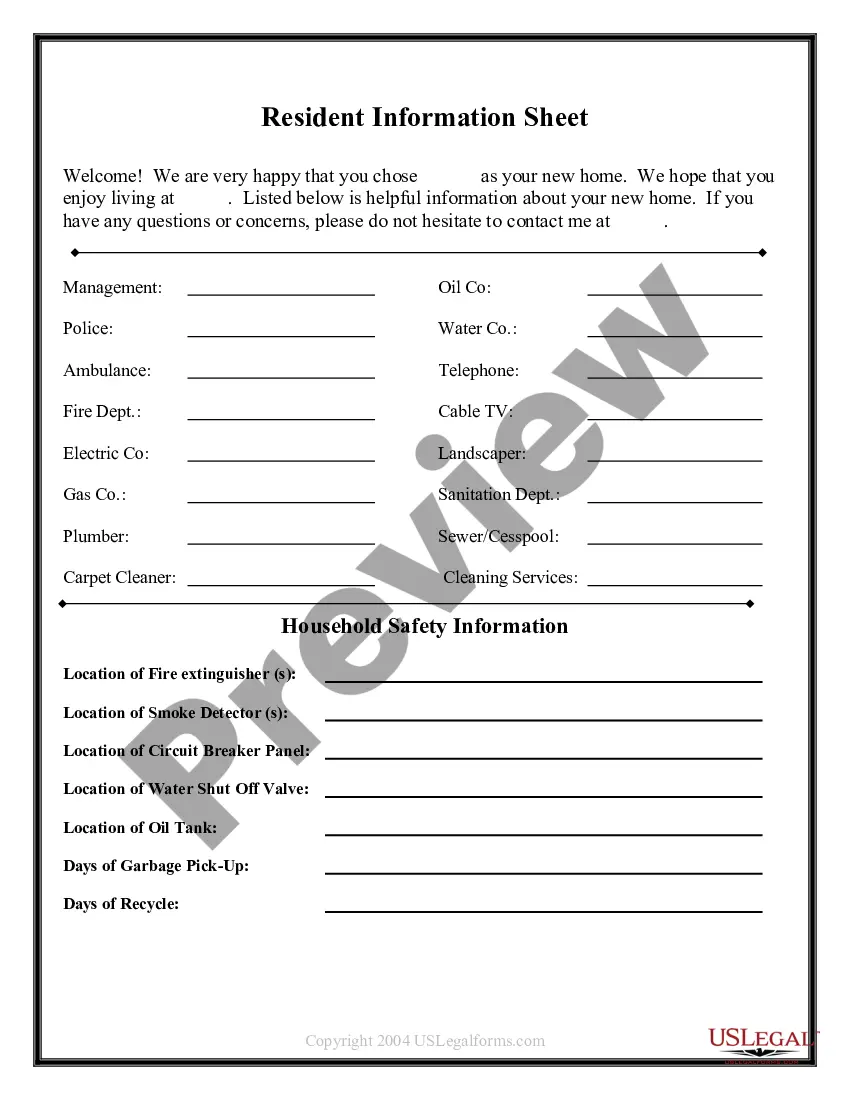
  • Preview Landlord Tenant Relationship Questionnaire for Tenants
  • Preview Landlord Tenant Relationship Questionnaire for Tenants
  • Preview Landlord Tenant Relationship Questionnaire for Tenants
  • Preview Landlord Tenant Relationship Questionnaire for Tenants
  • Preview Landlord Tenant Relationship Questionnaire for Tenants

How to fill out Landlord Tenant Relationship Questionnaire For Tenants?

Finding the appropriate valid document template can be a challenge.

Of course, there are numerous templates available online, but how do you locate the correct form you need.

Utilize the US Legal Forms website. The service offers thousands of templates, including the District of Columbia Landlord Tenant Relationship Questionnaire for Tenants, which can be utilized for both business and personal purposes. All documents are reviewed by professionals and comply with state and federal regulations.

Once you are confident that the form is suitable, click the Purchase now button to obtain the form. Choose the pricing plan you prefer and enter the required information. Create your account and pay for your order using your PayPal account or credit card. Select the file format and download the legal document template to your device. Finally, complete, modify, print, and sign the received District of Columbia Landlord Tenant Relationship Questionnaire for Tenants. US Legal Forms is the largest repository of legal forms where you can explore various document templates. Utilize the service to obtain professionally-crafted documents that comply with state requirements.

  1. If you are already registered, Log In to your account and click on the Download button to obtain the District of Columbia Landlord Tenant Relationship Questionnaire for Tenants.
  2. Use your account to browse the legal forms you may have purchased previously.
  3. Visit the My documents section of your account to retrieve another copy of the document you need.
  4. If you are a new user of US Legal Forms, here are basic steps for you to follow.
  5. First, ensure that you have selected the correct form for your city/state. You can review the form using the Preview button and read the form details to ensure this is indeed the right one for you.
  6. If the form does not meet your requirements, use the Search field to find the appropriate form.

Form popularity

FAQ

When communicating with your landlord, it's crucial to maintain a respectful tone and avoid making demands. Steer clear of saying anything that could be perceived as confrontational or dismissive, as this can strain your relationship. Instead, focus on discussing issues clearly and constructively, using the District of Columbia Landlord Tenant Relationship Questionnaire for Tenants as a reference point for your concerns. Effective communication can lead to better outcomes for both tenants and landlords.

The best screening tool for landlords is one that provides comprehensive insights into a tenant's background. The District of Columbia Landlord Tenant Relationship Questionnaire for Tenants is an excellent choice, as it covers critical areas such as credit history, rental history, and employment verification. By utilizing this questionnaire, landlords can make informed decisions and reduce the risks associated with renting properties. Additionally, platforms like USLegalForms offer templates that can simplify and enhance the screening process.

A rental questionnaire is a tool that helps landlords gather essential information from potential tenants. It typically includes questions about income, rental history, and personal references. The District of Columbia Landlord Tenant Relationship Questionnaire for Tenants serves as an effective format for this process, ensuring that both parties clearly understand expectations and responsibilities. Using this questionnaire can streamline the rental process and foster better communication.

Being a great tenant involves several key qualities. First, clear communication with your landlord fosters a positive relationship and helps address issues promptly. Second, paying rent on time demonstrates responsibility and reliability. Lastly, maintaining the property and adhering to lease agreements shows respect for the landlord's property. To better understand your role in the District of Columbia Landlord Tenant Relationship Questionnaire for Tenants, consider using our platform, which offers valuable resources to guide you.

To verify rental history, landlords may ask about previous addresses, duration of residence, and reasons for leaving. They may also inquire about payment history and any issues with prior landlords. Utilizing the District of Columbia Landlord Tenant Relationship Questionnaire for Tenants can help tenants gather necessary information and present their rental history confidently.

A tenant background check may reveal various factors, including prior evictions, criminal history, and credit score. These elements help landlords evaluate the risk of renting to a particular tenant. For a better understanding of what might show up, consider using the District of Columbia Landlord Tenant Relationship Questionnaire for Tenants to guide you in managing your rental application effectively.

An example of a tenant screening could involve a landlord checking a prospective tenant's credit score, rental history, and criminal background. This comprehensive check helps the landlord make informed decisions about renting their property. By using the District of Columbia Landlord Tenant Relationship Questionnaire for Tenants, you can prepare yourself for the screening process and improve your chances of approval.

A tenant screening report generally includes a background check, credit history, rental history, and sometimes employment verification. This report helps landlords assess whether a tenant is likely to fulfill their lease obligations. Understanding the contents of your tenant screening report can be aided by the District of Columbia Landlord Tenant Relationship Questionnaire for Tenants, which outlines what to expect.

A tenant screening is a process landlords use to evaluate potential renters. It typically includes background checks, credit checks, and verification of rental history to ensure the applicant meets their criteria. Using the District of Columbia Landlord Tenant Relationship Questionnaire for Tenants can help tenants prepare for this process and understand what information landlords seek.

To sue your landlord for emotional distress, you must demonstrate that their actions caused you significant emotional pain or suffering. Collect evidence, such as documentation of the landlord's behavior and any medical records related to your distress. Consulting the District of Columbia Landlord Tenant Relationship Questionnaire for Tenants can provide insights into your rights and the necessary steps to take in this situation.

Trusted and secure by over 3 million people of the world’s leading companies

District of Columbia Landlord Tenant Relationship Questionnaire for Tenants