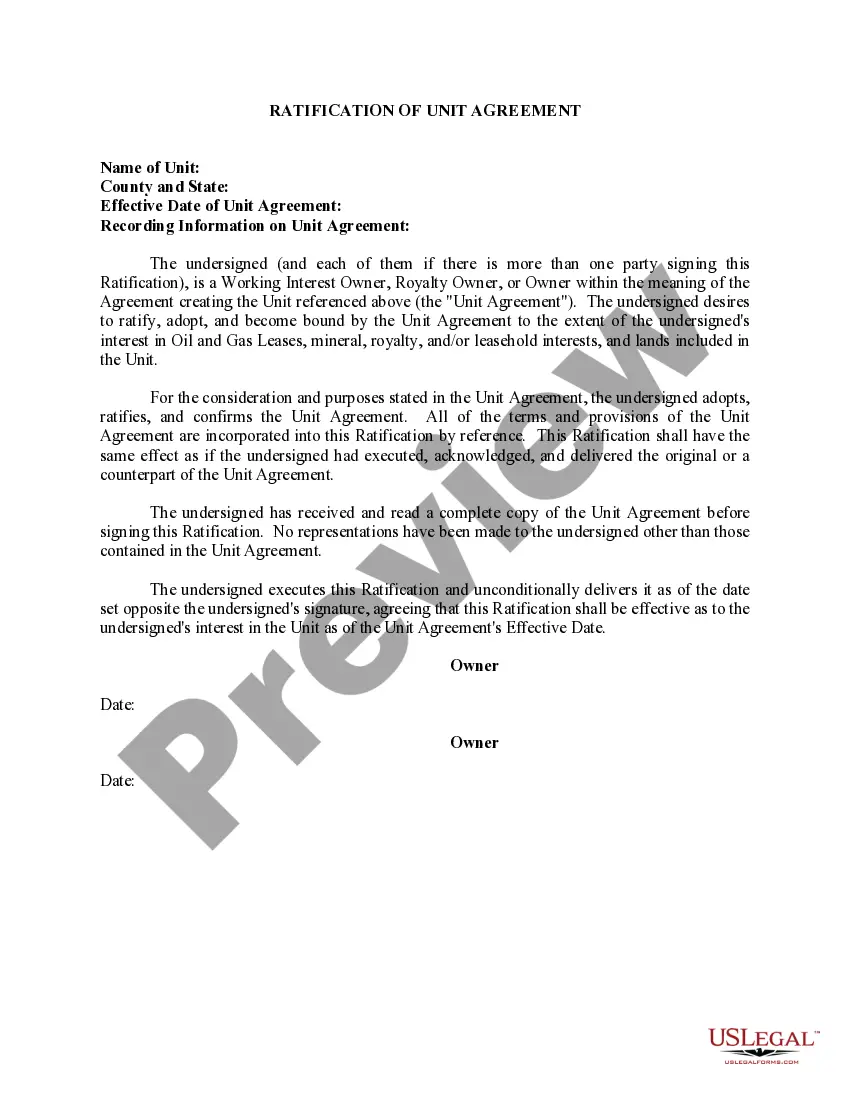
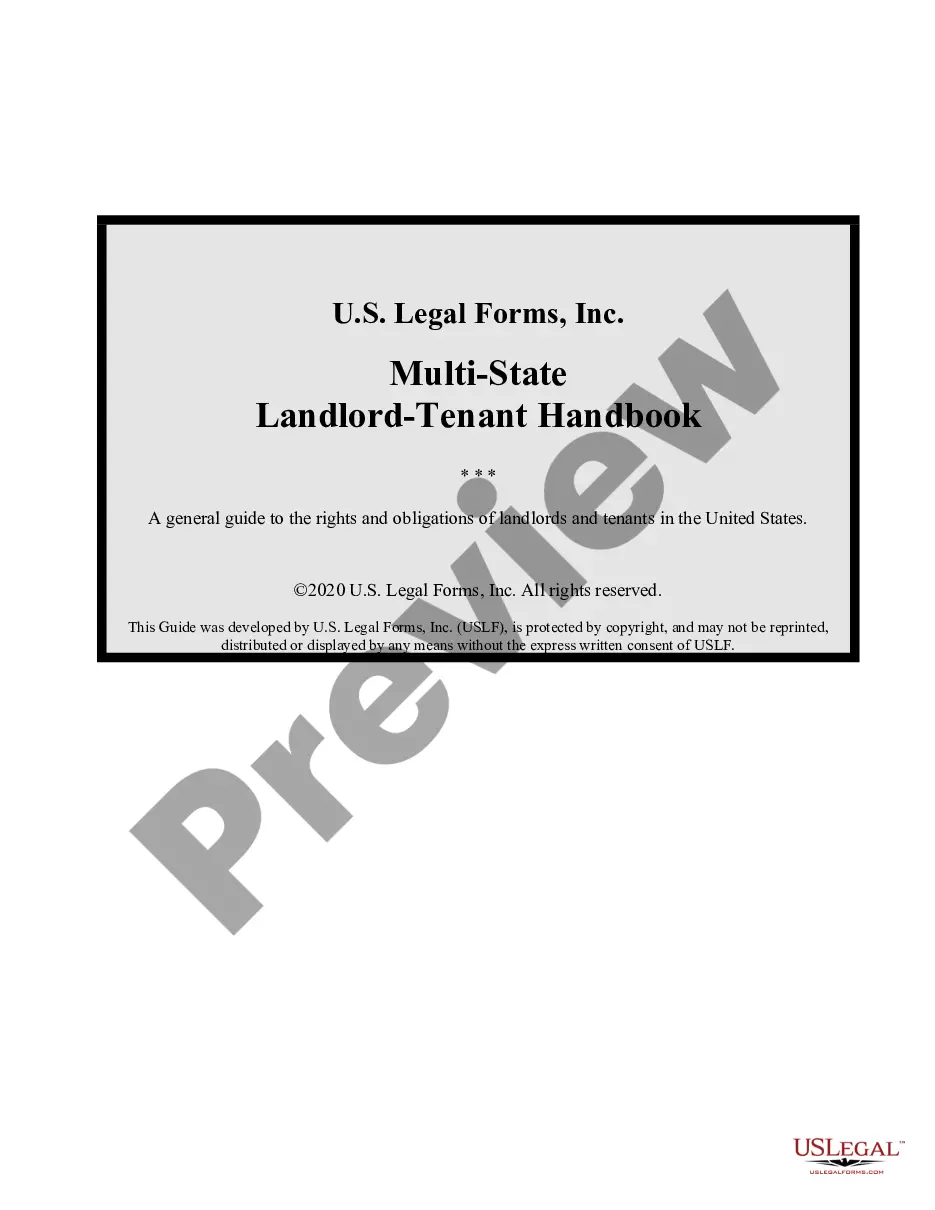
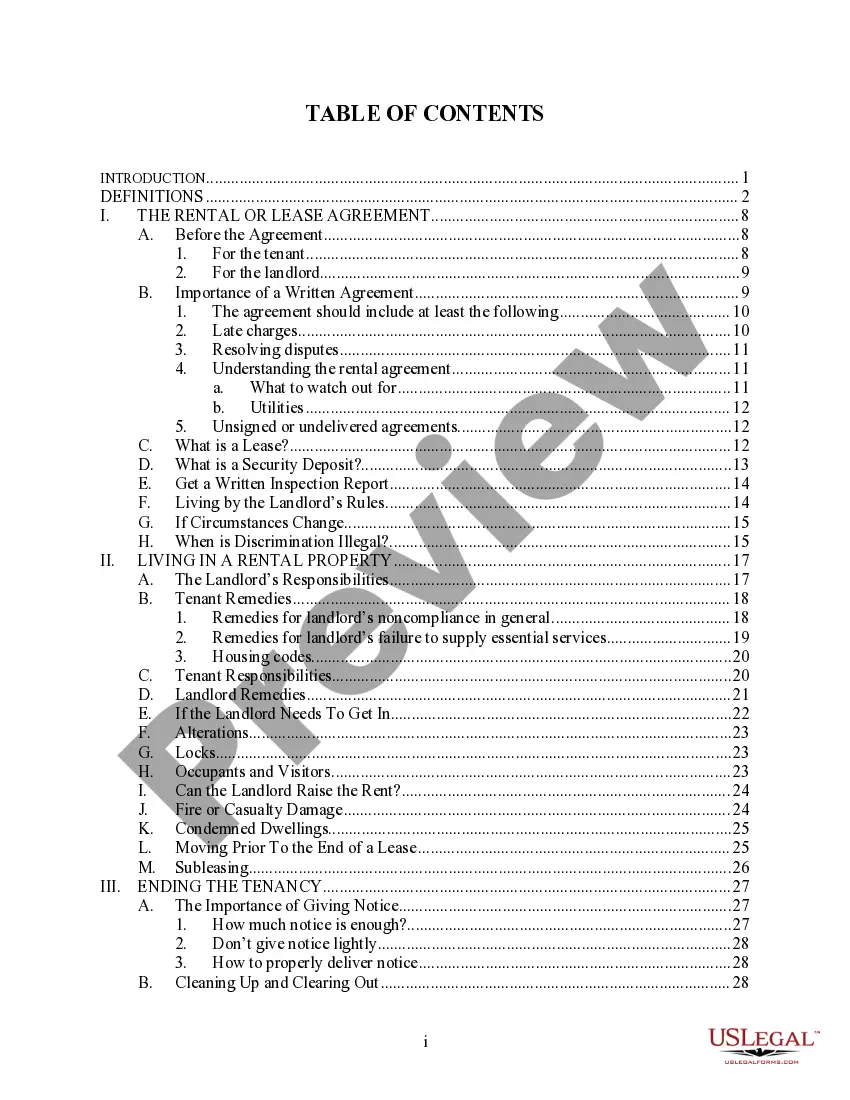
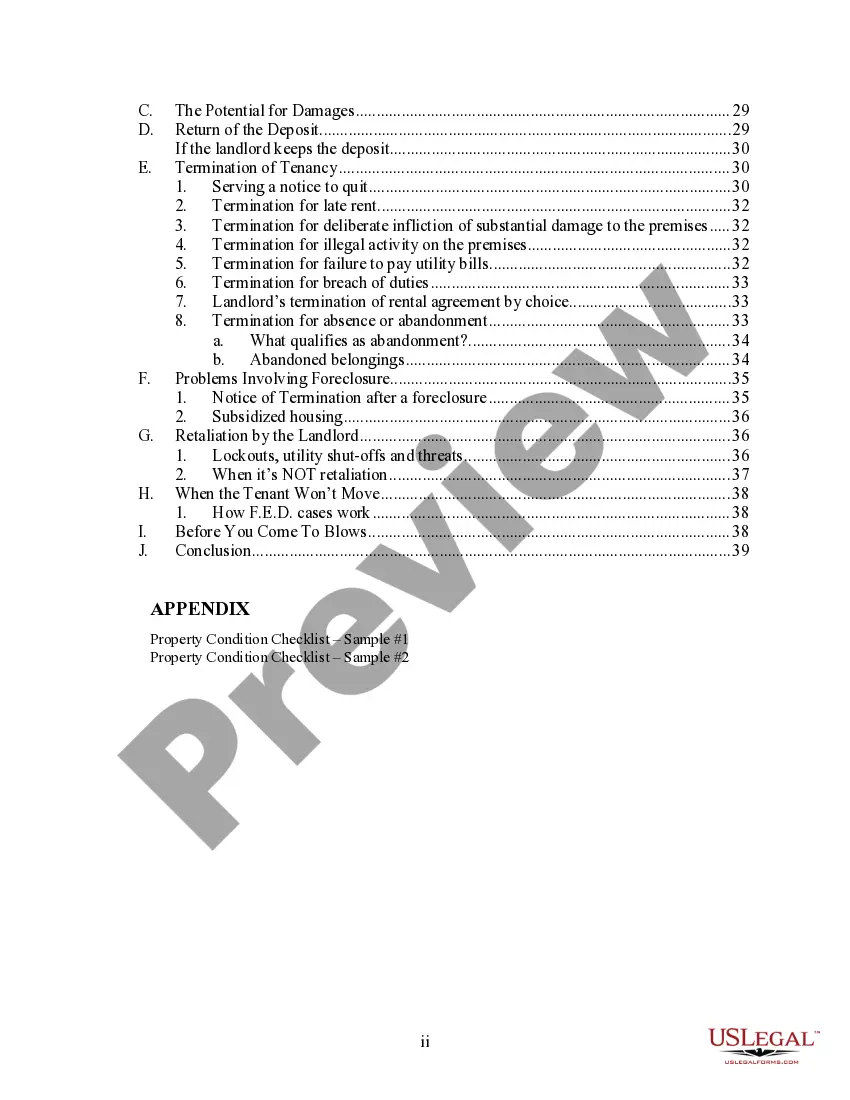
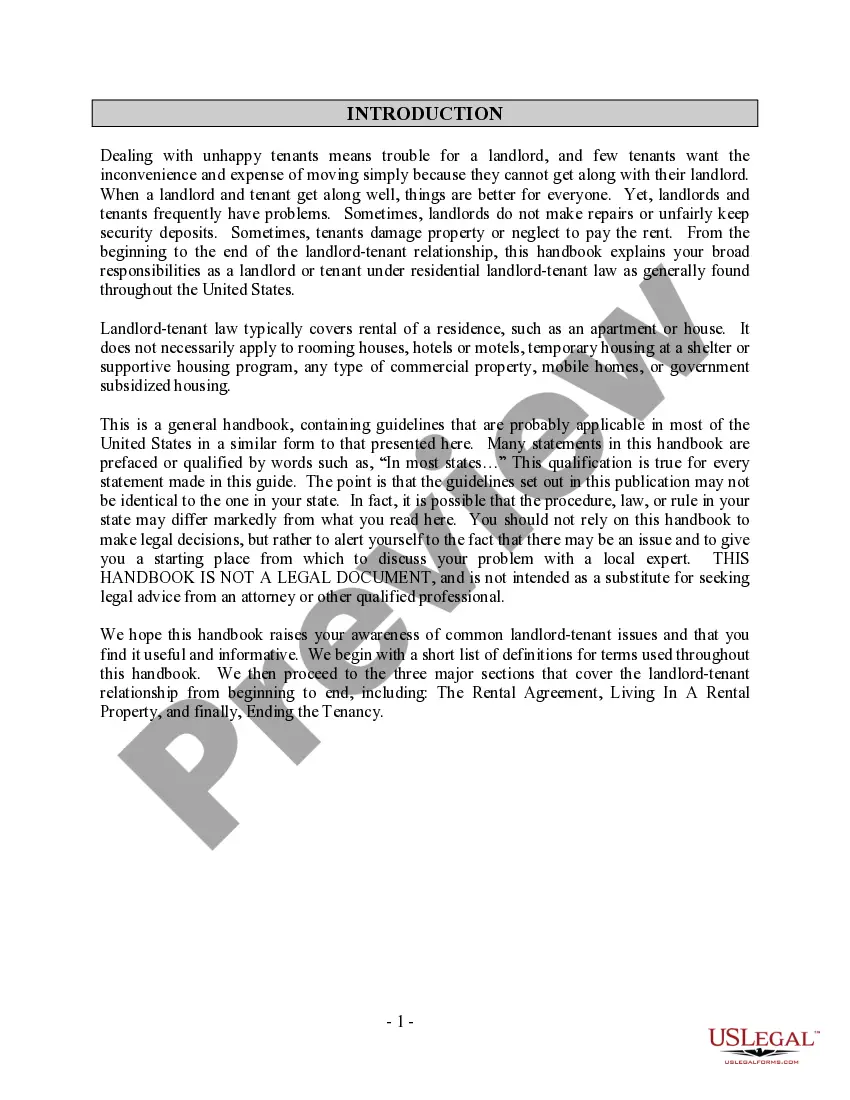
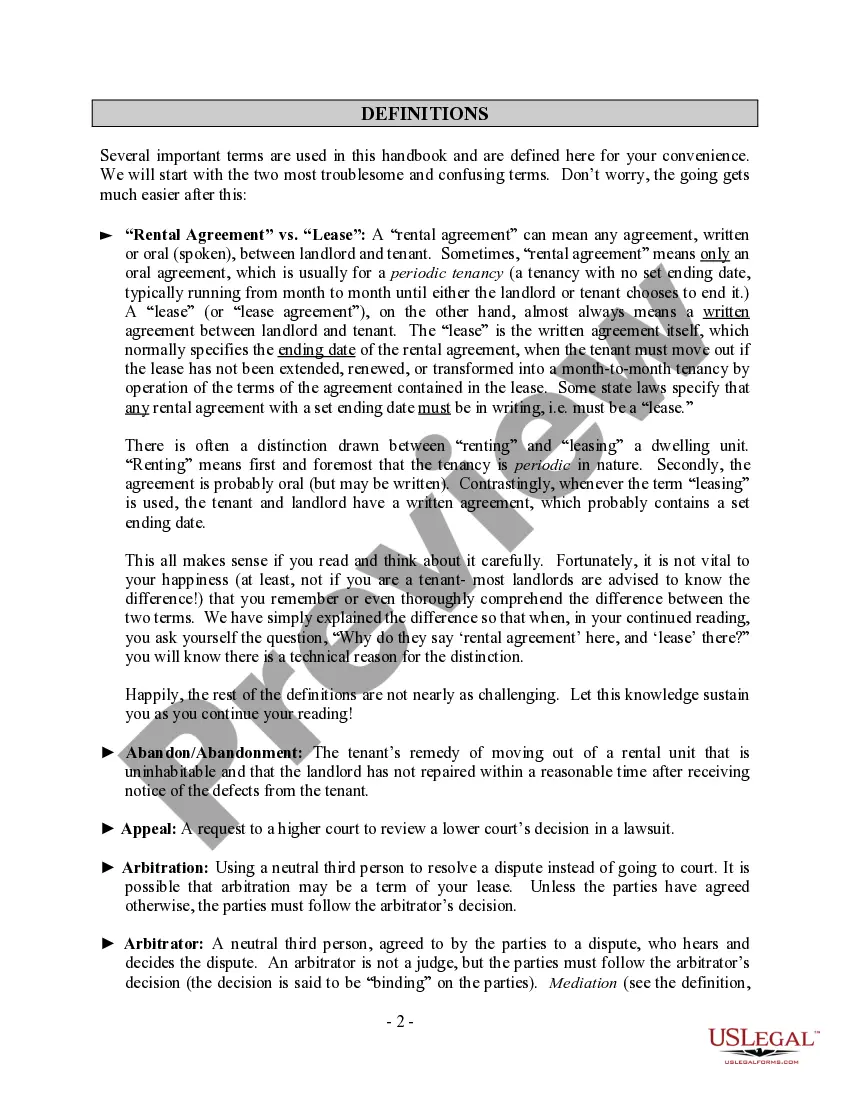
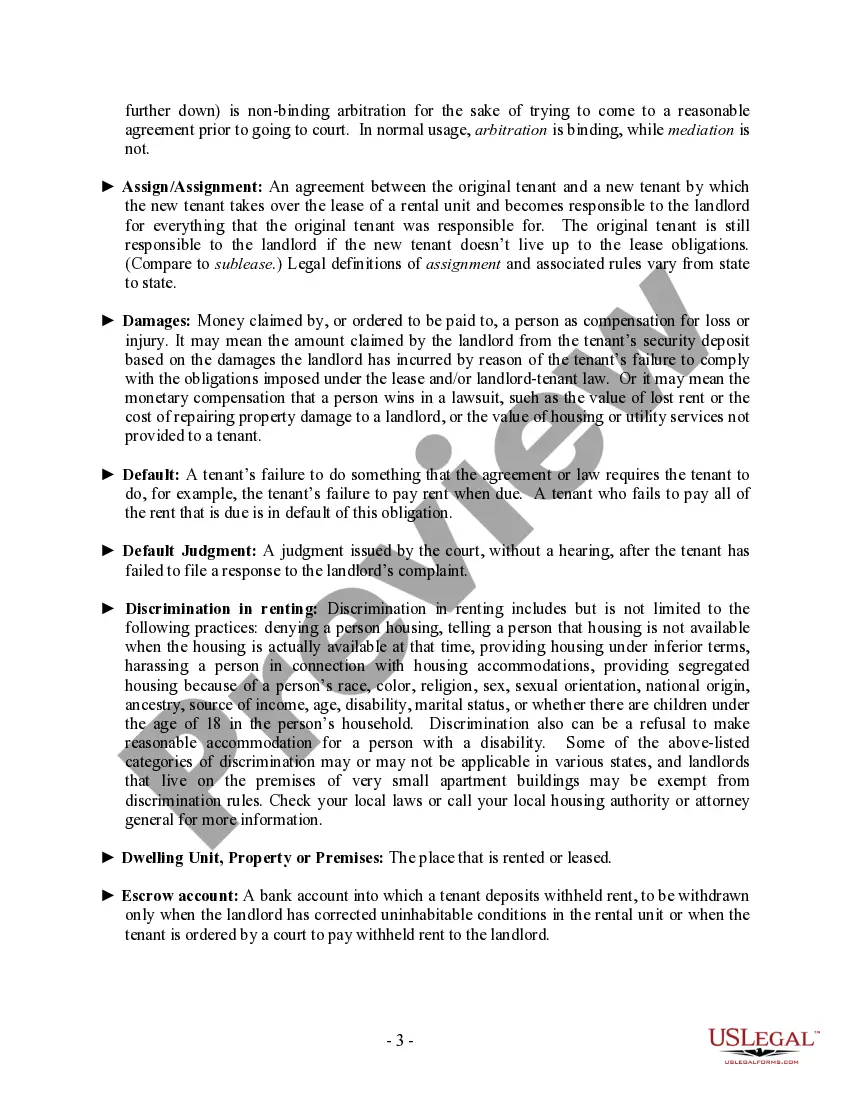
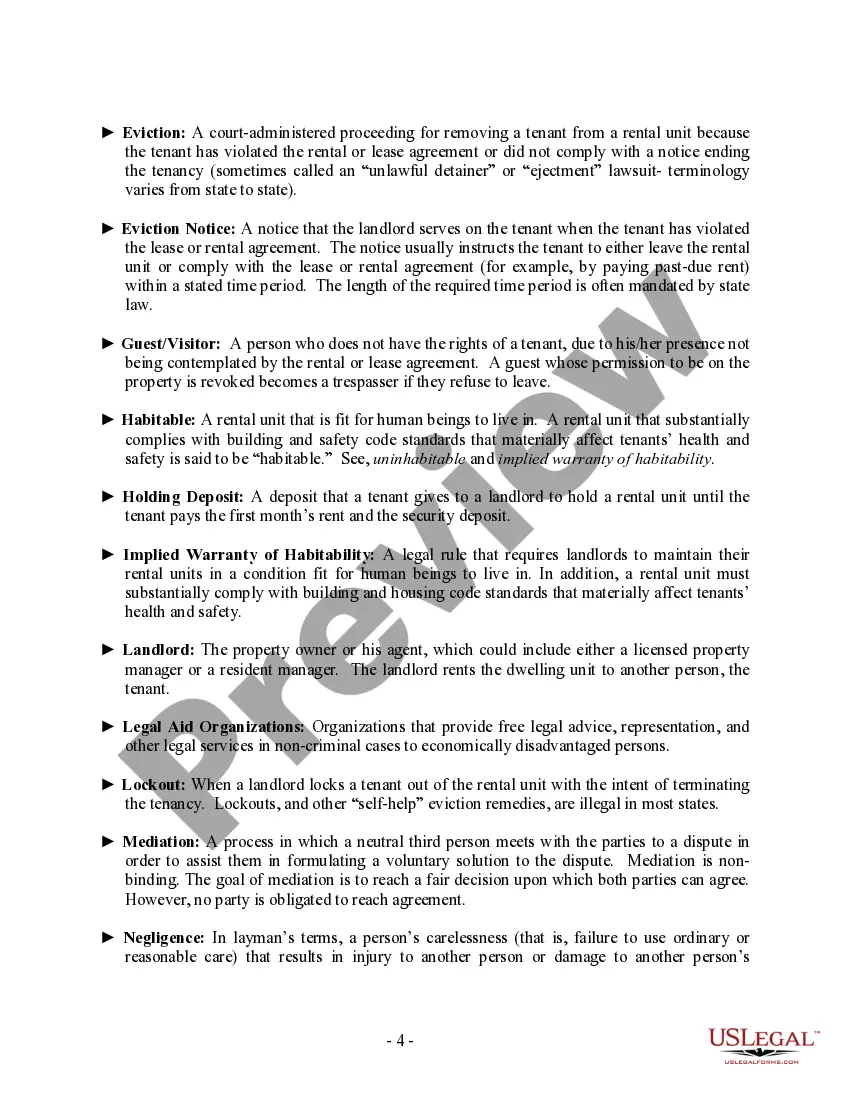
This Handbook summarizes the rights and obligations of landlords and tenants, and is designed to be a helpful guide to both landlords and tenants. Information about rental applications, leases, security deposits, inventory checklists, repair responsibilities, rent increases, termination of leases, eviction notices and much more is included in 40+ pages of materials.
District of Columbia Multistate Landlord Tenant Handbook - Guide - Laws
Instant download
Description
Free preview
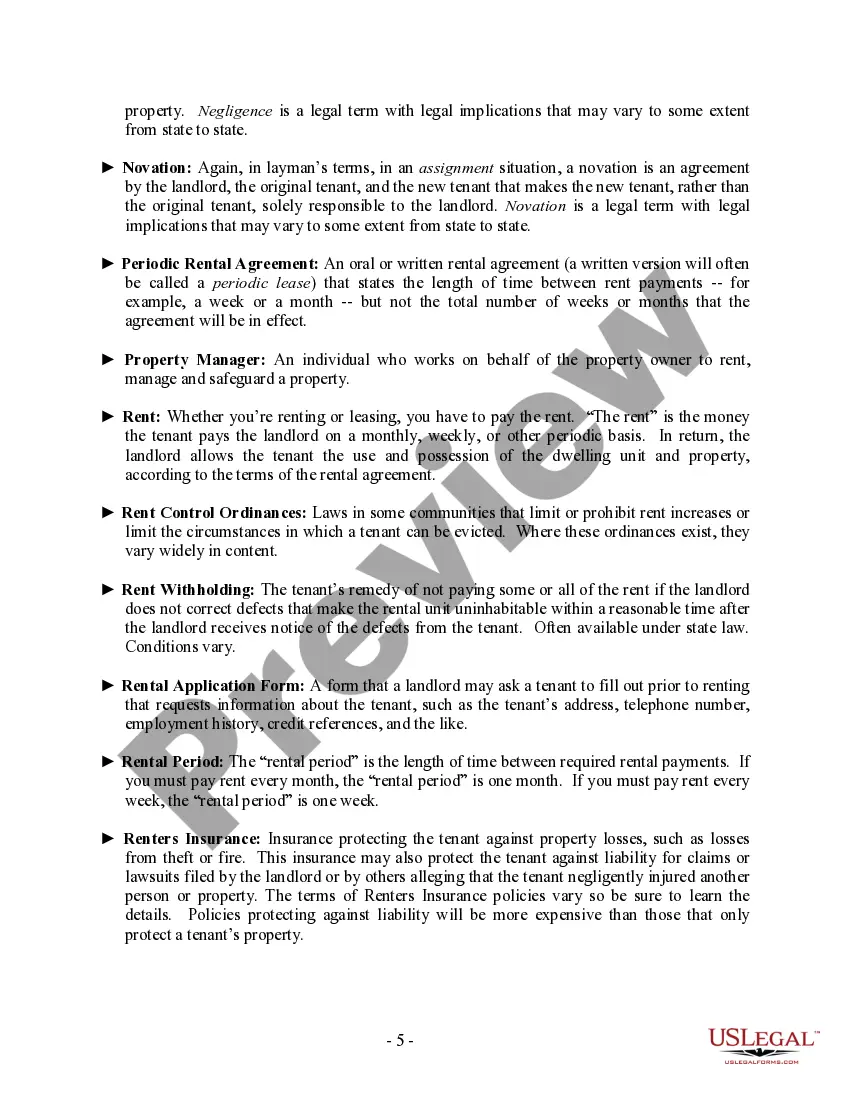
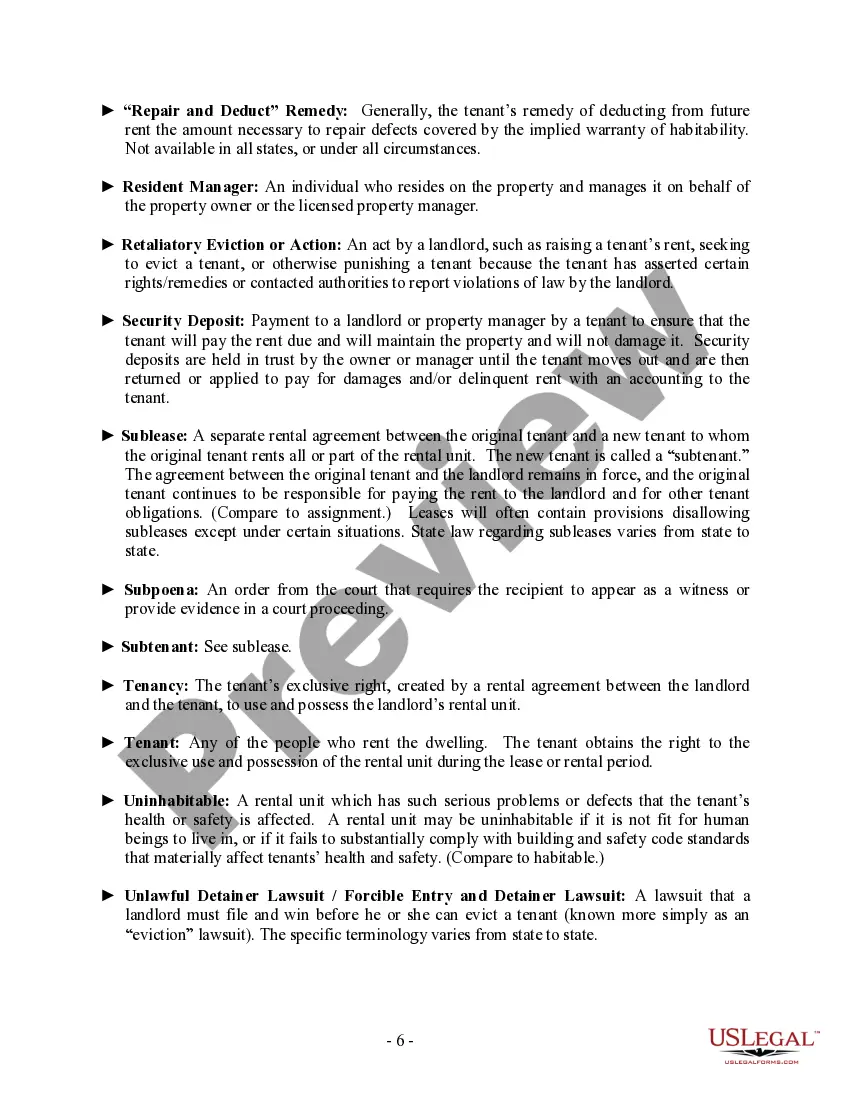

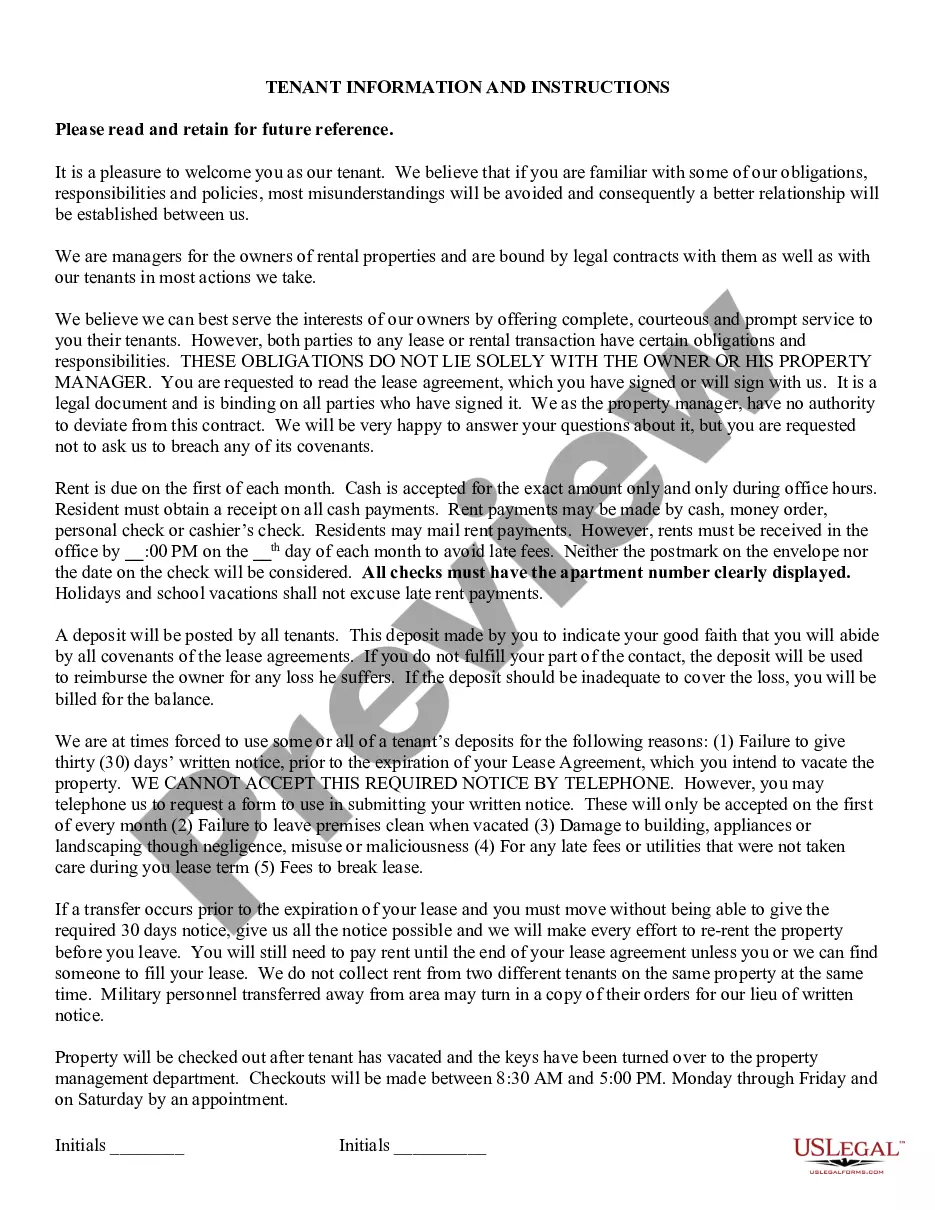
How to fill out Multistate Landlord Tenant Handbook - Guide - Laws?
If you wish to obtain, download, or print legal document templates, utilize US Legal Forms, the premier collection of legal forms available online.
Employ the site's straightforward and convenient search feature to locate the documents you require.
Numerous templates for business and personal purposes are categorized by groups and states, or keywords. Use US Legal Forms to find the District of Columbia Multistate Landlord Tenant Handbook - Guide - Laws in just a few clicks.
Every legal document template you purchase belongs to you permanently. You have access to every form you downloaded in your account. Navigate to the My documents section and select a form to print or download again.
Complete and download, and print the District of Columbia Multistate Landlord Tenant Handbook - Guide - Laws with US Legal Forms. There are thousands of professional and state-specific forms available for your business or personal needs.
- When you are already a US Legal Forms customer, Log Into your account and click on the Download button to acquire the District of Columbia Multistate Landlord Tenant Handbook - Guide - Laws.
- You can also access forms you previously downloaded from the My documents section of your account.
- If you are using US Legal Forms for the first time, follow the instructions outlined below.
- Step 1. Make sure you have selected the form for the correct city/state.
- Step 2. Use the Preview feature to review the form's content. Don't forget to check the summary.
- Step 3. If you are not satisfied with the form, utilize the Search area at the top of the screen to find other versions of the legal form template.
- Step 4. Once you have found the form you need, click the Buy now button. Choose the pricing plan you prefer and enter your details to create an account.
- Step 5. Complete the transaction. You can use your credit card or PayPal account to finalize the purchase.
- Step 6. Select the format of the legal document and download it to your device.
- Step 7. Fill out, modify, and print or sign the District of Columbia Multistate Landlord Tenant Handbook - Guide - Laws.
Form popularity
FAQ
Landlord red flags include a lack of professionalism, poor property upkeep, unwillingness to provide legal documentation, and vague lease terms. Identifying these concerns early can save you from potential disputes later. The District of Columbia Multistate Landlord Tenant Handbook - Guide - Laws serves as a valuable resource to help you navigate these issues effectively.
Before renting, a landlord typically checks your credit history, rental history, income verification, background check, and references. These elements help the landlord assess your reliability as a tenant. Familiarizing yourself with the District of Columbia Multistate Landlord Tenant Handbook - Guide - Laws can provide insights into what landlords are legally allowed to check.
Five red flag symptoms may include poor property maintenance, lack of communication, refusal to provide a lease, high turnover rates, and inconsistent rental agreements. These symptoms can indicate potential issues with the landlord or property management. The District of Columbia Multistate Landlord Tenant Handbook - Guide - Laws can help you identify these warning signs and protect your interests.
To determine if a landlord is reputable, consider checking online reviews, asking for references from current tenants, and reviewing their responsiveness during your initial interactions. A reliable landlord will maintain open communication and be willing to address your concerns. For a comprehensive understanding of landlord responsibilities, refer to the District of Columbia Multistate Landlord Tenant Handbook - Guide - Laws.
When communicating with your landlord, avoid making demands without justification, using aggressive language, or expressing dissatisfaction without proposing solutions. Instead, approach conversations with respect and clarity. The District of Columbia Multistate Landlord Tenant Handbook - Guide - Laws can help you understand your rights and responsibilities, fostering a productive dialogue.
Red flags for landlords often include inconsistent rental history, lack of references, or a reluctance to provide necessary documentation. A trustworthy landlord should be transparent and responsive to inquiries. The District of Columbia Multistate Landlord Tenant Handbook - Guide - Laws emphasizes the importance of thorough vetting to ensure a positive rental experience.
A tenancy agreement is a legally binding document as soon as it has been signed by all of the relevant parties. Usually, this is the tenant and the landlord, though it may also include a guarantor if the rental requires one.
D.C.'s rent control law was passed in 1985 and applies to owners of most large buildings that were built before 1976. In those buildings, annual rent increases are limited to 2% plus the prevailing rate of inflation.
Washington D.C. landlord-tenant laws are considered Landlord-friendly. There are 705,749 residents in Washington D.C. Average rent is $1,499 and 58% of residents are renter occupied.
In a unanimous vote on Tuesday, the D.C. Council permanently barred landlords from filing evictions against tenants who owe less than $600, sealed some eviction records, and further protected voucher holders during the rental screening process in an omnibus tenant protection bill.