District of Columbia Employment Conditions for Potential Employees
Description
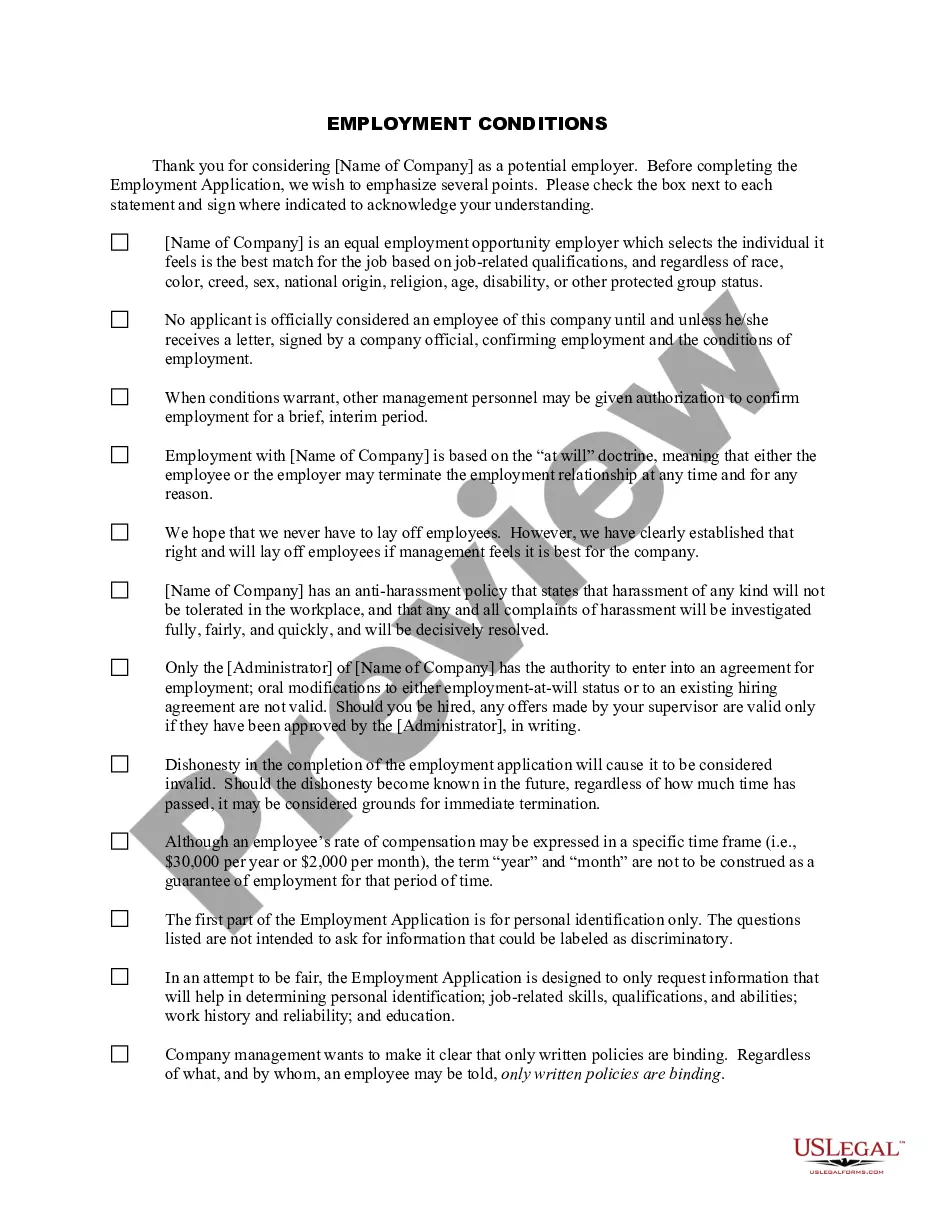
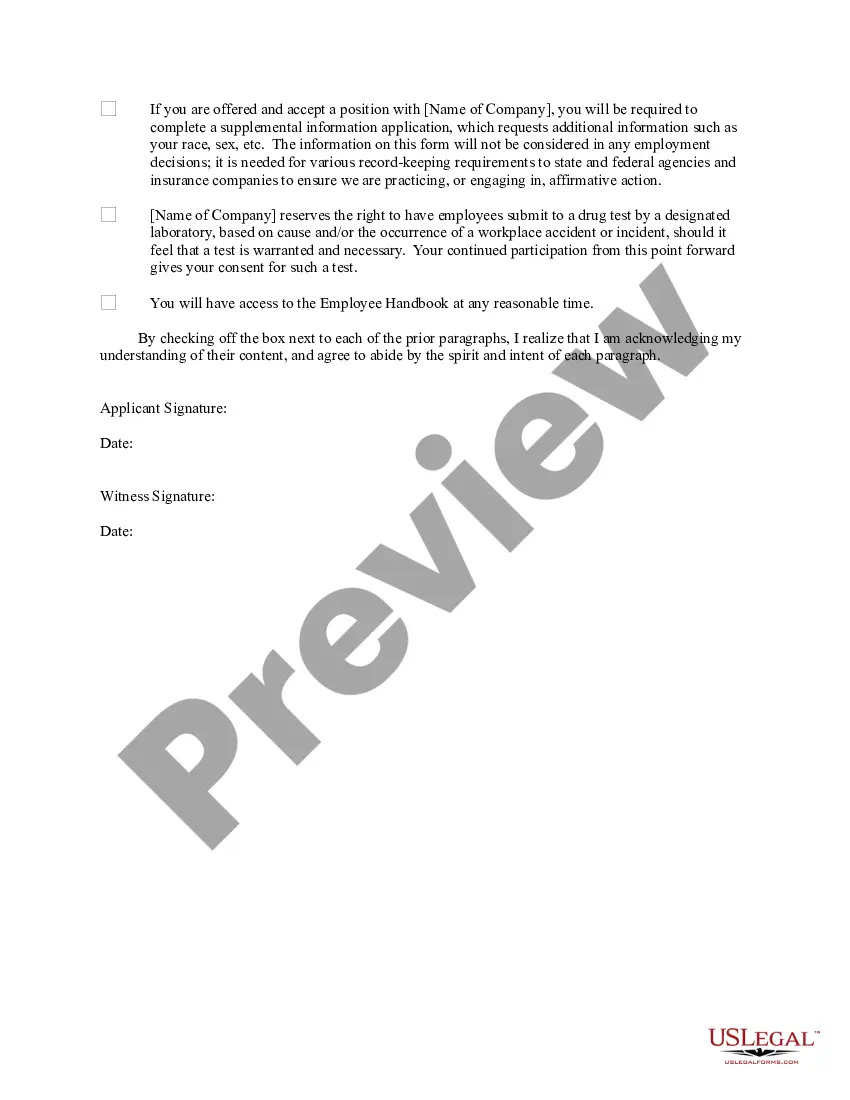

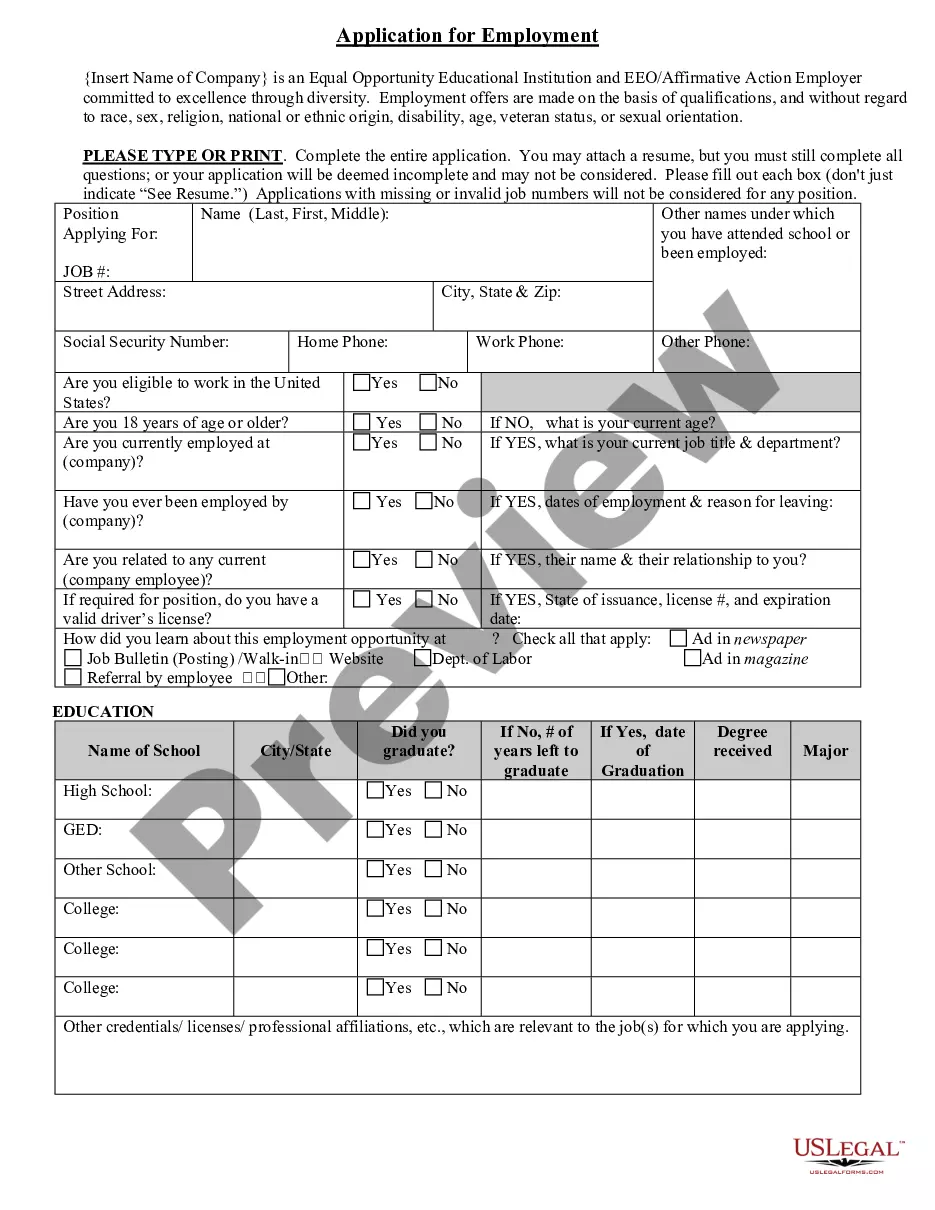
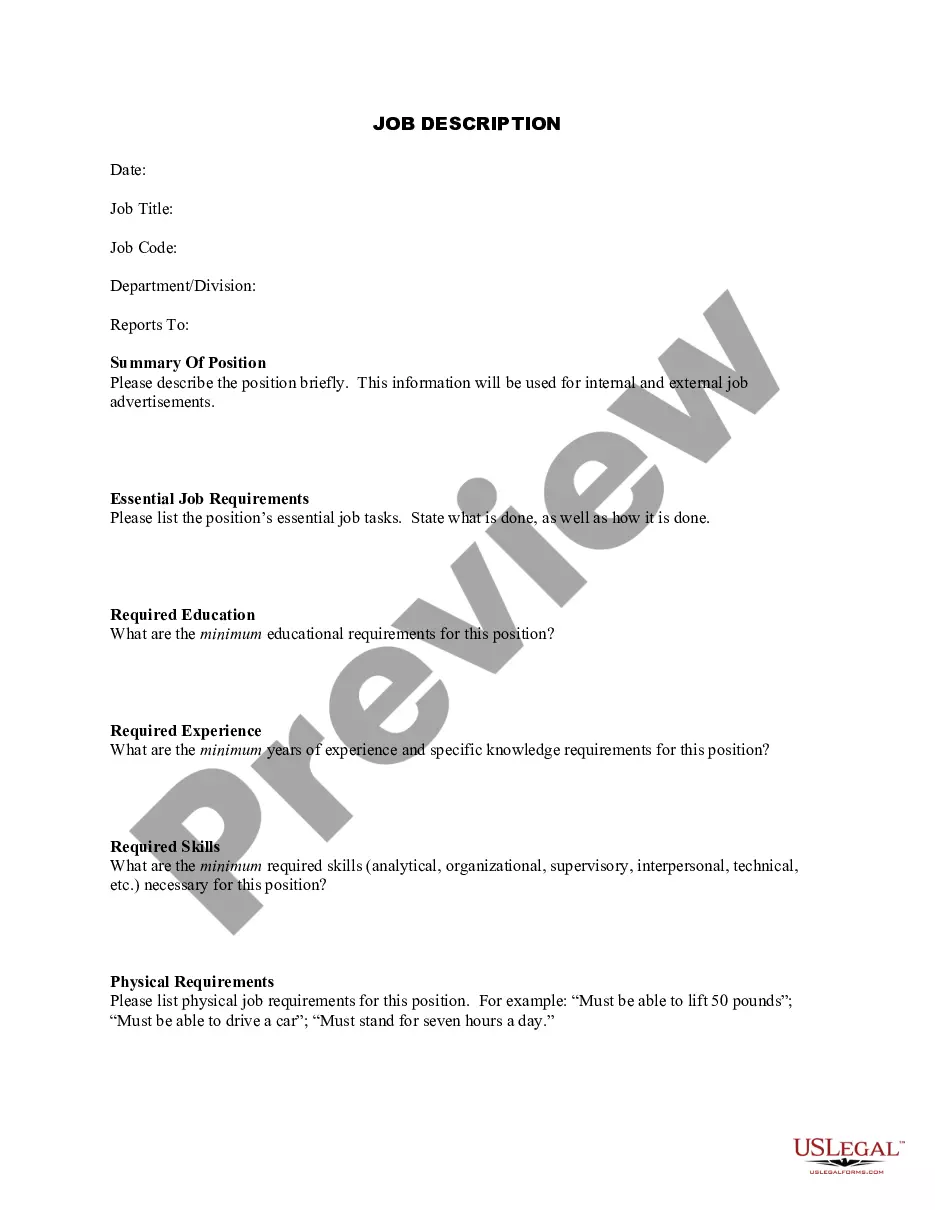

How to fill out Employment Conditions For Potential Employees?
Locating the appropriate legal document format can be a challenge.
Clearly, there are numerous templates accessible online, but how do you acquire the legal form you desire.
Utilize the US Legal Forms website. The service provides a vast array of templates, including the District of Columbia Employment Conditions for Prospective Employees, which you can use for business and personal needs.
If the form does not meet your requirements, use the Search box to find the correct form.
- All of the forms are reviewed by experts and meet federal and state regulations.
- If you are already registered, Log In to your account and click on the Download button to obtain the District of Columbia Employment Conditions for Prospective Employees.
- Use your account to view the legal forms you have previously acquired.
- Go to the My documents section of your account and obtain another copy of the document you need.
- If you are a new user of US Legal Forms, here are simple steps you can follow.
- First, ensure you have selected the correct form for your city/region. You can review the form using the Preview button and read the form details to confirm it is suitable for you.
Form popularity
FAQ
There are no so-called "right to work" laws in the District of Columbia, which means employees in unionized workforces who don't join the union may be required to pay a monthly fee to cover the expenses of representation. Legislation similar to other states' right to work laws was introduced in 2013 but failed to pass.
Most employers determine full-time status based on business needs and typically consider an employee to be full-time if they work anywhere from 32 to 40 or more hours per week.
time employee is, for a calendar month, an employee employed on average at least 30 hours of service per week, or 130 hours of service per month.
The three major common law exceptions are public policy, implied contract, and implied covenant of good faith. The at-will presumption is strong, however, and it can be difficult for an employee to prove that his circumstances fall within one of the exceptions.
There is no legally defined number of hours for full time employment, where individual employers can decide how many hours per week are to be considered full time. The hours that workers are expected to work will usually be set out in the company working hours policy and/or within individual contracts of employment.
Official employer designations regarding full-time employment generally range from 35 to 45 hours, with 40 hours being by far the most common standard. Some companies consider 50 hours a week full-time for exempt employees.
District of Columbia labor laws do not have any laws requiring an employer to pay severance pay to an employee. If an employer chooses to provide severance benefits, it must comply with the terms of its established policy or employment contract.
Blame the notoriously slow hiring process at federal government agencies. WASHINGTON It takes an average 32.2 days to go through the hiring process in D.C., longer than any other city in the nation.
Notice is not required by either party based on the fact that DC is an "employment at will" state, meaning that an employer or employee may terminate the relationship at any time, without a reason, without cause. 3.
Short answer: Full-time employment is usually considered between 30-40 hours a week, while part-time employment is usually less than 30 hours a week.