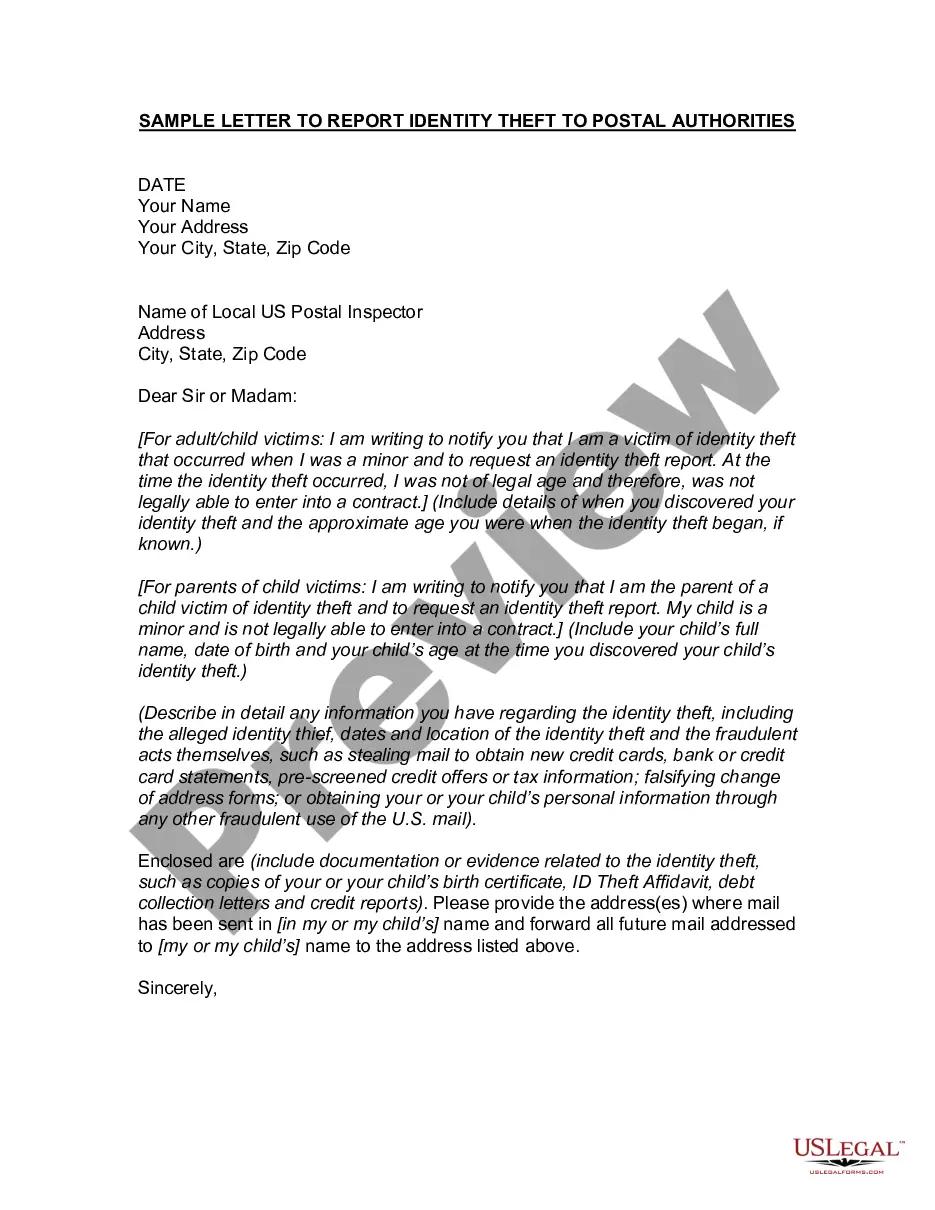
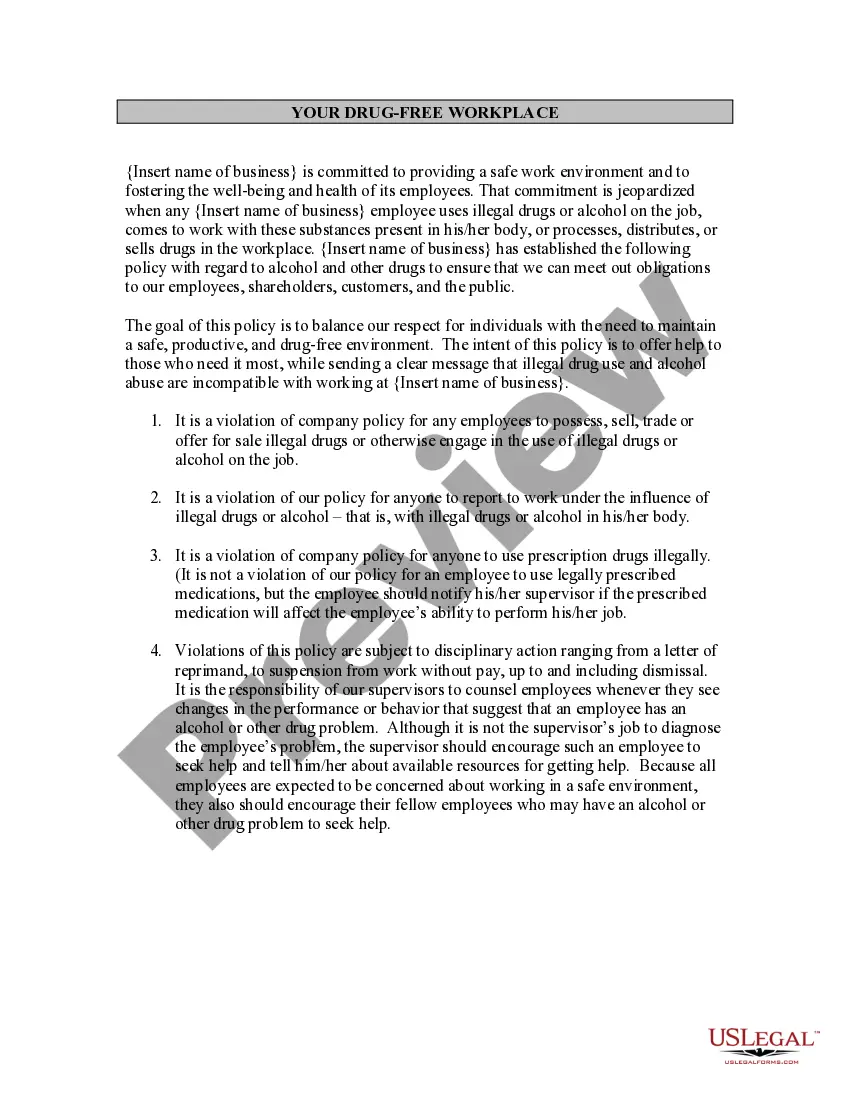
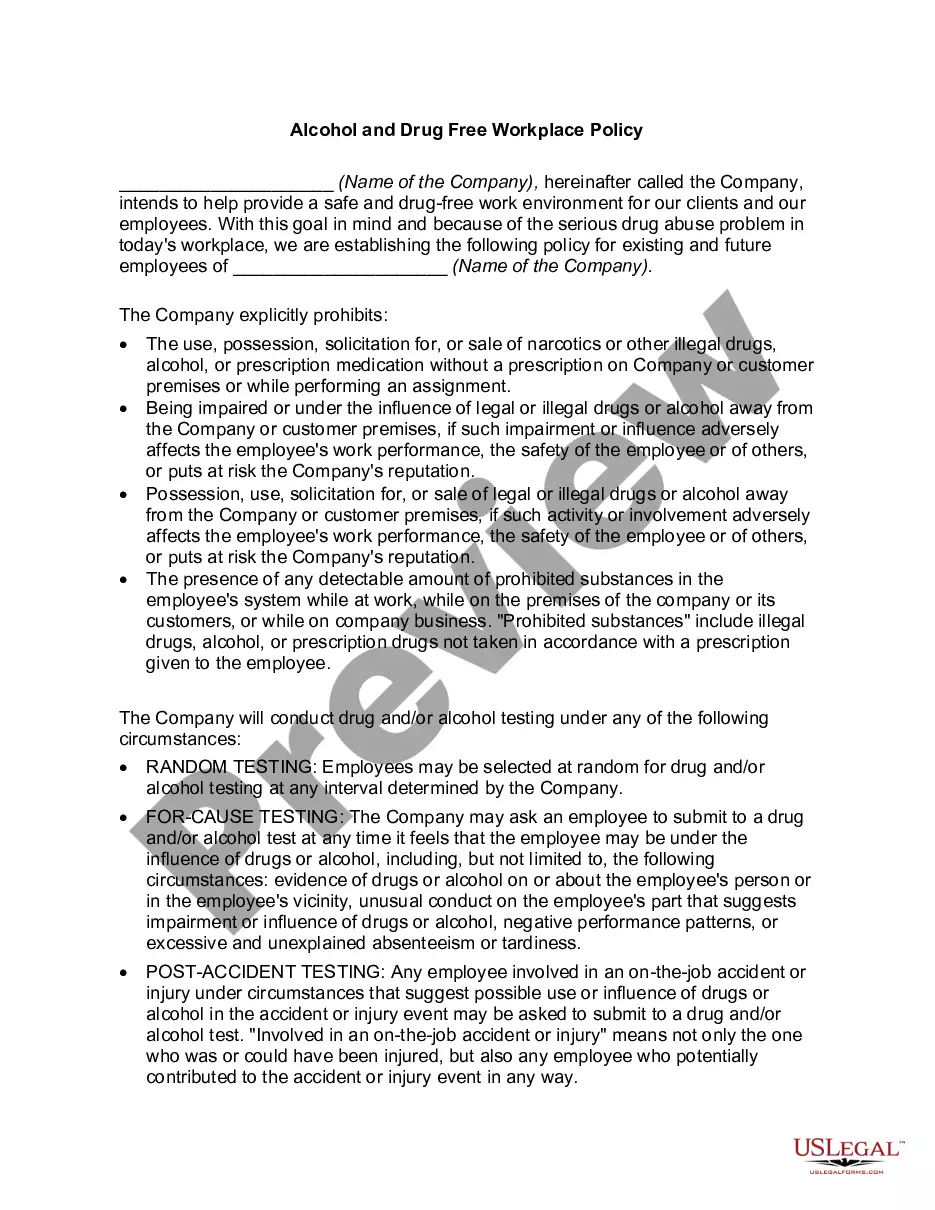
District of Columbia Your Drug-Free Workplace
Description
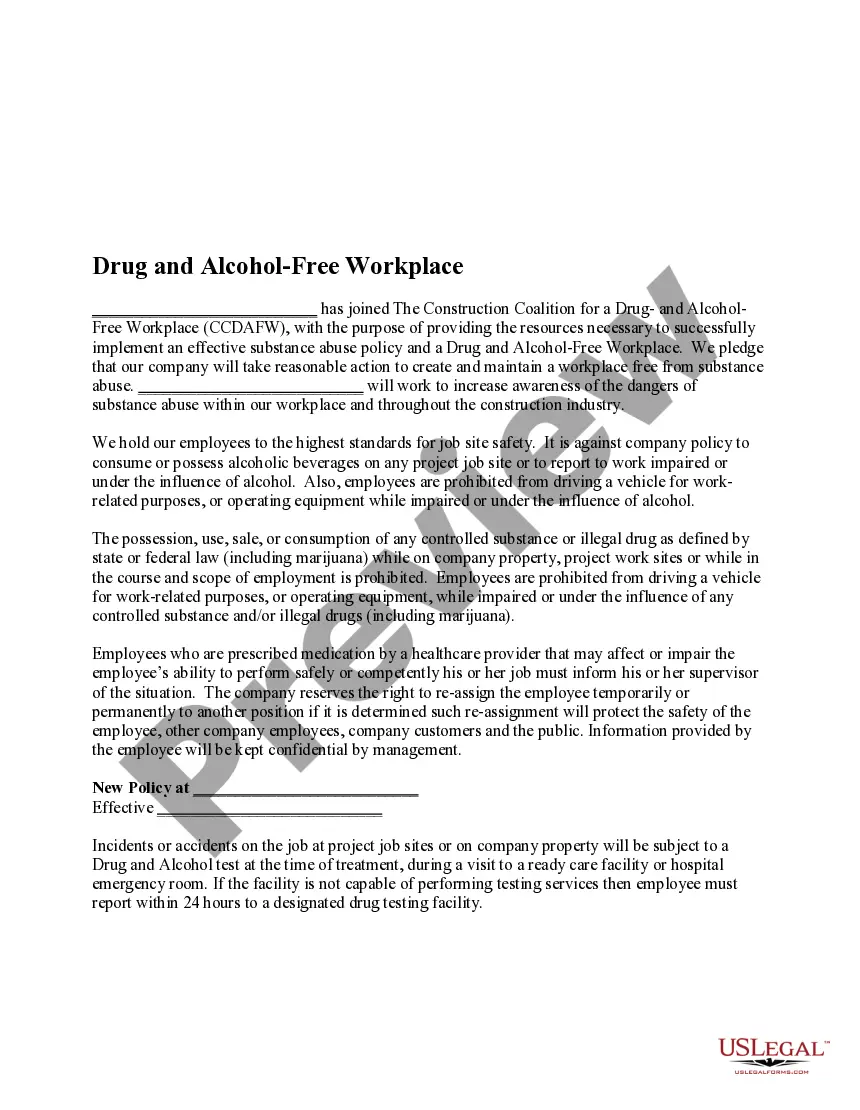
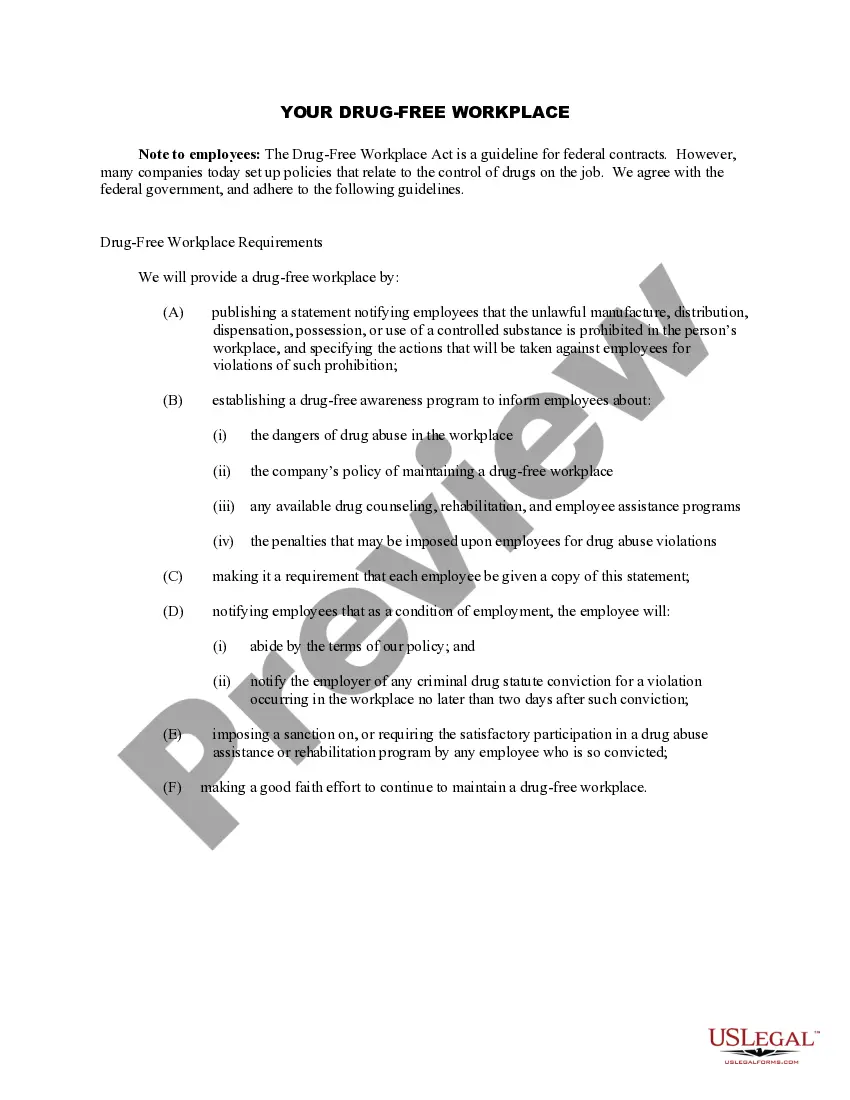
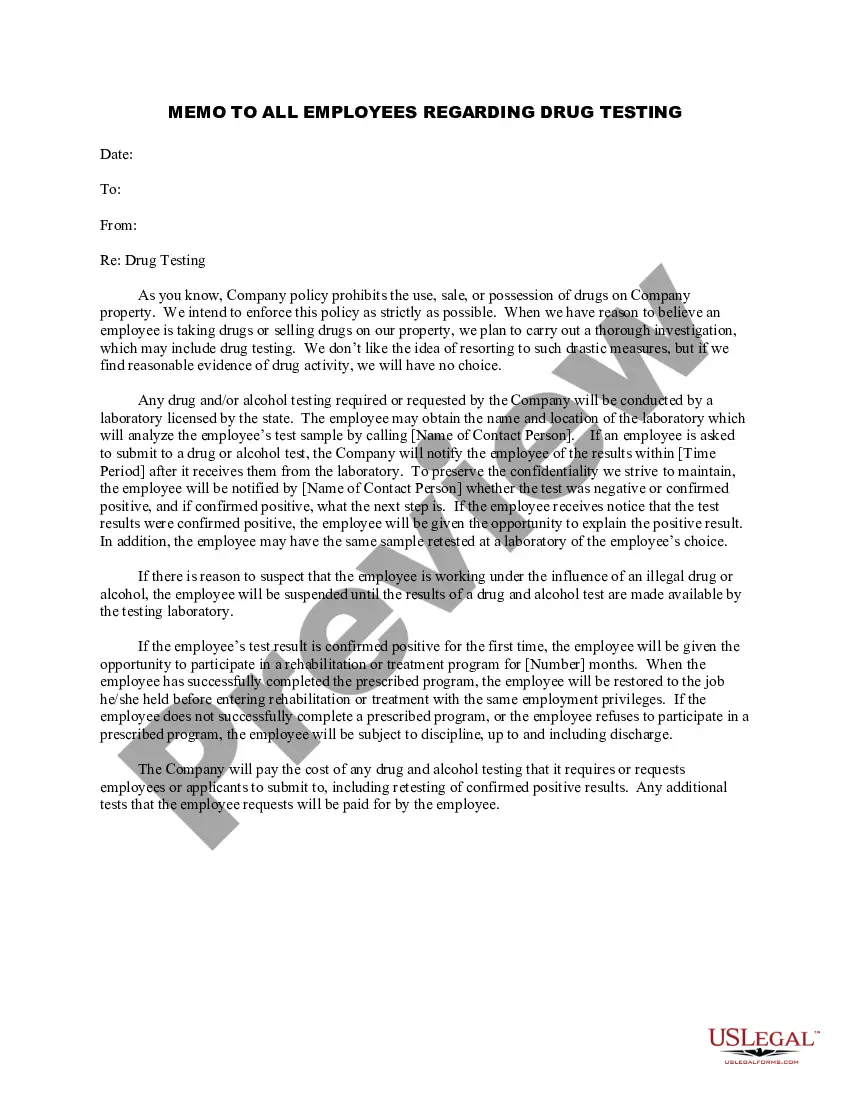
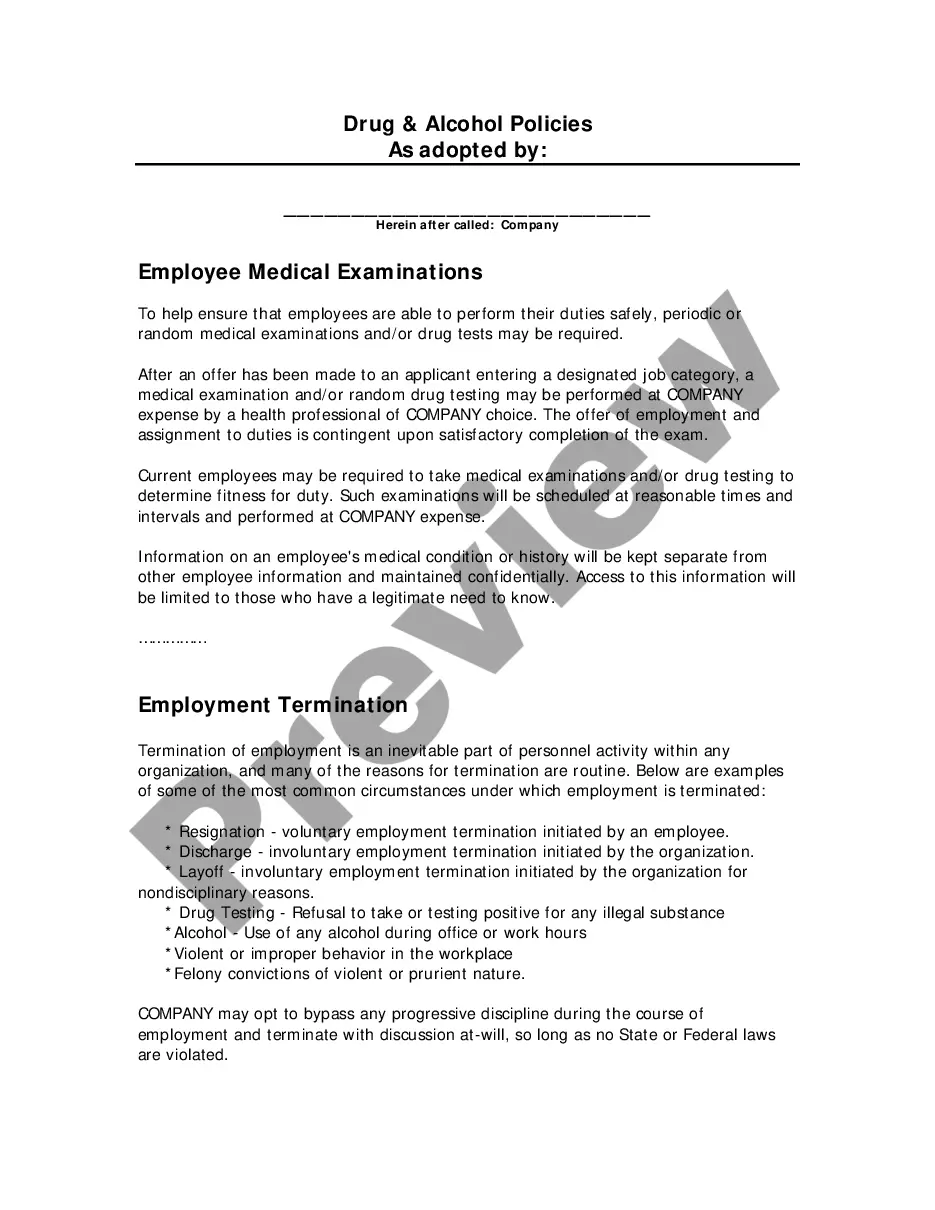

How to fill out Your Drug-Free Workplace?
Have you ever found yourself in a situation where you require documents for either business or personal objectives on a daily basis.
There are numerous legitimate document templates available online, but locating reliable ones is challenging.
US Legal Forms provides thousands of form templates, such as the District of Columbia Your Drug-Free Workplace, which can be tailored to meet state and federal standards.
Utilize US Legal Forms, the largest collection of legitimate forms, to save time and avoid mistakes.
The service offers professionally crafted legal document templates that you can use for various purposes. Create your account on US Legal Forms and start making your life a little easier.
- If you are already familiar with the US Legal Forms website and have an account, simply Log In.
- Next, you can download the District of Columbia Your Drug-Free Workplace template.
- If you do not have an account and want to start using US Legal Forms, follow these steps.
- Find the form you need and make sure it corresponds to the correct city/state.
- Use the Preview button to check the form.
- Review the description to ensure you have selected the right form.
- If the form does not meet your needs, utilize the Research field to find the form that suits your requirements.
- Once you find the correct form, click Acquire now.
- Choose the pricing plan you prefer, fill in the necessary information to create your account, and purchase the order using your PayPal or credit card.
- Select a convenient document format and download your copy.
- Locate all the document templates you have purchased in the My documents menu. You can obtain an additional copy of the District of Columbia Your Drug-Free Workplace anytime if needed. Just follow the form to download or print the document template.
Form popularity
FAQ
Yes, the D.C. government does conduct drug testing for its employees to ensure a safe work environment. This practice is part of the broader District of Columbia Your Drug-Free Workplace initiative, enhancing the safety and efficiency of government operations. Understanding the implications of these tests can help prospective employees prepare. Awareness of these policies is crucial for anyone considering employment with the D.C. government.
Certain industries are more likely to require drug testing than others. For instance, positions involving safety-sensitive roles, such as those in transportation and healthcare, frequently implement drug testing. Under the District of Columbia Your Drug-Free Workplace guidelines, companies across various sectors strive to create a safe environment for all employees. It's always wise for job seekers to inquire about drug testing policies when applying.
Yes, jobs within the D.C. government often require drug testing as part of the hiring process. This is aligned with the District of Columbia Your Drug-Free Workplace initiative, which aims to promote safety and productivity. Candidates should be aware of these requirements to prepare accordingly. Understanding these policies can greatly assist in navigating the hiring process in the public sector.
In Washington, D.C., teachers may be subject to drug testing, especially if they work in public schools. The goal is to maintain a safe and productive learning environment under the District of Columbia Your Drug-Free Workplace framework. Policies can vary by school district, so it's useful for educators to check specific requirements. Protecting students is a collaborative effort, and drug testing can play a role.
Yes, drug testing is legal in Washington, D.C. Employers can implement drug testing policies as part of their commitment to create a District of Columbia Your Drug-Free Workplace. However, they must comply with local laws and regulations. It's essential for both workers and employers to understand these regulations to ensure fair practices.
Yes, employers in British Columbia can perform drug testing, especially in high-risk workplaces. However, they must follow strict legal guidelines to ensure the testing is fair and does not violate employee privacy. For businesses navigating these regulations, utilizing the resources available through the District of Columbia Your Drug-Free Workplace can significantly aid in implementing effective and lawful drug testing policies.
In Canada, employers generally must provide a reasonable cause to require drug testing among employees. Typically, testing is performed under specific conditions, such as safety-sensitive positions or if there are reasonable grounds to suspect impairment. Understanding the legal framework surrounding drug testing can help ensure that employers align their practices with both local laws and the principles upheld by District of Columbia Your Drug-Free Workplace.
As an employee in South Carolina, you have rights regarding workplace safety and privacy, including your rights related to drug testing. Employers must follow specific procedures and maintain confidentiality regarding test results. If you're unsure of your rights or need assistance, platforms like USLegalForms can provide valuable resources and guidance, especially for maintaining compliance with District of Columbia Your Drug-Free Workplace standards.
If you fail a drug test in South Carolina, several consequences may arise, depending on your employment policies. Employers may choose to terminate employment, suspend, or require further testing. It's important to understand your workplace policy on drug testing and to seek guidance about your rights. Companies can use resources available through District of Columbia Your Drug-Free Workplace to ensure fair practices in handling drug test results.
The Controlled Substance Act in South Carolina regulates the manufacture, distribution, and possession of drugs. This law categorizes drugs into schedules based on their potential for abuse and accepted medical use. Employers in South Carolina must be aware of this Act to create a safe work environment, embracing practices aligned with the District of Columbia Your Drug-Free Workplace initiative, which promotes a healthy workforce.