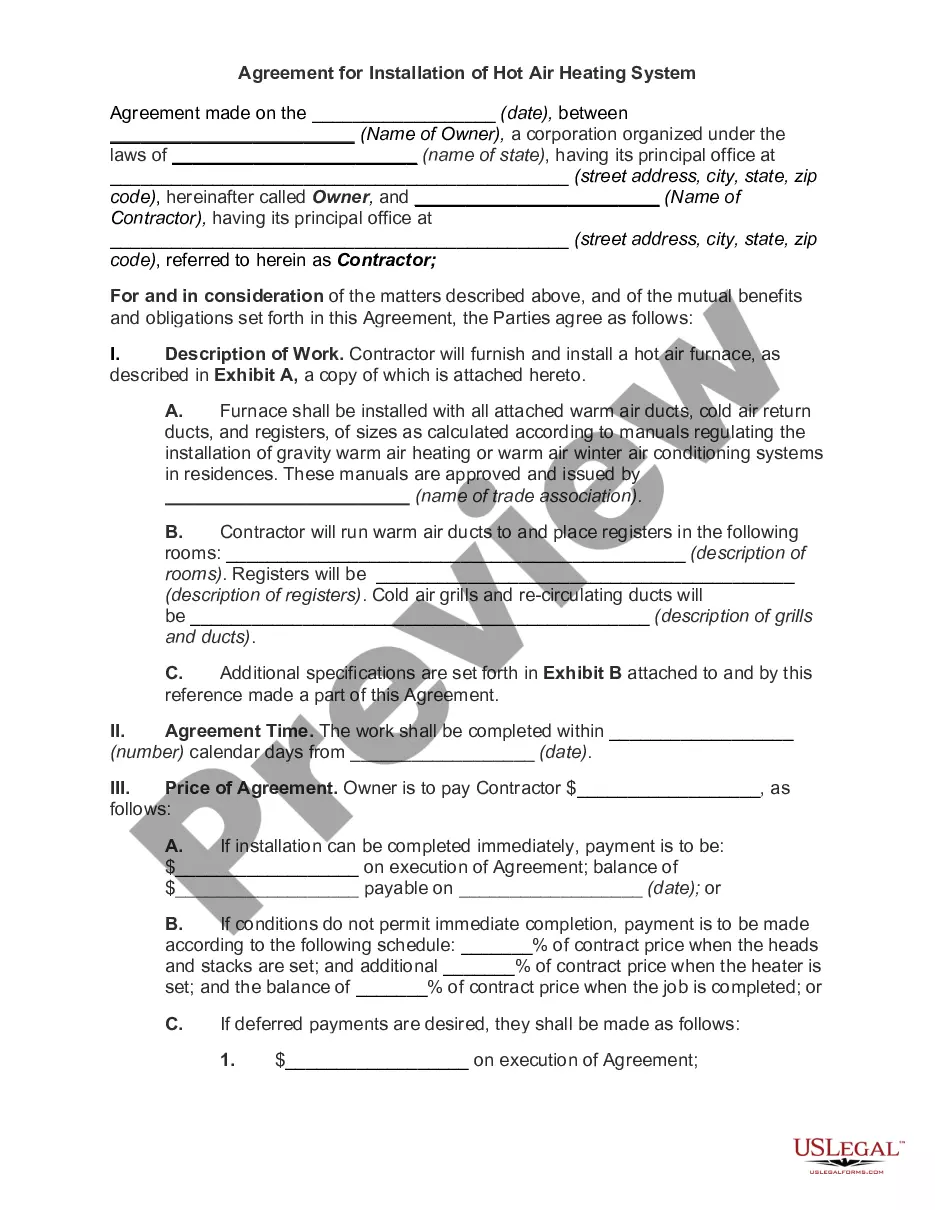
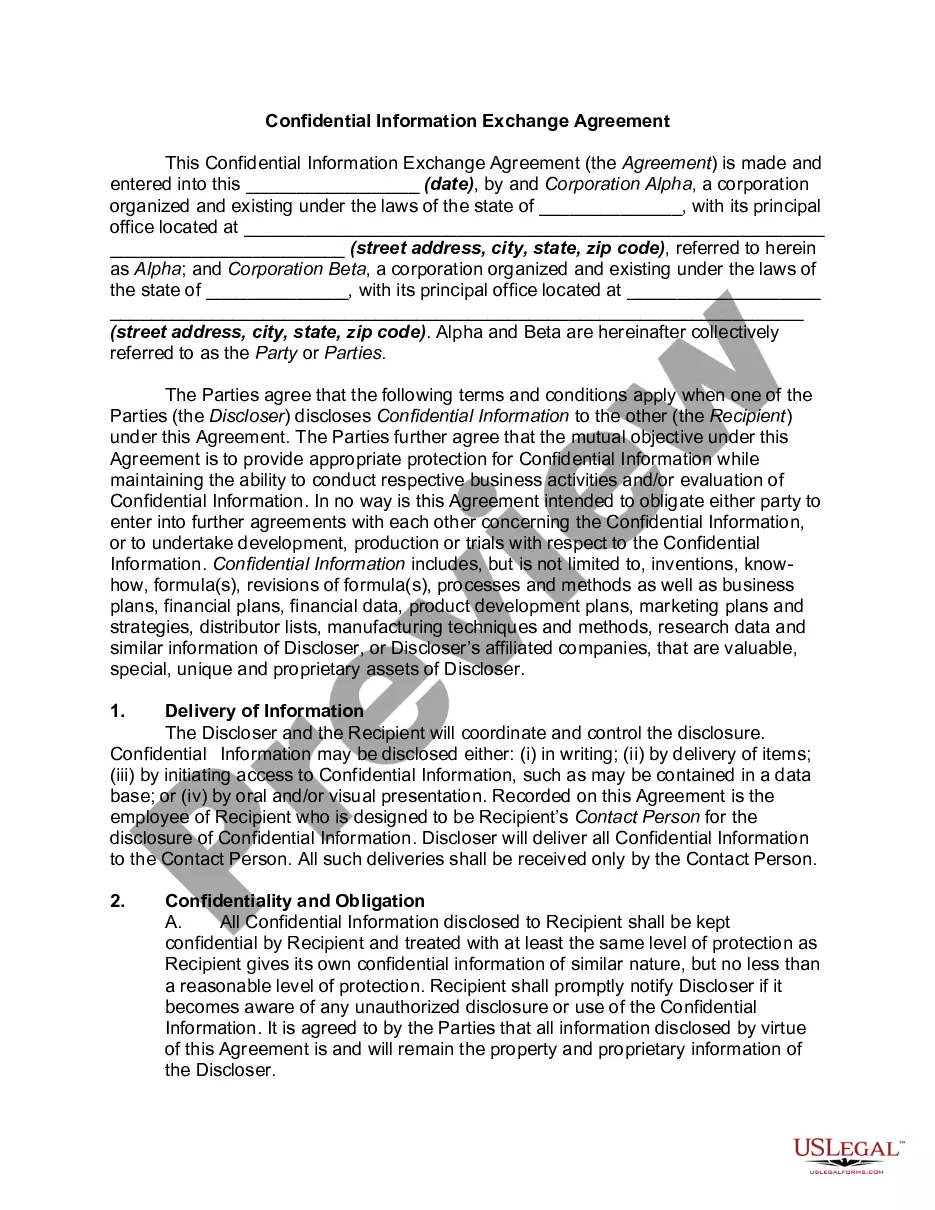
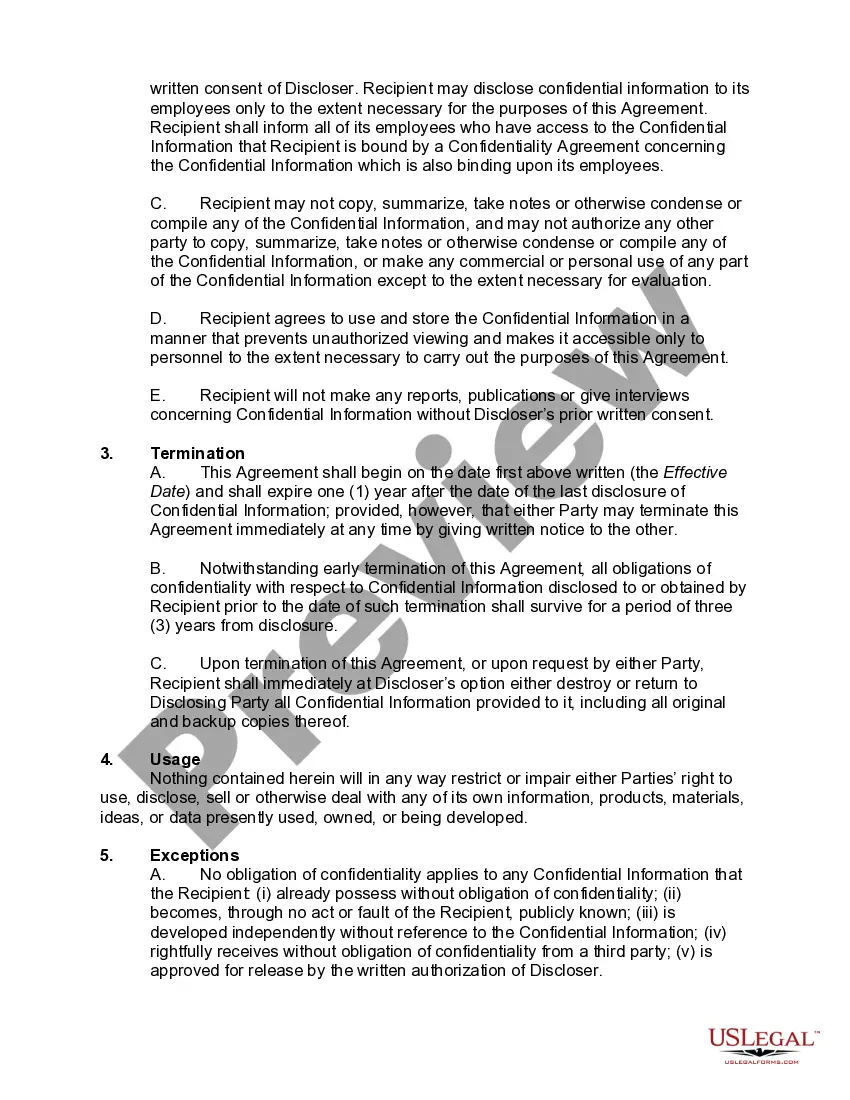
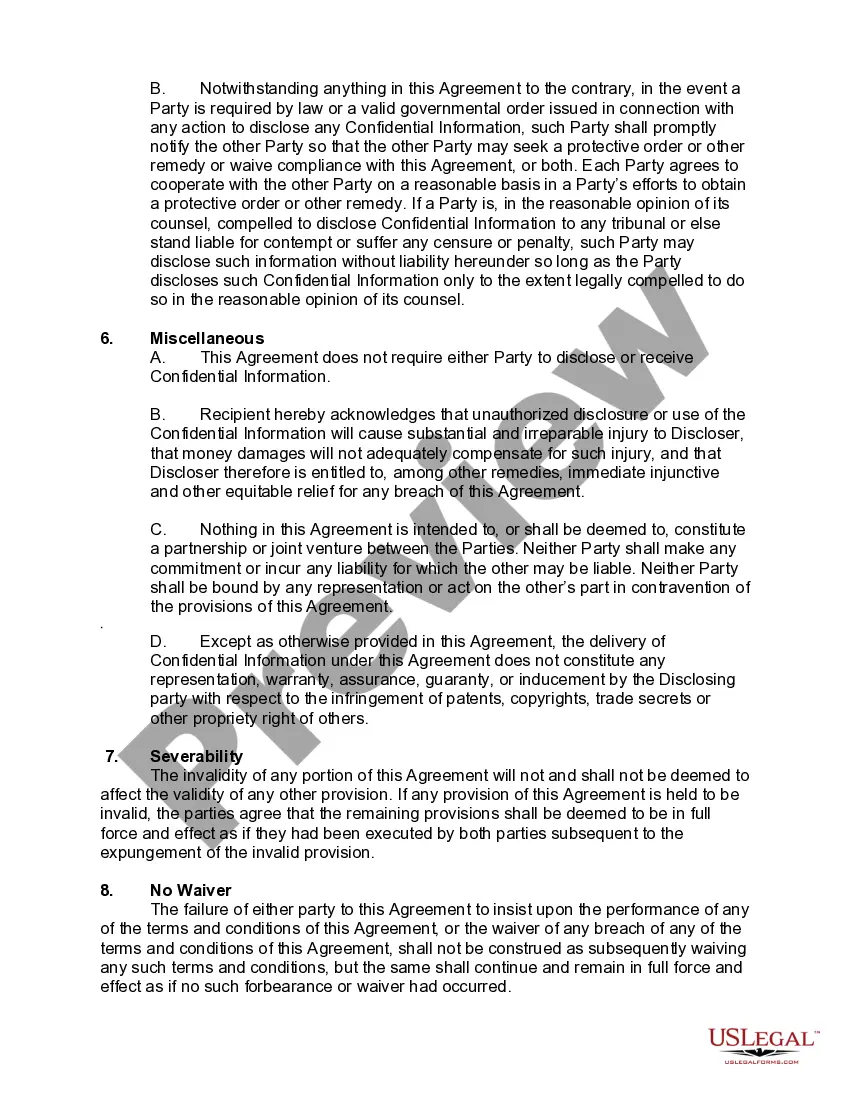
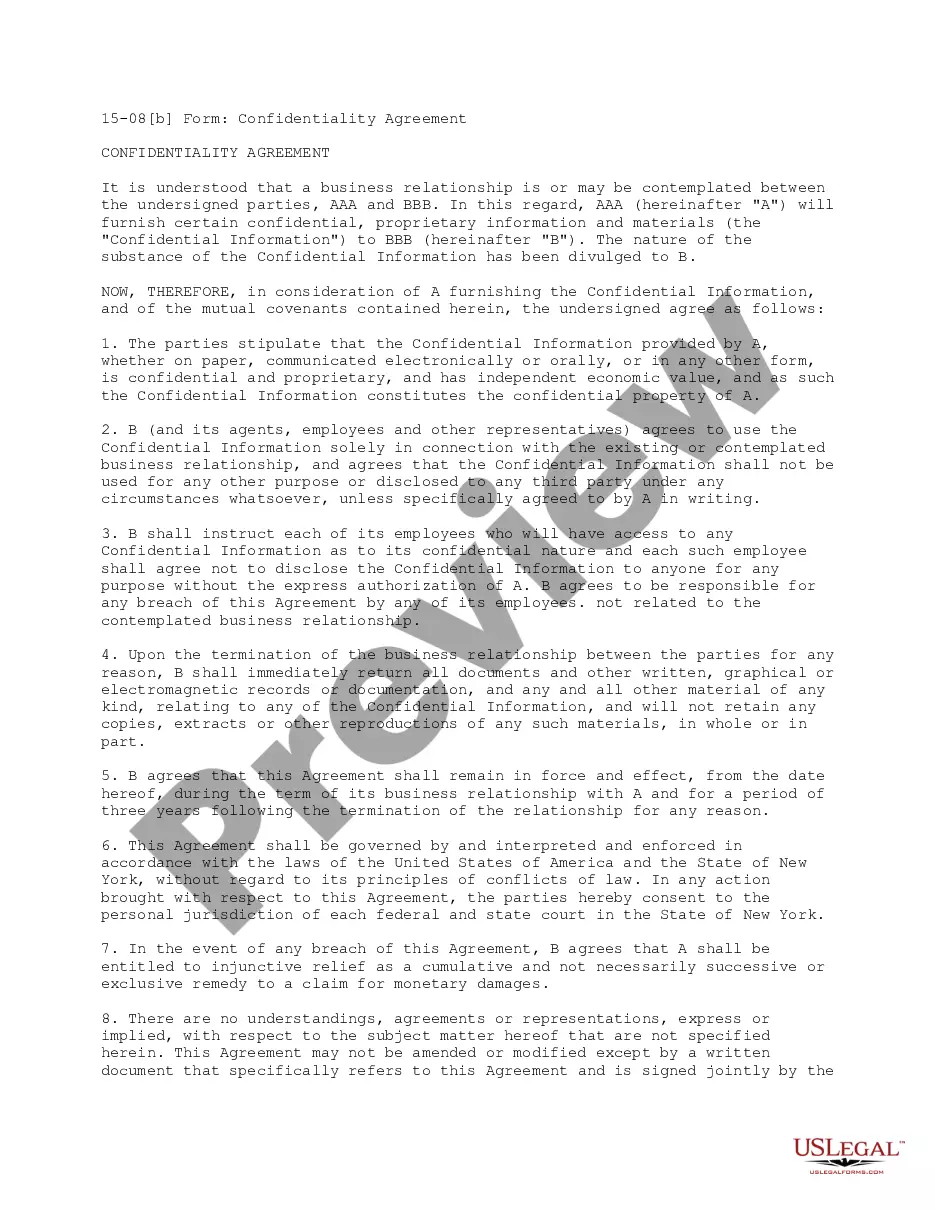
District of Columbia Confidential Information Exchange Agreement
Description
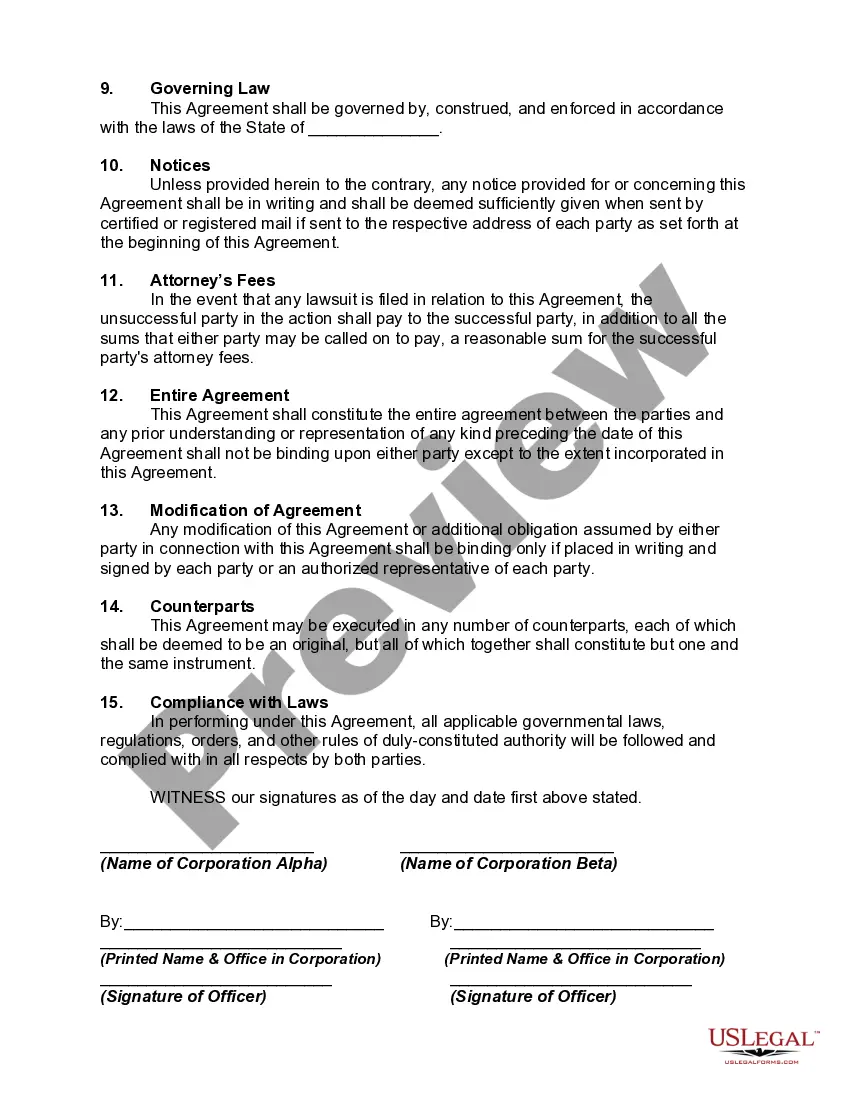

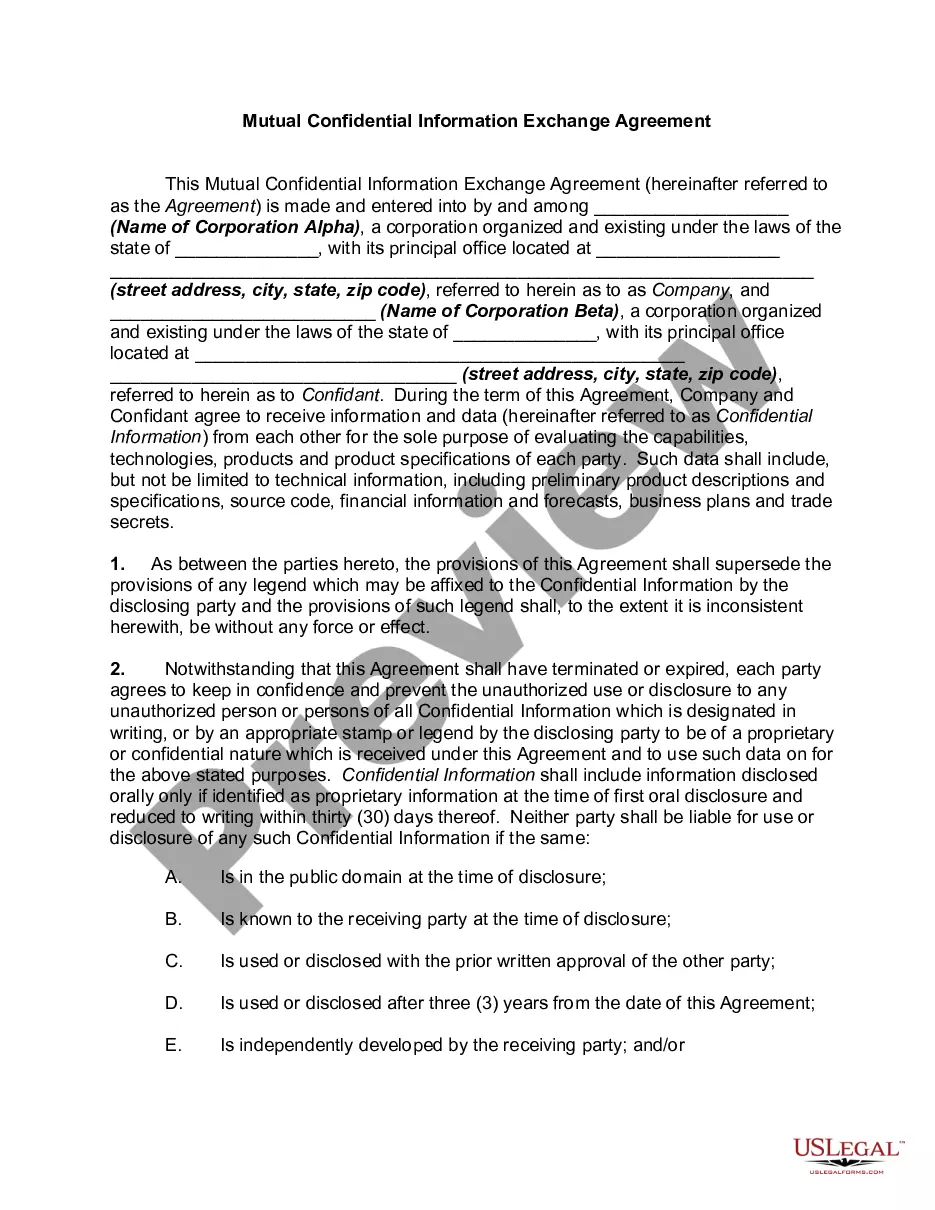
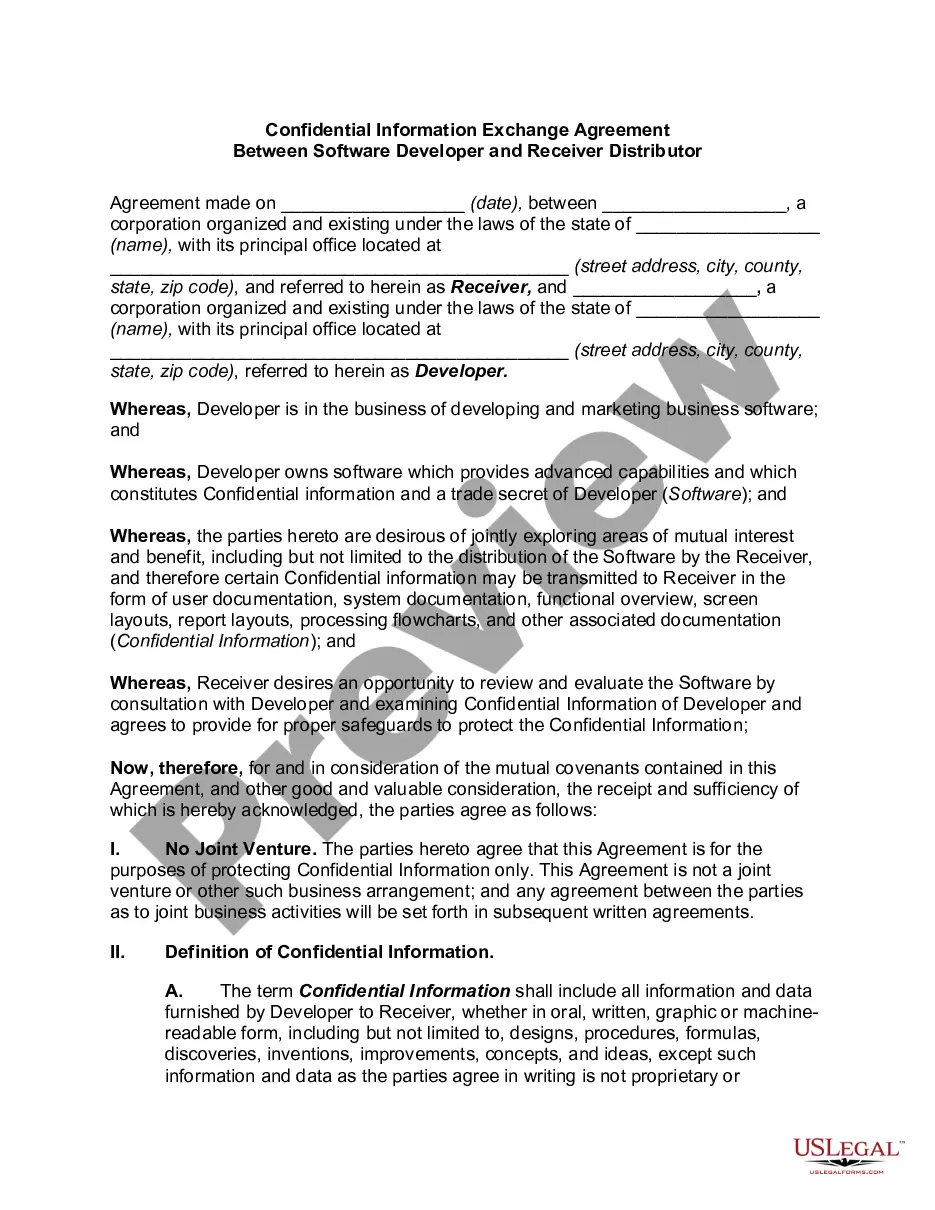
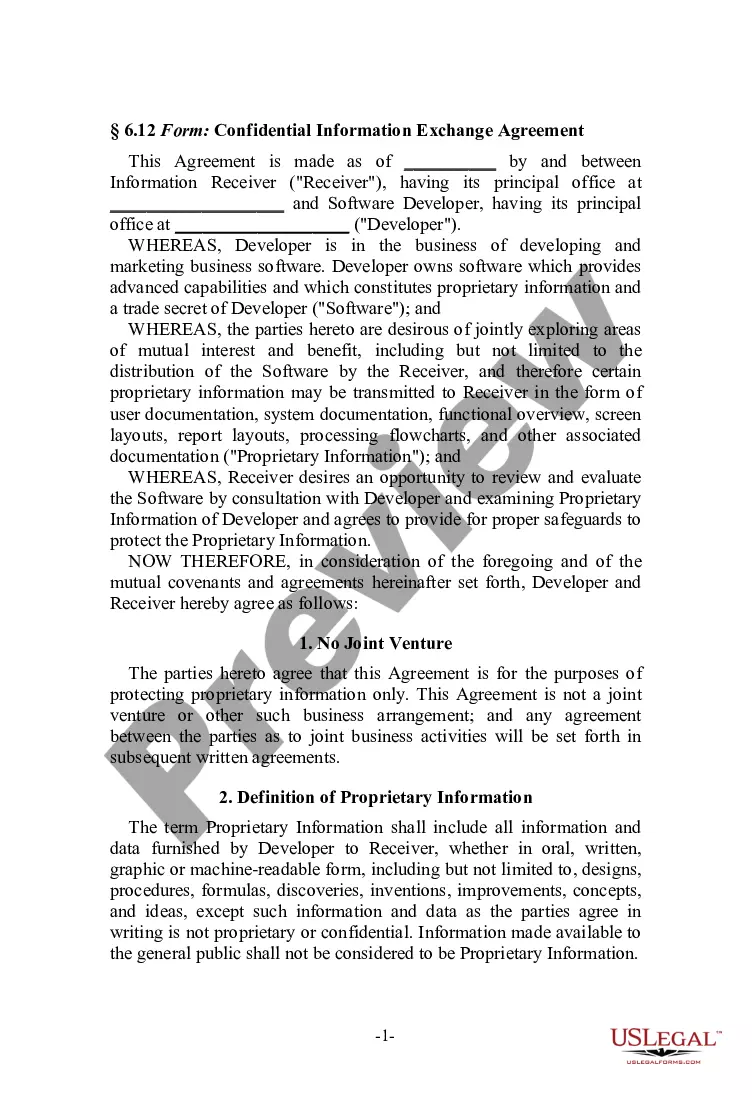
Get your form ready online
Our built-in tools help you complete, sign, share, and store your documents in one place.
Make edits, fill in missing information, and update formatting in US Legal Forms—just like you would in MS Word.
Download a copy, print it, send it by email, or mail it via USPS—whatever works best for your next step.
Sign and collect signatures with our SignNow integration. Send to multiple recipients, set reminders, and more. Go Premium to unlock E-Sign.
If this form requires notarization, complete it online through a secure video call—no need to meet a notary in person or wait for an appointment.
We protect your documents and personal data by following strict security and privacy standards.

Make edits, fill in missing information, and update formatting in US Legal Forms—just like you would in MS Word.

Download a copy, print it, send it by email, or mail it via USPS—whatever works best for your next step.

Sign and collect signatures with our SignNow integration. Send to multiple recipients, set reminders, and more. Go Premium to unlock E-Sign.

If this form requires notarization, complete it online through a secure video call—no need to meet a notary in person or wait for an appointment.

We protect your documents and personal data by following strict security and privacy standards.
Looking for another form?


How to fill out Confidential Information Exchange Agreement?
US Legal Forms - one of the most prominent repositories of legal templates in the United States - offers a wide range of legal document formats for you to download or print.
By using the website, you can discover thousands of forms for both business and personal use, categorized by type, state, or keywords. You can find the latest templates such as the District of Columbia Confidential Information Exchange Agreement within moments.
If you possess a membership, Log In and download the District of Columbia Confidential Information Exchange Agreement from the US Legal Forms collection. The Obtain button will appear on every template you view. You have access to all previously acquired forms in the My documents tab of your profile.
Proceed with the purchase. Use your credit card or PayPal account to complete the transaction.
Choose the format and download the document to your device. Make modifications. Fill out, edit, print, and sign the acquired District of Columbia Confidential Information Exchange Agreement. Every template you add to your account has no expiration date and belongs to you forever. Therefore, if you want to download or print another copy, simply go to the My documents section and click on the form you need. Access the District of Columbia Confidential Information Exchange Agreement with US Legal Forms, one of the most extensive collections of legal document templates. Utilize a multitude of professional and state-specific formats that meet your business or personal requirements.
- If this is your first time using US Legal Forms, here are simple steps to help you get started.
- Ensure you have selected the correct form for your city/county.
- Click on the Review button to examine the content of the form.
- Check the form description to make sure that you have chosen the appropriate document.
- If the form does not meet your requirements, utilize the Search field at the top of the screen to find the one that does.
- Once you are satisfied with the form, confirm your choice by clicking the Acquire now button.
- Select the payment plan you prefer and provide your details to register for an account.
Form popularity
FAQ
In security contexts, a CDA refers to a Confidentiality Disclosure Agreement that protects sensitive data within a secure environment. By establishing clear boundaries around the shared information, a CDA minimizes the risk of unintended disclosures. It's essential for organizations looking to safeguard their proprietary information within the framework of the District of Columbia Confidential Information Exchange Agreement.
Determining whether a NDA or CDA is better depends on your specific needs. If you are primarily focused on sharing sensitive information, a CDA may be more appropriate. However, for broad confidentiality purposes, a NDA often serves better. Choosing the right agreement is crucial in the context of the District of Columbia Confidential Information Exchange Agreement.
Confidentiality agreements, including the District of Columbia Confidential Information Exchange Agreement, are generally enforceable in a court of law, provided they meet certain legal criteria. The agreements must clearly define the confidential information and should be signed voluntarily by all parties involved. When drafted correctly, these agreements can effectively protect your interests.
The main difference between a CDA and a NDA lies in their use. While both agreements serve to protect confidential information, a CDA specifically focuses on the exchange of sensitive information, whereas an NDA is broader in scope. Understanding these differences is essential when creating a District of Columbia Confidential Information Exchange Agreement to ensure proper legal protections.
CDA stands for Confidentiality Disclosure Agreement. This type of agreement, often used interchangeably with an NDA (Non-Disclosure Agreement), is designed to protect sensitive information shared between parties. In the context of the District of Columbia Confidential Information Exchange Agreement, a CDA plays a crucial role in ensuring that confidential details remain secure.
NDAs can be quite effective in court if they are clearly written and legally enforceable. Courts generally uphold these agreements as long as they are reasonable in scope and duration. The strength of a District of Columbia Confidential Information Exchange Agreement lies in its specificity and clarity, which help ensure it holds weight in legal proceedings. Be sure to consult legal experts when crafting your agreement to enhance its enforceability.
While NDAs offer protection for confidential information, they have their drawbacks. For instance, they can limit your ability to discuss your work experiences or seek other job opportunities, as many agreements impose strict confidentiality clauses. Additionally, some may find the terms of a District of Columbia Confidential Information Exchange Agreement too restrictive. It is crucial to consider these factors carefully before signing.
Creating an NDA agreement involves a few essential steps. First, clearly define the confidential information you want to protect, specifying the parties involved. Utilize online platforms like uslegalforms to generate a comprehensive District of Columbia Confidential Information Exchange Agreement, ensuring all necessary details and legal terms are included. By following a structured approach, you can craft a solid agreement that meets your needs.
Signing an NDA is a significant commitment. It legally binds you to keep certain information private, and breaching the agreement can lead to serious consequences, including legal action. When engaging in a District of Columbia Confidential Information Exchange Agreement, it is essential to understand the terms fully, as they dictate what information you can share and what you cannot. Being fully aware of this agreement aids in safeguarding both your interests and those of your employer.
Yes, signing a non-disclosure agreement (NDA) is quite common in many job situations. Employers often require you to sign an NDA to protect their confidential information, especially if you will have access to sensitive data. Implementing a District of Columbia Confidential Information Exchange Agreement ensures that both parties understand their obligations regarding confidentiality. This process helps establish trust and clarity in professional relationships.