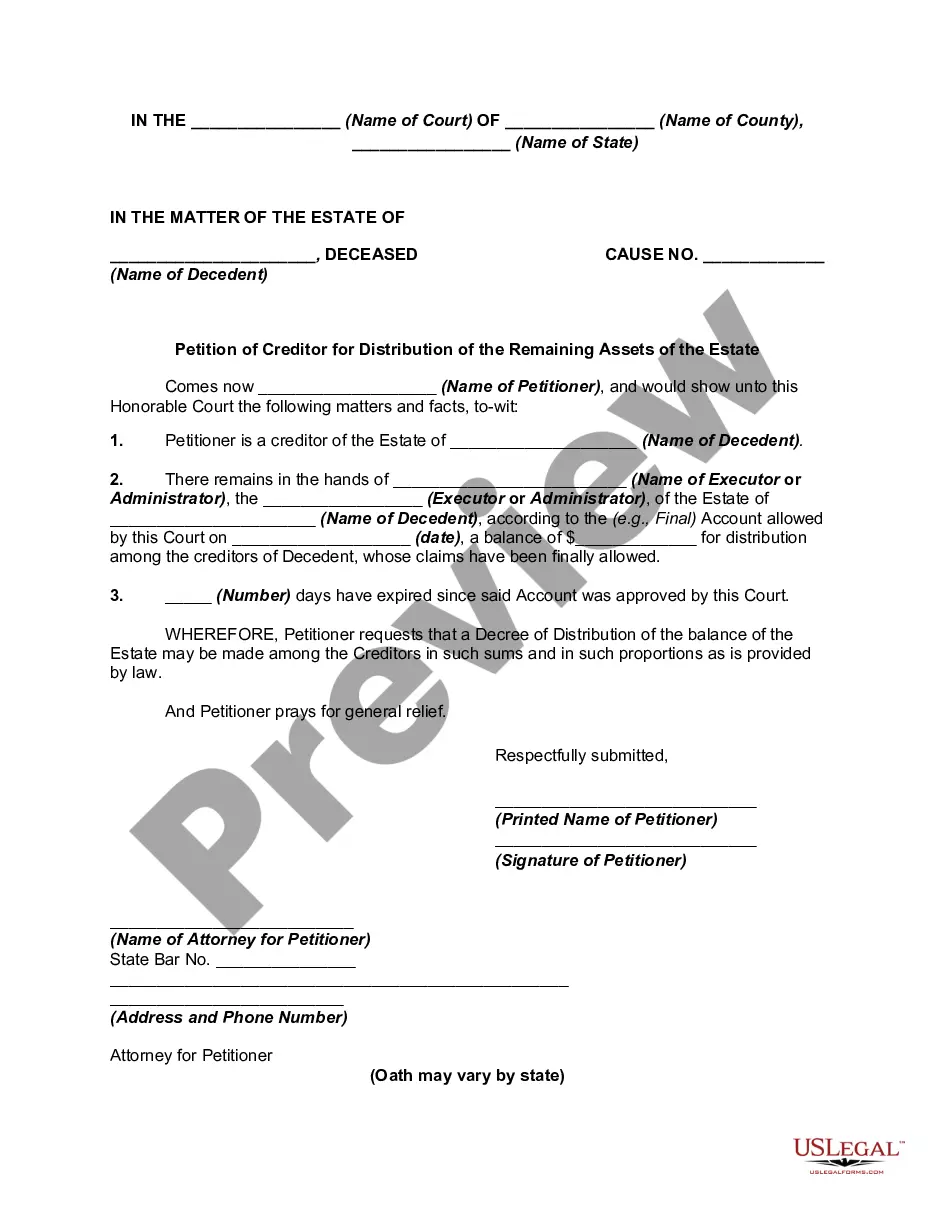
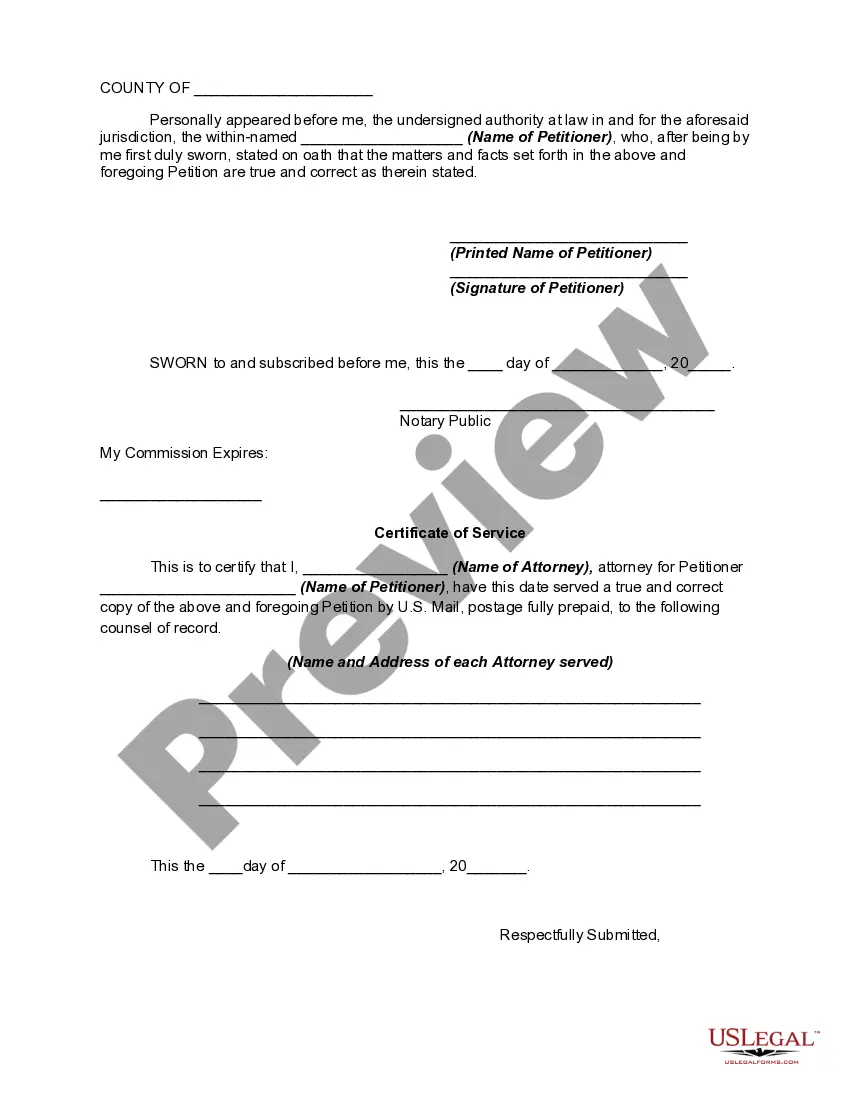
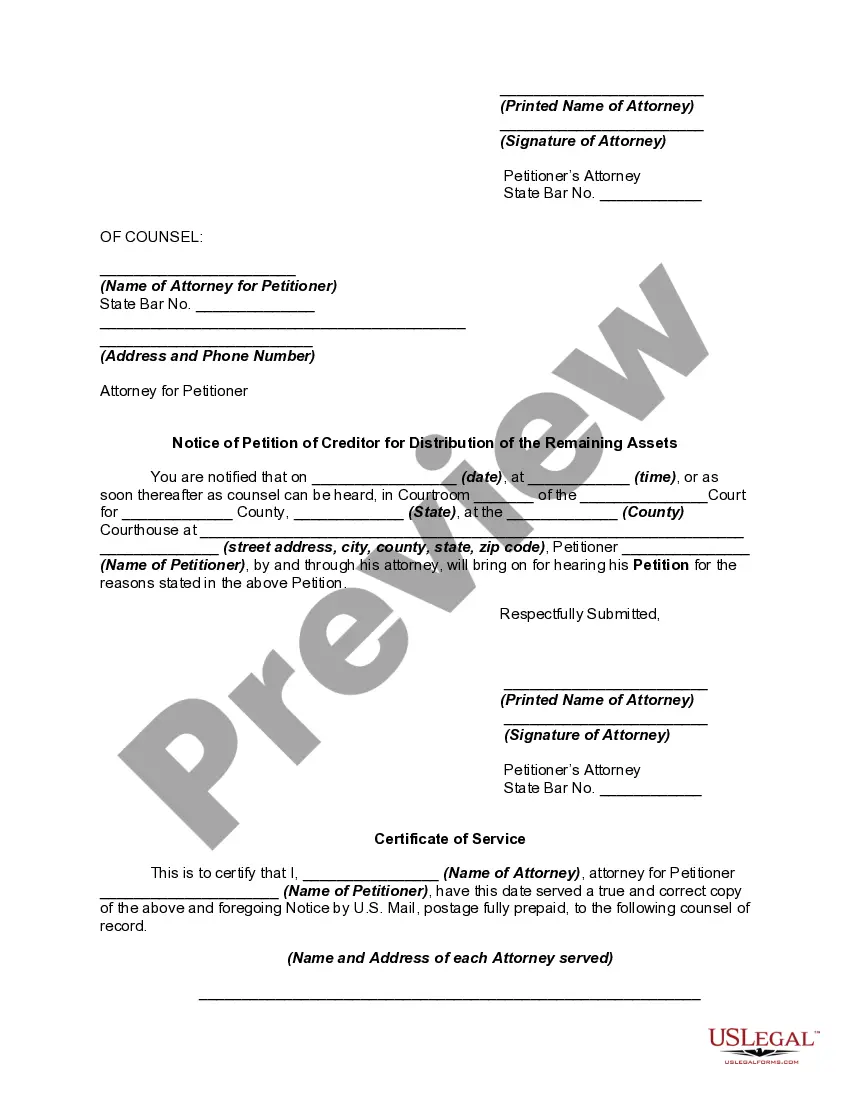
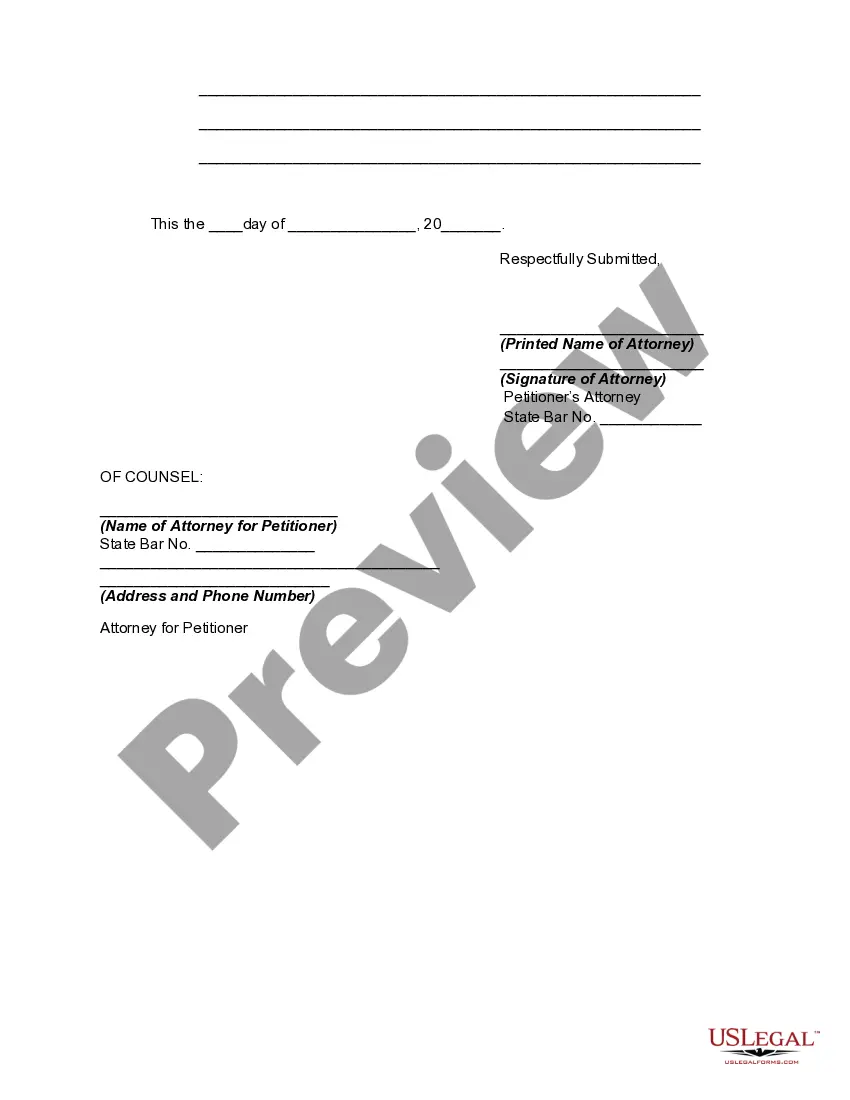
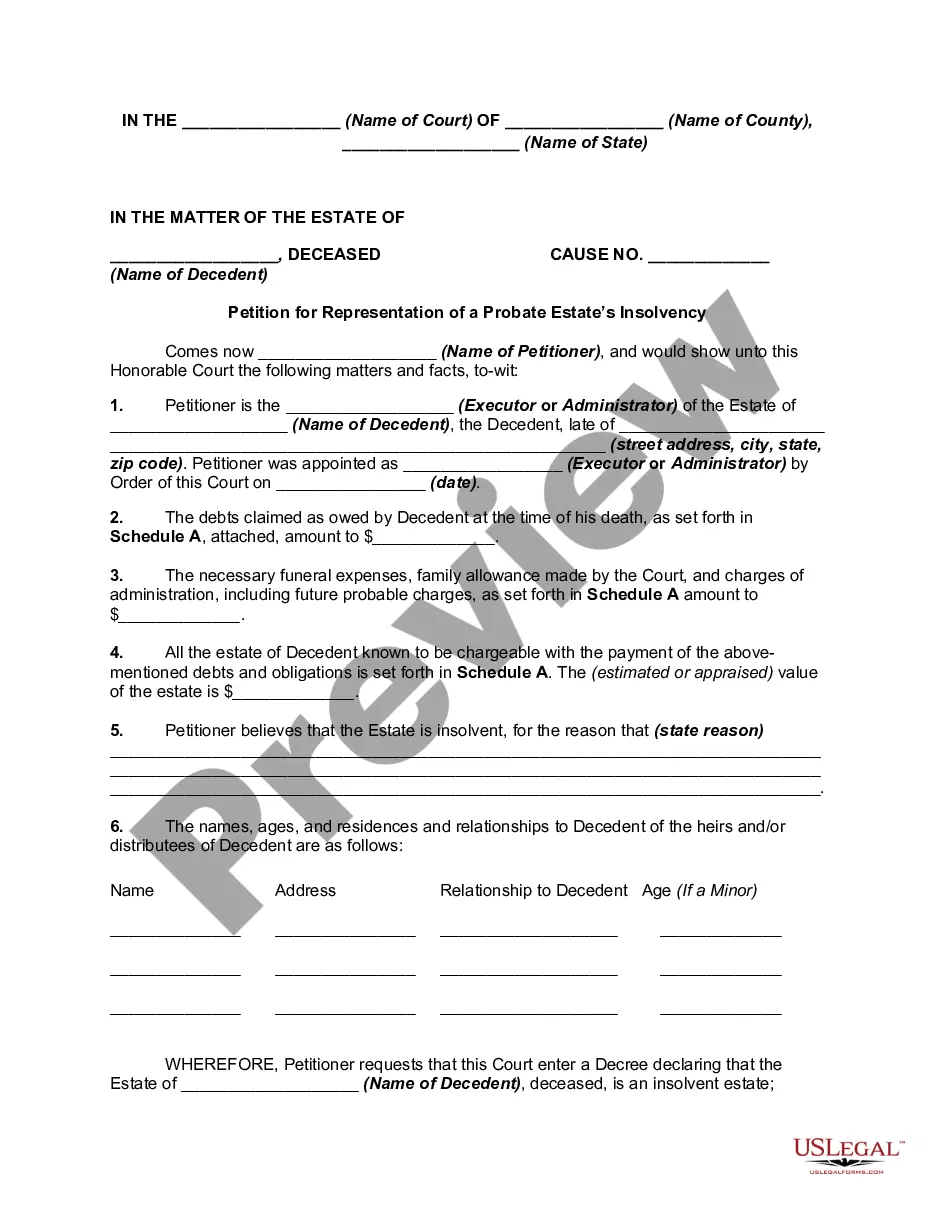
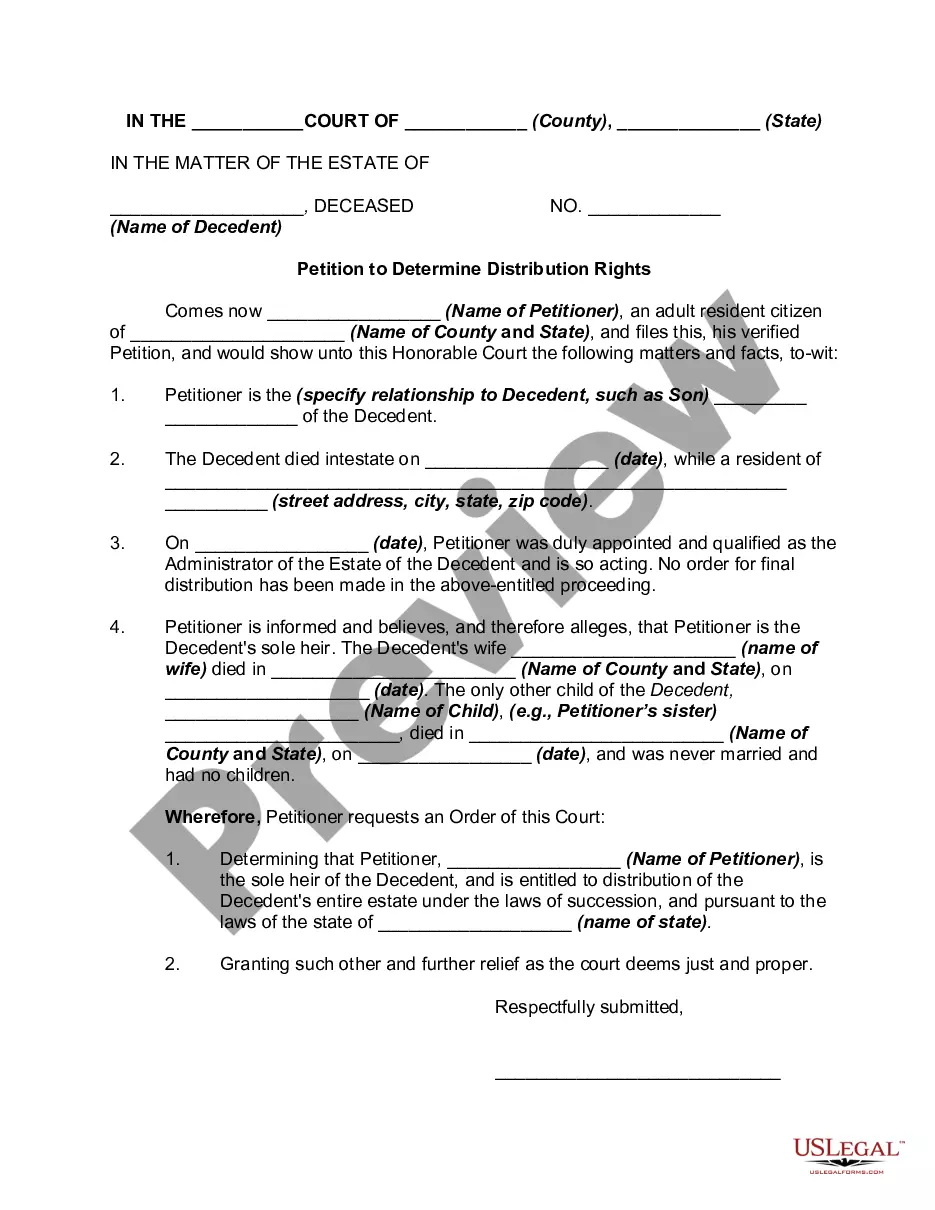
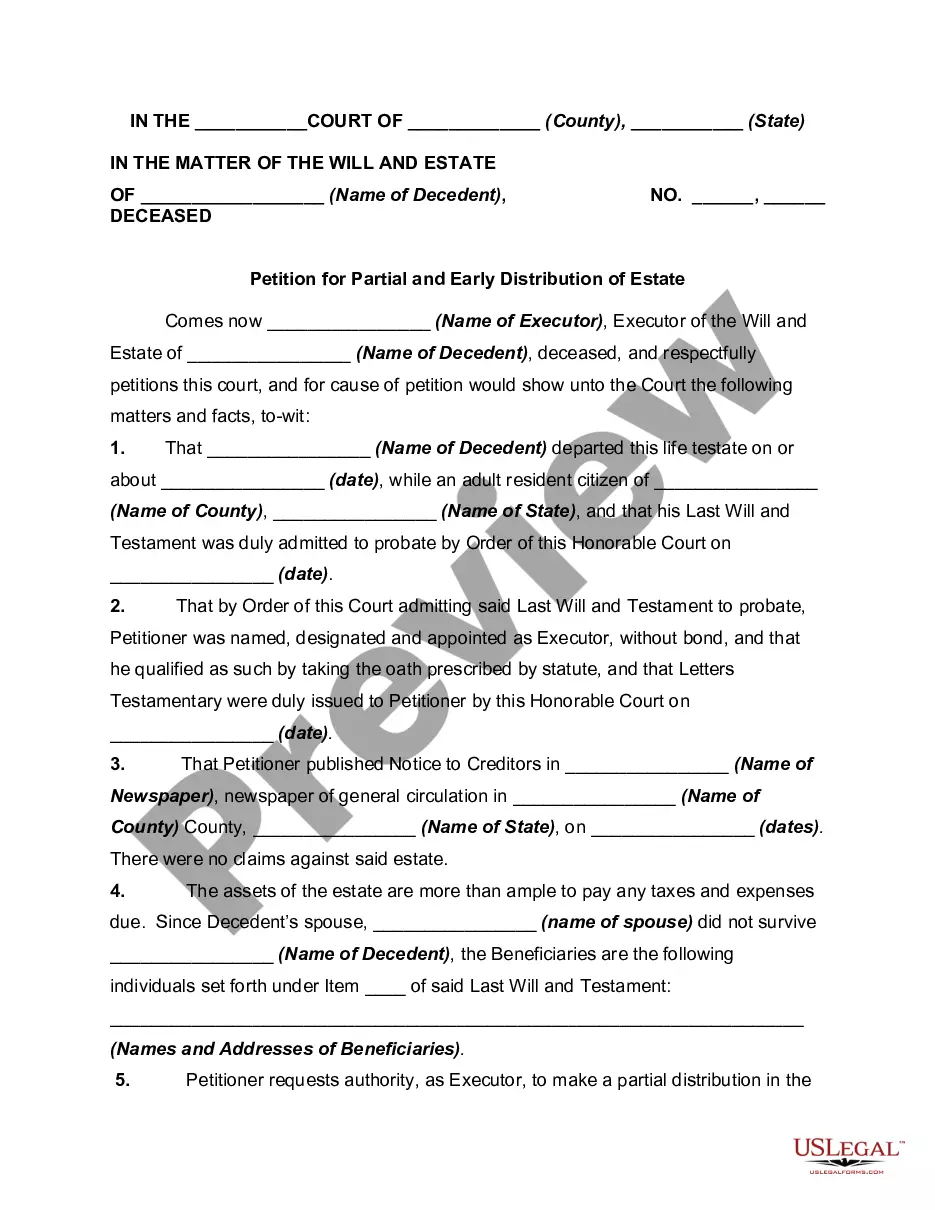
The following form is a Petition that adopts the "notice pleadings" format of the Federal Rules of Civil Procedure, which have been adopted by most states in one form or another.
District of Columbia Petition of Creditor of an Estate of a Decedent for Distribution of the Remaining Assets of the Estate
Category:
State:
Multi-State
Control #:
US-02438BG
Format:
Word;
PDF;
Rich Text
Instant download
Description
Free preview
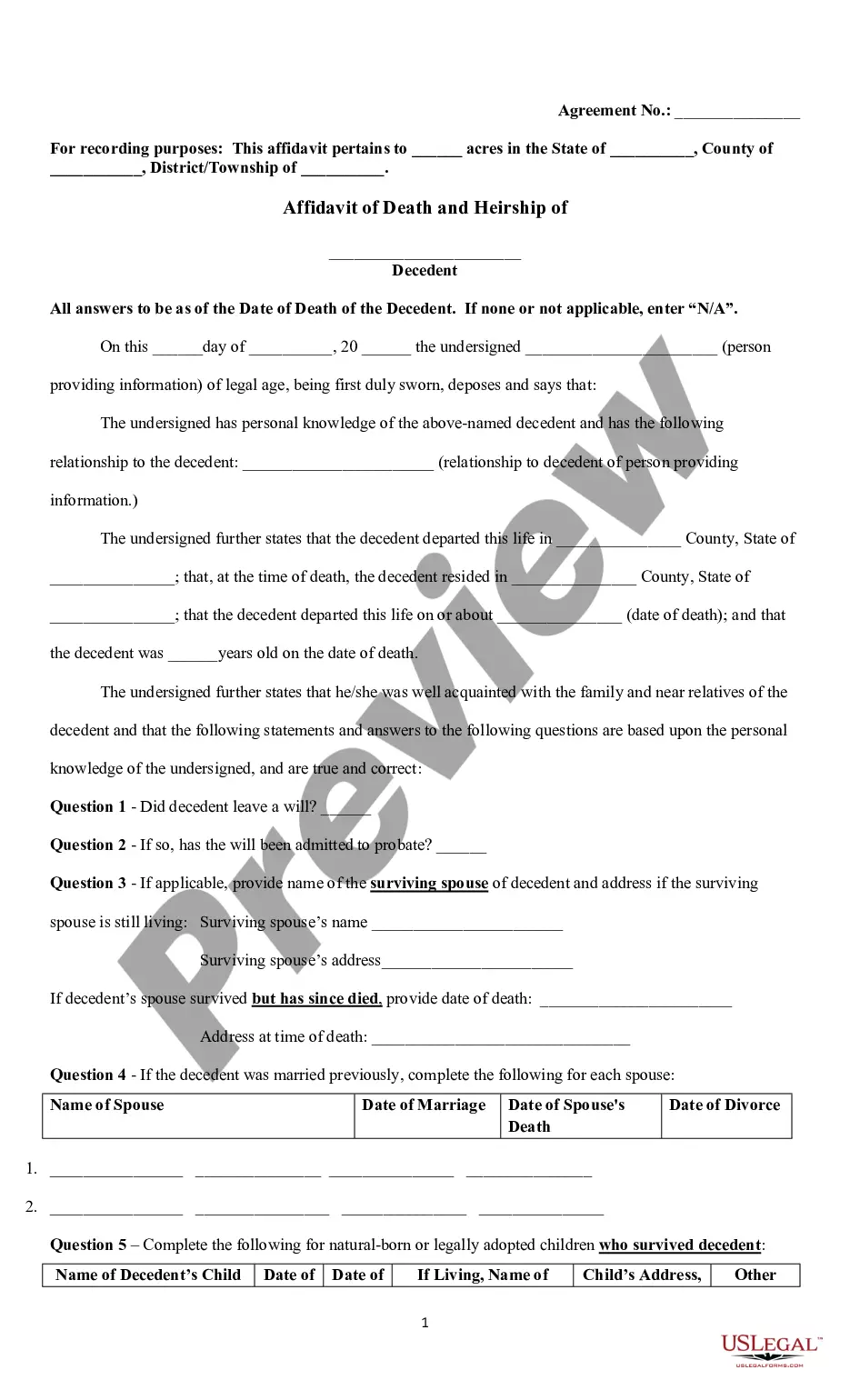
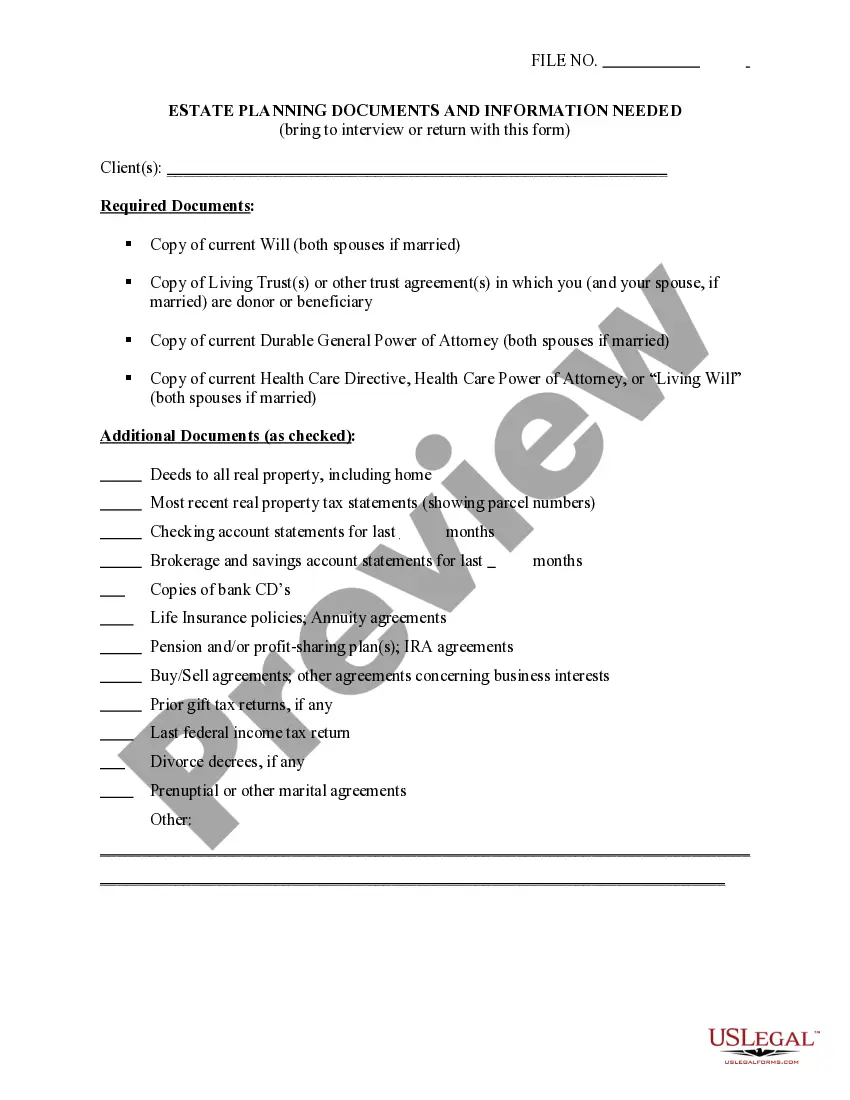

How to fill out Petition Of Creditor Of An Estate Of A Decedent For Distribution Of The Remaining Assets Of The Estate?
You can devote hours on the web trying to find the legal record design that suits the federal and state needs you want. US Legal Forms gives thousands of legal varieties which can be examined by pros. You can easily acquire or print the District of Columbia Petition of Creditor of an Estate of a Decedent for Distribution of the Remaining Assets of the Estate from my service.
If you already have a US Legal Forms bank account, it is possible to log in and click on the Download key. After that, it is possible to total, revise, print, or sign the District of Columbia Petition of Creditor of an Estate of a Decedent for Distribution of the Remaining Assets of the Estate. Every legal record design you get is yours forever. To obtain an additional copy associated with a bought kind, proceed to the My Forms tab and click on the corresponding key.
If you use the US Legal Forms internet site the very first time, stick to the easy recommendations listed below:
- First, make sure that you have selected the right record design for that region/area of your choice. Browse the kind explanation to make sure you have selected the right kind. If offered, utilize the Preview key to check through the record design at the same time.
- If you would like get an additional model of the kind, utilize the Lookup area to get the design that meets your needs and needs.
- After you have identified the design you want, click on Buy now to move forward.
- Find the costs prepare you want, enter your credentials, and register for a merchant account on US Legal Forms.
- Complete the financial transaction. You may use your bank card or PayPal bank account to fund the legal kind.
- Find the formatting of the record and acquire it for your gadget.
- Make alterations for your record if required. You can total, revise and sign and print District of Columbia Petition of Creditor of an Estate of a Decedent for Distribution of the Remaining Assets of the Estate.
Download and print thousands of record layouts while using US Legal Forms website, which provides the greatest selection of legal varieties. Use professional and express-distinct layouts to deal with your business or personal requires.
Form popularity
FAQ
About distributing assets Distributing the estate involves officially signing over all assets to beneficiaries. This can only be done once all assets have been collected and all debts have been paid. The process of signing over assets is different for real estate and personal property.
Probate court is a specialized type of court that deals with the property and debts of a person who has died. The basic role of the probate court judge is to assure that the deceased person's creditors are paid, and that any remaining assets are distributed to the proper beneficiaries.
A deceased estate must be reported to the Master of the High Court (?Master?) or a magistrate's office to appoint a person that will deal with the administration of the deceased estate.
After someone dies, someone (called the deceased person's 'executor' or 'administrator') must deal with their money and property (the deceased person's 'estate'). They need to pay the deceased person's taxes and debts, and distribute his or her money and property to the people entitled to it.
Probate is the legal process that you must follow to transfer or inherit property after the person who owned the property has passed away. Depending on the amount and type of property the deceased person owned, you may or may not need to go to court to transfer or inherit the property.
Probate is the court supervised process of identifying and gathering a person's assets after their death, paying all of their debts, and distributing the balance to the rightful heirs or beneficiaries.
Probate is the process completed when a decedent leaves assets to distribute, such as bank accounts, real estate, and financial investments. Probate is the general administration of a deceased person's will or the estate of a deceased person without a will.