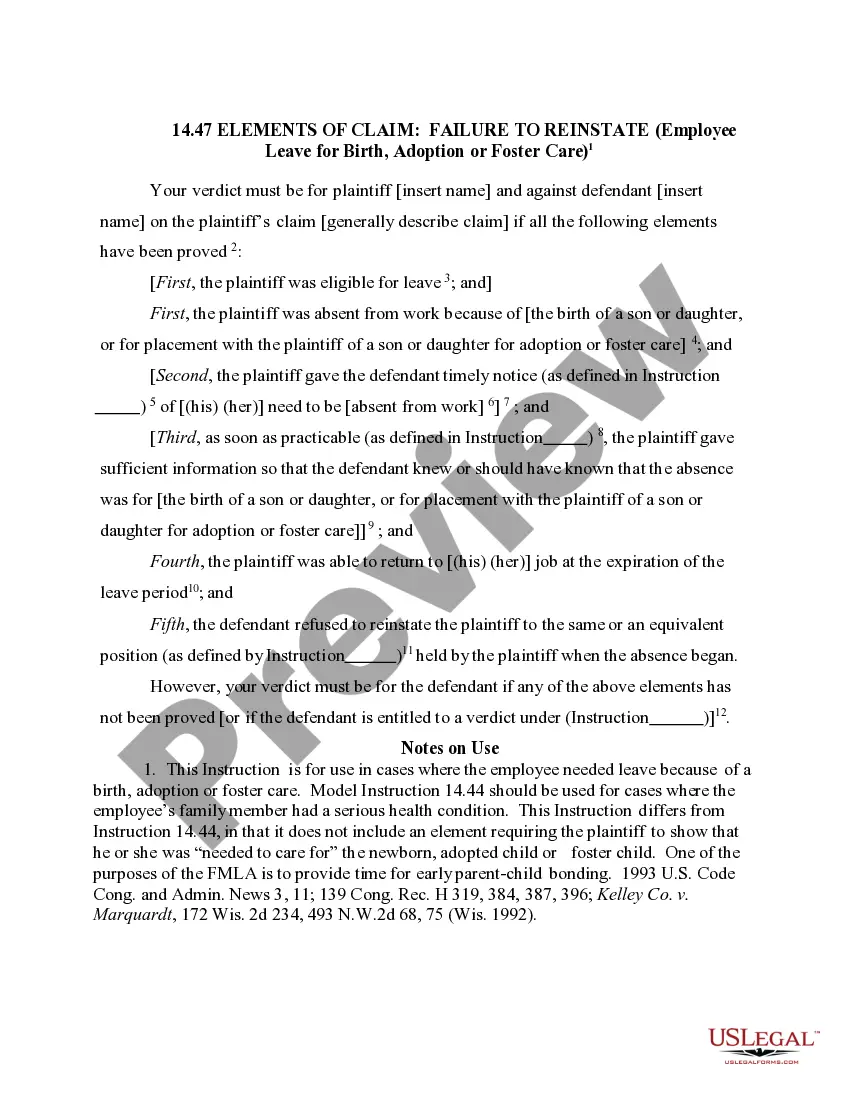
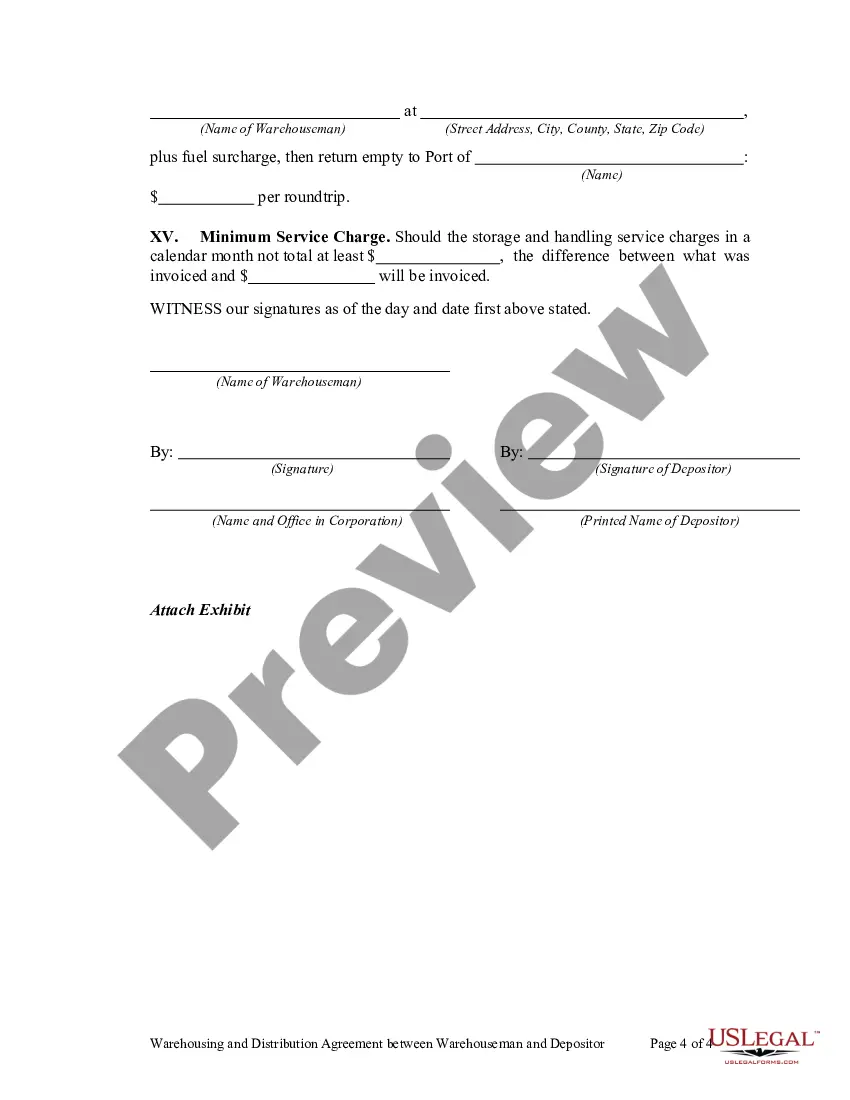
District of Columbia Warehousing and Distribution Agreement between Warehouseman and Depositor
Description
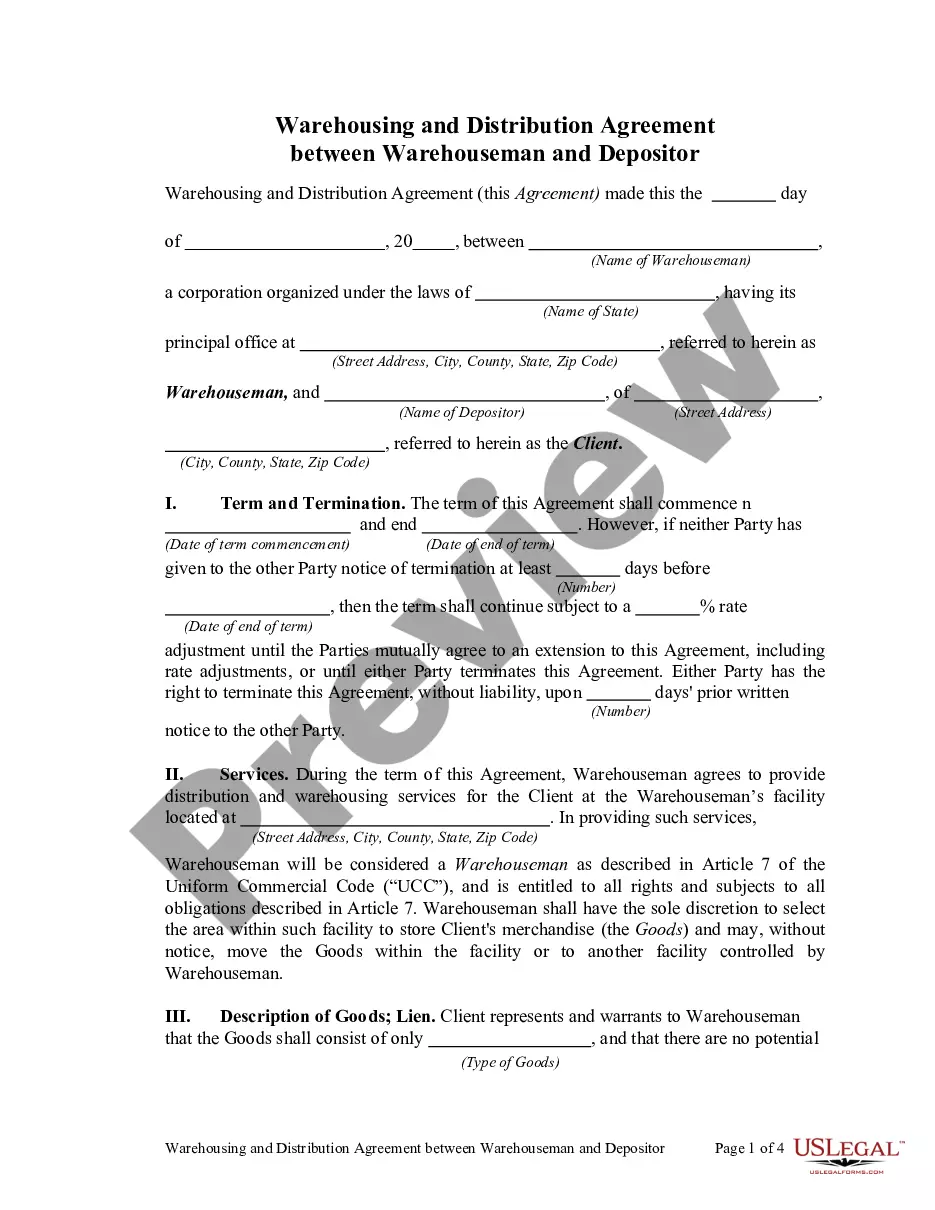
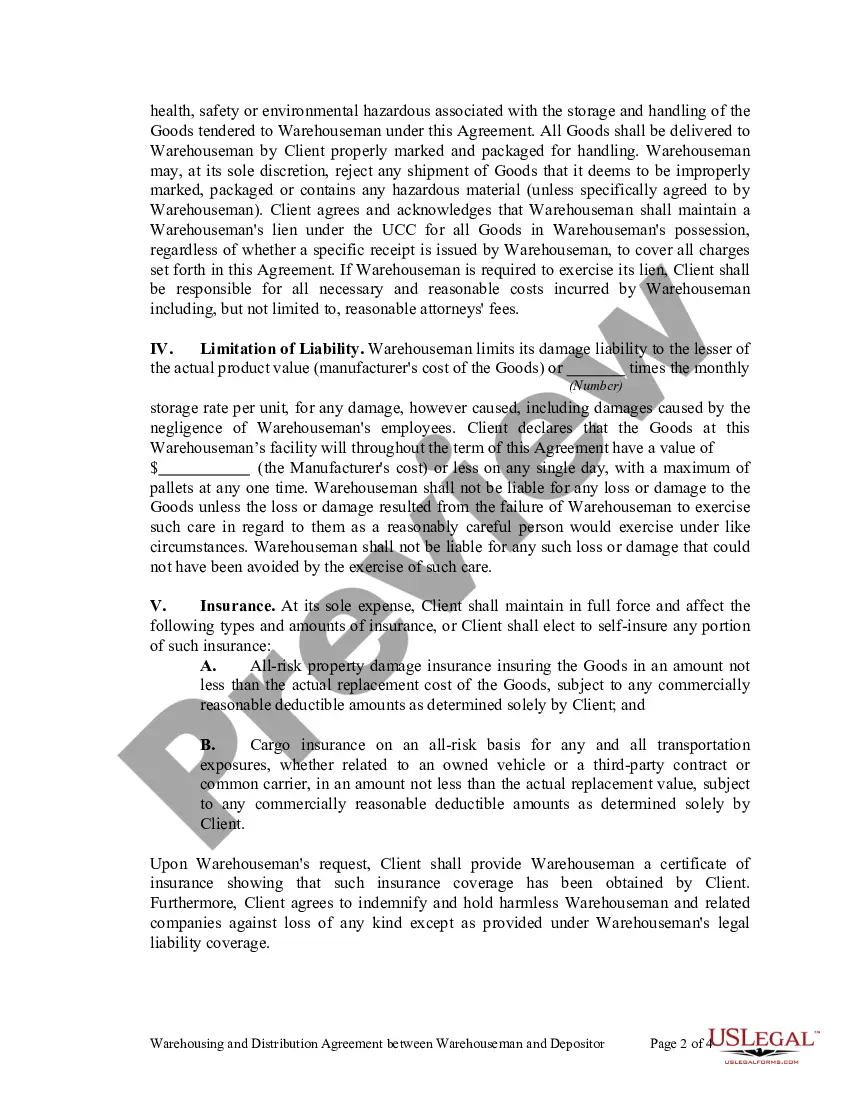
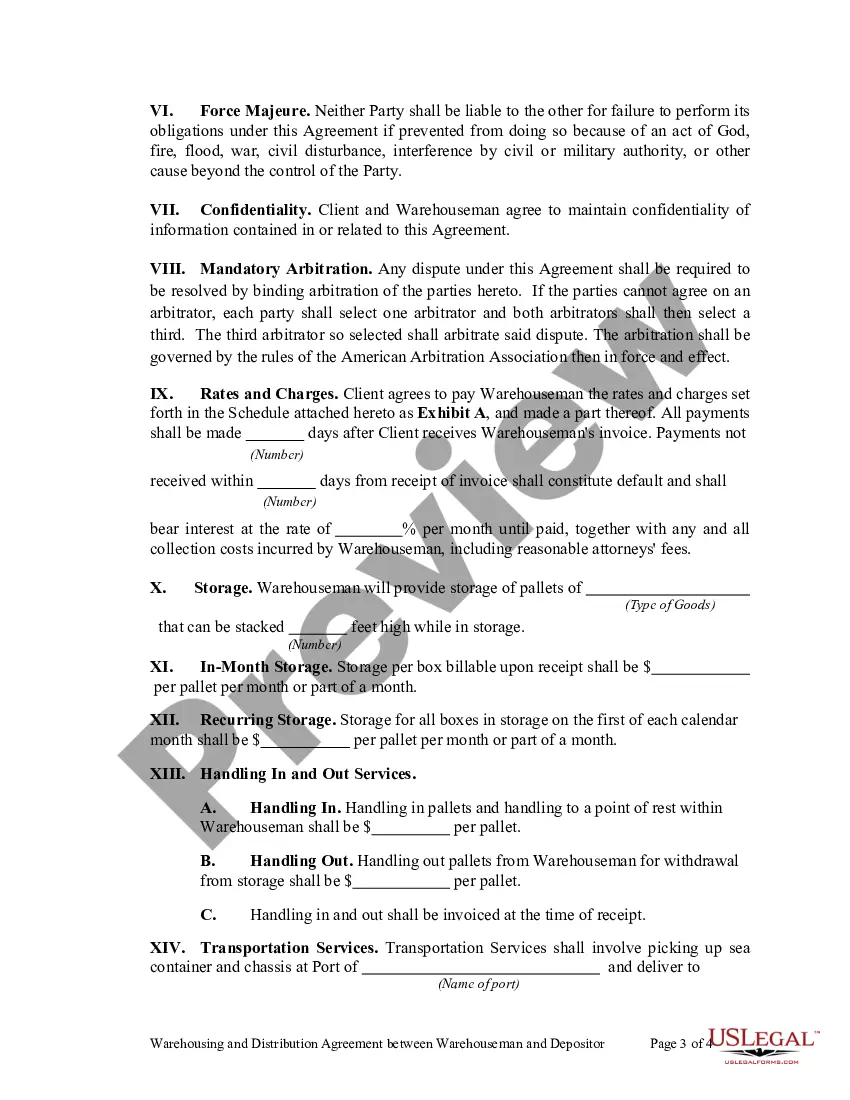







How to fill out Warehousing And Distribution Agreement Between Warehouseman And Depositor?
US Legal Forms - one of the largest collections of legal documents in the United States - provides a variety of legal form templates that you can download or print. By using the site, you can discover thousands of forms for business and personal purposes, organized by categories, states, or keywords.
You can access the latest versions of forms such as the District of Columbia Warehousing and Distribution Agreement between Warehouseman and Depositor within moments. If you have an existing subscription, Log In and download the District of Columbia Warehousing and Distribution Agreement between Warehouseman and Depositor from the US Legal Forms repository. The Download option will appear on every form you view. You have access to all previously downloaded forms from the My documents section of your account.
To utilize US Legal Forms for the first time, follow these simple steps to get started: Make sure you've selected the correct form for your city/state. Click the Review option to check the form's content. Read the form description to ensure you have selected the appropriate form. If the form doesn’t meet your needs, use the Search field at the top of the screen to find one that does. If you are satisfied with the form, confirm your choice by clicking the Buy now button. Then, choose the pricing plan you prefer and provide your details to register for an account. Complete the purchase. Use your credit card or PayPal account to finalize the transaction. Select the format and download the form to your device. Make changes. Fill out, edit, print, and sign the downloaded District of Columbia Warehousing and Distribution Agreement between Warehouseman and Depositor.
- Each format you add to your account has no expiration date and is yours indefinitely.
- If you wish to download or print another copy, simply go to the My documents section and click on the form you desire.
- Access the District of Columbia Warehousing and Distribution Agreement between Warehouseman and Depositor with US Legal Forms, the most extensive collection of legal document templates.
- Utilize thousands of professional and state-specific templates that fulfill your business or personal requirements.
- Explore various legal forms that cater to your needs efficiently.
- Enjoy the convenience of having a comprehensive legal form library at your fingertips.
Form popularity
FAQ
A contract warehouse handles the shipping, receiving, and storage of goods on a contract basis. This type of warehouse usually requires a client to commit to services for a particular period of time. The length of time varies, often stated in years rather than months.
Operating Costs: Contract warehouses provide similar characteristics to private warehouses but at lower costs. Private warehouses require significant capital inputs for development and maintenance, whereas contract warehouses maintained by third parties offer more cost-effective solutions.
Contract warehousing can also apply to just part of a warehouse. For example, a company may commit to a contract warehousing arrangement for 30,000 square feet out of a 130,000-square-foot warehouse. The 3PL can use the rest of the empty space for shared warehousing or even other contract arrangements.
Warehouse examples include retail stores, distribution centers, cold storage facilities, and manufacturing plants. In retail stores, items are stored and organized in a warehouse and shipped to customers or other stores. Distribution centers are used to store and distribute goods to multiple locations.
Warehousing services offered by third-party logistics (3PL) companies tend to fall into one of two categories: general warehousing or contract warehousing. Broadly speaking, general warehousing offers the most flexibility and scalability, while contract warehousing provides more control and stable costs.
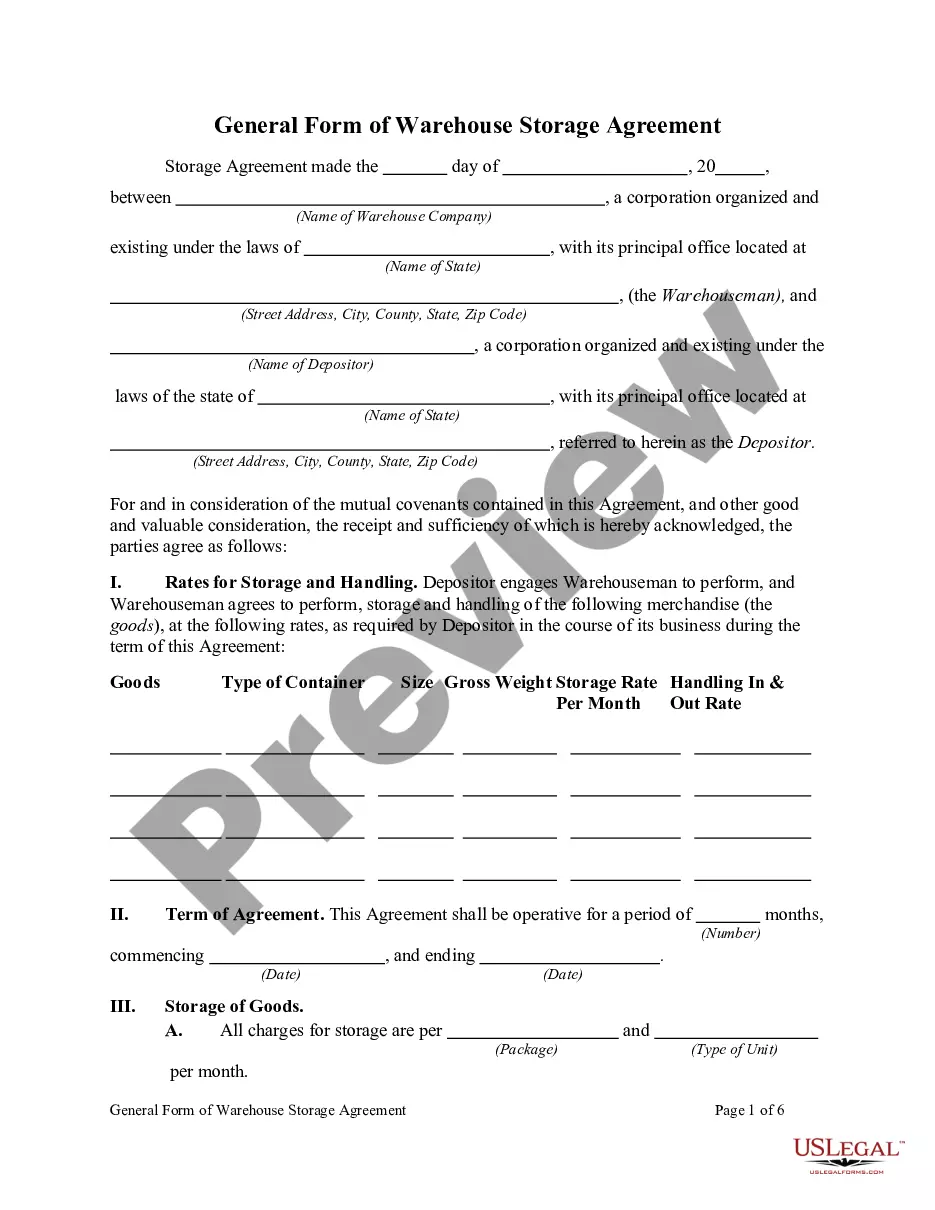
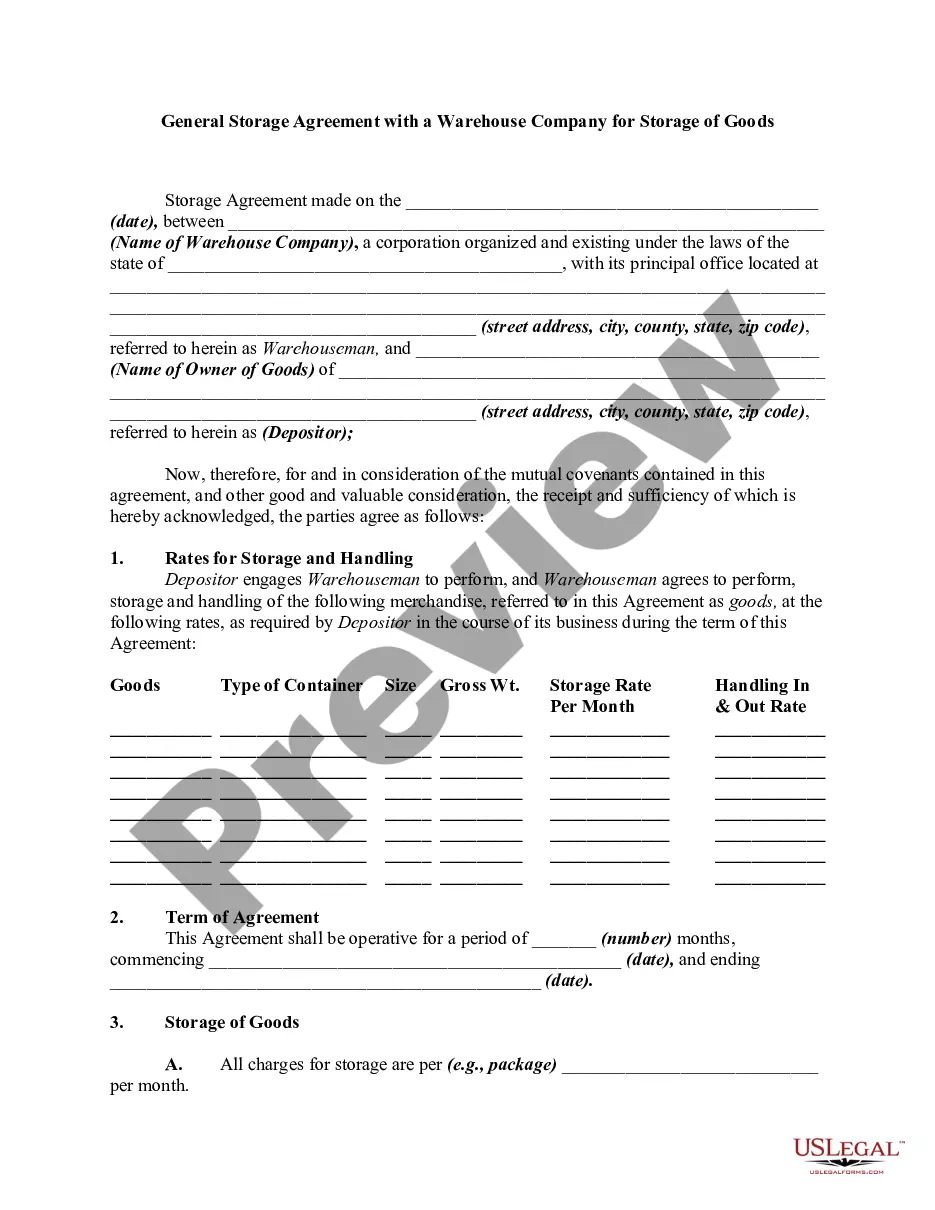
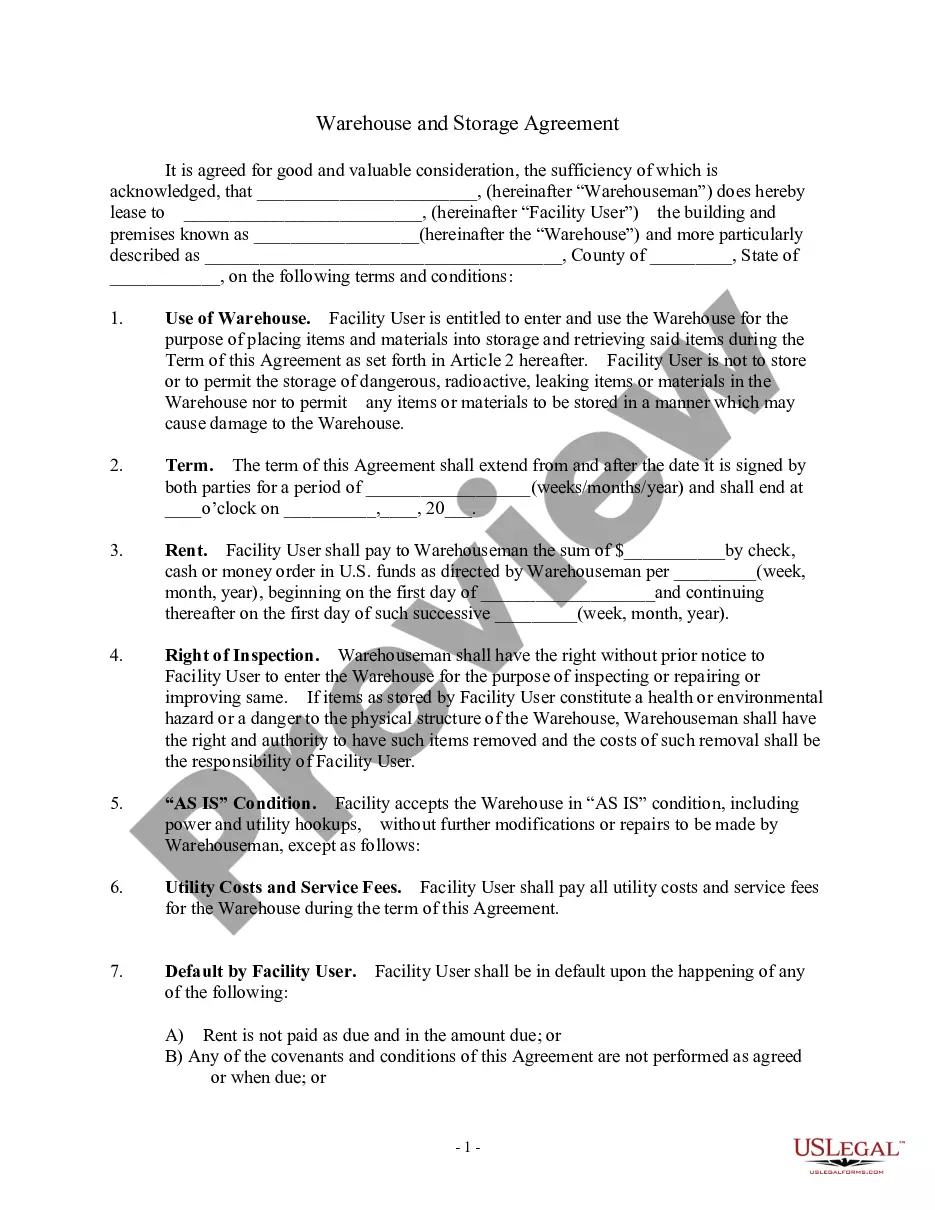
A warehousing agreement for the storage of goods for a business customer. A professional warehousing provider agrees to store the customer's goods on a long-term or regular basis. The agreement is drafted to be broadly neutral between the parties.