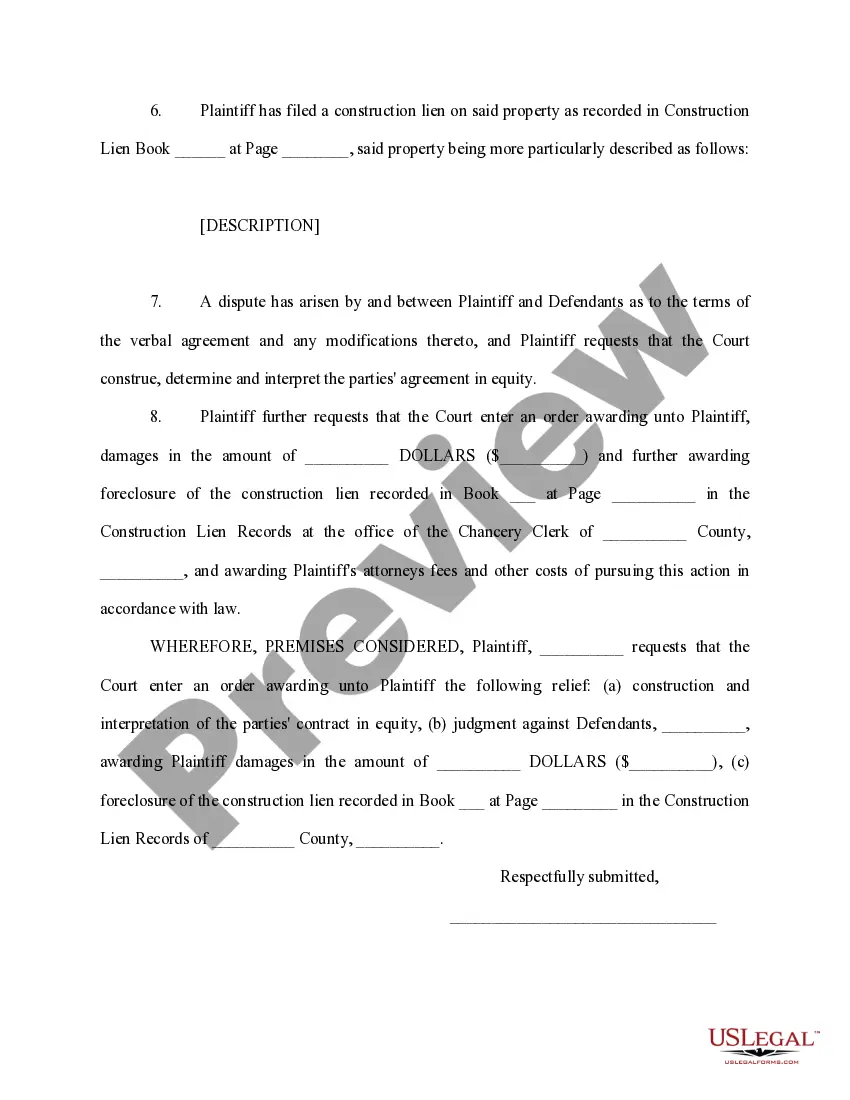
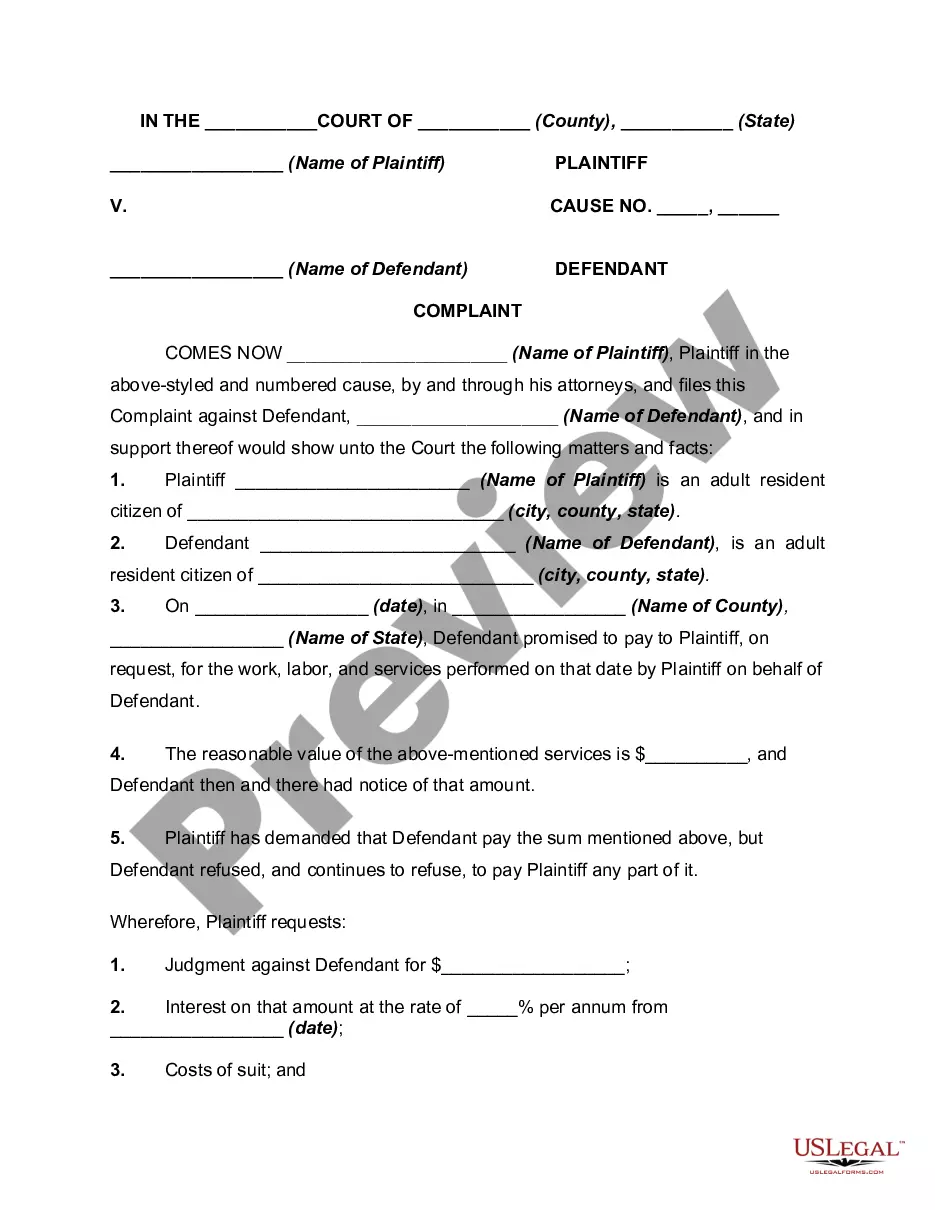
District of Columbia Sample Complaint by Contractor for Amount Due
Description
Get your form ready online
Our built-in tools help you complete, sign, share, and store your documents in one place.
Make edits, fill in missing information, and update formatting in US Legal Forms—just like you would in MS Word.
Download a copy, print it, send it by email, or mail it via USPS—whatever works best for your next step.
Sign and collect signatures with our SignNow integration. Send to multiple recipients, set reminders, and more. Go Premium to unlock E-Sign.
If this form requires notarization, complete it online through a secure video call—no need to meet a notary in person or wait for an appointment.
We protect your documents and personal data by following strict security and privacy standards.

Make edits, fill in missing information, and update formatting in US Legal Forms—just like you would in MS Word.

Download a copy, print it, send it by email, or mail it via USPS—whatever works best for your next step.

Sign and collect signatures with our SignNow integration. Send to multiple recipients, set reminders, and more. Go Premium to unlock E-Sign.

If this form requires notarization, complete it online through a secure video call—no need to meet a notary in person or wait for an appointment.

We protect your documents and personal data by following strict security and privacy standards.
Looking for another form?




How to fill out Sample Complaint By Contractor For Amount Due?
Are you currently in a situation where you require documents for either business or personal purposes regularly.
There are numerous legitimate document templates accessible online, but finding ones you can trust is challenging.
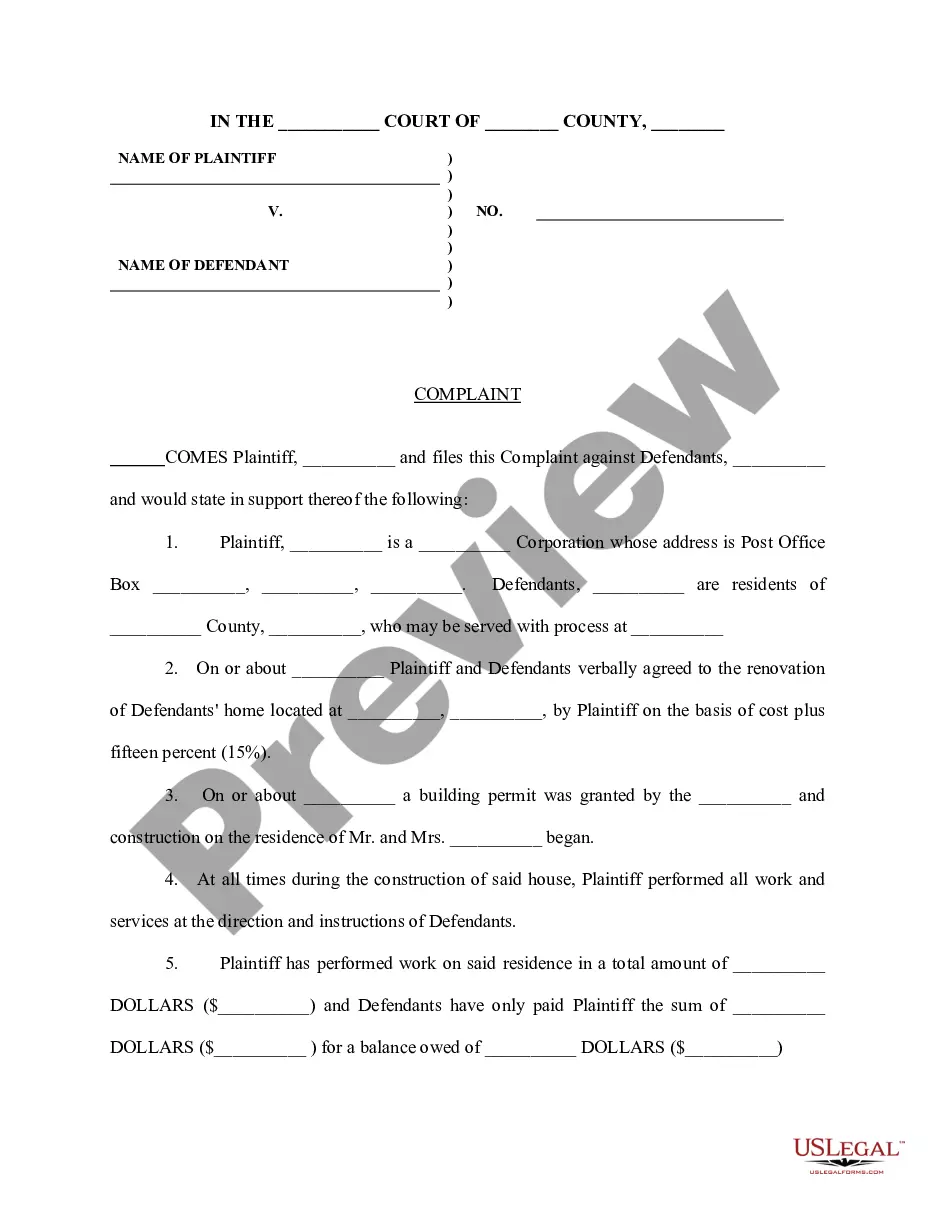
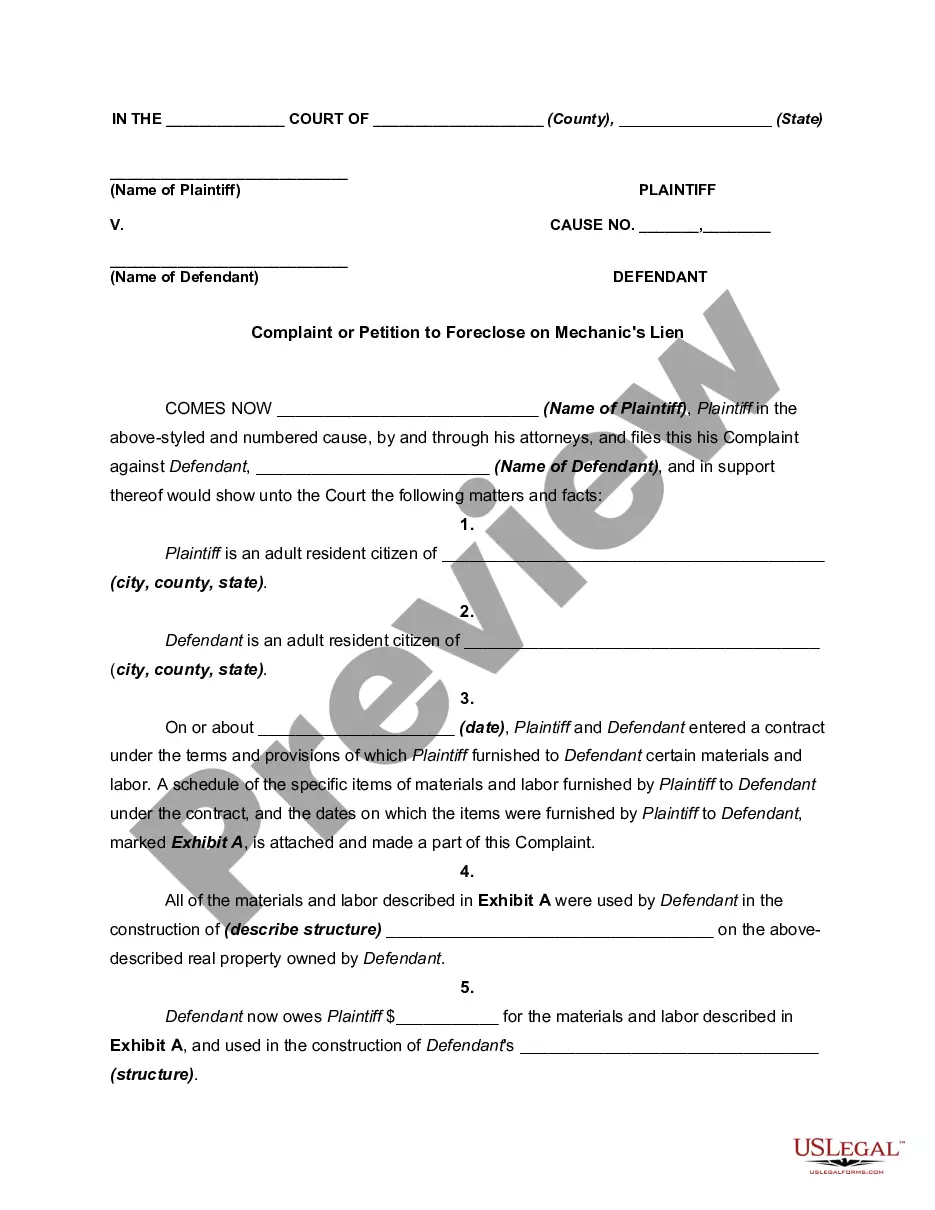
US Legal Forms provides a vast array of form templates, including the District of Columbia Sample Complaint by Contractor for Amount Due, which are designed to comply with federal and state regulations.
Access all the document templates you have purchased in the My documents menu. You can obtain an additional copy of the District of Columbia Sample Complaint by Contractor for Amount Due at any time, if needed. Just click the necessary form to download or print the document template.
Utilize US Legal Forms, the most extensive collection of legal forms, to save time and prevent mistakes. The service offers properly crafted legal document templates that can be used for a variety of purposes. Create your account on US Legal Forms and begin simplifying your life.
- If you are already familiar with the US Legal Forms website and have your account, simply Log In.
- Then, you can download the District of Columbia Sample Complaint by Contractor for Amount Due template.
- If you do not have an account and wish to start using US Legal Forms, follow these steps.
- Obtain the form you need and ensure it is for the correct city/county.
- Use the Preview button to examine the form.
- Check the details to make sure you have selected the correct form.
- If the form is not what you are looking for, use the Search field to find the form that matches your needs and requirements.
- When you find the appropriate form, click Get now.
- Choose the pricing plan you prefer, fill in the required information to create your account, and complete your purchase using PayPal or Visa or Mastercard.
- Select a convenient file format and download your version.
Form popularity
FAQ
Filing claims against DC Office of Risk Management Claims must be submitted to the Office of Risk Management within six months of incurring the injury, otherwise the claim may be denied at the onset. The Office of Risk Management has forms for automobile accidents, personal injury, and property damage.
Injury victims may file lawsuits for their damages believed to be caused by the careless actions of the city and its employees but must follow certain protocols before a formal civil suit can be filed. Before taking any legal action, you should seek qualified legal counsel to for advise about your case about your case.
If you live in D.C., you may report a problem you have with a contractor to the Office of the Attorney General for the District of Columbia and to the Department of Consumer and Regulatory Affairs (DCRA). The Office of the Attorney General has a Consumer Hotline for you to call, at 202-442-9828.
Cases must be filed by submitting forms called Statement of Claim and Information Sheet in the Small Claims Clerk's Office. The Small Claims Clerk's Office is located in Court Building B, 510 4th Street, NW, Room 120. The party who files the case is called the plaintiff. The defendant is the person who is being sued.
If you need assistance submitting your consumer complaint, please contact the Consumer Complaint Hotline at 202-442-9828 or email consumer.protection@dc.gov. It only takes 5 minutes to submit your complaint online - be prepared to provide: Your contact information (address, phone number, email address).
Cases must be filed by submitting forms called Statement of Claim and Information Sheet in the Small Claims Clerk's Office. The Small Claims Clerk's Office is located in Court Building B, 510 4th Street, NW, Room 120. The party who files the case is called the plaintiff. The defendant is the person who is being sued.
Generally speaking, there is a three year statute of limitation for personal injury cases in DC. This means that a personal injury case must either be filed or completely resolved within three years of the date of the occurrence or, in some cases, the date in which the harm is discovered.
The United States Congress has ultimate authority over the District.