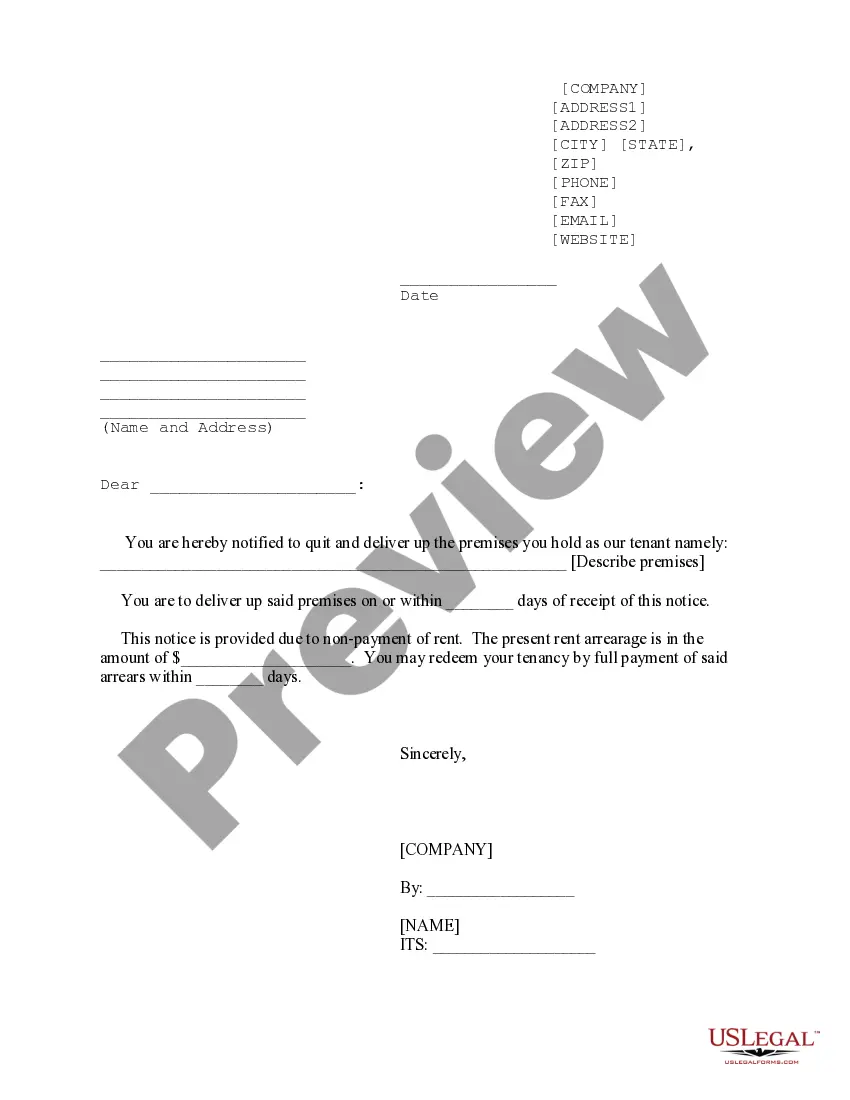
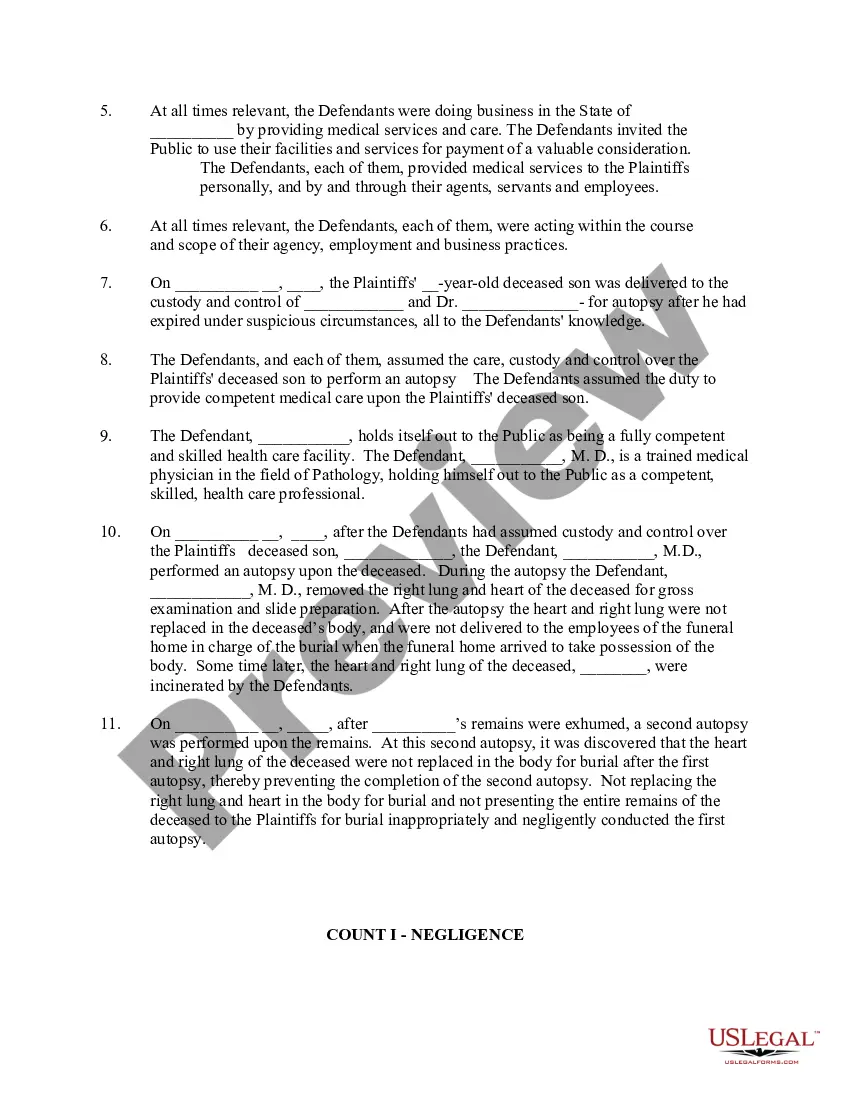
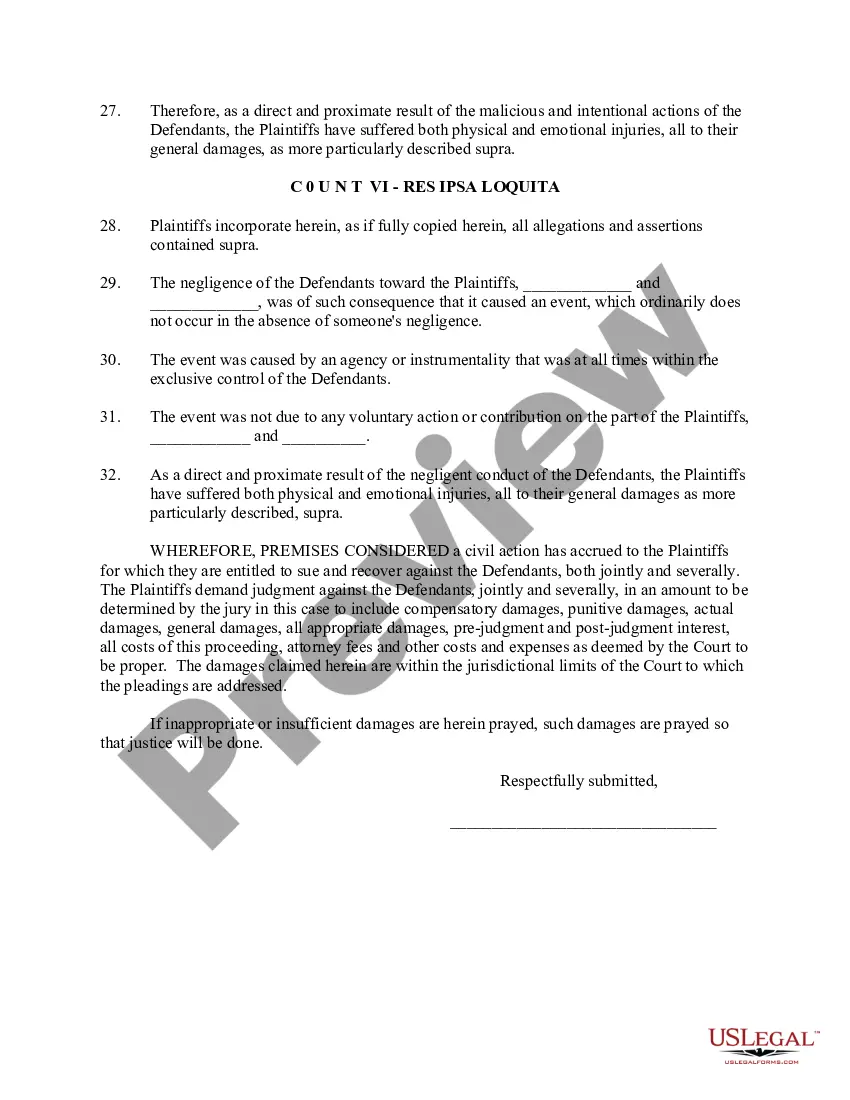
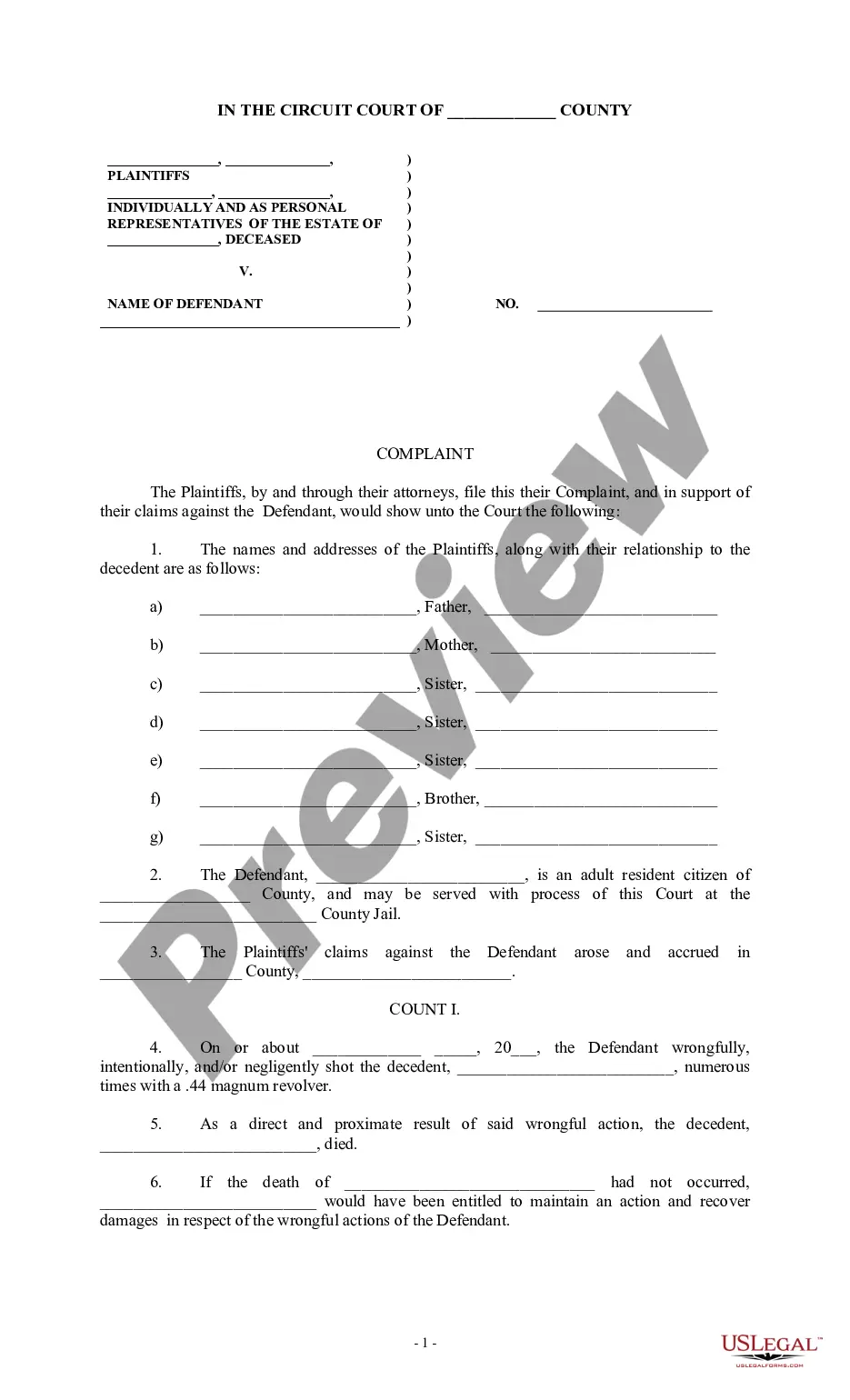
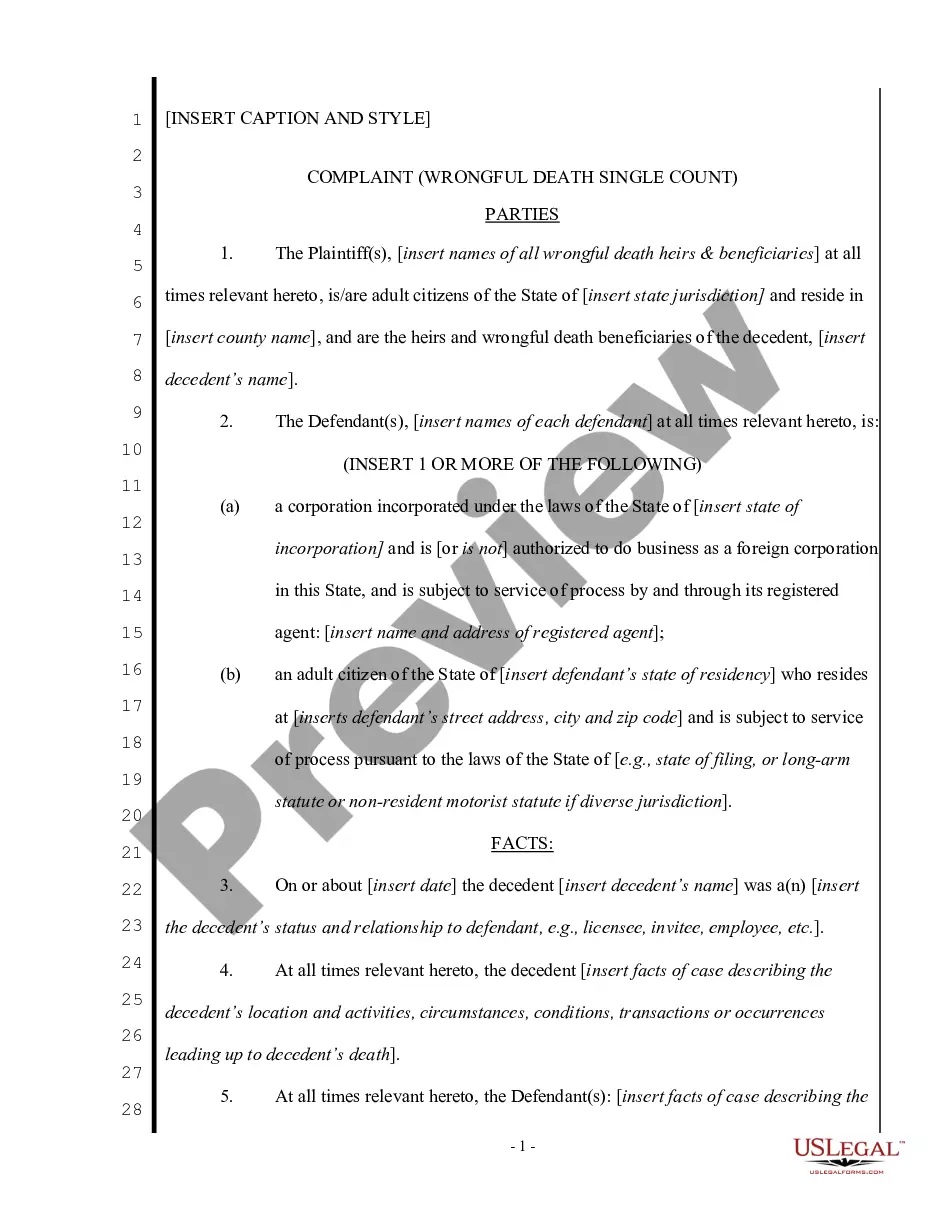
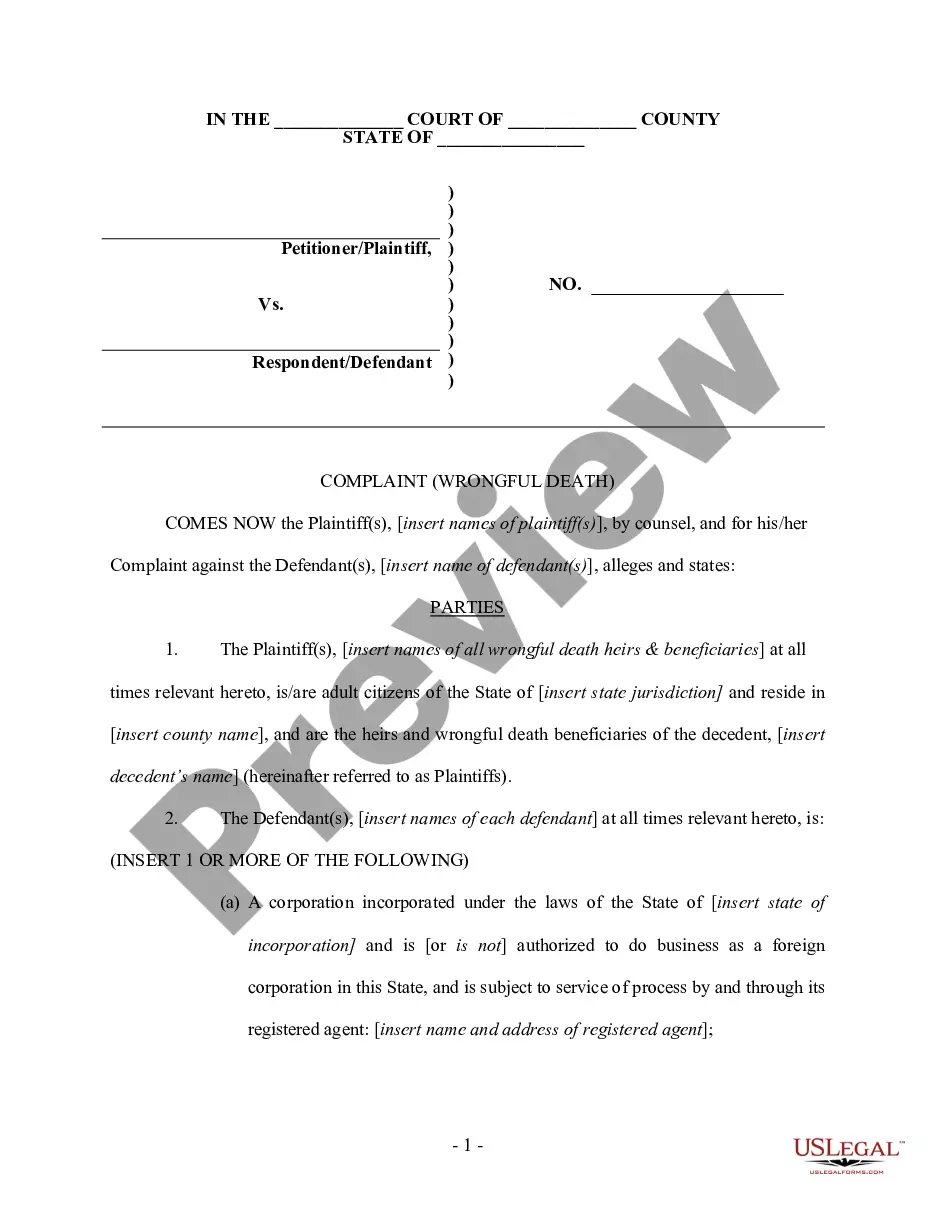
This is a Complaint pleading for use in litigation of the title matter. Adapt this form to comply with your facts and circumstances, and with your specific state law. Not recommended for use by non-attorneys.
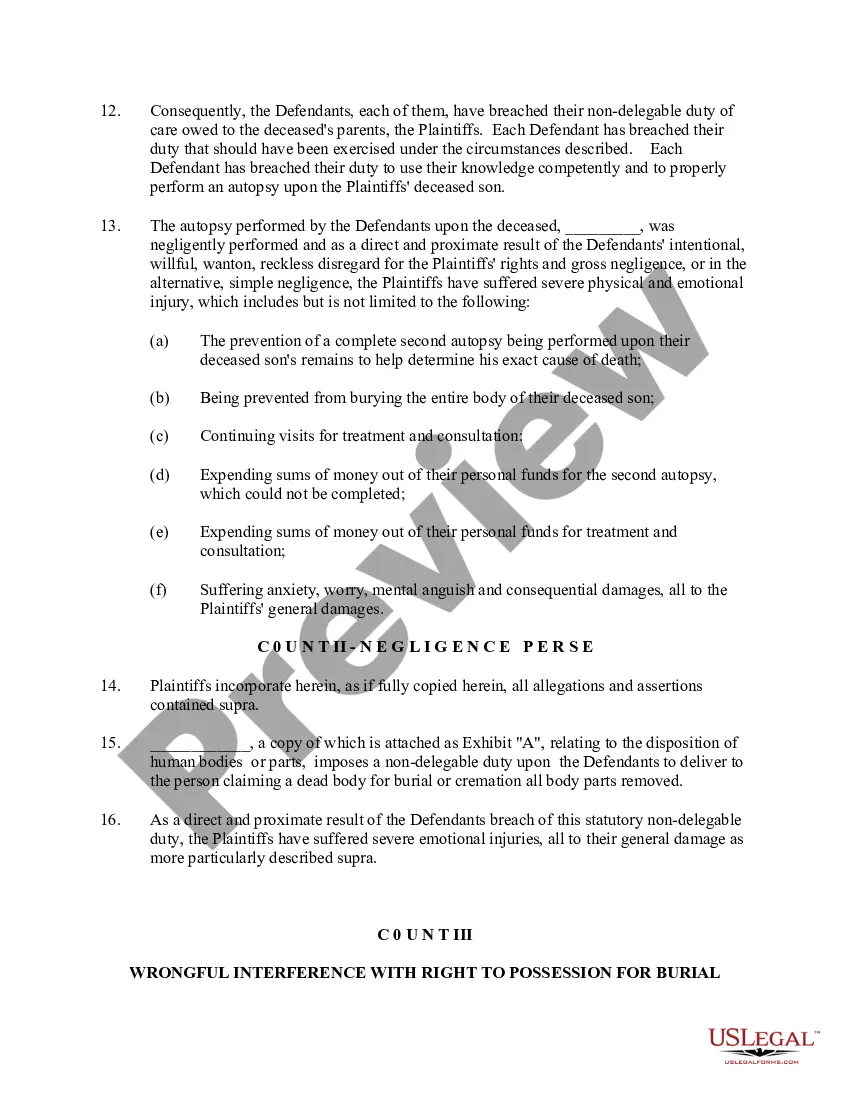
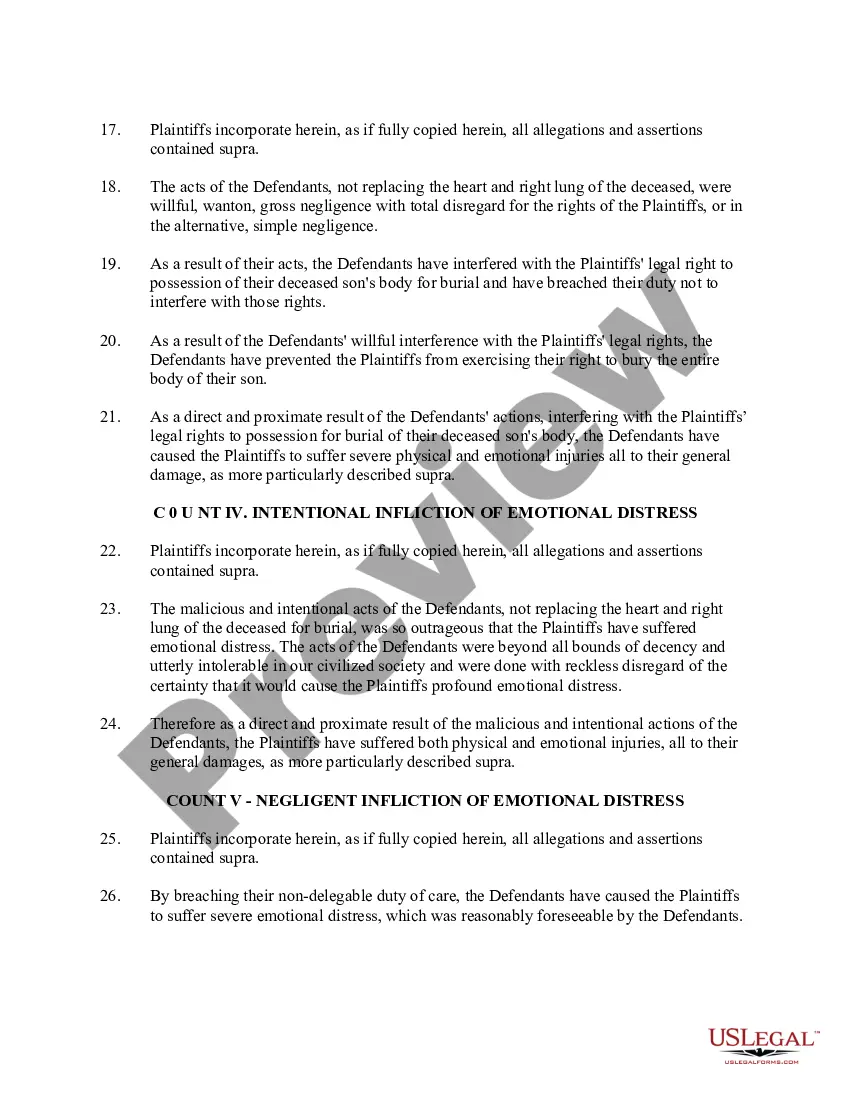
District of Columbia Complaint For Wrongful Interference With Right To Possession For Burial
Category:
State:
Multi-State
Control #:
US-000303
Format:
Word;
Rich Text
Instant download
Description
Free preview


Get your form ready online
Our built-in tools help you complete, sign, share, and store your documents in one place.
Built-in online Word editor
Make edits, fill in missing information, and update formatting in US Legal Forms—just like you would in MS Word.
Export easily
Download a copy, print it, send it by email, or mail it via USPS—whatever works best for your next step.
E-sign your document
Sign and collect signatures with our SignNow integration. Send to multiple recipients, set reminders, and more. Go Premium to unlock E-Sign.
Notarize online 24/7
If this form requires notarization, complete it online through a secure video call—no need to meet a notary in person or wait for an appointment.
Store your document securely
We protect your documents and personal data by following strict security and privacy standards.

Make edits, fill in missing information, and update formatting in US Legal Forms—just like you would in MS Word.

Download a copy, print it, send it by email, or mail it via USPS—whatever works best for your next step.

Sign and collect signatures with our SignNow integration. Send to multiple recipients, set reminders, and more. Go Premium to unlock E-Sign.

If this form requires notarization, complete it online through a secure video call—no need to meet a notary in person or wait for an appointment.

We protect your documents and personal data by following strict security and privacy standards.
Looking for another form?






How to fill out Complaint For Wrongful Interference With Right To Possession For Burial?
Are you currently in a circumstance that requires you to have documents for occasional business or specific purposes nearly every day.
There are numerous legal document templates accessible online, but obtaining versions you can trust isn't easy.
US Legal Forms provides a vast collection of form templates, including the District of Columbia Complaint For Wrongful Interference With Right To Possession For Burial, which is designed to meet state and federal requirements.
If you find the correct form, click Purchase now.
Select the pricing plan you want, provide the necessary information to create your account, and complete your order using your PayPal or credit card.
- If you are already acquainted with the US Legal Forms website and have an account, simply Log In.
- Then, you can download the District of Columbia Complaint For Wrongful Interference With Right To Possession For Burial template.
- If you do not have an account and wish to begin using US Legal Forms, follow these steps.
- Obtain the form you need and ensure it is for the correct jurisdiction/area.
- Use the Preview option to review the form.
- Read the description to confirm you have selected the appropriate form.
- If the form isn't what you are looking for, use the Search field to find the form that meets your needs and specifications.
Form popularity
FAQ
Tortious interference with a dead body is a legal issue that arises when someone unlawfully disrupts the handling or burial of a deceased individual. This can include actions that compromise the family's right to grieve and conduct final rites. If you are facing such difficulties, you might consider filing a District of Columbia Complaint For Wrongful Interference With Right To Possession For Burial to protect your rights and the dignity of the deceased.
Filing a complaint against a judge in Washington D.C. requires specific procedures to ensure that your concerns are addressed appropriately. You can submit a complaint to the D.C. Commission on Judicial Disabilities and Tenure, which reviews issues related to judicial conduct. If your situation involves wrongful interference with burial rights, consider integrating a District of Columbia Complaint For Wrongful Interference With Right To Possession For Burial into your case.
Tortious interference with a corpse refers to wrongful acts that violate the rights associated with a deceased person's remains. This could involve actions that prevent proper burial or memorialization. If you are affected by such interference, you may want to explore the option of a District of Columbia Complaint For Wrongful Interference With Right To Possession For Burial to ensure justice is served.
Interference with a dead body involves actions that disrupt the rightful handling or burial of a deceased person. This can include unauthorized removal, alteration, or disrespectful treatment of the body. If you find yourself facing such an issue, consider filing a District of Columbia Complaint For Wrongful Interference With Right To Possession For Burial to seek resolution and restore dignity.
The legal term for messing with a dead body is often referred to as 'abuse of a corpse'. This term encompasses actions that violate the dignity of the deceased and can lead to serious legal consequences. If you are dealing with such a situation, filing a District of Columbia Complaint For Wrongful Interference With Right To Possession For Burial may be necessary to uphold the rights of the deceased and their family.
Tortious interference in probate refers to actions that unlawfully disrupt someone's right to manage or distribute an estate. This can occur when an individual, intentionally and without justification, interferes with the probate process or the rights of heirs. Understanding how to navigate a District of Columbia Complaint For Wrongful Interference With Right To Possession For Burial is essential if you believe your rights have been compromised.
In addition to competing claims, such as family squabbles over property ownership, quiet title actions help property owners reestablish their claim to ownership if another party conveyed the property fraudulently by a forged deed or coercion, occupied the property illegally and now claim ownership, disputed your ...
Quiet title action represents a legal proceeding whereby an entity or person claims title to a portion or all of a specific real property. The Plaintiff asks the Court for a ruling that their title is superior to any other interest claimed by the Defendant.
(a) When a person detains possession of real property without right, or after his right to possession has ceased, the Superior Court of the District of Columbia, on complaint under oath verified by the person aggrieved by the detention, or by his agent or attorney having knowledge of the facts, may issue a summons in ...
In addition to competing claims, such as family squabbles over property ownership, quiet title actions help property owners reestablish their claim to ownership if another party conveyed the property fraudulently by a forged deed or coercion, occupied the property illegally and now claim ownership, disputed your ...