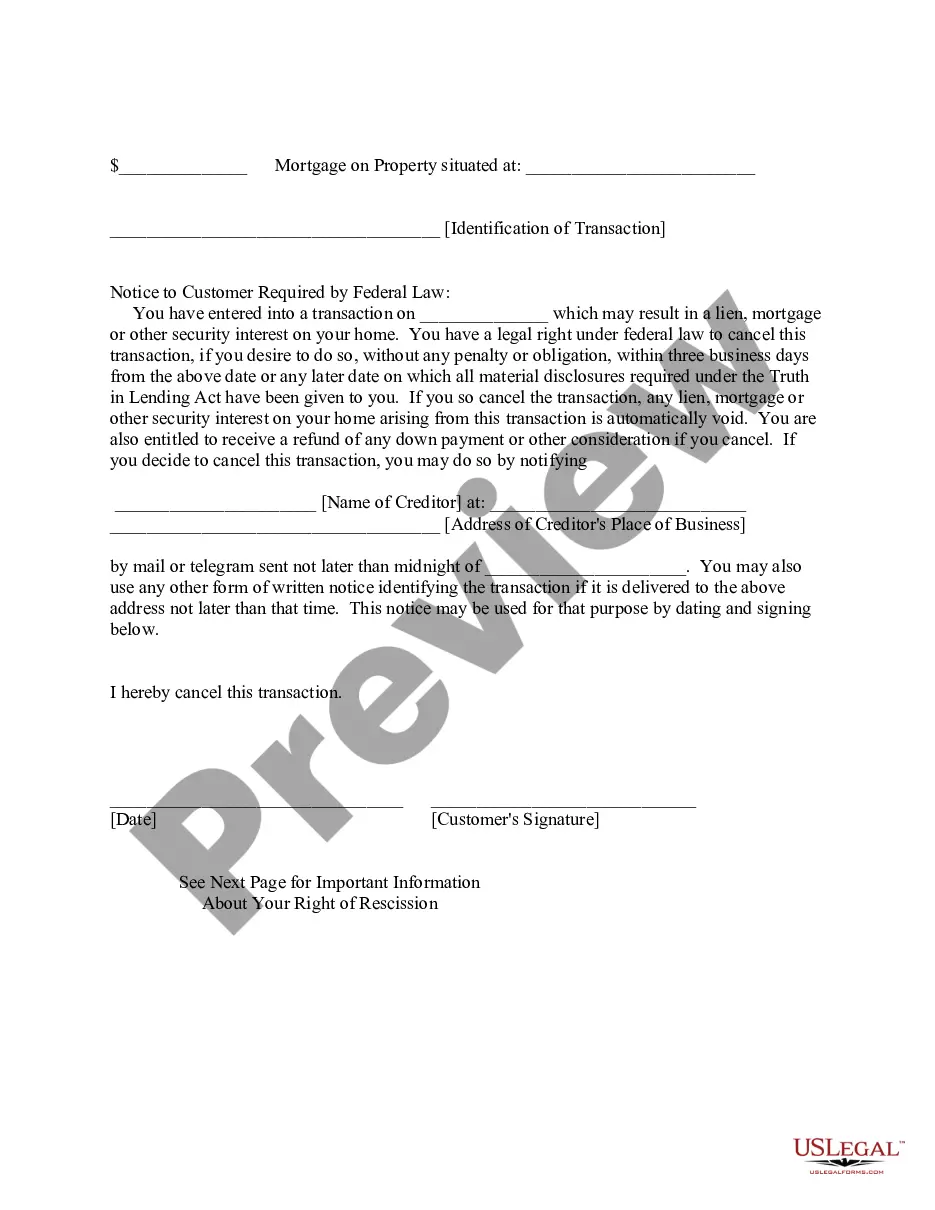
This is a multi-state form covering the subject matter of the title.
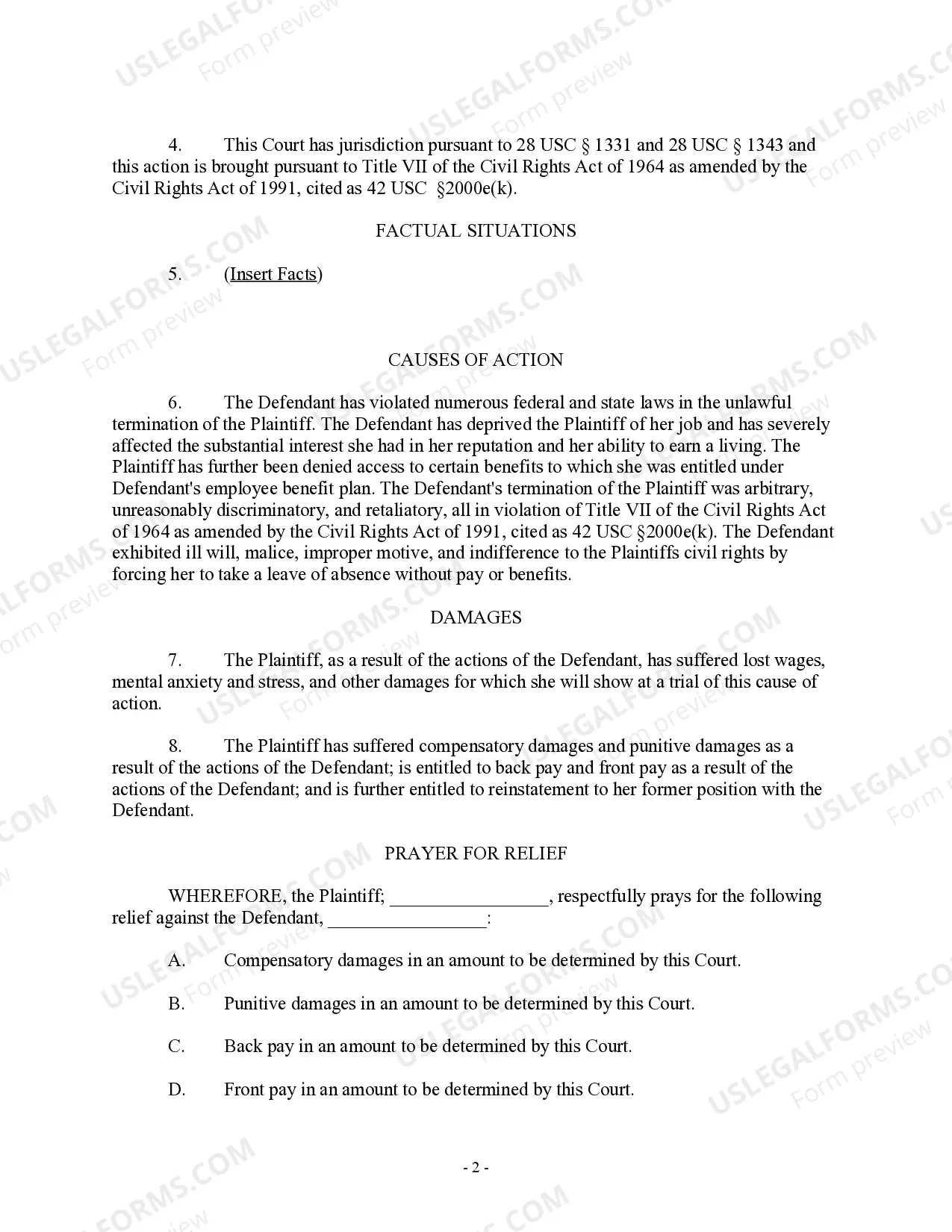
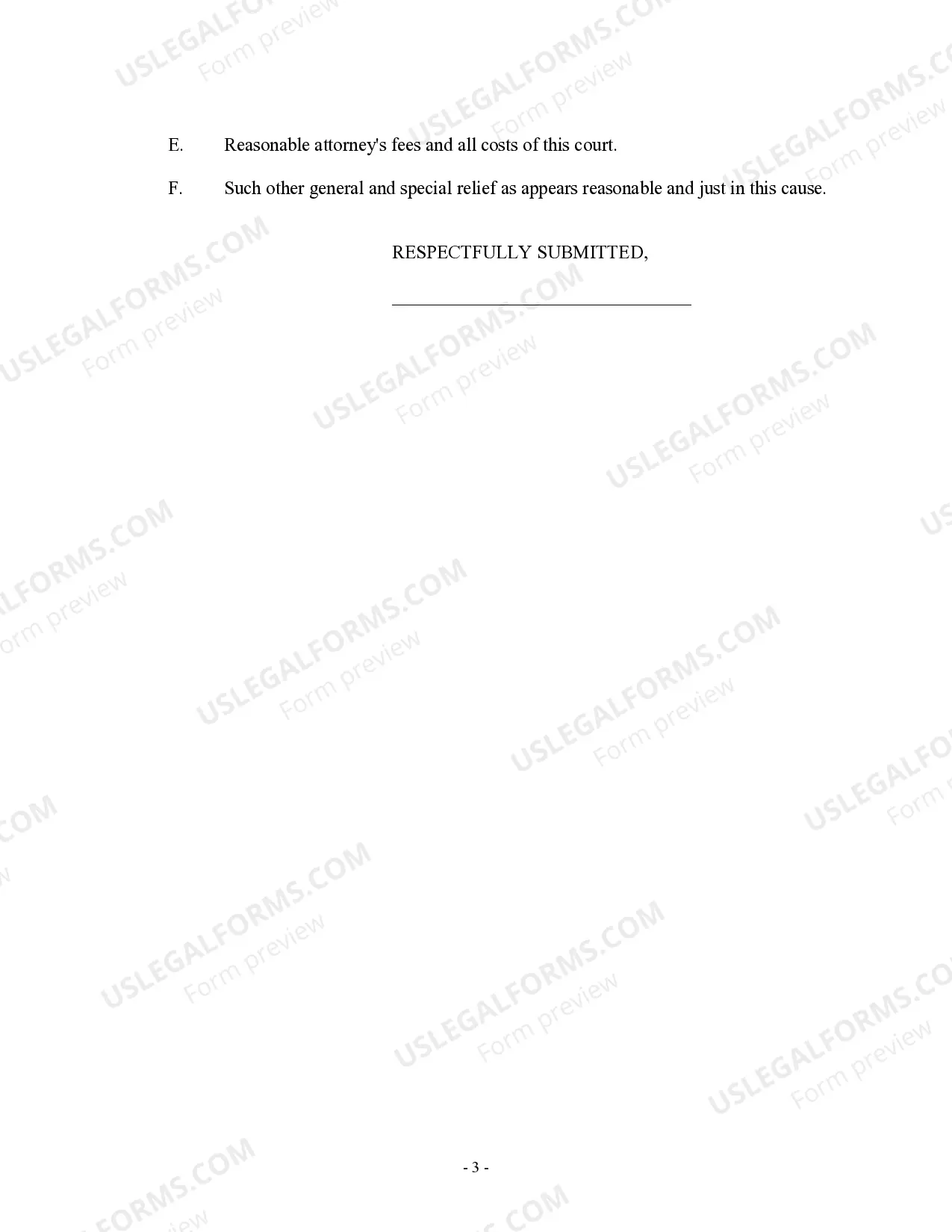
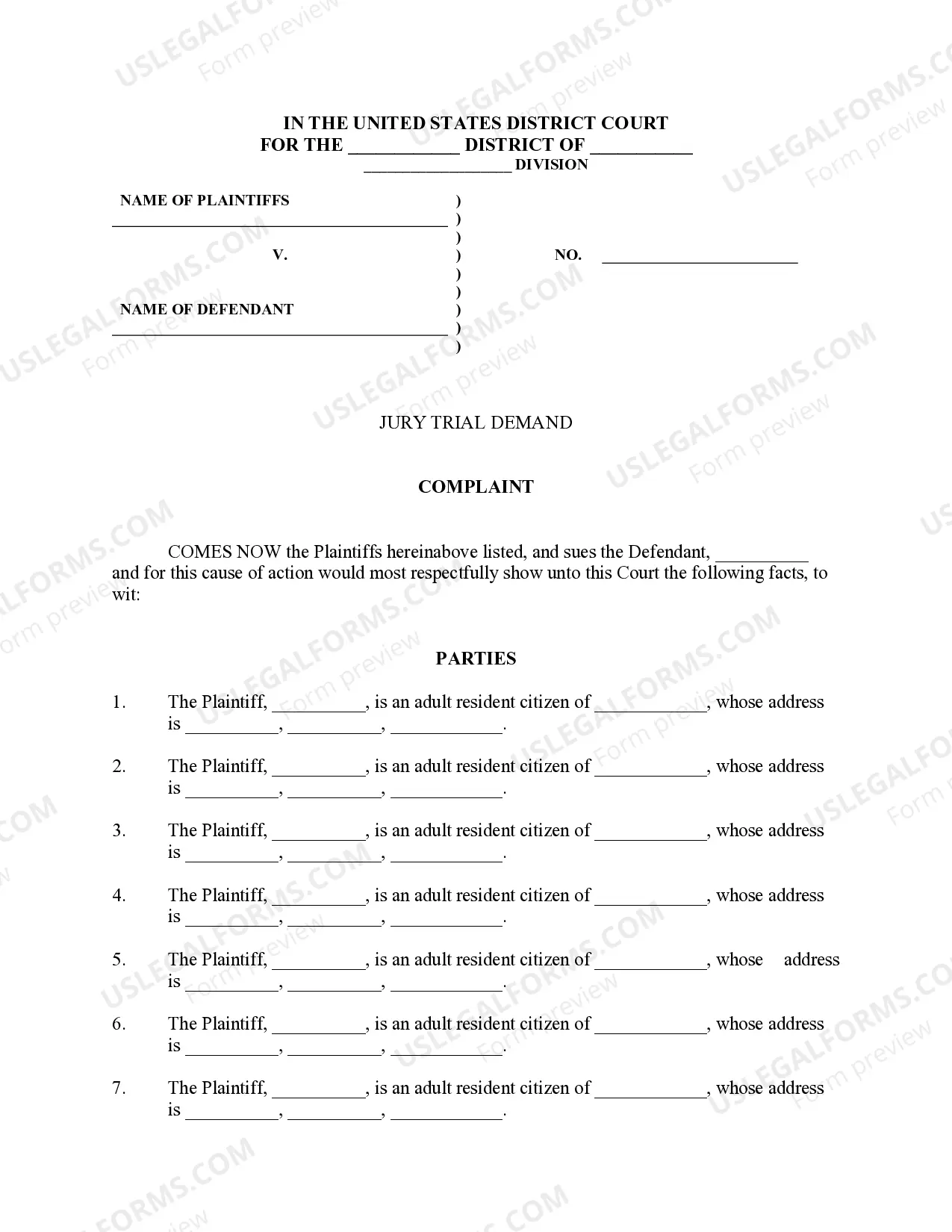
District of Columbia Complaint For Wrongful Termination - Title VII Civil Rights Act - Pregnancy Discrimination Act - Jury Trial Demand
Category:
State:
Multi-State
Control #:
US-000291
Format:
Word;
Rich Text
Instant download
Description
Free preview




Get your form ready online
Our built-in tools help you complete, sign, share, and store your documents in one place.
Built-in online Word editor
Make edits, fill in missing information, and update formatting in US Legal Forms—just like you would in MS Word.
Export easily
Download a copy, print it, send it by email, or mail it via USPS—whatever works best for your next step.
E-sign your document
Sign and collect signatures with our SignNow integration. Send to multiple recipients, set reminders, and more. Go Premium to unlock E-Sign.
Notarize online 24/7
If this form requires notarization, complete it online through a secure video call—no need to meet a notary in person or wait for an appointment.
Store your document securely
We protect your documents and personal data by following strict security and privacy standards.

Make edits, fill in missing information, and update formatting in US Legal Forms—just like you would in MS Word.

Download a copy, print it, send it by email, or mail it via USPS—whatever works best for your next step.

Sign and collect signatures with our SignNow integration. Send to multiple recipients, set reminders, and more. Go Premium to unlock E-Sign.

If this form requires notarization, complete it online through a secure video call—no need to meet a notary in person or wait for an appointment.

We protect your documents and personal data by following strict security and privacy standards.
Looking for another form?







How to fill out Complaint For Wrongful Termination - Title VII Civil Rights Act - Pregnancy Discrimination Act - Jury Trial Demand?
You can dedicate hours online trying to find the legal document template that meets the state and federal requirements you need. US Legal Forms offers thousands of legal documents that are reviewed by experts.
You can download or print the District of Columbia Complaint For Wrongful Termination - Title VII Civil Rights Act - Pregnancy Discrimination Act - Jury Trial Demand from our service.
If you possess a US Legal Forms account, you may Log In and then click on the Download button. After that, you may complete, modify, print, or sign the District of Columbia Complaint For Wrongful Termination - Title VII Civil Rights Act - Pregnancy Discrimination Act - Jury Trial Demand. Every legal document template you obtain is yours permanently. To get another copy of any purchased form, visit the My documents tab and click the corresponding button.
Choose the format of the document and download it to your device. Make modifications to your document if possible. You can complete, edit, sign, and print the District of Columbia Complaint For Wrongful Termination - Title VII Civil Rights Act - Pregnancy Discrimination Act - Jury Trial Demand. Download and print thousands of document templates using the US Legal Forms Website, which offers the largest selection of legal forms. Utilize professional and state-specific templates to address your business or personal needs.
- If you are using the US Legal Forms website for the first time, follow the simple instructions below.
- First, ensure that you have selected the correct document template for the area/city you choose. Review the form details to make sure you have selected the accurate form.
- If available, utilize the Preview button to examine the document template as well.
- To find another version of the form, use the Search section to locate the template that meets your needs and requirements.
- Once you have found the template you want, click Download now to proceed.
- Select the pricing plan you prefer, enter your credentials, and register for an account on US Legal Forms.
- Complete the transaction. You can use your credit card or PayPal account to pay for the legal form.
Form popularity
FAQ
The law against pregnancy discrimination is primarily governed by the Pregnancy Discrimination Act, which is an amendment to the Title VII Civil Rights Act. This law prohibits discrimination based on pregnancy, childbirth, or related medical conditions. Employers must treat pregnant employees the same as other employees regarding job responsibilities and benefits. Filing a District of Columbia Complaint For Wrongful Termination can help enforce these legal rights.
Proving pregnancy discrimination can be challenging, as it often requires clear evidence linking your pregnancy to the discrimination. You must demonstrate that your pregnancy status led to adverse employment actions. Gathering documentation, witness testimonies, and consulting legal experts can significantly aid your case. A District of Columbia Complaint For Wrongful Termination can help highlight these issues in court.
Discrimination settlements can vary in duration based on the complexity of the case and negotiations. Some cases may settle within a few months, while others could take years. Factors such as court schedules and the willingness of both parties to negotiate also play a role. If you seek to expedite the process, consider filing a District of Columbia Complaint For Wrongful Termination to formalize your claims.
Employers can request proof of pregnancy only when it relates to benefits or accommodations. However, they cannot demand proof simply to discriminate against an employee. Under the Pregnancy Discrimination Act, unnecessary inquiries about pregnancy status may constitute unlawful discrimination. If you believe you have faced such actions, consider a District of Columbia Complaint For Wrongful Termination.
To prove pregnancy discrimination, you need to show that you faced unfavorable treatment due to your pregnancy. Evidence may include changes in job duties, denial of benefits, or negative comments from supervisors. Documenting communications and gathering witness statements can strengthen your case. Filing a District of Columbia Complaint For Wrongful Termination under the Title VII Civil Rights Act can initiate legal action.
The pregnancy exclusion law refers to regulations that prevent discrimination against employees based on pregnancy. Under the Title VII Civil Rights Act and the Pregnancy Discrimination Act, employers cannot treat pregnant employees differently than other employees. This includes benefits, job assignments, and termination decisions. A District of Columbia Complaint For Wrongful Termination can be filed if an employee believes these rights have been violated.
The value of a pregnancy discrimination case can vary widely based on several factors, including lost wages, emotional distress, and any punitive damages. Courts consider the specifics of each case, including the impact on your career and well-being. Consulting with a legal expert can provide clarity on what you might expect. A District of Columbia Complaint For Wrongful Termination - Title VII Civil Rights Act - Pregnancy Discrimination Act - Jury Trial Demand can help you assess your situation comprehensively.
Winning a pregnancy discrimination lawsuit requires you to present compelling evidence that demonstrates your employer's discriminatory practices. Focus on gathering documentation, witness testimonies, and any relevant communications that support your case. Additionally, hiring a knowledgeable attorney can enhance your chances of success. You can utilize a District of Columbia Complaint For Wrongful Termination - Title VII Civil Rights Act - Pregnancy Discrimination Act - Jury Trial Demand to help organize your legal strategy.
Proving pregnancy discrimination can be challenging, but it is not impossible. You need clear evidence that your employer's actions were motivated by your pregnancy. Documenting incidents and maintaining records of any related conversations can strengthen your claim. A District of Columbia Complaint For Wrongful Termination - Title VII Civil Rights Act - Pregnancy Discrimination Act - Jury Trial Demand provides a structured approach to present your evidence.
To prove discrimination under Title VII, you must show that your employer treated you unfairly based on a protected characteristic, such as pregnancy. This often involves gathering evidence like emails, witness statements, or performance reviews that illustrate a pattern of discrimination. Establishing a link between your treatment and your pregnancy status is crucial. Utilizing a District of Columbia Complaint For Wrongful Termination - Title VII Civil Rights Act - Pregnancy Discrimination Act - Jury Trial Demand can help articulate your case effectively.