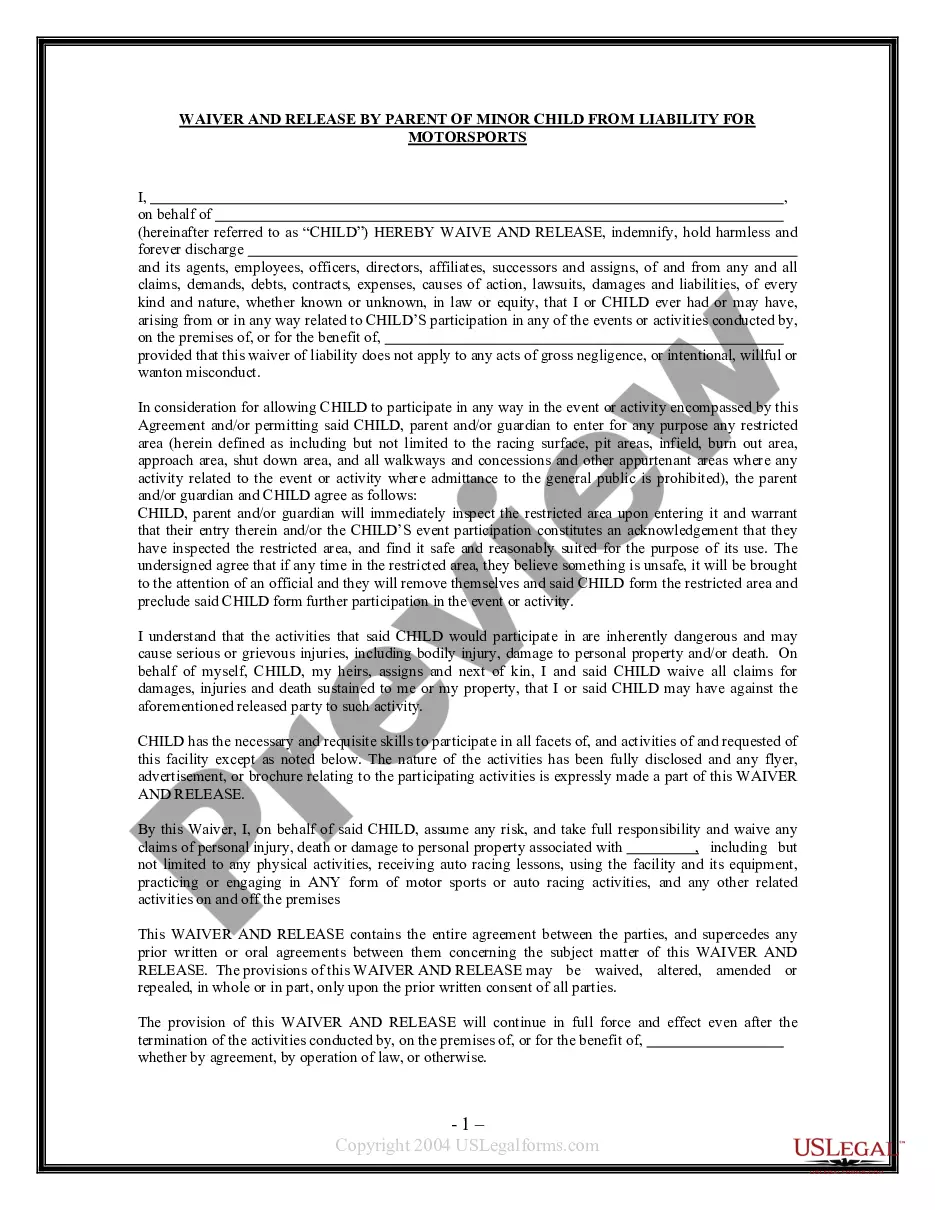
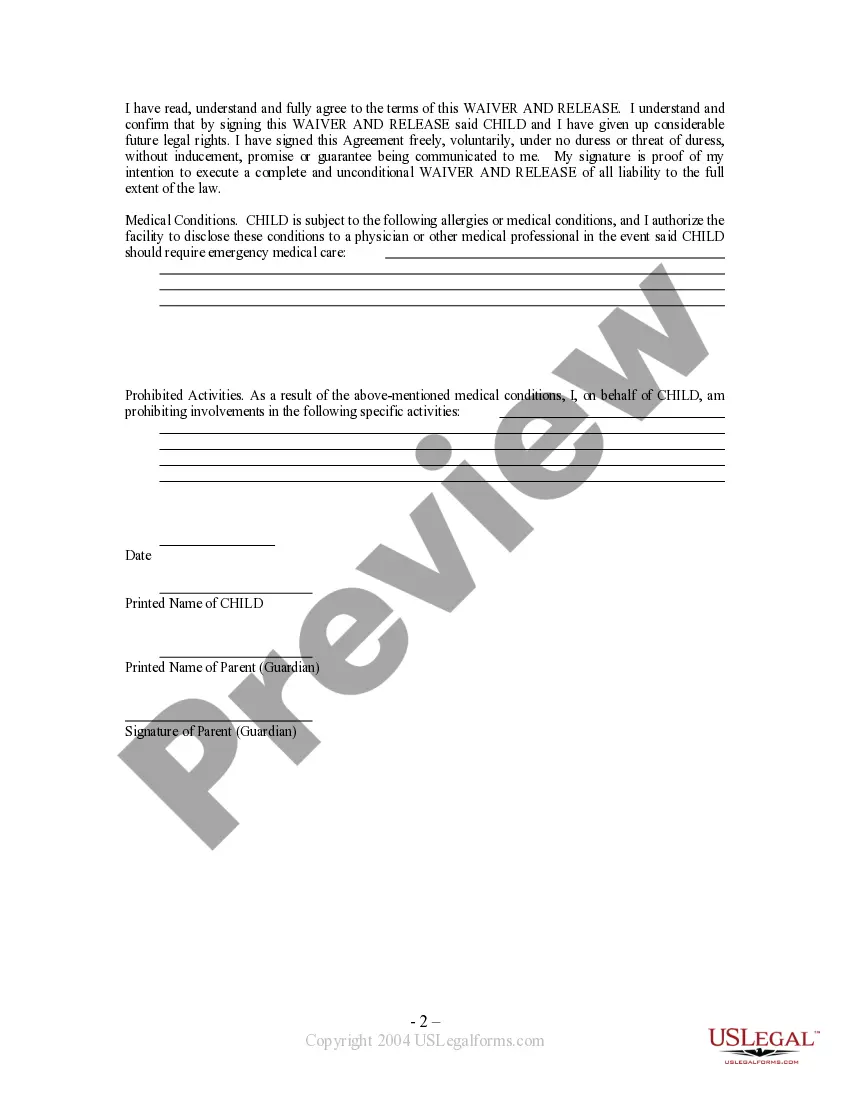
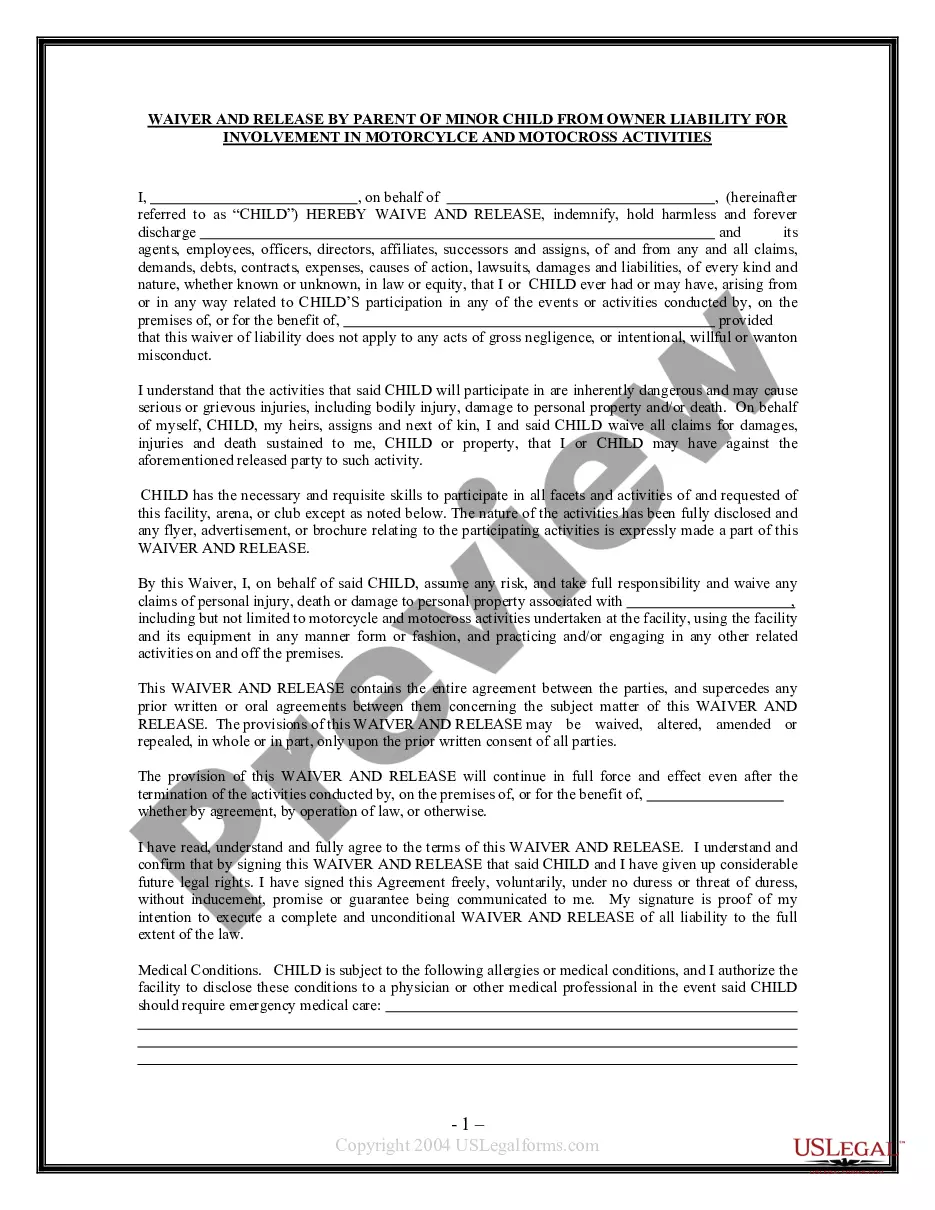
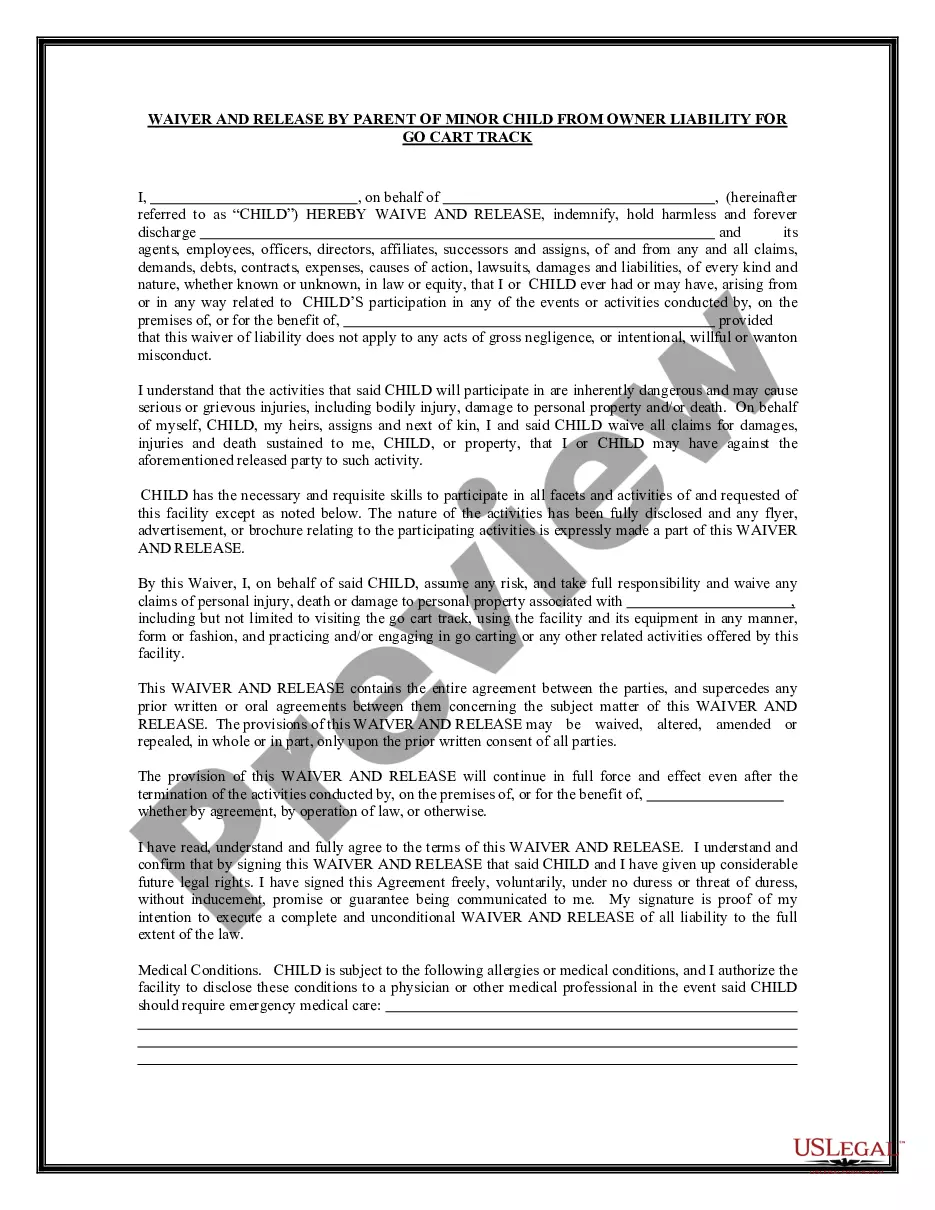
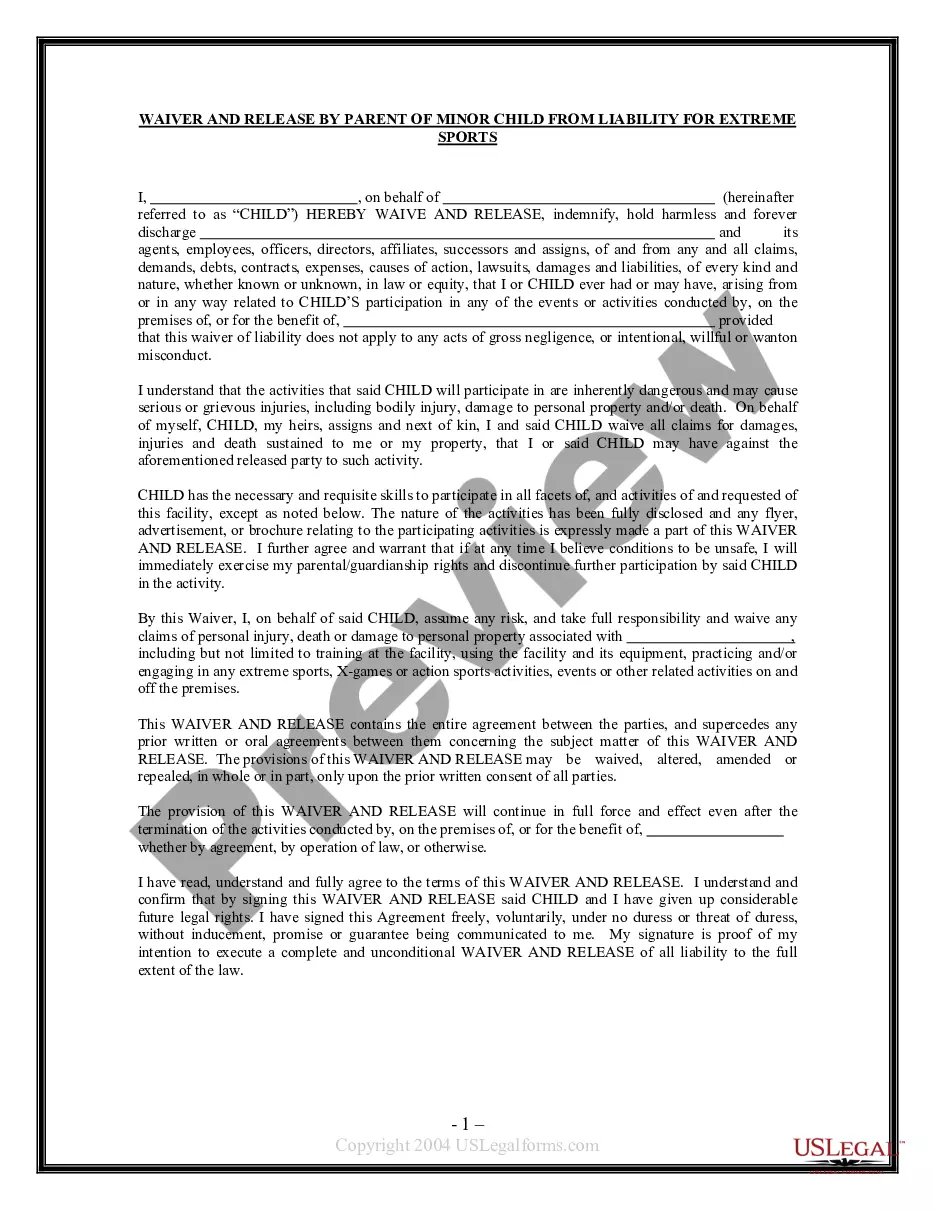
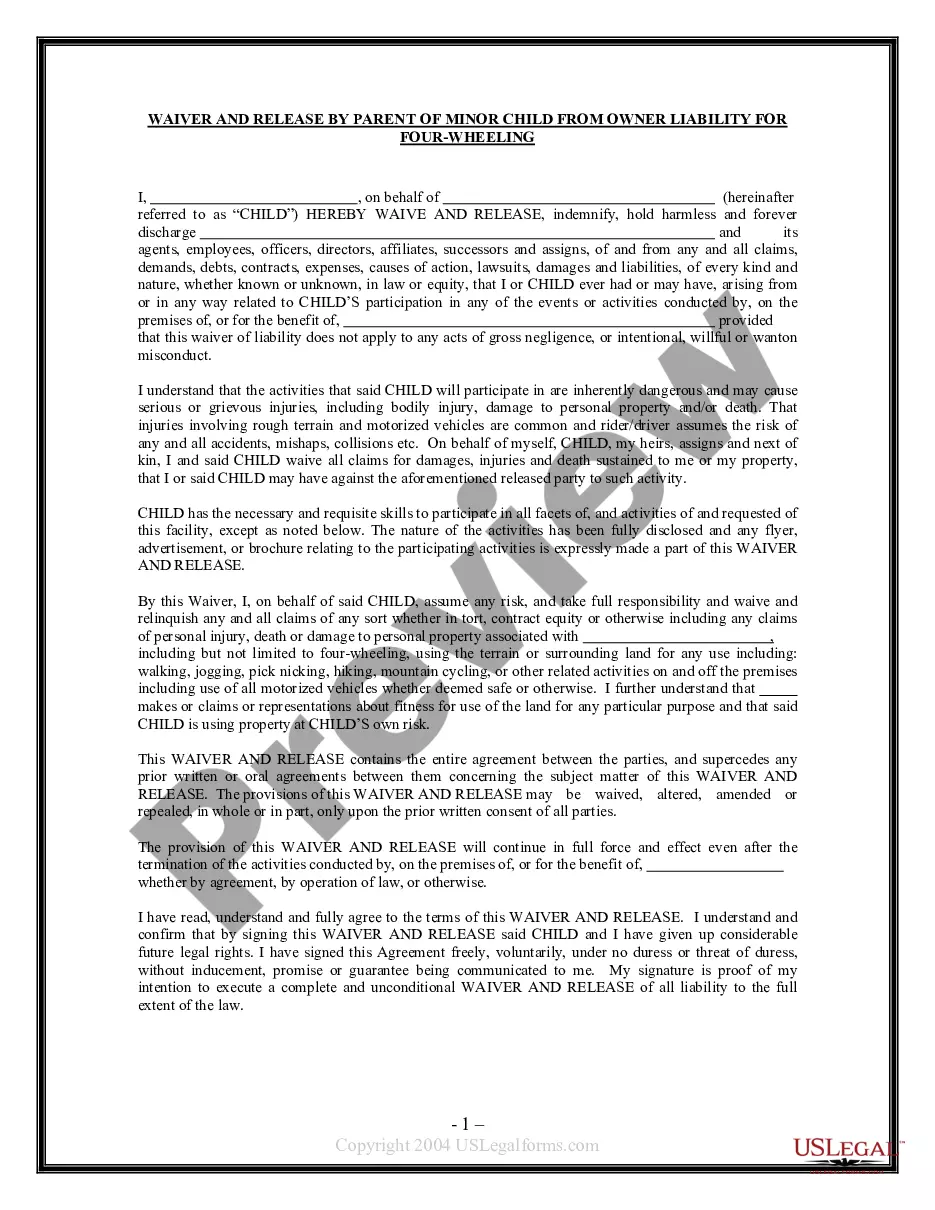
This form allows a parent or guardian to release a motorsports facility from liability for injuries which may be incurred by a minor child while on the premises, taking part in activities, etc.
Connecticut Waiver and Release From Liability For Minor Child for Motorsports
Category:
State:
Multi-State
Control #:
US-WAV-37M
Format:
Word;
Rich Text
Instant download
Description
Free preview
How to fill out Waiver And Release From Liability For Minor Child For Motorsports?
Have you found yourself in a scenario where you frequently require documents for business or personal reasons? There are many authentic document templates available online, but locating reliable ones isn't straightforward. US Legal Forms offers thousands of form templates, such as the Connecticut Waiver and Release From Liability For Minor Child for Motorsports, designed to comply with federal and state regulations.
If you are already familiar with the US Legal Forms website and have an account, simply Log In. After that, you can download the Connecticut Waiver and Release From Liability For Minor Child for Motorsports template.
If you do not have an account and wish to begin using US Legal Forms, follow these steps: Get the form you need and make sure it is for the correct city/state. Use the Preview button to review the form. Check the details to ensure you have selected the right form. If the form isn't what you're looking for, utilize the Lookup field to find the form that meets your needs and specifications. Once you find the correct form, click Acquire now. Choose the pricing plan you prefer, fill in the required information to create your account, and pay for the transaction using your PayPal or credit card. Select a convenient document format and download your copy.
- Access all the document templates you have purchased in the My documents section. You can retrieve another copy of the Connecticut Waiver and Release From Liability For Minor Child for Motorsports at any time if needed. Click on the necessary form to download or print the document template.
- Utilize US Legal Forms, one of the most extensive collections of legal forms, to save time and prevent errors. The service provides well-crafted legal document templates that can be used for various purposes. Create your account on US Legal Forms and start making your life a bit easier.
Form popularity
FAQ
To write a release of liability waiver, start by clearly stating the purpose and the parties involved. Include specific risks associated with the activity, and ensure that the language is straightforward and easy to understand. Utilizing the Connecticut Waiver and Release From Liability For Minor Child for Motorsports template from platforms like uslegalforms can streamline this process and ensure that you cover all necessary legal aspects.
A waiver may be deemed unenforceable if it is vague, overly broad, or signed under duress. Additionally, waivers that attempt to release parties from liability for gross negligence or intentional harm are likely invalid. Therefore, ensuring that the Connecticut Waiver and Release From Liability For Minor Child for Motorsports is clear and specific is vital for its enforceability.
Yes, liability waivers are generally enforceable in Connecticut, provided they are properly drafted. Courts will uphold waivers that are clear and specific about the risks involved. The Connecticut Waiver and Release From Liability For Minor Child for Motorsports can help organizations mitigate risk when designed correctly.
Yes, liability waivers can be legally binding if they meet certain requirements. They must be clear, specific, and voluntarily signed by the participant. A well-crafted Connecticut Waiver and Release From Liability For Minor Child for Motorsports can provide strong protection for organizations, as long as it complies with state laws.
You can write your own liability waiver, but it is often advisable to consult a legal expert. Proper wording is crucial for the waiver to be effective and enforceable. Utilizing a pre-designed template, such as the Connecticut Waiver and Release From Liability For Minor Child for Motorsports available on platforms like uslegalforms, can save you time and ensure legal compliance.
Connecticut follows a modified comparative negligence rule, rather than strict liability. This means that liability can be shared among parties based on their level of fault. Understanding this can help when drafting a Connecticut Waiver and Release From Liability For Minor Child for Motorsports, as it clarifies the responsibilities of all involved.
In Connecticut, waivers signed by minors are generally not legally binding. This is because minors do not have the legal capacity to enter into contracts. Therefore, a Connecticut Waiver and Release From Liability For Minor Child for Motorsports should ideally include the signature of a parent or guardian to ensure enforceability.
Waivers can limit your ability to sue, but they do not completely prevent you from taking legal action. The Connecticut Waiver and Release From Liability For Minor Child for Motorsports is designed to protect organizations from liability. However, if the waiver is improperly drafted or if there is gross negligence, you may still have grounds to sue.