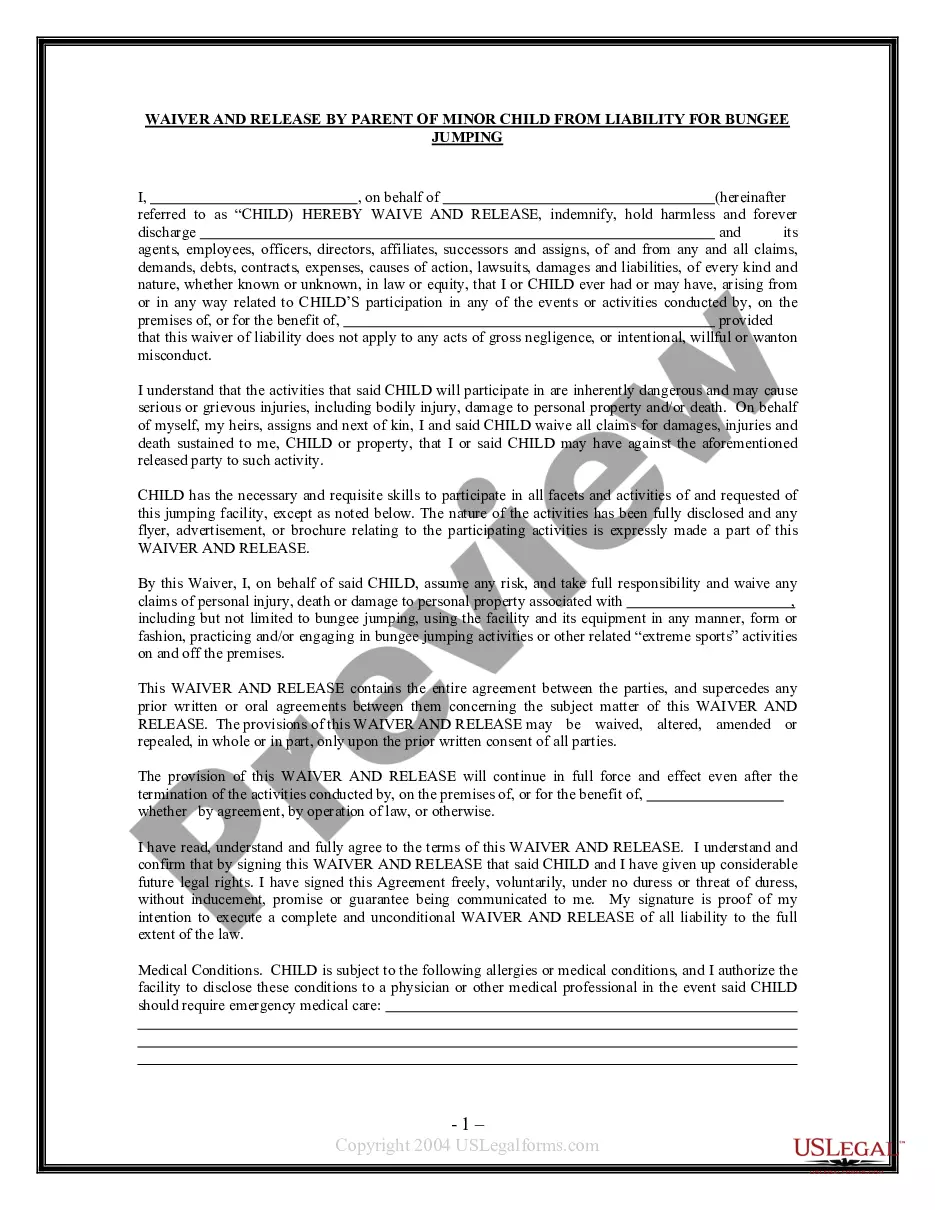
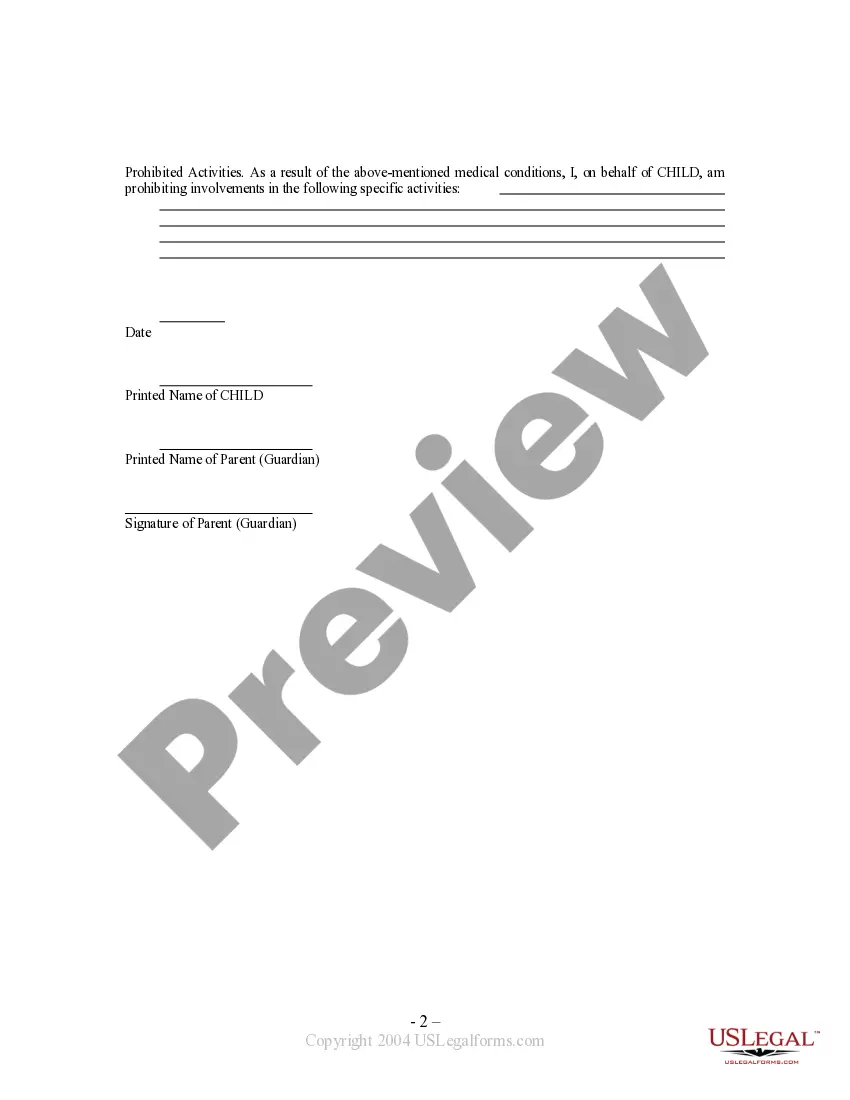
This form allows a parent or guardian to release a bungee jumping facility from liability for injuries which may be incurred by a minor child while on the premises, taking part in activities, etc.
Connecticut Waiver and Release From Liability For Minor Child for Bungee Jumping
Category:
State:
Multi-State
Control #:
US-WAV-04M
Format:
Word;
Rich Text
Instant download
Description
Free preview
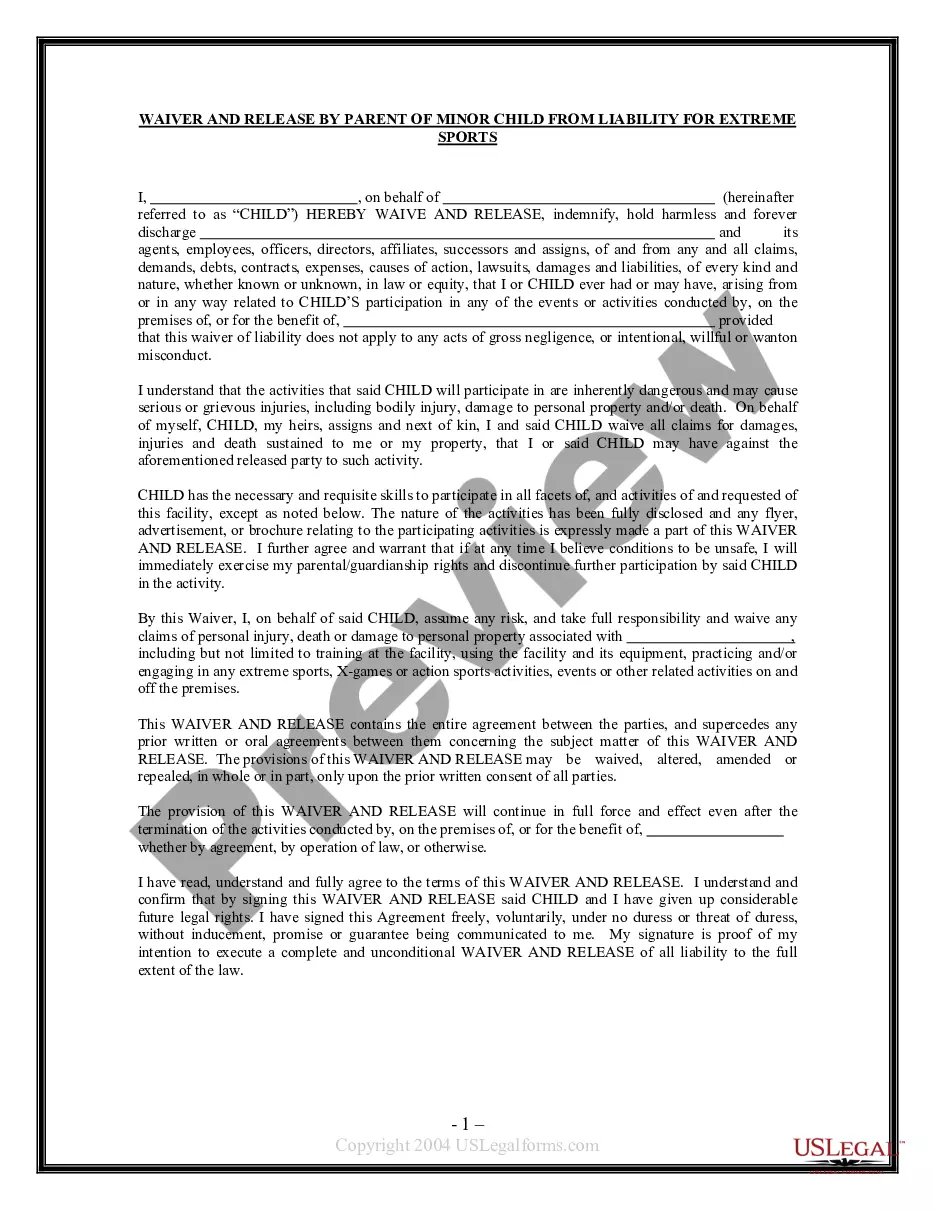
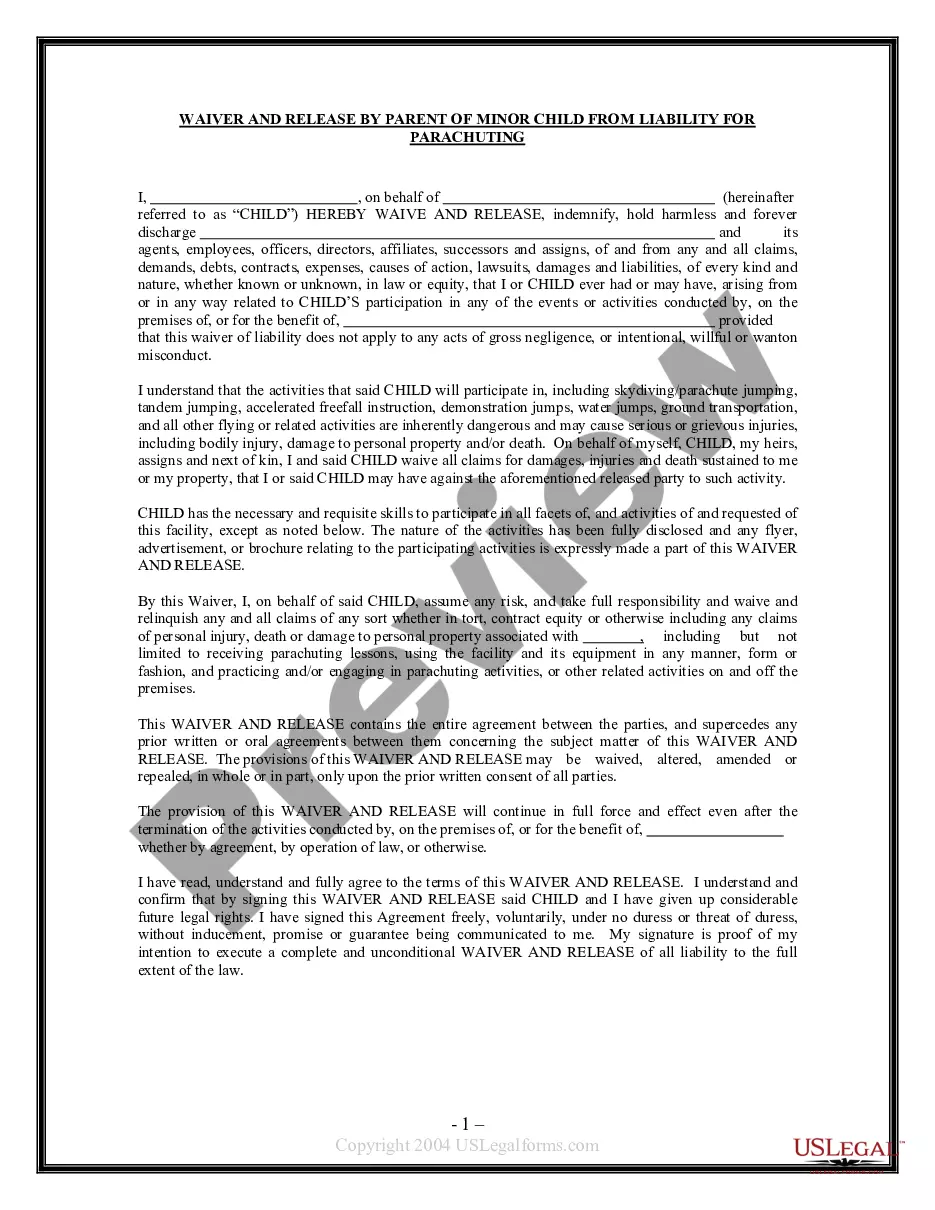
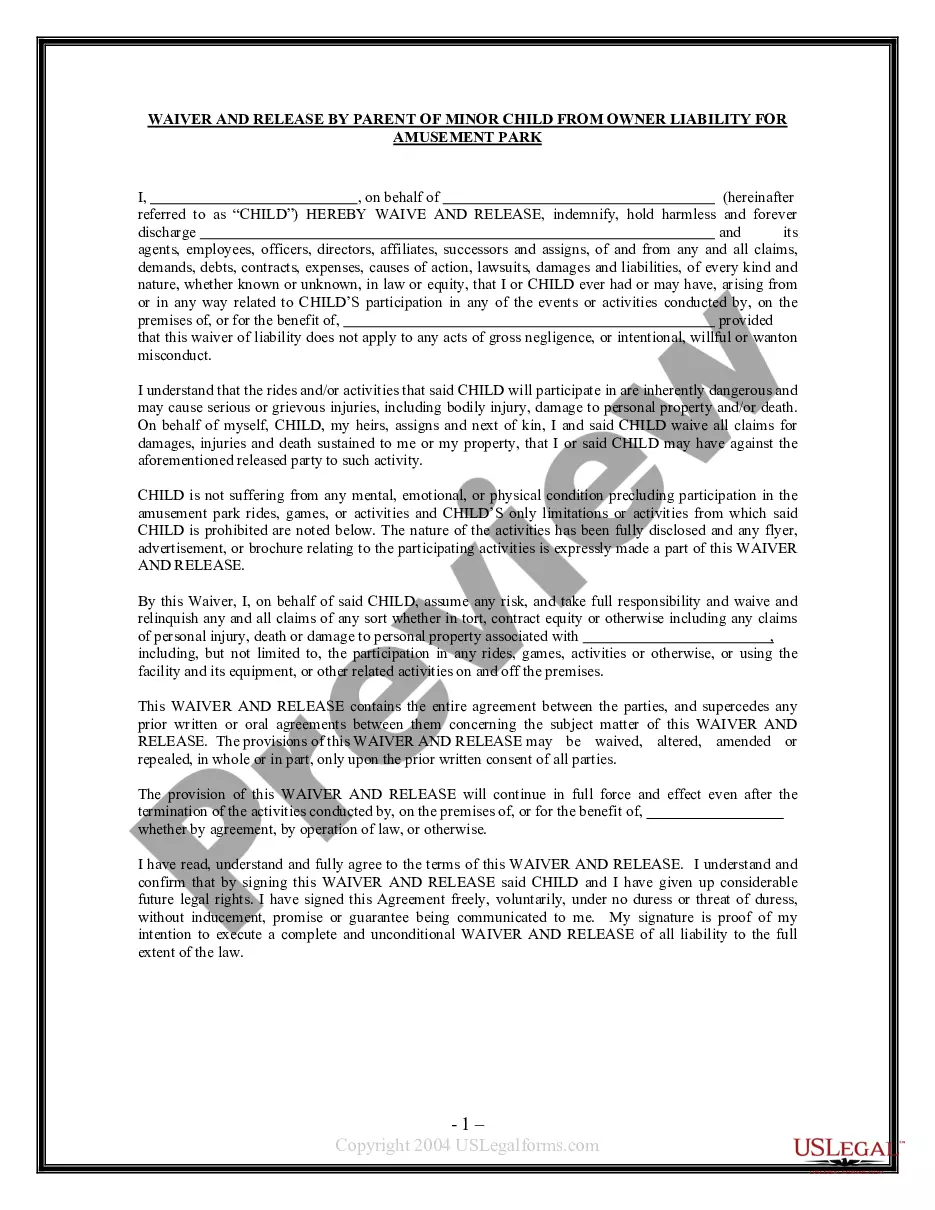
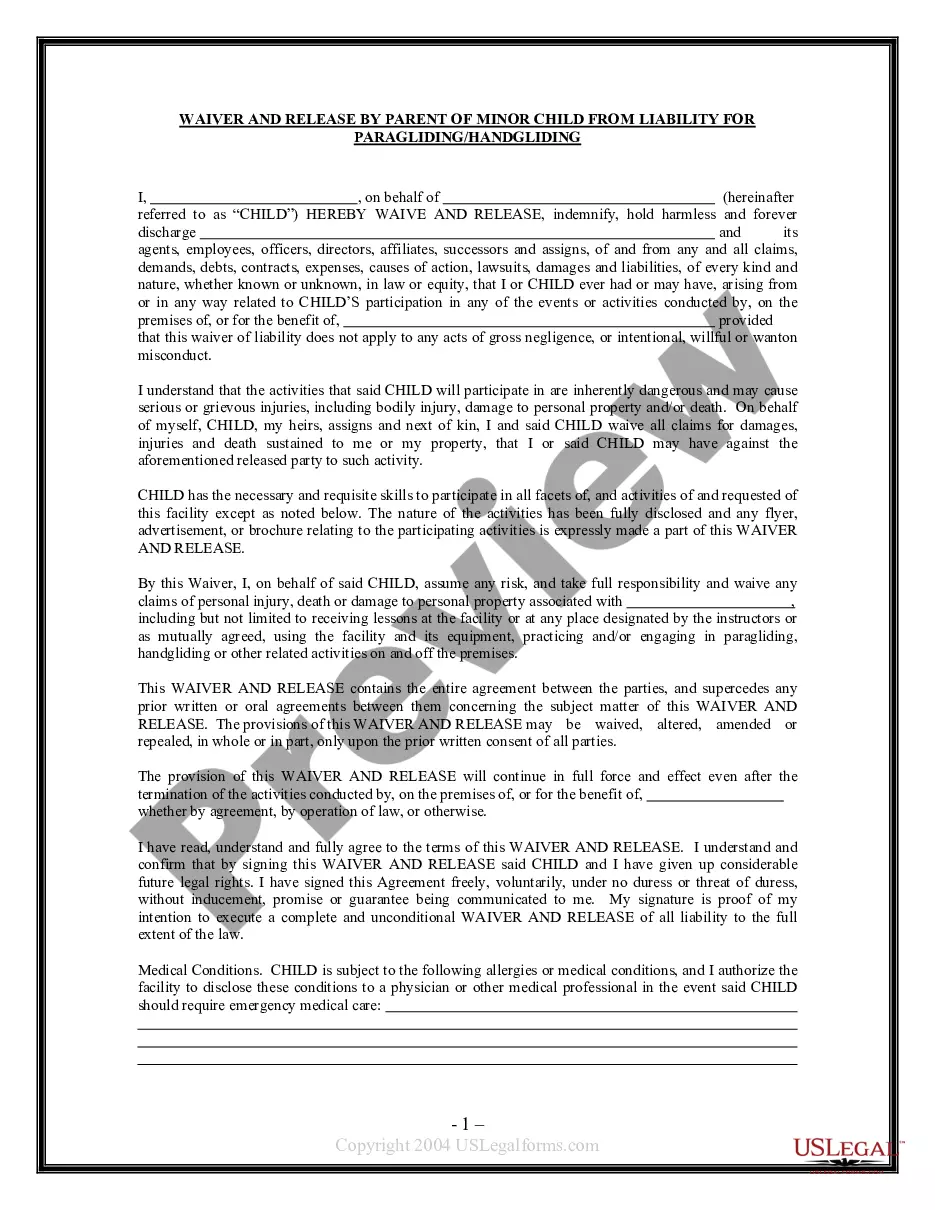
How to fill out Waiver And Release From Liability For Minor Child For Bungee Jumping?
Are you currently in a position where you need documents for either business or personal purposes almost every day.
There are numerous legal document templates accessible online, but finding ones you can rely on isn't easy.
US Legal Forms provides thousands of form templates, such as the Connecticut Waiver and Release From Liability For Minor Child for Bungee Jumping, that are designed to comply with federal and state regulations.
Utilize US Legal Forms, one of the most extensive collections of legal forms, to save time and avoid errors.
The service provides professionally crafted legal document templates that you can use for a variety of purposes. Create an account on US Legal Forms and start making your life a bit easier.
- If you are already familiar with the US Legal Forms website and have an account, simply Log In.
- Then, you can download the Connecticut Waiver and Release From Liability For Minor Child for Bungee Jumping template.
- If you do not have an account and wish to start using US Legal Forms, follow these steps.
- Select the form you need and ensure it is for the correct area/state.
- Use the Preview button to review the form.
- Read the description to confirm you have chosen the right document.
- If the form isn’t what you’re looking for, use the Search field to find the form that suits your needs and requirements.
- Once you find the right form, click on Buy now.
- Choose the pricing plan you prefer, fill in the necessary information to create your account, and pay for the order with your PayPal or credit card.
- Select a convenient file format and obtain your copy.
- Access all the document templates you have purchased in the My documents list. You can get an additional copy of the Connecticut Waiver and Release From Liability For Minor Child for Bungee Jumping whenever necessary. Just click on the desired form to download or print the document template.
Form popularity
FAQ
An example of a waiver of liability is a Connecticut Waiver and Release From Liability For Minor Child for Bungee Jumping, which outlines the risks of injury or harm associated with the activity. This document typically states that the parent or guardian voluntarily assumes these risks and releases the bungee jumping operator from any claims. Such a waiver serves to protect both the participant and the service provider, ensuring clarity and understanding of the risks involved.
Writing a liability waiver form involves outlining the risks associated with an activity and obtaining consent from participants. For a Connecticut Waiver and Release From Liability For Minor Child for Bungee Jumping, be sure to include specific details about the bungee jumping experience. Clearly state that the parent or guardian understands the risks and agrees to release the provider from liability. Utilizing platforms like uslegalforms can simplify this process, offering templates tailored to your needs.
To write a Connecticut Waiver and Release From Liability For Minor Child for Bungee Jumping, start by clearly stating the purpose of the document. Include the names of the parties involved, the date, and a description of the activity. It's important to specify the risks associated with bungee jumping and the acknowledgment by the parent or guardian of these risks. Finally, ensure that the form is signed and dated to validate the agreement.
In general, waivers signed by minors, including the Connecticut Waiver and Release From Liability For Minor Child for Bungee Jumping, are not considered legally binding. This is because minors typically lack the legal capacity to enter into contracts. However, parents or guardians can often sign on behalf of the minor to provide consent and mitigate liability. It is advisable to consult with a legal expert to ensure that your waiver meets state requirements and offers adequate protection.
Connecticut is not a strict liability state in all cases; it follows a modified comparative negligence standard. This means that liability is usually established based on the degree of fault of each party involved in an incident. For activities like bungee jumping, having a well-structured Connecticut Waiver and Release From Liability For Minor Child can significantly affect liability claims. Familiarize yourself with the specific legal standards to ensure proper protection.
While waivers can limit your ability to sue, they do not eliminate it entirely. A Connecticut Waiver and Release From Liability For Minor Child for Bungee Jumping aims to protect the provider from lawsuits related to inherent risks. However, if negligence or misconduct is involved, the waiver may not be enforceable. It's important to understand your rights and the limitations of waivers when considering legal action.
In Connecticut, the risk of injury to a minor is not automatically classified as a felony; it depends on the circumstances surrounding the incident. If a child's safety is compromised due to negligence or intentional harm, criminal charges could arise. Understanding the legal implications is crucial, especially when participating in activities like bungee jumping. Ensure you have a properly executed Connecticut Waiver and Release From Liability For Minor Child for Bungee Jumping to protect against potential liabilities.
A waiver can become unenforceable for several reasons, including ambiguous language or lack of informed consent. If the waiver does not adequately inform the signer of the risks associated with bungee jumping, it may not hold up in court. Additionally, if the waiver is signed under duress or without the proper authority, such as a parent for minors, it may be challenged. It is wise to use a reputable source like uslegalforms to create a comprehensive Connecticut Waiver and Release From Liability For Minor Child for Bungee Jumping.
Liability waivers can be legally binding in Connecticut if they are drafted properly. A Connecticut Waiver and Release From Liability For Minor Child for Bungee Jumping must clearly state the rights being waived and the risks involved. If the waiver is signed voluntarily and without coercion, it is more likely to hold up in court. However, it is essential to ensure that the waiver complies with state law to maintain its enforceability.
Yes, liability waivers are generally enforceable in Connecticut, provided they meet specific legal requirements. To be valid, a Connecticut Waiver and Release From Liability For Minor Child for Bungee Jumping must be clear and unambiguous in its language. Additionally, the waiver should inform participants of the risks involved and be signed by a parent or legal guardian if it pertains to a minor. Always consult a legal professional to ensure your waiver complies with state laws.