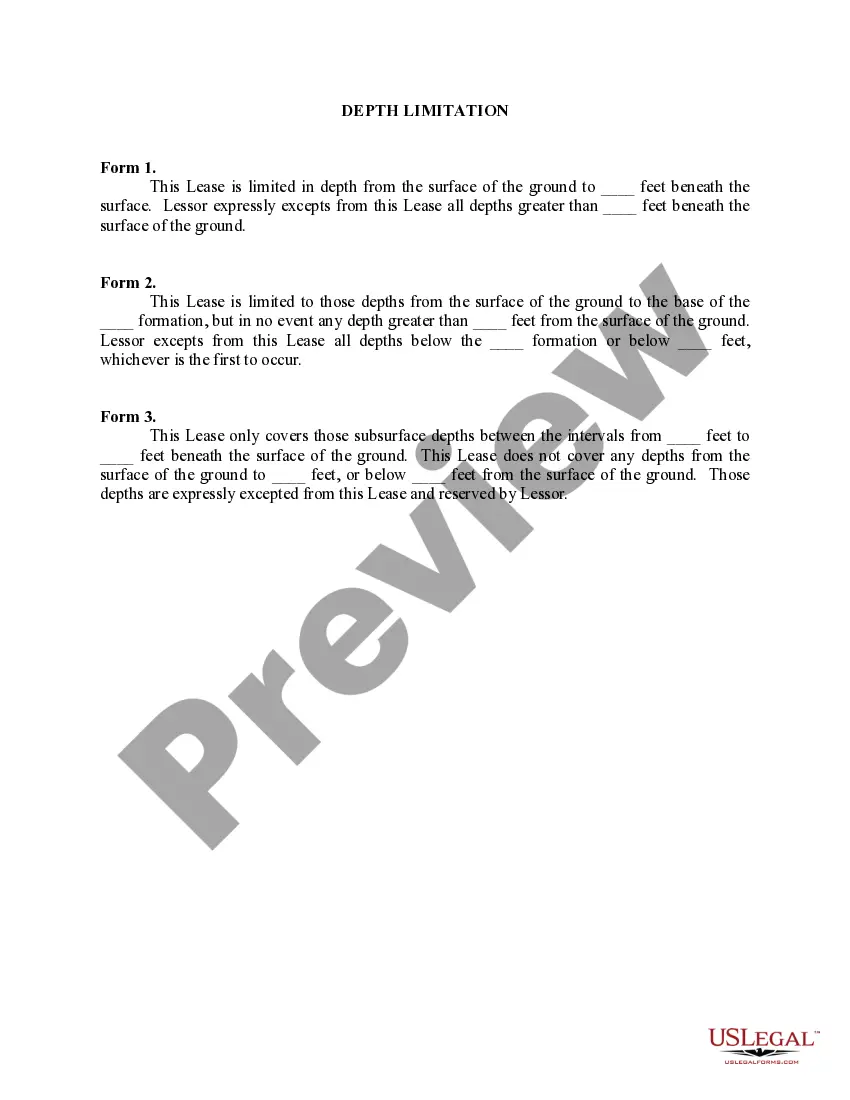
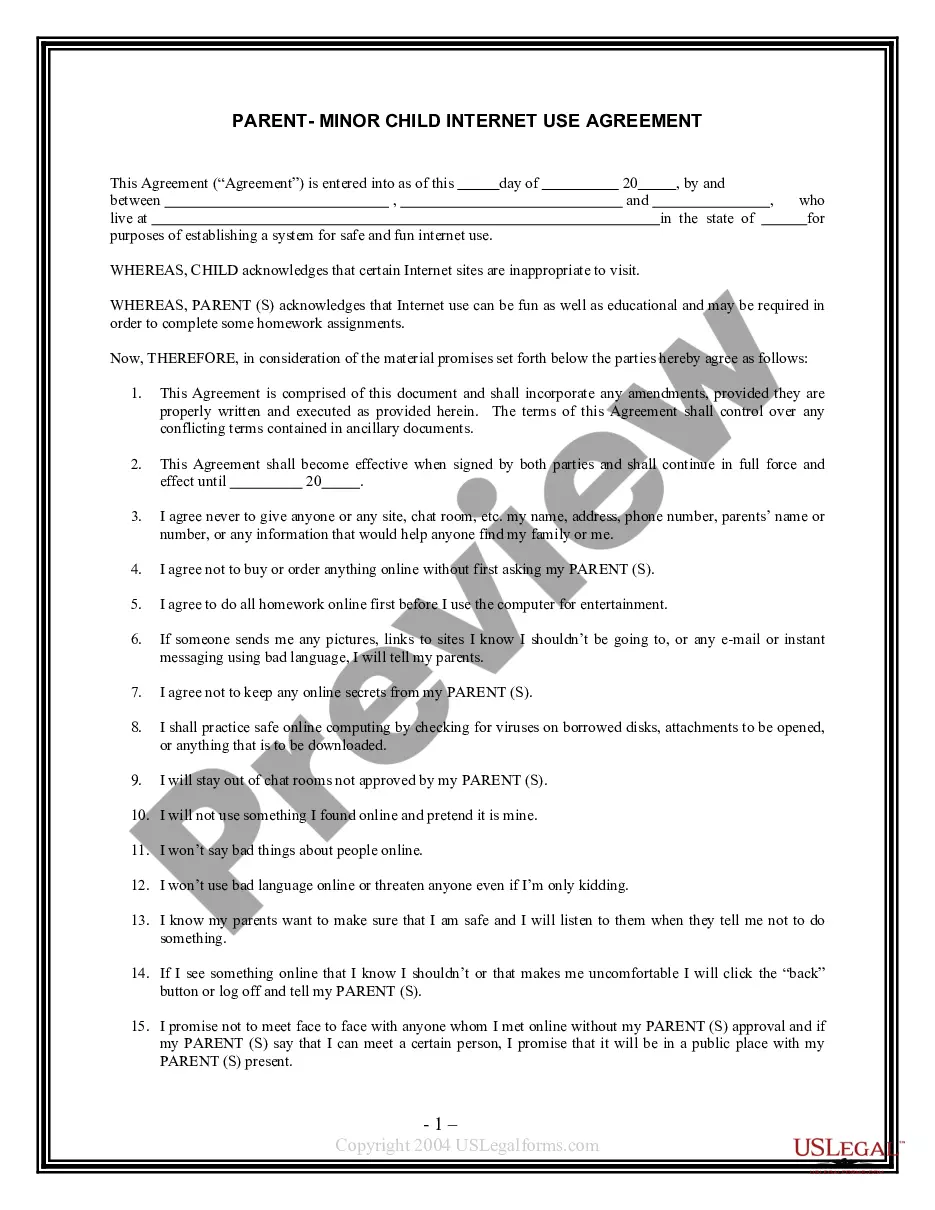
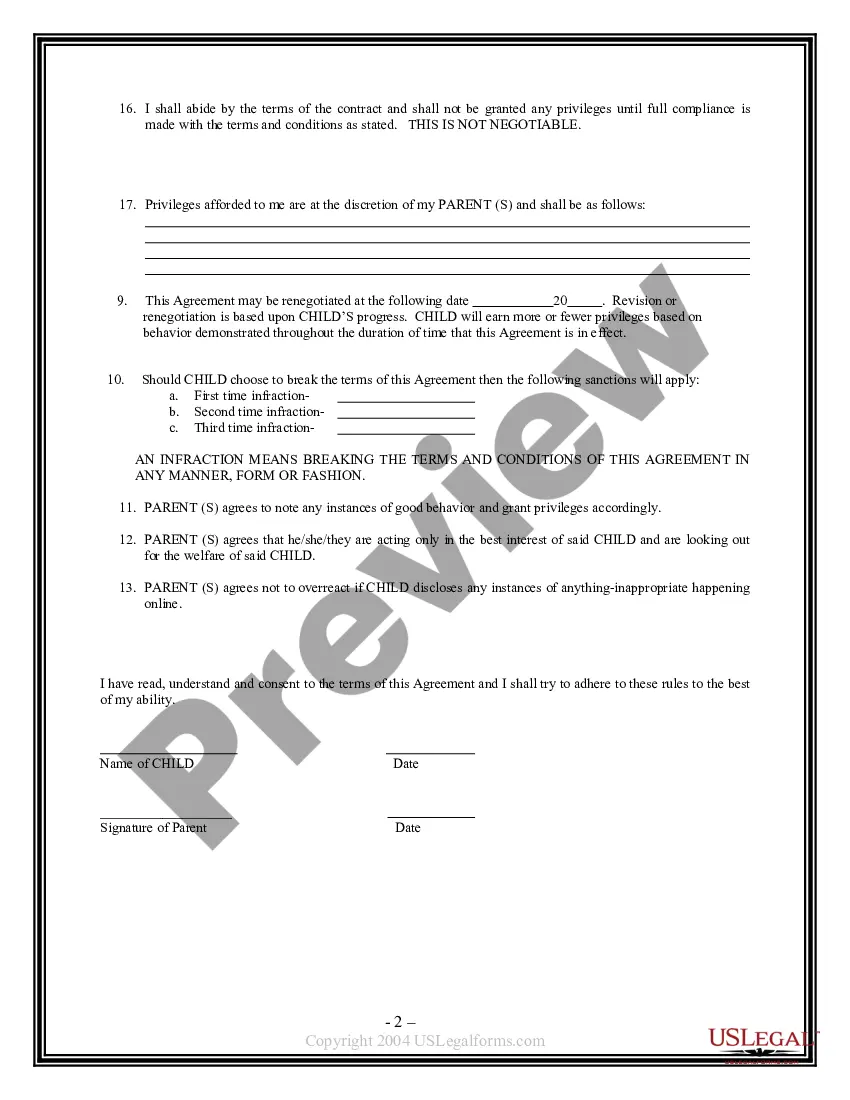
This is a contract between parent(s) and a younger child introducing child to Internet safety by describing what types of sites child should not contact and other general rules for Internet use.
Connecticut Parent - Minor Child Internet Use Agreement
Category:
State:
Multi-State
Control #:
US-PC10
Format:
Word;
Rich Text
Instant download
Description
Free preview
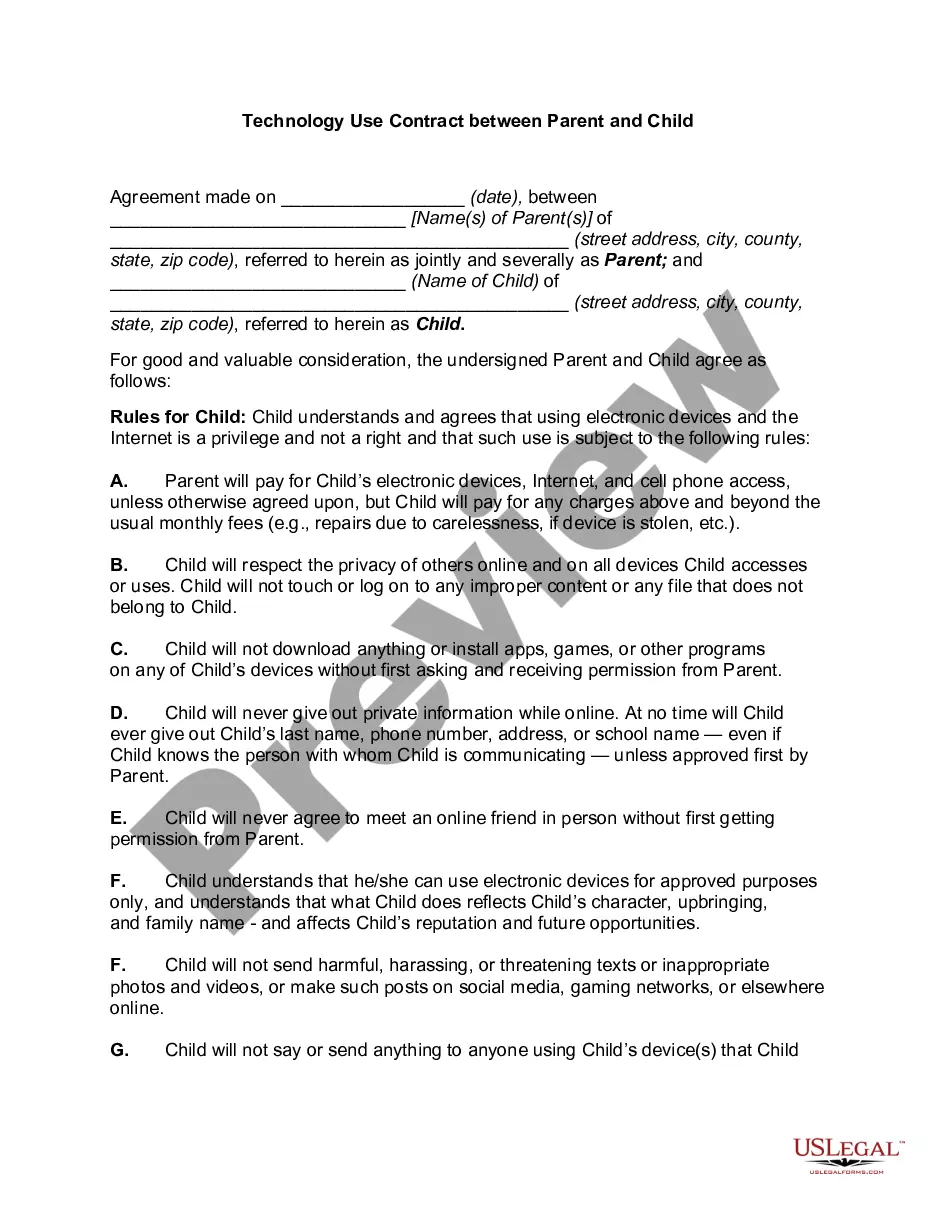
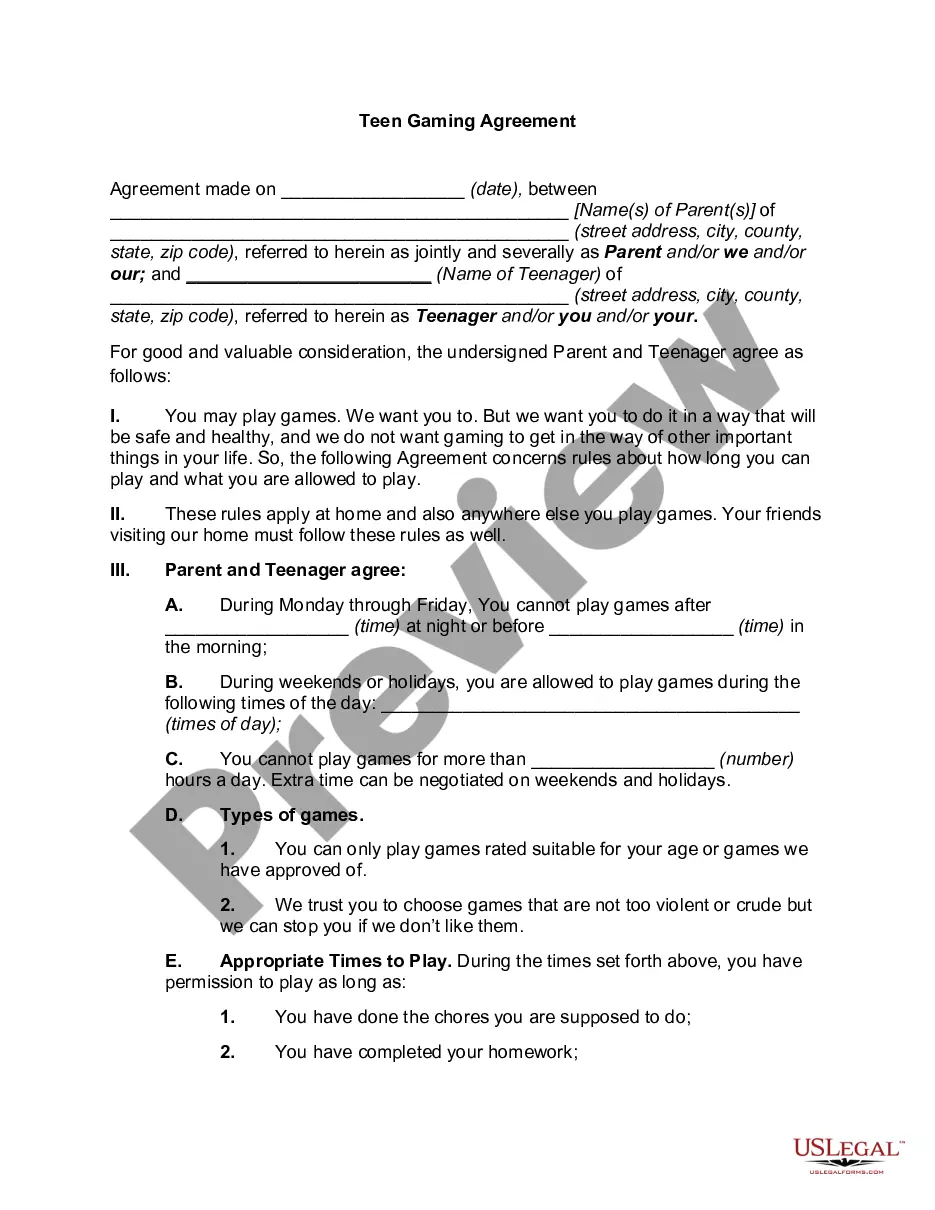
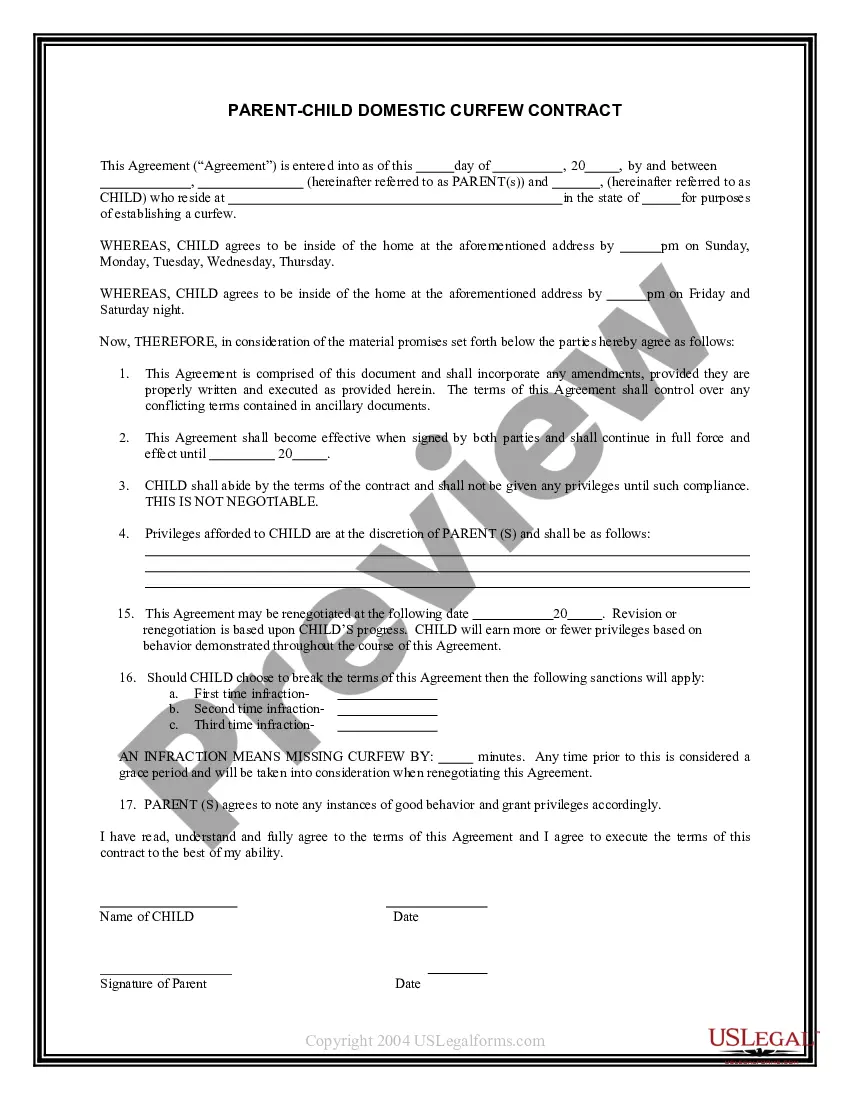
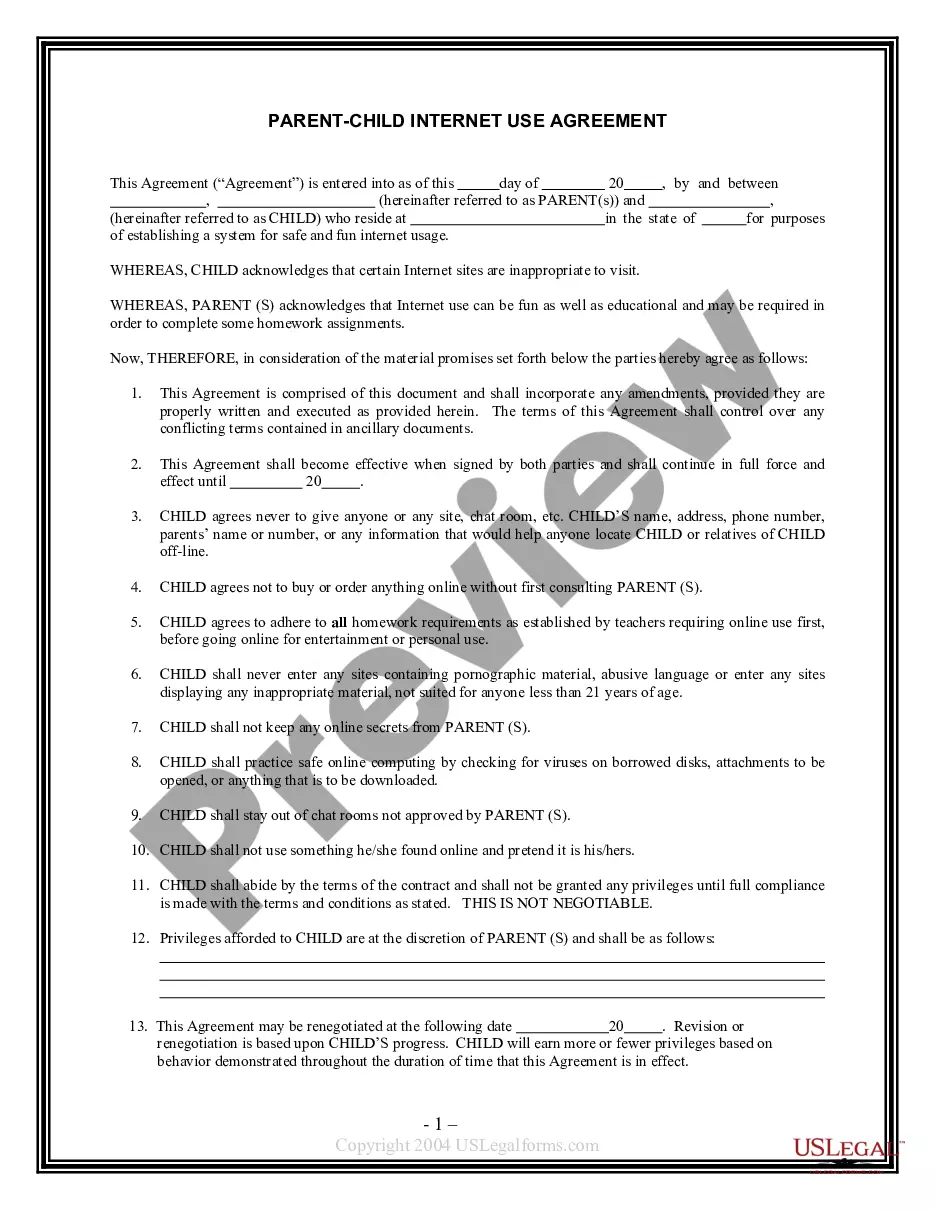
Get your form ready online
Our built-in tools help you complete, sign, share, and store your documents in one place.
Built-in online Word editor
Make edits, fill in missing information, and update formatting in US Legal Forms—just like you would in MS Word.
Export easily
Download a copy, print it, send it by email, or mail it via USPS—whatever works best for your next step.
E-sign your document
Sign and collect signatures with our SignNow integration. Send to multiple recipients, set reminders, and more. Go Premium to unlock E-Sign.
Notarize online 24/7
If this form requires notarization, complete it online through a secure video call—no need to meet a notary in person or wait for an appointment.
Store your document securely
We protect your documents and personal data by following strict security and privacy standards.

Make edits, fill in missing information, and update formatting in US Legal Forms—just like you would in MS Word.

Download a copy, print it, send it by email, or mail it via USPS—whatever works best for your next step.

Sign and collect signatures with our SignNow integration. Send to multiple recipients, set reminders, and more. Go Premium to unlock E-Sign.

If this form requires notarization, complete it online through a secure video call—no need to meet a notary in person or wait for an appointment.

We protect your documents and personal data by following strict security and privacy standards.
Looking for another form?
How to fill out Parent - Minor Child Internet Use Agreement?
US Legal Forms - one of the largest collections of legal documents in the United States - offers a variety of legal document templates that you can download or print.
By using the website, you can find thousands of forms for business and personal use, organized by categories, states, or keywords. You can discover the latest versions of forms such as the Connecticut Parent - Minor Child Internet Use Agreement in just moments.
If you already have a monthly subscription, Log In and download the Connecticut Parent - Minor Child Internet Use Agreement from the US Legal Forms collection. The Download button will be visible on every form you view. You can access all previously downloaded forms in the My documents section of your account.
Process the payment. Use your credit card or PayPal account to complete the transaction.
Select the format and download the form to your device. Edit. Fill out, modify, print, and sign the downloaded Connecticut Parent - Minor Child Internet Use Agreement. Each format you add to your account has no expiration date and is yours indefinitely. Therefore, if you wish to download or print another version, simply go to the My documents section and click on the form you need.
- Make sure you have selected the correct form for your city/state.
- Click the Review button to check the form's content.
- Read the form description to ensure you have selected the right document.
- If the form does not meet your needs, use the Search area at the top of the screen to find one that does.
- If you are satisfied with the form, confirm your selection by clicking the Purchase now button.
- Then, choose the payment plan you prefer and provide your information to register for an account.
Form popularity
FAQ
The Sunshine law in Connecticut promotes transparency in government by ensuring that meetings and records of public agencies are accessible to the public. This law helps foster accountability and encourages citizen engagement in governmental processes. It aligns with the principles outlined in the Connecticut Parent - Minor Child Internet Use Agreement by emphasizing the importance of openness and informed decision-making. Parents can leverage this law to understand their rights and responsibilities regarding their child's online interactions.
In Connecticut, there is no specific age at which a child can refuse to see a parent outright. However, as children grow older, their preferences may be considered more seriously in custody and visitation matters. The law typically takes into account the child's maturity and understanding. This aspect is important for parents to consider when establishing a Connecticut Parent - Minor Child Internet Use Agreement, as it can influence how they approach technology use and communication.
The Connecticut data privacy Act for children focuses on protecting the online privacy of minors. It requires websites and online services to obtain parental consent before collecting personal information from children under 13 years old. This act supports the Connecticut Parent - Minor Child Internet Use Agreement by ensuring that parents have control over their child's online activities and data sharing. By using clear guidelines, it helps parents safeguard their children's digital experiences.
Many states require parental consent for the medical treatment of mature minors, including Connecticut. While the mature minor doctrine is a legal agreement accepted by other U.S. states, stating matured unemancipated minors may make their own medical decisions without the consent of their parents.
Connecticut custody laws only require that the child is "of sufficient age" to have his or her wishes considered. Connecticut case law generally treats 12 as a reasonable age to express a custody preference.
3 The general rule, however, is that anyone under the age of majority (eighteen in Connecticut) does not possess the legal capacity to consent to a procedure that re- quires informed consent. 2 See - ics/code-medical-ethics/opinion5055.
Under state law in Connecticut both the mother and the father of a child have the legal right to seek custody of the child and/or visitation time with the child. When a child custody case begins both the mother and the father are treated equally and have equal rights.
Assistance of a parent or guardian, the contract will not be enforceable against the minor. party, provided the minor fulfils his or her obligations. With the advancement of technology in society today, it is almost impossible for a minor not to enter into a contract online.
Connecticut custody laws only require that the child is "of sufficient age" to have his or her wishes considered. Connecticut case law generally treats 12 as a reasonable age to express a custody preference.
The definition with the widest applicability throughout the statutes classifies a minor as any person under age 18 (CGS § 1-1d). That statute also establishes that the age of majority in Connecticut is 18, and it considers anyone who reaches this age an adult.