Connecticut Cease and Desist for Defamation
Description
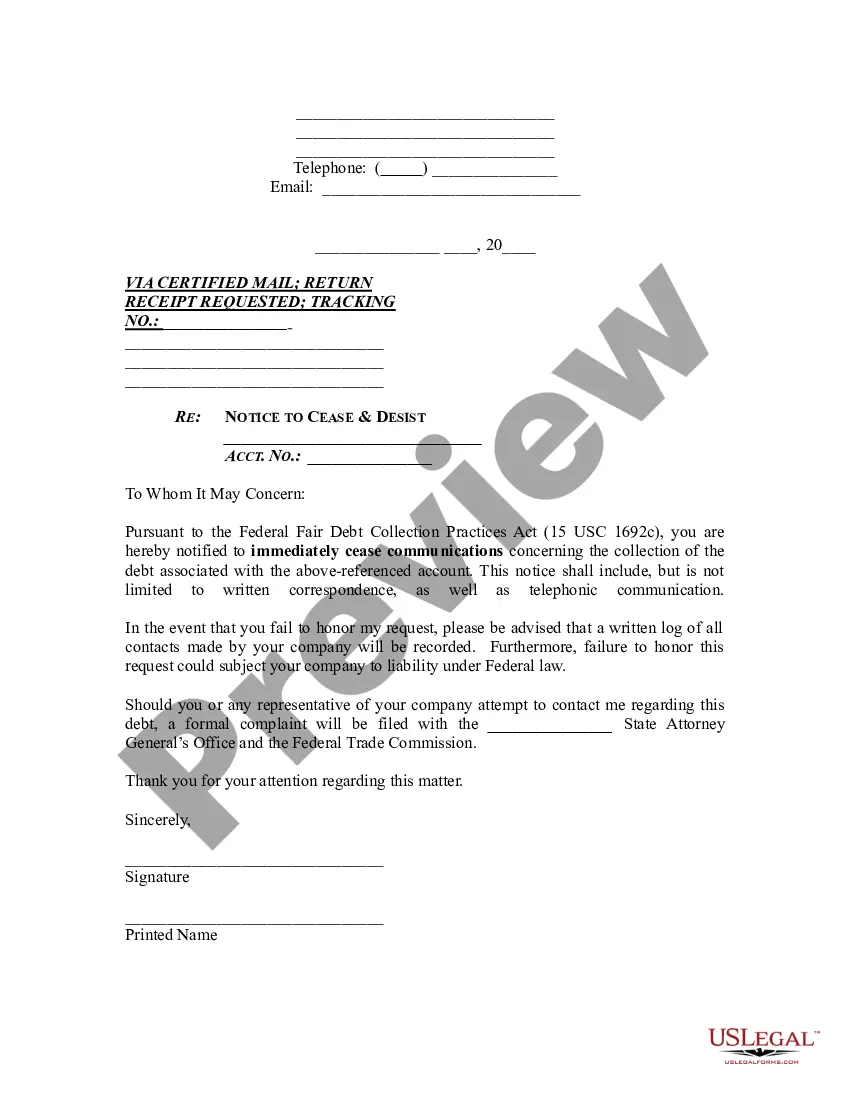
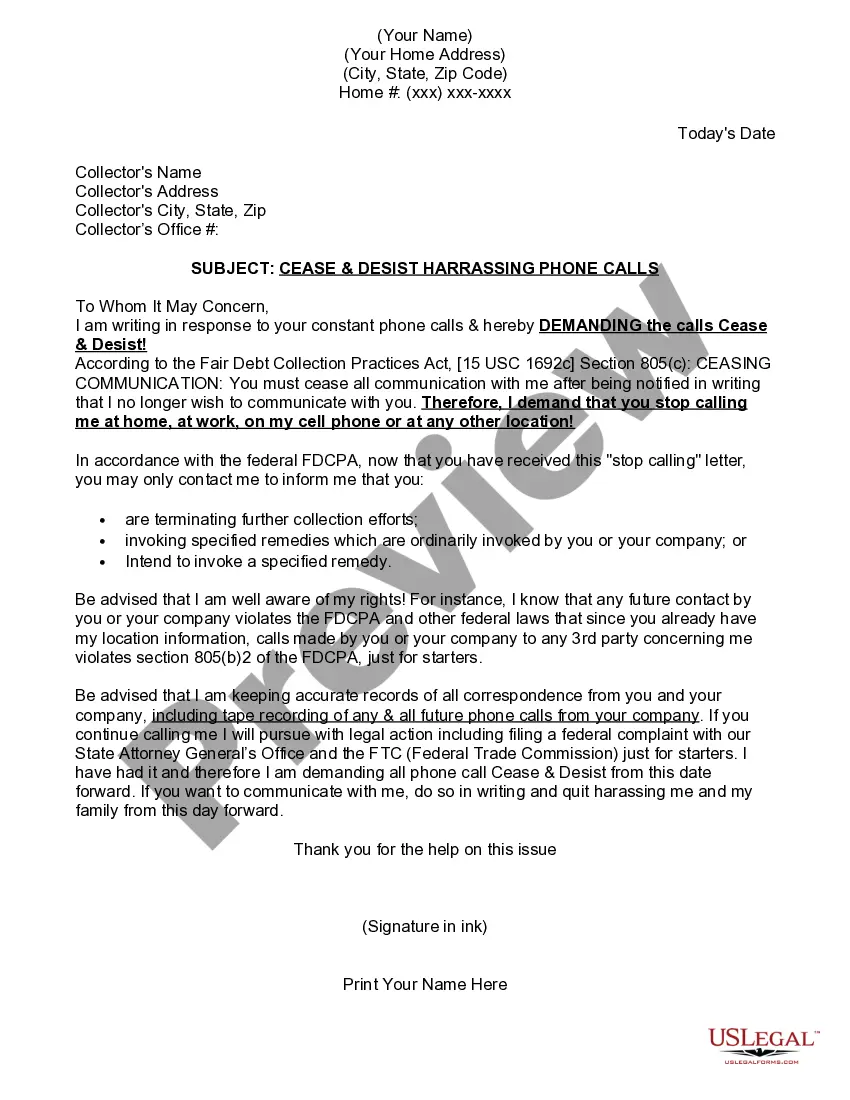
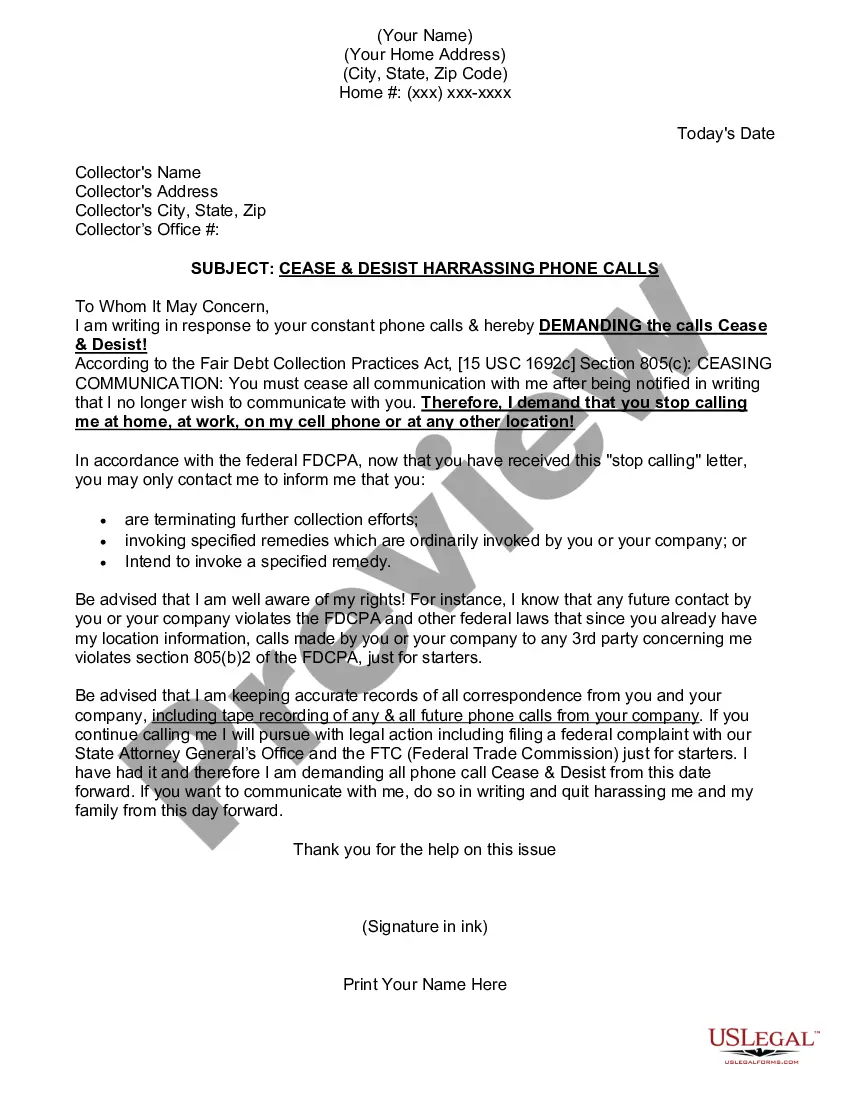
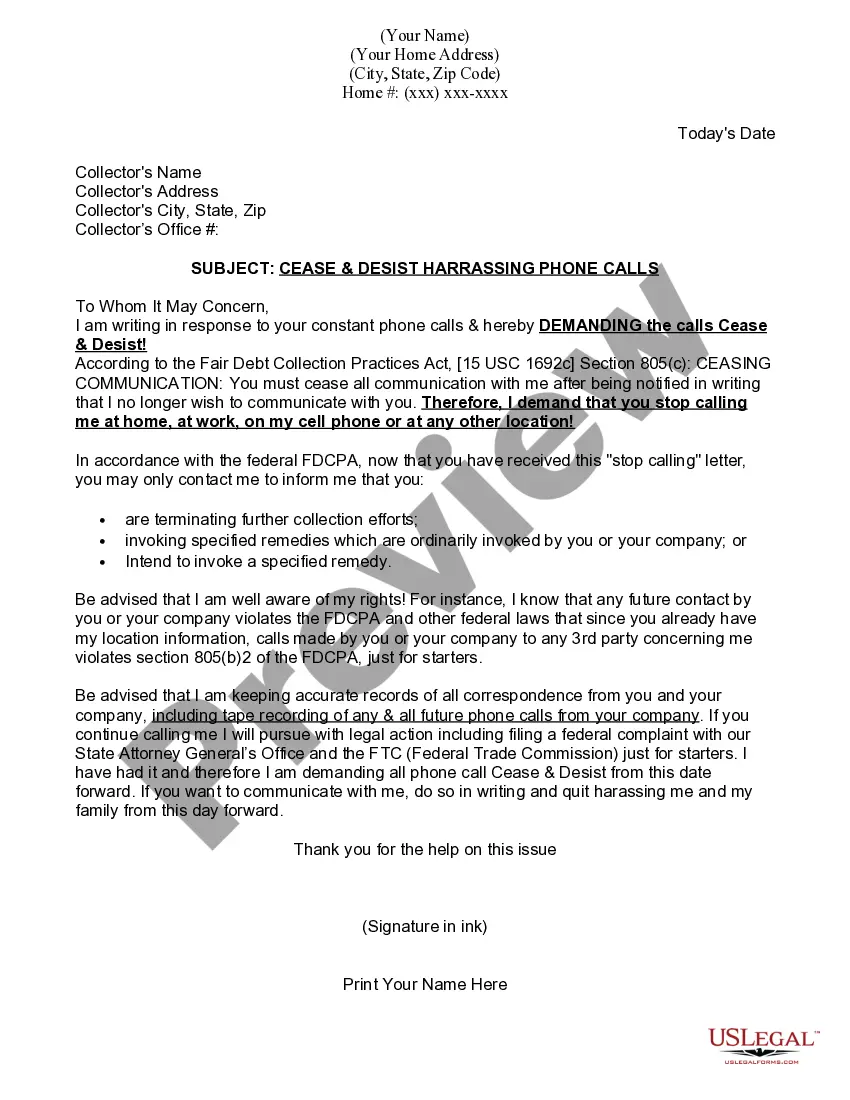
How to fill out Cease And Desist For Defamation?
You can spend numerous hours online attempting to locate the legal document template that complies with the federal and state regulations you will require.
US Legal Forms provides thousands of legal forms that are vetted by experts.
You can indeed obtain or print the Connecticut Cease and Desist for Defamation through my support.
If you want to get another version of the form, utilize the Search field to find the template that suits your needs and requirements.
- If you already have a US Legal Forms account, you can sign in and click on the Obtain button.
- Then, you can complete, modify, print, or sign the Connecticut Cease and Desist for Defamation.
- Every legal document template you obtain is yours permanently.
- To get another copy of the purchased form, visit the My documents section and click on the appropriate button.
- If you are using the US Legal Forms website for the first time, follow the simple instructions below.
- First, ensure that you have selected the correct document template for your region/area of interest.
- Review the form details to confirm you have selected the right form.
- If available, use the Review button to check the document template as well.
Form popularity
FAQ
The grounds for a cease and desist defamation typically involve false statements presented as facts that harm your reputation. These statements must be proven to be untrue and made with negligence or malice. Establishing these grounds is vital for ensuring the effectiveness of your cease and desist effort. Using resources like UsLegalForms can assist you in navigating this complex process.
To legally stop someone from slandering you, consider sending a Connecticut Cease and Desist for Defamation letter. This letter formally requests that the individual cease their defamatory actions and can serve as a warning before further legal action. If the slandering continues, you may need to pursue a defamation lawsuit to protect your reputation.
Yes, you can sue for defamation of character in Connecticut if you have experienced false statements that damage your reputation. The lawsuit must prove that the statements are untrue, were made with negligence or malice, and resulted in harm. Consulting with legal professionals can provide guidance on the process and enhance your chances of success.
To support a Connecticut Cease and Desist for Defamation, you need to provide proof of the false statements made against you and evidence of the harm these statements caused. This can include witness statements, screenshots of online posts, or other documentation. Gathering this evidence strengthens your case and enhances the effectiveness of your cease and desist letter.
Yes, you can send a cease and desist letter for defamation in Connecticut. This letter acts as a formal request to the offending party to stop making defamatory statements. It outlines the false statements and explains how they harm your reputation. Utilizing a legal service like UsLegalForms can help you craft an effective cease and desist letter.
The grounds for a Connecticut Cease and Desist for Defamation typically include false statements made about an individual or entity that harm their reputation. To be actionable, the statements must be made with negligence or actual malice. Additionally, the statement must be presented as a fact rather than opinion. Understanding these elements is crucial for effectively addressing defamation.
To sue for defamation of character in Connecticut, you must first establish that a false statement was made, that it caused harm to your reputation, and that it was made with negligence or actual malice. Gathering evidence is crucial, as is consulting with a legal expert to navigate the complexities of the law. US Legal Forms can provide the necessary documents and guidance to support you through this process, ensuring you have a solid foundation for your case.
Writing a cease and desist letter for defamation involves several key steps. Start by clearly stating the defamatory statements and identify the party responsible. Next, request the cessation of these actions and mention potential legal consequences if they fail to comply. US Legal Forms offers templates and resources to help you craft a precise and legally sound letter tailored to Connecticut defamation cases.
To create a cease and desist letter for defamation, you need to gather evidence supporting your claims. This proof may include copies of the defamatory statements, witness statements, and any documentation showing the impact on your reputation. US Legal Forms can guide you through the necessary steps to compile this information effectively, ensuring your letter is robust and compelling.
An example of a cease and desist letter for defamation includes the identification of the defamatory statements and the request for their immediate retraction. This letter typically outlines the consequences of failing to comply with the request. Using US Legal Forms, you can find various examples tailored to Connecticut laws, helping you draft an effective letter that addresses your specific situation.