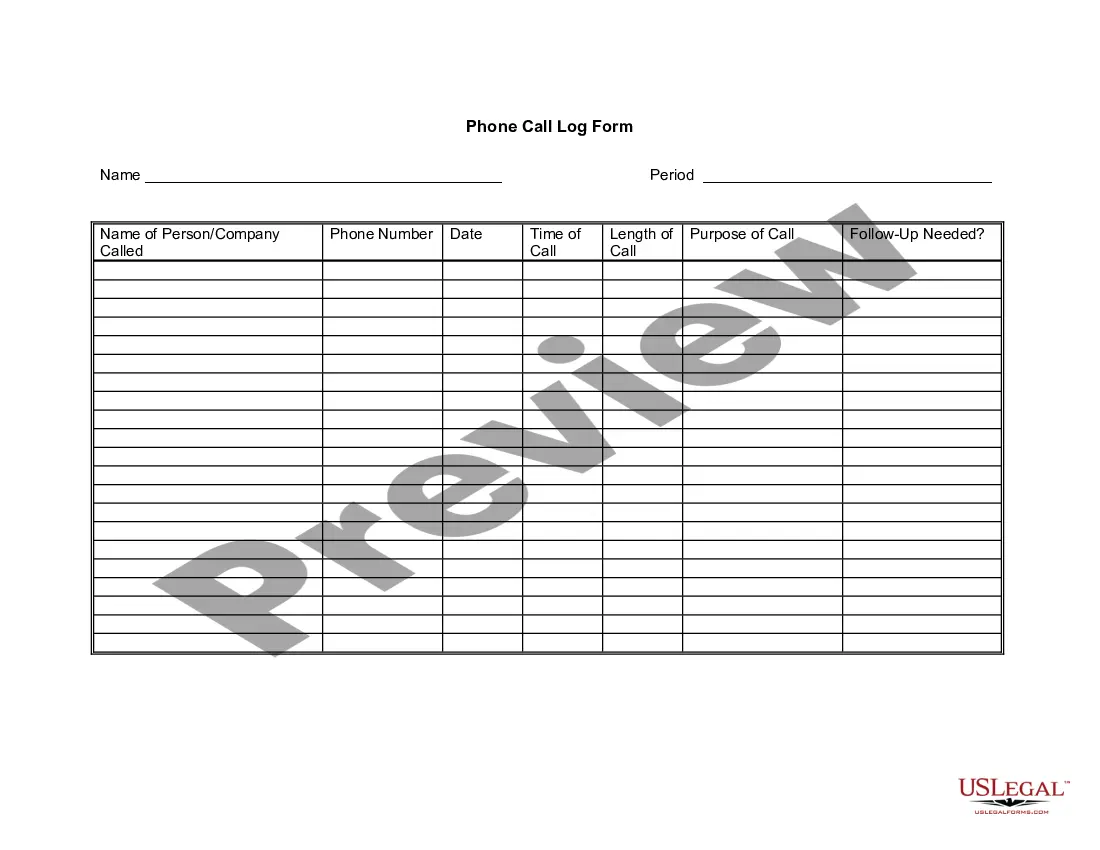
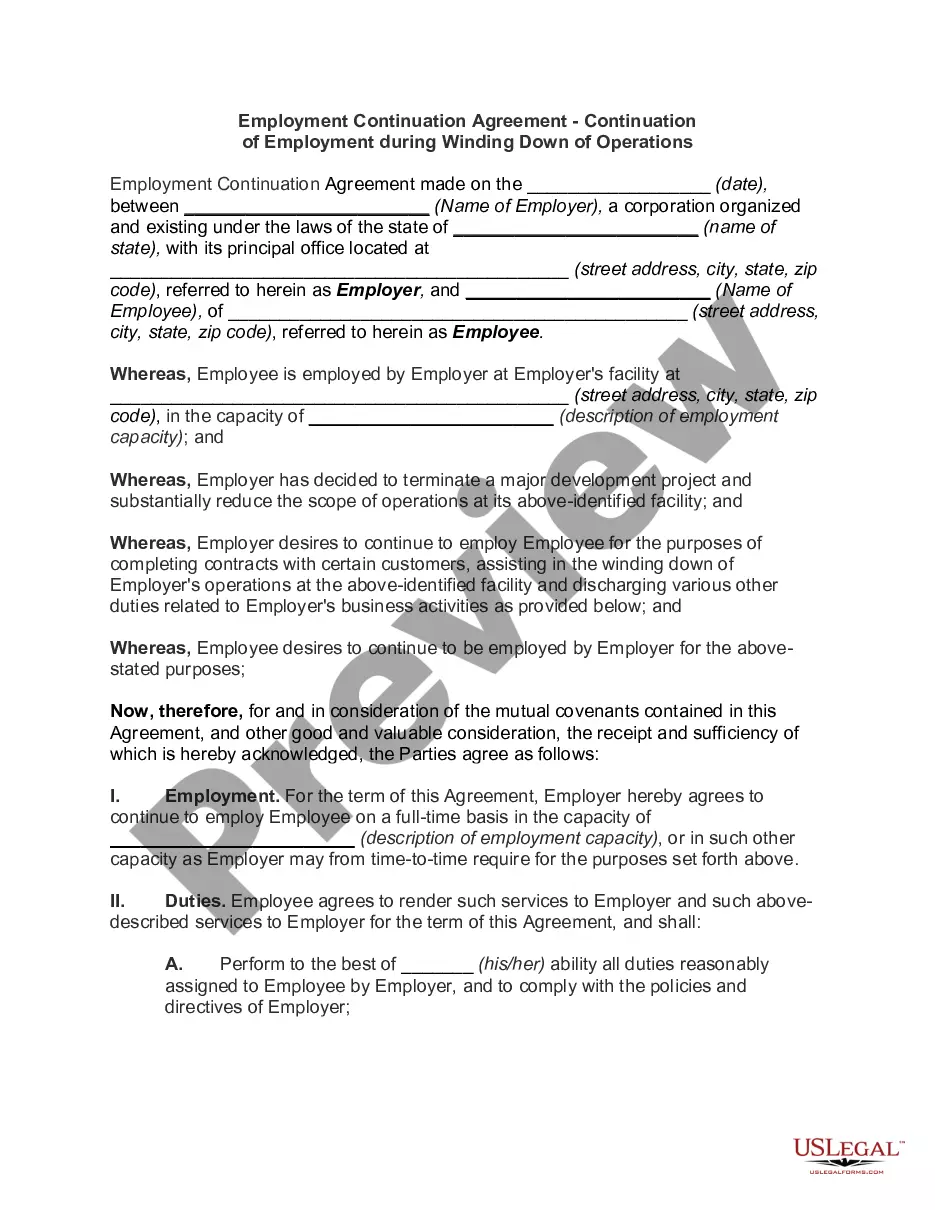
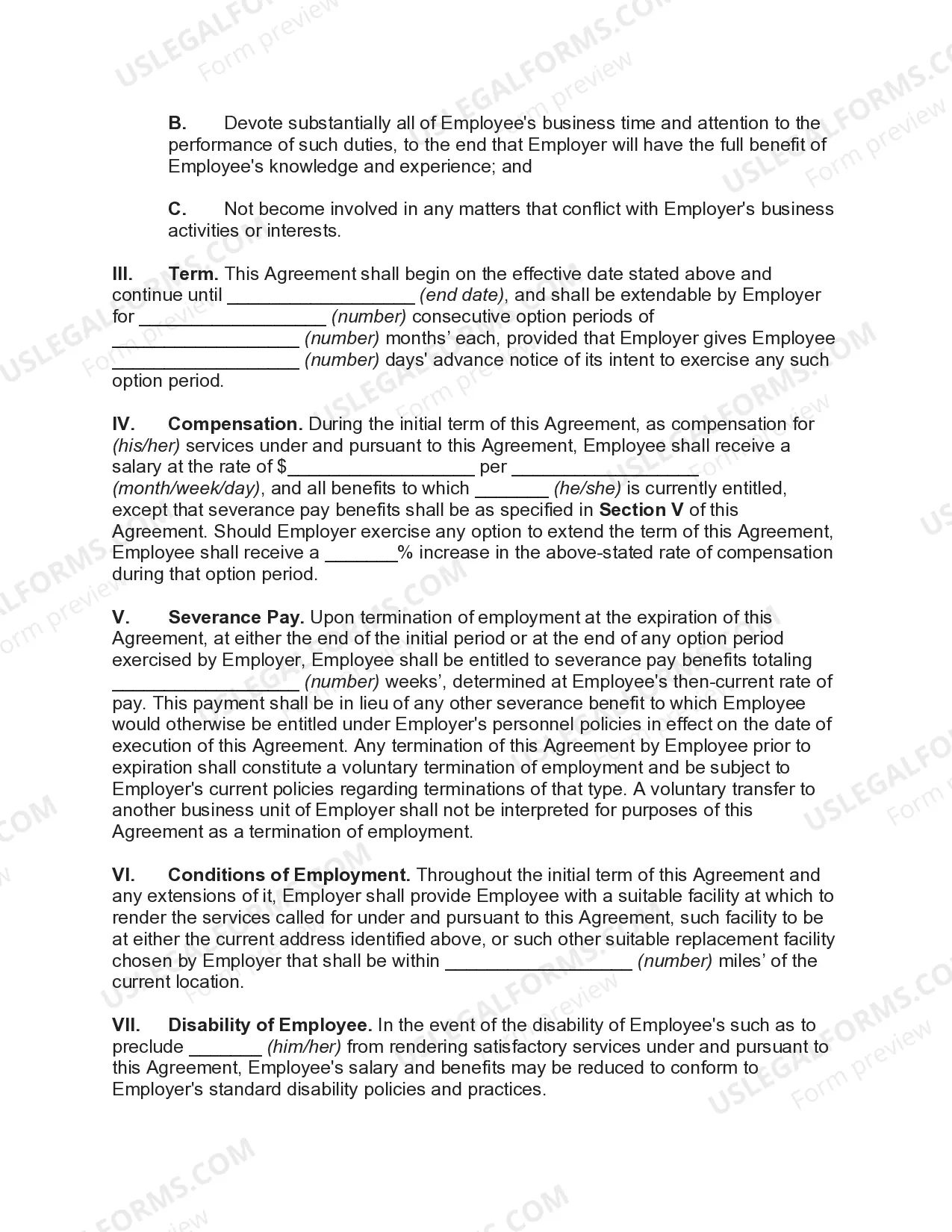
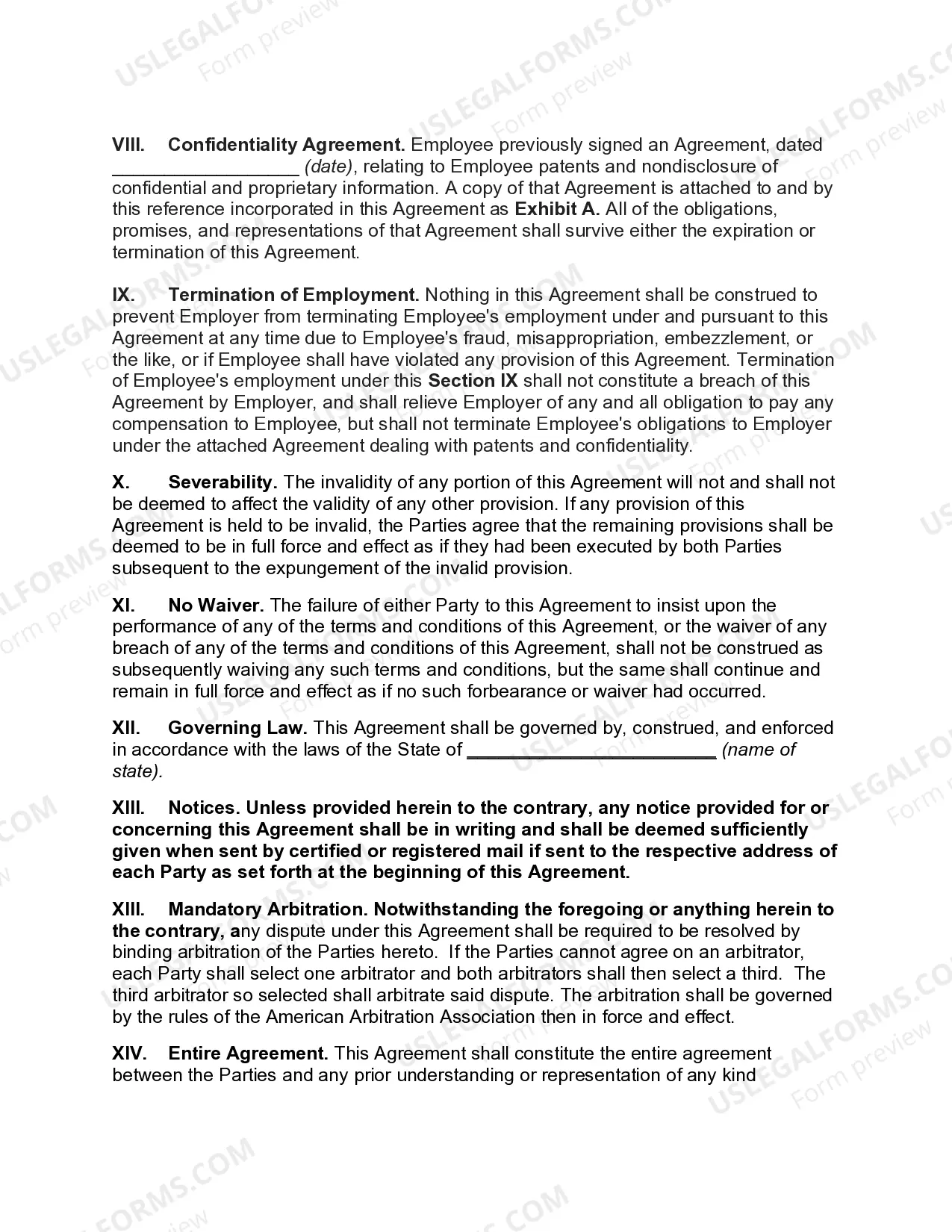
Connecticut Employment Continuation Agreement - Continuation of Employment during Winding Down of Operations
Description
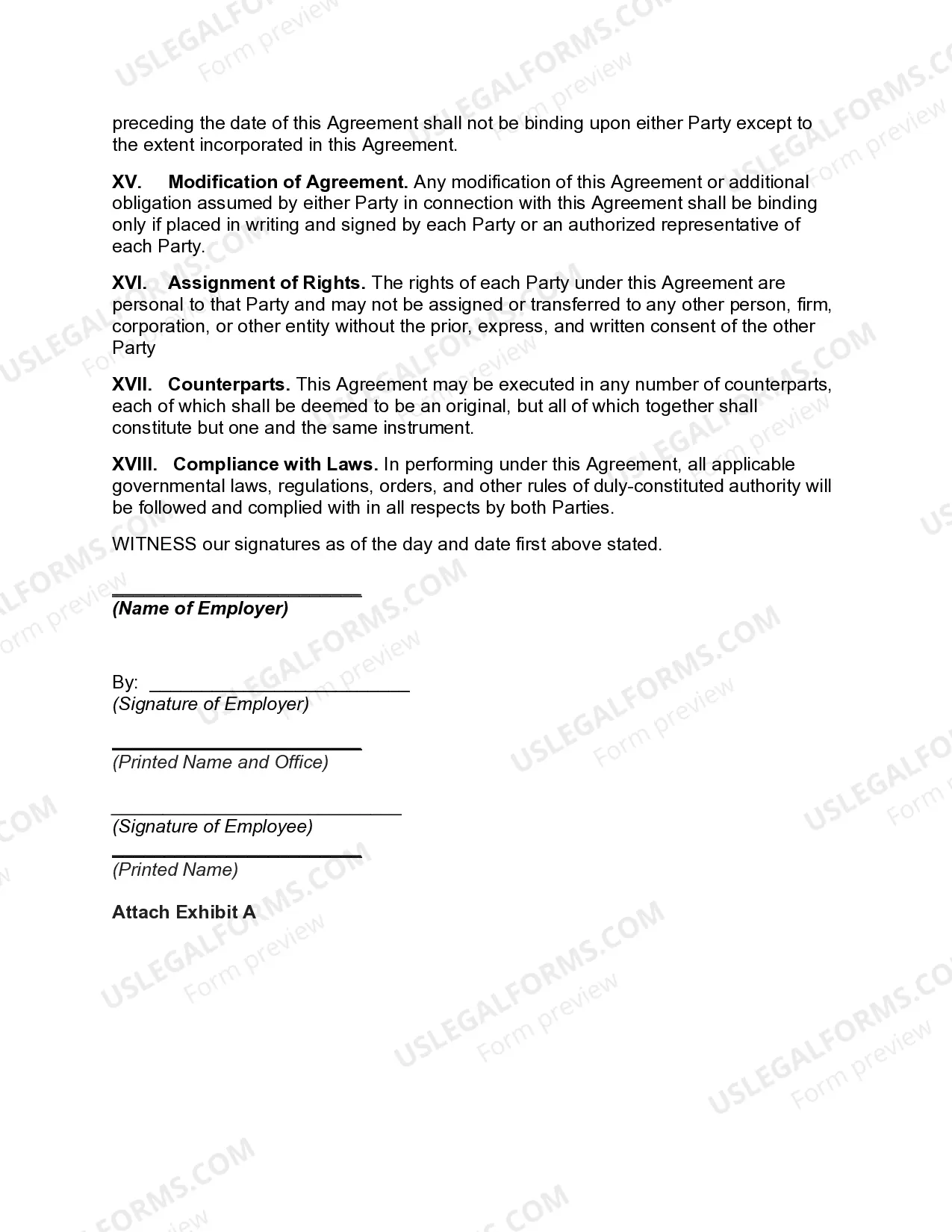
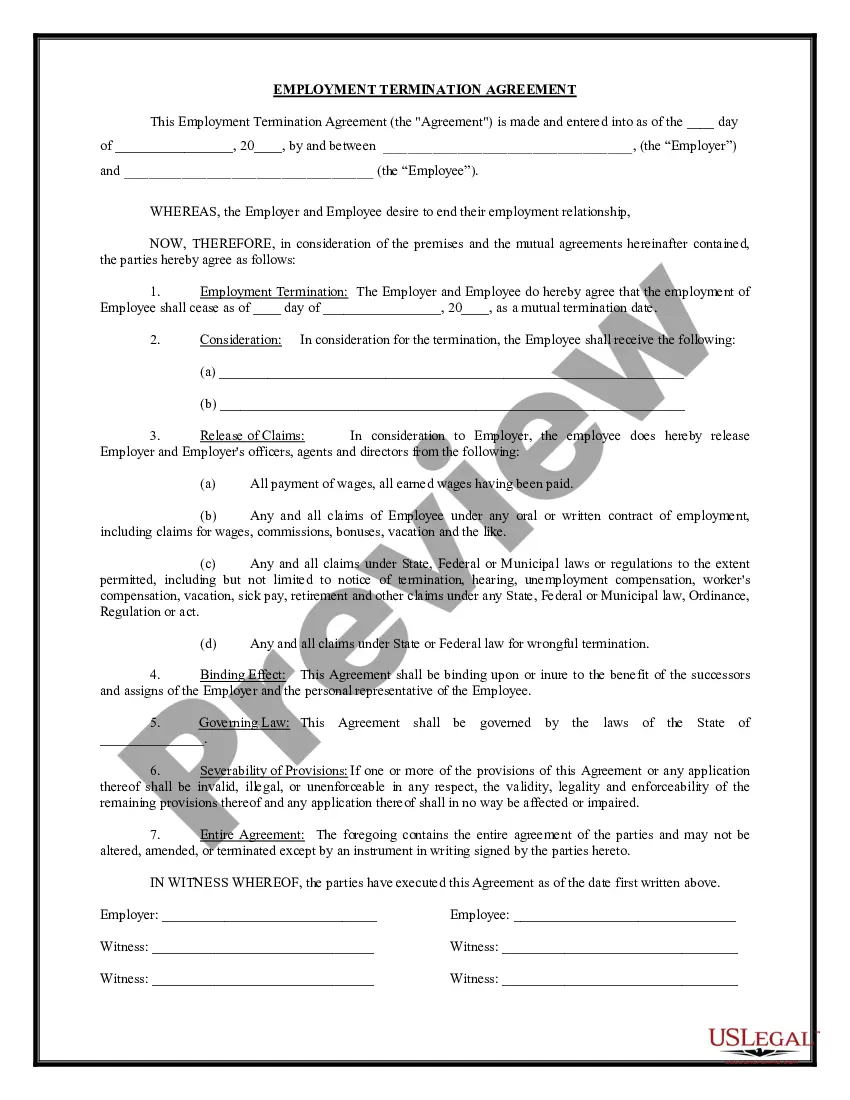
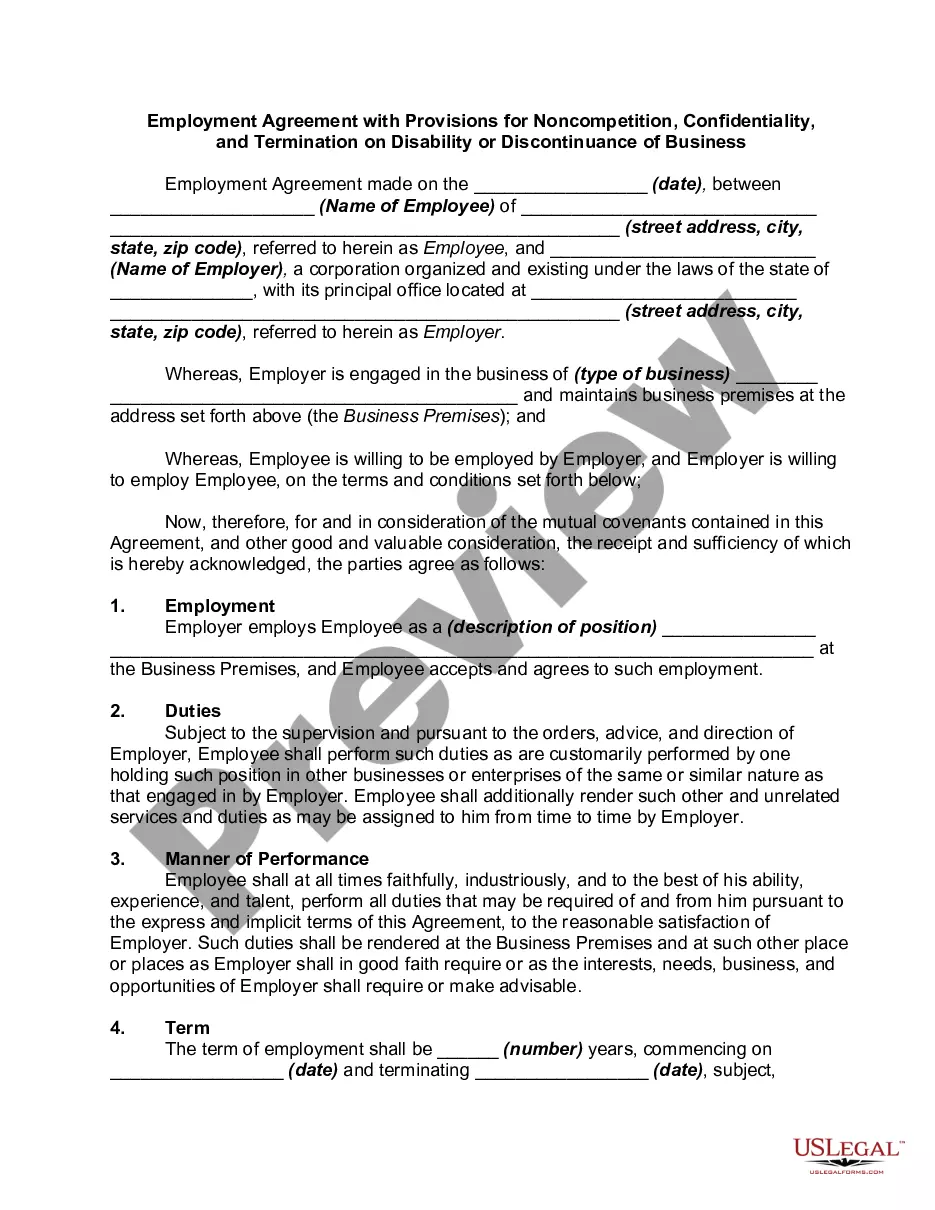
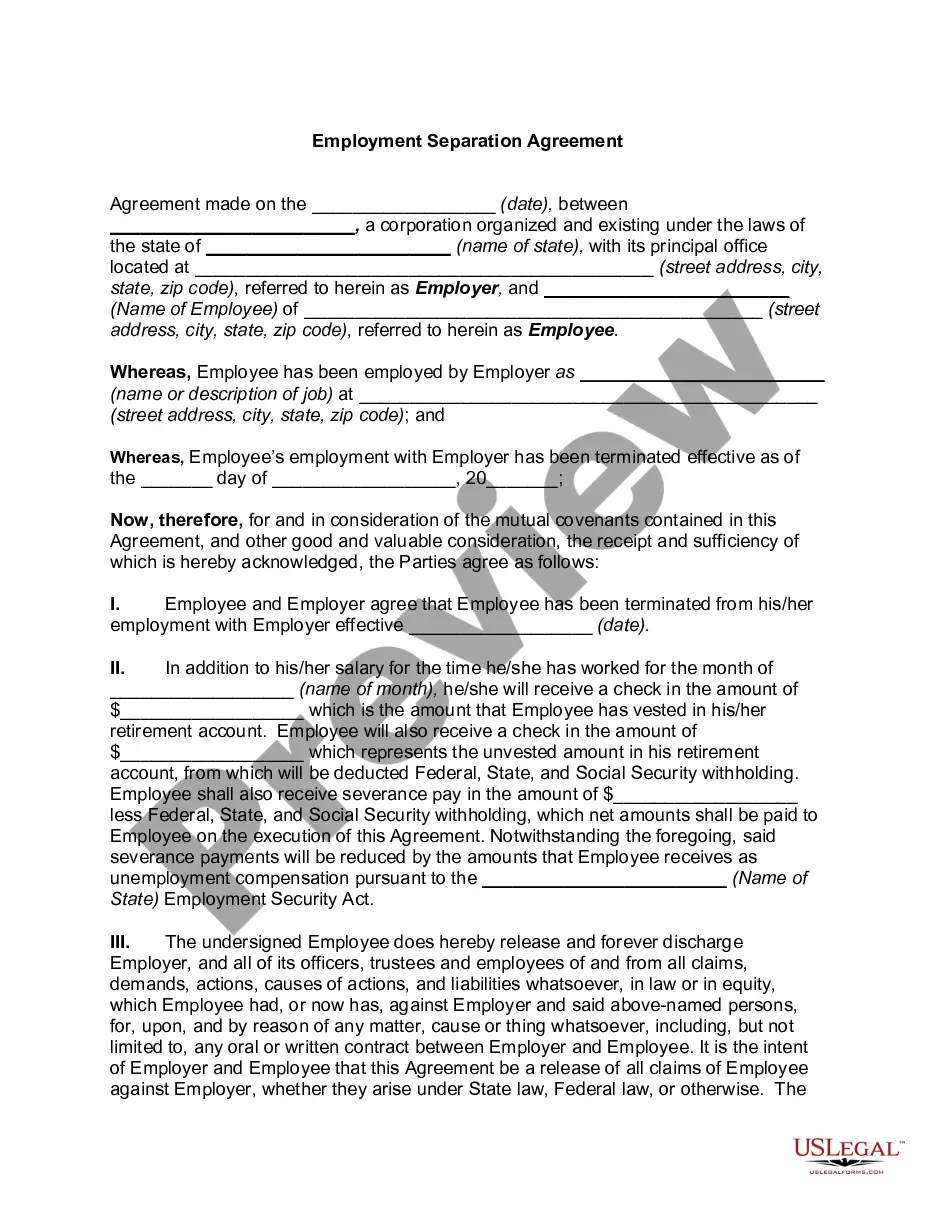
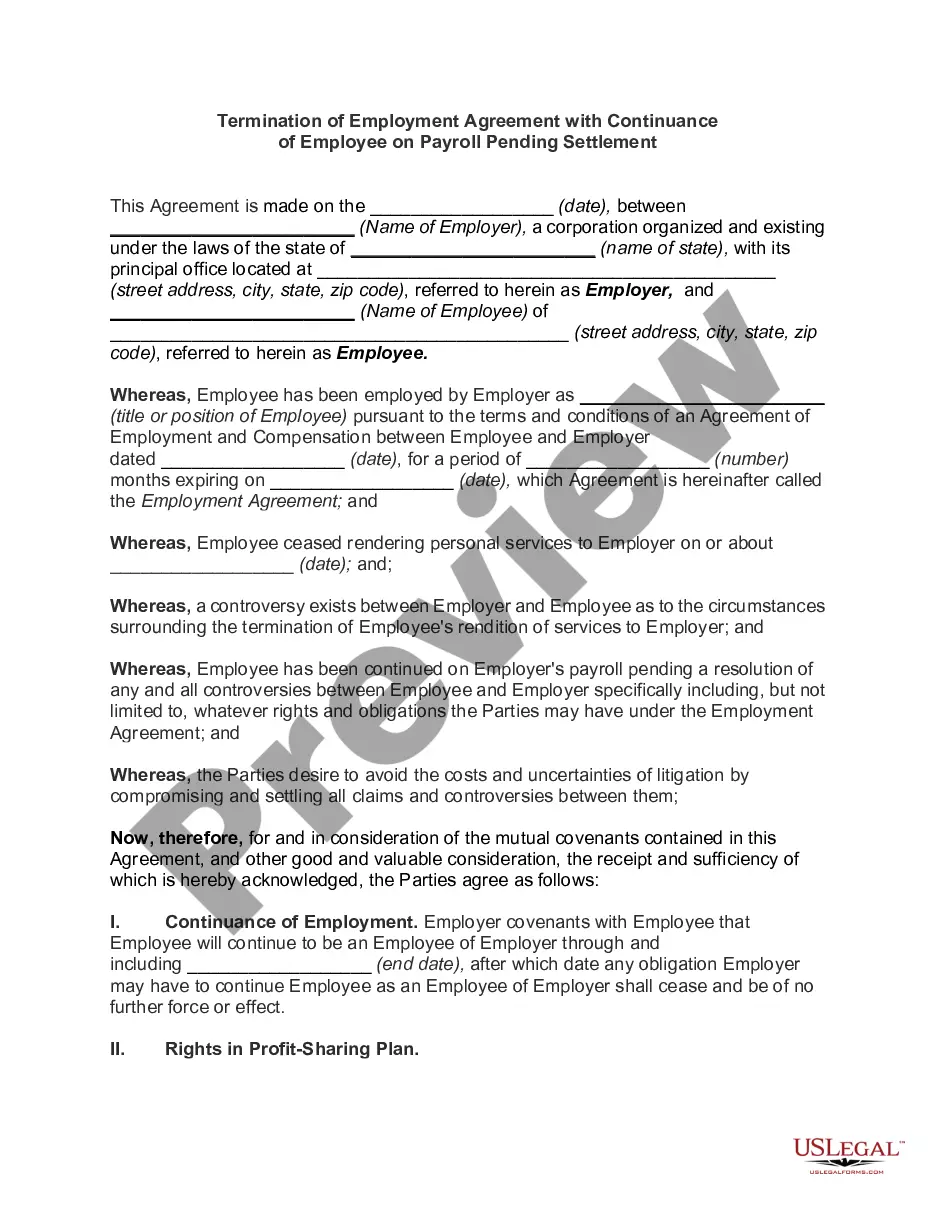
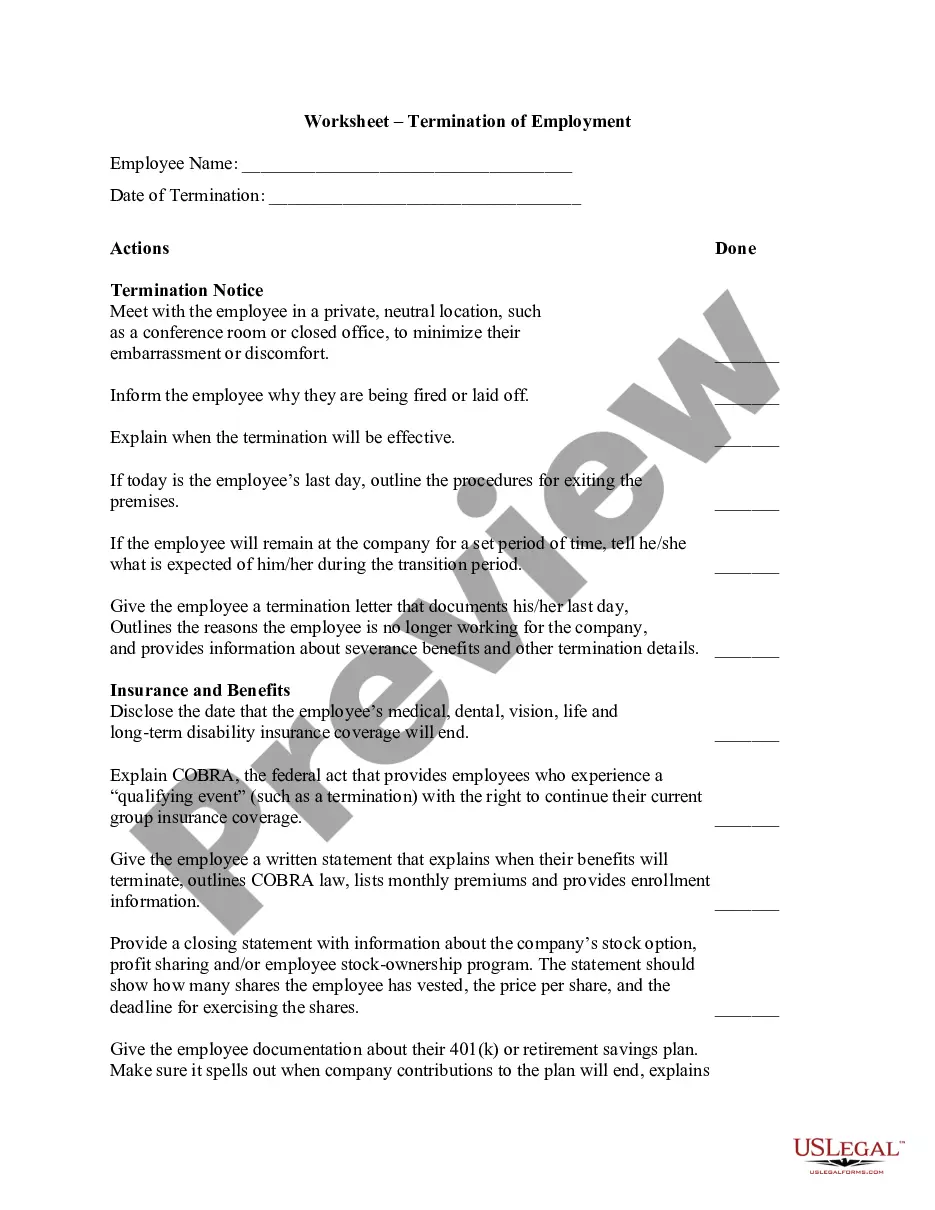
Get your form ready online
Our built-in tools help you complete, sign, share, and store your documents in one place.
Make edits, fill in missing information, and update formatting in US Legal Forms—just like you would in MS Word.
Download a copy, print it, send it by email, or mail it via USPS—whatever works best for your next step.
Sign and collect signatures with our SignNow integration. Send to multiple recipients, set reminders, and more. Go Premium to unlock E-Sign.
If this form requires notarization, complete it online through a secure video call—no need to meet a notary in person or wait for an appointment.
We protect your documents and personal data by following strict security and privacy standards.

Make edits, fill in missing information, and update formatting in US Legal Forms—just like you would in MS Word.

Download a copy, print it, send it by email, or mail it via USPS—whatever works best for your next step.

Sign and collect signatures with our SignNow integration. Send to multiple recipients, set reminders, and more. Go Premium to unlock E-Sign.

If this form requires notarization, complete it online through a secure video call—no need to meet a notary in person or wait for an appointment.

We protect your documents and personal data by following strict security and privacy standards.
Looking for another form?


How to fill out Employment Continuation Agreement - Continuation Of Employment During Winding Down Of Operations?
Are you in a position where you require documentation for both business or personal reasons on a daily basis.
There are numerous legal document templates available online, but locating trustworthy ones can be challenging.
US Legal Forms offers thousands of form templates, including the Connecticut Employment Continuation Agreement - Continuation of Employment during Winding Down of Operations, designed to comply with state and federal regulations.
Once you find the correct form, click Get now.
Choose the pricing plan you prefer, fill in the necessary details to create your account, and pay for your order using PayPal or a credit card.
- If you are already familiar with the US Legal Forms website and have an account, just Log In.
- Next, you can download the Connecticut Employment Continuation Agreement - Continuation of Employment during Winding Down of Operations template.
- If you do not have an account and want to start using US Legal Forms, follow these steps.
- Obtain the form you need and make sure it is for the correct city/state.
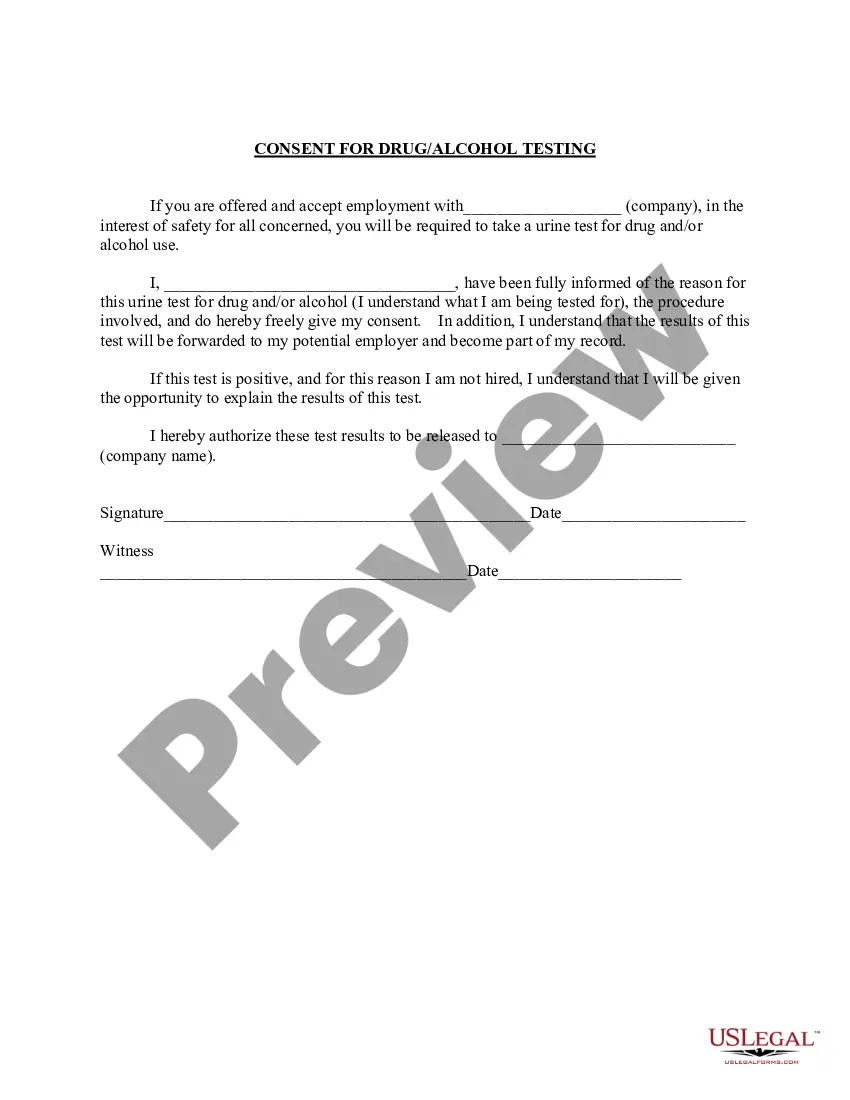
- Use the Preview button to view the form.
- Review the information to ensure you have selected the right form.
- If the form isn’t what you need, utilize the Search field to find a form that fits your requirements.
Form popularity
FAQ
Statute 31-51ii in Connecticut addresses the rights of employees concerning the disclosure of personnel files and related information. This law allows employees to review their personnel records, promoting transparency between employers and employees. For those involved in or affected by the Connecticut Employment Continuation Agreement - Continuation of Employment during Winding Down of Operations, understanding this statute can strengthen their position and clarify rights during operational changes.
A mass layoff occurs under the WARN Act when: at least 50 employees are laid off during a 30-day period, if the laid-off employees made up at least one third of the workforce; 500 employees are laid off during a 30-day period, no matter how large the workforce; or.
Under the federal WARN Act, employers are required to provide written advance notice in the event of either a plant closing or a mass layoff. Both of these events are specifically defined under the Act.
If you've lost your job due to a company shutdown, you have the right to receive your final paycheck within the timelines set by your state government. The timeline of receiving your final paycheck may vary depending on the state in which you live but could be as soon as your last day of employment.
Connecticut is an "at will" state. This means that employers have the right to fire or terminate an employee at anytime without providing a reason, as long as it is not illegal.
WARN provides that, with certain exceptions, employers of 100 or more workers must give at least 60 days' advance notice of a plant closing or mass layoff to affected workers or their representatives, to the State dislocated worker unit, and to the appropriate local government. Effective Date: .
Right-to-work laws allow employees to decide whether or not to join or financially support a union. Twenty-two states currently have right-to-work laws; Connecticut is not one of them. Studies on the economic impact of a right-to-work law on a state have focused on their effect on wages and employment levels.
Generally, employees who lose their jobs in a layoff have no automatic right to severance pay. However, there are a few exceptions: Mass layoff severance. In a few states, employers are required to provide a small amount of severance as part of a large layoff or plant closing.
The act applies to companies with over 100 active full-time employees, private and public companies and all non-profit and for-profit organizations. Employees covered under the act include both salaried and hourly employees. Employees must be employed for at least six months during the last 12 months.
Worker Adjustment and Retraining Notification Act (WARN) (29 USC 2100 et. seq.) - Protects workers, their families and communities by requiring most employers with 100 or more employees to provide notification 60 calendar days in advance of plant closings and mass layoffs.