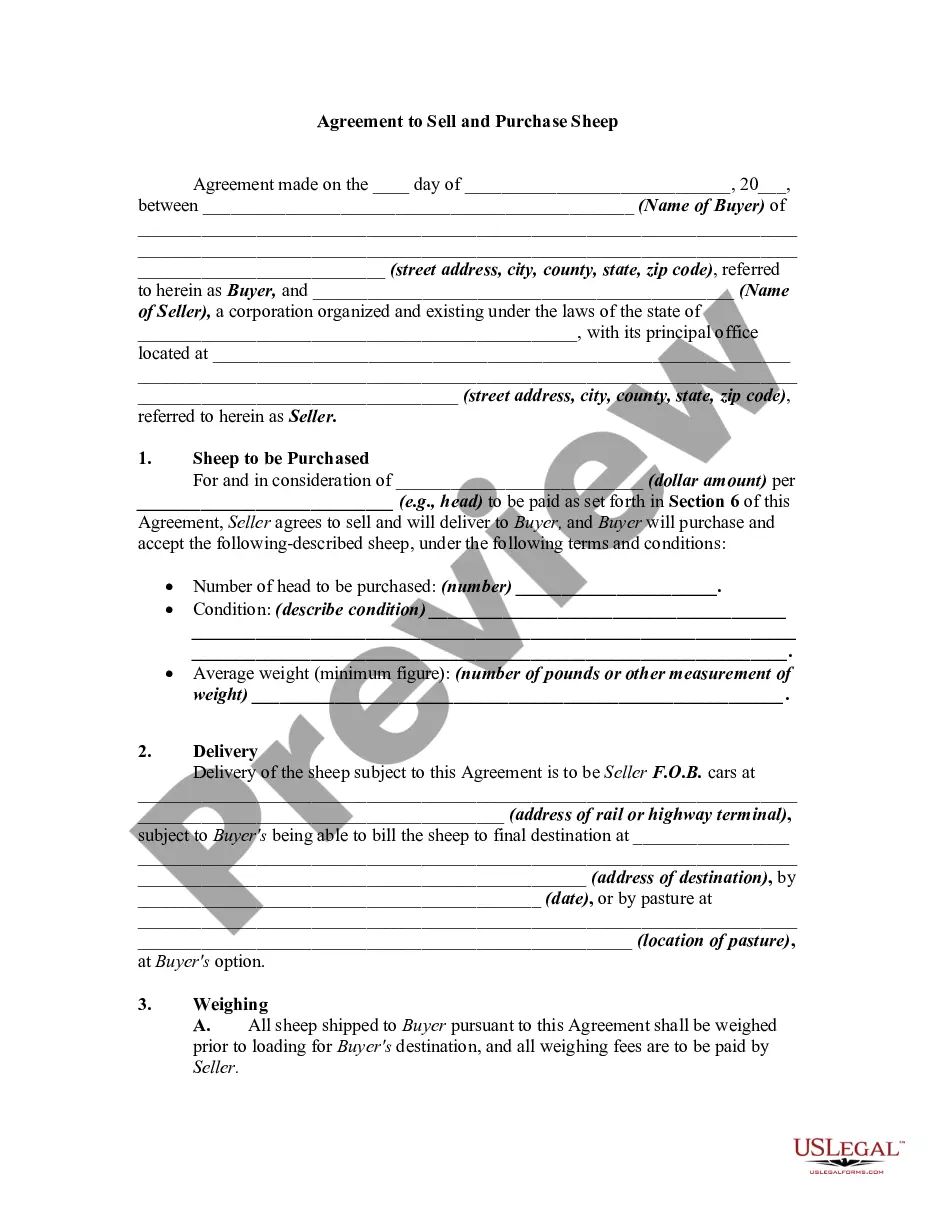
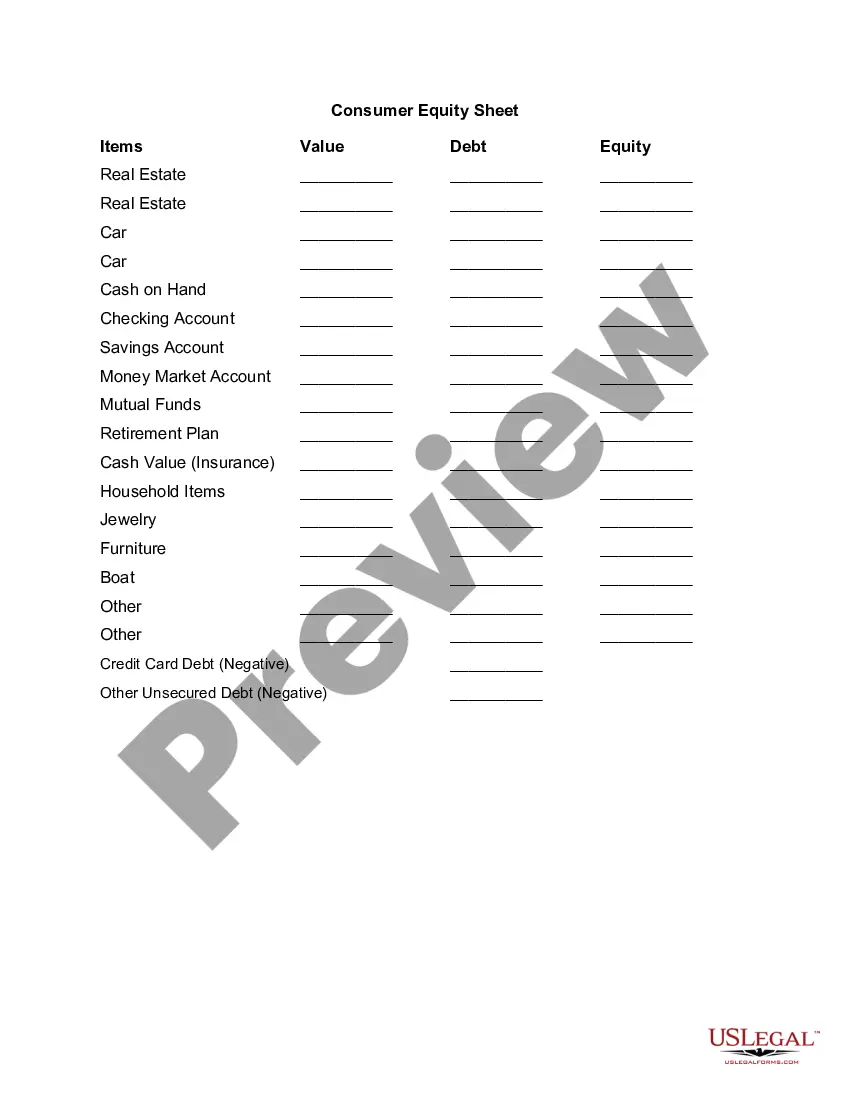
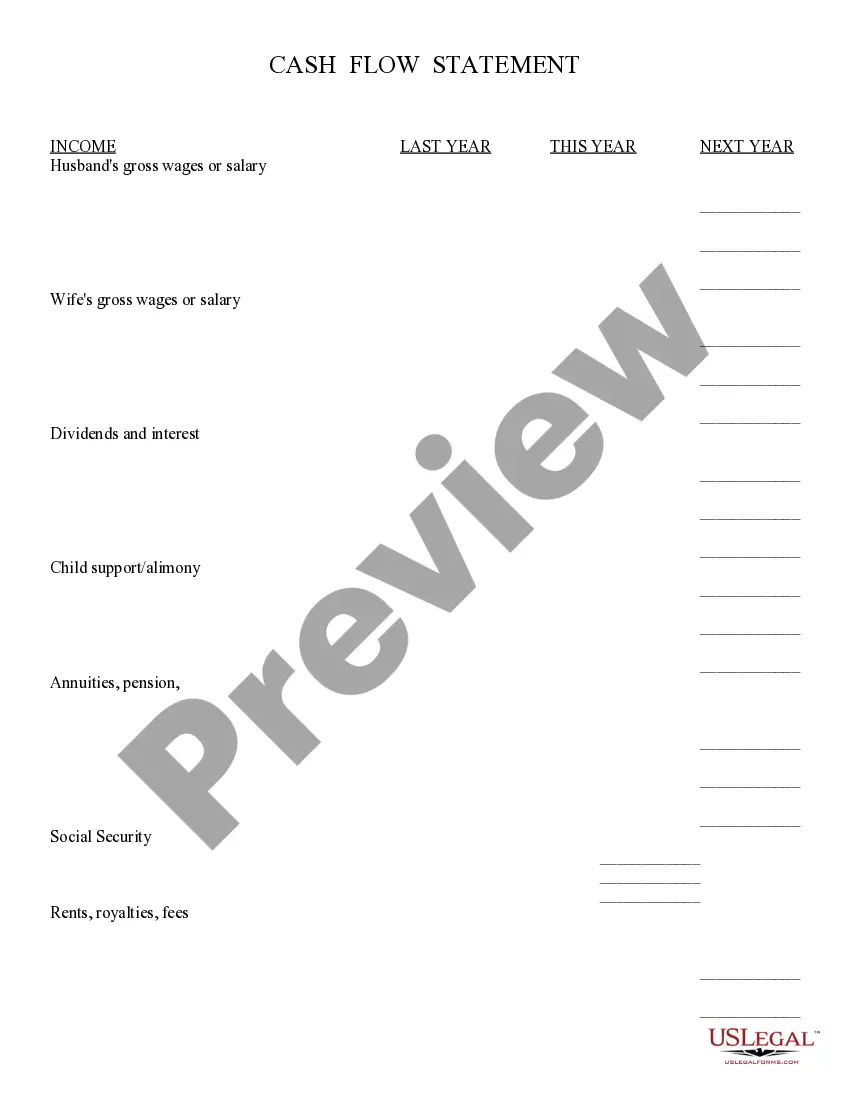
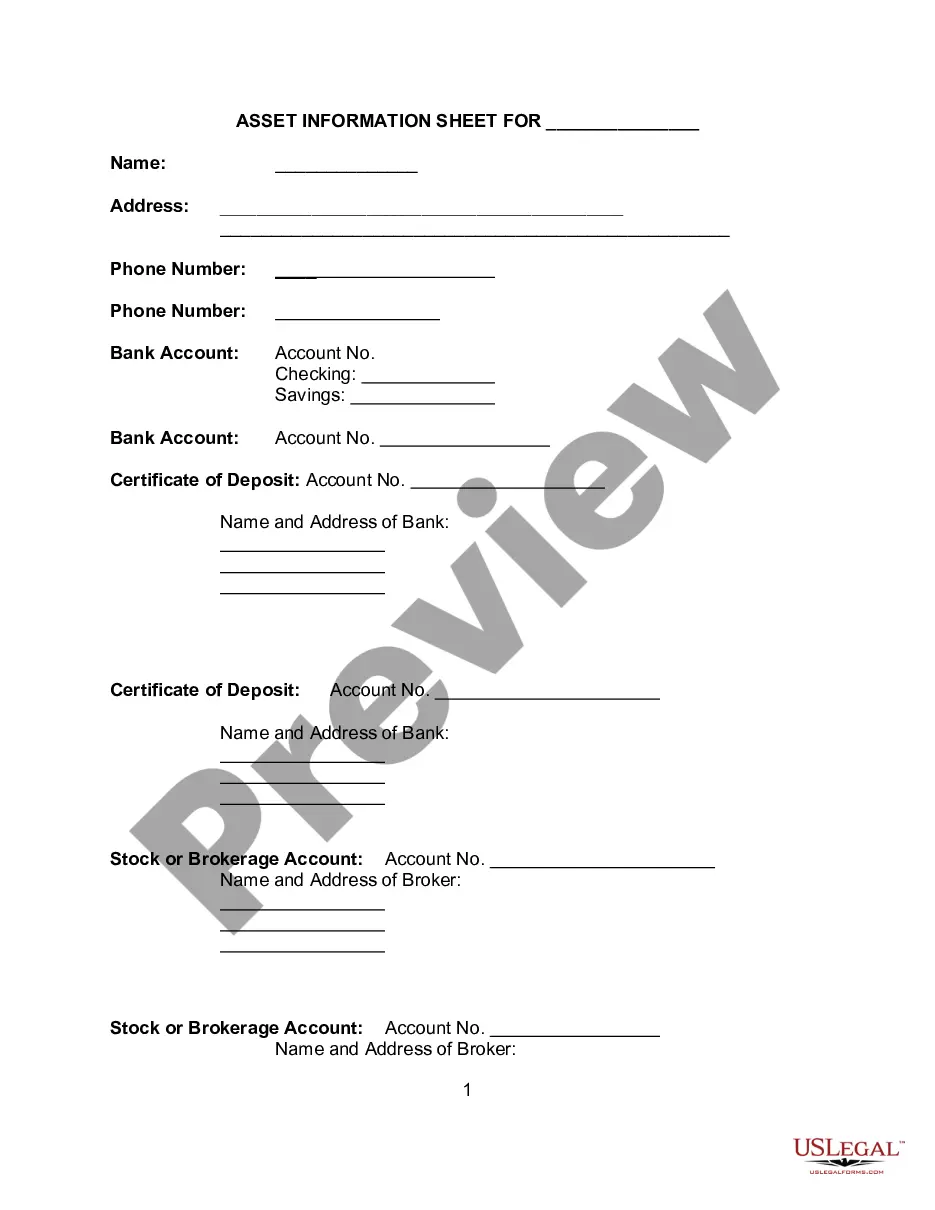
Connecticut Consumer Equity Sheet
Description

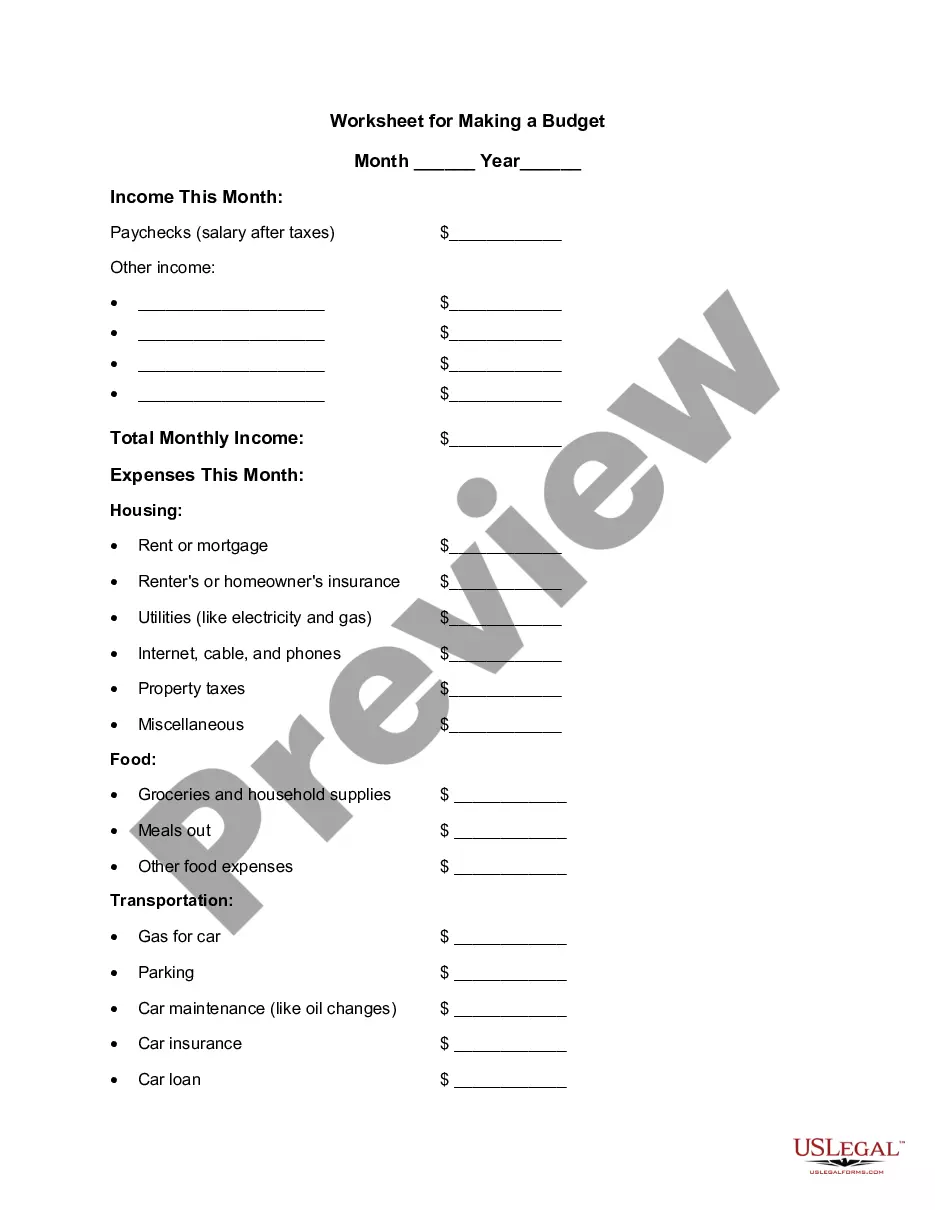

Get your form ready online
Our built-in tools help you complete, sign, share, and store your documents in one place.
Make edits, fill in missing information, and update formatting in US Legal Forms—just like you would in MS Word.
Download a copy, print it, send it by email, or mail it via USPS—whatever works best for your next step.
Sign and collect signatures with our SignNow integration. Send to multiple recipients, set reminders, and more. Go Premium to unlock E-Sign.
If this form requires notarization, complete it online through a secure video call—no need to meet a notary in person or wait for an appointment.
We protect your documents and personal data by following strict security and privacy standards.

Make edits, fill in missing information, and update formatting in US Legal Forms—just like you would in MS Word.

Download a copy, print it, send it by email, or mail it via USPS—whatever works best for your next step.

Sign and collect signatures with our SignNow integration. Send to multiple recipients, set reminders, and more. Go Premium to unlock E-Sign.

If this form requires notarization, complete it online through a secure video call—no need to meet a notary in person or wait for an appointment.

We protect your documents and personal data by following strict security and privacy standards.
Looking for another form?

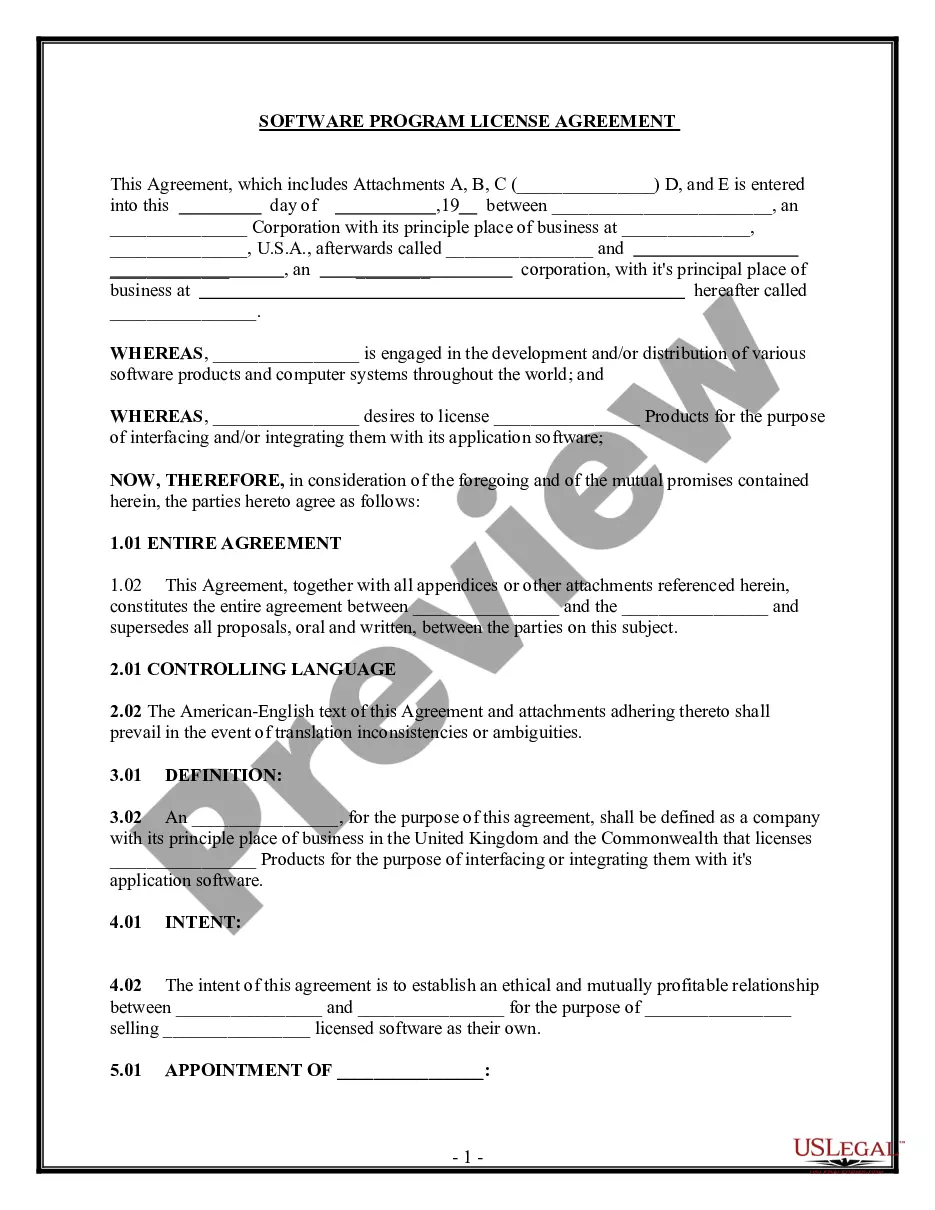
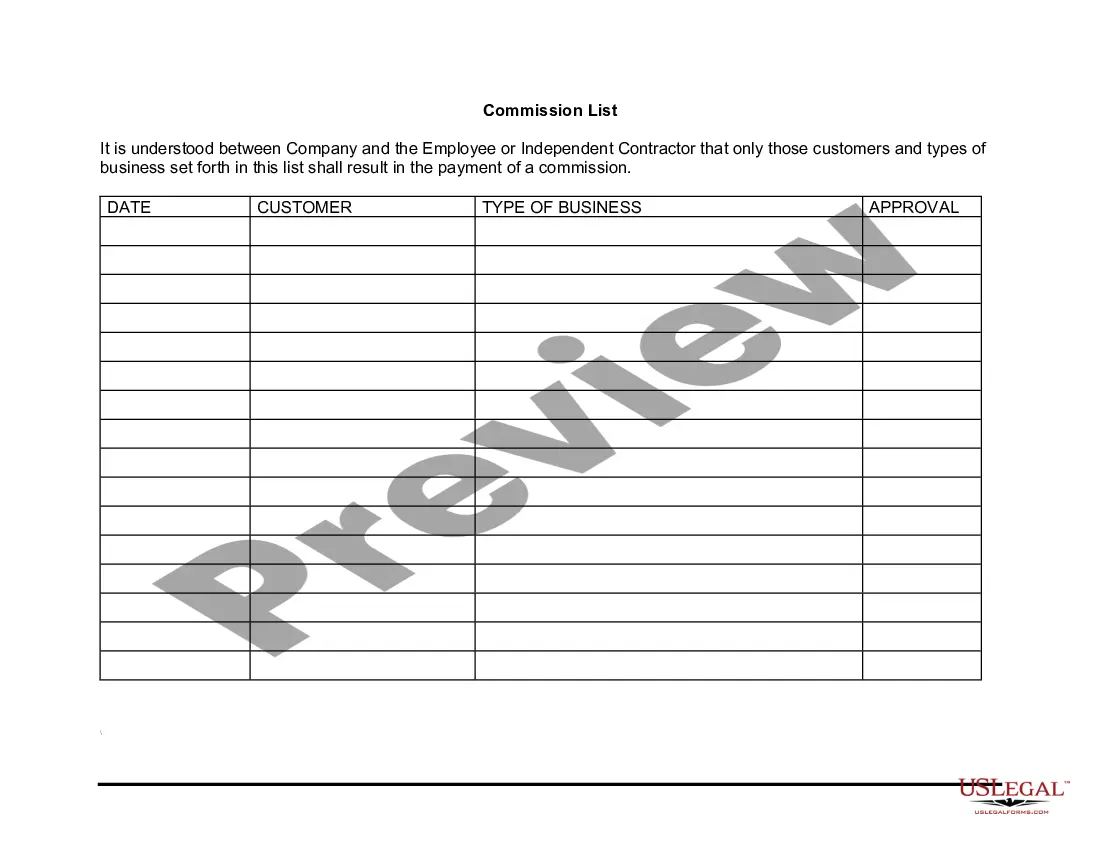

How to fill out Consumer Equity Sheet?
Finding the appropriate legal document template can be challenging.
There are numerous templates accessible online, but how can you find the legal form you need.
Utilize the US Legal Forms website. This service provides thousands of templates, including the Connecticut Consumer Equity Sheet, which can serve both business and personal needs.
You can review the form using the Preview option and read the form description to ensure it’s appropriate for your needs.
- All forms are reviewed by professionals and comply with state and federal regulations.
- If you are already registered, Log In to your account and click on the Download button to obtain the Connecticut Consumer Equity Sheet.
- Use your account to search for the legal forms you have previously purchased.
- Visit the My documents section of your account to download another copy of the document you need.
- If you are a new user of US Legal Forms, here are some straightforward instructions to follow.
- First, ensure that you have selected the correct form for your city/region.
Form popularity
FAQ
Under the Connecticut Child Support Guidelines, each parent's net income is used to calculate support. Net income is defined as gross income minus allowable deductions. Salary, commissions, bonuses, pension income, retirement income, and trust income can all be included in gross income.
§46b-84(d). The minimum presumptive support amount shall be the support amount at the $4,000 net weekly income. The maximum presumptive support amount shall be determined by multiplying the parents' net weekly income by the applicable percentage shown at the $4,000 net income level.
Calculating Gross and Net Income Guideline child support is based on the combined net incomegross income minus allowable deductionsof both parents. Gross income includes most types of earned or unearned income.
Property division is one of the major issues in Connecticut divorces, and many people wonder whether CT is a 50/50 divorce state. When it comes to dividing property in a divorce, Connecticut is an equitable distribution state. It is not, as is sometimes misunderstood, a community property state.
The Consumer Protection Act, 2019. Parliament of India. Long title. An Act to provide for protection of the interests of consumers and for the said purpose, to establish authorities for timely and effective administration and settlement of consumers' disputes and for matters connected therewith or incidental thereto.
Connecticut Department of Consumer Protection.
Consumer Protection Act, 1986 seeks to promote and protect the interest of consumers against deficiencies and defects in goods or services. It also seeks to secure the rights of a consumer against unfair or restrictive trade practices.
According to the guidelines, the basic child support obligation for parents earning a total of $1,000 per week is: $229 (or about 23%) of the combined net weekly income for 1 child. $322 (or about 32%) for 2 children. $385 (or about 39%) for 3 children.
According to the guidelines, the basic child support obligation for parents earning a total of $1,000 per week is: $229 (or about 23%) of the combined net weekly income for 1 child. $322 (or about 32%) for 2 children. $385 (or about 39%) for 3 children.
Usually, the duty to support created by a child support order ends when the child is 18 years old. However, this may vary from state to state. For example, in Connecticut, the duty to support may go to age 19 if the child is still in high school.