Connecticut Mutual Confidential Disclosure Agreement
Description
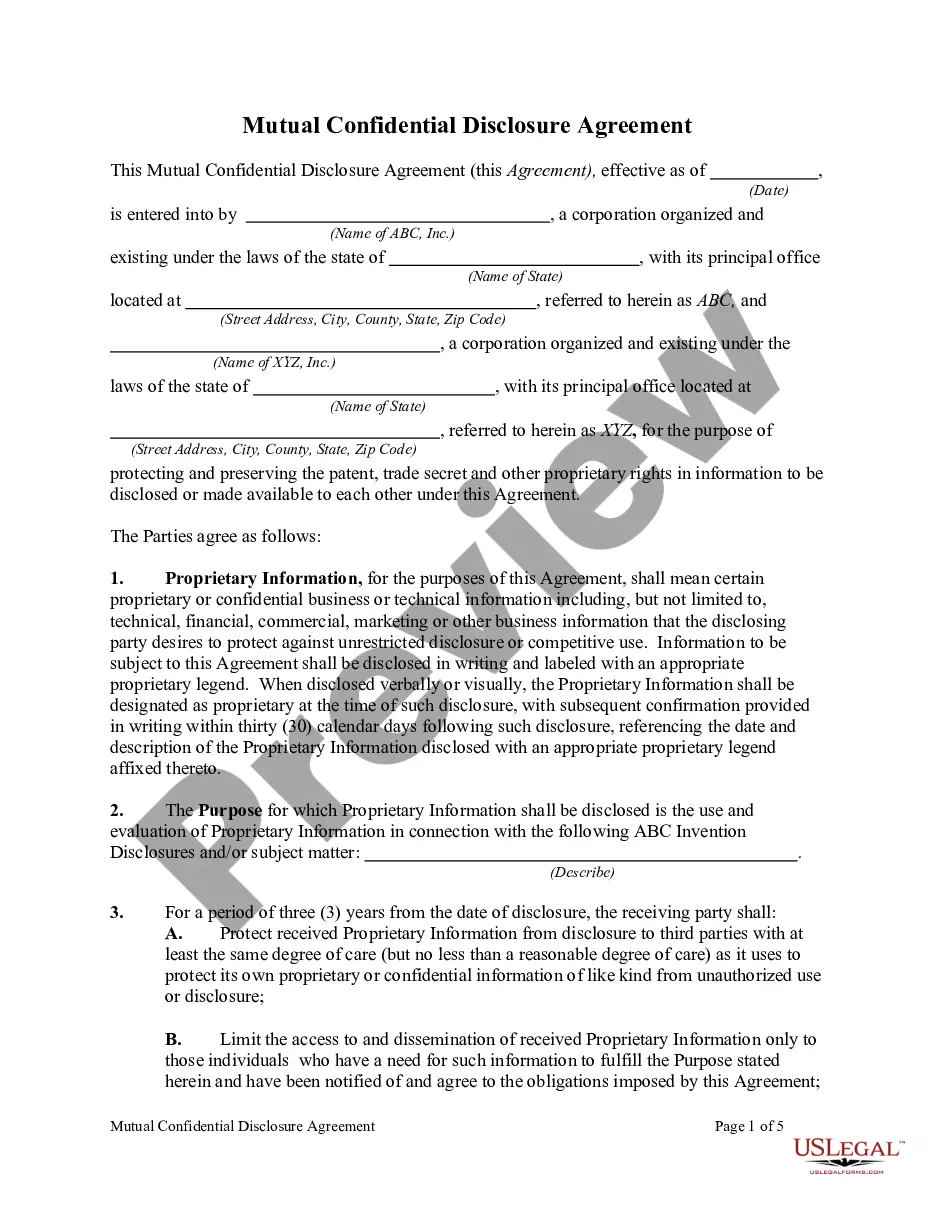
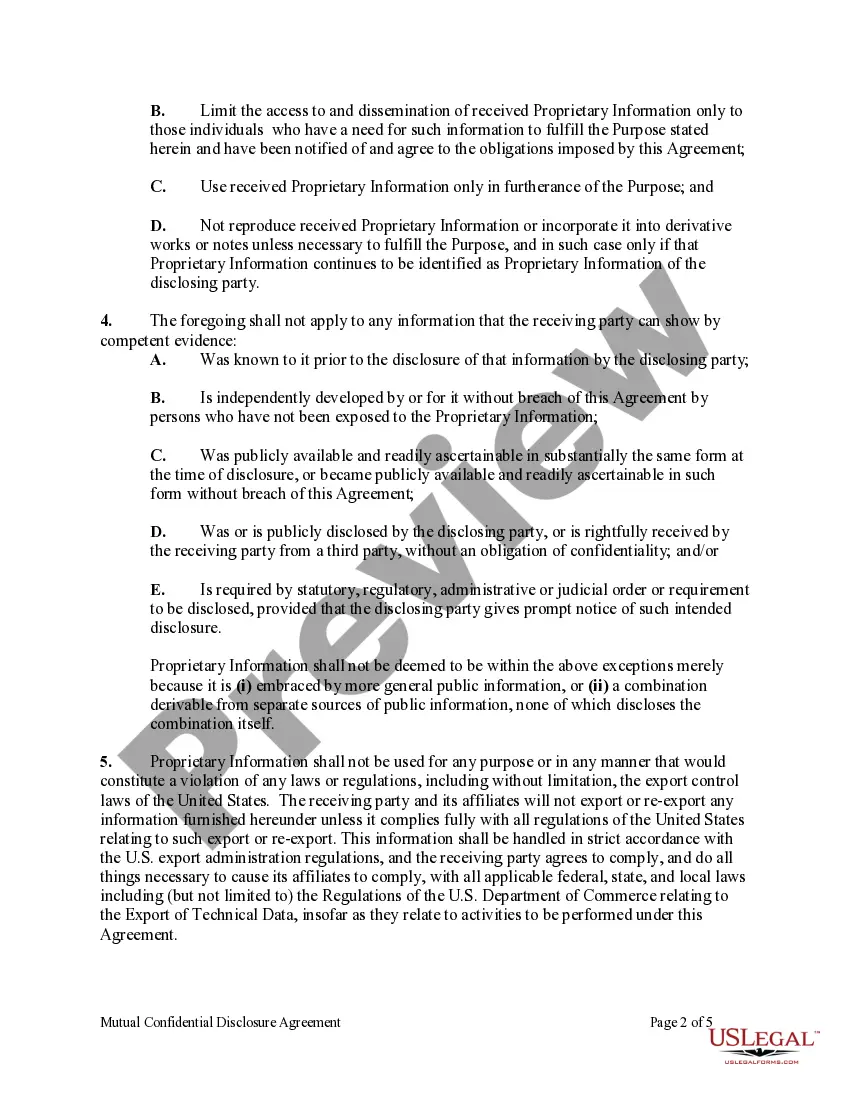
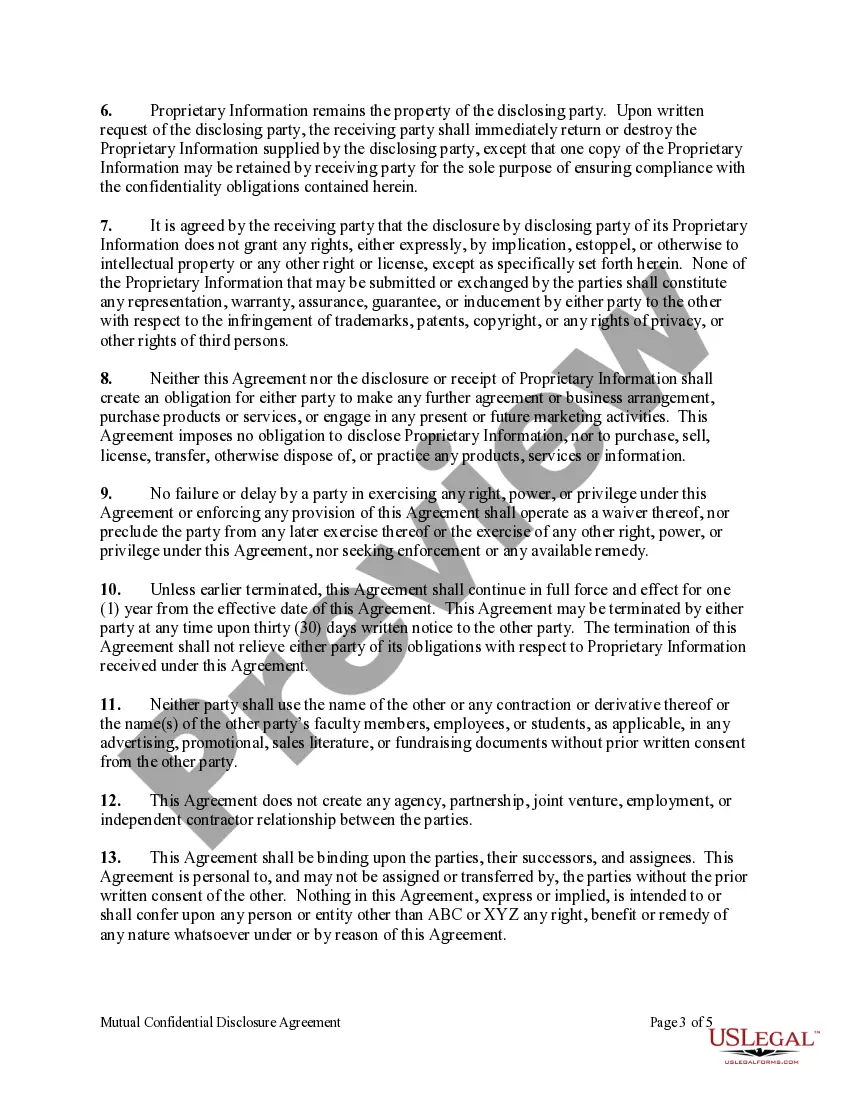
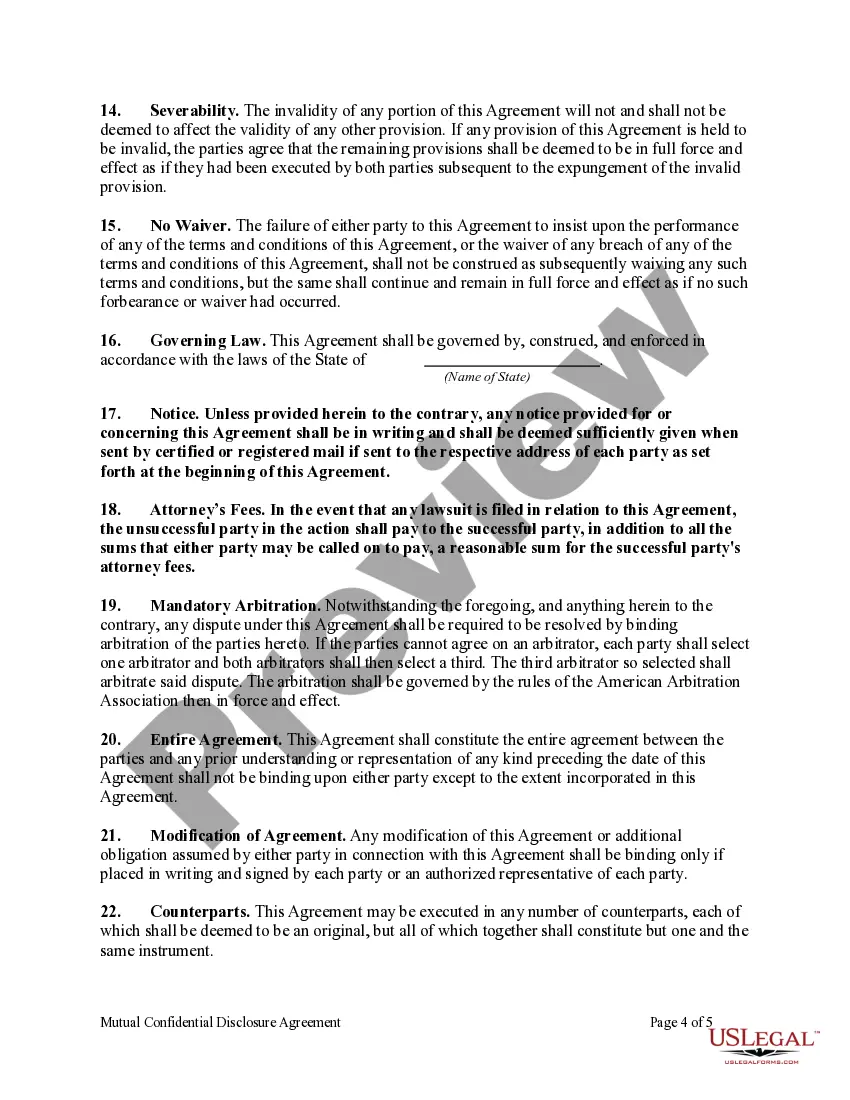
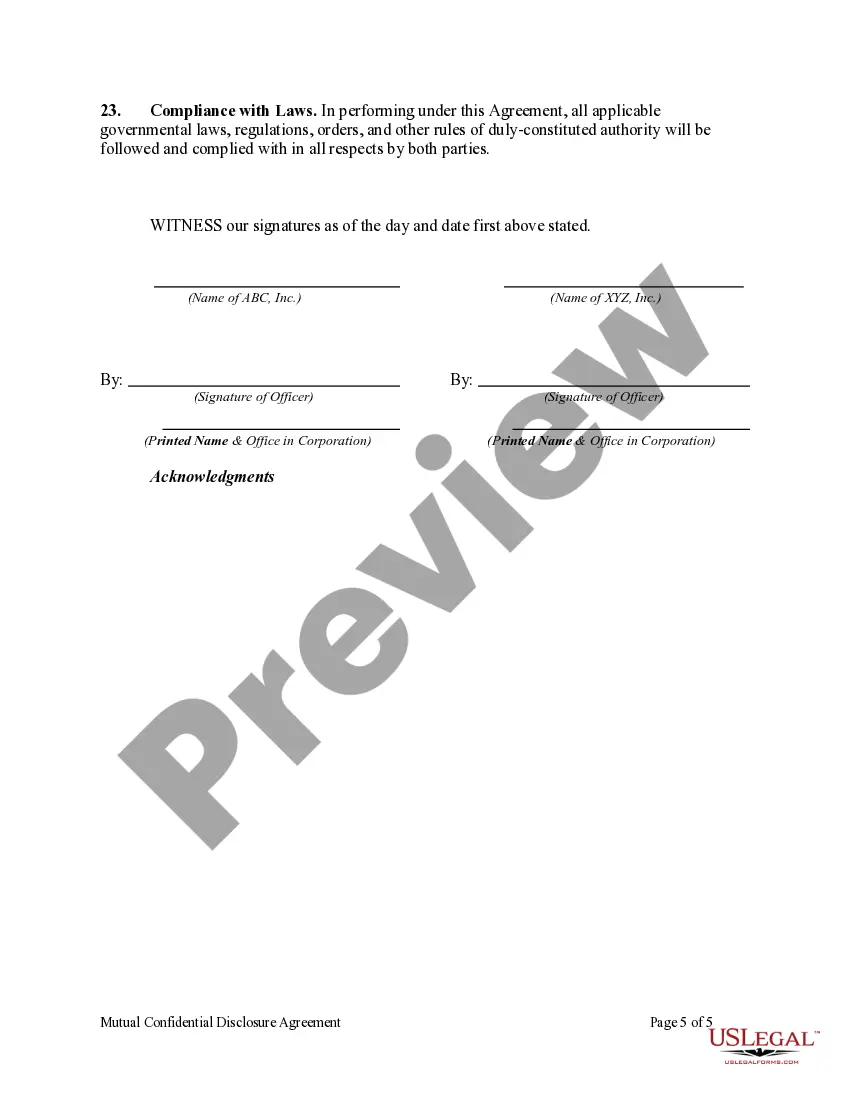
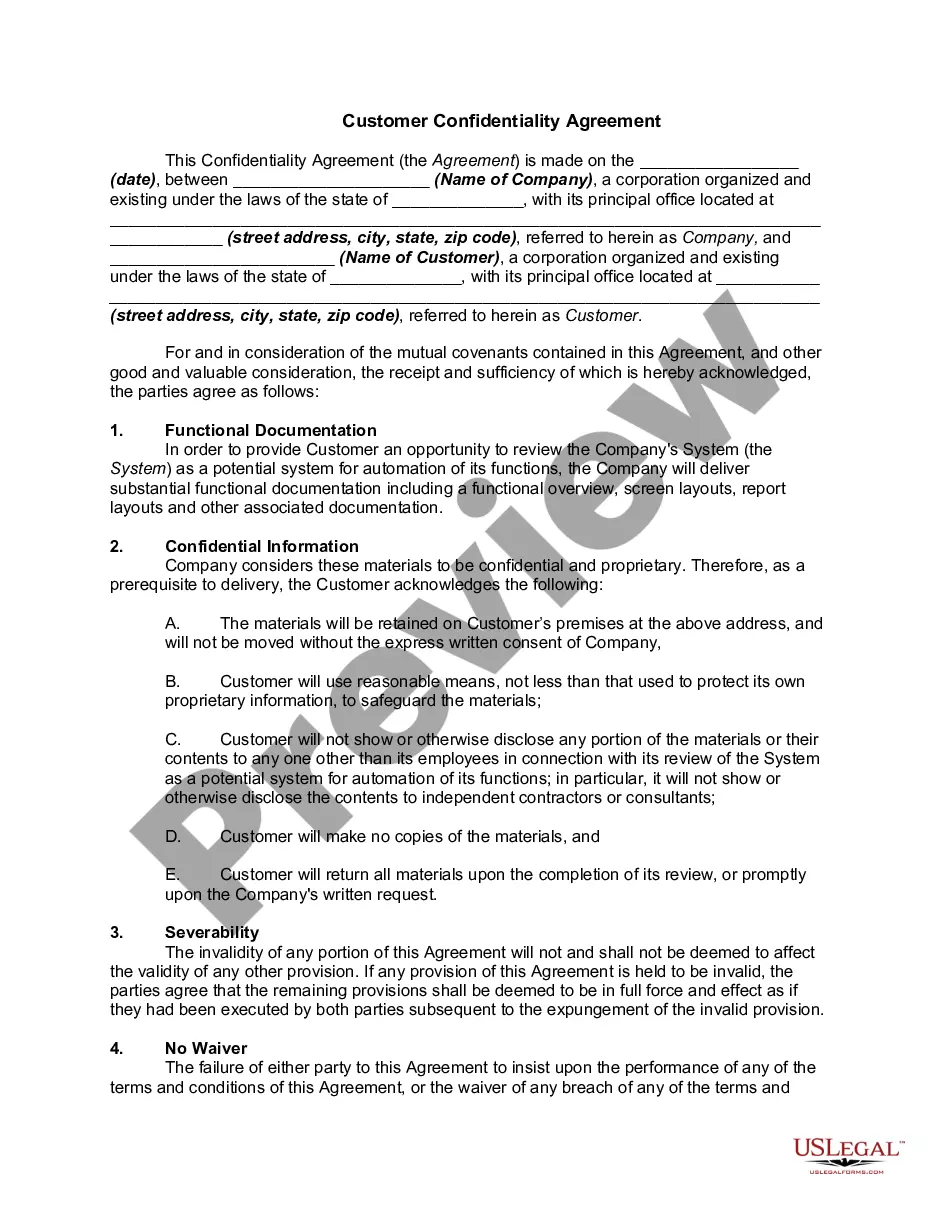
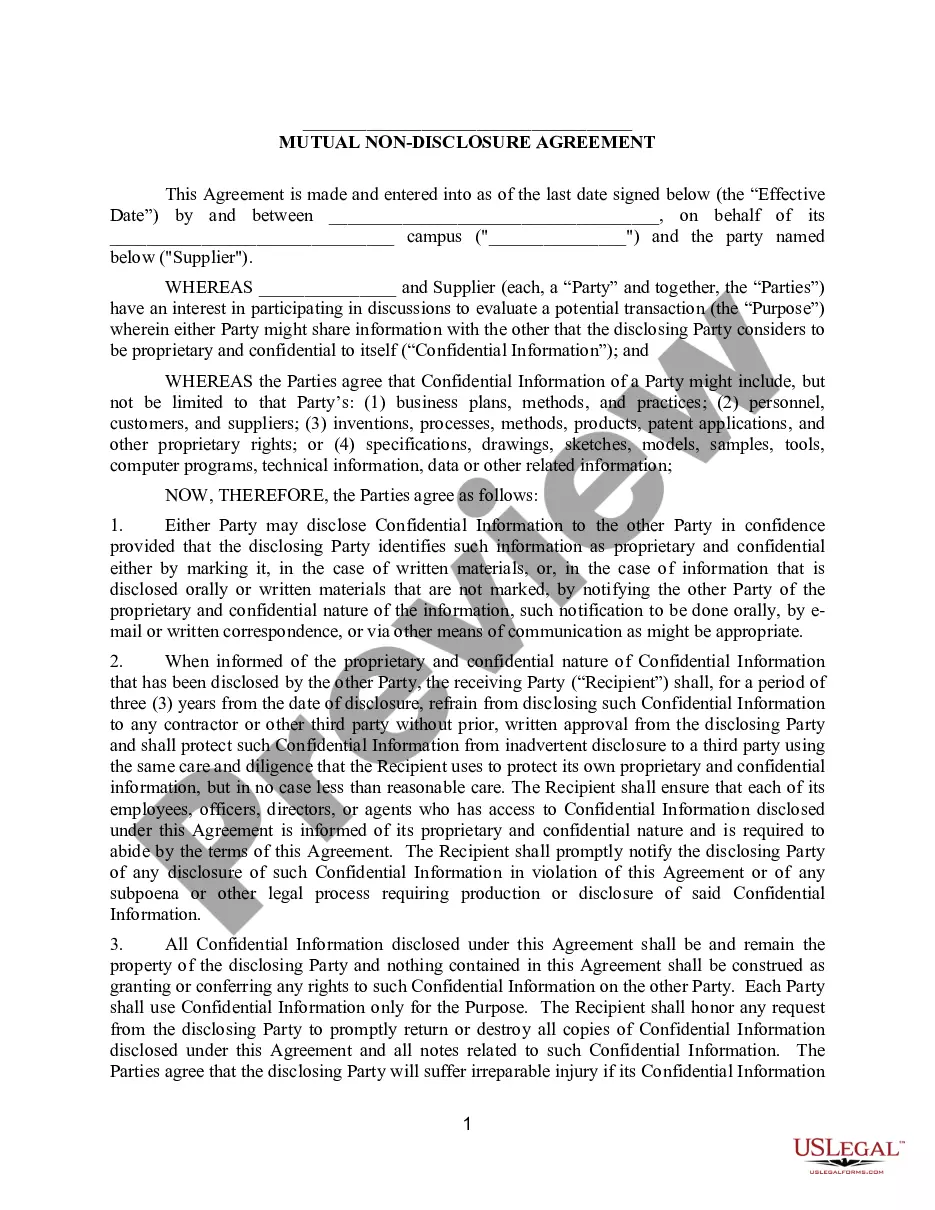
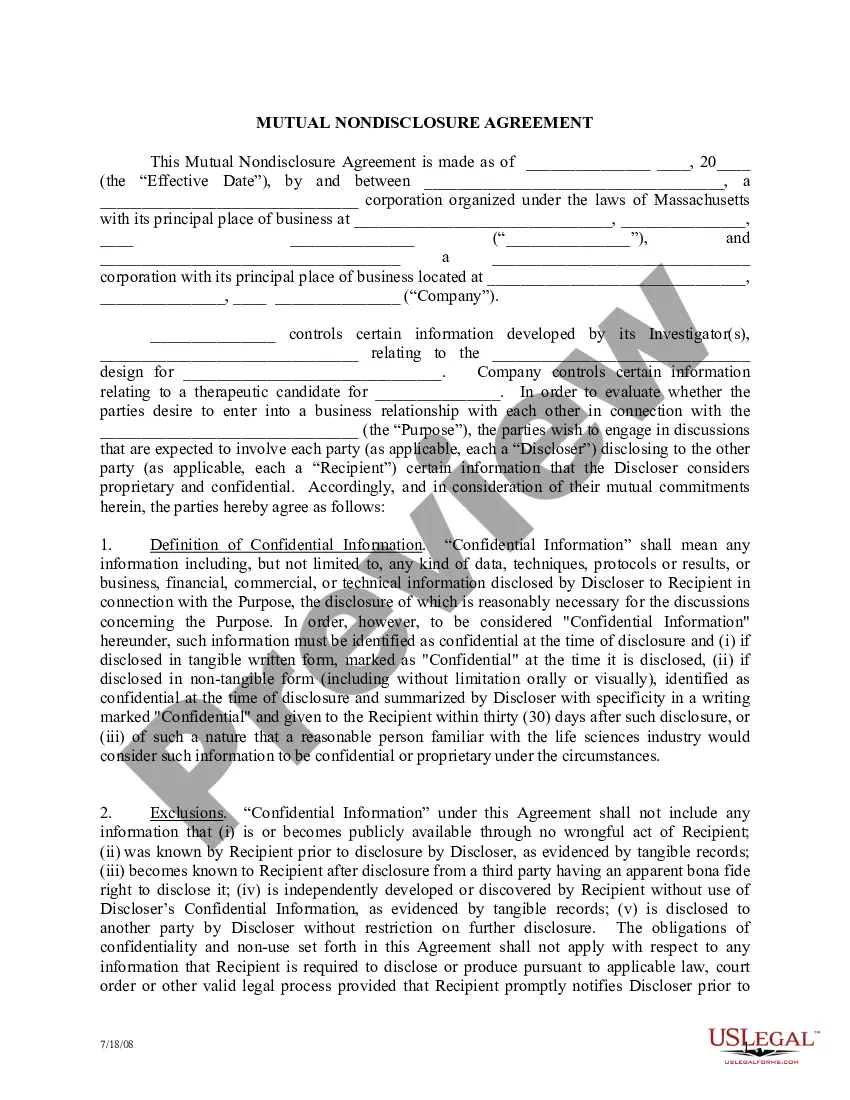



How to fill out Mutual Confidential Disclosure Agreement?
If you wish to finalize, acquire, or generate legal document templates, utilize US Legal Forms, the largest collection of legal forms, which can be accessed online.
Employ the site’s simple and user-friendly search to locate the documents you need.
A range of templates for business and personal purposes are organized by categories and regions, or keywords.
Every legal document template you purchase is yours permanently. You have access to every form you saved in your account.
Navigate to the My documents section and select a form to print or download again. Be proactive and download and print the Connecticut Mutual Confidential Disclosure Agreement with US Legal Forms. There are numerous professional and jurisdiction-specific forms you can utilize for your business or personal requirements.
- Utilize US Legal Forms to locate the Connecticut Mutual Confidential Disclosure Agreement in just a few clicks.
- If you are an existing US Legal Forms user, Log In to your account and click the Download button to access the Connecticut Mutual Confidential Disclosure Agreement.
- You can also access forms you previously saved in the My documents section of your account.
- If this is your first time using US Legal Forms, follow the instructions below.
- Step 1. Make sure you have selected the form for the correct city/state.
- Step 2. Use the Preview option to review the form's details. Don’t forget to read the summary.
- Step 3. If you are dissatisfied with the form, utilize the Search field at the top of the screen to find alternative versions of the legal form template.
- Step 4. Once you have found the form you need, select the Buy now button.
- Step 5. Complete the transaction. You can use your MasterCard, Visa, or PayPal account to process the payment.
- Step 6. Choose the format of the legal document and download it to your device.
- Step 7. Fill out, modify, and print or sign the Connecticut Mutual Confidential Disclosure Agreement.
Form popularity
FAQ
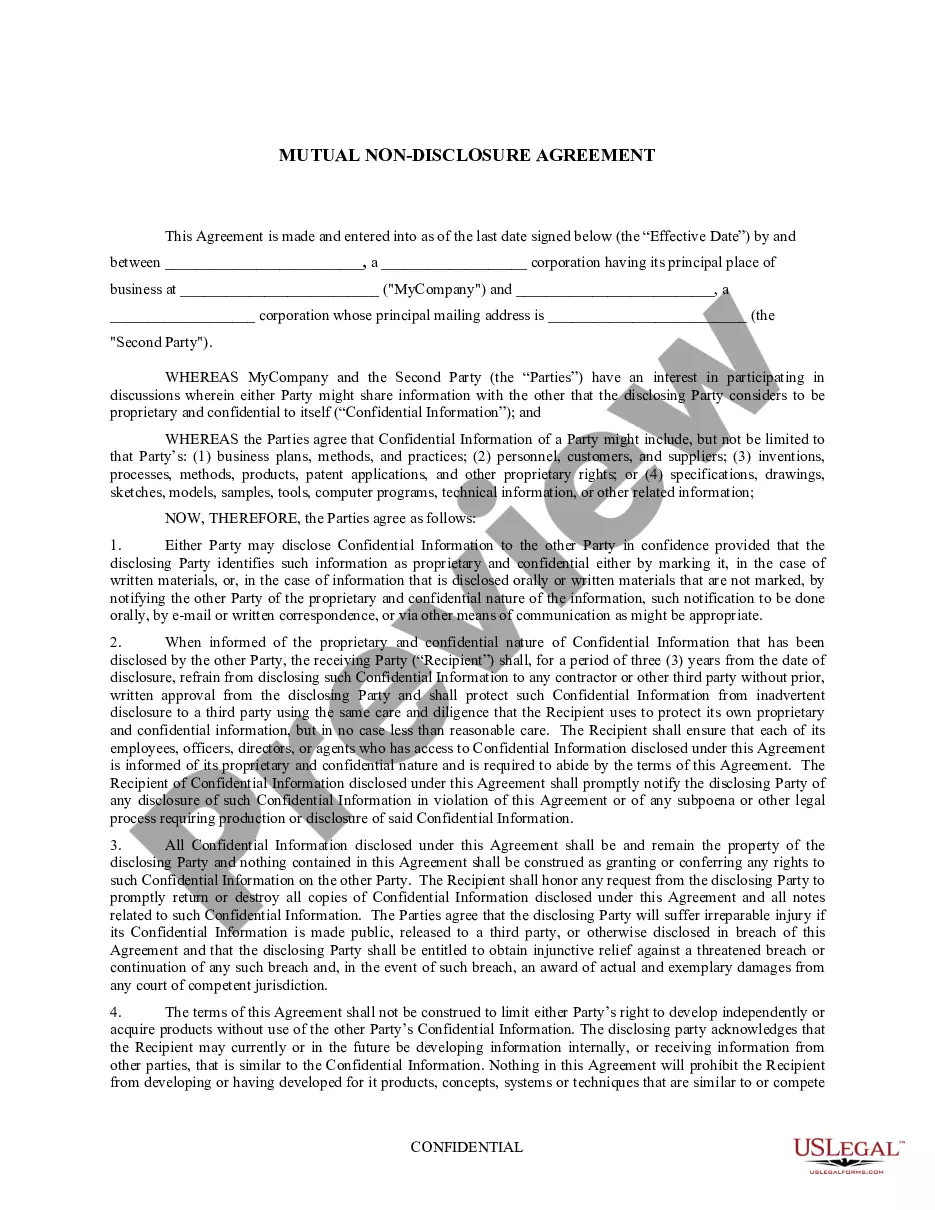
A mutual confidential disclosure agreement is a legal document that allows two parties to exchange sensitive information under strict confidentiality terms. This agreement ensures that both parties are equally responsible for protecting the disclosed information. Opting for a Connecticut Mutual Confidential Disclosure Agreement can facilitate trust and collaboration while safeguarding proprietary data. It's an essential tool for businesses looking to secure their interests.
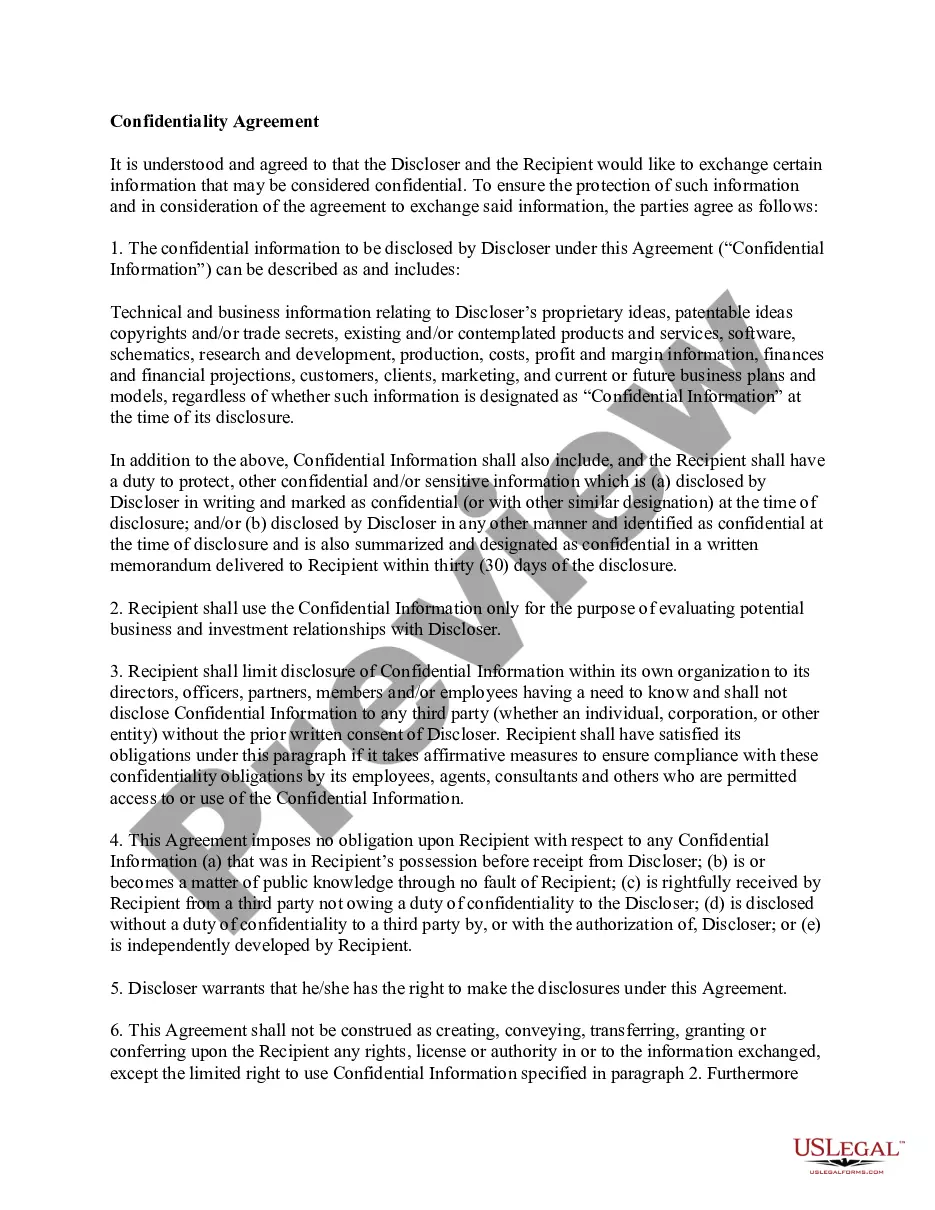
A Confidential Disclosure Agreement (CDA) and a Non-Disclosure Agreement (NDA) are similar but serve different purposes. A CDA typically involves a mutual understanding between parties, where both agree to disclose confidential information. In contrast, an NDA usually involves one party protecting their information from another. By comprehending the differences, you can determine which document, like a Connecticut Mutual Confidential Disclosure Agreement, suits your needs.
While a Non-Disclosure Agreement (NDA) can protect sensitive information, it may also present certain disadvantages. For instance, it could enforce limitations that restrict future business opportunities, especially if the agreement covers a broad scope of information. Moreover, if you breach the NDA, you may face legal consequences that could harm your business reputation. Therefore, understanding the implications of a Connecticut Mutual Confidential Disclosure Agreement is crucial before entering into one.
Yes, a Mutual Non-Disclosure Agreement (MNDA) is entirely legal as long as it meets the criteria for enforceability, such as being clear, specific, and agreed upon by all parties. The Connecticut Mutual Confidential Disclosure Agreement functions within these legal bounds, providing both parties with a solid framework for confidentiality. It's vital to consult legal professionals or utilize resources like US Legal Forms to ensure the agreement is robust and valid.
The three types of NDAs include unilateral, bilateral (or mutual), and multilateral agreements. A unilateral NDA involves one party disclosing confidential information while the other party agrees to keep it secret. A bilateral NDA, exemplified by the Connecticut Mutual Confidential Disclosure Agreement, ensures both parties share and protect each other's sensitive information, while a multilateral NDA involves three or more parties, each with confidentiality obligations.
An NDA, or Non-Disclosure Agreement, protects confidential information between two or more parties, while an MNDA, or Mutual Non-Disclosure Agreement, is a specific type of NDA that ensures both parties share mutual protection. The Connecticut Mutual Confidential Disclosure Agreement falls into the category of MNDA, as it offers reciprocal confidentiality obligations. Knowing this distinction can guide you in choosing the appropriate agreement for secure information exchange.
A mutual confidentiality agreement, often referred to as a Connecticut Mutual Confidential Disclosure Agreement, obligates both parties to protect each other's confidential information. In contrast, a standard Non-Disclosure Agreement (NDA) typically protects only one party’s information. Understanding these distinctions helps in selecting the right agreement for your needs, especially in collaborative situations.
To fill out a Connecticut Mutual Confidential Disclosure Agreement, start by identifying the parties involved. Clearly outline the purpose of the agreement, specifying what information is confidential. Next, include terms regarding the duration of confidentiality and any potential legal remedies for breach. Using platforms like US Legal Forms can simplify this process, providing user-friendly templates.
Yes, an NDA can certainly be mutual, allowing both parties to share their confidential information with each other while remaining protected. The Connecticut Mutual Confidential Disclosure Agreement is specifically designed to cater to situations where both sides have sensitive data. In a mutual NDA, both parties agree to keep shared information private, creating a balanced relationship. This structure is particularly beneficial in business partnerships and collaborations.
Filling a mutual non-disclosure agreement involves stating the names of both parties and defining what qualifies as confidential information. You should clearly outline the purpose of sharing confidential data, which is important under the Connecticut Mutual Confidential Disclosure Agreement. It is also essential to mention the duration of the agreement and any exclusions. After reviewing the terms, both parties must sign the document to initiate the confidentiality terms.