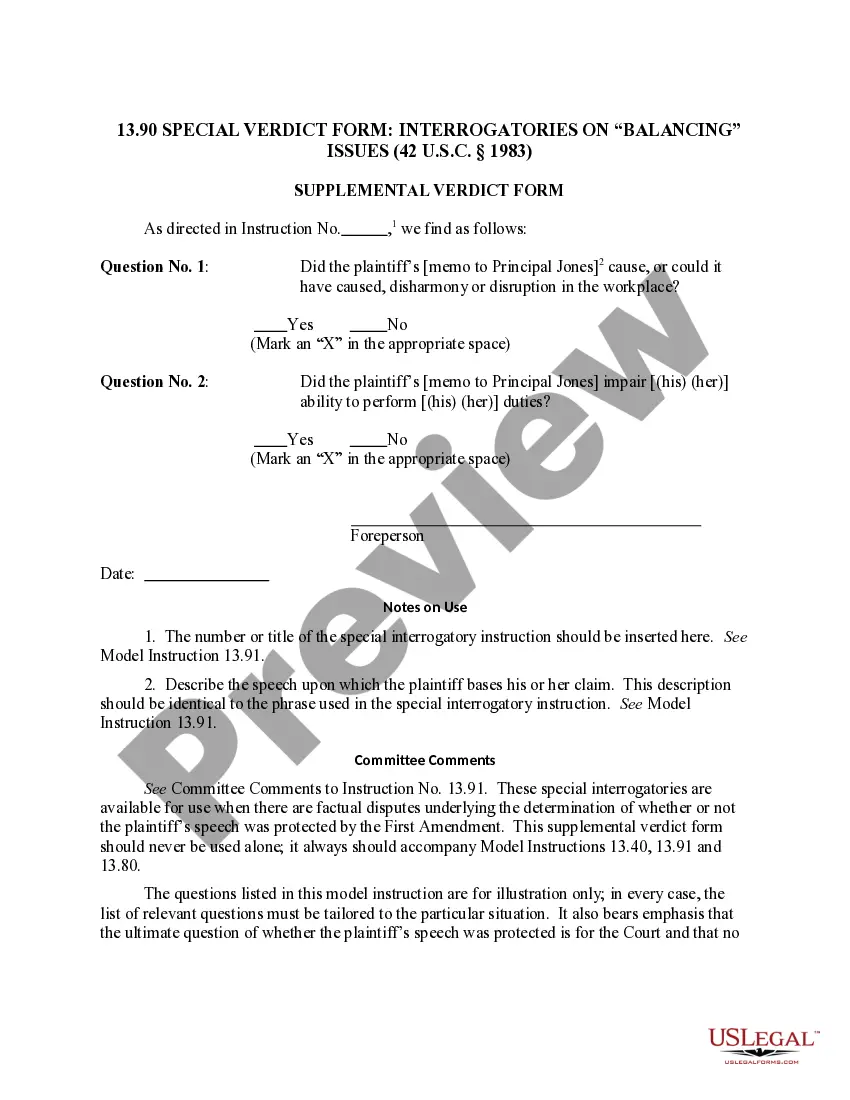
Connecticut Business Ethics and Conduct Disclosure Statement
Description
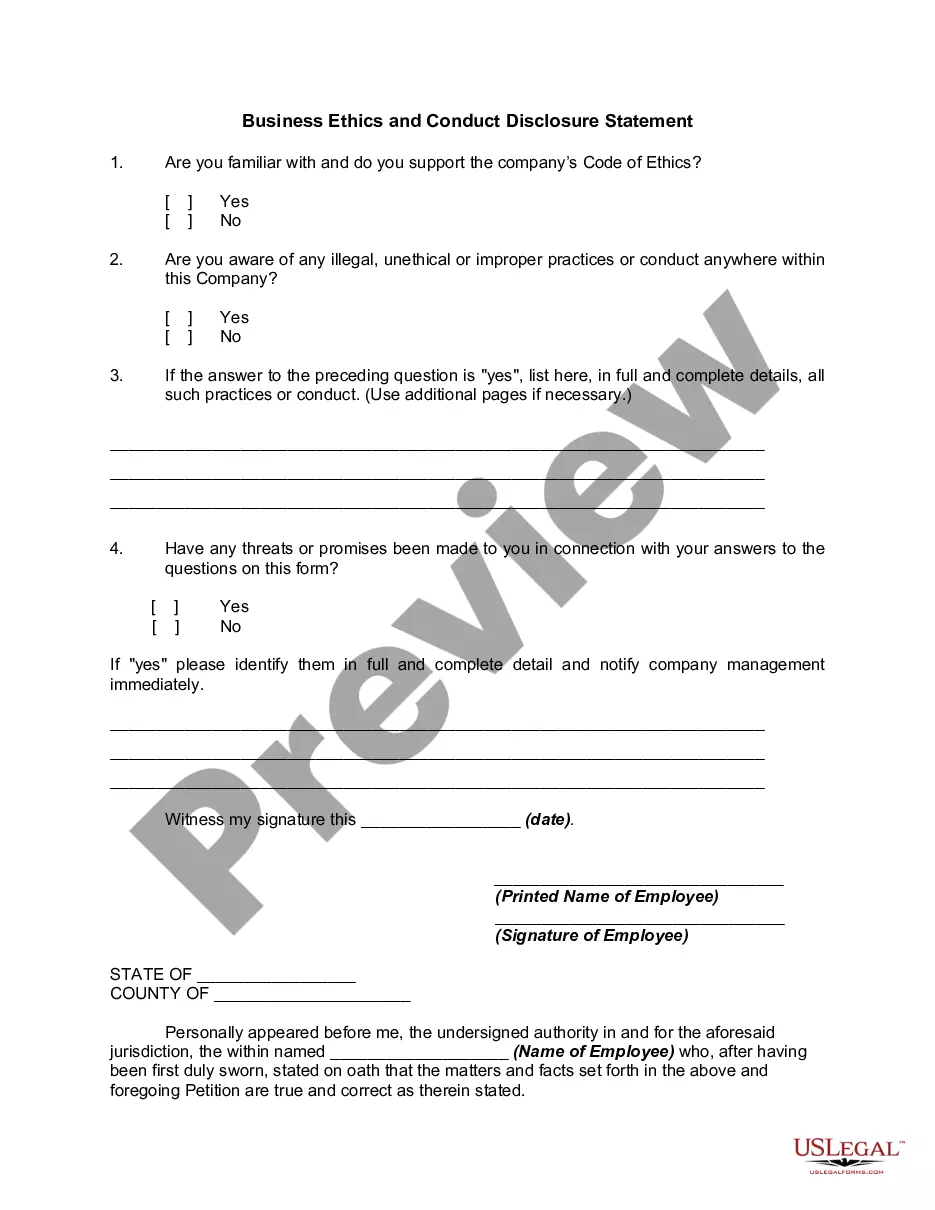
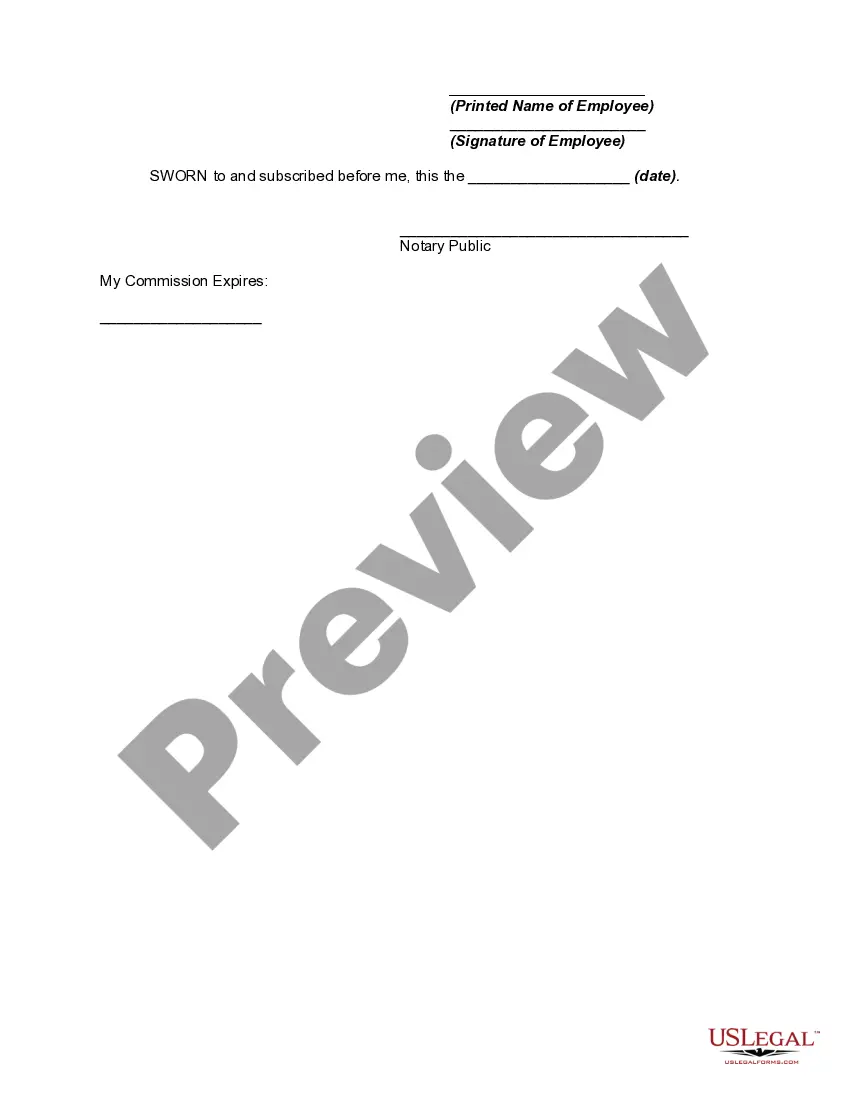
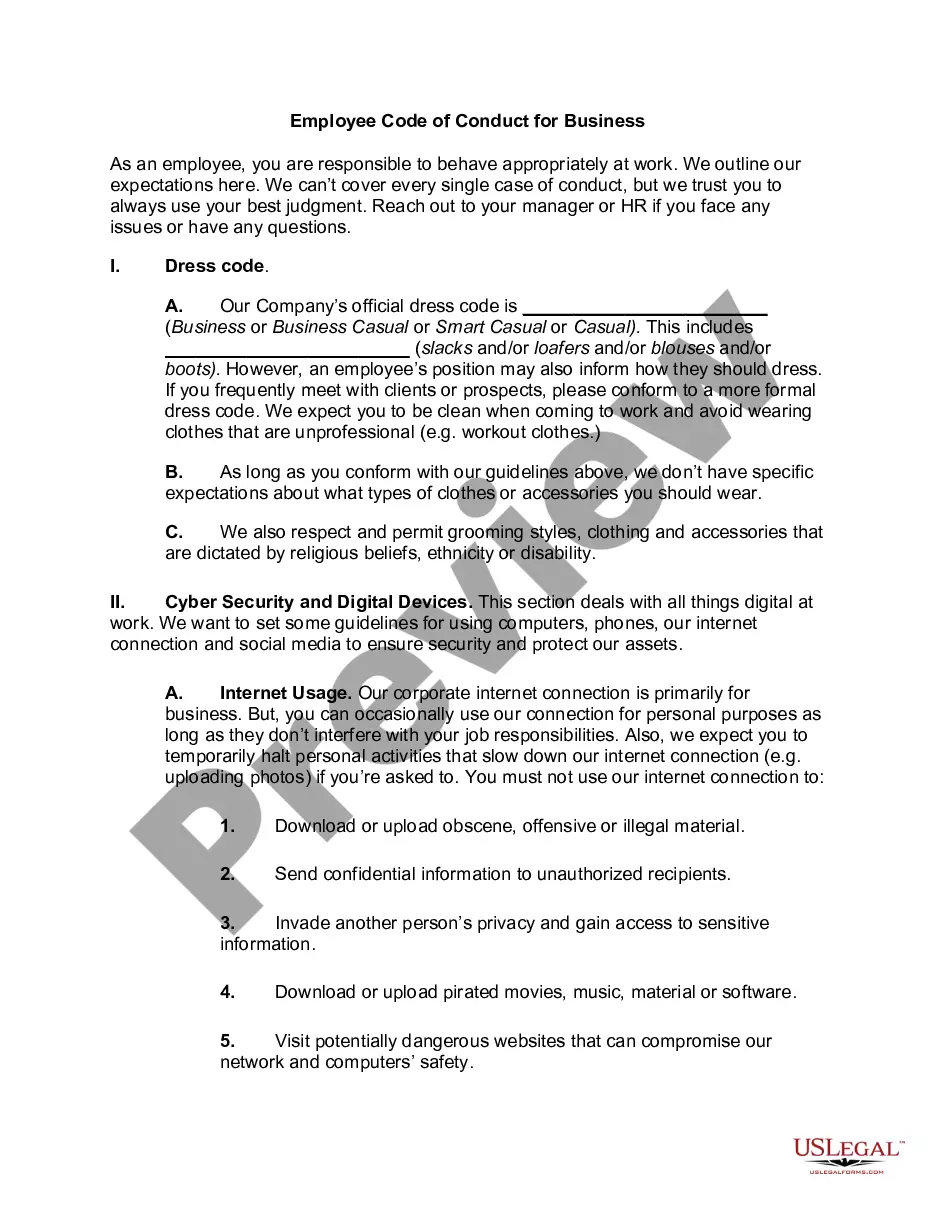



How to fill out Business Ethics And Conduct Disclosure Statement?
Selecting the optimal legal document design can be a challenge.
Of course, there are numerous templates accessible online, but how will you find the legal form you need.
Utilize the US Legal Forms website. This service offers thousands of templates, including the Connecticut Business Ethics and Conduct Disclosure Statement, that can be utilized for both business and personal purposes.
First, ensure you have selected the appropriate form for your locality/state. You can review the form using the Review button and read the form description to confirm it is suitable for you.
- All documents are vetted by experts and comply with state and federal regulations.
- If you have an existing account, Log In and then click the Download button to obtain the Connecticut Business Ethics and Conduct Disclosure Statement.
- Leverage your account to view the legal documents you have previously purchased.
- Go to the My documents section of your account to download another copy of the document you require.
- If you are a new user of US Legal Forms, here are simple steps you can follow.
Form popularity
FAQ
To write business ethics, articulate the values that reflect your company's identity and how they should influence behavior. Focus on clarity and relevance, ensuring that your ethics statement is easily understood by all employees. A Connecticut Business Ethics and Conduct Disclosure Statement would be a practical tool to help you outline these ethical principles effectively.
Creating a code of ethics example involves outlining key values, expectations, and guidelines. Start with a preamble that states the importance of ethics in your organization. Then, include sections on conflict of interest, confidentiality, and compliance with laws, much like what you would find in a Connecticut Business Ethics and Conduct Disclosure Statement, for practical clarity.
To write a code of ethics for your business, start by identifying your core values and principles. Clearly articulate the expectations for behavior and decision-making that align with these values. Consider leveraging the framework provided by a Connecticut Business Ethics and Conduct Disclosure Statement to ensure comprehensive ethical guidelines are established for all employees.
A code of conduct outlines specific guidelines for behavior in a professional setting, while a code of ethics defines the overarching values of the organization. For instance, a Connecticut Business Ethics and Conduct Disclosure Statement may include a code of conduct that prohibits discrimination and harassment, alongside a code of ethics that emphasizes integrity and social responsibility. Together, they foster a safe and ethical workplace.
The seven business ethics include integrity, honesty, loyalty, fairness, respect for others, accountability, and compliance. These ethical standards serve as crucial benchmarks for evaluating business conduct. By adhering to a Connecticut Business Ethics and Conduct Disclosure Statement, businesses encourage a strong ethical framework that impacts their reputation and success.
Five common codes of ethics typically include honesty, integrity, transparency, respect, and accountability. These principles serve as a foundation for ethical decision-making within organizations. Implementing a Connecticut Business Ethics and Conduct Disclosure Statement can help reinforce these codes, guiding employees toward ethical behavior in their daily activities.
A business ethics statement outlines the ethical principles that guide a company's operations. For example, a Connecticut Business Ethics and Conduct Disclosure Statement might specify the commitment to integrity, transparency, and fairness in dealing with clients and stakeholders. This statement helps create a culture of trust and accountability within the organization.
A business code of ethics statement is a formal declaration outlining an organization's values and ethical principles. It provides employees and stakeholders with clear expectations regarding ethical conduct and decision-making. Incorporating a Connecticut Business Ethics and Conduct Disclosure Statement within this code reinforces your commitment to ethical practices, ensuring that all members of the organization understand their responsibilities.
Disclosure of information in business ethics refers to the process of sharing relevant information that may impact stakeholders' decisions. This transparency is crucial for building trust and credibility, particularly when developing a Connecticut Business Ethics and Conduct Disclosure Statement. By openly communicating ethical practices and policies, businesses demonstrate their commitment to ethical standards and responsible management.
Section 1 101qq of the CT General statutes specifically addresses the importance of ethical practices in business operations. It mandates that organizations disclose their compliance with established ethical standards to promote transparency and trust. Understanding this section is vital for forming a solid Connecticut Business Ethics and Conduct Disclosure Statement and ensuring that your business upholds legal and ethical obligations.