Connecticut Co-Branding Agreement
Description
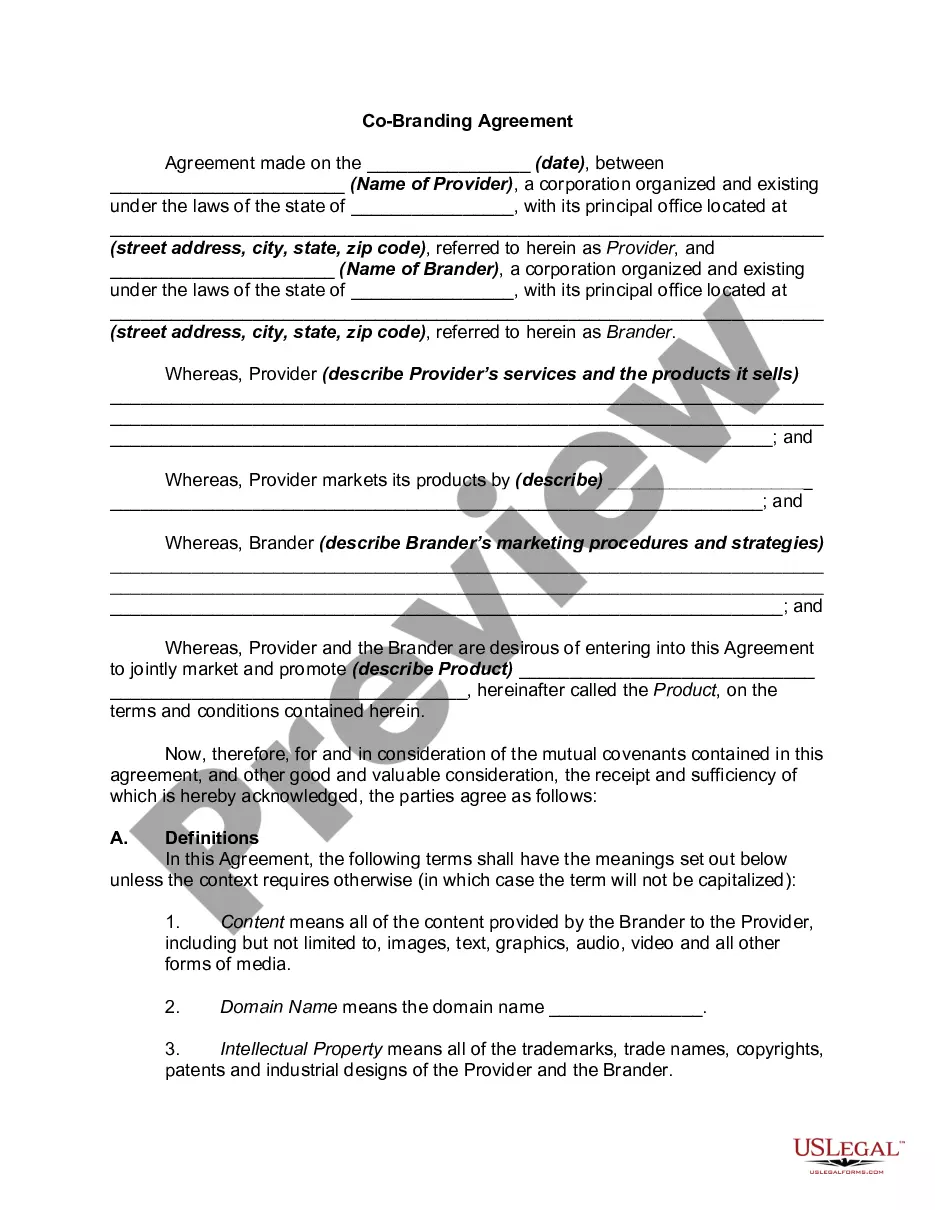
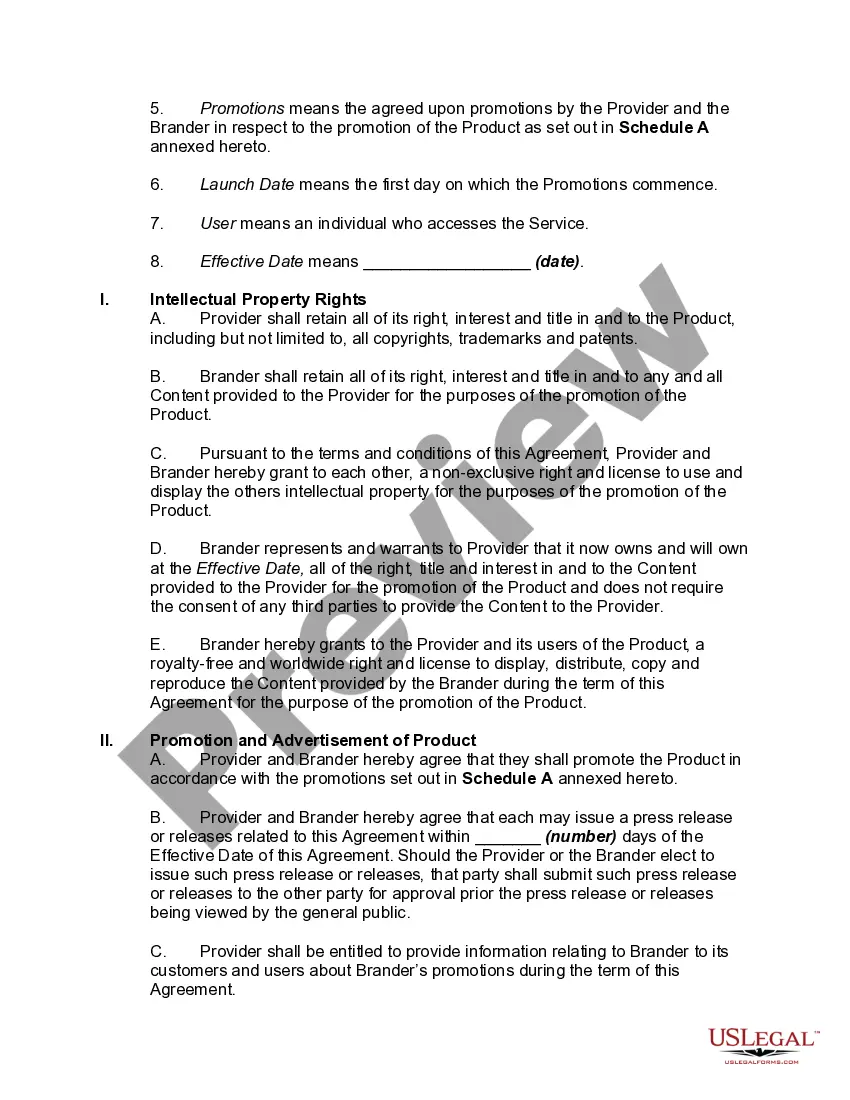
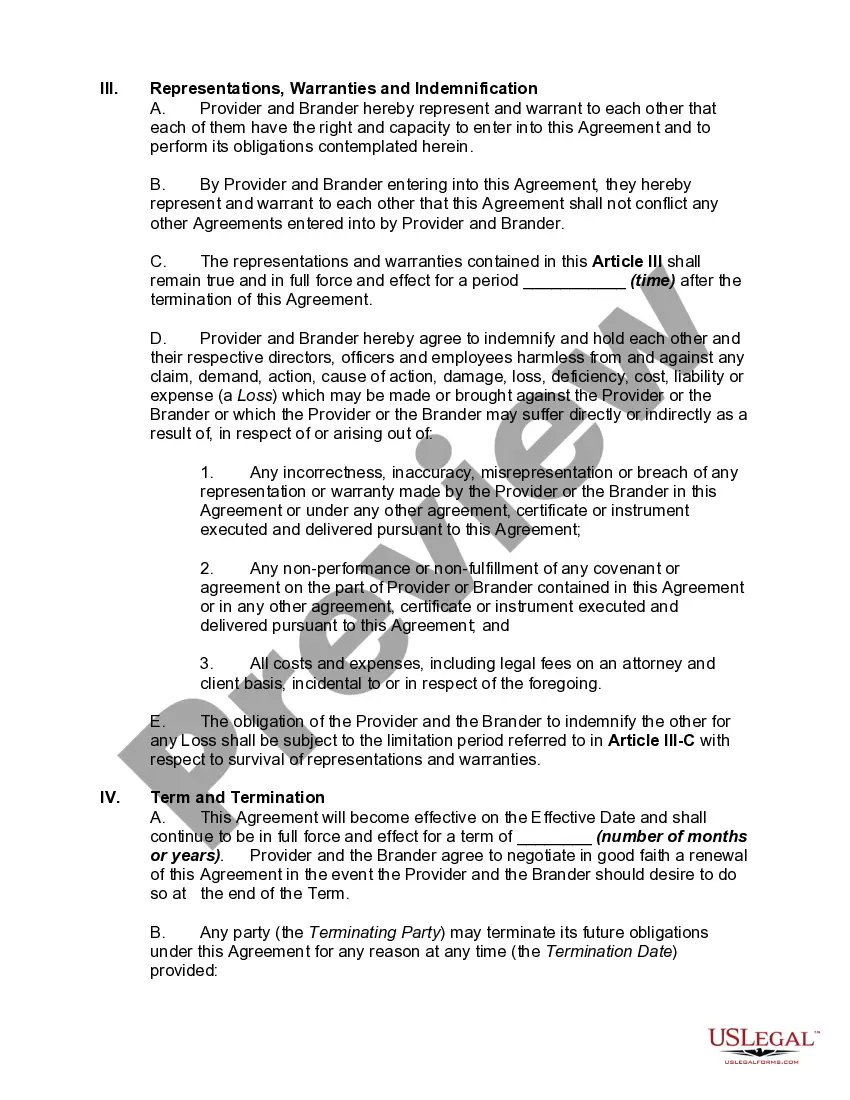
How to fill out Co-Branding Agreement?
If you wish to be thorough, acquire, or print authentic document templates, utilize US Legal Forms, the foremost collection of legal forms that can be accessed online.
Utilize the website's straightforward and convenient search feature to locate the documents you need.
Numerous templates for business and personal use are categorized by type and state, or by keywords. Utilize US Legal Forms to locate the Connecticut Co-Branding Agreement with just a few clicks.
Every legal document template you obtain is yours indefinitely. You will have access to every form you obtained in your account. Navigate to the My documents section and select a form to print or download again.
Compete and acquire, and print the Connecticut Co-Branding Agreement with US Legal Forms. There are millions of professional and state-specific forms available for your business or personal needs.
- If you are already a US Legal Forms user, sign in to your account and click on the Download button to obtain the Connecticut Co-Branding Agreement.
- You can also access forms you have previously obtained in the My documents section of your account.
- If you are using US Legal Forms for the first time, follow the steps below.
- Step 1. Ensure that you have chosen the form for your specific city/state.
- Step 2. Use the Preview option to review the form’s content. Don’t forget to read the description.
- Step 3. If you are not satisfied with the form, use the Search area at the top of the screen to find other versions of the legal form template.
- Step 4. Once you have found the form you need, click the Buy now button. Choose the pricing plan you prefer and enter your details to create an account.
- Step 5. Complete the transaction. You can use your credit card or PayPal account to finalize the purchase.
- Step 6. Select the format of the legal document and download it to your device.
- Step 7. Complete, customize, and print or sign the Connecticut Co-Branding Agreement.
Form popularity
FAQ
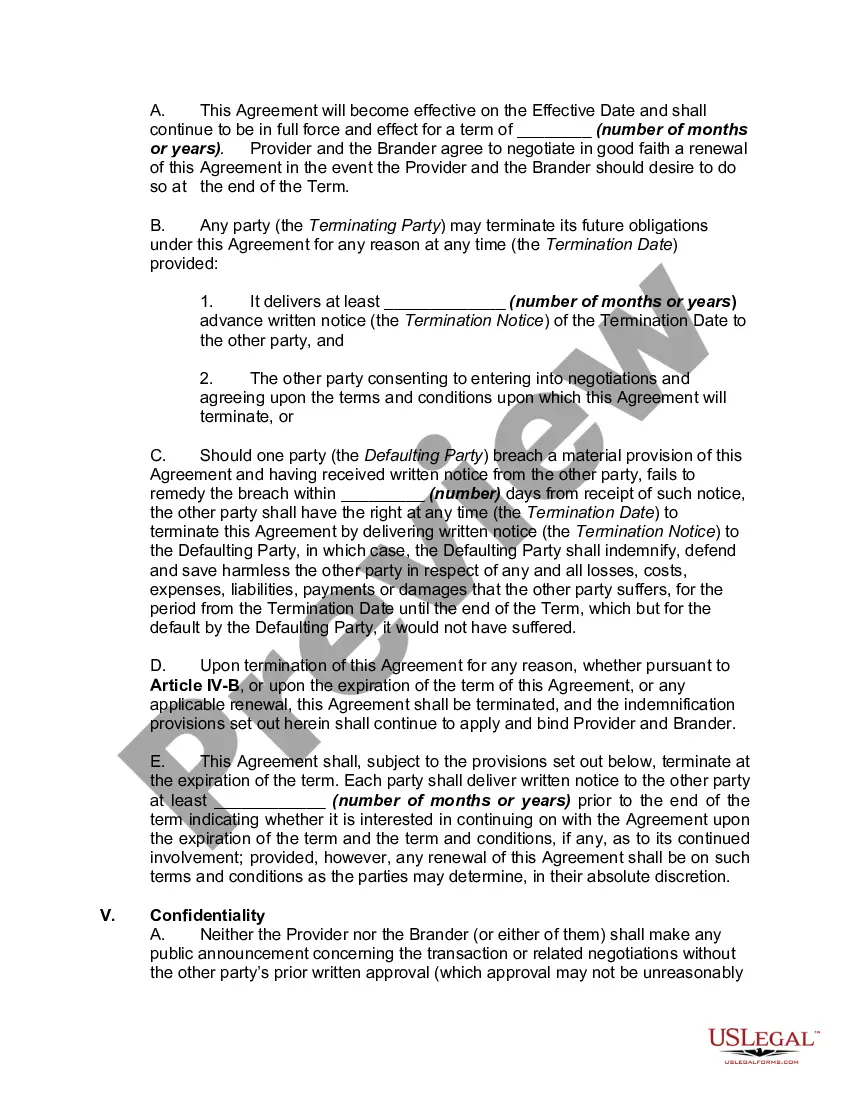
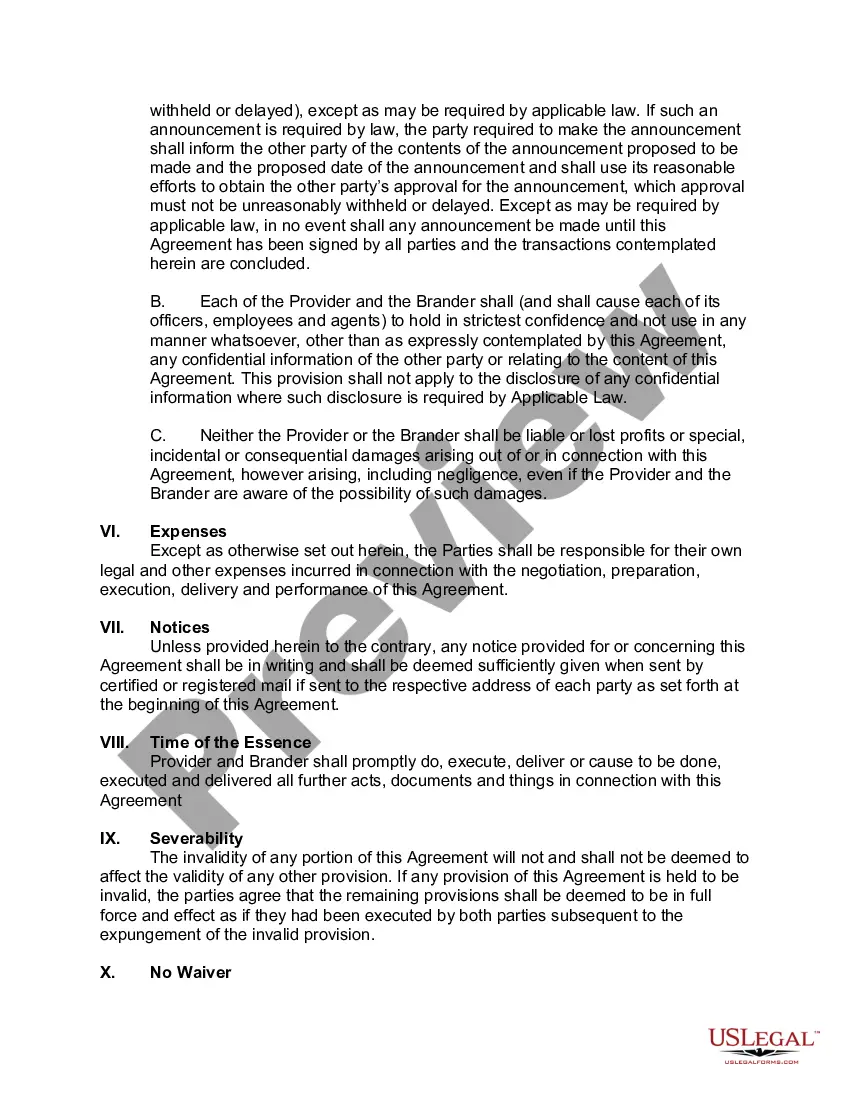
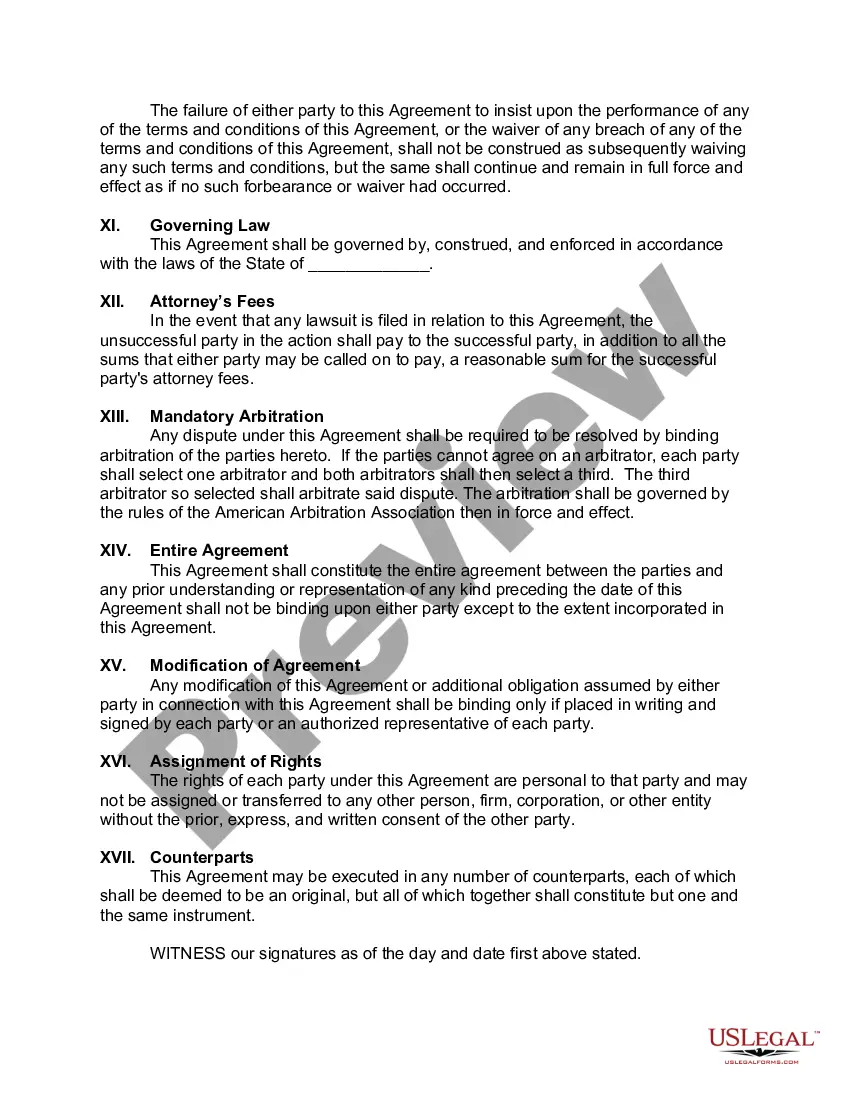
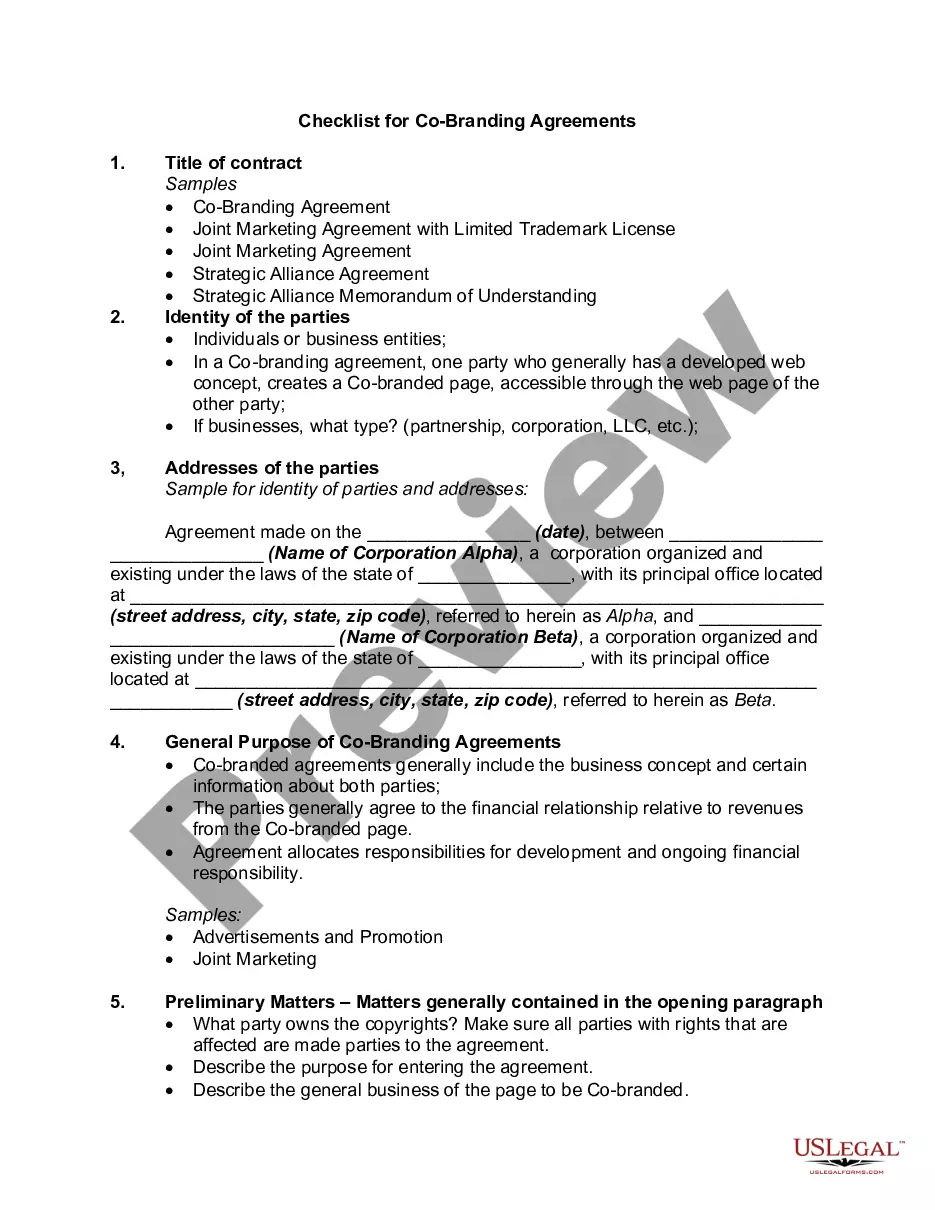
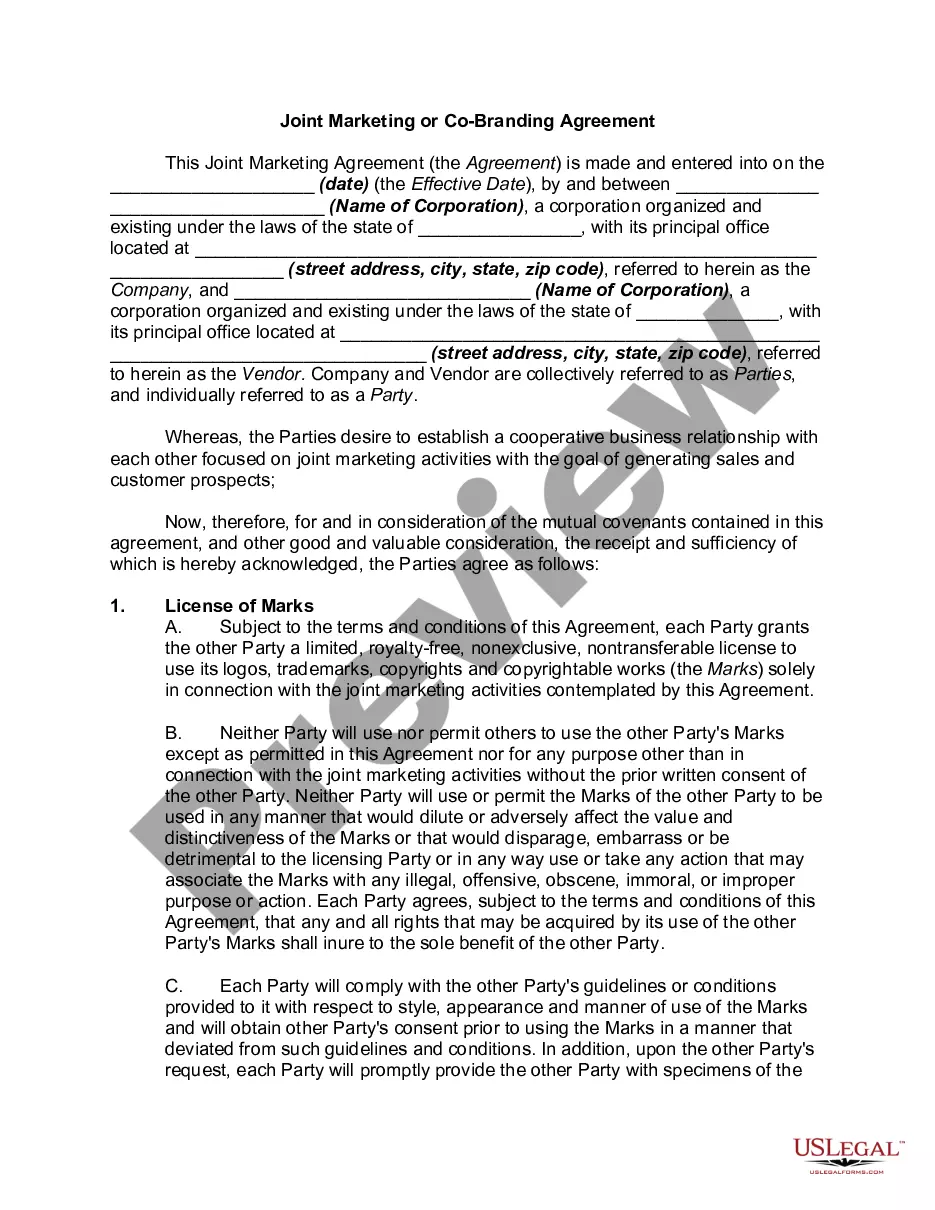
To write a simple Connecticut Co-Branding Agreement, start by defining the purpose of the collaboration clearly. Outline the roles of each brand, the duration of the agreement, and how profits and responsibilities will be shared. Keep the language straightforward, and make sure to have both parties review the document before signing it to ensure mutual understanding.
Completing a Connecticut Co-Branding Agreement means finalizing all the details outlined within the document. First, ensure every section accurately reflects the understanding between parties. After verifying all information, both parties should sign the agreement and keep copies for their records to ensure compliance with the terms.
Filling out a Connecticut Co-Branding Agreement involves systematically entering relevant details about both brands. You should include sections that outline responsibilities, financial arrangements, and duration of the agreement. Once completed, both parties must review the document, making adjustments as needed, before signing it to establish a binding contract.
To fill out a Connecticut Co-Branding Agreement, start by gathering all necessary information about the involved brands. Clearly state the objectives, terms, and duties of each party. After reviewing the document, ensure that all sections are complete, and both parties sign and date the agreement to validate it.
An example of an agreement is a Connecticut Co-Branding Agreement, which outlines the terms and conditions under which two or more brands collaborate. This type of agreement typically includes details such as shared marketing efforts, financial contributions, and brand representation. By setting clear expectations, it allows both parties to align their goals and maximize the benefits of the partnership.
A brand control agreement is a contract that establishes guidelines on how a brand can be used by other parties. This ensures that the brand's integrity and image are maintained. When entering a Connecticut Co-Branding Agreement, firms may utilize a brand control agreement to specify how both brands can be represented throughout their collaboration.
The three rules of branding often include consistency, simplicity, and uniqueness. Consistency ensures that the brand message remains clear across all platforms, while simplicity makes it easy for consumers to understand the brand's value. Uniqueness helps a brand stand out in the marketplace; a Connecticut Co-Branding Agreement can leverage these rules to enhance both brands' visibility.
A branding plan includes various elements such as market research, target audience identification, messaging strategy, and visual guidelines. It serves as a roadmap for a brand's identity and how it interacts with consumers. By engaging in a Connecticut Co-Branding Agreement, partners can enhance their branding efforts through shared insights and resources.
Branding can be seen in the way companies create visual identities that resonate with consumers. For example, think about the familiar logos of well-known companies like Nike or Apple. In a Connecticut Co-Branding Agreement, brands might combine unique elements from each to create something fresh and appealing to their audience.
A branding agreement is a contract that defines how a brand will be presented and marketed. This can include guidelines for logos, messaging, and overall brand identity. In the context of a Connecticut Co-Branding Agreement, parties specify how their brands will support each other's identity and values to strengthen market presence.