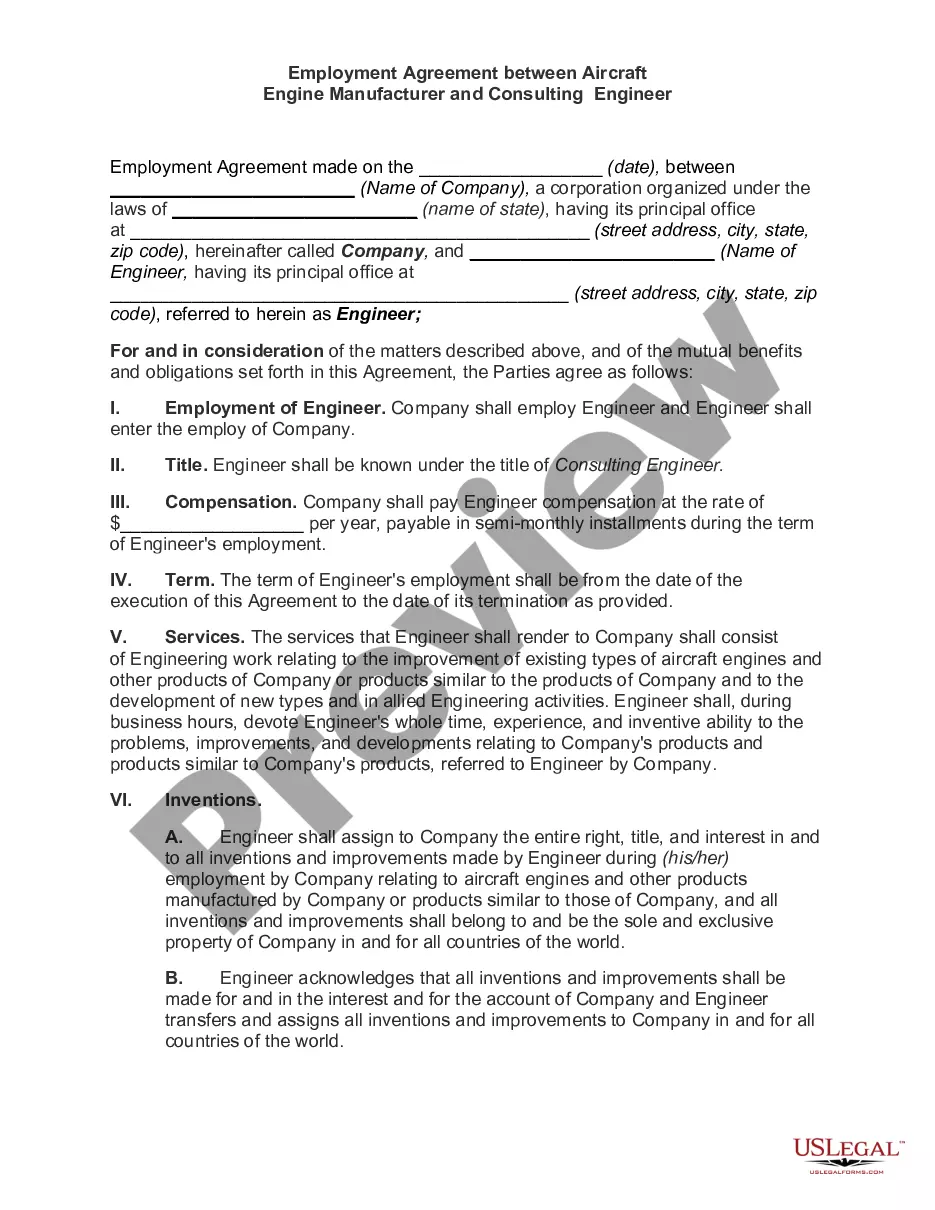
Connecticut Mutual Confidential Information Exchange Agreement
Description
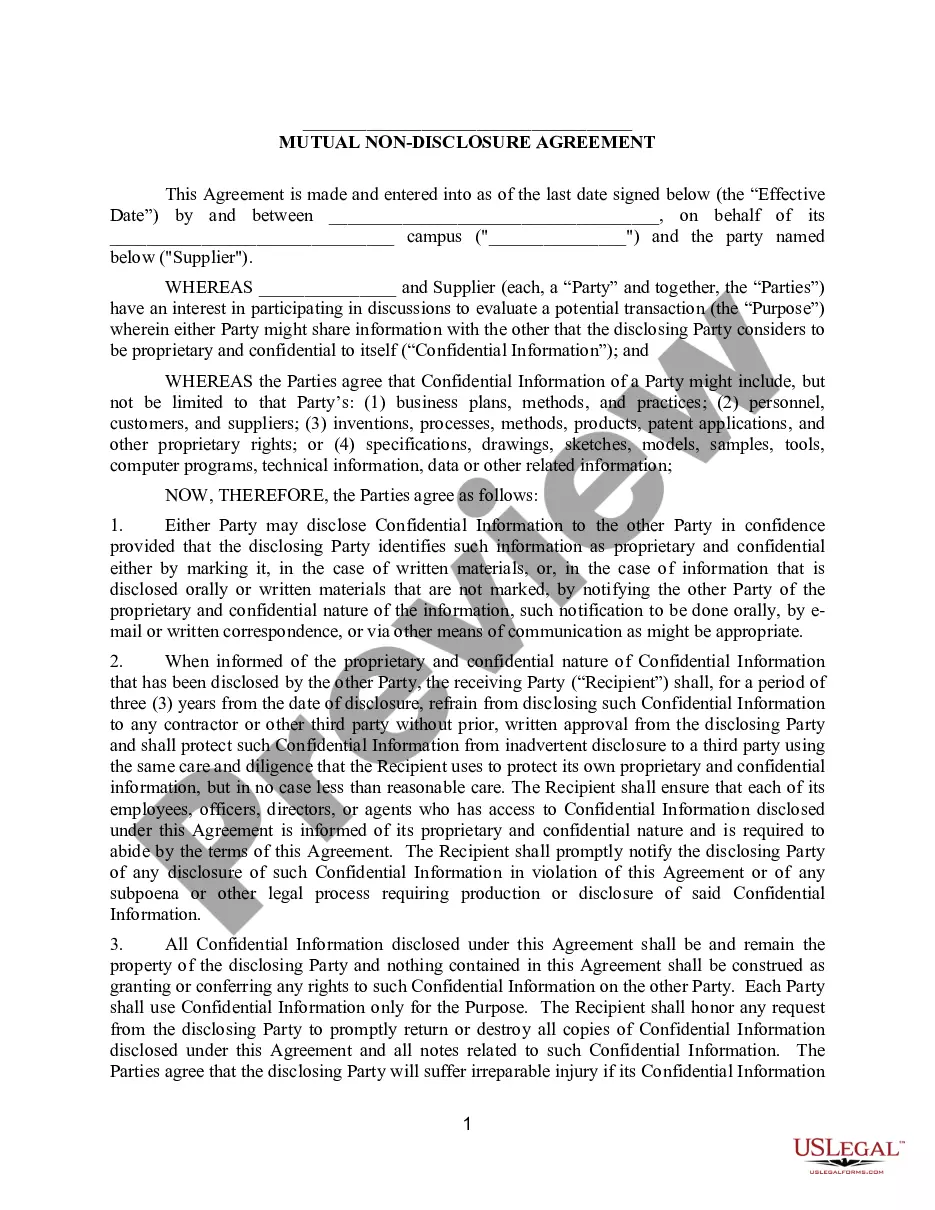
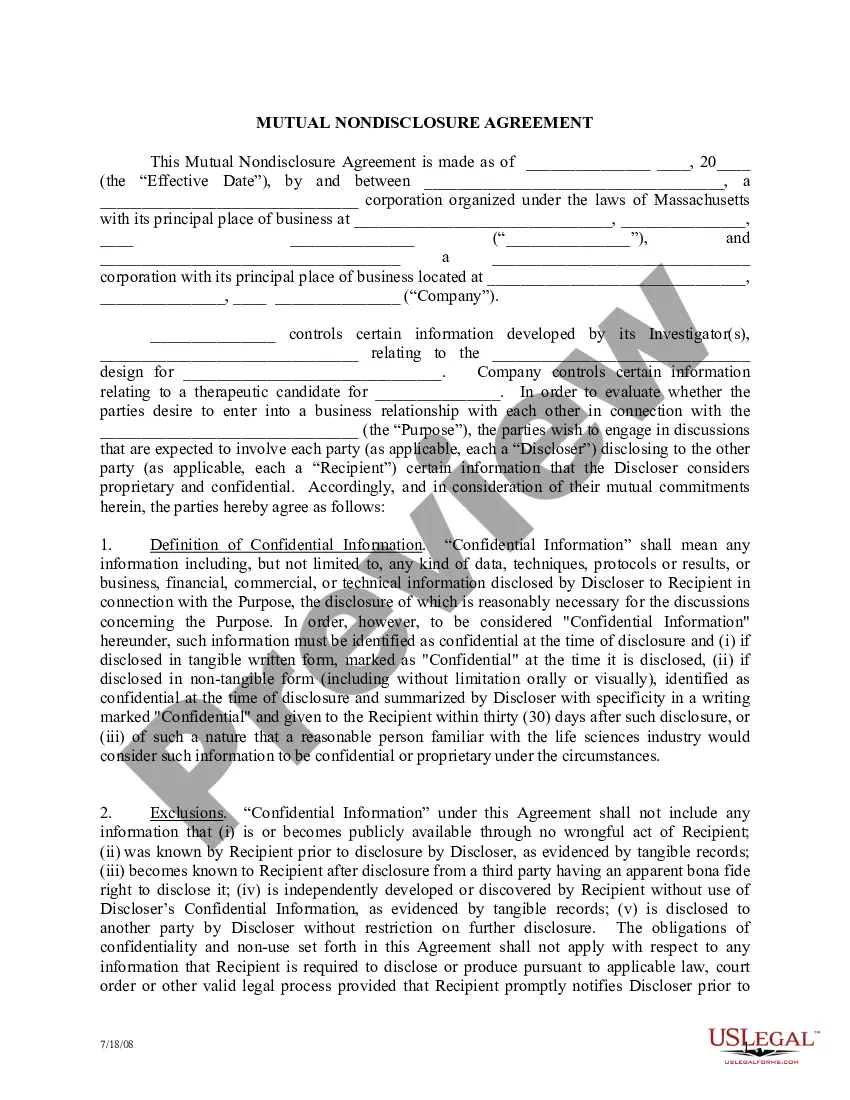
How to fill out Mutual Confidential Information Exchange Agreement?
If you require to complete, obtain, or print legal document templates, utilize US Legal Forms, the largest selection of legal documents available online.
Employ the site's straightforward and user-friendly search to find the paperwork you need.
Various templates for business and personal uses are organized by categories and states, or keywords.
Step 3. If you are dissatisfied with the form, utilize the Search area at the top of the page to find alternative versions of the legal template.
Step 4. Once you have found the form you need, click on the Get now button. Select the pricing plan you prefer and enter your information to register for an account.
- Utilize US Legal Forms to acquire the Connecticut Mutual Confidential Information Exchange Agreement with just a few clicks.
- If you are currently a US Legal Forms customer, sign in to your account and select the Acquire option to get the Connecticut Mutual Confidential Information Exchange Agreement.
- You can also access forms you have previously downloaded in the My documents tab of your account.
- If you are using US Legal Forms for the first time, follow the instructions below.
- Step 1. Verify that you have selected the form for the correct city/state.
- Step 2. Use the Review option to examine the contents of the form. Don’t forget to read the description.
Form popularity
FAQ
Yes, confidentiality agreements typically hold up in court, provided they are well-drafted and comply with legal standards. A Connecticut Mutual Confidential Information Exchange Agreement can be enforced if it clearly defines the terms of confidentiality, the information covered, and the repercussions for breaches. However, it's advisable to consult with a legal expert to ensure enforceability and protect your interests.
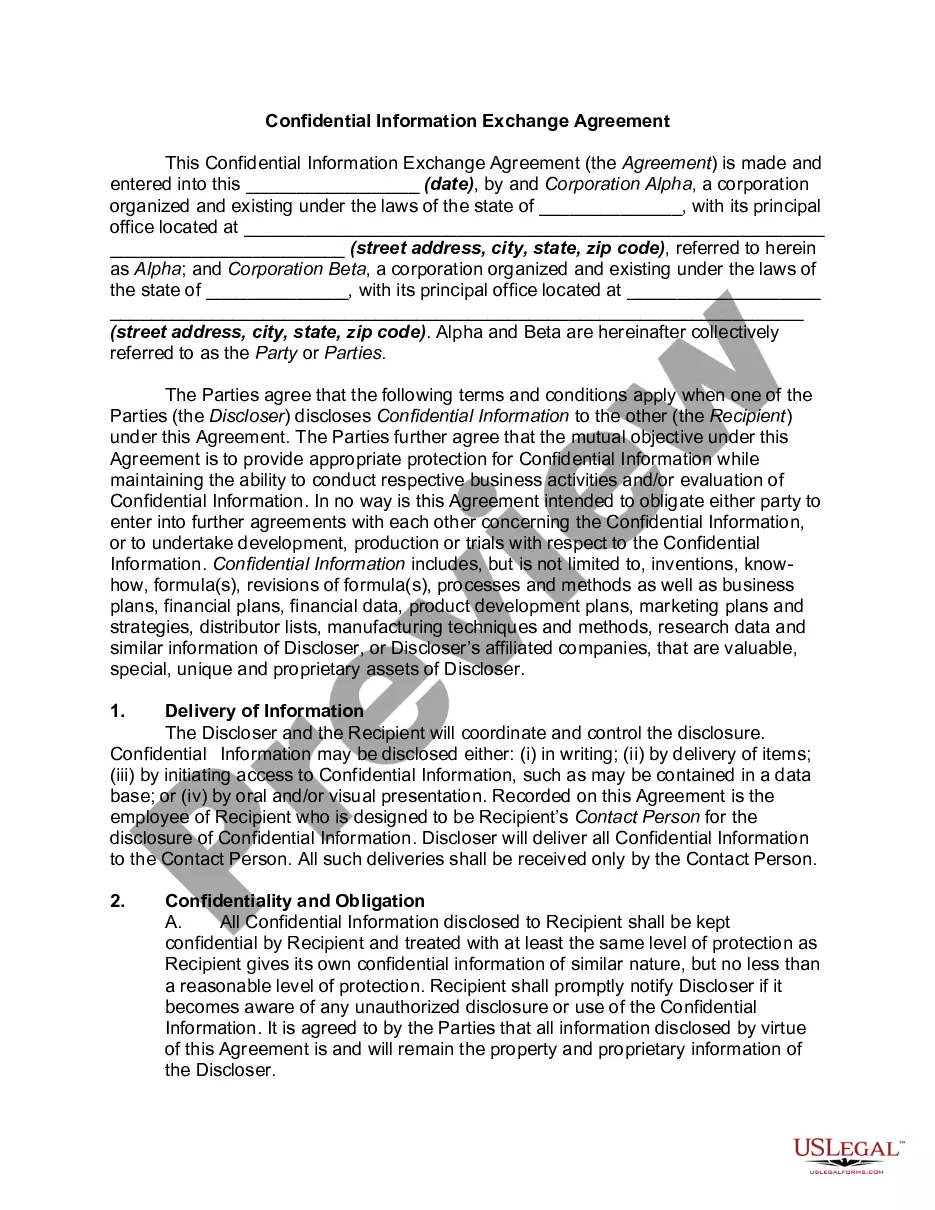
An information exchange agreement, like the Connecticut Mutual Confidential Information Exchange Agreement, facilitates the secure sharing of information between two or more parties. This type of agreement ensures that all parties understand their responsibilities regarding confidentiality and data protection. It's commonly used in business collaborations, enhancing openness while safeguarding sensitive details.
A confidential information agreement outlines the terms under which sensitive information will be shared between parties. In the context of a Connecticut Mutual Confidential Information Exchange Agreement, this includes protections for all exchanged data. Such agreements help maintain trust and legal boundaries, ensuring that proprietary information is not disclosed to unauthorized individuals.
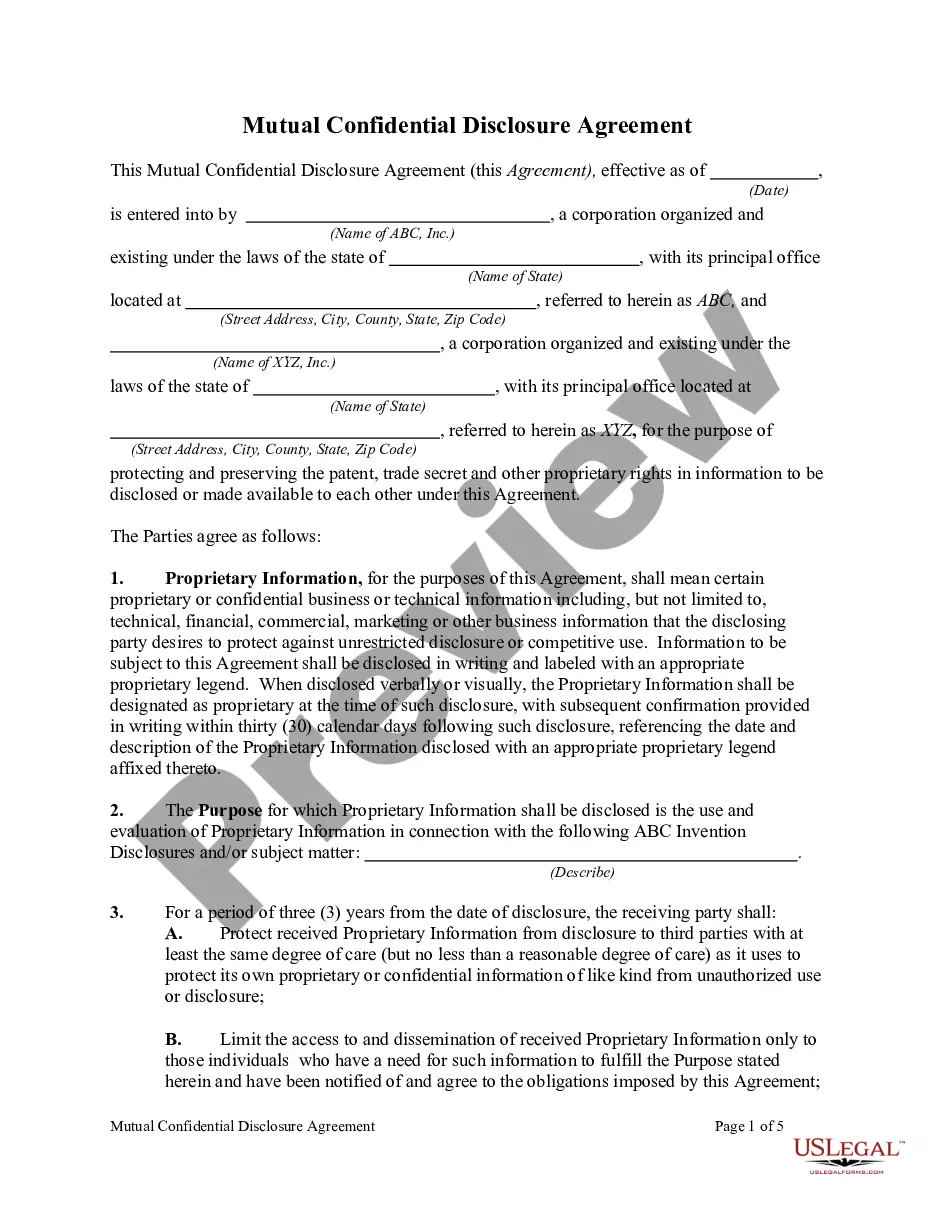
A mutual confidentiality agreement and a Non-Disclosure Agreement (NDA) serve similar purposes but are not exactly the same. In a Connecticut Mutual Confidential Information Exchange Agreement, both parties share and protect sensitive information. An NDA typically involves one party disclosing information that the other party must keep confidential. It's important to understand the nuances to ensure the agreement aligns with your specific needs.
Yes, you can create your own confidentiality agreement, but it's beneficial to follow a reliable template, such as the Connecticut Mutual Confidential Information Exchange Agreement. By using a structured approach, you ensure that all vital aspects are covered, reducing the risk of oversights. However, consider consulting a legal professional to verify that your agreement meets legal requirements and adequately protects your interests.
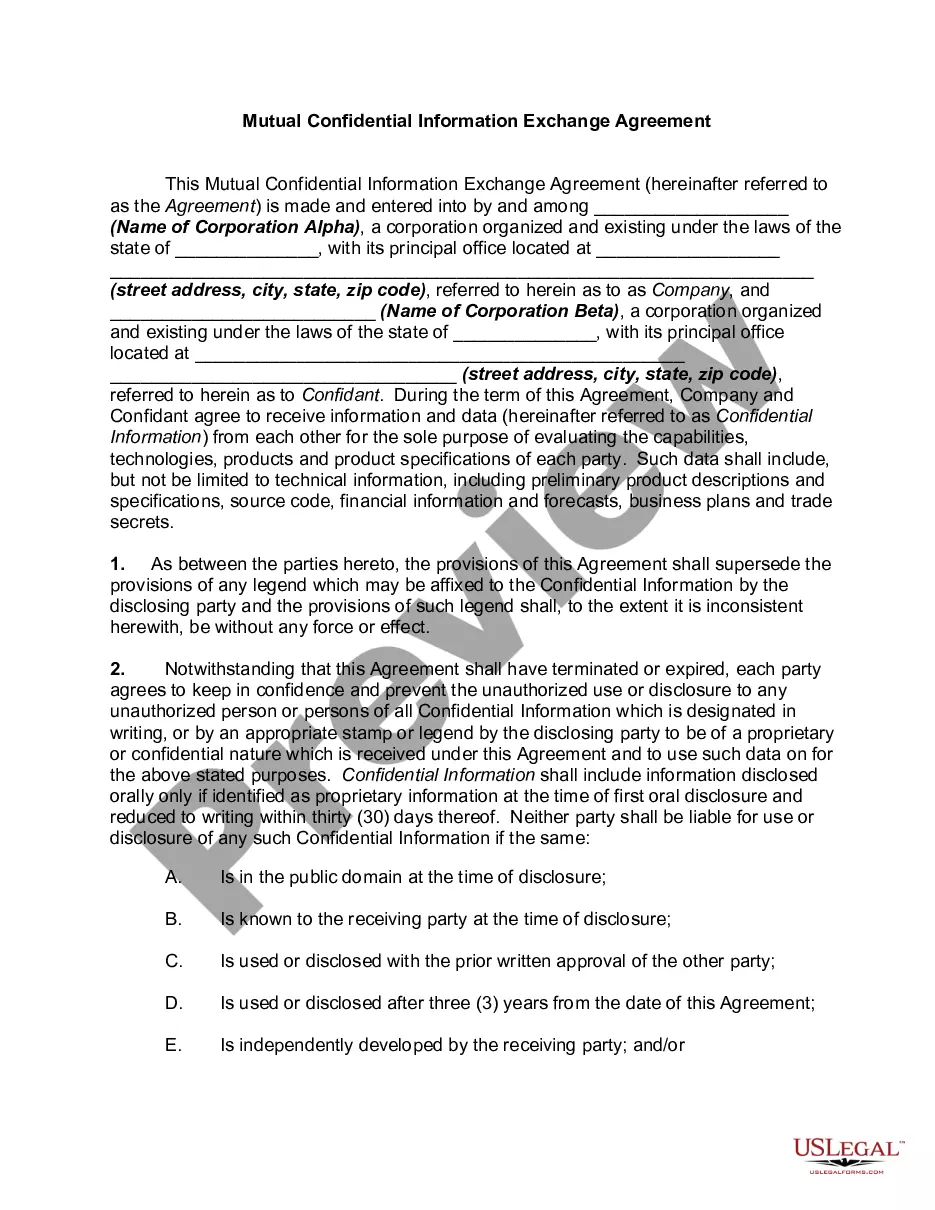
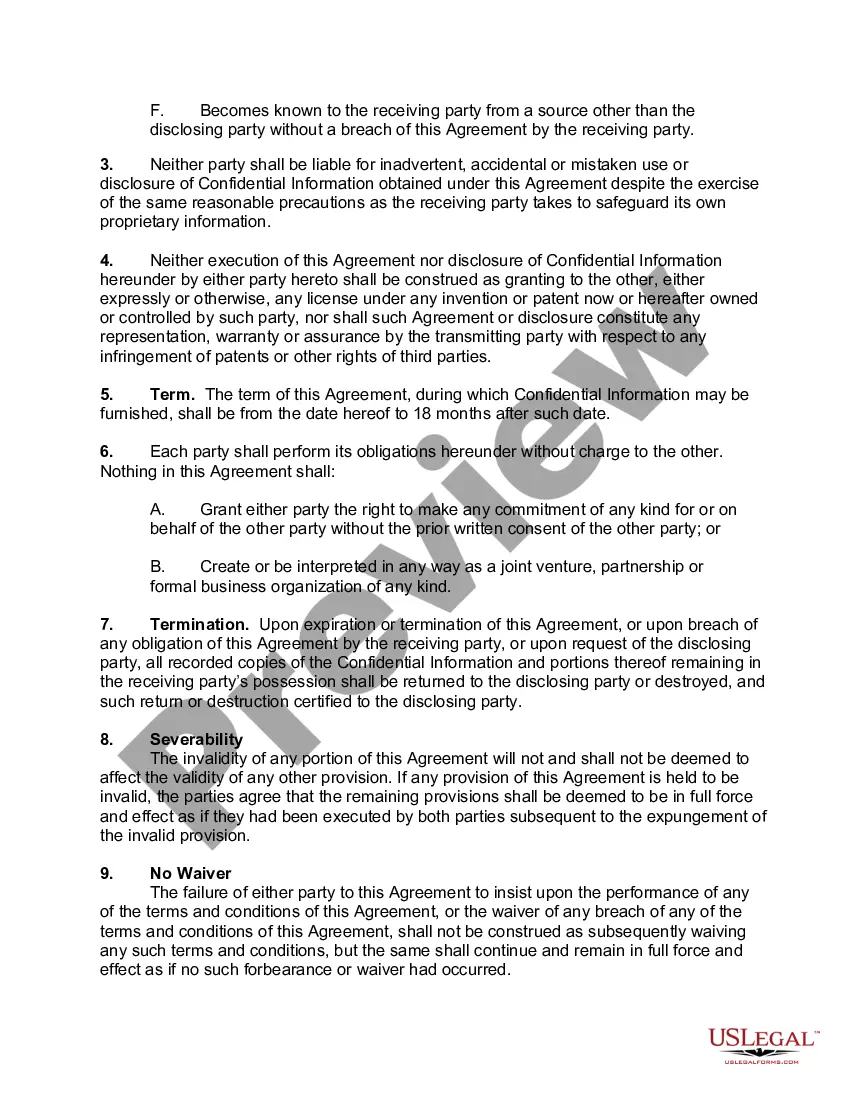
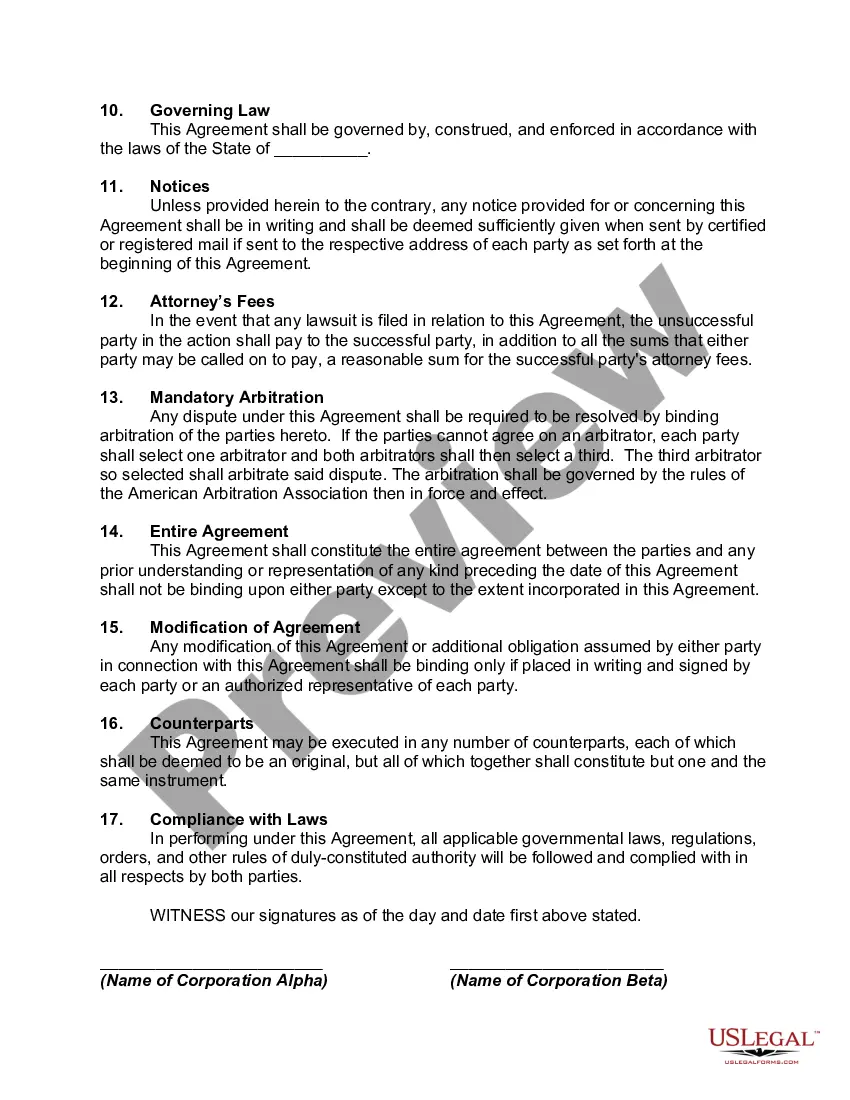
A Connecticut Mutual Confidential Information Exchange Agreement defines the terms under which parties can share sensitive information with each other while protecting both sides’ interests. This agreement outlines what constitutes confidential information and the obligations of each party to safeguard it. By establishing clear guidelines, this agreement provides a sense of security, ensuring that shared information is not disclosed to unauthorized individuals.
Yes, signing a Non-Disclosure Agreement (NDA) is a significant step in protecting your confidential information. By entering into a Connecticut Mutual Confidential Information Exchange Agreement, both parties agree to keep sensitive information private, which fosters trust and encourages open communication. This legal commitment helps prevent unauthorized disclosure and misuse of proprietary data, making it an essential practice for businesses.
NDA refers to Non-Disclosure Agreement, which focuses on preventing the sharing of one-party information. MDNA, a common misunderstanding, generally relates to a misspelling or confusion with MNDA. When you need a clear framework to protect shared confidential information, a Connecticut Mutual Confidential Information Exchange Agreement from USLegalForms provides the clarity and security you need.
The key difference lies in the obligations each agreement imposes. A Non-Disclosure Agreement (NDA) typically protects one party, while a Mutual Non-Disclosure Agreement (MNDA) protects both parties involved. If you are considering sharing sensitive information with another party, a Connecticut Mutual Confidential Information Exchange Agreement can serve both sides effectively, assuring mutual protection.
MNDA stands for Mutual Non-Disclosure Agreement, which signifies an agreement designed to protect the confidential information shared by two parties. This differs from a traditional NDA, where only one party's information is safeguarded. Utilizing a Connecticut Mutual Confidential Information Exchange Agreement helps you establish trust and confidentiality between both parties.