Connecticut Stand Alone Confidentiality and Noncompetition Agreement with Employee
Description
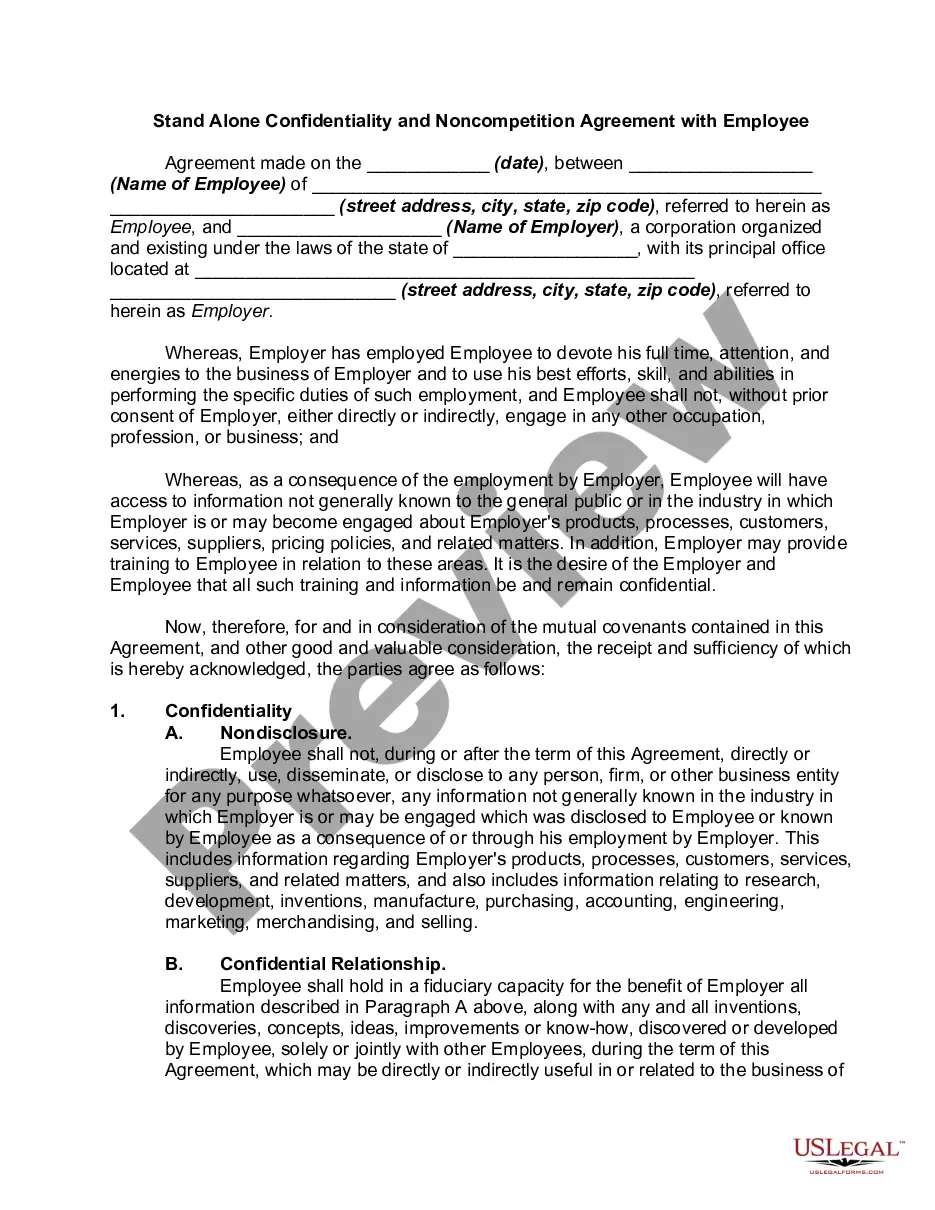
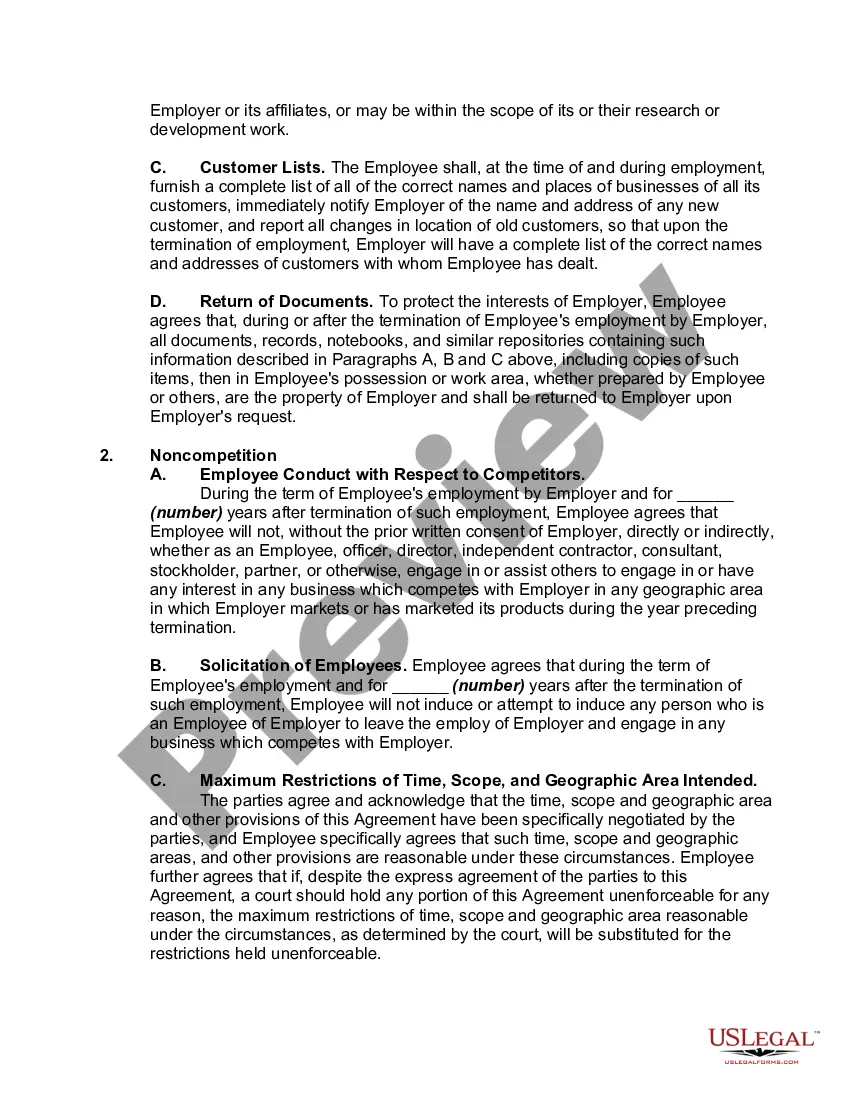
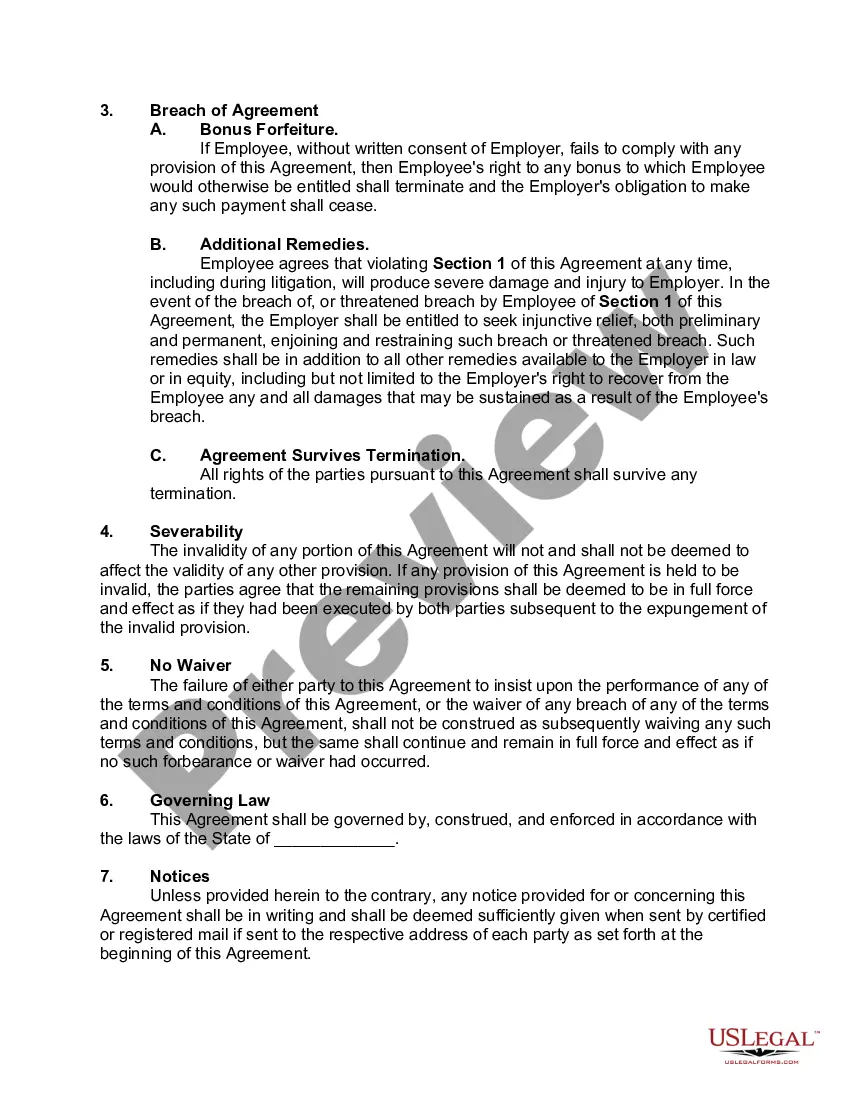
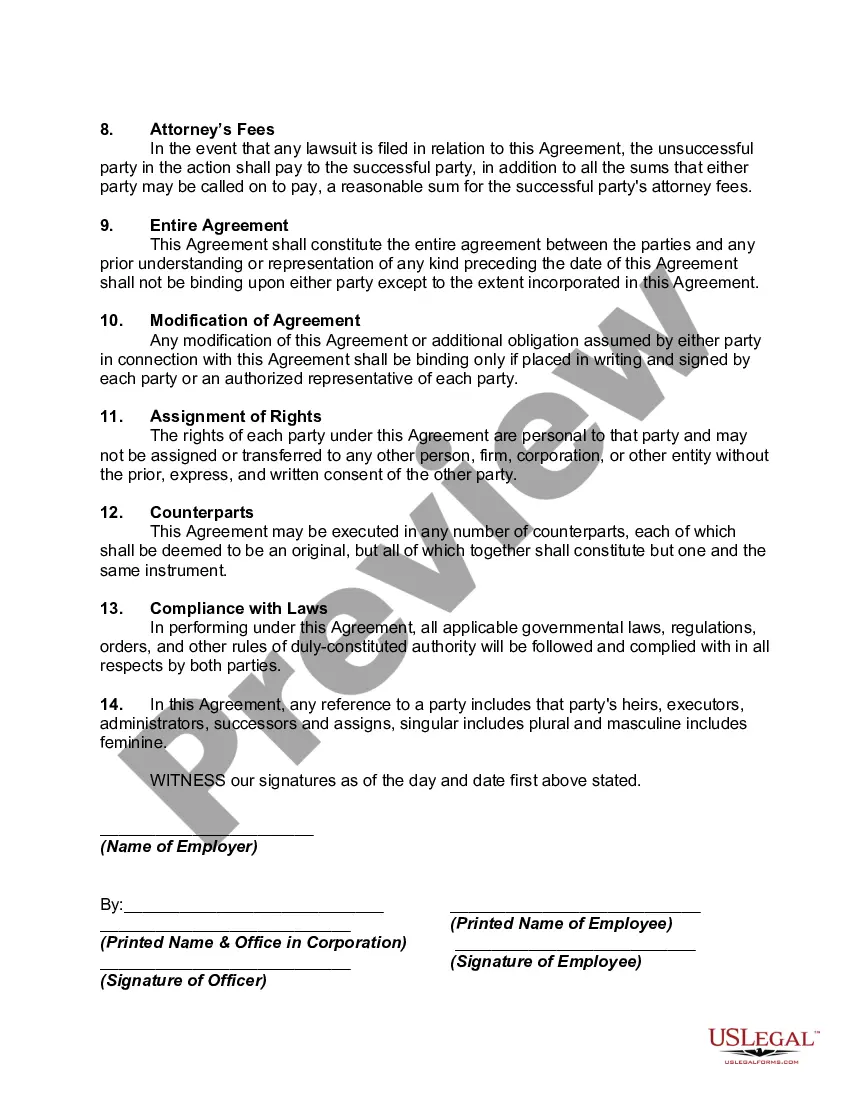
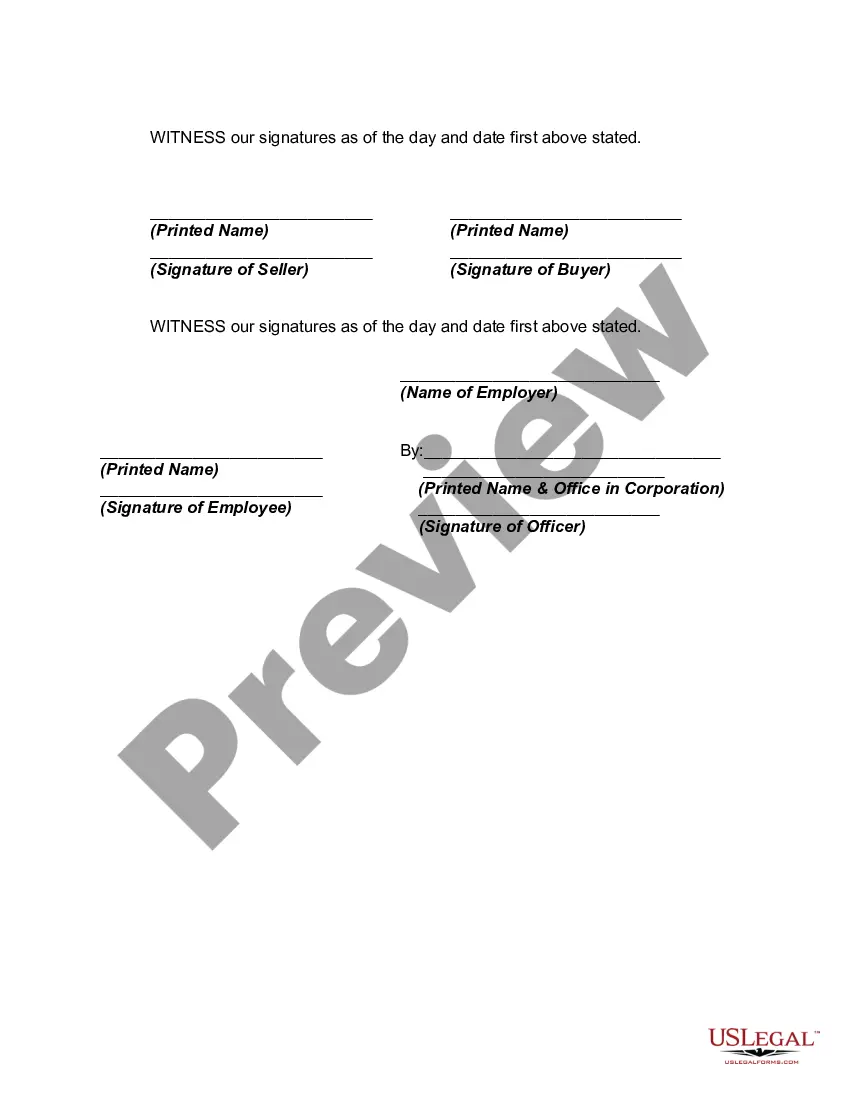
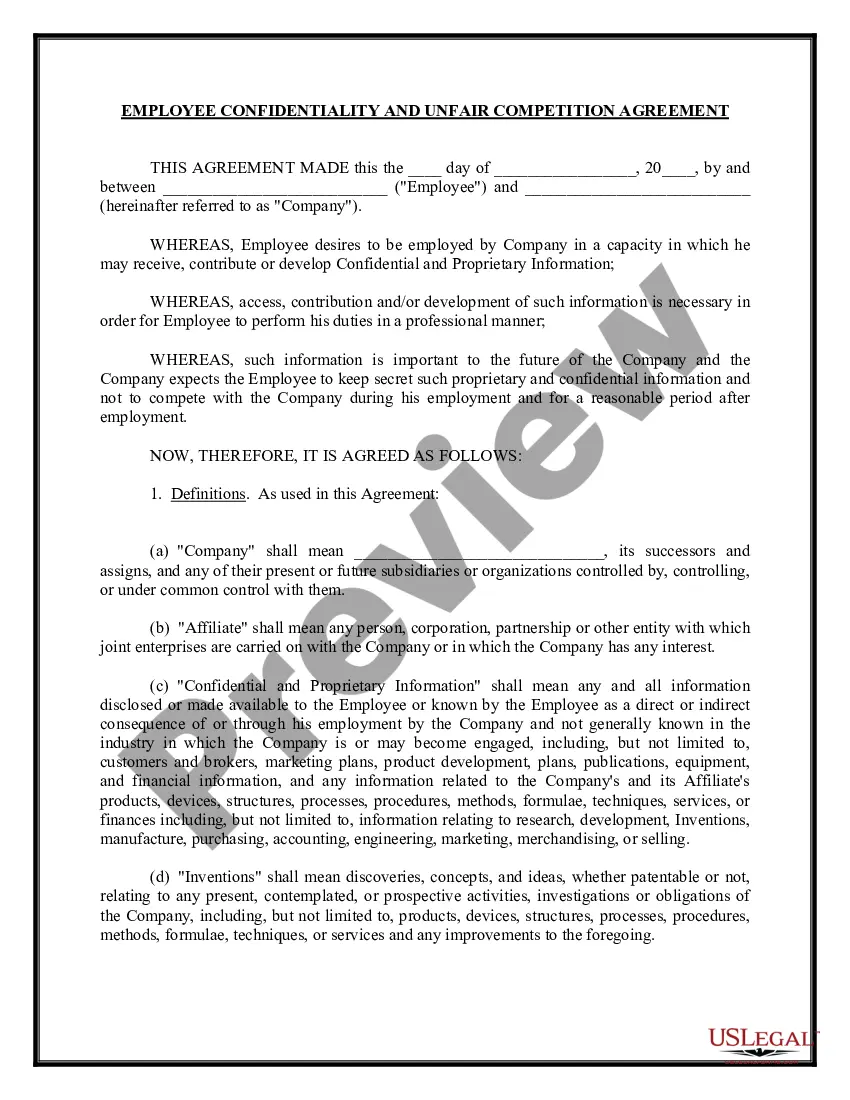
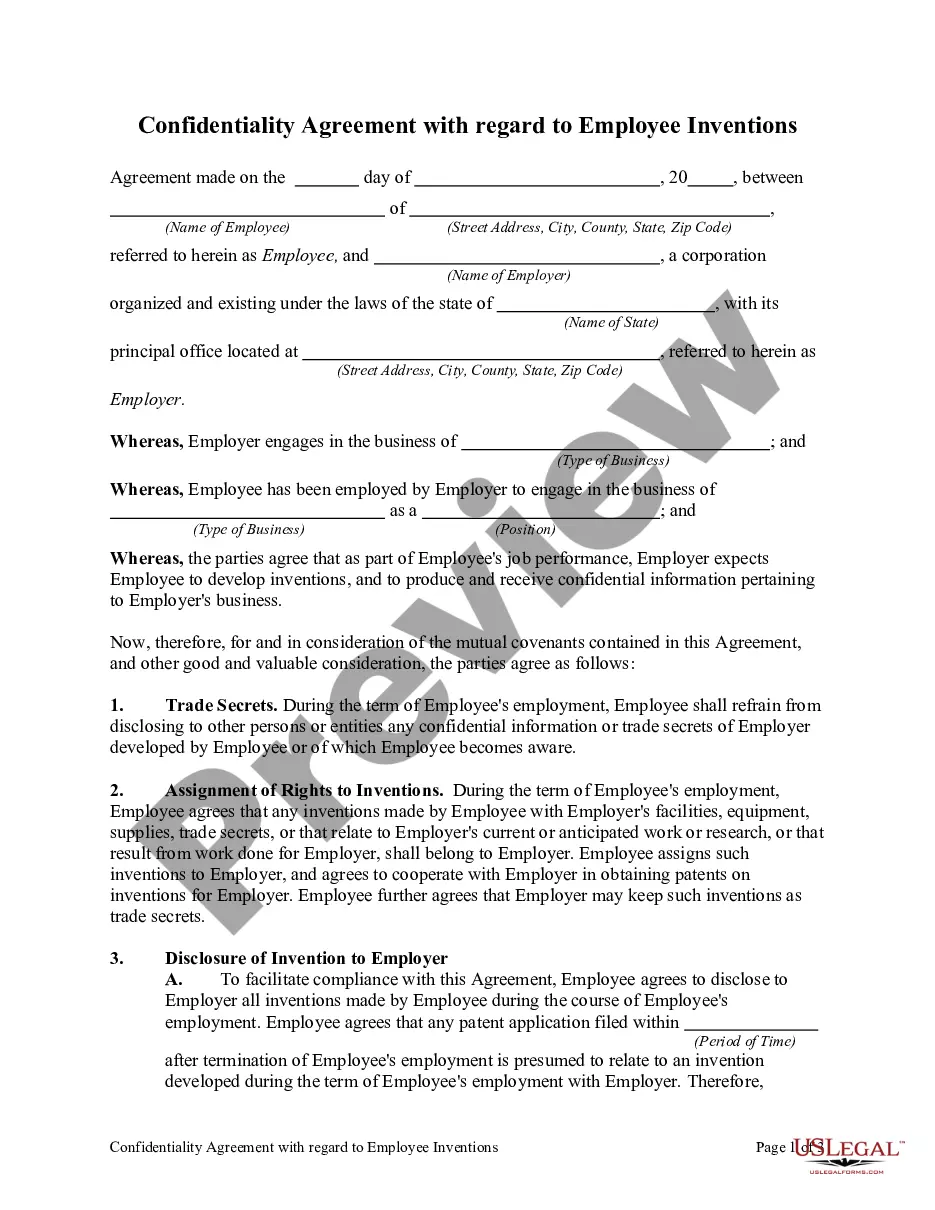
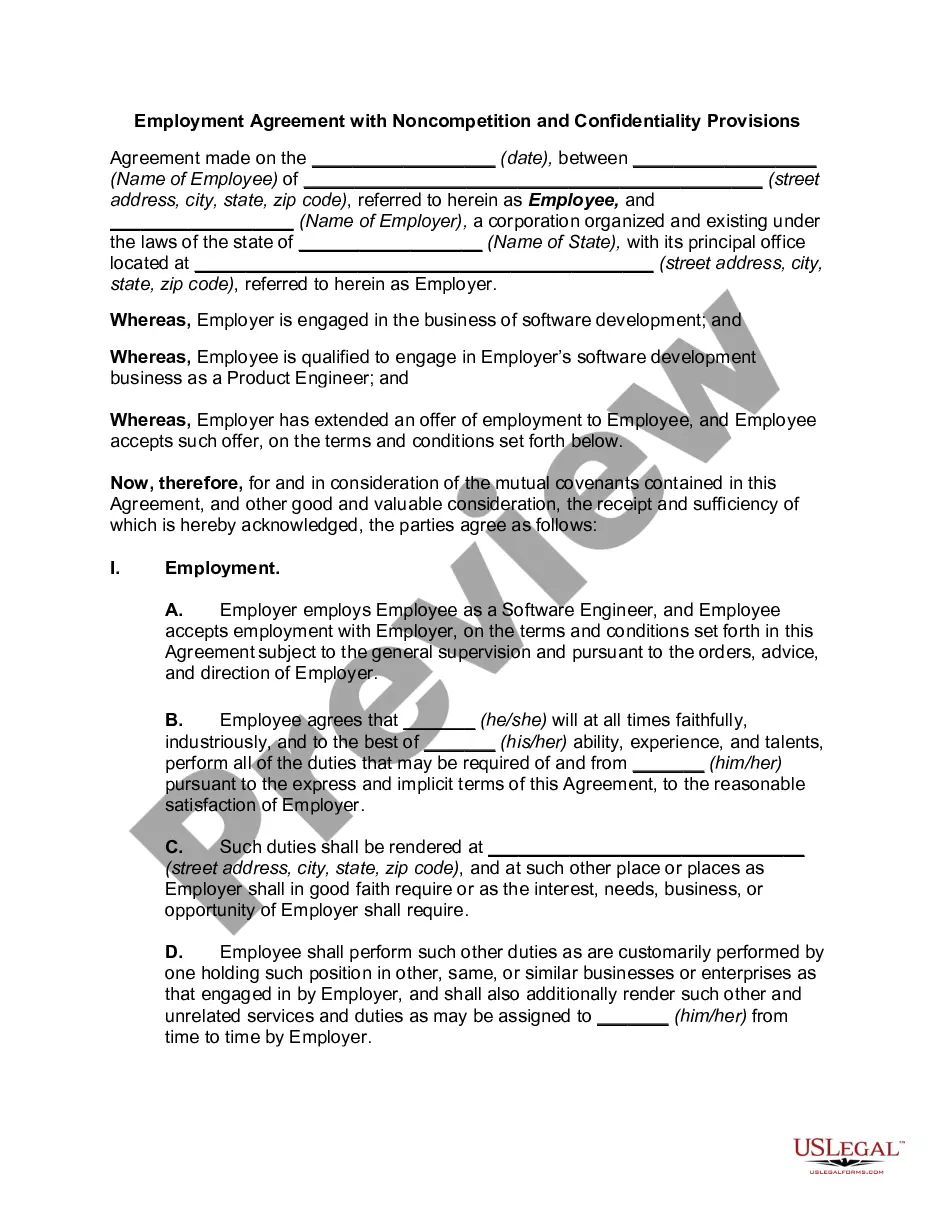
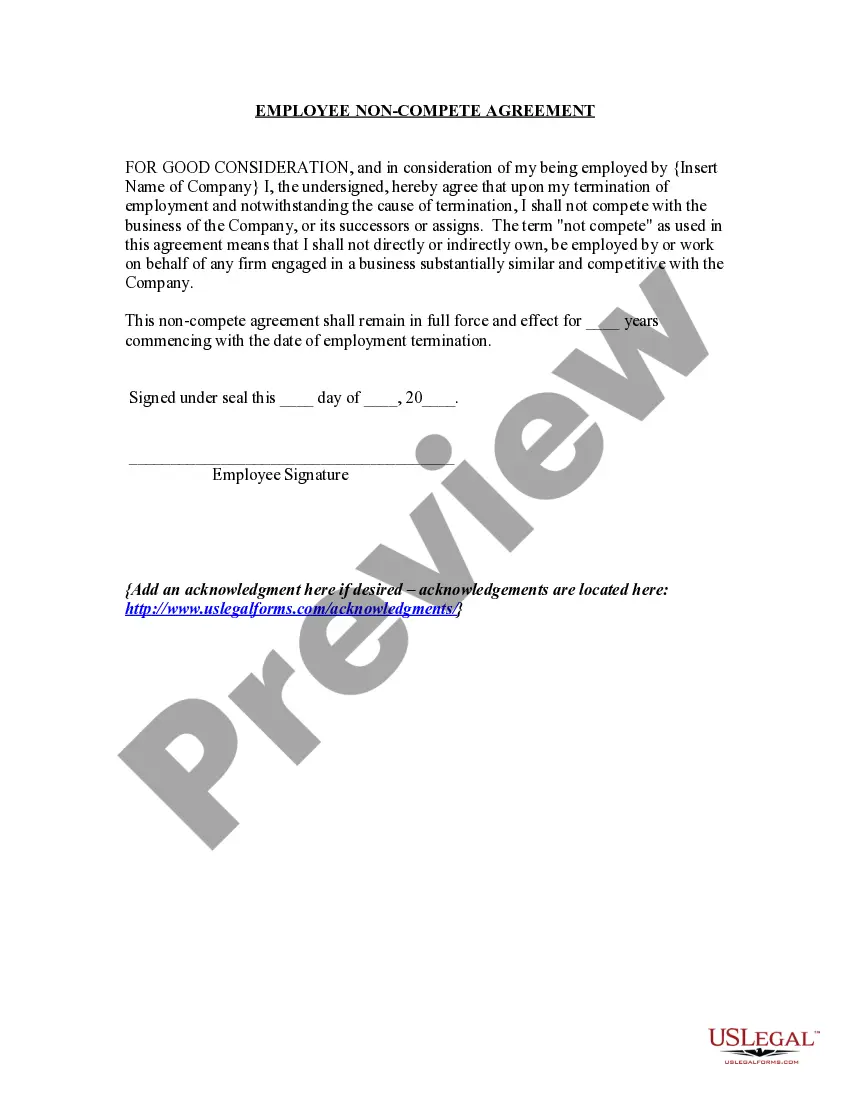
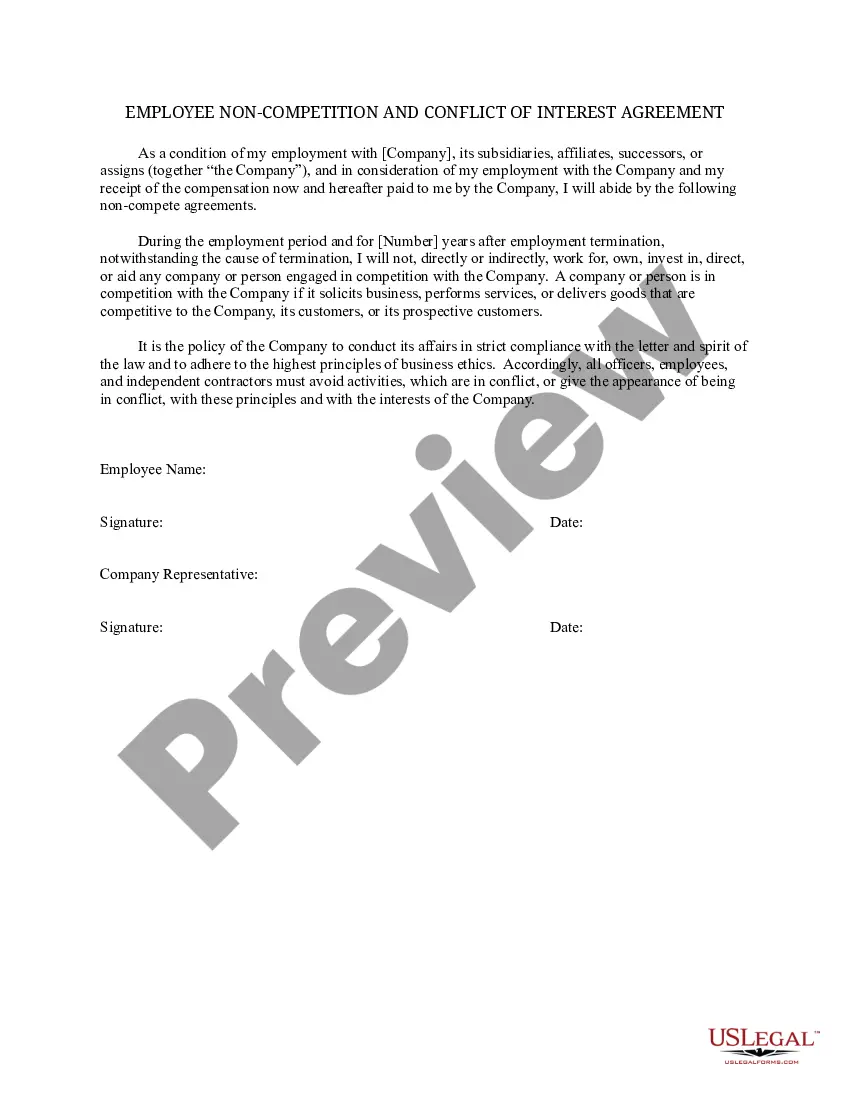

How to fill out Stand Alone Confidentiality And Noncompetition Agreement With Employee?
US Legal Forms - among the largest repositories of legal documents in the USA - offers a broad selection of legal form categories available for purchase or creation.
By using the site, you can access thousands of forms for business and personal purposes, organized by categories, states, or keywords. You can obtain the most recent version of forms like the Connecticut Stand Alone Confidentiality and Noncompetition Agreement with Employee in a matter of seconds.
If you are registered, Log In and obtain the Connecticut Stand Alone Confidentiality and Noncompetition Agreement with Employee from your US Legal Forms library. The Download option will appear on each form you view. You can access all previously obtained forms in the My documents section of your account.
Complete the transaction. Use your credit card or PayPal account to finalize the purchase.
Select the format and download the form to your device. Make edits. Fill out, modify, print, and sign the Connecticut Stand Alone Confidentiality and Noncompetition Agreement with Employee you acquired. Each template added to your account has no expiration date and is yours indefinitely. Therefore, if you wish to download or print another copy, simply go to the My documents section and click on the form you need. Access the Connecticut Stand Alone Confidentiality and Noncompetition Agreement with Employee with US Legal Forms, the most extensive library of legal document templates. Utilize thousands of professional and state-specific templates that satisfy your business or personal requirements.
- Ensure you have selected the correct form for your region/county.
- Click on the Review option to examine the content of the form.
- Read the form description to confirm you have selected the appropriate document.
- If the form does not meet your requirements, utilize the Search field at the top of the screen to find one that does.
- If you are satisfied with the form, validate your choice by clicking the Purchase now button.
- Then, select the pricing plan you prefer and provide your details to register for an account.
Form popularity
FAQ
Yes, a non-compete clause is legal in Connecticut, provided it meets specific criteria. The Connecticut Stand Alone Confidentiality and Noncompetition Agreement with Employee must protect trade secrets or confidential information and not be overly restrictive. Courts will examine the reasonableness of the agreement in terms of time, geographic area, and business interests. Thus, working with a platform like USLegalForms ensures that your agreement aligns with state laws.
A valid Connecticut Stand Alone Confidentiality and Noncompetition Agreement with Employee must have reasonable limitations in scope, duration, and geography. It should protect legitimate business interests while not unduly restricting the employee's right to work. Additionally, it should be signed voluntarily by both parties, ensuring mutual consent. Meeting these criteria strengthens the enforceability of the agreement.
Writing a Connecticut Stand Alone Confidentiality and Noncompetition Agreement with Employee involves several steps. Start by clearly defining the purpose of the agreement, including what constitutes confidential information. Then, specify the obligations of both parties regarding confidentiality and competition after employment ends. Utilize resources like USLegalForms to draft a robust agreement that meets state requirements.
To fill out a Connecticut Stand Alone Confidentiality and Noncompetition Agreement with Employee, begin by entering the employee's name and the specific job title. Next, outline the duration and geographic area of the non-compete clause. Be sure to clarify the terms regarding trade secrets and confidential information. Completing these sections helps ensure that your agreement is comprehensive and clear.
Yes, non-compete agreements can hold up in court, particularly if they are fair and reasonable. Courts evaluate these agreements based on their impact on the employee's future employment and the employer's legitimate business interests. To enhance the enforceability of a Connecticut Stand Alone Confidentiality and Noncompetition Agreement with Employee, it's crucial to adhere to local legal standards and practices.
A confidentiality agreement focuses on protecting sensitive information from disclosure, while a non-compete agreement restricts an employee from working for competitors after leaving the company. Both documents serve different purposes but can be vital in maintaining a business's competitive edge. Combining both into a Connecticut Stand Alone Confidentiality and Noncompetition Agreement with Employee can enhance your protection.
Yes, many employers actively enforce non-compete agreements, but the level of enforcement varies. Employers commonly seek to protect their trade secrets and competitive advantage, often using these agreements as a safeguard. When these agreements are framed as a Connecticut Stand Alone Confidentiality and Noncompetition Agreement with Employee, they can be more likely to withstand challenges in court.
Writing a non-compete agreement involves clearly stating the terms, including the scope, duration, and geographical restrictions. It's crucial to outline the specific interests the agreement protects and ensure that it’s reasonable and fair. Utilizing a Connecticut Stand Alone Confidentiality and Noncompetition Agreement with Employee template can provide a helpful starting point for crafting an effective document.
The enforceability of a non-compete agreement in court largely depends on its reasonableness in scope and duration. Connecticut courts typically evaluate these agreements based on their necessity to protect an employer's interests without imposing undue hardship on employees. Therefore, drafting a well-structured Connecticut Stand Alone Confidentiality and Noncompetition Agreement with Employee is essential.
Yes, Connecticut permits non-compete agreements, but they must meet specific legal standards to be enforceable. To ensure validity, the agreement should protect legitimate business interests and not unfairly restrict an employee's ability to work. Thus, it's prudent to draft a Connecticut Stand Alone Confidentiality and Noncompetition Agreement with Employee carefully, considering the state's legal framework.