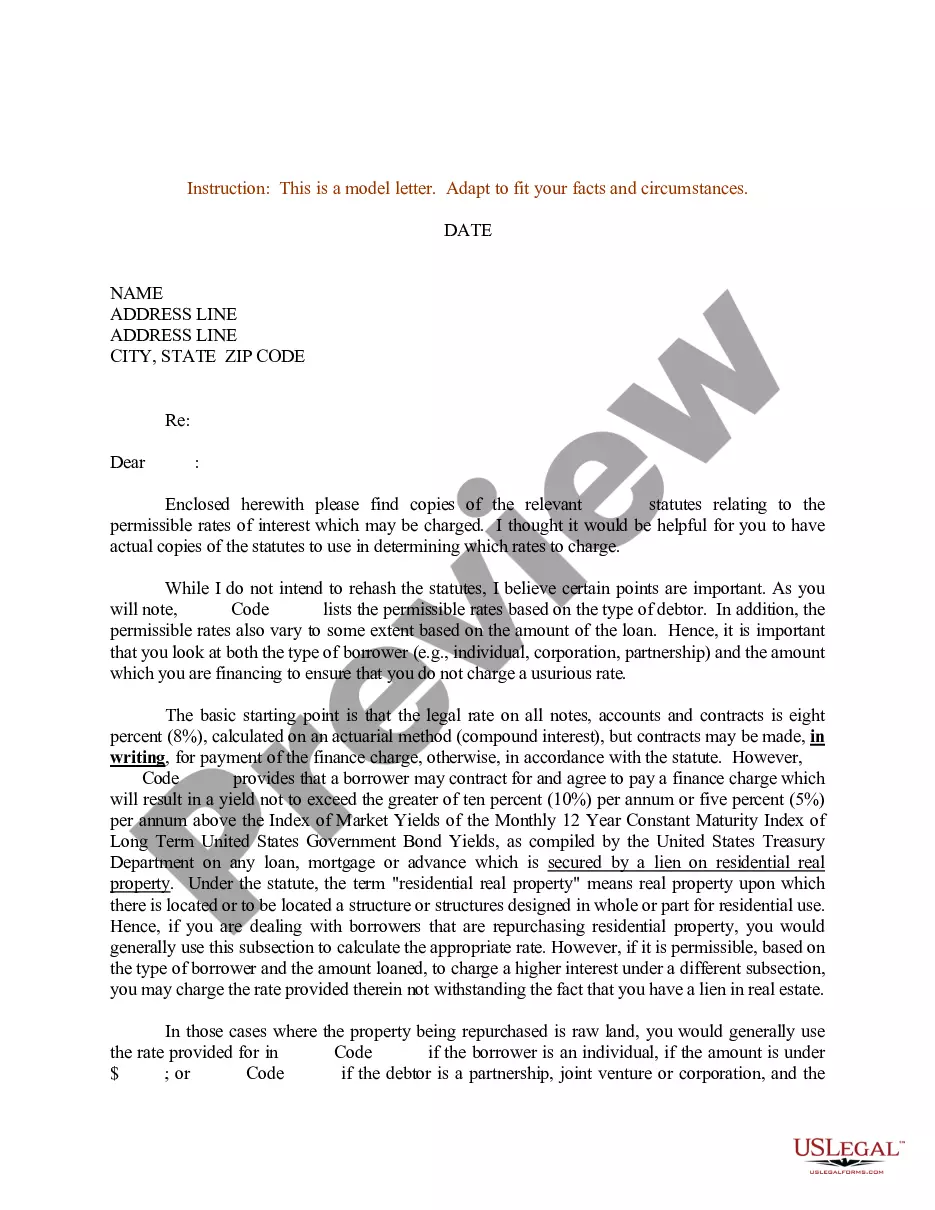
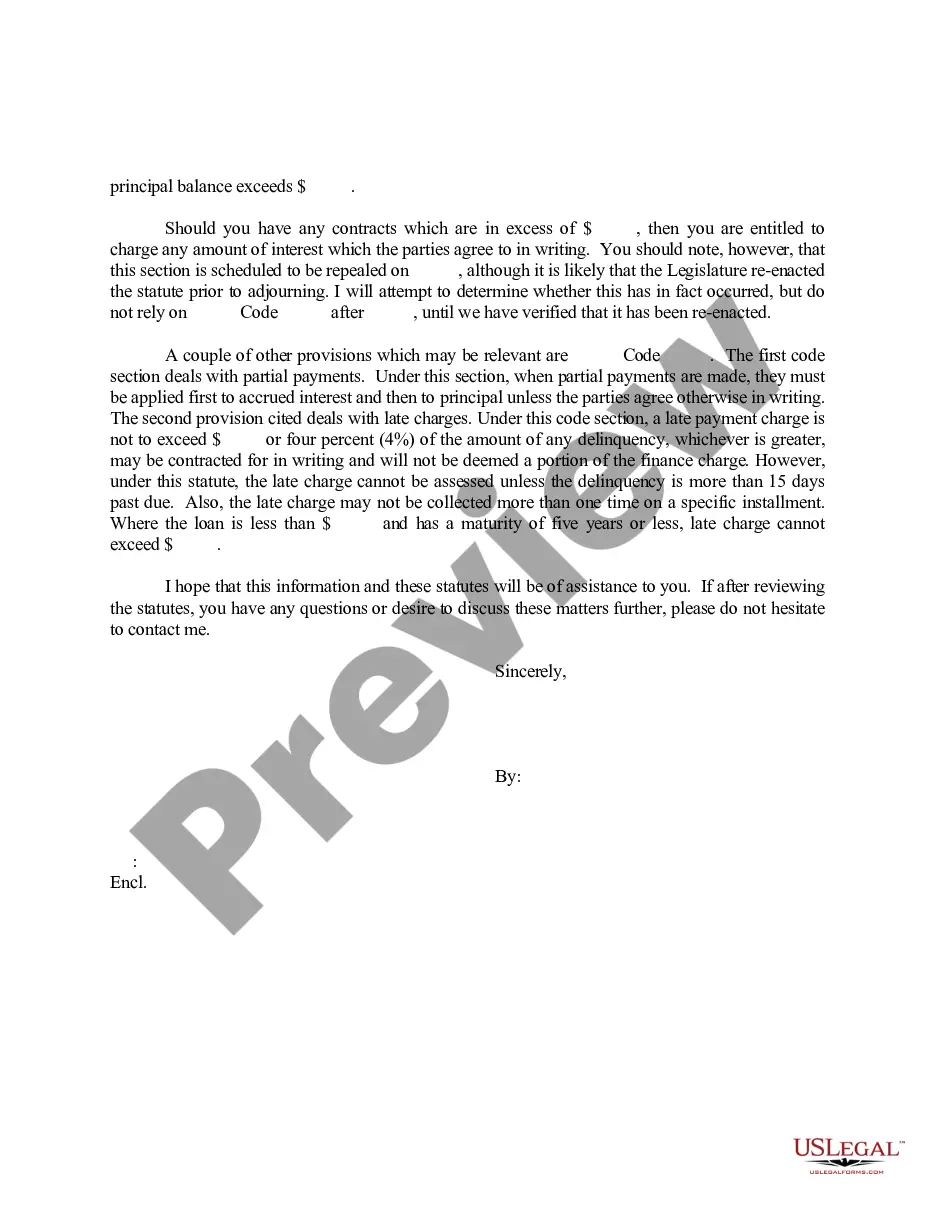
Connecticut Sample Letter Stating Interest Statutes
Description









How to fill out Sample Letter Stating Interest Statutes?
US Legal Forms - one of the largest collections of legal documents in the United States - offers a broad selection of legal document templates that you can obtain or print. By utilizing the website, you can access thousands of templates for business and personal purposes, organized by categories, states, or keywords. You can find the latest versions of documents like the Connecticut Sample Letter Stating Interest Statutes in just a few minutes.
If you have an account, Log In and obtain the Connecticut Sample Letter Stating Interest Statutes from the US Legal Forms library. The Download button will appear on every document you view. You can access all previously downloaded documents in the My documents section of your account.
If you are using US Legal Forms for the first time, here are simple instructions to get started: Ensure you have selected the correct document for your city/county. Click on the Preview button to review the document's details. Read the document description to confirm that you have chosen the right one. If the document does not meet your requirements, utilize the Search field at the top of the screen to find one that does. If you are satisfied with the document, confirm your choice by clicking the Purchase now button. Then, choose the payment plan you prefer and provide your credentials to register for an account. Complete the transaction. Use a credit card or PayPal account to finalize the transaction. Select the format and download the document onto your device. Make modifications. Fill out, edit, and print and sign the downloaded Connecticut Sample Letter Stating Interest Statutes. Every template you add to your account does not have an expiration date and is yours permanently. Therefore, if you wish to obtain or print another copy, simply go to the My documents section and click on the document you want.
- Gain access to the Connecticut Sample Letter Stating Interest Statutes with US Legal Forms, one of the most comprehensive libraries of legal document templates.
- Utilize thousands of professional and state-specific templates that cater to your business or personal needs and requirements.
- Find the legal documents you need quickly and efficiently.
- Keep all your downloaded templates safe and accessible at any time.
- Easily modify your documents as required without any hassle.
- Enjoy the convenience of a user-friendly platform for all your legal document needs.
Form popularity
FAQ
Rule 1.10 - Imputation of Conflicts of Interest: General Rule (a) While lawyers are associated in a firm, none of them shall knowingly represent a client when any one of them practicing alone would be prohibited from doing so by Rules 1.7, 1.8(c), or 1.9, unless the prohibition is based on a personal interest of the ...
For citation purposes, refer to a specific provision of the General Statutes first by title, then by section. For example, if you are discussing a law on speeding, you would look at Title 14, Section 219, which would be cited simply as "Conn. Gen. Stat.
Rule 7.1. A communication is false or misleading if it contains a material misrepresentation of fact or law, or omits a fact necessary to make the statement considered as a whole not materially misleading. Connecticut Rules of Professional Conduct - Law Firm Sites lawfirmsites.com ? states ? connecticut lawfirmsites.com ? states ? connecticut
Rule 1.7 - Conflict of Interest: General Rule (a) Except as provided in paragraph (b), a lawyer shall not represent a client if the representation involves a concurrent conflict of interest. Conflict of Interest: General Rule, N.J. Ct. R. app 3 R. R. 1.7 - Casetext casetext.com ? part-i-rules-of-general-application casetext.com ? part-i-rules-of-general-application
Although it is prohibited to mix lawyer funds with client funds, Rule 1.15 of the Connecticut Rules of Professional Conduct permits a lawyer's own funds to be placed in a trust account for the sole purposes of paying financial institution service charges on the account or to obtain a waiver of fees and service charges ... FAQ : IOLTA/IOTA - Connecticut Bar Foundation ctbarfdn.org ? ioltaiota ? faq ctbarfdn.org ? ioltaiota ? faq
Rule 7.1. A lawyer shall not make a false or misleading communication about the lawyer or the lawyer's services. A communication is false or misleading if it contains a material misrepresentation of fact or law, or omits a fact necessary to make the statement considered as a whole not materially misleading.
Rule 4.2 of the Rules of Professional Conduct provides that ?[i]n representing a client, a lawyer shall not communicate about the subject of the representation with a party the lawyer knows to be represented by another lawyer in the matter, unless the lawyer has the consent of the other lawyer or is authorized by law ...