Connecticut Non-Disclosure Agreement for Freelancers
Description
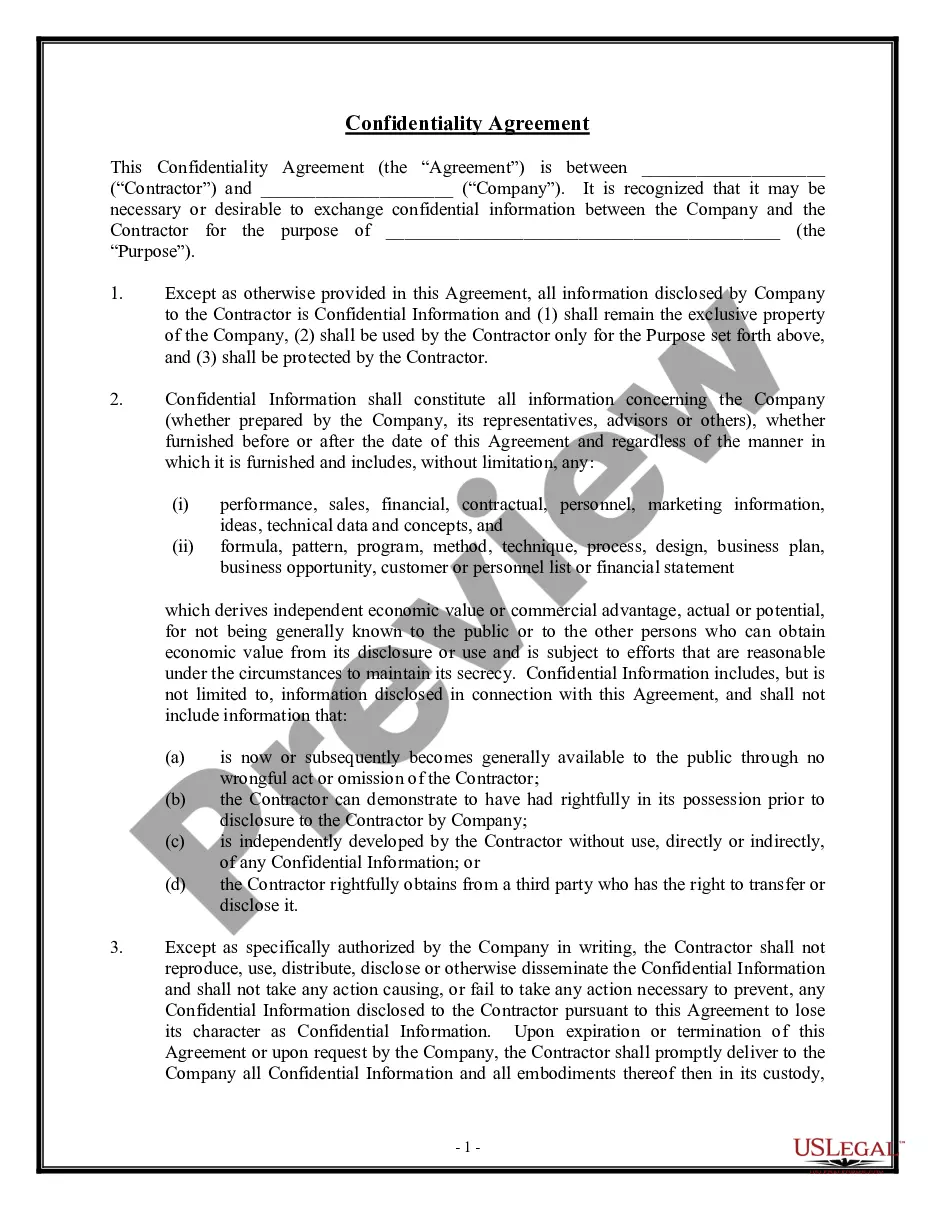
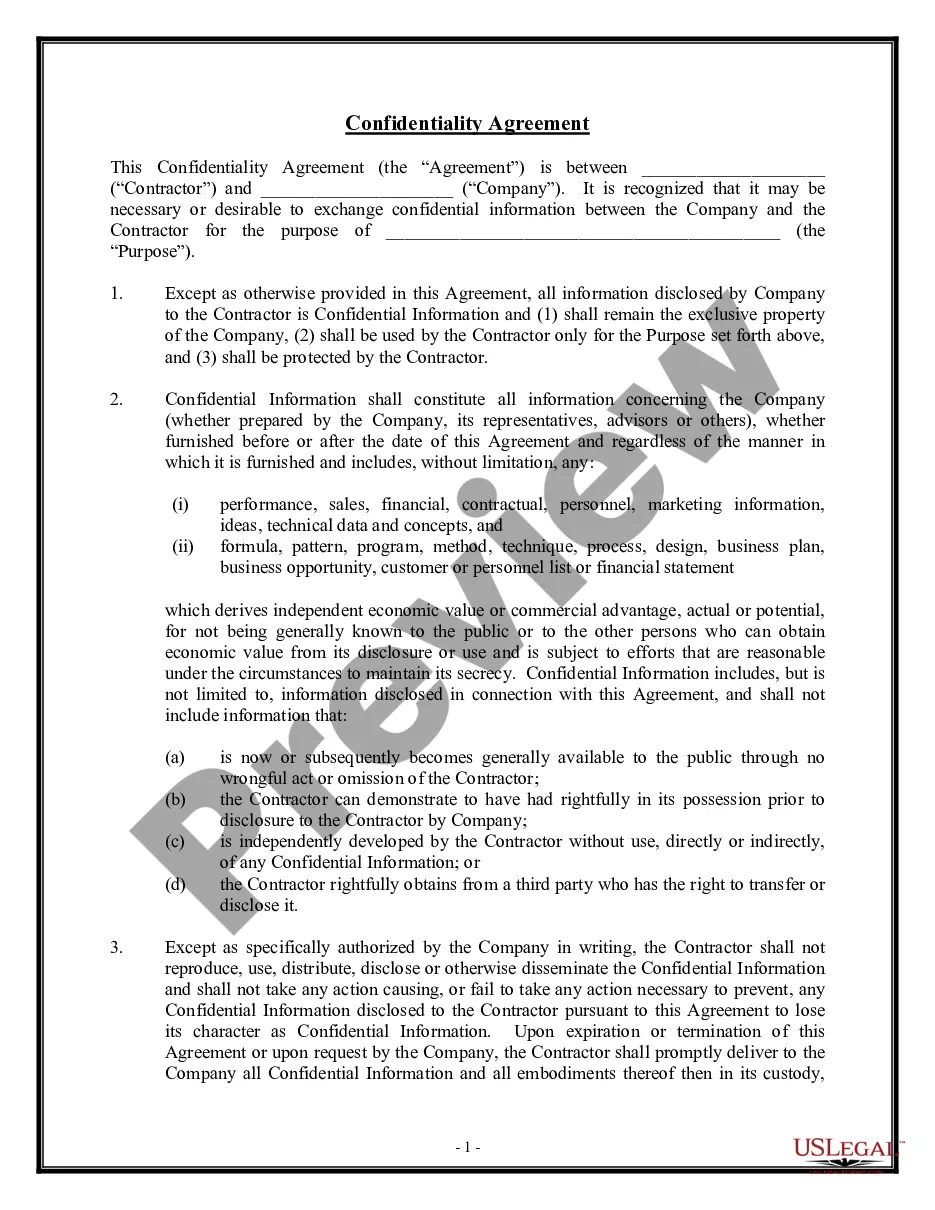
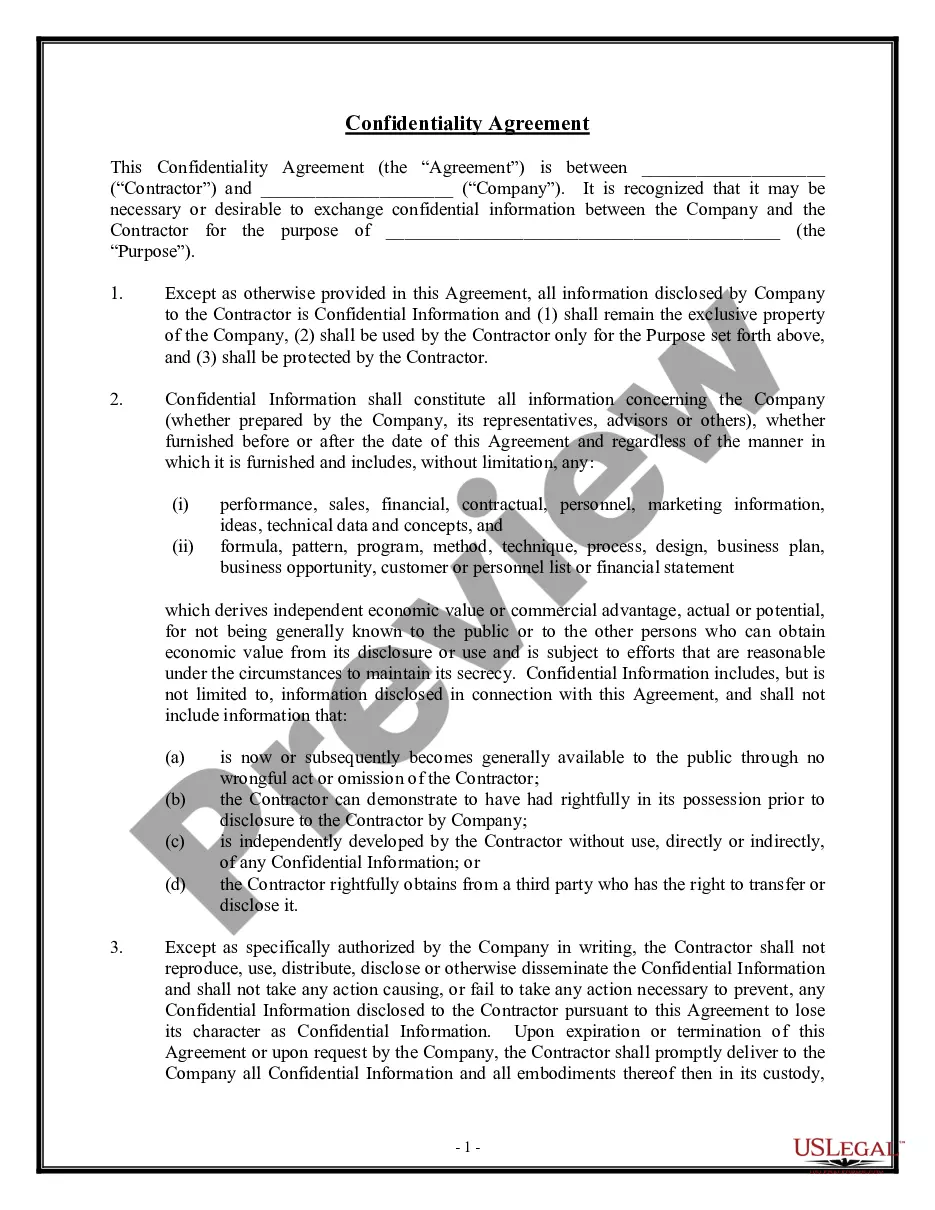
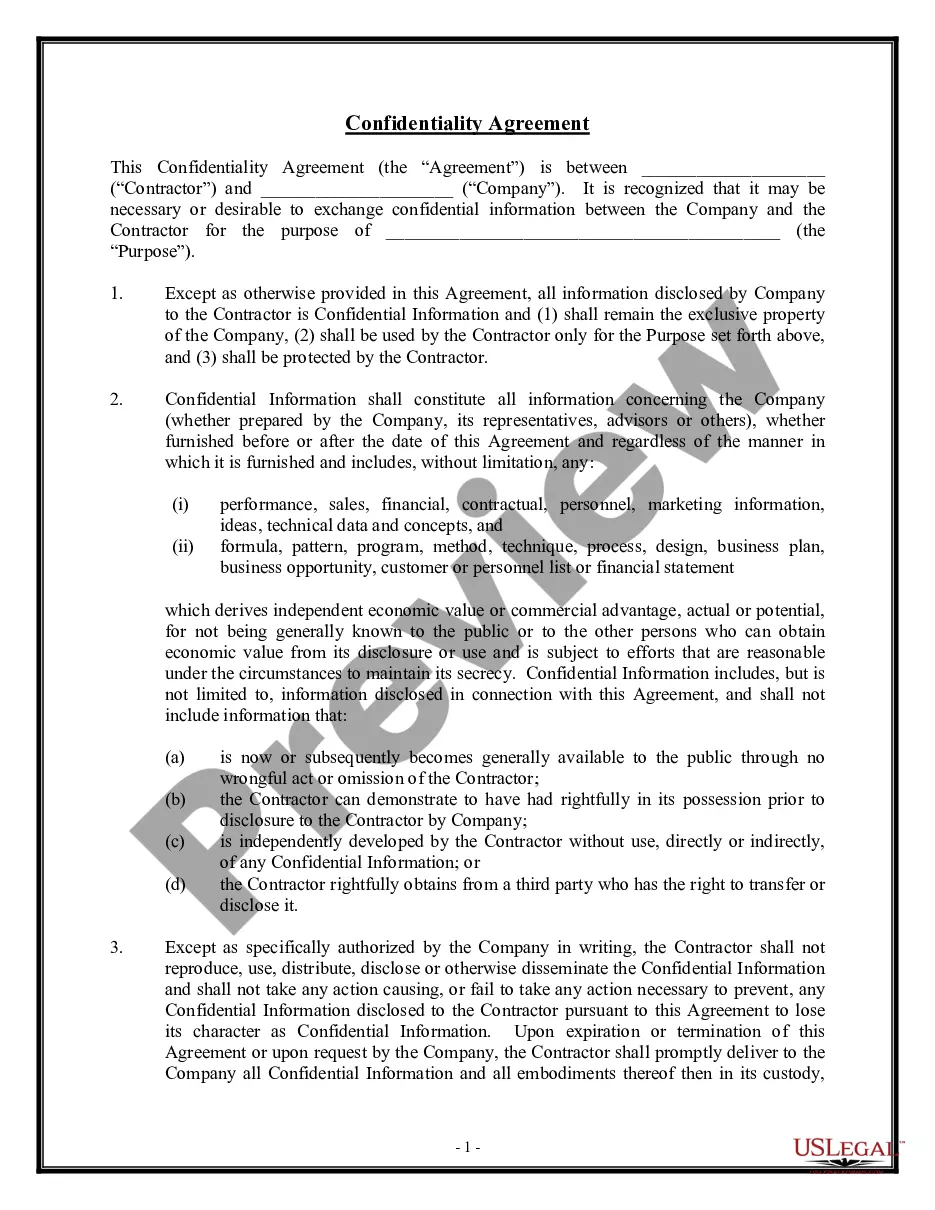
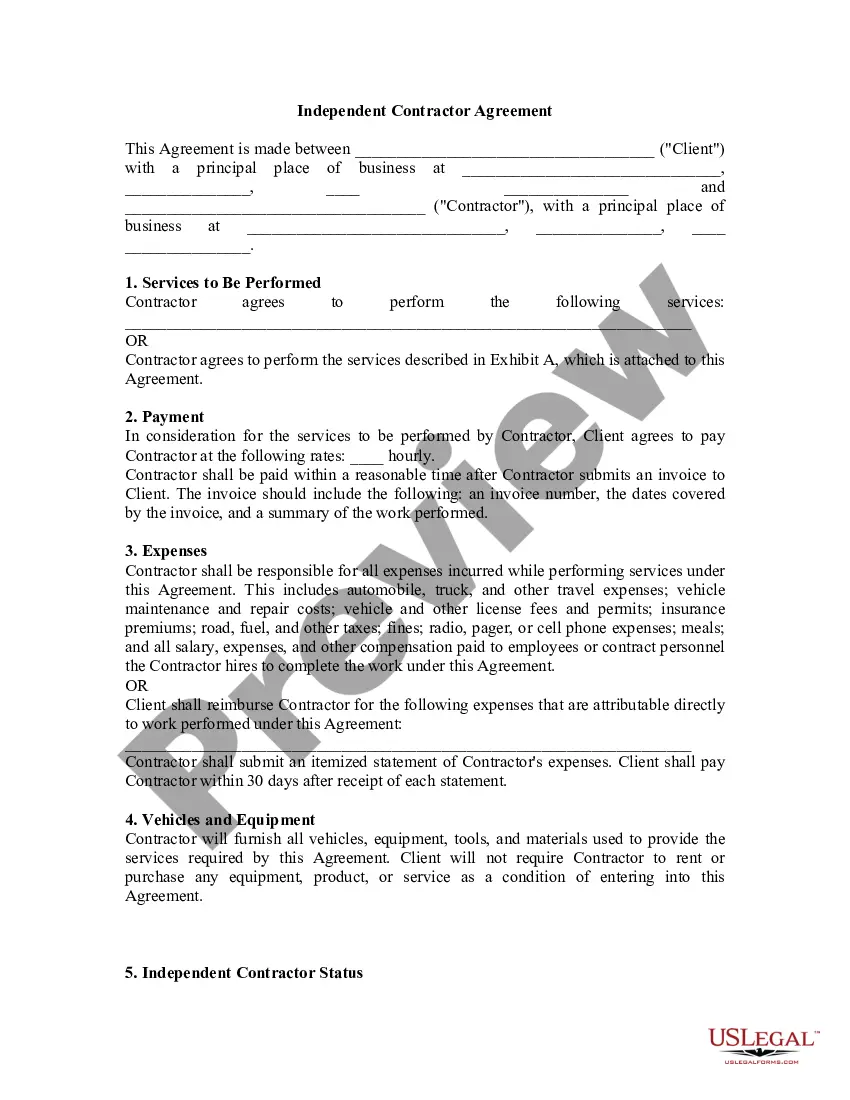
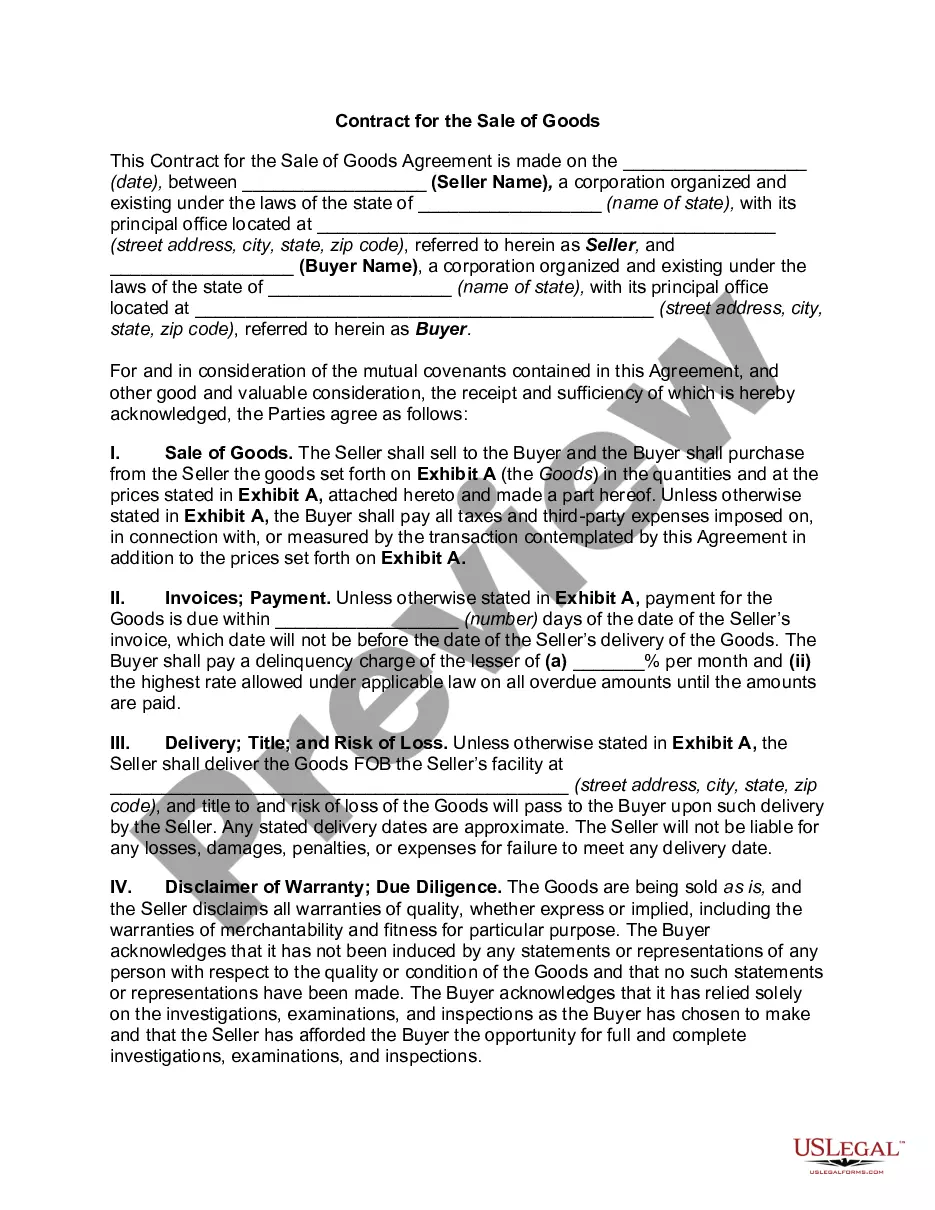
How to fill out Non-Disclosure Agreement For Freelancers?
In case you need to access, download, or print authentic document templates, utilize US Legal Forms, the largest variety of legal forms available online.
Employ the site's user-friendly and efficient search tool to find the documents you need. Various templates for business and personal purposes are organized by categories and states or keywords.
Use US Legal Forms to acquire the Connecticut Non-Disclosure Agreement for Freelancers with just a few clicks.
Every legal document template you acquire is yours indefinitely. You will have access to each form you downloaded in your account. Check the My documents section and select a form to print or download again.
Stay competitive and download and print the Connecticut Non-Disclosure Agreement for Freelancers using US Legal Forms. There are millions of professional and state-specific forms you can utilize for your business or personal needs.
- If you are already a US Legal Forms member, Log In to your account and click on the Download button to get the Connecticut Non-Disclosure Agreement for Freelancers.
- You can also retrieve forms you previously downloaded from the My documents section of your account.
- If this is your first time using US Legal Forms, follow the steps outlined below.
- Step 1. Ensure that you have chosen the form for the correct city/state.
- Step 2. Utilize the Review feature to go over the form's details. Remember to read the description.
- Step 3. If you are not satisfied with the form, use the Search bar at the top of the screen to find other versions of the legal form template.
- Step 4. Once you have found the form you need, click the Purchase now button. Select the pricing plan you prefer and provide your information to register for an account.
- Step 5. Complete the transaction. You can use your credit card or PayPal account to finalize the purchase.
- Step 6. Choose the format of the legal form and download it to your device.
- Step 7. Complete, modify, and print or sign the Connecticut Non-Disclosure Agreement for Freelancers.
Form popularity
FAQ
The purpose of a Connecticut Non-Disclosure Agreement for Freelancers is to protect sensitive information shared in business relationships. It prevents unauthorized disclosure of proprietary information, trade secrets, or other confidential data. By having an NDA in place, freelancers and clients can establish trust and promote a secure environment for collaboration.
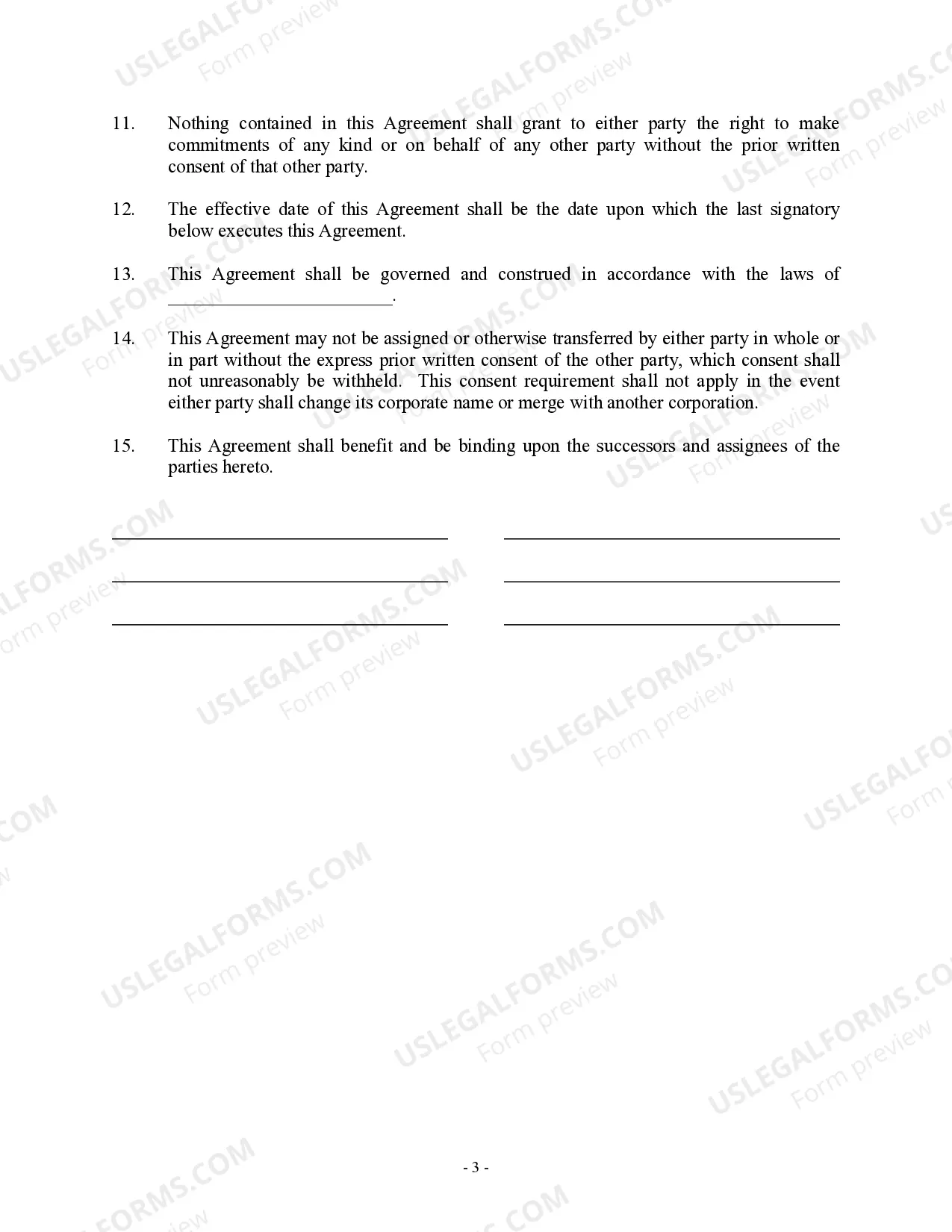
To fill out a Connecticut Non-Disclosure Agreement for Freelancers, start by identifying the parties involved and defining what constitutes confidential information. Then, outline the obligations of both parties, including how long the confidentiality will last. Lastly, ensure both parties sign and date the document to make it legally binding.
It is advisable to have a Connecticut Non-Disclosure Agreement for Freelancers when working on platforms like Upwork. An NDA can help establish clear expectations about confidentiality and protect your creative work. Although Upwork provides certain protections, an agreement between you and your client further secures sensitive information.
Yes, non-disclosure agreements apply to independent contractors, including freelancers. When an independent contractor signs a Connecticut Non-Disclosure Agreement for Freelancers, they commit to keeping the client’s confidential information protected. These agreements are crucial for maintaining a professional relationship and safeguarding proprietary data.
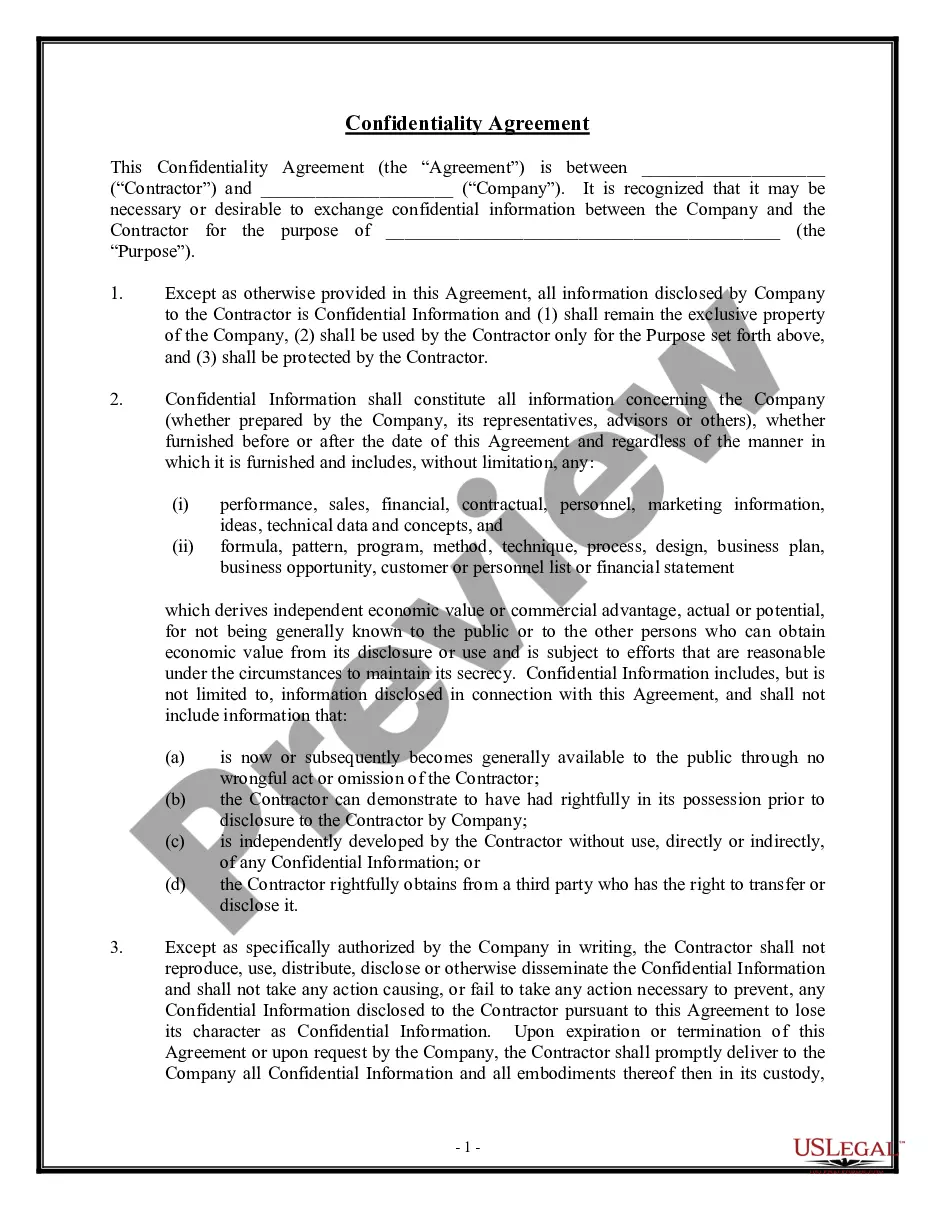
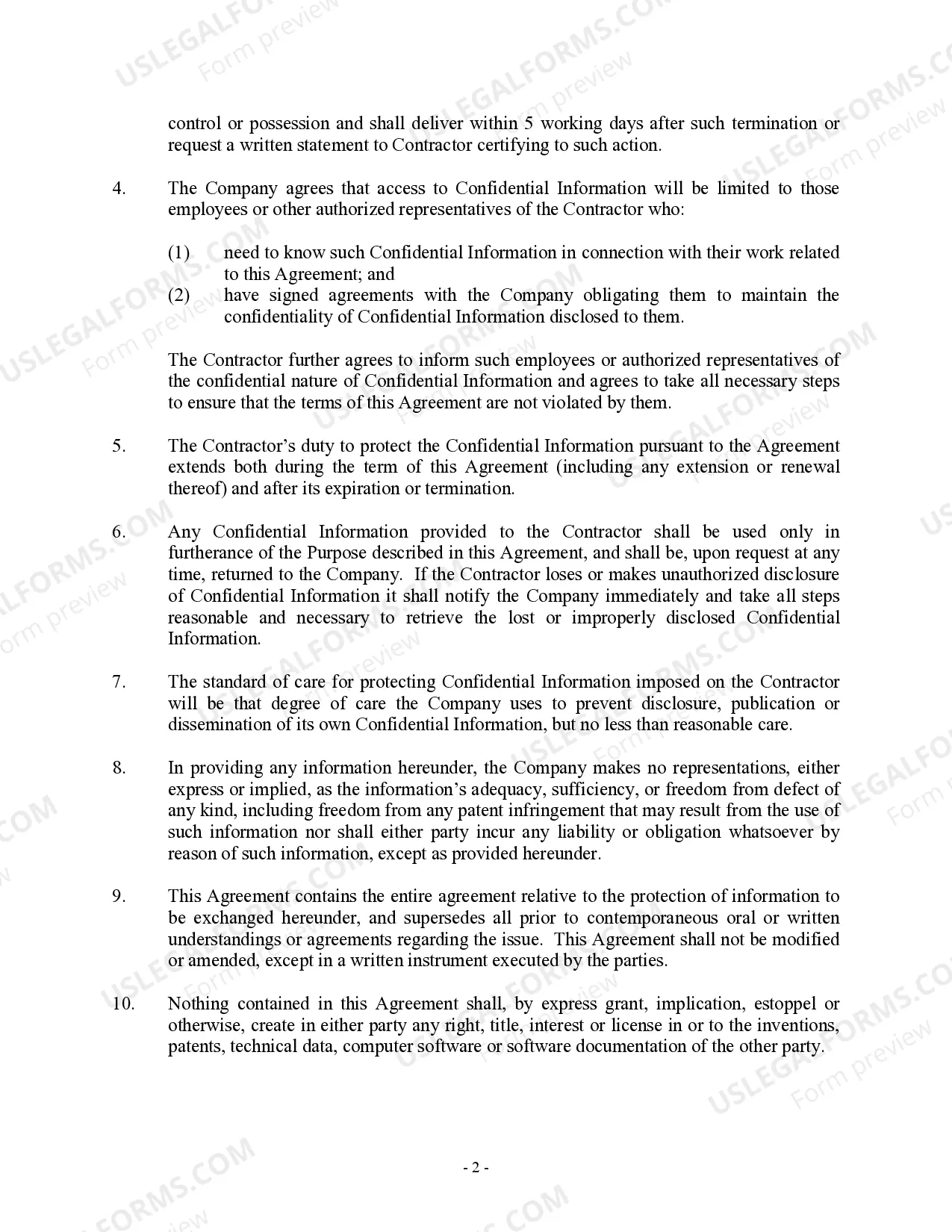
A Connecticut Non-Disclosure Agreement for Freelancers is a legal document that protects sensitive information shared between a freelancer and their client. It establishes the expectation that any confidential information disclosed during a project must remain private. This agreement fosters trust, permitting freelancers to work freely without fear that their creative ideas or strategies will be misused.
Yes, you can write a Connecticut Non-Disclosure Agreement for Freelancers yourself, but it's important to ensure that it covers all necessary components. These components include the definition of confidential information, obligations of both parties, and the agreement's duration. However, using a template or consulting a legal professional can help you avoid common pitfalls and ensure that your NDA is comprehensive and enforceable.
An NDA becomes illegal if it violates public policy or attempts to restrict someone's rights unlawfully. For instance, agreements that prevent individuals from reporting illegal activities or violate existing laws are not enforceable. Additionally, if an NDA contains overly broad terms that stifle normal business operations, it may also be deemed illegal. Understanding these nuances is crucial when drafting your Connecticut Non-Disclosure Agreement for freelancers.
NDAs, including Connecticut Non-Disclosure Agreements for freelancers, generally hold up well in court if they are properly crafted. Courts tend to enforce these agreements when they are reasonable in scope and duration. To enhance the enforceability of your NDA, ensure it is clear about the obligations of both parties and reflects a legitimate business interest. Legal platforms like US Legal Forms can assist in drafting agreements that stand the test of legal scrutiny.
No, a Connecticut Non-Disclosure Agreement for freelancers does not have to be notarized to be valid. What matters is that both parties agree to the terms and sign the document. However, notarization can add an additional layer of credibility and may help in legal disputes if they arise. It is beneficial to read through the specific requirements in your state to ensure compliance.
Yes, you can write your own NDA, but it's crucial to ensure that it covers all necessary legal elements. Make sure to include provisions that detail what information is confidential and the obligations of both parties. Using templates designed for a Connecticut Non-Disclosure Agreement for freelancers can be a helpful reference. This approach combines flexibility with legal correctness, streamlining the process for you.